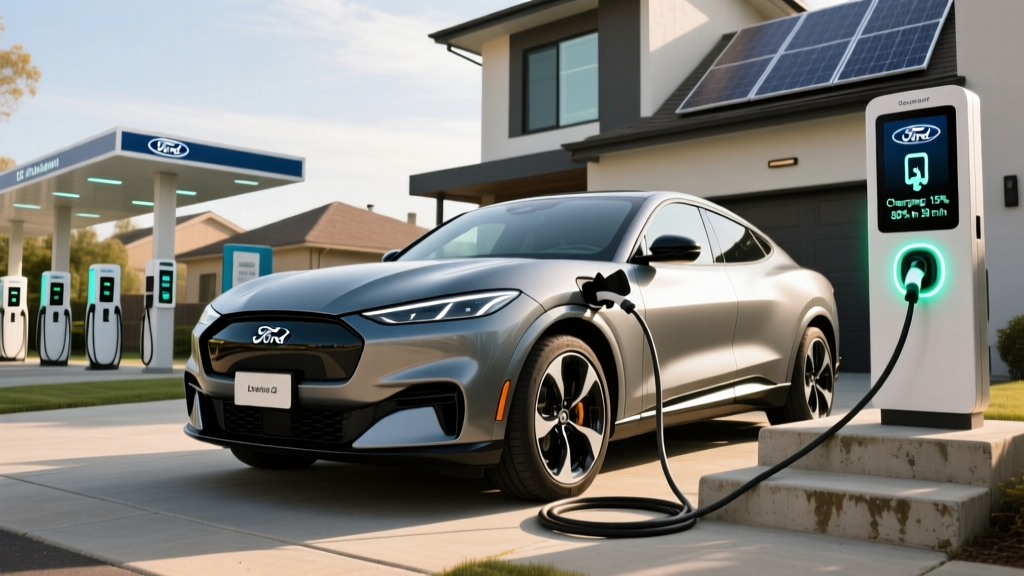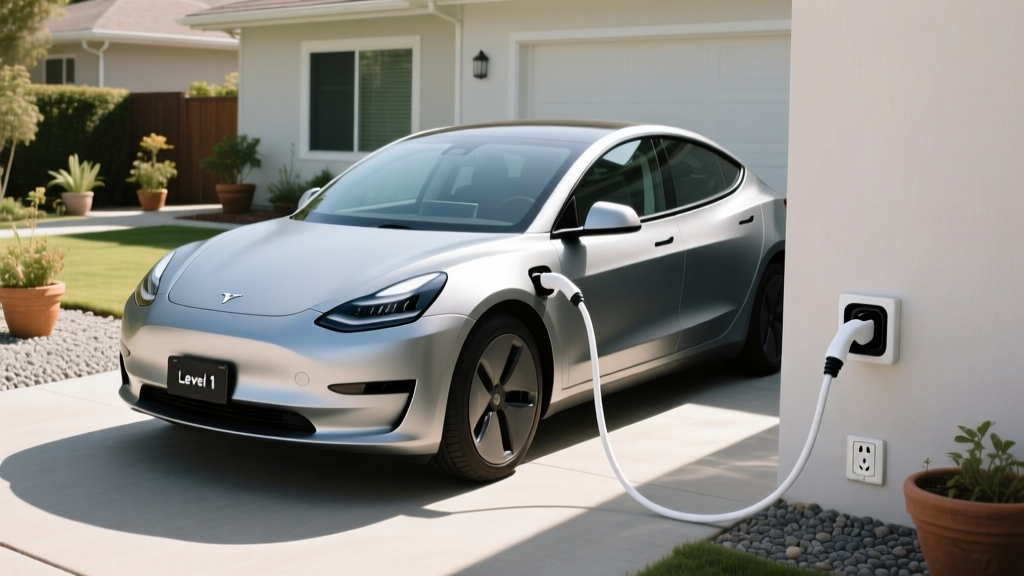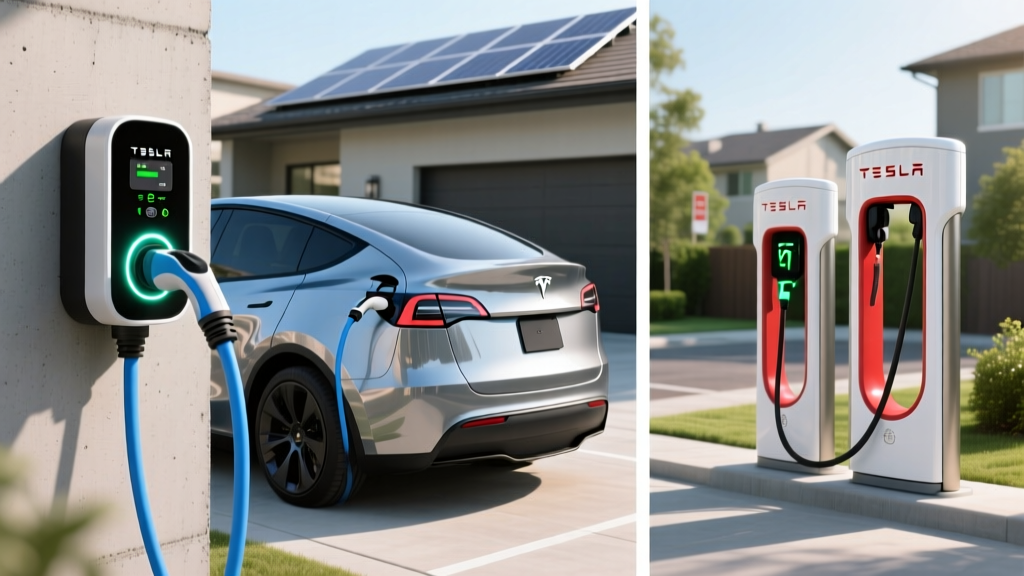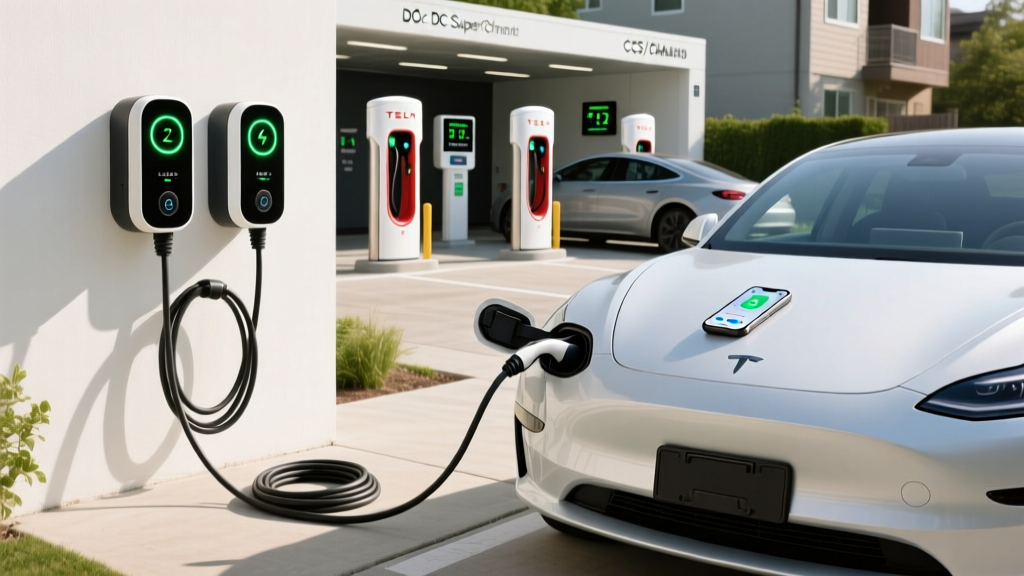
If you've been researching electric vehicles, you've likely encountered the term charging bus — and it has nothing to do with transit. In EV electrical engineering, the charging bus refers to the power pathway that delivers electricity from the grid, through your charging equipment, into the vehicle's onboard charger and ultimately the high-voltage battery pack. Understanding how this bus works — its voltage limits, current capacity, and connector standards — is the key to understanding why your EV charges at the speed it does, and what you can do to make it charge faster at home or on the road.
This guide breaks down the entire EV charging bus ecosystem in 2026: the three charging levels, home installation requirements and costs, connector compatibility across brands, real cost-per-mile math, and the specific hardware we recommend.
The Three Levels of the EV Charging Bus: Speeds Explained
Every EV sold in the United States can accept power from three distinct charging levels. The difference between them comes down to voltage, amperage, and whether AC power is converted to DC inside the vehicle (Level 1 and 2) or outside it (DC Fast Charging). Here's what each level actually delivers in practical terms.
| Level | Voltage / Amps | Max Power (kW) | Miles of Range Added per Hour | Typical Use Case |
|---|---|---|---|---|
| Level 1 | 120V / 12–16A | 1.4–1.9 kW | 3–5 miles | Overnight trickle, emergency top-ups, PHEVs |
| Level 2 | 240V / 16–80A | 3.8–19.2 kW | 12–75 miles | Daily home/workplace charging (primary method) |
| DC Fast Charging (DCFC) | 400–800V+ DC | 50–350 kW | 150–1,000+ miles/hr (peak) | Road trips, rapid top-ups (10–80% in 15–40 min) |
Critical distinction: kW (kilowatts) measures power — the rate at which energy flows. kWh (kilowatt-hours) measures energy — the total capacity stored in your battery. A 75 kWh battery charged at 10 kW takes roughly 7.5 hours from empty to full (minus losses). Mixing these units is the most common mistake in EV discussions.
Charging Time Examples by Battery Size (10–80% State of Charge)
Most EV owners charge between 10% and 80% State of Charge (SoC) on DC fast chargers, because charging slows significantly above 80% to protect battery health. Here's what that looks like across common battery sizes:
- 60 kWh battery (e.g., base Hyundai Kona Electric): ~20 minutes at a 150 kW DCFC (peak), ~4.5 hours on a 10 kW Level 2 home charger.
- 82 kWh battery (e.g., Tesla Model Y Long Range): ~22 minutes at a 250 kW Supercharger, ~5.5 hours on an 11.5 kW Level 2.
- 100 kWh battery (e.g., GMC Sierra EV): ~28 minutes at a 350 kW DCFC, ~7 hours on a 14.4 kW Level 2.
These figures assume optimal battery temperature (preconditioned) and a sustained charge curve. In reality, DC fast charging peaks early and tapers — a 250 kW-rated vehicle may only sustain that rate for 3–5 minutes before stepping down. Always evaluate chargers and vehicles by their 10–80% time, not the peak kW number.
Home Charger Installation: Electrical Requirements and Costs
Level 2 home charging is the backbone of practical EV ownership. Over 80% of all EV charging happens at home, and a properly installed Level 2 station means you start every morning with a full battery. But installation isn't as simple as plugging in an appliance — here's what the electrical system demands.
What Your Electrical Panel Needs to Support
A Level 2 charger requires a dedicated 240-volt circuit, identical to what an electric dryer or oven uses. The specific amperage depends on the charger you choose:
- 16A circuit (3.8 kW): Requires a 20A breaker. Works on most panels, including older 100A service.
- 32A circuit (7.7 kW): Requires a 40A breaker. The most popular home charger size. Needs a panel with at least 40A of spare capacity.
- 48A circuit (11.5 kW): Requires a 60A breaker. Delivers faster charging but demands a 200A panel with meaningful headroom.
- 80A circuit (19.2 kW): Requires a 100A breaker. Found on premium installations and some commercial setups. Rarely needed for residential use.
Panel upgrade reality: Many homes built before 2000 have 100A or 150A electrical service. Adding a 48A EV charger to an already-loaded 100A panel often requires a panel upgrade to 200A, which costs between $1,500 and $3,500 depending on your utility and local code. This is the single biggest variable in home charging cost, and it's frequently overlooked in online estimates.
Installation Cost Breakdown
| Component | Cost Range | Notes |
|---|---|---|
| Level 2 Charger Equipment | $300 – $750 | Smart WiFi-enabled units; basic non-smart units from $200 |
| Electrician Labor (standard install) | $400 – $1,200 | Depends on run length from panel to garage/carport |
| Electrical Permit | $50 – $250 | Required in most jurisdictions; varies by municipality |
| Panel Upgrade (if needed) | $1,500 – $3,500 | 100A → 200A service upgrade; not always required |
| Total (no panel upgrade) | $750 – $2,200 | Typical scenario for homes with 200A service |
| Total (with panel upgrade) | $2,250 – $5,700 | Older homes or heavily loaded panels |
Some utility companies offer rebates of $250–$500 for Level 2 charger installation, and certain states provide additional incentives. Check your local utility's EV program page before scheduling an electrician. The IRS also offers the Residential Clean Energy Credit (30% of equipment and installation costs, up to $1,000 annually) through 2032 for qualifying home charging equipment — though eligibility depends on your specific tax situation.
Connector Compatibility: Which Plug Does Your EV Use?
The connector landscape has shifted dramatically. As of 2026, the North American Charging Standard (NACS) — originally developed by Tesla — has become the dominant connector for new EVs, while CCS1 remains common on vehicles sold between 2018 and 2024. CHAdeMO is effectively legacy.
| Connector | Brands Using It (New Vehicles) | DC Fast Charge Availability |
|---|---|---|
| NACS (Tesla standard) | Tesla (all), Ford, GM, Rivian, Volvo, Polestar, Mercedes-Benz, BMW, Hyundai, Kia, Subaru | Tesla Supercharger network (20,000+ stalls), plus NACS-equipped Electrify America and EVgo stations |
| CCS1 | Legacy VW ID.4, older BMW i4/iX, older Hyundai Ioniq 5, Audi Q4 e-tron (pre-2025), Porsche Taycan | Electrify America, EVgo, ChargePoint DCFC, Ionity (Europe) |
| CHAdeMO | Nissan Leaf (discontinued after 2025), Mitsubishi Outlander PHEV (older) | Limited and declining network; some Electrify America legacy stalls |
Adapter reality: If you own a CCS1-equipped EV and want to use Tesla Superchargers, you need a CCS-to-NACS adapter. Tesla sells an official adapter for approximately $250, and third-party options from Lectron and A2Z are available for $150–$200. These adapters support DC fast charging up to 150–250 kW depending on the model. Conversely, NACS-equipped vehicles (like the Ford F-150 Lightning) can use legacy CCS stations with a NACS-to-CCS adapter.
For Level 2 home charging, the situation is simpler: all home Level 2 chargers use a J1772 connector (or NACS for Tesla wall connectors), and adapters between the two are inexpensive and widely available. Every EV sold in the US includes a J1772 inlet or adapter.
Cost to Charge: Per-Mile Math vs. Gasoline
The economic case for EV charging hinges on your local electricity rates and how you charge. Here's a realistic breakdown using national average energy prices for 2026.
| Scenario | Rate ($/kWh) | Cost Per Mile* | Equivalent Gas MPG |
|---|---|---|---|
| Home, off-peak (utility time-of-use rate) | $0.08 – $0.12 | $0.024 – $0.036 | 100 – 150 MPG equivalent |
| Home, standard residential rate | $0.14 – $0.18 | $0.042 – $0.054 | 65 – 85 MPG equivalent |
| Public Level 2 (workplace, retail) | $0.20 – $0.35 | $0.060 – $0.105 | 35 – 55 MPG equivalent |
| DC Fast Charging (Electrify America, EVgo) | $0.35 – $0.55 | $0.105 – $0.165 | 22 – 35 MPG equivalent |
| *Based on 3.0 miles per kWh (typical EV efficiency, ~333 Wh/mile). Gas comparison at $3.40/gallon. | |||
The takeaway: home charging at off-peak rates delivers fueling costs roughly one-quarter to one-third of an equivalent 30 MPG gas car. Even at standard residential rates, EVs are significantly cheaper to fuel. However, exclusive reliance on DC fast charging erases much of the cost advantage — which is why home Level 2 installation is the most impactful financial decision an EV owner can make.
For a driver covering 12,000 miles per year with home off-peak charging at $0.10/kWh, annual fuel cost is approximately $400. A 30 MPG gas car at $3.40/gallon costs $1,360 for the same distance — a $960 annual savings.
Recommended Level 2 Home Chargers (2026)
After testing dozens of Level 2 units across multiple EVs and home electrical setups, here are the chargers that deliver the best combination of power output, reliability, smart features, and value. All units listed below are UL-listed (or ETL-listed) for safety compliance.
Emporia Vue Level 2 Smart Charger
- Power Output: 48A (11.5 kW) on a 60A circuit; configurable down to 16A
- Connector: J1772 (NACS adapter included)
- Cable Length: 24 feet
- Smart Features: WiFi scheduling, energy monitoring via Emporia app, solar integration, time-of-use optimization
- Price: ~$400
- Best For: Budget-conscious buyers who want full smart features and energy tracking
ChargePoint Home Flex
- Power Output: Up to 50A (12 kW) on a 60A circuit; adjustable from 16A–50A via DIP switches
- Connector: J1772 or NACS (selectable at purchase)
- Cable Length: 23 feet
- Smart Features: WiFi, ChargePoint app scheduling, Alexa integration, detailed charging history
- Price: ~$550 (J1772) / ~$600 (NACS)
- Best For: Owners who want flexible amperage tuning and broad network ecosystem integration
Tesla Wall Connector (Gen 4)
- Power Output: 48A (11.5 kW) on a 60A circuit
- Connector: NACS native (J1772 adapter available separately)
- Cable Length: 24 feet
- Smart Features: WiFi firmware updates, power sharing (link up to 6 units on one circuit), Tesla app integration
- Price: ~$475
- Best For: Tesla owners and NACS-equipped EV drivers who want a clean, reliable unit with power-sharing capability
Grizzl-E Smart Level 2
- Power Output: 40A (9.6 kW) on a 50A circuit
- Connector: J1772 or NACS (selectable)
- Cable Length: 24 feet
- Smart Features: OCPP-compatible, works with multiple apps, adjustable amperage
- Price: ~$500
- Best For: Outdoor installations (rated to -40°F), Canadian-made, extremely durable build
Safety, Code, and Installation Best Practices
Electrical safety isn't optional — and cutting corners on EV charger installation can create fire risk, void your homeowner's insurance, and fail inspection. Here's what code and best practice require:
- Dedicated circuit: Your Level 2 charger must have its own dedicated breaker — it cannot share a circuit with other outlets or appliances. This is required by NEC (National Electrical Code) Article 625.
- GFCI protection: The 2023 NEC update requires GFCI (Ground Fault Circuit Interrupter) protection for all EV charging outlets rated 150V to ground or less. Most quality hardwired chargers include built-in GFCI protection. If you install a NEMA 14-50 receptacle instead of hardwiring, the breaker itself must be GFCI-type — these cost $80–$150 more than standard breakers.
- Outdoor rating: If your charger is installed outdoors (carport, driveway), it must carry a NEMA 4 or NEMA 4X rating for weather resistance. All chargers recommended above meet this standard.
- Permit and inspection: Most municipalities require an electrical permit for EV charger installation. The permit typically costs $50–$250, and a city inspector will verify the work meets code before closing the permit. Skipping this step can create liability issues if a fire or insurance claim arises.
- Wire gauge: A 60A circuit requires 6 AWG copper wire (or 4 AWG aluminum). Your electrician will size this correctly, but if you're running a long cable (over 100 feet from panel to charger), voltage drop calculations may require upsizing to 4 AWG copper.
Hardwired vs. plug: Hardwired installations (charger directly connected to the circuit, no receptacle) are generally preferred for 48A+ chargers. They eliminate the NEMA receptacle as a potential failure point, avoid GFCI breaker requirements, and often cost less in labor. A NEMA 14-50 plug offers portability — useful if you rent and want to take the charger when you move — but limits you to 40A continuous (50A breaker) and requires the more expensive GFCI breaker.
Frequently Asked Questions
How much does it cost to install a home EV charger?
A typical Level 2 home charger installation costs $750 to $2,200 if your electrical panel has sufficient capacity (200A service with available breaker slots). If a panel upgrade from 100A to 200A is needed, total costs range from $2,250 to $5,700. Equipment itself costs $300–$750; the remainder is electrician labor ($400–$1,200) and permit fees ($50–$250). Always get a load calculation from a licensed electrician before assuming your panel can handle the additional circuit.
How fast will each charging level add range?
Level 1 (120V) adds approximately 3–5 miles of range per hour — adequate for PHEVs with small batteries, but impractical for full BEVs. Level 2 (240V) adds 12–75 miles per hour depending on amperage (3.8–19.2 kW). A 48A / 11.5 kW Level 2 charger adds roughly 35–40 miles per hour, enough to fully replenish most EVs overnight. DC fast charging adds 150–1,000+ miles per hour at peak rates, but sessions are measured in minutes (10–80% in 15–40 minutes) rather than sustained hourly rates.
Which connector/charger is compatible with my EV?
Check your vehicle's charging port: if it has a single small port, it's NACS (Tesla and most 2025+ models from Ford, GM, Rivian, Hyundai, Kia, and others). If it has a larger port with two additional DC pins at the bottom, it's CCS1 (common on 2018–2024 models). CHAdeMO has a distinctive round connector and is found primarily on older Nissan Leafs. For home Level 2 charging, any J1772 charger works with any EV (Tesla includes a J1772 adapter, and aftermarket NACS-to-J1772 adapters cost $50–$100). For DC fast charging, you may need a CCS-to-NACS adapter ($150–$250) depending on your vehicle and preferred charging network.
How much does charging cost per mile vs gas?
At home off-peak rates ($0.08–$0.12/kWh), EV charging costs $0.024–$0.036 per mile — equivalent to a gas car achieving 100–150 MPG. At standard residential rates ($0.14–$0.18/kWh), that rises to $0.042–$0.054 per mile (65–85 MPG equivalent). DC fast charging at public rates ($0.35–$0.55/kWh) costs $0.105–$0.165 per mile, comparable to a 22–35 MPG gas vehicle. For most owners who charge primarily at home, annual fuel savings versus a 30 MPG gas car exceed $900–$1,100 based on 12,000 miles driven.
What electrical upgrades might I need?
The most common upgrade is a panel upgrade from 100A to 200A service ($1,500–$3,500), required when your existing panel lacks sufficient spare capacity for a new 40A–60A breaker. Other potential upgrades include: running a new conduit from the panel to the garage ($200–$800 depending on distance), upgrading the meter socket if the utility requires it, or installing a smart panel/load management system ($300–$600) that dynamically limits charger draw when other appliances are running — this can avoid a panel upgrade entirely in some cases. A licensed electrician will perform a load calculation (NEC Article 220) to determine exactly what your home requires.
Can I use a regular 120V outlet to charge my EV?
Yes — every EV comes with a Level 1 charging cord that plugs into a standard 120V household outlet. However, at 1.4–1.9 kW, you'll add only 3–5 miles of range per hour. This means fully charging a 75 kWh battery from empty would take approximately 40–50 hours. Level 1 charging is practical for plug-in hybrids (which have smaller batteries of 10–20 kWh) or for BEV owners who drive fewer than 30 miles per day and can top up overnight. For most BEV owners, Level 1 is an emergency backup, not a daily solution.
Does the charging bus limit my EV's charge speed?
Yes — and this is where the engineering matters. Your vehicle's onboard charger (for Level 1 and Level 2) has a maximum power acceptance, typically 7.7 kW to 19.2 kW depending on the model. Even if you install a 19.2 kW charger at home, a vehicle with an 11.5 kW onboard charger (like the Hyundai Ioniq 5) will only accept 11.5 kW. For DC fast charging, the vehicle's battery management system and the voltage architecture (400V vs 800V) determine peak acceptance. Vehicles on 800V architectures (Hyundai Ioniq 5, Kia EV6, Porsche Taycan, GMC Sierra EV) can accept 250–350 kW at peak, while 400V vehicles typically peak at 150–220 kW. Always match your home charger output to your vehicle's onboard charger capacity — oversizing wastes money without adding speed.