If you're new to electric vehicles, charging a car works differently than filling a gas tank — but once you understand the levels, speeds, and costs, it becomes one of the easiest parts of EV ownership. Most drivers charge at home overnight and only use public DC fast chargers for road trips. This guide breaks down every number you need: kilowatt charge rates, installation costs, connector types, and what you'll actually pay per mile in 2026.
The Three Charging Levels Explained
EV charging is categorized into three levels based on voltage and power delivery. The critical distinction to internalize: kW (kilowatts) measures power — how fast energy flows into your battery. kWh (kilowatt-hours) measures energy — how much your battery stores. A 60 kWh battery charged at 10 kW takes roughly 6 hours. Confusing these two is the single most common EV literacy gap.
| Level | Voltage | Power (kW) | Miles of Range Added Per Hour | Best For |
|---|---|---|---|---|
| Level 1 | 120V AC | 1.0–1.4 kW | 3–5 mi/hr | Overnight top-offs, PHEVs, low-mileage drivers |
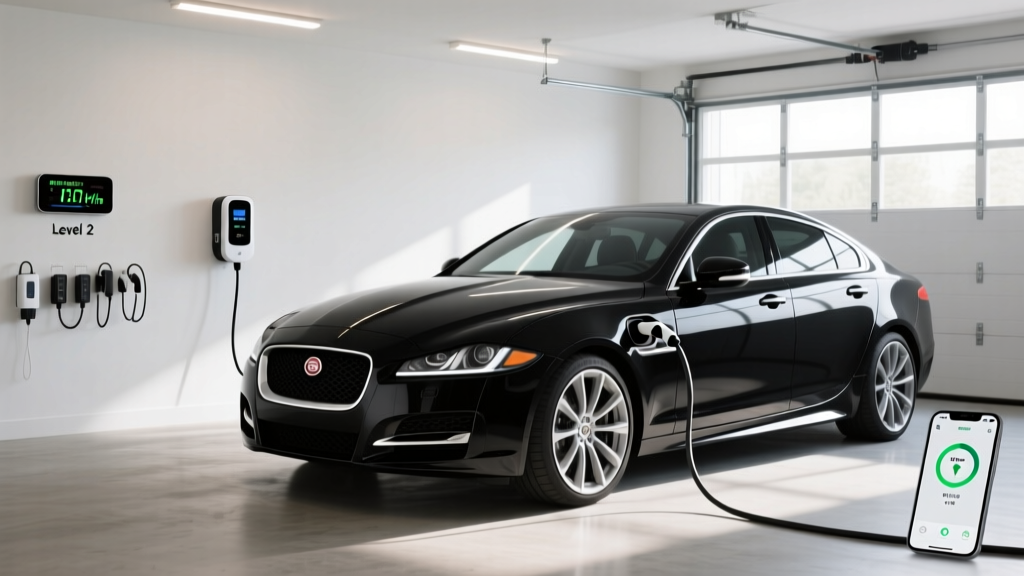
| Level 2 | 240V AC | 3.3–19.2 kW | 12–75 mi/hr | Home daily charging, workplace, destination |
| DC Fast Charge | 400–800V DC | 50–350+ kW | 150–1,200+ mi/hr (peak) | Road trips, highway corridors |
A few real-world caveats: Level 2 miles-per-hour varies dramatically by vehicle acceptance rate. A Ford F-150 Lightning with an 80-amp onboard charger can accept 19.2 kW, adding roughly 30 miles of range per hour. A base Nissan Leaf tops out at 7.2 kW regardless of how powerful your wall unit is. DC fast charging speeds are peak rates — the charge curve tapers significantly above 80% state of charge to protect battery health, which is why manufacturers quote 10–80% times rather than full-charge times.
How Much Does It Cost to Install a Home EV Charger?
Home Level 2 charging is the backbone of practical EV ownership, but installation costs vary wildly depending on your electrical panel's capacity and the distance from your panel to the charging location. Here's a realistic 2026 cost breakdown for a standard 48-amp (hardwired) or 40-amp (NEMA 14-50 outlet) Level 2 installation:
| Component | Low-End | High-End | Notes |
|---|---|---|---|
| Level 2 charger (equipment) | $350 | $750 | 40–48A smart charger, 24ft cable |
| Electrician labor (standard run) | $500 | $1,500 | Panel to garage, <30ft run, conduit |
| Electrical permit | $50 | $250 | Varies by municipality |
| NEMA 14-50 outlet (if not hardwired) | $75 | $200 | Industrial-grade receptacle recommended |
| Subtotal (no panel upgrade) | $975 | $2,700 | Average falls around $1,200–$1,800 |
| Panel upgrade (100A → 200A) | $1,500 | $4,000 | Required if existing panel lacks capacity |
The Panel Upgrade Reality
Homes built before 1990 often have 100-amp electrical service. Adding a 48-amp continuous-draw EV circuit (which requires a 60-amp breaker by National Electrical Code) may push total load beyond your panel's rating. A licensed electrician will perform a load calculation — summing your HVAC, water heater, dryer, oven, and EV charger draw against your panel's capacity. If you're short on headroom, options include:
- Panel upgrade to 200A: The most common fix, costing $1,500–$4,000 depending on utility requirements.
- Lower-amperage charger: A 32-amp charger on a 40-amp breaker draws less, delivering about 25 miles of range per hour — sufficient for most daily driving.
- Smart load-management devices: Products like the Emporia VUE or manufacturer-integrated panels (e.g., SPAN) can dynamically throttle charger draw to avoid overloading the panel.
Always hire a licensed electrician and pull a permit. Unpermitted EV charger installations can void homeowner's insurance and create fire risk.
Which Connector Is Compatible With My EV?
The connector landscape shifted dramatically between 2023 and 2026, with the North American Charging Standard (NACS) — originally Tesla's proprietary connector — becoming the dominant standard. Here's where each brand stands for the 2026 model year:
| Connector | Brands Using Natively | Adapter Needed? |
|---|---|---|
| NACS (J3400) | Tesla (all), Ford, GM, Rivian, Volvo, Polestar, Hyundai, Kia, BMW, Lucid, Mercedes-Benz | CCS-to-NACS adapter for legacy CCS vehicles |
| CCS1 | VW (older), some remaining 2024–2025 inventory | NACS-to-CCS adapter for Tesla Superchargers |
| CHAdeMO | Nissan Leaf (legacy, production ending) | Limited adapter options; network declining |
What this means practically: If you buy a new EV in 2026, it almost certainly has a NACS port. Ford, GM, and Rivian owners who purchased 2024–2025 models with CCS ports can use a manufacturer-supplied or aftermarket NACS adapter to access Tesla Superchargers — the largest fast-charging network in North America with over 28,000 stalls. CHAdeMO is effectively a legacy standard; new Nissan models use NACS.
For home Level 2 charging, the J1772 connector remains universal across all non-Tesla EVs sold before 2025. Most modern home chargers now ship with either a J1772 plug or a NACS plug; adapters between the two cost $50–$150.
How Much Does Charging Cost Per Mile vs. Gas?
Charging costs depend entirely on where and when you plug in. Electricity rates vary by state, time of day, and utility plan. Here are representative 2026 scenarios for a midsize EV averaging 3.5 miles per kWh (roughly 29 kWh/100 mi — typical of a Tesla Model Y or Hyundai Ioniq 5):
| Scenario | Rate ($/kWh) | Cost Per Mile | Notes |
|---|---|---|---|
| Home, off-peak utility rate | $0.08–$0.12 | $0.02–$0.03 | Best-case: overnight TOU plan |
| Home, average US residential | $0.16–$0.18 | $0.05 | National average ~$0.17/kWh |
| Public Level 2 (ChargePoint, etc.) | $0.25–$0.49 | $0.07–$0.14 | Varies by location and network |
| DC Fast Charge (Electrify America, EVgo) | $0.35–$0.55 | $0.10–$0.16 | Peak rates in urban areas |
| Tesla Supercharger (V3/V4) | $0.25–$0.40 | $0.07–$0.11 | Membership pricing available |
| Gasoline comparison (28 MPG combined @ $3.40/gal): $0.12/mile | |||
Source: U.S. Energy Information Administration for residential electricity rates.
The takeaway: home charging on an off-peak utility plan is 4–6× cheaper per mile than gasoline. Even public DC fast charging is cost-competitive with gas at current prices. The savings compound — a driver covering 12,000 miles/year saves $800–$1,200 annually by charging at home versus buying gas.
Charging Time Examples: 10–80% by Battery Size
The 10–80% metric is the industry standard because charging above 80% slows dramatically due to the charge curve taper. Here's what to expect with common battery sizes and charger types:
DC Fast Charging (10–80%)
- 60 kWh battery (e.g., base Nissan Leaf, Chevy Equinox EV): ~20–25 minutes on a 150 kW charger; ~35–40 minutes on a 50 kW charger.
- 80 kWh battery (e.g., Tesla Model Y, Ford Mustang Mach-E): ~18–22 minutes on a 250 kW charger (peak); ~28–35 minutes on a 150 kW charger.
- 100+ kWh battery (e.g., Ford F-150 Lightning Extended Range, GMC Sierra EV): ~25–35 minutes on a 350 kW charger; ~40–50 minutes on a 150 kW charger.
Home Level 2 Charging (0–100%)
- 60 kWh battery on 48A/11.5 kW charger: ~5.5 hours
- 80 kWh battery on 48A/11.5 kW charger: ~7 hours
- 100 kWh battery on 48A/11.5 kW charger: ~9 hours
For overnight home charging, even a 32-amp (7.7 kW) Level 2 unit replenishes 200–250 miles of range in 8 hours — more than enough for 95% of daily driving needs.
Recommended Home Chargers for 2026
Based on power output, build quality, smart features, and connector options, these are the top home Level 2 chargers currently available:
ChargePoint Home Flex (NACS or J1772)
- Power output: Up to 11.5 kW (48A) on a 60A circuit; configurable down to 16A
- Connector: Available in NACS or J1772
- Cable length: 24 ft
- Smart features: Wi-Fi, scheduling, energy tracking, Alexa integration, utility TOU integration
- Price: ~$599
- Verdict: Best overall for most homes; flexible amperage means it works on older panels
Wall Connector (Tesla)
- Power output: Up to 11.5 kW (48A)
- Connector: NACS native; J1772 adapter available
- Cable length: 24 ft
- Smart features: Wi-Fi, power sharing (daisy-chain up to 6 units), OTA updates, Tesla app integration
- Price: ~$475
- Verdict: Best value for Tesla owners; cleanest integration with NACS vehicles
Emporia Level 2 EV Charger
- Power output: Up to 11.5 kW (48A)
- Connector: J1772 (NACS adapter sold separately)
- Cable length: 24 ft
- Smart features: Wi-Fi, solar integration, real-time energy monitoring, load management with Emporia VUE panel monitor
- Price: ~$399
- Verdict: Best budget smart charger; ideal if you have solar panels or need load management
Grizzl-E Smart (United Chargers)
- Power output: Up to 10 kW (40A) on a 50A circuit
- Connector: J1772 or NACS
- Cable length: 24 ft
- Smart features: Wi-Fi, OCPP compatibility, adjustable amperage, extreme-cold rated (-40°F)
- Price: ~$549
- Verdict: Best for cold climates and outdoor installs; rugged Canadian-built unit
Safety and Electrical Code Considerations
The National Electrical Code (NEC) treats EV charging as a continuous load — defined as operating for 3 hours or more. This means the circuit must be rated at 125% of the charger's maximum draw. A 48-amp charger requires a 60-amp breaker. A 40-amp charger requires a 50-amp breaker. Never undersize the breaker or wire gauge.
- Dedicated circuit: Your EV charger must have its own dedicated circuit — not shared with other appliances.
- Wire gauge: 6 AWG copper for 48A/60A circuits; 8 AWG for 32A/40A circuits (verify with your electrician per NEC Table 310.16).
- GFCI protection: NEC 2023 and later require GFCI protection for all 120V and 240V receptacles used for EV charging in garages. Hardwired installations may have different requirements depending on jurisdiction.
- Outdoor rating: If your charger mounts outside, ensure it carries a NEMA 4 (weatherproof) rating. Most major chargers (ChargePoint, Tesla, Grizzl-E) are rated for outdoor use, but the connection point and conduit must also be weather-sealed.
- Permit and inspection: Nearly all jurisdictions require an electrical permit and post-installation inspection. Skipping this risks insurance denial in the event of an electrical fire.
For authoritative installation guidance, see the National Fire Protection Association's NEC resources and consult your local building department.
Public Charging Networks: What to Expect in 2026
Public charging has improved significantly but still requires planning. The major networks and their current status:
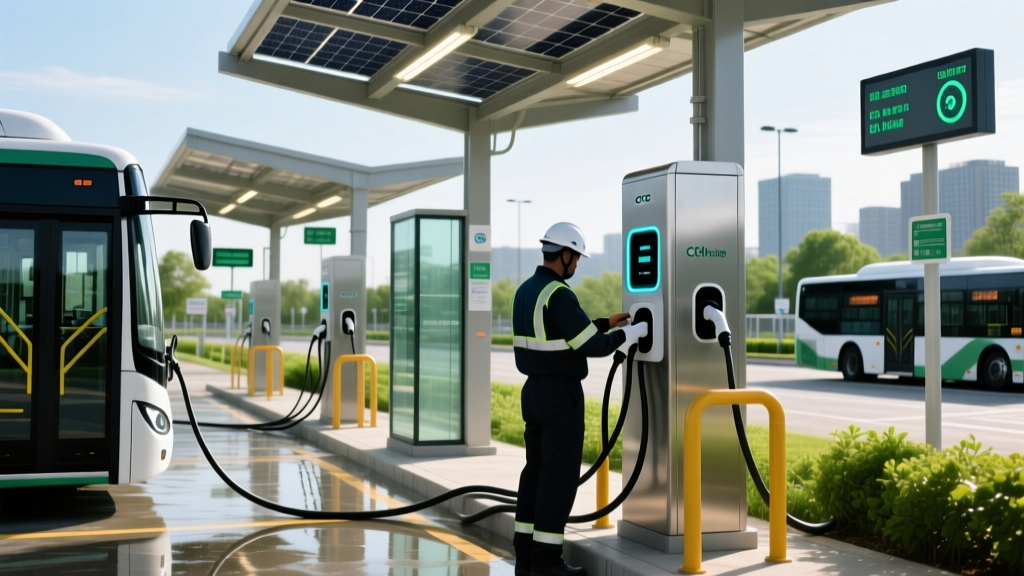
- Tesla Supercharger: Now open to non-Tesla EVs (via built-in Magic Dock adapter or your vehicle's NACS port). Over 28,000 stalls in North America. V3 stalls deliver 250 kW; V4 stalls deliver up to 350 kW. Reliability remains the industry benchmark — typically 97%+ uptime.
- Electrify America: ~5,000 DC fast stalls, primarily along highway corridors. Peak speeds up to 350 kW. Reliability has improved with newer hardware but remains inconsistent at older sites. Pricing: $0.35–$0.55/kWh or subscription plans.
- EVgo: ~3,500 DC fast stalls, concentrated in urban areas and shopping centers. Partnership with GM for new 350 kW stalls. Pricing: $0.35–$0.48/kWh.
- ChargePoint: Primarily Level 2 destination charging (workplaces, retail, hotels) with growing DC fast presence. App shows real-time availability and pricing.
For real-time public charger availability and reliability data, fueleconomy.gov provides EV efficiency comparisons to help estimate range and charging needs by model.
Frequently Asked Questions
Can I charge my EV with a regular household outlet?
Yes — that's Level 1 charging using a standard 120V outlet. You'll add roughly 3–5 miles of range per hour. For a PHEV with a 30-mile electric range, overnight Level 1 charging is usually sufficient. For a full BEV with a 250+ mile battery, Level 1 is impractical as a primary strategy — a full charge could take 40–60 hours.
Do I need a smart charger, or is a basic unit fine?
A basic ("dumb") Level 2 charger works perfectly for charging. Smart features — scheduling, energy tracking, utility TOU integration, solar pairing — are conveniences that can save money on time-of-use electricity plans. If your utility offers off-peak EV rates, a smart charger's scheduling feature typically pays for itself within 12–18 months.
Will frequent DC fast charging damage my battery?
Modern battery management systems (BMS) throttle charge speed and manage thermal load to minimize degradation. Studies from battery research institutions show that exclusive DC fast charging increases annual degradation by roughly 0.5–1.0% compared to Level 2 charging. For a battery warrantied to retain 70% capacity over 8 years/100,000 miles, this difference is marginal. Still, home Level 2 charging is gentler and cheaper — use DC fast charging for road trips, not daily fills.
What if my home has a 100-amp panel?
A 100-amp panel can often support a 32-amp (7.7 kW) Level 2 charger if your other loads are modest (gas appliances, no electric heat). An electrician's load calculation will determine this. If you need a 48-amp charger or run electric HVAC and appliances, a panel upgrade to 200A ($1,500–$4,000) is likely required.
How does cold weather affect charging speed?
Lithium-ion batteries charge slower when cold. Below freezing, a battery that normally accepts 250 kW may initially accept only 50–80 kW until it warms up. Most modern EVs have battery preconditioning — when you navigate to a charger, the thermal management system preheats the pack en route to restore peak charge speed. Always navigate to your DC fast charger via the car's built-in nav to trigger preconditioning.
Can I use a dryer outlet for EV charging?
A NEMA 14-30 (dryer) outlet provides 240V/30A, which supports roughly 5.8 kW (24 amps continuous) — adequate for overnight charging of most EVs. However, NEC code requires a dedicated circuit for EV charging. You cannot share the dryer circuit. Have an electrician install a dedicated NEMA 14-50 or hardwired connection for safe, code-compliant charging.