A 600-mile range electric car sounds like freedom from charging logistics. Lucid's Air Grand Touring achieves an EPA-estimated 516 miles, and upcoming solid-state platforms from Toyota and Samsung SDI target the 600-mile mark by the late 2020s. But here's the physics problem that range-chasing headlines skip: the bigger the battery, the more energy you need to push into it, and the more your charging setup matters.
A 118 kWh battery (the size in Lucid's longest-range variants) or a hypothetical 130-150 kWh solid-state pack doesn't just need "a charger." It needs the right charging infrastructure — adequate home electrical service, a Level 2 unit with sufficient amperage, and awareness of DC fast-charging curve limitations. This guide breaks down exactly what charging a 600-mile range electric car requires, from your garage panel to cross-country road trips.
Charging Levels Explained: kW, Miles Per Hour, and Why They Matter
Before plugging in anything, understand the three charging levels and what they deliver. kW (kilowatts) measures power — how fast energy flows. kWh (kilowatt-hours) measures energy — the battery's total capacity. A 130 kWh battery charged at 11.5 kW takes roughly 11.3 hours from 0-100%. That math is non-negotiable.
| Level | Voltage / Amperage | Max Power (kW) | Miles of Range Added Per Hour | Best Use Case |
|---|---|---|---|---|
| Level 1 | 120V / 12-16A | 1.4 - 1.9 kW | 3 - 5 miles | Overnight trickle, PHEVs, emergency |
| Level 2 | 240V / 16-80A | 3.8 - 19.2 kW | 14 - 60 miles | Daily home charging, workplace |
| DC Fast (Level 3) | 400V-900V DC | 50 - 350+ kW | 150 - 800+ miles/hr (peak) | Road trips, rapid top-ups |
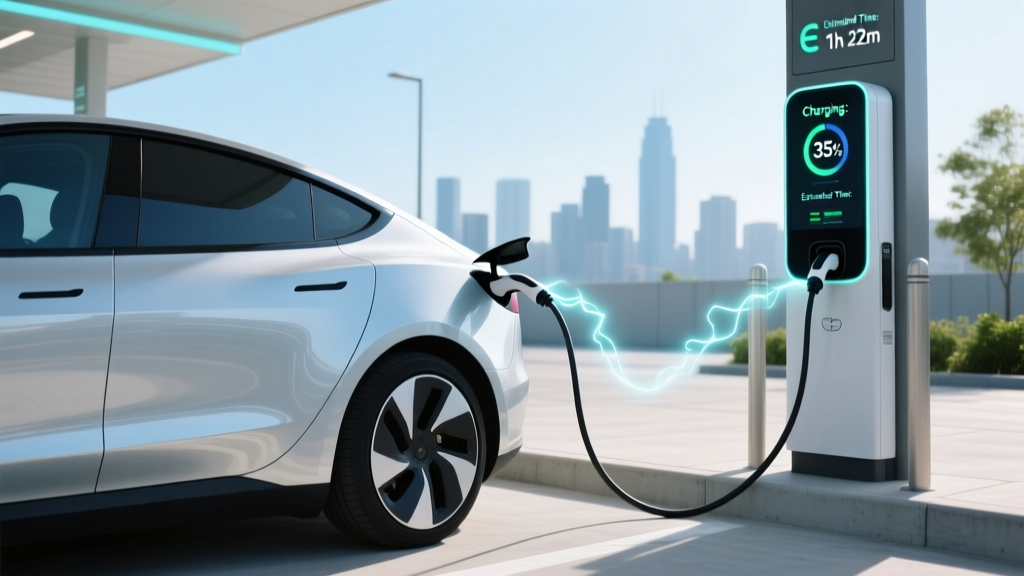
For a 600-mile range electric car with a ~130 kWh usable battery, Level 1 is essentially useless for daily needs — it would take over 68 hours for a full charge. Level 2 at 48 amps (11.5 kW) is the practical home baseline, delivering a full charge in about 11-12 hours. DC fast charging at 250+ kW can add 300 miles in roughly 20 minutes, though charge-curve taper above 80% SoC (State of Charge) means the final 20% takes disproportionately longer.
How Much Does It Cost to Install a Home EV Charger?
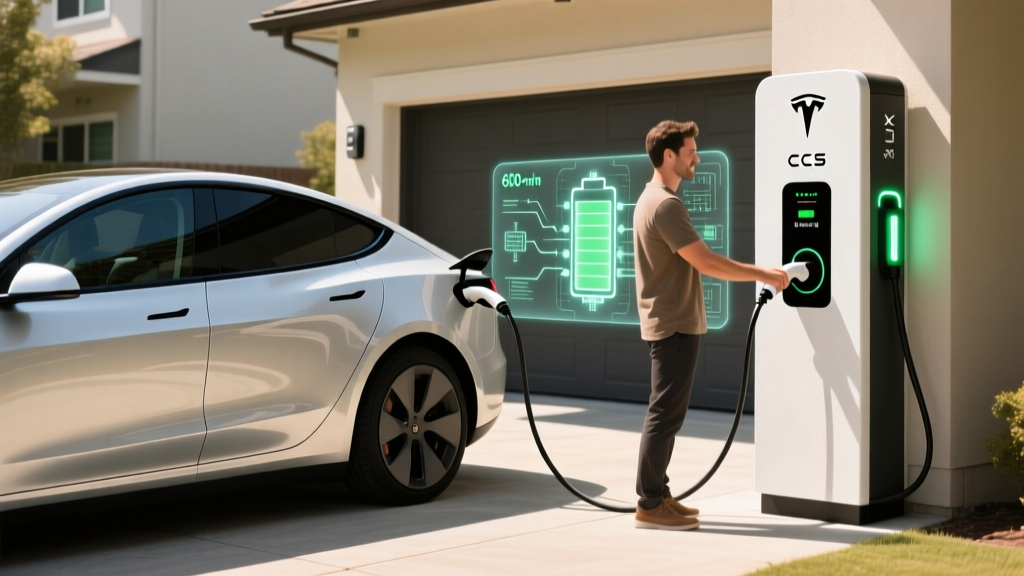
Home Level 2 installation for a high-capacity EV isn't a simple plug-and-play job. A 600-mile range electric car with a 130+ kWh battery benefits from a 48-amp or higher charger, which requires a dedicated 60-amp (or larger) circuit on a 240V line. Here's what that actually costs:
| Component | Low Estimate | High Estimate | Notes |
|---|---|---|---|
| Level 2 Charger (48A hardwired) | $400 | $750 | ChargePoint Home Flex, Emporia, Wallbox |
| Electrician labor (240V/60A circuit) | $600 | $1,500 | Varies by run distance from panel |
| Electrical permit | $50 | $200 | Required in most jurisdictions |
| Panel upgrade (100A → 200A) | $1,500 | $3,500 | Needed if panel lacks spare capacity |
| Conduit, wiring, junction box | $100 | $400 | Materials for longer garage runs |
| Total (no panel upgrade) | $1,150 | $2,850 | |
| Total (with panel upgrade) | $2,650 | $6,350 | Common in homes built before 2000 |
The panel upgrade is the wildcard. Homes with 100-amp service or panels already near capacity (common with electric ranges, dryers, and HVAC) may need a 200-amp upgrade before adding a 60-amp dedicated EV circuit. A licensed electrician can perform a load calculation to determine if your panel has headroom. The U.S. Department of Energy recommends this assessment before purchasing equipment.
Home Charging Speed: How Fast Will a Level 2 Charger Fill a 130 kWh Battery?
The charging time for a 600-mile range electric car depends on your Level 2 amperage and the vehicle's onboard charger acceptance rate. Most large-battery EVs accept 11.5 kW (48A) to 19.2 kW (80A) on Level 2.
| Charger Amperage | Power (kW) | 10-80% Time (approx.) | Miles Added Per Hour | Common Equipment |
|---|---|---|---|---|
| 32A | 7.7 kW | ~11.5 hours | ~23 mi/hr | Basic portable units |
| 40A | 9.6 kW | ~9.5 hours | ~28 mi/hr | Tesla Wall Connector (40A config) |
| 48A | 11.5 kW | ~7.8 hours | ~34 mi/hr | ChargePoint Home Flex, Emporia V2 |
| 60A | 14.4 kW | ~6.3 hours | ~42 mi/hr | Ford Charge Station Pro |
| 80A | 19.2 kW | ~4.7 hours | ~56 mi/hr | Requires 100A circuit; limited vehicle support |
For a 600-mile EV, a 48A hardwired charger is the sweet spot: it refills roughly 340 miles of range overnight (10 hours), requires a manageable 60A circuit, and works with most 200-amp residential panels. Going to 80A demands a 100A dedicated circuit — feasible but costly and overkill unless you regularly drain the battery below 20%.
DC Fast Charging: Road Trip Reality for a 600-Mile EV
The advantage of a massive battery shows on road trips: fewer stops. But when you do stop, charging speed and curve behavior determine your total travel time.
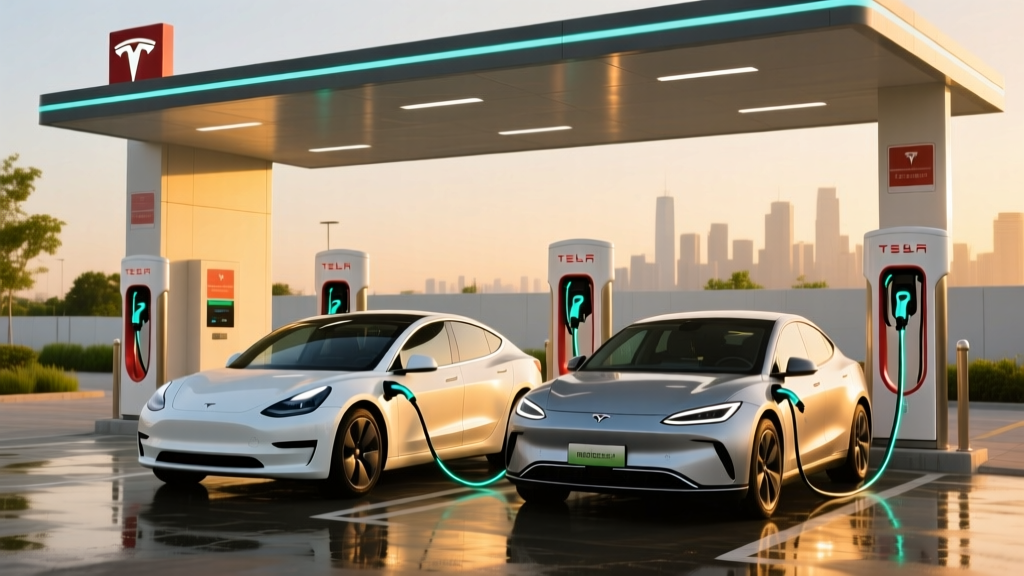
Most 600-mile range electric cars use 800V+ architectures (like Lucid's 900V system or Hyundai/Kia's E-GMP) capable of accepting 250-350 kW at DC fast chargers. Here's what a realistic road-trip stop looks like:
- Peak charge rate: 250-300 kW (at chargers like Electrify America 350 kW or Tesla V4 Superchargers)
- 10-80% time: 20-28 minutes depending on battery temperature and preconditioning
- Charge curve taper: Speed drops significantly above 80% SoC — the final 20% can take as long as the first 60%. Always plan stops around 10-80% windows.
- Real-world added range per stop: ~350-420 miles in 20-25 minutes
Preconditioning is critical. The battery management system (BMS) must warm the pack to optimal temperature (typically 85-95°F) for peak charge acceptance. Navigate to a DC fast charger using the vehicle's built-in navigation, and most systems will precondition automatically. Arriving cold can cut peak charge rates by 30-50%.
Connector Compatibility: NACS, CCS, and Adapters
As of 2026, the North American connector landscape has largely consolidated around NACS (North American Charging Standard, originally Tesla's connector). Nearly every major automaker — Ford, GM, Rivian, Hyundai, Kia, BMW, and others — has adopted NACS for new vehicles. But CCS1-equipped vehicles from 2022-2025 remain on the road and need adapters at NACS-only stations.
| Connector | Brands Using It (2026) | DC Fast Availability | Adapter Needed? |
|---|---|---|---|
| NACS (J3400) | Tesla, Ford, GM, Rivian, Hyundai, Kia, BMW, Mercedes, Lucid (2025+) | Tesla Superchargers + growing third-party | CCS→NACS adapter for older CCS cars (~$200-250) |
| CCS1 | Legacy 2022-2025 models (VW ID.4, earlier Hyundai/Kia, BMW i4) | Electrify America, EVgo, ChargePoint | NACS→CCS adapter needed at Tesla Superchargers |
| CHAdeMO | Nissan Leaf (legacy only, discontinued) | Declining availability | No adapter available; use remaining CHAdeMO stations |
If you're buying a new 600-mile range electric car in 2026, it will almost certainly ship with a NACS port. For access to Electrify America's CCS-only stations, carry a NACS-to-CCS adapter (approximately $200-$250 from approved manufacturers like Lectron or A2Z). The SAE J3400 standard formalized NACS, ensuring cross-brand interoperability going forward.
Cost Per Mile: Home Charging vs. Public vs. Gas
The economics of charging a 600-mile range electric car depend entirely on where and when you plug in. Here's a comparison using a 130 kWh battery and 3.8 mi/kWh efficiency (realistic for a large luxury EV sedan):
| Scenario | Cost per kWh | Full Charge Cost (130 kWh) | Cost Per Mile |
|---|---|---|---|
| Home (off-peak utility rate) | $0.08 - $0.12 | $10.40 - $15.60 | $0.022 - $0.033 |
| Home (standard residential avg.) | $0.16 | $20.80 | $0.042 |
| Public Level 2 (ChargePoint, etc.) | $0.25 - $0.40 | $32.50 - $52.00 | $0.066 - $0.105 |
| DC Fast (Electrify America, EVgo) | $0.35 - $0.55 | $45.50 - $71.50 | $0.092 - $0.145 |
| Tesla Supercharger (avg. 2026) | $0.28 - $0.36 | $36.40 - $46.80 | $0.074 - $0.095 |
| Gasoline (30 MPG avg., $3.40/gal) | — | — | $0.113 |
Home off-peak charging is the clear winner — roughly 3 cents per mile, or about one-quarter the cost of gasoline. Even at standard residential rates, a 600-mile EV costs around $21 to fully charge at home, compared to $68 for a 30 MPG gas car covering the same distance. The savings erode on road trips using DC fast charging, where per-mile costs approach gasoline parity.
According to fueleconomy.gov, EVs convert over 77% of electrical energy to wheel motion, compared to 12-30% for gasoline vehicles — the fundamental efficiency advantage that makes home charging so cheap.
Recommended Home Charging Equipment for Large-Battery EVs
Not all Level 2 chargers are equal. For a 600-mile range electric car, you need reliable hardware with sufficient amperage, adequate cable length, and smart scheduling features to exploit off-peak utility rates.
ChargePoint Home Flex
- Power Output: Up to 50A (12 kW) on a 60A circuit; configurable down to 16A
- Connector: NACS (2025+ models) or J1772 with NACS adapter
- Cable Length: 23 feet
- Smart Features: Wi-Fi, app scheduling, utility integration, energy tracking
- Price: ~$550-$600
- Verdict: Best all-rounder; amperage flexibility works with most panels
Tesla Wall Connector (Gen 4)
- Power Output: Up to 48A (11.5 kW) on a 60A circuit
- Connector: NACS native
- Cable Length: 24 feet
- Smart Features: Wi-Fi, OTA updates, Power Sharing (link multiple units), integrated Tesla app
- Price: ~$450-$500
- Verdict: Best value for NACS-equipped vehicles; no adapter needed for Tesla, Ford, GM, Rivian
Emporia Vue V2 EV Charger
- Power Output: Up to 48A (11.5 kW); software-configurable
- Connector: NACS (2025+ models) or J1772
- Cable Length: 24 feet
- Smart Features: Whole-home energy monitoring integration, solar-aware charging, load management
- Price: ~$400-$450
- Verdict: Best for solar-equipped homes; pairs with Emporia Vue energy monitor
Ford Pro Power (Charge Station Pro)
- Power Output: Up to 80A (19.2 kW) on a 100A circuit
- Connector: NACS (2025+) / CCS1 (older)
- Cable Length: 25 feet
- Smart Features: FordPass integration, V2H (vehicle-to-home) capable with F-150 Lightning
- Price: ~$900-$1,300
- Verdict: Overkill for most; only if your panel supports 100A and you need fastest Level 2 speeds
Safety, Electrical Code, and Installation Best Practices
EV charging draws sustained high current for hours — unlike a dryer that cycles on and off. This places unique demands on your electrical system. The National Electrical Code (NEC) Article 625 governs EV charging installations, and your electrician must follow these requirements:
- Dedicated circuit: Your Level 2 charger must have its own dedicated breaker — no sharing with other appliances. A 48A charger requires a 60A breaker (NEC requires circuits rated at 125% of continuous load).
- GFCI protection: Outdoor installations require GFCI (Ground Fault Circuit Interrupter) protection. Many modern hardwired chargers include built-in GFCI, eliminating the need for a GFCI breaker (which can nuisance-trip on EV loads).
- Outdoor rating: If installing outside, the charger must carry a NEMA 4 or IP65 rating for weather resistance. All units listed above meet this standard.
- Wire gauge: 6 AWG copper for 60A circuits; 4 AWG for 80A. Aluminum wire requires upsizing.
- Permit and inspection: Most jurisdictions require an electrical permit and post-installation inspection. Skipping this risks insurance claim denial if a fire originates from unpermitted work.
Frequently Asked Questions
How much does it cost to install a home EV charger for a 600-mile range electric car?
Expect $1,150-$2,850 for a standard 48A Level 2 installation if your electrical panel has capacity. If you need a 200-amp panel upgrade (common in older homes), total costs rise to $2,650-$6,350. The charger itself runs $400-$750; the rest is electrician labor, materials, and permits.
How fast will each charging level add range to a 600-mile EV?
Level 1 (120V) adds 3-5 miles per hour — impractical for a large battery. Level 2 (240V, 48A) adds roughly 34 miles per hour, fully charging a 130 kWh battery in about 11 hours. DC fast charging at 250+ kW can add 300+ miles in 20-25 minutes (10-80% SoC), though speed tapers significantly above 80%.
Which connector does a 600-mile range electric car use in 2026?
Nearly all new EVs sold in 2026 use the NACS (J3400) connector, including Tesla, Ford, GM, Hyundai, Kia, Rivian, BMW, and Lucid. If you own a 2022-2025 CCS-equipped vehicle, you'll need a CCS-to-NACS adapter (~$200-$250) for Tesla Supercharger access. CHAdeMO is effectively discontinued.
How much does charging cost per mile compared to gas?
Home off-peak charging costs approximately $0.02-$0.03 per mile. Standard residential rates bring it to ~$0.04/mile. Public DC fast charging ranges $0.07-$0.15/mile. A comparable 30 MPG gas car at $3.40/gallon costs ~$0.11/mile. Home charging delivers 70-80% fuel cost savings.
What electrical upgrades might I need for a home charger?
The most common upgrade is a panel capacity increase from 100A to 200A service ($1,500-$3,500), required when your panel lacks spare capacity for a dedicated 60A EV circuit. Older homes may also need full panel replacement if they have Federal Pacific or Zinsco panels. A licensed electrician's load calculation determines your specific needs.
Can I charge a 600-mile EV on a regular 120V outlet?
Technically yes, but practically no. Level 1 charging adds only 3-5 miles of range per hour — a full charge of a 130 kWh battery would take 65-90 hours. Level 1 works for plug-in hybrids with small batteries, but for a large-battery EV, a 240V Level 2 installation is essential.
Does the federal tax credit cover home charger installation?
The IRS Residential Clean Energy Credit (IRC §25C) covers 30% of home EV charger equipment and installation costs, up to $1,000, through 2032. This is separate from the §30D vehicle purchase credit. Eligibility requires the charger be installed at your primary residence. Consult a tax professional for your specific situation, as rules and caps are subject to change.
Charging a 600-mile range electric car is less about finding stations and more about getting your home infrastructure right. With a properly installed 48A Level 2 charger, a 200-amp panel, and off-peak utility scheduling, you'll wake up to 340+ miles every morning for about 3 cents a mile — and only think about public charging on road trips. The upfront investment of $1,500-$3,000 for installation pays for itself within 12-18 months of fuel savings for most drivers.