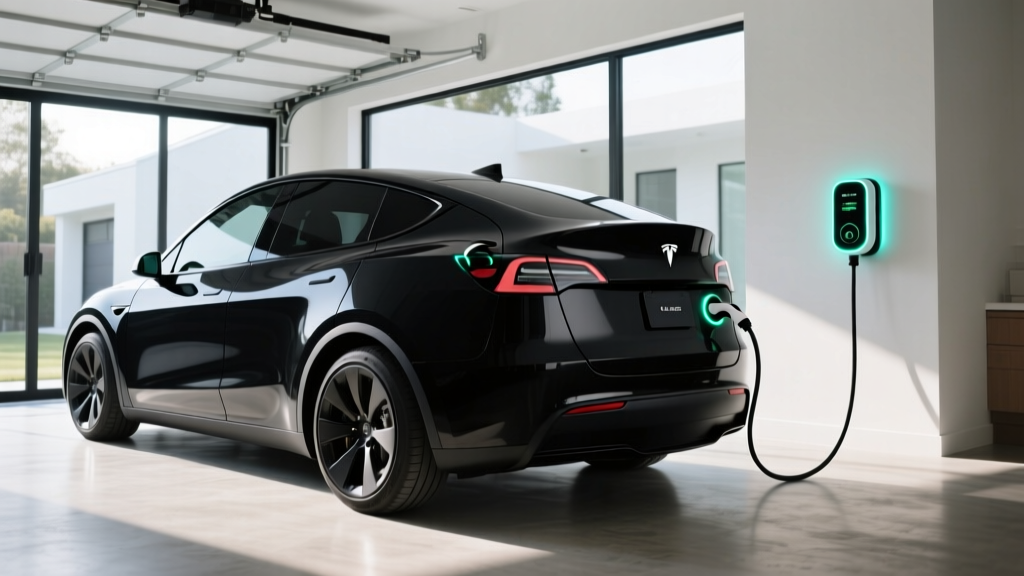
If you're cross-shopping the Dodge Charger Daytona EV and the Chevrolet Camaro (or weighing any American muscle car against its electric successor), the biggest ownership shift isn't horsepower — it's how and where you refuel. This guide breaks down exactly what it takes to charge a modern EV at home and on the road, using the 2026 Dodge Charger Daytona and comparable EVs as our reference points, so you can compare apples to apples against a gas Camaro's fuel costs and pit-stop times.
Charging Levels Explained: Speeds, kW, and Miles Per Hour
Before comparing a Charger Daytona's charging needs to a Camaro's 6.2L V8 fill-ups, you need to understand the three charging tiers. Power is measured in kW (kilowatts — the rate of flow), while battery capacity is measured in kWh (kilowatt-hours — the tank size). Confusing these is the #1 EV literacy mistake.
| Level | Voltage | Power (kW) | Miles of Range/Hour | Best For |
|---|---|---|---|---|
| Level 1 | 120V AC | 1.2–1.9 kW | 3–5 mi/hr | Overnight top-ups, PHEVs, emergencies |
| Level 2 | 240V AC | 7.2–19.2 kW | 25–65 mi/hr | Daily home/work charging (primary method) |
| DC Fast | 400–800V DC | 50–350 kW | 180–1,200+ mi/hr (peak) | Road trips, quick 10–80% top-ups |
Home Charger Installation: Electrical Requirements & Cost Breakdown
The single biggest variable in EV ownership is whether your home's electrical panel can support a Level 2 charger. Most Level 2 units require a dedicated 240V circuit at 40A or 50A (delivering 9.6 kW or 12 kW continuously, respectively — NEC requires circuits rated 125% above continuous load, so a 40A charger needs a 50A breaker).
Panel Capacity: The Hidden Cost
If your home has a 100A main panel (common in pre-1990 construction), adding a 50A EV circuit may exceed your panel's capacity, especially if you already run electric HVAC, a dryer, and an oven. An electrician will perform a load calculation per NEC Article 220. If you're over capacity, you face either a panel upgrade to 200A ($1,800–$4,000) or a smart panel/energy management device like the Emporia VUE with auto-throttling (~$400–$800 installed) that dynamically reduces charger draw when other loads spike.
| Component | Typical Range | Notes |
|---|---|---|
| Level 2 Charger Equipment | $350–$800 | Smart Wi-Fi units (ChargePoint, Emporia, Wallbox) |
| Electrician Labor (standard install) | $500–$1,500 | Depends on run length from panel to garage |
| Permit & Inspection | $100–$400 | Required in most jurisdictions; varies by city |
| Panel Upgrade (if needed) | $1,800–$4,000 | 100A→200A; not needed for most modern homes |
| Total (no panel upgrade) | $950–$2,700 | Most common scenario |
| Total (with panel upgrade) | $2,750–$6,700 | Older homes, high-load households |
Always hire a licensed electrician and pull a permit. Unpermitted work can void homeowner's insurance claims and create fire risk — especially with continuous high-amperage loads that run 6–10 hours per session.
Connector Compatibility: NACS, CCS, and CHAdeMO
The connector landscape has consolidated significantly since 2024. Here's what fits what:
| Connector | Brands Using It | Adapter Needed? |
|---|---|---|
| NACS (Tesla/J3400) | Tesla, Ford, GM, Rivian, Volvo, Polestar, Dodge (Charger Daytona), Hyundai/Kia (2025+) | CCS→NACS adapter for older CCS cars at Tesla Superchargers |
| CCS1 | VW, BMW, older Hyundai/Kia, Stellantis (some), Lucid | NACS→CCS adapter to use Tesla Superchargers |
| CHAdeMO | Nissan Leaf (legacy only — discontinued) | No viable adapter; network shrinking |
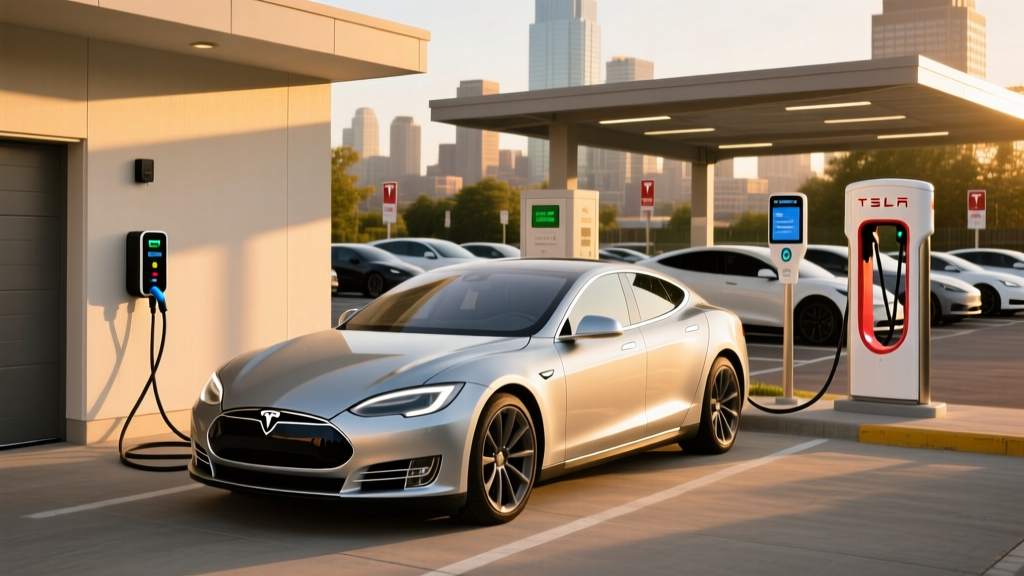
The 2026 Dodge Charger Daytona uses the NACS connector, giving it native access to Tesla's Supercharger network (20,000+ stalls in the US) without an adapter. If you're comparing a Charger Daytona to a used Camaro, this is a significant infrastructure advantage — Tesla's network consistently posts higher uptime rates than Electrify America or EVgo, per PlugShare community data.
Charging Time Examples: 10–80% for Common Battery Sizes
Real charging times depend on battery size, chemistry, temperature, and the charger's actual sustained output (not just its peak kW rating). Here are realistic 10–80% estimates:
- Dodge Charger Daytona (100.5 kWh pack, ~92 kWh usable, NMC): ~27 min on a 180 kW DC fast charger; ~9.5 hours on a 9.6 kW Level 2 home charger
- Tesla Model Y Long Range (~75 kWh usable, NMC): ~22 min on a 250 kW Supercharger; ~7.5 hours on a 9.6 kW Level 2
- Ford F-150 Lightning Extended Range (131 kWh pack, ~115 kWh usable, NMC): ~40 min on a 180 kW charger; ~12 hours on a 9.6 kW Level 2
- Hyundai Ioniq 5 (77.4 kWh usable, NMC): ~18 min on a 350 kW charger (800V architecture); ~8 hours on a 9.6 kW Level 2
Cost Per Mile: EV Charging vs Gas Camaro
This is where the Charger vs Camaro comparison gets concrete. Let's model real costs:
| Scenario | $/kWh or $/gal | Cost Per Mile | Annual (12,000 mi) |
|---|---|---|---|
| Charger Daytona — Home off-peak (0.28 kWh/mi) | $0.13/kWh | $0.036/mi | $432 |
| Charger Daytona — Home peak | $0.25/kWh | $0.070/mi | $840 |
| Charger Daytona — Public DC fast | $0.42/kWh | $0.118/mi | $1,416 |
| Camaro SS 6.2L V8 (19 MPG combined) | $3.40/gal | $0.179/mi | $2,148 |
Even at public DC fast charging rates, the Charger Daytona costs roughly 35% less per mile than a Camaro SS on premium fuel. At home off-peak rates, the savings are dramatic: $1,716/year for a 12,000-mile driver. According to fueleconomy.gov, the Charger Daytona's combined efficiency is approximately 98 MPGe (0.28–0.31 kWh/mi depending on trim and driving style).
However, if you rely entirely on public DC fast charging (no home access), the cost gap narrows significantly — and convenience tilts toward gas. This is the honest trade-off: EV savings require home or workplace charging access.
Recommended Level 2 Home Chargers (2026)
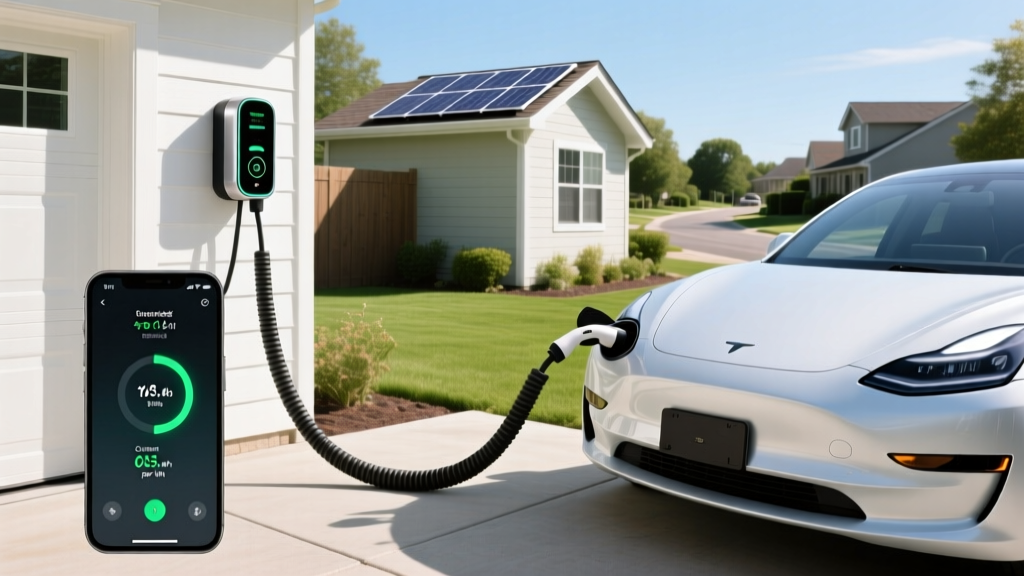
Emporia Level 2 Smart Charger
- Power: 48A / 11.5 kW (hardwired) or 40A / 9.6 kW (NEMA 14-50)
- Connector: J1772 (NACS adapter included with many 2025+ bundles)
- Cable: 24 ft
- Smart features: Wi-Fi, energy monitoring via Emporia VUE, solar integration, scheduling
- Price: $349–$399
Best value pick — excellent app, energy tracking, and solar-aware scheduling.
ChargePoint Home Flex
- Power: Up to 50A / 12 kW (adjustable via DIP switches)
- Connector: J1772 or NACS (configurable)
- Cable: 23 ft
- Smart features: Wi-Fi, ChargePoint app, Alexa, scheduling, load sharing
- Price: $649–$699
Best for multi-EV households — supports load sharing across two units on one circuit.
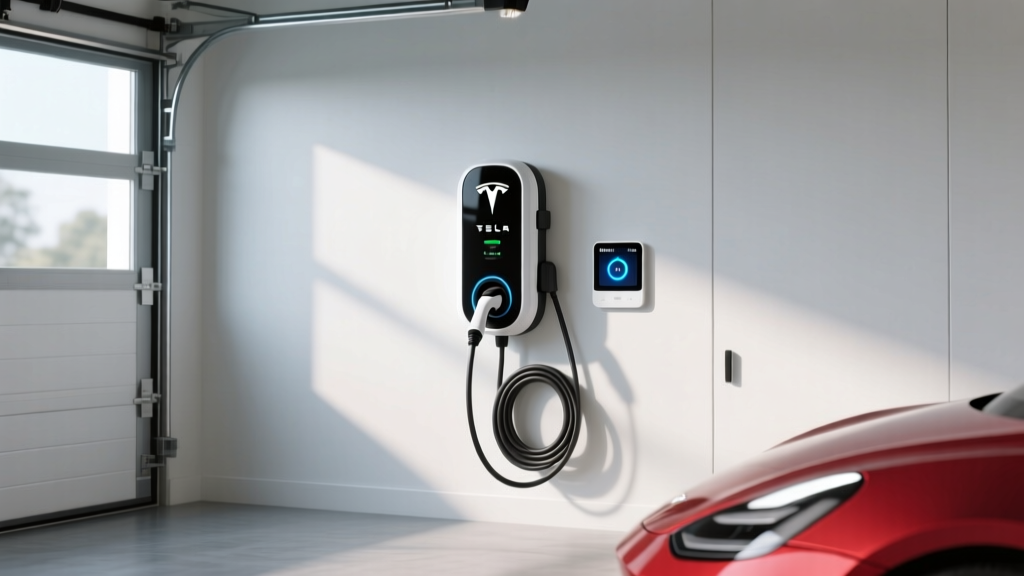
Tesla Wall Connector (J3400/NACS)
- Power: 48A / 11.5 kW
- Connector: NACS native
- Cable: 24 ft
- Smart features: Wi-Fi, OTA updates, power sharing, access control
- Price: $475
Best for NACS-native vehicles (Charger Daytona, Ford, GM, Rivian) — cleanest install, no adapter.
Wallbox Pulsar Plus
- Power: 48A / 11.5 kW
- Connector: J1772 (NACS version available)
- Cable: 25 ft
- Smart features: Wi-Fi + Bluetooth, Eco-Smart solar mode, Power Sharing
- Price: $549–$599
Best outdoor-rated compact unit — NEMA 4X, small footprint.
Safety, Code, and Permit Considerations
Level 2 charging is a continuous load under NEC Article 210.20, meaning the circuit must be rated 125% above the charger's maximum draw. A 48A charger requires a 60A breaker and 6 AWG copper wire (or 4 AWG aluminum). Key code requirements:
- Dedicated circuit: The EV charger cannot share a circuit with other outlets or appliances
- GFCI protection: Required for outdoor installations and in many jurisdictions for indoor garage outlets (NEC 2023+). Note: some chargers have built-in GFCI, which can cause nuisance tripping on GFCI breakers — consult your electrician
- Outdoor rating: If mounted outside, the charger must be NEMA 4 or 4X rated (Wallbox Pulsar Plus, Tesla Wall Connector both qualify)
- Permit required: Most municipalities require an electrical permit ($100–$400) and a final inspection. Skipping this risks insurance denial in the event of a fire
- Utility notification: Some utilities (PG&E, ConEd, Duke Energy) require you to notify them before adding a Level 2 load; some offer rebates of $300–$1,500 or special EV time-of-use rates
For the most current electrical code requirements, reference the NFPA 70 National Electrical Code and your local authority having jurisdiction (AHJ).
Frequently Asked Questions
How much does it cost to install a home EV charger?
A standard Level 2 installation (equipment + electrician + permit) runs $950–$2,700 for homes with a 200A panel and a short wire run. If you need a panel upgrade from 100A to 200A, add $1,800–$4,000. Total with panel upgrade: $2,750–$6,700. Utility rebates and the federal §30C alternative fuel refueling property credit (up to $1,000 for home charger equipment through 2032) can offset costs.
How fast will each charging level add range?
Level 1 (120V): 3–5 miles per hour. Level 2 (240V, 48A): 30–45 miles per hour for most EVs. DC fast charging: 180–1,200+ miles per hour at peak, but only for a portion of the session — expect 10–80% in 18–40 minutes depending on battery size and charger power.
Which connector is compatible with my EV?
Check your vehicle's charge port. The 2026 Dodge Charger Daytona, all Teslas, Ford EVs, GM EVs, and Rivian use NACS. Most VW, BMW, and pre-2025 Hyundai/Kia EVs use CCS1. Nissan Leaf uses CHAdeMO (legacy). If your car has CCS1 and you want Tesla Supercharger access, you'll need a NACS-to-CCS adapter ($150–$250 from manufacturers like Lectron or A2Z).
How much does charging cost per mile vs gas?
Home off-peak charging averages $0.03–$0.07 per mile. Public DC fast charging averages $0.10–$0.15 per mile. A Camaro SS at 19 MPG combined with $3.40/gal fuel costs ~$0.18 per mile. Even exclusive DC fast charging is typically 20–40% cheaper per mile than gas, but home charging delivers 70–80% savings.
What electrical upgrades might I need?
The most common upgrade is a panel increase from 100A to 200A ($1,800–$4,000). Alternatives include smart load-management devices (Emporia VUE, Span panel) that dynamically throttle charger amperage when other loads are high, avoiding the panel upgrade entirely. If your garage is far from the panel (100+ ft wire run), expect higher labor costs for copper wire. Some older homes also need a grounding upgrade to meet current NEC standards.