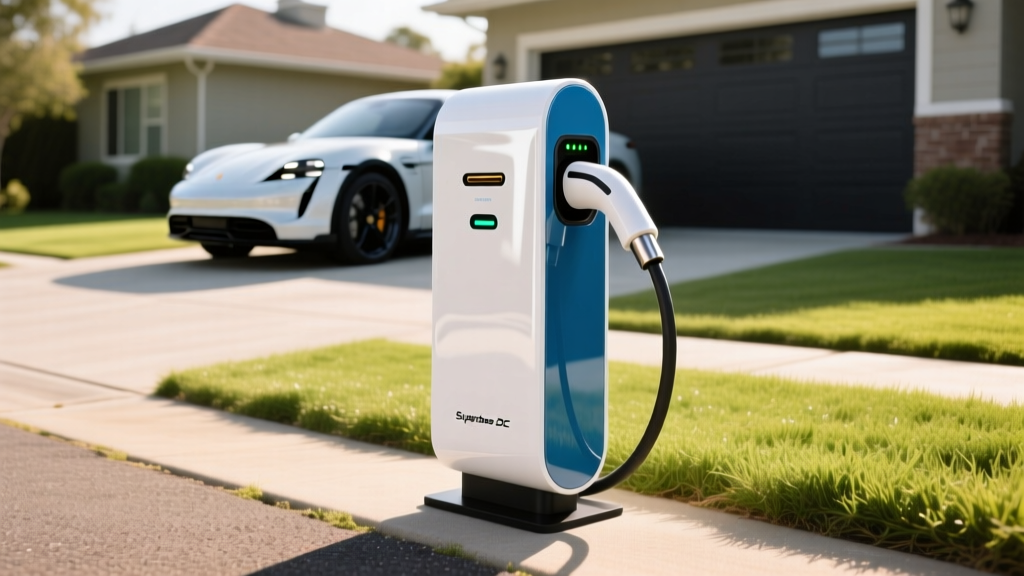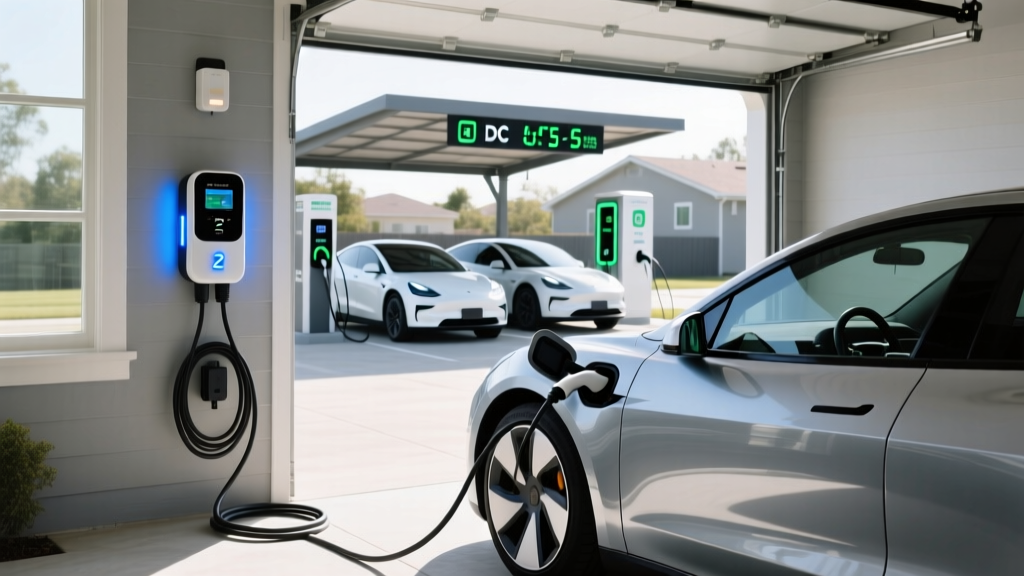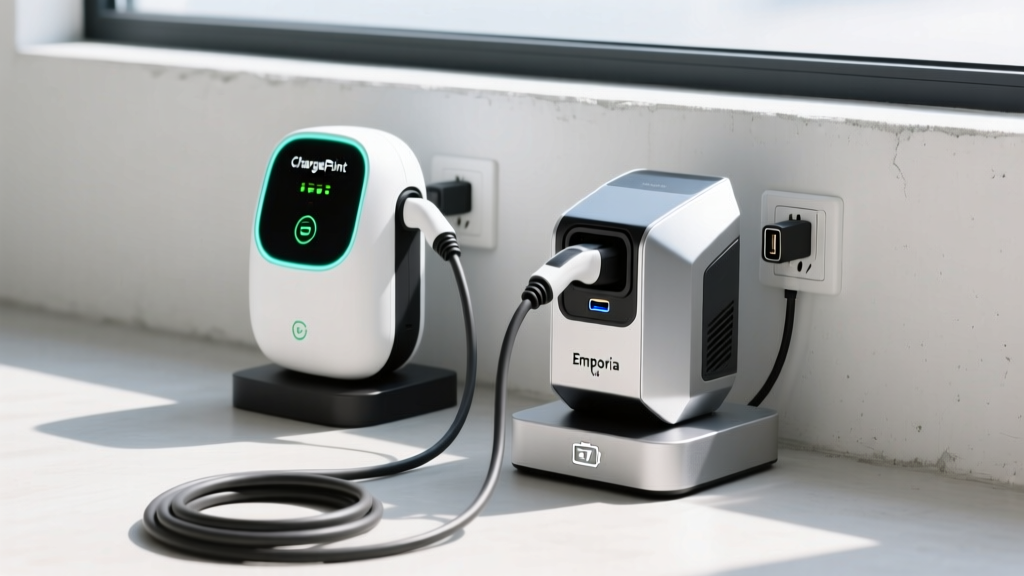
If you've spent any time researching home EV charging equipment, you've likely encountered the phrase "charger v6" alongside performance metrics like 0-60 charge times or peak power output. The Emporia V6 has emerged as a popular budget-friendly Level 2 charger, but how does it stack up against established competitors when you need to add range quickly? This guide breaks down the real-world charging speeds, installation requirements, connector compatibility, and total costs for the top Level 2 chargers available in 2026 — so you can pick the unit that actually matches your EV's onboard charger capacity.
Charging Levels Explained: How Fast Does Each Level Add Range?
Every EV owner deals with three distinct charging tiers. Understanding the speed difference between them is the foundation of choosing the right home equipment.
| Level | Voltage / Amperage | Max Power (kW) | Miles of Range Added Per Hour | Best Use Case |
|---|---|---|---|---|
| Level 1 | 120V / 12A | 1.4 kW | 3–5 miles/hr | Overnight top-ups, PHEVs, low-mileage drivers |
| Level 2 | 240V / 32A–48A | 7.7–11.5 kW | 25–44 miles/hr | Daily home charging (the standard for BEV owners) |
| DC Fast Charging | 400V–800V / 100A–500A | 50–350 kW | 150–1,000+ miles/hr | Road trips, commercial fleets (not for home install) |
For most battery electric vehicle (BEV) owners, Level 2 is the practical daily standard. A 48-amp, 11.5 kW charger can replenish roughly 35–44 miles of range per hour of charging, depending on your vehicle's efficiency (measured in kWh/100mi). A Tesla Model Y with its 75 kWh usable battery and ~3.5 mi/kWh efficiency gains about 40 miles per hour at 11.5 kW. A less efficient vehicle like the Ford F-150 Lightning (extended range, ~2 mi/kWh) gains closer to 23 miles per hour at the same power level.
DC fast charging is strictly for public stations and road trips. You cannot install a DC fast charger at home — the electrical infrastructure (480V three-phase, dedicated transformer) costs tens of thousands of dollars and is irrelevant to residential use.
Charging Time Examples: 10–80% for Common EV Batteries
EV batteries charge fastest between 10% and 80% State of Charge (SoC). Above 80%, the battery management system (BMS) tapers the charge rate to protect cell health — a phenomenon called the charge curve taper. This is why manufacturers and reviewers quote 10–80% times rather than 0–100%.
Here's how long a 10–80% session takes on a 48-amp (11.5 kW) Level 2 charger for several popular 2025–2026 EVs:
- Tesla Model Y Long Range (75 kWh usable): ~4.5 hours (adds ~52.5 kWh at 11.5 kW average, accounting for ~5% charging losses)
- Hyundai Ioniq 5 (77.4 kWh usable): ~4.7 hours
- Chevrolet Equinox EV (85 kWh usable): ~5.2 hours
- Ford F-150 Lightning Extended Range (131 kWh usable): ~8 hours
- Toyota bZ4X (71.4 kWh usable): ~4.3 hours
These times assume your EV's onboard charger can accept the full 11.5 kW. Some vehicles — notably older Nissan Leaf models and certain base-trim EVs — have onboard chargers limited to 6.6 kW or even 3.3 kW, which means a more powerful wall unit won't charge them any faster. Always check your vehicle's onboard charger spec before overspending on a high-amperage unit.
Which Connector and Charger Is Compatible with My EV?
The North American charging connector landscape has shifted dramatically since Tesla opened its Supercharger network and the NACS (North American Charging Standard) connector became the de facto industry standard. Here's where things stand for 2025–2026 model-year vehicles:
| Connector | Vehicles Using It (2025–2026) | Adapter Needed? |
|---|---|---|
| NACS (Tesla) | All Tesla vehicles; Ford, GM, Rivian, Hyundai/Kia, Volvo, BMW, Mercedes (2025+ models ship with NACS port) | No for NACS-native vehicles. CCS-to-NACS adapter needed for older CCS vehicles at NACS chargers. |
| CCS1 | Pre-2025 Ford, GM, Hyundai/Kia, VW, BMW, Stellantis models; still found on many public DC fast chargers | NACS-to-CCS adapter available from Tesla ($250) and third parties for NACS vehicles at CCS stations |
| CHAdeMO | Nissan Leaf (all years), Mitsubishi Outlander PHEV (legacy). Being phased out. | No adapters widely available. CHAdeMO stations are increasingly rare. |
For home Level 2 charging, the connector situation is simpler. Most Level 2 chargers sold in 2026 ship with a NACS connector or offer it as a configurable option. If you drive a CCS1-equipped vehicle (pre-2025 model), you can either buy a charger with a CCS1 plug or use a NACS-to-CCS adapter. J1772 — the older Level 2 standard — is now largely superseded by NACS for Level 2 as well, though many public Level 2 stations still carry J1772 connectors.
Home Installation: Electrical Requirements, Panel Upgrades, and Real Costs
A Level 2 charger requires a dedicated 240-volt circuit — the same voltage your electric dryer or oven uses. The amperage of that circuit determines your maximum charging speed:
- 40-amp circuit → 32 amps continuous → 7.7 kW max
- 50-amp circuit → 40 amps continuous → 9.6 kW max
- 60-amp circuit → 48 amps continuous → 11.5 kW max
National Electrical Code (NEC) requires that continuous loads (like EV charging) use no more than 80% of a circuit breaker's rated capacity. So a 48-amp charger needs a 60-amp breaker and appropriately sized wire (typically 6 AWG copper or 4 AWG aluminum for runs over 50 feet).
Installation Cost Breakdown
Here's what a typical Level 2 home charger installation actually costs in 2026, based on national averages from licensed electricians and HomeAdvisor data:
| Component | Simple Install (panel nearby, no upgrade) | Complex Install (long run or panel upgrade) |
|---|---|---|
| Level 2 Charger Equipment | $300–$700 | $300–$700 |
| Electrician Labor | $300–$600 | $800–$2,000 |
| Electrical Permit | $50–$200 | $50–$200 |
| Wire & Conduit (50+ ft run) | $0–$100 | $200–$800 |
| Electrical Panel Upgrade (100A→200A) | N/A | $1,500–$3,500 |
| Total Estimated Cost | $650–$1,600 | $2,850–$7,200 |
Equipment Recommendations: Top Level 2 Chargers for 2026
Here are the most capable and widely available Level 2 home chargers, compared on the metrics that matter: power output, connector options, cable length, smart features, and price.
Emporia V6 ("Charger V6")
- Max Output: 48 amps / 11.5 kW (hardwired) or 40 amps / 9.6 kW (NEMA 14-50 plug)
- Connector: J1772 (NACS adapter available separately)
- Cable Length: 24 feet
- Smart Features: Wi-Fi, Emporia app, energy monitoring, solar integration, scheduled charging, load management
- Price: ~$350–$400
- Best For: Budget-conscious buyers who want full smart features and energy tracking at the lowest equipment cost
ChargePoint Home Flex
- Max Output: 50 amps / 12 kW (hardwired) or 40 amps / 9.6 kW (NEMA 14-50)
- Connector: J1772 or NACS (configurable at purchase)
- Cable Length: 23 feet
- Smart Features: Wi-Fi, ChargePoint app, Alexa/Google integration, scheduled charging, flex circuit breaker sizing (adjust amperage via DIP switches)
- Price: ~$550–$700
- Best For: Buyers who want NACS native, adjustable amperage for older panels, and proven brand reliability
Tesla Wall Connector (Gen 4)
- Max Output: 48 amps / 11.5 kW (hardwired)
- Connector: NACS native
- Cable Length: 24 feet
- Smart Features: Wi-Fi, Tesla app, over-the-air updates, power sharing (link up to 6 units on one circuit for multi-EV garages), vehicle integration
- Price: ~$450–$500
- Best For: Tesla owners and NACS-native vehicle owners who want seamless integration and multi-charger power sharing
Grizzl-E Smart
- Max Output: 40 amps / 9.6 kW (NEMA 14-50) or 48 amps / 11.5 kW (hardwired)
- Connector: J1772 or NACS
- Cable Length: 24 feet
- Smart Features: Wi-Fi, Grizzl-E app, OCPP protocol (compatible with utility demand-response programs), adjustable amperage
- Price: ~$450–$550
- Best For: Cold-climate owners (rated to -40°F), outdoor installations, and utility-program participants
The "charger v6 0-60" question, decoded: The Emporia V6's "0-60" in charging terms doesn't refer to vehicle acceleration. It refers to how quickly it can take a battery from low to high SoC. At 11.5 kW hardwired, the V6 charges at the same rate as any other 48-amp Level 2 unit — the limiting factor is your EV's onboard charger, not the wall unit. A Tesla Model 3 (with an 11.5 kW onboard charger) charges identically on the Emporia V6, ChargePoint Home Flex, or Tesla Wall Connector at 48 amps.
Cost to Charge: Home vs Public vs Gas — The Per-Mile Breakdown
The economic case for home charging rests on one number: cost per mile. Here's how it compares across scenarios, using national average electricity and gas prices as of early 2026 (EIA electricity data):
| Charging Scenario | Rate ($/kWh) | Cost Per Mile (at 3 mi/kWh) | Annual Cost (12,000 mi) |
|---|---|---|---|
| Home (national avg, 16¢/kWh) | $0.16 | $0.053 | $640 |
| Home (off-peak TOU rate, 8¢/kWh) | $0.08 | $0.027 | $320 |
| Public Level 2 (avg, 25¢/kWh) | $0.25 | $0.083 | $1,000 |
| DC Fast Charging (avg, 40¢/kWh) | $0.40 | $0.133 | $1,600 |
| Gas Vehicle (27 MPG avg, $3.30/gal) | N/A | $0.122 | $1,467 |
The numbers are clear: home charging on an off-peak rate is roughly 4–5x cheaper per mile than gasoline. Even at the national average residential rate, you're paying less than half per mile. But exclusive reliance on DC fast charging erases the cost advantage entirely — DC fast charging can actually cost more per mile than gas. This is why home Level 2 installation isn't optional for most EV owners; it's the core economic proposition.
Safety, Code, and Smart Features You Shouldn't Skip
Level 2 charger installation is not a DIY project. The NEC and your local building code require specific protections:
- Dedicated circuit: Your EV charger must be on its own breaker — not shared with other appliances. This prevents overloading and tripped breakers during long charge sessions.
- GFCI protection: NEC 2023 (and continuing in 2026 code cycles) requires Ground Fault Circuit Interrupter protection for all EV charging circuits. Most modern Level 2 chargers have built-in GFCI, but your electrician may also install a GFCI breaker depending on local interpretation.
- Outdoor rating: If your charger mounts outside, it must carry a NEMA 4 (weatherproof) rating. All chargers recommended above meet this standard.
- Hardwired vs plug: Hardwired installations (no plug, direct wire connection) support the full 48 amps / 11.5 kW. NEMA 14-50 plug-in installations are limited to 40 amps / 9.6 kW by code (80% of a 50-amp receptacle rating). Hardwired also eliminates the risk of the plug overheating under sustained load — a documented issue with some 14-50 receptacles not rated for continuous duty.
- Permit and inspection: Most jurisdictions require an electrical permit ($50–$200) and a post-installation inspection. Skipping this can void your homeowner's insurance coverage for electrical fires and may cause issues at resale.
Smart features worth paying for: Scheduled charging (to hit off-peak utility rates automatically), load management (prevents panel overload when running the charger simultaneously with HVAC or electric range), and energy monitoring (tracks your charging kWh separately for tax or utility rebate documentation). The Emporia V6 excels here — its real-time energy dashboard shows exactly how many kWh each session consumes, which is useful for IRS §30D tax credit record-keeping and utility time-of-use enrollment.
Frequently Asked Questions
How much does it cost to install a home EV charger?
A straightforward Level 2 installation (panel has capacity, short wire run, no upgrade needed) typically costs $650–$1,600 total, including the charger, electrician labor, and permit. A complex installation requiring a panel upgrade, long conduit run, or trenching can range from $2,850–$7,200. Always get a load calculation from a licensed electrician before purchasing equipment.
How fast will each charging level add range?
Level 1 (120V) adds 3–5 miles of range per hour. Level 2 (240V, 48 amps) adds 25–44 miles per hour depending on vehicle efficiency. DC fast charging (public only) can add 150–1,000+ miles per hour at peak power, though sustained rates are lower due to charge-curve taper above 80% SoC.
Which connector/charger is compatible with my EV?
If your EV is a 2025+ model from Ford, GM, Hyundai, Kia, Rivian, or Volvo, it likely has a NACS port — get a NACS-equipped charger like the Tesla Wall Connector or ChargePoint Home Flex (NACS variant). Pre-2025 non-Tesla EVs typically use CCS1 or J1772 — the Emporia V6 with J1772 connector works for all of these, and adapters are available for NACS-to-CCS compatibility. Check your vehicle's charge port before ordering.
How much does charging cost per mile vs gas?
Home charging at the national average rate (16¢/kWh) costs about 5.3¢ per mile for an efficient EV (3 mi/kWh). Off-peak rates drop this to 2.7¢ per mile. A comparable gas vehicle at 27 MPG and $3.30/gal costs 12.2¢ per mile — roughly 2–4x more. DC fast charging at 40¢/kWh costs about 13.3¢ per mile, slightly more than gas.
What electrical upgrades might I need?
If your home has a 100-amp electrical panel that's already near capacity, you may need a panel upgrade to 200 amps ($1,500–$3,500). Homes with 200-amp panels usually have sufficient headroom for a 60-amp EV circuit. Other potential upgrades include adding a sub-panel in the garage, replacing an outdated NEMA 14-50 receptacle with a hardwired connection, or upgrading aluminum service entrance wiring in pre-1970 homes.
Is the Emporia V6 ("charger v6") as fast as more expensive units?
Yes — at 48 amps hardwired (11.5 kW), the Emporia V6 charges at the same maximum speed as the ChargePoint Home Flex and Tesla Wall Connector. The limiting factor is your EV's onboard charger capacity, not the wall unit. The V6's lower price ($350–$400 vs $500–$700) reflects its budget build quality and J1772-only connector, not slower charging performance.