Why 'Charger V6 Horsepower' and EV Charging kW Keep Getting Confused
If you've searched for "charger v6 horsepower" and landed here, you're likely navigating two worlds at once: the Dodge Charger's traditional V6 powertrain and the rapidly expanding universe of electric vehicle charging. The word "charger" means very different things depending on context — a muscle car with a 3.6-liter Pentastar V6 producing 292 horsepower, or the hardware that pushes electrons into an EV battery at rates measured in kilowatts (kW).
This guide bridges both worlds. We'll cover the Dodge Charger V6's specs for those cross-shopping, then deliver a complete, data-driven breakdown of EV charging levels, home installation costs, connector standards, equipment picks, and real cost-per-mile figures for 2026. Whether you're deciding between a V6 Charger and an electric sedan, or you already own an EV and need to set up charging at home, the exact numbers are below.
Dodge Charger V6 Horsepower: The Baseline Numbers
Before we dive into EV charging infrastructure, let's settle the horsepower question. The most recent Dodge Charger V6 models (2023 and earlier, as Stellantis discontinued the V6 LD-platform Charger after the 2023 model year in favor of the new two-door electric and inline-six Daytona/Charger lineup) featured the 3.6L Pentastar V6:
- SXT trim: 292 hp, 260 lb-ft torque, 0-60 mph in ~6.4 seconds
- GT trim: 300 hp, 264 lb-ft torque, 0-60 mph in ~6.0 seconds
- EPA fuel economy: 19 city / 30 highway / 23 combined mpg
- Fuel tank: 18.5 gallons
For the 2024+ model years, Dodge shifted to the new Charger platform offering the electric Charger Daytona (Scat Pack: 670 hp, R/T: 496 hp) and the inline-six Hurricane-powered Charger SIXPACK (420-550 hp). The naturally aspirated V6 is no longer in the new lineup, making the 2023 Charger V6 the end of an era. If you're comparing that V6 to an EV, the charging infrastructure discussion below is what replaces the gas station.
EV Charging Levels Explained: kW, Speed, and Real-World Range Added
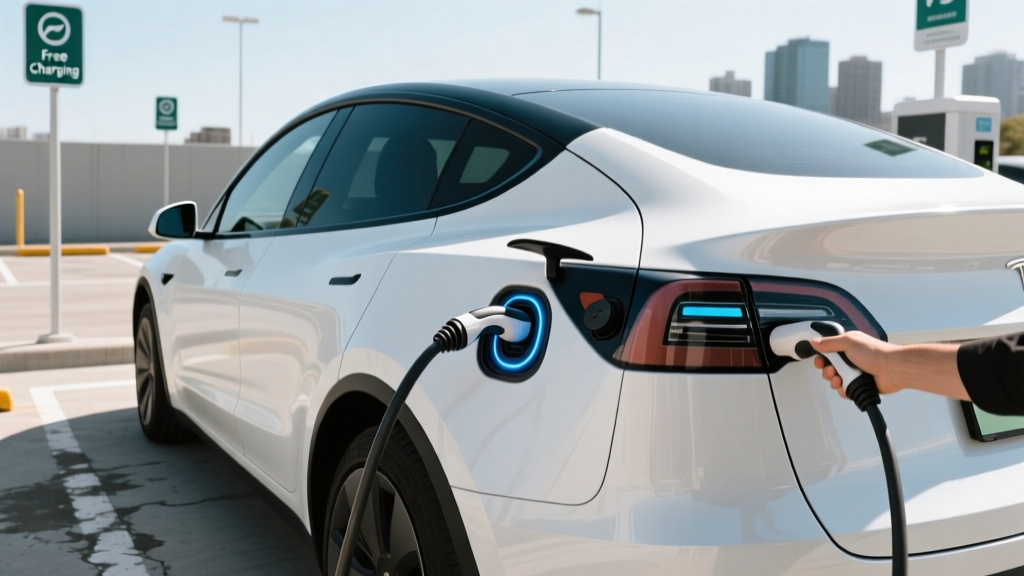
EV charging is categorized into three levels, each defined by voltage, power output (in kW), and the practical metric that matters most: how many miles of range you gain per hour of charging. Note that kW (kilowatts) measures power — the rate of energy delivery — while kWh (kilowatt-hours) measures energy, the total capacity stored in your battery. Confusing these two is the most common mistake in EV literacy.
| Level | Voltage | Power (kW) | Miles of Range / Hour | Typical Use Case |
|---|---|---|---|---|
| Level 1 | 120V AC | 1.0–1.4 kW | 3–5 mi/hr | Overnight trickle, PHEVs, emergencies |
| Level 2 | 240V AC | 3.3–19.2 kW | 12–75 mi/hr | Home daily charging, workplaces, hotels |
| DC Fast Charge | 400–900V DC | 50–350 kW | 150–1,200+ mi/hr (peak) | Road trips, highway corridors |
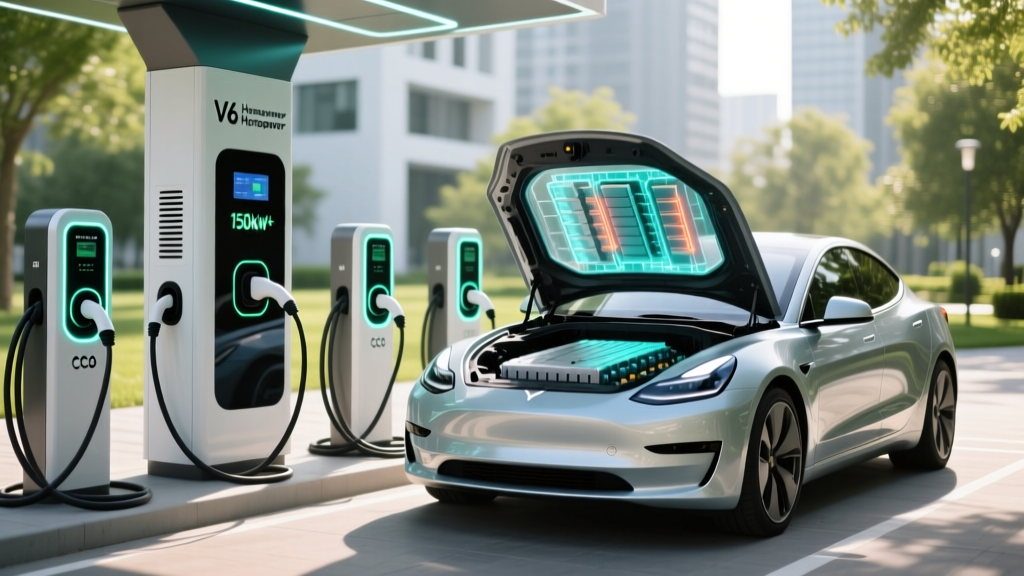
A few realities the table doesn't capture: DC fast charging speed is not sustained. A vehicle that peaks at 250 kW may only hold that rate from 10-30% state of charge (SoC), then taper progressively. A realistic 10-80% session on a 350 kW-capable charger with a vehicle like the Hyundai Ioniq 5 (84 kWh battery, NMC) takes about 18 minutes. The same session on a 150 kW charger stretches to 25-30 minutes. Always look at 10-80% times, not peak kW claims.
- 60 kWh battery (e.g., Nissan Leaf, base Tesla Model 3 RWD): ~22 min at 150 kW DCFC; ~5.5 hours at 7.2 kW Level 2
- 82 kWh battery (e.g., Tesla Model Y Long Range): ~25 min at 250 kW DCFC; ~8 hours at 11.5 kW Level 2
- 100 kWh battery (e.g., Ford F-150 Lightning Extended Range): ~35 min at 150 kW DCFC; ~10 hours at 11.5 kW Level 2
Home EV Charger Installation: Electrical Requirements and Total Cost
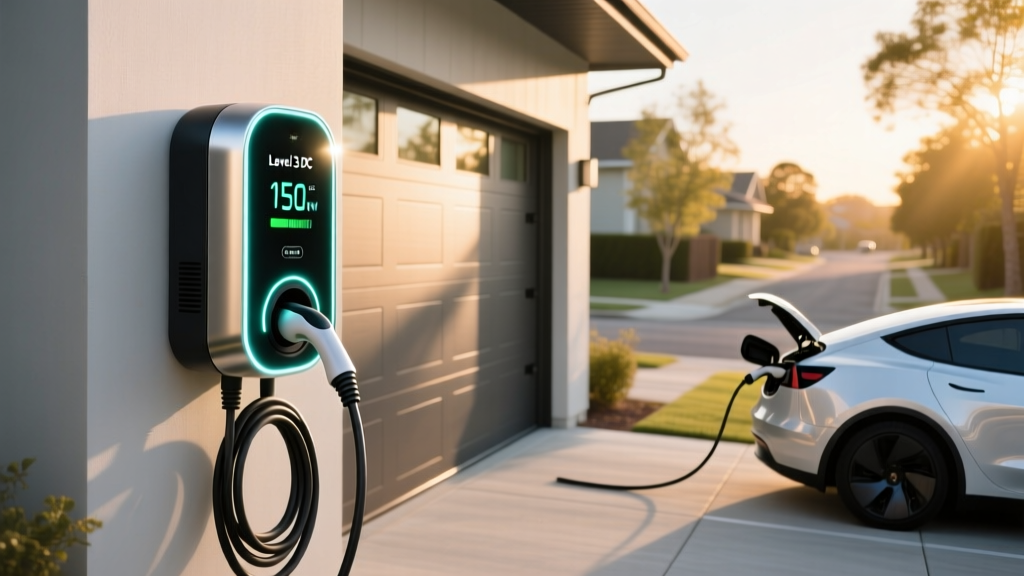
Installing a Level 2 home charger is the single most impactful upgrade an EV owner can make. It transforms charging from a chore into something that happens automatically while you sleep. But the installation cost varies dramatically based on your home's electrical panel, the distance from panel to charger location, and local permit requirements.
Electrical Requirements
A typical Level 2 home charger requires a 240-volt dedicated circuit. The most common configurations:
- 40-amp circuit / 32-amp continuous draw: Delivers 7.7 kW. Most popular for residential installs. Requires a NEMA 14-50 outlet or hardwired connection.
- 50-amp circuit / 40-amp continuous: Delivers 9.6 kW. Common for higher-power chargers.
- 60-amp circuit / 48-amp continuous: Delivers 11.5 kW. Requires substantial panel capacity and hardwiring.
The National Electrical Code (NEC) requires that continuous loads (defined as running 3+ hours — which EV charging always does) not exceed 80% of the circuit breaker rating. So a 40A breaker supports 32A continuous, a 50A breaker supports 40A continuous, and so on.
Do You Need a Panel Upgrade?
This is the cost variable most online guides gloss over. If your home has a 100-amp main service panel (common in homes built before the 1990s), adding a 40-50 amp dedicated EV circuit may exceed your panel's remaining capacity. A licensed electrician will perform a load calculation considering your existing circuits (HVAC, electric range, dryer, water heater). If the panel is maxed out, you'll need either:
- Panel upgrade to 200A: $1,500–$4,000+ depending on utility connection work
- Load management device: $200–$500 installed; automatically throttles charger when other circuits are drawing heavily, avoiding a full panel upgrade
Installation Cost Breakdown
| Component | Simple Install (panel nearby, no upgrade) | Complex Install (long run, panel upgrade) |
|---|---|---|
| Level 2 Charger Equipment | $350–$700 | $350–$700 |
| Electrician Labor (2-4 hrs simple / 6-12 hrs complex) | $300–$800 | $1,200–$3,000 |
| Permit & Inspection | $50–$200 | $100–$350 |
| Panel Upgrade (if needed) | $0 | $1,500–$4,000 |
| Conduit, Wiring, Miscellaneous | $50–$200 | $300–$800 |
| Total Range | $750–$1,900 | $3,450–$8,850 |
The federal Alternative Fuel Vehicle Refueling Property Credit (IRS Form 8911) can offset up to 30% of home charger equipment and installation costs, capped at $1,000, for installations in eligible census tracts. Check irs.gov for current eligibility maps and rules.
Connector Compatibility: NACS, CCS, and CHAdeMO in 2026
The connector landscape has consolidated significantly since 2023, when Ford and GM announced adoption of Tesla's North American Charging Standard (NACS). As of the 2026 model year, NACS is the dominant connector for new EVs sold in North America. Here's where each standard stands:
| Connector | Brands Using It (2026 Models) | Adapter Needed? |
|---|---|---|
| NACS (native) | Tesla, Ford, GM (Chevy/Cadillac/GMC), Rivian, Volvo, Polestar, Mercedes, Nissan (new models), Honda, Fisker | None — direct access to Tesla Supercharger network |
| CCS1 (legacy/remaining) | Hyundai, Kia, Volkswagen, BMW, Stellantis (some), Lucid, older Ford/GM models | NACS-to-CCS adapter ($150-$250) for Supercharger access; CCS native at Electrify America, EVgo, ChargePoint |
| CHAdeMO | Nissan Leaf (discontinued in US after 2025), Mitsubishi Outlander PHEV (older model years) | Limited network; most new CHAdeMO stations have been replaced by CCS/NACS |
Practical advice: If you're buying a 2026 EV, prioritize NACS-equipped vehicles for the broadest charging network access. If you own a CCS-equipped EV (like the Hyundai Ioniq 5 or Kia EV6), purchase the manufacturer-approved NACS adapter for Supercharger access on road trips, while using native CCS at Electrify America stations locally.
Cost to Charge an EV vs. Fueling a V6 Charger
The Dodge Charger V6 at 23 mpg combined and $3.40/gallon (2026 national average for regular unleaded) costs approximately $0.148 per mile in fuel. Here's how EV charging scenarios compare:
| Scenario | Rate | Cost per Mile (at 3.5 mi/kWh efficiency) |
|---|---|---|
| Home charging (off-peak utility rate) | $0.08–$0.14/kWh | $0.023–$0.040 |
| Home charging (standard rate, no TOU plan) | $0.14–$0.20/kWh | $0.040–$0.057 |
| Public Level 2 (ChargePoint, Blink) | $0.25–$0.49/kWh | $0.071–$0.140 |
| DC Fast Charging (Electrify America, EVgo) | $0.35–$0.55/kWh | $0.100–$0.157 |
| Tesla Supercharger (varies by location/time) | $0.25–$0.45/kWh | $0.071–$0.129 |
| Dodge Charger V6 (gas, 23 mpg) | $3.40/gallon | $0.148 |
The takeaway: home-charged EVs cost 65-85% less per mile than fueling a V6 Charger. Even exclusive DC fast charging is competitive with or slightly cheaper than gasoline. The economics strongly favor home charging as your primary strategy, with public fast charging reserved for road trips.
Best Home EV Chargers for 2026: Equipment Picks
Not all Level 2 chargers are equal. Key variables include max power output, cable length, connector type, smart features (Wi-Fi scheduling, utility integration), and build quality. Here are top picks based on real-world use and current specs:
Tesla Wall Connector (Gen 4)
- Power: Up to 11.5 kW (48A) on 60A circuit
- Connector: NACS native
- Cable: 24 ft
- Smart features: Wi-Fi, OTA updates, power sharing between units, access control
- Price: ~$475
- Best for: Tesla and NACS-equipped EVs; cleanest integration
ChargePoint Home Flex (2nd Gen)
- Power: Up to 12 kW (50A) on 60A circuit, configurable down to 16A
- Connector: NACS or J1772 (configurable)
- Cable: 23 ft
- Smart features: Wi-Fi, app scheduling, utility demand-response programs, Alexa
- Price: ~$599
- Best for: Multi-EV households, utility program integration
Emporia Level 2 EV Charger
- Power: Up to 11.5 kW (48A)
- Connector: NACS or J1772
- Cable: 24 ft
- Smart features: Wi-Fi, solar integration, real-time energy monitoring via Emporia app
- Price: ~$399
- Best for: Budget-conscious buyers, solar-panel households
Grizzl-E Smart (United Chargers)
- Power: Up to 10 kW (40A) on 50A circuit
- Connector: J1772 (NACS adapter included)
- Cable: 24 ft
- Smart features: Wi-Fi, OCPP support, adjustable amperage, extreme cold rated (-40°F)
- Price: ~$549
- Best for: Cold climates, outdoor installs, Canadian/Northern US owners
Safety, Electrical Code, and Installation Best Practices
EV charging draws sustained high current for hours — more like running an electric furnace than plugging in a phone. Code compliance and safety aren't optional:
- Dedicated circuit: Your Level 2 charger must be on its own dedicated breaker — never shared with other appliances.
- GFCI protection: NEC 2020 and later require GFCI protection for all EV charging outlets (NEMA 14-50 or hardwired). Hardwired chargers with built-in GFCI are increasingly preferred to avoid nuisance trips with external GFCI breakers.
- Outdoor rating: If installing outside, ensure the charger carries a NEMA 4 or IP65 rating. All recommended units above are outdoor-rated.
- Permit and inspection: Nearly all jurisdictions require an electrical permit for a new 240V circuit. The inspection verifies wire gauge, breaker sizing, grounding, and GFCI compliance. Skipping the permit risks insurance denial if an electrical fire occurs.
- Wire gauge: 6 AWG copper for 50A circuits, 4 AWG for 60A circuits. Your electrician will size per the run length and local code.
Always hire a licensed electrician familiar with EV charging installs. Ask for their experience with load calculations and whether they've installed load-management devices — this expertise can save you thousands by avoiding an unnecessary panel upgrade.
Frequently Asked Questions
How much does it cost to install a home EV charger?
A straightforward Level 2 installation (panel has capacity, short wire run) typically costs $750–$1,900 including equipment, electrician labor, and permit. Complex installs requiring long conduit runs or a panel upgrade to 200A can reach $3,500–$8,850. The federal refueling property credit may offset up to $1,000 (30% of costs) if you're in an eligible census tract.
How fast will each charging level add range?
Level 1 (120V) adds 3-5 miles per hour — adequate only for PHEVs with small batteries or overnight trickle charging. Level 2 (240V) at 7.7-11.5 kW adds 25-45 miles per hour, easily replenishing a full day's driving overnight. DC fast charging at 150-350 kW can add 150-300+ miles in a 20-30 minute session, though actual speed depends on the vehicle's charge curve, battery temperature, and state of charge.
Which connector/charger is compatible with my EV?
For 2026 model-year vehicles: Tesla, Ford, GM, Rivian, Volvo, Polestar, and most new-market entrants use NACS natively. Hyundai, Kia, BMW, and Volkswagen still use CCS1. Check your vehicle's charge port or the manufacturer's spec sheet. For home Level 2 charging, NACS vehicles use a Tesla Wall Connector or NACS-equipped ChargePoint; CCS vehicles use a J1772 connector (the universal Level 2 standard, with CCS being the DC fast extension of J1772).
How much does charging cost per mile vs gas?
Home charging at typical utility rates costs $0.03–$0.06 per mile — roughly 70-80% less than fueling a 23 mpg V6 at $3.40/gallon ($0.15/mile). Public DC fast charging at $0.35–$0.55/kWh costs $0.10–$0.16 per mile, which is competitive with gasoline. The savings are maximized with home charging on a time-of-use plan that offers off-peak rates below $0.10/kWh.
What electrical upgrades might I need?
The most common upgrade is a service panel replacement from 100A to 200A, needed in older homes where the existing panel can't accommodate a new 40-60A circuit. This costs $1,500–$4,000. A less expensive alternative is an automated load management device ($200–$500 installed) that dynamically reduces charger power when other high-draw appliances are running. Homes with 200A panels and moderate existing loads usually need no upgrade at all — an electrician's load calculation will confirm.
Sources: fueleconomy.gov (EPA efficiency data), IRS.gov (refueling property credit), NHTSA.gov (vehicle safety and specification data).