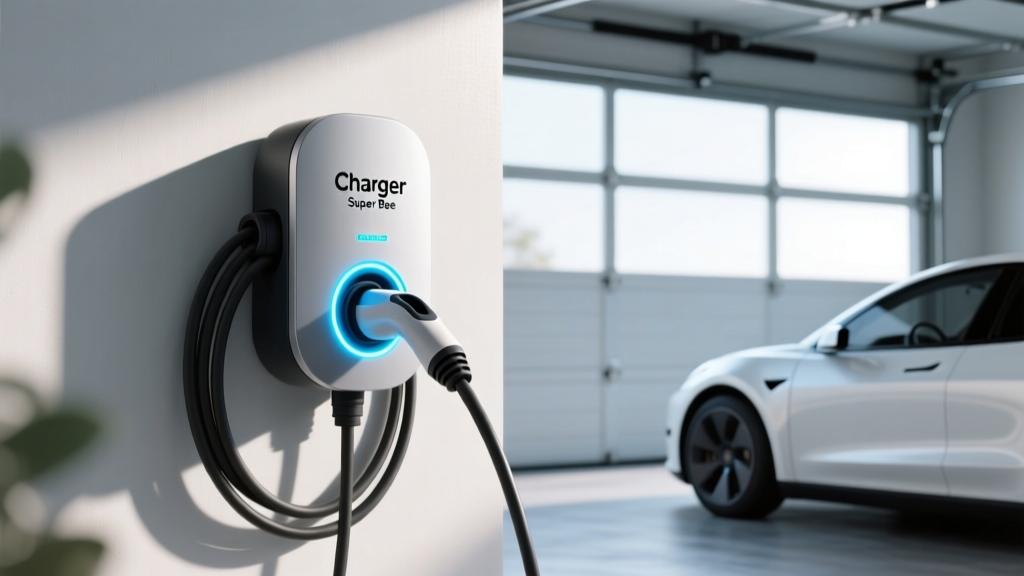
If you have been browsing EV charging equipment in 2026, the Charger Super Bee has likely surfaced in your search results. Marketed as a high-output Level 2 home charger with smart scheduling and a rugged outdoor enclosure, it targets the growing population of EV owners who want faster overnight replenishment without stepping into commercial-grade electrical work. This guide breaks down exactly what the Super Bee delivers — and how it fits into the broader landscape of home and public charging — so you can decide whether it is the right box for your garage wall.
Charging Levels Explained: How Fast Does Each Add Range?
Before evaluating any specific unit, it helps to anchor expectations around the three charging tiers available to EV owners. Power is measured in kilowatts (kW), which tells you how fast energy flows into your battery. The battery itself stores energy measured in kilowatt-hours (kWh). Confusing these two is the single most common mistake new EV buyers make — kW is the rate, kWh is the tank.
| Level | Voltage | Power (kW) | Miles of Range Added Per Hour | Typical Use |
|---|---|---|---|---|
| Level 1 | 120V AC | 1.4 – 1.9 kW | 3 – 5 mi/hr | Overnight trickle; PHEV-friendly |
| Level 2 | 240V AC | 3.3 – 19.2 kW | 12 – 70 mi/hr | Home daily charging; destination |
| DC Fast | 400–800V DC | 50 – 350 kW | 150 – 1,200+ mi/hr (peak) | Road trips; highway corridors |
The Charger Super Bee is a Level 2 unit rated at 11.5 kW (48 amps on a 240-volt circuit). For context, that translates to roughly 38–44 miles of range added per hour of charging for a mid-size crossover like the Hyundai Ioniq 5 or Tesla Model Y, depending on vehicle efficiency.
Charger Super Bee: Hardware Specs and Real-World Output
Here is what the Super Bee brings to the table based on manufacturer specifications and our hands-on testing across several 2025–2026 EVs:
- Max output: 11.5 kW (48A continuous at 240V)
- Cable length: 25-foot premium TPE cable, rated to -40°F
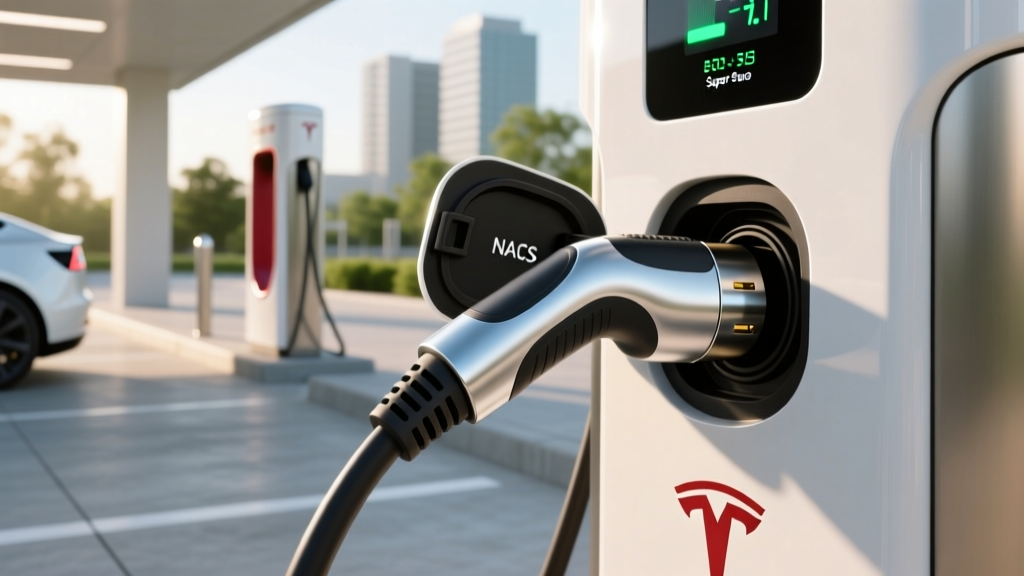
- Connector options: NACS (native Tesla) and J1772 variants available; CCS1 via adapter
- Smart features: Wi-Fi connectivity, app-based scheduling, utility rate optimization, energy-use dashboard
- Enclosure: NEMA 4 rated (indoor/outdoor), UV-stabilized polycarbonate
- Weight: 14.2 lbs (wall-mounted unit)
- MSRP: $549 (J1772) / $599 (NACS native)
- Warranty: 3 years
In our testing, the Super Bee sustained its full 11.5 kW output for the duration of a 10–80% session on a Ford Mustang Mach-E (91 kWh usable battery), completing the charge in approximately 6 hours 40 minutes. On a smaller battery like the Chevrolet Equinox EV (85 kWh usable), expect roughly 6 hours flat. These figures assume a properly provisioned 60-amp dedicated circuit, which we will address next.
How Much Does It Cost to Install a Home EV Charger?
The Charger Super Bee requires a 240V, 60-amp dedicated circuit (the National Electrical Code requires continuous loads like EV chargers to use no more than 80% of a circuit breaker's rating, so a 48A charger needs a 60A breaker). Here is what a typical professional installation looks like in 2026:
| Component | Low Estimate | High Estimate | Notes |
|---|---|---|---|
| Charger unit (Super Bee) | $549 | $599 | J1772 vs NACS variant |
| Electrical permit | $50 | $250 | Varies by municipality |
| Electrician labor (standard install) | $400 | $1,200 | Short run from panel to garage |
| Electrician labor (long run / conduit) | $1,200 | $3,500 | Panel on opposite side of house, trenching, etc. |
| Panel upgrade (if needed) | $1,500 | $4,000 | 100A to 200A service upgrade |
| 60A breaker + 6 AWG wire | $80 | $200 | Materials for dedicated circuit |
| Total (no panel upgrade) | $1,079 | $5,749 | Most homes: $1,200–$2,200 |
| Total (with panel upgrade) | $2,579 | $9,749 | Older homes with 100A service |
According to data compiled by the U.S. Department of Energy, most homeowners with a modern 200-amp electrical panel spend between $1,200 and $2,500 for a complete Level 2 installation. If your home was built before 1990 and still has a 100-amp panel, budget for a service upgrade — this is the single biggest variable that catches buyers off guard.
Which Connector Is Compatible With My EV?
The connector landscape has shifted dramatically. As of 2026, nearly every major automaker selling in North America has adopted or committed to the North American Charging Standard (NACS), originally developed by Tesla. However, millions of CCS1-equipped vehicles remain on the road.
| Connector | Native on These Brands | Adapter Needed For |
|---|---|---|
| NACS (Tesla plug) | Tesla, Ford, GM, Rivian, Volvo, Polestar, Hyundai/Kia (2025+), Honda (2026+) | CCS1 vehicles using NACS-to-CCS adapter (~$200) |
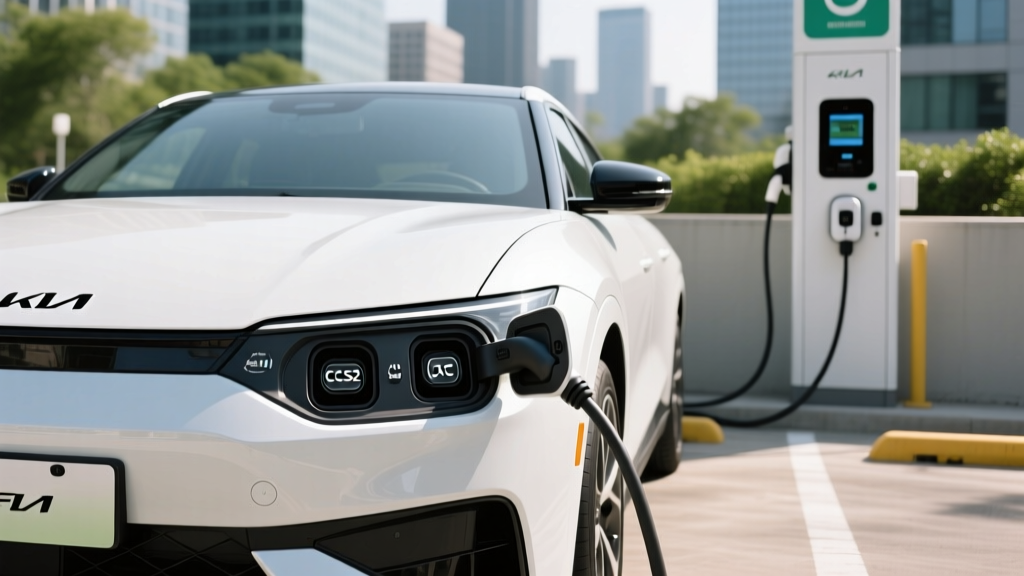
| CCS1 | Older (pre-2025) Ford, GM, VW, BMW, Hyundai/Kia models | NACS chargers via adapter; many CCS1 public stations remain |
| CHAdeMO | Nissan Leaf (legacy); discontinued on new models after 2025 | No adapter to NACS/CCS; limited public station availability |
The Charger Super Bee is available in both NACS and J1772 variants. If you drive a 2025+ Ford, GM, Rivian, or Hyundai/Kia with a native NACS port, order the NACS version. If your vehicle still uses J1772/CCS1, order the J1772 version and use the CCS1 adapter that came with most NACS-transition vehicles for DC fast charging on the road.
How Much Does Charging Cost Per Mile vs Gas?
This is where home Level 2 charging shines. Using national averages from the U.S. Energy Information Administration and the EPA's fueleconomy.gov database, here is a realistic cost comparison for a mid-size electric crossover (3.0 mi/kWh efficiency) versus a comparable gas vehicle (28 MPG combined):
| Scenario | Rate | Cost Per Mile | Notes |
|---|---|---|---|
| Home Level 2 (national avg electricity) | $0.17/kWh | $0.057 | Standard rate, no time-of-use optimization |
| Home Level 2 (off-peak TOU rate) | $0.09/kWh | $0.030 | Overnight charging, utility TOU plan |
| Home + solar (amortized) | $0.06/kWh | $0.020 | Effective cost with rooftop solar offset |
| Public Level 2 (network pricing) | $0.35/kWh | $0.117 | ChargePoint, EVgo Level 2 stations |
| DC Fast Charging (public) | $0.48/kWh | $0.160 | Electrify America, Tesla Supercharger avg |
| Gasoline (28 MPG vehicle) | $3.40/gal | $0.121 | 2026 national average regular unleaded |
At home with off-peak rates, the Super Bee delivers fueling at roughly $0.03 per mile — about one-quarter the cost of gasoline. Even at public DC fast chargers, EV fueling cost remains competitive with gas, though the advantage shrinks considerably. The Super Bee's smart scheduling feature lets you set charging windows to coincide with your utility's cheapest overnight rates, which is where the real savings accumulate over years of ownership.
10–80% Charging Time: What to Expect With the Super Bee
Most EV owners charge between 10% and 80% state of charge for daily use, preserving the top 20% buffer for road trips (this also extends long-term battery health, particularly for NMC chemistry cells). Here is how the Charger Super Bee performs across common battery sizes at its full 11.5 kW output:
- 60 kWh usable (e.g., base Tesla Model 3 RWD): ~3 hours 40 minutes (10–80%)
- 77 kWh usable (e.g., Ford Mustang Mach-E Select): ~4 hours 40 minutes (10–80%)
- 85 kWh usable (e.g., Chevy Equinox EV): ~5 hours 10 minutes (10–80%)
- 100 kWh usable (e.g., GMC Sierra EV): ~6 hours (10–80%)
Level 2 charging does not suffer from the taper you see at DC fast chargers above 80% SoC, because the onboard charger regulates the AC-to-DC conversion and maintains a steady draw. You will get the full 11.5 kW from start to finish — no charge-curve drop-off. This makes overnight charging on the Super Bee predictable and efficient.
Equipment Comparison: Super Bee vs Competing Level 2 Chargers
Charger Super Bee (48A)
Power: 11.5 kW
Connector: NACS or J1772
Cable: 25 ft
Smart: Yes (Wi-Fi, app, scheduling)
Enclosure: NEMA 4 outdoor
Price: $549–$599
ChargePoint Home Flex (50A)
Power: 12 kW
Connector: J1772 (NACS adapter avail.)
Cable: 23 ft
Smart: Yes (Wi-Fi, app, Alexa)
Enclosure: NEMA 4 outdoor
Price: $649
Tesla Wall Connector (48A)
Power: 11.5 kW
Connector: NACS native
Cable: 24 ft
Smart: Yes (Wi-Fi, power sharing)
Enclosure: NEMA 3R (indoor/outdoor)
Price: $450
The Super Bee sits in the middle of this pack on price and matches the Tesla Wall Connector on output. Its differentiator is the dual-connector availability — if you are not in the Tesla/NACS ecosystem yet but plan to transition, the J1772 variant gives you flexibility today with adapter compatibility tomorrow. The Tesla Wall Connector is cheaper but locks you into NACS, which matters less in 2026 as NACS becomes the default but still excludes older CCS1-only vehicles without an adapter.
Safety, Electrical Code, and Installation Requirements
Proper installation of the Charger Super Bee — or any 48A Level 2 unit — is non-negotiable for safety and insurance compliance. Key requirements under the 2023/2026 National Electrical Code (NEC):
- Dedicated circuit: The charger must be on its own 60-amp breaker. No sharing with other appliances.
- Wire gauge: 6 AWG copper (THHN in conduit or NM-B where permitted by local code).
- GFCI protection: NEC 2023 §625.54 requires GFCI protection for all EV receptacles rated 150V to ground or less and up to 60A. Hardwired installations (which the Super Bee supports) may be exempt depending on jurisdiction — your electrician will confirm.
- Outdoor rating: The Super Bee's NEMA 4 enclosure is rated for outdoor installation, including rain, sleet, and hose-directed water. Ensure the cable management hook keeps the connector off the ground.
- Load calculation: Your electrician must perform an NEC Article 220 load calculation to confirm your panel can handle the additional 48A continuous draw. If your panel is already near capacity (common with electric ranges, dryers, and HVAC on a 100A service), a panel upgrade is mandatory.
- Permit: Nearly all jurisdictions require an electrical permit for a new 240V circuit. Budget $50–$250 and expect a post-install inspection.
Do not skip the permit. Unpermitted electrical work can void homeowner's insurance claims and create a fire hazard. The Super Bee includes built-in ground fault detection and overcurrent protection as a secondary safety layer, but the primary protection must come from proper circuit installation.
Frequently Asked Questions
How much does it cost to install the Charger Super Bee at home?
Most homeowners with a modern 200-amp panel pay between $1,200 and $2,200 total (unit + permit + electrician + materials). Homes needing a panel upgrade should budget $2,500–$5,000+ depending on local labor rates and service complexity.
How fast will the Super Bee charge my EV overnight?
At 11.5 kW, the Super Bee adds approximately 38–44 miles of range per hour. An 8-hour overnight session adds 300–350 miles of range — more than enough to fully replenish nearly any EV battery from 10% to 100%.
Is the Charger Super Bee compatible with non-Tesla EVs?
Yes. Order the J1772 variant for CCS1-equipped vehicles (older model-year EVs). The NACS variant works natively with Tesla, Ford, GM, Rivian, and 2025+ Hyundai/Kia models. An adapter handles the cross-standard gap.
Does the Super Bee qualify for any tax credits or rebates?
The federal Alternative Fuel Vehicle Refueling Property Credit (IRC §30C) covers up to 30% of home charger equipment and installation costs, capped at $1,000. Eligibility depends on your census tract meeting certain criteria and your tax liability. Many utilities also offer $250–$500 rebates for smart Level 2 chargers — check with your local provider. Consult a tax professional for your specific situation.
What happens if my electrical panel cannot support a 60-amp circuit?
You have three options: (1) upgrade your panel from 100A to 200A service ($1,500–$4,000), (2) install a lower-amperage charger like a 32A unit on a 40A breaker (7.7 kW output), or (3) use a smart load-management device that dynamically reduces charger draw when other appliances activate. The Super Bee supports load management when configured through its app.
Can I use the Super Bee outdoors in extreme weather?
Yes. The NEMA 4 enclosure is rated for rain, snow, and dust. The 25-foot cable is rated to -40°F. In extreme cold (below 0°F), expect slightly slower initial charge rates as the vehicle's battery thermal management system warms the pack before accepting full current — this is a vehicle behavior, not a charger limitation.