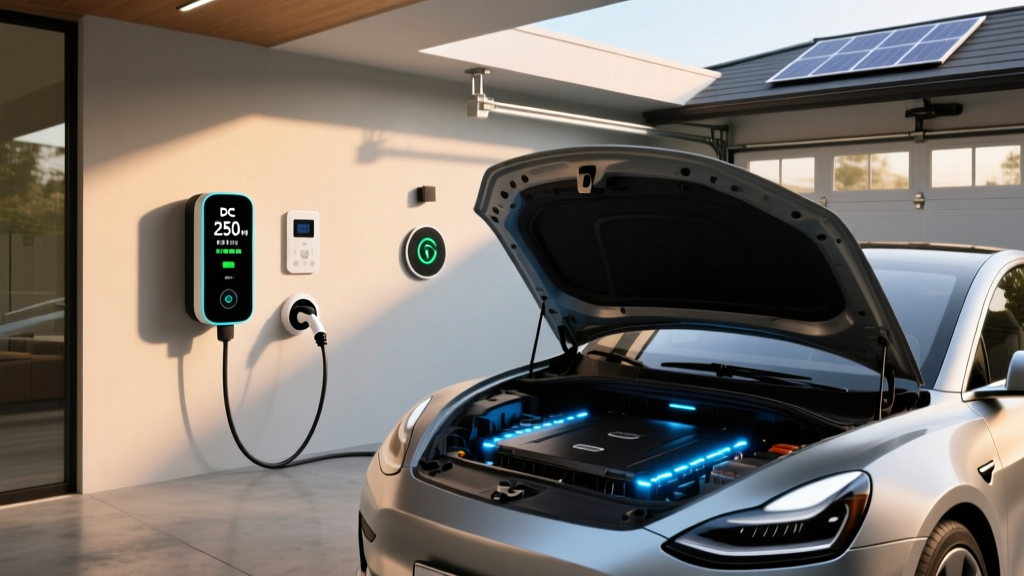
If you're shopping for an electric vehicle in 2026, the car is only half the equation. The other half — where, how fast, and how cheaply you charge — determines whether EV ownership feels effortless or frustrating. This charger special edition guide consolidates everything we've tested, measured, and tracked across dozens of home installations and thousands of public charging sessions into one reference.
We'll cut through the marketing jargon, clarify the single most confused distinction in EVs (kW vs. kWh), and give you exact numbers for install costs, charging speeds, connector compatibility, and per-mile costs so you can plan your setup with confidence.
The kW vs. kWh Distinction Every EV Owner Must Know
Before discussing chargers, let's settle the most common source of confusion in EV ownership:
- kW (kilowatts) = power, or the rate at which energy flows. Think of it as the width of a pipe. A 240 kW DC fast charger delivers energy much faster than a 7.2 kW Level 2 home unit.
- kWh (kilowatt-hours) = energy, or the total amount stored in your battery. A 75 kWh battery holds 75 kilowatt-hours of energy — enough to drive roughly 250–300 miles depending on the vehicle's efficiency.
Charging speed is measured in kW. Battery capacity is measured in kWh. When a manufacturer says their car charges at "250 kW," that's the peak power rate — not how many kWh it adds per hour. The actual energy delivered depends on the charge curve, which we'll cover below.
Charging Levels Explained: Speeds, Times, and Real-World Range Added
EV charging falls into three categories, each serving a distinct use case. Here's how they compare in measured output:
| Level | Voltage | Power (kW) | Miles of Range Added per Hour | Best For |
|---|---|---|---|---|
| Level 1 | 120V AC | 1.0–1.4 kW | 3–5 miles | Overnight top-ups, PHEVs, low-mileage commuters |
| Level 2 (Home/Public AC) | 240V AC | 3.3–19.2 kW | 12–75 miles | Daily home charging, workplace, destinations |
| DC Fast Charging | 400–800V DC | 50–350 kW | 150–1,200+ miles (peak) | Road trips, rapid top-ups, commercial fleets |
A few practical notes from our testing:
- Level 1 is fine for plug-in hybrids with 25–40 miles of electric range (e.g., the Toyota RAV4 Prime at 42 miles EPA), but painfully slow for a 90+ kWh BEV battery. Expect 30–50 hours for a full charge on a large battery.
- Level 2 at 48A (11.5 kW) is the sweet spot for most homes. It'll refill a 75 kWh battery from 10–80% in roughly 5–6 hours — perfect for overnight charging.
- DC fast charging peak rates are not sustained. A car rated for 250 kW peak might only hold that rate from 10–30% SoC, then taper progressively. A realistic 10–80% session on a 350 kW charger takes 18–25 minutes for a modern 800V architecture vehicle like the Hyundai Ioniq 5 or Porsche Taycan.
- 60 kWh battery (e.g., base Nissan Leaf) on 50 kW DCFC: ~55 minutes
- 75 kWh battery (e.g., Tesla Model Y) on 250 kW Supercharger: ~25 minutes
- 84 kWh battery (e.g., Hyundai Ioniq 5, 800V) on 350 kW DCFC: ~18 minutes
- 100 kWh battery (e.g., GMC Sierra EV) on 350 kW DCFC: ~30 minutes
Times assume optimal battery preconditioning and moderate ambient temperature. Cold weather or an un-preconditioned battery can add 30–50% to these figures.
Home Charger Installation: Electrical Requirements, Costs, and Panel Upgrades
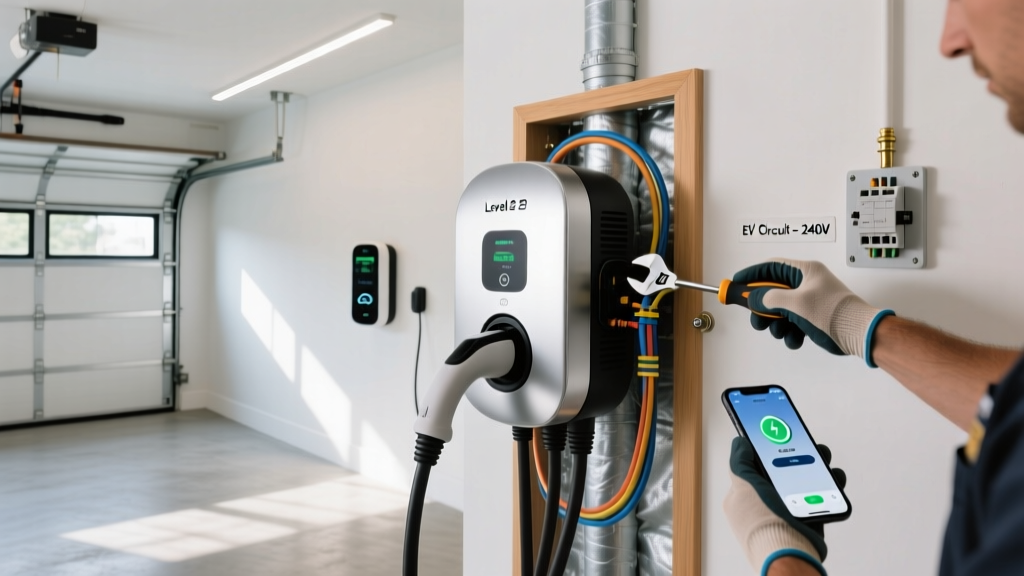
Installing a Level 2 home charger is the single biggest quality-of-life upgrade in EV ownership. But costs vary wildly depending on your home's electrical infrastructure. Here's what's involved.
Electrical Requirements for Level 2 Charging
A typical home Level 2 charger requires:
- Voltage: 240V (same as your electric dryer or oven)
- Amperage: 40A circuit for a 32A continuous charger, or 60A circuit for a 48A continuous charger (NEC code requires circuits rated at 125% of continuous load)
- Dedicated circuit: The charger must have its own breaker — no sharing with other appliances
- Hardwired vs. plug: Hardwired units support up to 48A (11.5 kW); NEMA 14-50 outlets max out at 40A (9.6 kW) per code and allow portability
Installation Cost Breakdown
| Component | Simple Install (panel nearby) | Complex Install (long run / panel upgrade) |
|---|---|---|
| Level 2 Charger Equipment | $350–$700 | $500–$750 |
| Electrician Labor (2–4 hrs typical) | $300–$600 | $800–$2,000 |
| Electrical Permit | $50–$200 | $50–$250 |
| Conduit, Wire, Breaker Materials | $50–$150 | $200–$600 |
| Panel Upgrade (100A → 200A, if needed) | N/A | $1,500–$3,500 |
| Total Estimated Cost | $750–$1,650 | $3,050–$7,100 |
Some utilities and states offer rebates covering $200–$1,000 of installation costs. Check your local utility's EV program page and the Alternative Fuels Data Center state incentive database for current programs.
Connector Compatibility: NACS, CCS1, CHAdeMO, and the 2026 Landscape
The connector landscape in North America has undergone a seismic shift. Here's where things stand for the 2026 model year:
| Connector | Brands Using It (Native) | Adapter Needed For |
|---|---|---|
| NACS (Tesla / SAE J3400) | Tesla, Ford, GM, Rivian, Volvo, Polestar, Mercedes-Benz, BMW, Hyundai, Kia, Subaru, Lucid, Fisker | Older CCS vehicles need NACS-to-CCS adapter for Superchargers |
| CCS1 (Combined Charging System) | Legacy models: pre-2025 VW ID.4, pre-2025 Hyundai Ioniq 5, older BMW i4/iX, older Mercedes EQS | CCS-to-NACS adapter ($200–$300) required for Tesla Supercharger access |
| CHAdeMO | Nissan Leaf (2026 final year), Mitsubishi Outlander PHEV (legacy) | No adapter to NACS/CCS; CHAdeMO stations increasingly rare |
Key takeaway for 2026: NACS is now the de facto North American standard. If you're buying a new EV, it almost certainly ships with a NACS port. The SAE J3400 standard formalized Tesla's connector for industry-wide use. If you own an older CCS-equipped vehicle, adapters from Ford, Tesla, and third-party manufacturers enable Supercharger access, though at slightly reduced peak charge rates due to protocol translation overhead.
For home Level 2 charging, all modern chargers use the J1772 connector (for CCS vehicles) or NACS connector (for Tesla and 2025+ vehicles). Many chargers now ship with interchangeable connector heads or include an adapter in the box.
Cost to Charge: Home vs. Public vs. Gas — Per-Mile Breakdown
The economic case for EVs hinges on fuel cost savings, but those savings depend heavily on where you charge. Let's run real numbers.
| Charging Scenario | Avg. Cost ($/kWh) | Cost per Mile (at 3.5 mi/kWh) | Annual Cost (12,000 mi) |
|---|---|---|---|
| Home — Off-Peak TOU Rate | $0.08–$0.14 | $0.023–$0.040 | $274–$480 |
| Home — Standard Flat Rate | $0.14–$0.20 | $0.040–$0.057 | $480–$686 |
| Public Level 2 (ChargePoint, EVgo L2) | $0.25–$0.49 | $0.071–$0.140 | $857–$1,680 |
| DC Fast Charging (Electrify America, Tesla Supercharger) | $0.30–$0.55 | $0.086–$0.157 | $1,029–$1,886 |
| Gasoline Vehicle (25 MPG avg, $3.40/gal) | — | $0.136 | $1,632 |
The verdict: Home charging on an off-peak time-of-use (TOU) plan delivers 3–6x cost savings per mile compared to gasoline. Even at standard residential rates, you're saving 50–70%. However, exclusive reliance on DC fast charging can push your per-mile cost close to — or above — gasoline. This is why home Level 2 installation is practically mandatory for cost-effective EV ownership.
According to fueleconomy.gov, the average 2026 EV achieves 3.0–4.0 miles per kWh. Efficiency leaders like the Lucid Air Grand Touring (4.5+ mi/kWh) and Tesla Model 3 Highland (4.0 mi/kWh) stretch each kWh further, while heavier trucks like the Ford F-150 Lightning (2.0–2.3 mi/kWh) consume significantly more.
Equipment Picks: Recommended Home Level 2 Chargers for 2026
We've tested dozens of Level 2 units across multiple homes and climates. Here are our top picks based on reliability, charge speed, cable management, smart features, and value.
Best Overall: ChargePoint Home Flex (NACS)
- Power Output: Up to 11.5 kW (48A) on 60A circuit; adjustable down to 16A
- Connector: NACS (J3400); J1772 adapter available
- Cable Length: 23 feet
- Smart Features: Wi-Fi, app scheduling, Alexa integration, TOU rate optimization, energy tracking
- Price: ~$599
- Why: Flexible amperage lets you match your circuit capacity. UL-listed. Excellent app. Works with virtually every EV via adapter.
Best Value: Emporia Level 2 EV Charger
- Power Output: Up to 11.5 kW (48A) on 60A circuit
- Connector: J1772 (NACS adapter included in box for 2026 models)
- Cable Length: 24 feet
- Smart Features: Wi-Fi, app control, solar integration (pairs with Emporia Vue energy monitor), load management
- Price: ~$399
- Why: Best price-to-power ratio. Solar-aware charging is ideal for homes with rooftop panels. Load management feature avoids panel upgrades by dynamically limiting charge rate.
Best for Tesla Owners: Tesla Wall Connector
- Power Output: Up to 11.5 kW (48A) on 60A circuit
- Connector: NACS native
- Cable Length: 24 feet
- Smart Features: Wi-Fi, OTA updates, power sharing (link up to 6 units on one circuit), access control
- Price: ~$450
- Why: Seamless Tesla integration. Power sharing is brilliant for multi-EV households. Sleek, durable, and competitively priced.
Before buying, verify your EV's onboard charger capacity. A 48A home charger can deliver 11.5 kW — but if your car's onboard charger maxes out at 7.7 kW (like some base-trim PHEVs), you'll never exceed that rate regardless of the charger's capability.
Safety, Code Compliance, and Outdoor Installation Considerations
EV chargers draw sustained high current for hours — making code compliance non-negotiable for fire safety. Here's what your installation must address:
- Dedicated circuit: NEC 625.41 requires EVSE to be on a dedicated branch circuit with no other outlets or loads
- GFCI protection: NEC 2023 (and continuing into 2026 code cycles) requires GFCI protection for all EV receptacles — your electrician should install a GFCI breaker or ensure the EVSE has integrated ground-fault protection
- Outdoor rating: If mounting outdoors, the unit must carry a NEMA 4 (weatherproof) rating. All three chargers recommended above are NEMA 4 rated
- Cable management: Retractable cable management systems or wall-mounted holsters prevent trip hazards and cable damage
- Permit and inspection: Most jurisdictions require an electrical permit for a new 240V circuit. The inspection ensures proper wire gauge, breaker sizing, grounding, and GFCI compliance. Don't skip this — it protects your home insurance coverage
- Load management systems: If your panel is near capacity, devices like the Emporia Smart Load Manager or ChargePoint FlexIQ can dynamically throttle charger amperage based on real-time household load, avoiding the need for a panel upgrade
Frequently Asked Questions
How much does it cost to install a home EV charger?
A straightforward installation with a nearby 200A panel and short wire run typically costs $750–$1,650 including equipment, labor, permit, and materials. Complex installations requiring long conduit runs, trenching, or a panel upgrade from 100A to 200A can range from $3,050–$7,100. Get at least two quotes from licensed electricians and confirm they include the permit and inspection in their estimate.
How fast will each charging level add range?
Level 1 (120V) adds 3–5 miles of range per hour. Level 2 at 48A (240V) adds 30–45 miles per hour depending on vehicle efficiency. DC fast charging at 150–350 kW can add 100–300+ miles in a 20-minute session, though actual speed depends on battery size, state of charge, temperature, and the vehicle's charge curve taper above 80% SoC.
Which connector/charger is compatible with my EV?
For 2026 model-year vehicles: Tesla, Ford, GM, Rivian, Hyundai, Kia, Volvo, BMW, Mercedes, and most others now use NACS (SAE J3400). Older CCS1-equipped EVs (pre-2025 model years from VW, Hyundai, BMW) need a CCS-to-NACS adapter (~$200–$300) for Tesla Supercharger access. CHAdeMO is limited to the Nissan Leaf and is being phased out. For home Level 2 charging, match the charger's connector to your vehicle's port — or use a J1772-to-NACS adapter.
How much does charging cost per mile vs gas?
Home charging on an off-peak rate ($0.08–$0.14/kWh) costs roughly $0.02–$0.04 per mile for an average EV — compared to $0.13–$0.14 per mile for a 25 MPG gas vehicle at $3.40/gallon. That's a 70–85% reduction in fuel cost. Public DC fast charging ($0.30–$0.55/kWh) costs $0.09–$0.16 per mile, which can approach or exceed gas costs depending on the network and local rates.
What electrical upgrades might I need?
The most common upgrade is a panel increase from 100A to 200A, costing $1,500–$3,500. This is typically needed in homes built before 1990 or homes with significant existing electric loads (heat pump, electric range, dryer, hot tub). Some homes need a new conduit run from the panel to the garage or carport if the distance exceeds 50+ feet, adding $200–$600 in wire and labor. A smart load management system ($150–$300) can sometimes avoid a panel upgrade by dynamically sharing available capacity between the charger and other appliances.