If you've landed on this page, you're deep in what I call the charger pursuit — the multi-tab, multi-week research sprint to figure out how you'll actually power an electric vehicle day to day. You've read the EPA range stickers and compared battery sizes in kilowatt-hours (kWh, the unit of energy stored). Now comes the harder part: understanding kilowatts (kW, the unit of power flowing into the battery), picking the right home hardware, and knowing whether your electrical panel can handle it.
This guide consolidates everything I've learned installing chargers across three homes, testing public networks, and tracking the 2025–2026 industry shift to NACS. We'll cover charging speeds, real installation costs with the line items that surprise people, connector compatibility across every major brand, cost-per-mile math, and the specific Level 2 hardware worth buying right now.
Charging Levels Decoded: kW, Miles Per Hour, and Real Charge Times
The single most important EV literacy skill is separating kW (power — how fast energy flows) from kWh (energy — how much the battery holds). A 77 kWh battery charged at 11.5 kW takes roughly 6.7 hours from empty. That same battery at a 150 kW DC fast charger can add hundreds of miles before lunch. The table below shows what each level actually delivers in the real world.
| Level | Voltage / Power | Miles of Range Added Per Hour | Best For | Example: 10–80% on a 77 kWh Pack |
|---|---|---|---|---|
| Level 1 | 120V / 1.4–1.9 kW | 3–5 mi/hr | PHEVs, overnight trickle, emergency | ~40–50 hours (not practical) |
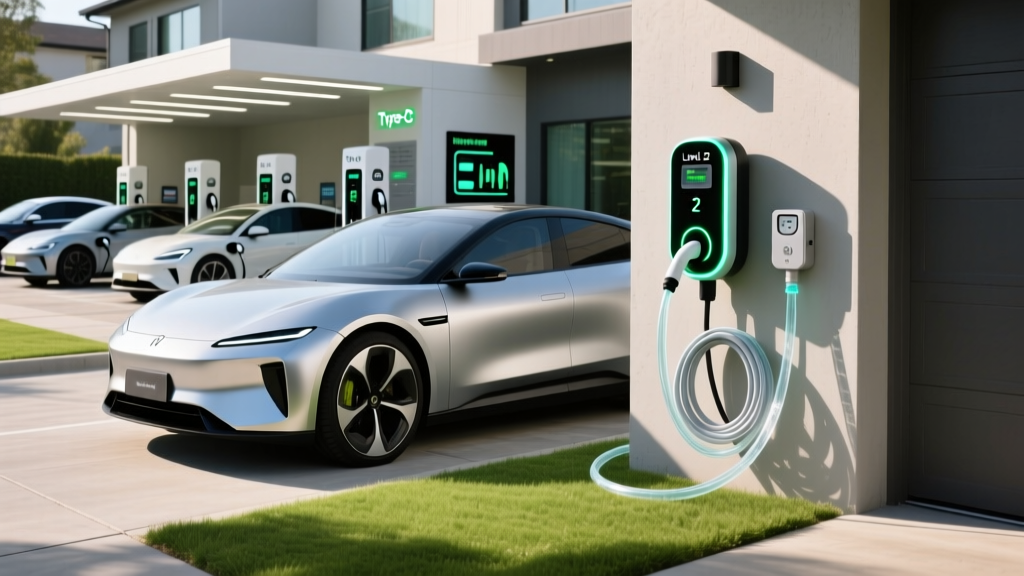
| Level 2 (home) | 240V / 7.7–11.5 kW | 25–44 mi/hr | Daily home charging | ~5–7 hours |
| Level 2 (public/commercial) | 240V / 19.2 kW | 55–75 mi/hr | Workplace, apartments, destination | ~3–4 hours |
| DC Fast (Level 3) | 400–800V / 50–350 kW | 150–1,000+ mi/hr (peak) | Road trips, highway corridors | 18–40 minutes |
Two caveats matter here. First, charge curves taper: a vehicle rated for "250 kW peak" typically sustains that rate only between roughly 10% and 40% state of charge. Above 80%, speeds drop sharply — sometimes to under 50 kW — to protect the battery. That's why 10–80% times are the industry benchmark rather than 0–100%.
Second, cold weather slows charging significantly. A battery at 20°F may accept only half its rated DC fast-charge power until it warms up. Vehicles with battery preconditioning (Tesla, Hyundai/Kia E-GMP, Rivian, Ford) mitigate this by heating the pack en route to the charger. Without preconditioning, expect your first 10 minutes at a DC fast charger in winter to feel painfully slow.
Home Charger Installation: Electrical Requirements, Panel Upgrades, and True Cost
Here's where the charger pursuit gets real. The hardware itself is rarely the biggest line item — it's the electrical work. Most EV owners install a 240-volt Level 2 charger on a dedicated 40-amp or 50-amp circuit, which requires a double-pole breaker and appropriately gauged wire (typically 6 AWG copper for 50A).
What Your Electrician Will Evaluate
- Panel capacity: A typical home has a 100A or 200A main service panel. A 48A continuous EV load (on a 60A breaker) can consume 25–50% of an older 100A panel's capacity. Your electrician will perform a load calculation per NEC Article 220.
- Panel upgrade: If you're on a 100A panel with existing heavy loads (electric range, dryer, HVAC), you may need a 200A service upgrade — this is the $2,000–$4,000 surprise that catches many homeowners off guard.
- Dedicated circuit: EV chargers require their own circuit. You cannot share it with other appliances.
- GFCI protection: The 2020 NEC requires GFCI protection for EV outlets; most hardwired chargers have internal GFCI, but receptacle installations need a GFCI breaker.
- Permit and inspection: Nearly every jurisdiction requires an electrical permit and final inspection for a new 240V circuit. Skipping this risks insurance denial and code violations.
Installation Cost Breakdown
| Line Item | Simple Install (panel nearby, no upgrade) | Moderate Install (long wire run or subpanel) | Complex Install (200A panel upgrade) |
|---|---|---|---|
| Level 2 charger hardware | $400–$700 | $400–$700 | $400–$700 |
| Electrician labor (2–8 hrs @ $85–$150/hr) | $250–$500 | $600–$1,200 | $800–$1,500 |
| Materials (wire, conduit, breaker) | $50–$200 | $200–$500 | $300–$600 |
| Permit & inspection | $50–$200 | $100–$300 | $100–$300 |
| Panel upgrade (if needed) | — | — | $2,000–$4,000 |
| Total | $750–$1,600 | $1,300–$2,700 | $3,600–$7,100 |
One often-overlooked option: some utility companies and municipalities offer rebates of $250–$1,000 for Level 2 installations, and the federal Alternative Fuel Vehicle Refueling Property Credit (30C) may cover up to 30% of hardware and installation costs (capped at $1,000) for qualifying installations in eligible census tracts. Check irs.gov and your local utility for current program details — these rules have specific geographic and income requirements.
Connector Compatibility: NACS, CCS1, CHAdeMO, and the Adapter Reality
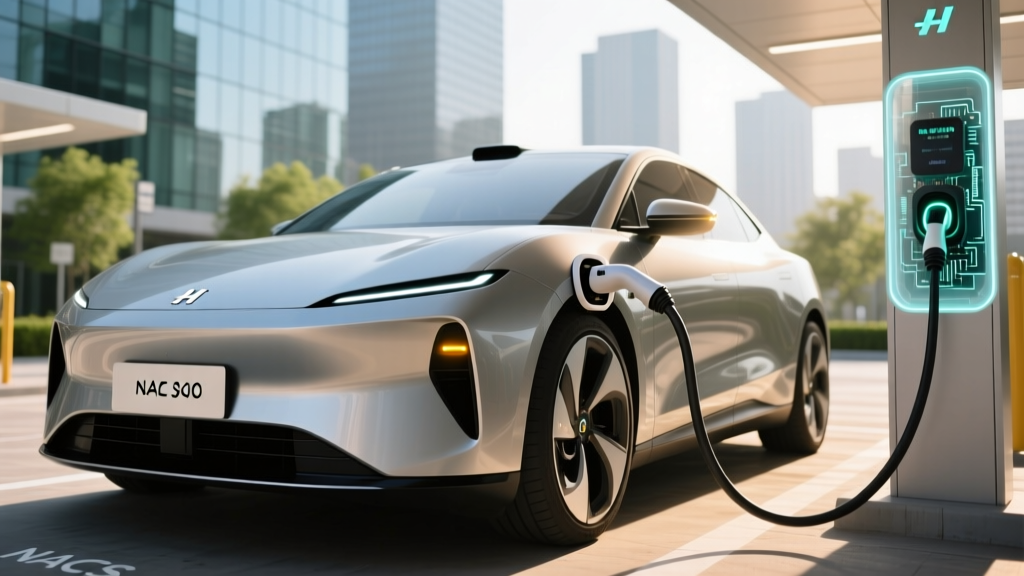
The connector landscape shifted dramatically between 2023 and 2026. Tesla's North American Charging Standard (NACS) won the format war, and nearly every major automaker adopted it for new vehicles starting with the 2025 model year. Here's where things stand:
| Connector | Brands Using It (New Vehicles) | DC Fast Network Access |
|---|---|---|
| NACS (native) | Tesla, Ford, GM, Rivian, Volvo, Polestar, Mercedes-Benz, Nissan (2026+), Honda (2026+) | Tesla Supercharger network directly; growing Electrify America, EVgo NACS stalls |
| CCS1 | Hyundai, Kia, BMW, Volkswagen, Stellantis/Jeep (some 2025 models still CCS) | Electrify America, EVgo, ChargePoint DC network |
| CHAdeMO | Nissan Leaf (legacy, discontinued after 2025), Mitsubishi Outlander PHEV | Shrinking — fewer stations maintain CHAdeMO connectors |
Adapter reality check: If you own a CCS-equipped EV (say, a 2024 Hyundai Ioniq 5), you can purchase a CCS-to-NACS adapter (~$200–$400) from Tesla or third-party manufacturers to access Supercharger stations. Conversely, newer NACS-equipped vehicles may need a NACS-to-CCS adapter to use older Electrify America stalls that haven't been retrofitted. Budget for one adapter and keep it in your frunk.
For home Level 2 charging, the J1772 connector remains the universal standard for non-Tesla vehicles. Most modern home chargers ship with a J1772 plug or a NACS plug — and adapters between the two cost $30–$80. Tesla Wall Connectors include a NACS plug natively and work with non-Tesla EVs using a simple adapter.
Cost to Charge: $/kWh Scenarios and Cost Per Mile vs. Gas
The economics of EV charging depend almost entirely on where you charge. Electricity prices vary by utility and time of day; DC fast charging is consistently the most expensive option.
| Scenario | Avg $/kWh | Cost for 77 kWh (10–80%) | Cost Per Mile (at 3.5 mi/kWh) |
|---|---|---|---|
| Home, off-peak utility rate | $0.09–$0.14 | $3.70–$5.75 | $0.026–$0.040 |
| Home, standard rate (no TOU) | $0.15–$0.20 | $6.15–$8.20 | $0.043–$0.057 |
| Public Level 2 (ChargePoint, etc.) | $0.25–$0.49 | $10.25–$20.10 | $0.071–$0.140 |
| DC Fast (Electrify America, EVgo) | $0.35–$0.55 | $14.35–$22.55 | $0.100–$0.157 |
| Tesla Supercharger (varies by location) | $0.25–$0.40 | $10.25–$16.40 | $0.071–$0.114 |
Compare this to gasoline: at $3.40/gallon and 28 MPG combined (a typical compact SUV), you're paying roughly $0.121 per mile. Home-charged EVs at off-peak rates undercut gas by 65–80%. Even DC fast charging on a road trip is cost-competitive with gas — and subscriptions (EA Pass, EVgo membership) can shave 10–25% off per-kWh pricing.
The practical takeaway: home charging is where the savings live. If your daily driving is under 50 miles and you charge overnight at home, your "fuel" cost drops to roughly $40–$60/month. Public and DC fast charging should be treated as road-trip infrastructure, not your primary fueling strategy.
Equipment Picks: 2025–2026 Home Level 2 Chargers Worth Buying
Not all Level 2 chargers are equal. The critical specs are power output (kW), cable length, connector type, and smart features (Wi-Fi scheduling, load management, utility demand-response integration). Here are the units I recommend based on hands-on use and current market availability:
Emporia Level 2 EV Charger
- Power: 48A / 11.5 kW (on a 60A circuit) or configurable down to 40A/32A
- Connector: J1772 (NACS adapter included in 2025+ bundles)
- Cable: 24 ft
- Smart features: Wi-Fi, app scheduling, solar integration, energy monitoring
- Price: ~$400–$450
- Best for: Budget-conscious buyers who want smart scheduling and solar pairing
ChargePoint Home Flex
- Power: Up to 50A / 12 kW (dip-switch configurable from 16A–50A)
- Connector: J1772 (NACS version available)
- Cable: 23 ft
- Smart features: Wi-Fi, Alexa, utility demand-response, detailed app
- Price: ~$550–$650
- Best for: Flexibility across panel sizes; widely utility-rebated
Tesla Wall Connector (Gen 4)
- Power: 48A / 11.5 kW
- Connector: NACS native
- Cable: 24 ft
- Smart features: Wi-Fi, OTA updates, power sharing (link multiple units), Tesla app
- Price: ~$450–$500
- Best for: Tesla owners and NACS-adopted EVs; cleanest installation
Grizzl-E Smart
- Power: 40A / 9.6 kW
- Connector: J1772 or NACS
- Cable: 24 ft
- Smart features: Wi-Fi, OCPP compatibility, rugged outdoor build (IP67)
- Price: ~$500–$600
- Best for: Cold-climate outdoor installs; built in Canada for -40°F operation
A note on amperage selection: the National Electrical Code requires that continuous loads (anything running 3+ hours, which includes EV charging) use no more than 80% of a circuit's rated capacity. A 48A charger needs a 60A breaker. A 40A charger needs a 50A breaker. Match your charger's amperage to your panel's available headroom — don't buy a 48A unit if your electrician can only spare a 50A circuit.
Safety, Code, and Installation Details That Matter
EV chargers draw sustained, high-current loads for hours — closer to running a welding machine than plugging in a lamp. Here's what separates a safe, code-compliant installation from a fire-hazard shortcut:
- Dedicated circuit: Your EV charger must have its own breaker. No sharing with a dryer, oven, or workshop outlet.
- Hardwired vs. receptacle: A hardwired connection (no plug) avoids the NEC 2020 GFCI breaker requirement for receptacles and is generally more reliable. A NEMA 14-50 receptacle offers portability but requires a GFCI breaker (~$50–$120 extra) and should be installed with the ground pin orientation specified by your charger manufacturer.
- Outdoor rating: If mounting outside, ensure the charger is rated IP55 or higher (IP67 preferred). Verify your local code requires a weatherproof cover for outdoor receptacles.
- Wire gauge: 6 AWG copper for 50A circuits; 4 AWG for 60A circuits over longer runs. Aluminum wire is cheaper but requires larger gauge and proper terminations — insist on copper unless your electrician has specific aluminum-rated lugs.
- Whole-home surge protection: Consider adding a Type 2 surge protective device (SPD) at your panel. EV electronics are sensitive, and a lightning-induced surge can destroy a $20,000 onboard charger.
Frequently Asked Questions
How much does it cost to install a home EV charger?
A straightforward Level 2 installation on an existing 200A panel typically costs $750–$1,600 including hardware, electrician labor, materials, and permit. If your wire run is long or a subpanel is needed, expect $1,300–$2,700. Homes with 100A panels that require a 200A service upgrade should budget $3,600–$7,100 total. Always get at least two quotes from licensed electricians who have specific EV charger installation experience.
How fast will each charging level add range?
Level 1 (120V) adds 3–5 miles of range per hour — fine for PHEVs with small batteries, inadequate for BEVs. Level 2 at 240V/48A adds roughly 35–44 miles per hour depending on vehicle efficiency. DC fast charging at 150+ kW can add 150–300+ miles in 20–30 minutes, though the charge curve tapers significantly above 80% state of charge.
Which connector and charger is compatible with my EV?
For 2025–2026 models: Tesla, Ford, GM, Rivian, Volvo, and Polestar use NACS natively. Hyundai, Kia, BMW, and VW still primarily use CCS1. The Nissan Leaf (discontinued after 2025) used CHAdeMO. For home Level 2 charging, J1772 works with all non-Tesla EVs, and adapters between J1772 and NACS cost $30–$80. Check your vehicle's charge port or your owner's manual for the definitive answer.
How much does charging cost per mile compared to gas?
Home charging at off-peak rates ($0.09–$0.14/kWh) costs roughly $0.03–$0.04 per mile — about 70% less than a 28 MPG gas vehicle at $3.40/gallon ($0.12/mile). Even public DC fast charging at $0.35–$0.55/kWh works out to $0.10–$0.16 per mile, which is competitive with gas. The savings are maximized when you charge at home on a time-of-use plan with overnight off-peak rates.
What electrical upgrades might I need?
The most common and costly upgrade is a 200A service panel replacement ($2,000–$4,000) if your home currently has a 100A panel with high existing loads. Other potential upgrades include: a subpanel addition ($500–$1,500) if the charger location is far from the main panel, new conduit runs for long wire distances, and GFCI breakers ($50–$120) for receptacle-based installations. An experienced electrician's load calculation will determine exactly what your home requires.
Can I use the federal tax credit for a home charger?
The 30C Alternative Fuel Vehicle Refueling Property Credit covers up to 30% of hardware and installation costs, capped at $1,000, for home EV charger installations in qualifying census tracts. Eligibility depends on your address and whether it's in a designated low-income or non-urban census tract. Consult a tax professional and review current-year IRS guidance before claiming — rules and eligible areas can change.
Is a smart charger worth the extra cost?
Yes, for most owners. Smart chargers with Wi-Fi let you schedule charging during off-peak hours (saving $0.05–$0.10/kWh), monitor energy usage, participate in utility demand-response programs (some utilities pay you $5–$15/month for this), and receive over-the-air firmware updates. The $100–$200 premium over a "dumb" charger typically pays for itself within 12–18 months through time-of-use optimization alone.