If you have ever watched a Tesla Supercharger add 200 miles of range in 15 minutes and wondered why your home outlet takes 40 hours to do the same, you are not alone. The EV charging landscape in 2026 spans a massive speed spectrum — from a trickle-charge 1.4 kW wall plug to 350+ kW DC fast chargers that genuinely earn the "fast and furious" label. Understanding where your setup falls on that spectrum, what it costs, and what electrical work your home actually needs is the single biggest factor in daily EV satisfaction.
This guide cuts through the marketing noise with exact numbers: kilowatt (kW) charge rates, miles of range added per hour, real installation costs, and the connector compatibility matrix that determines whether you can plug in at all. Whether you are installing your first home Level 2 charger or mapping out a cross-country road trip on public DC fast networks, the data below will set your expectations correctly.
The Three Charging Levels: Speed, Power, and Real-World Range Added
EV charging is categorized into three levels based on voltage, amperage, and whether the power conversion from AC (alternating current, what your home uses) to DC (direct current, what your battery stores) happens inside the car or at the station. The single most important distinction to internalize: kW (kilowatts) measures power — the rate of energy flow, while kWh (kilowatt-hours) measures energy — the total capacity of your battery. A 72 kWh battery charged at 11.5 kW takes roughly 6.3 hours from empty; that same battery at 150 kW peaks much faster but tapers as it fills.
| Level | Voltage / Amperage | Power Output (kW) | Miles of Range Added per Hour | Typical Use Case |
|---|---|---|---|---|
| Level 1 | 120V / 12–16A | 1.4–1.9 kW | 3–5 miles/hr | Overnight top-off; PHEV daily charging |
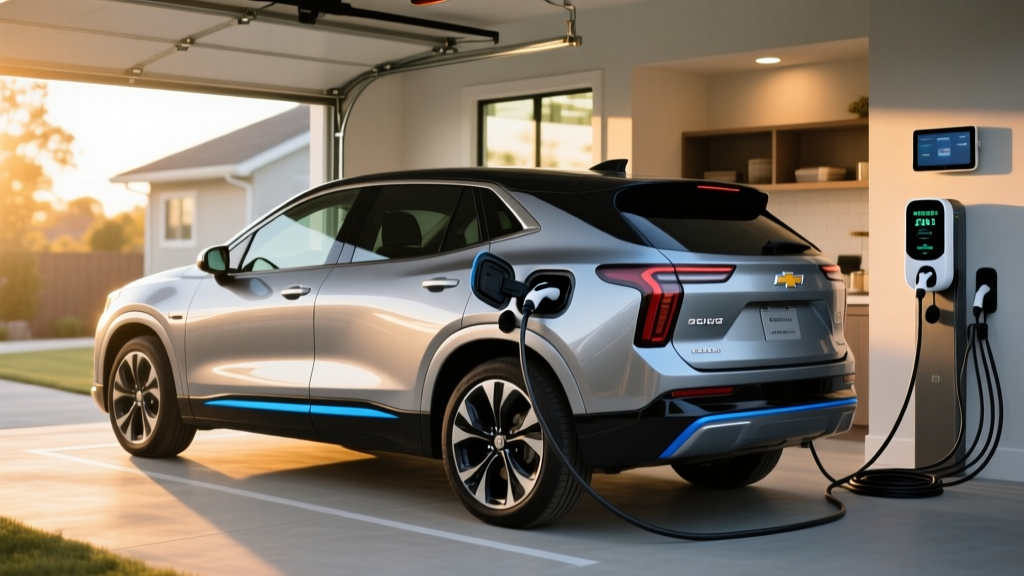
| Level 2 | 240V / 16–80A | 3.8–19.2 kW | 12–75 miles/hr | Primary home charging; workplace; destination |
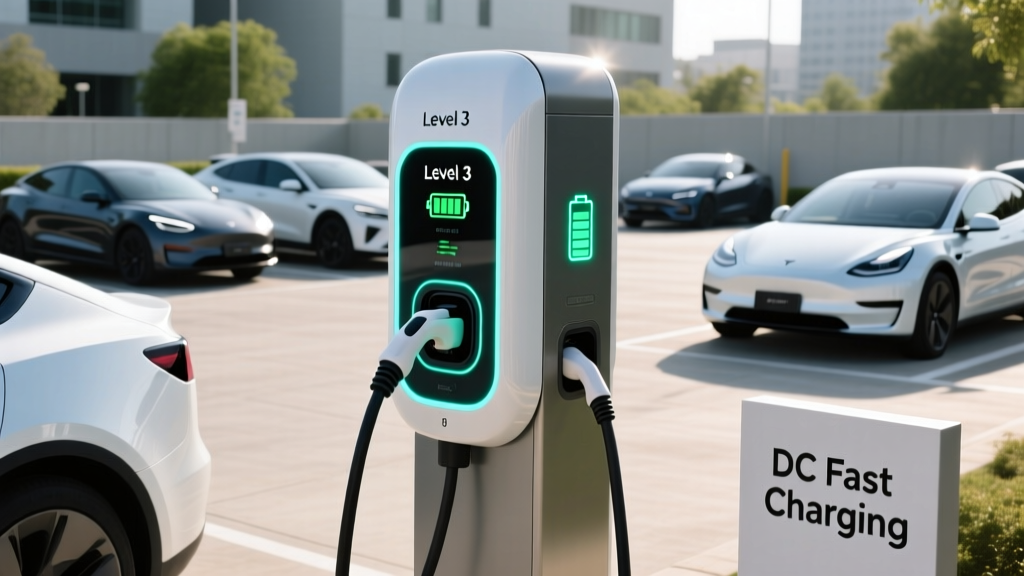
| DC Fast (Level 3) | 400–900V DC | 50–350+ kW | 150–1,300+ miles/hr (peak) | Road trips; rapid top-ups; commercial fleets |
How Much Does It Cost to Install a Home EV Charger?
Home Level 2 charger installation is the most common upgrade EV buyers make, and costs vary enormously depending on your electrical panel capacity, the distance from panel to charger location, and local permit requirements. Below is a realistic breakdown based on 2026 national averages.
| Component | Low End | Typical | High End | Notes |
|---|---|---|---|---|
| Level 2 Charger Equipment (hardwired or NEMA 14-50 plug) | $300 | $500 | $800 | 40A–48A smart chargers; Wi-Fi enabled |
| Electrician Labor | $400 | $800 | $1,800 | Depends on run length, wall type, conduit needs |
| Electrical Permit | $50 | $150 | $350 | Required in most jurisdictions; varies by municipality |
| Panel Upgrade (if needed) | $0 | $0 | $3,500 | Required if your panel lacks capacity; 100A panels often need upgrade to 200A |
| Total (no panel upgrade) | $750 | $1,450 | $2,950 | Most homes with 200A service fall here |
| Total (with panel upgrade) | $2,500 | $3,800 | $5,500+ | Older homes with 100A or 60A service |
Electrical Requirements: What Your Panel Must Handle
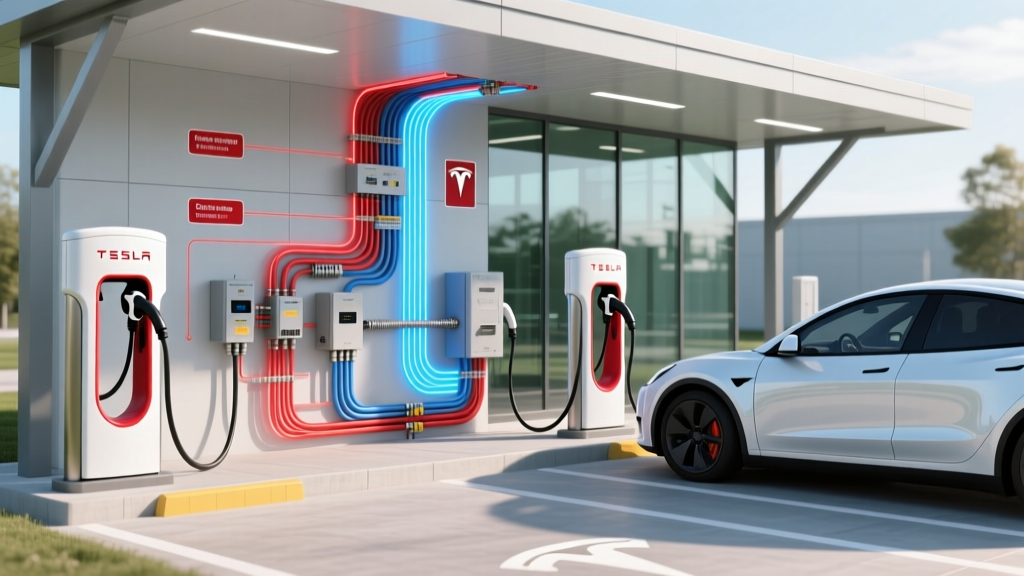
A typical Level 2 home charger runs on a 240V dedicated circuit at 40A to 60A. Per the National Electrical Code (NEC), continuous loads like EV charging must be derated to 80% of circuit capacity — meaning a 48A charger requires a 60A breaker, and a 40A charger requires a 50A breaker. Your electrician will verify that your panel has sufficient spare capacity using a NEC Article 220 load calculation.
Homes built after 2000 typically have 200A service with enough headroom. Homes built before 1980 with 100A or 60A panels will likely need a service upgrade — a significant added cost but one that also increases your home's resale value and enables future solar or heat-pump installations.
Charging Time Examples: How Long Does 10–80% Actually Take?
The 10–80% window is the industry-standard benchmark because lithium-ion batteries accept charge fastest in this range. Above 80%, the Battery Management System (BMS) progressively reduces current to protect cell health — this is called charge-curve taper, and it means the last 20% can take as long as the first 70%. Here is how common battery sizes perform at different charge rates:
| Battery Size (kWh usable) | Example Vehicle | Level 2 at 11.5 kW (48A) | DC Fast at 150 kW peak | DC Fast at 250 kW peak |
|---|---|---|---|---|
| 58 kWh | VW ID.4 (Standard) | ~3.5 hours | ~28 minutes | ~22 minutes |
| 75 kWh | Tesla Model Y Long Range | ~4.6 hours | ~32 minutes | ~25 minutes |
| 84 kWh | Hyundai Ioniq 5 (Long Range) | ~5.1 hours | ~28 minutes* | ~18 minutes* |
| 112 kWh | GMC Sierra EV | ~6.9 hours | ~48 minutes | ~35 minutes |
*Hyundai Ioniq 5 with 800V architecture sustains higher peak rates longer than 400V vehicles, yielding faster real-world sessions despite similar battery sizes.
These times assume battery preconditioning (warming the pack to optimal temperature before charging) and moderate ambient conditions. In sub-freezing weather without preconditioning, expect 10–80% times to increase by 30–50% as the BMS limits current to protect cold cells.
Connector Compatibility: NACS, CCS1, and CHAdeMO in 2026
The North American charging connector landscape has consolidated dramatically. Tesla's North American Charging Standard (NACS) has been adopted by Ford, GM, Rivian, Volvo, Hyundai, Kia, and most other major automakers starting with 2025–2026 model-year vehicles. CCS1 (Combined Charging System) remains on many 2024–2025 vehicles and is still supported at most public stations. CHAdeMO, used primarily by the Nissan Leaf, is effectively a legacy standard with declining infrastructure support.
| Connector | Brands Using It (2026) | Adapter Needed? | Public Network Access |
|---|---|---|---|
| NACS (J3400) | Tesla, Ford, GM, Rivian, Hyundai, Kia, Volvo, Polestar, BMW, Mercedes-Benz, Lucid, Subaru | CCS-to-NACS adapter for older CCS stations ($150–$300) | Tesla Supercharger network (open to all NACS); growing Electrify America, EVgo support |
| CCS1 | VW (older models), some Stellantis models, 2024 and prior model-year vehicles from brands now switching | NACS-to-CCS adapter for Tesla Superchargers ($200–$300) | Electrify America, EVgo, ChargePoint, most non-Tesla networks |
| CHAdeMO | Nissan Leaf (legacy only) | No practical adapter to NACS/CCS | Declining; some Electrify America and EVgo stations still equipped |
Cost to Charge: $/kWh Scenarios and Cost Per Mile vs Gas
Charging cost is where EVs deliver their most tangible ownership advantage — but only if you charge strategically. Electricity rates vary by utility, time of day, and whether you are at home or on a public network. Below is a realistic cost comparison using 2026 national averages.
| Charging Scenario | Typical $/kWh | Cost to Add 200 Miles* | Cost Per Mile |
|---|---|---|---|
| Home (off-peak / time-of-use rate) | $0.08–$0.14 | $4.80–$8.40 | $0.024–$0.042 |
| Home (standard residential rate) | $0.14–$0.20 | $8.40–$12.00 | $0.042–$0.060 |
| Public Level 2 (workplace, destination) | $0.20–$0.35 | $12.00–$21.00 | $0.060–$0.105 |
| DC Fast Charging (Electrify America, EVgo, Tesla) | $0.32–$0.56 | $19.20–$33.60 | $0.096–$0.168 |
| Gasoline Comparison (25 MPG combined at $3.40/gal) | |||
| Gas vehicle | $3.40/gallon | $27.20 | $0.136 |
*Based on average EV efficiency of 3.5 miles per kWh (roughly 28.5 kWh/100 mi). Your actual cost varies with vehicle efficiency, terrain, and climate.
The takeaway is clear: home charging at off-peak rates is 70–80% cheaper per mile than gasoline. Even public DC fast charging is often comparable to or slightly cheaper than gas on a per-mile basis, though it erodes the EV cost advantage significantly. According to fueleconomy.gov, most 2026 EVs achieve 100–130 MPGe combined, translating to $0.03–$0.05 per mile on average residential electricity.
Equipment Recommendations: 2026 Home Charger Picks
Choosing a Level 2 home charger comes down to amperage (which determines charge speed), connector type, cable length, smart features, and build quality. Below are three proven picks for different budgets and needs.
Budget Pick: Emporia Vue Level 2 Charger
- Power Output: 40A (9.6 kW at 240V)
- Connector: NACS (J3400) or J1772 (depending on model)
- Cable Length: 24 feet
- Smart Features: Wi-Fi, app-based scheduling, energy monitoring via Emporia Vue panel integration
- Price: ~$349
- Best For: Budget-conscious buyers who want smart scheduling for off-peak utility rates
Best Overall: ChargePoint Home Flex (2nd Gen)
- Power Output: Up to 50A (12 kW at 240V), adjustable down to 16A
- Connector: NACS (J3400) native; J1772 adapter available
- Cable Length: 23 feet
- Smart Features: Wi-Fi, Alexa integration, ChargePoint network account, flexible amperage settings to match your circuit
- Price: ~$549
- Best For: Most homeowners; adjustable amperage means it works on 20A to 60A circuits without swapping hardware
Premium Pick: Tesla Wall Connector (Gen 4)
- Power Output: Up to 48A (11.5 kW at 240V)
- Connector: NACS native; J1772 adapter included for non-Tesla EVs
- Cable Length: 24 feet
- Smart Features: Wi-Fi, over-the-air updates, power sharing between two Wall Connectors on one circuit, Tesla app integration
- Price: ~$475
- Best For: Tesla owners or multi-EV households; power-sharing feature lets two chargers run on a single 60A circuit
Safety, Code, and the Panel-Upgrade Question
EV charging is a high-draw, continuous electrical load — your charger may run at full power for 6–8 hours straight every night. This makes proper installation non-negotiable. Key code and safety requirements include:
- Dedicated circuit: Your Level 2 charger must have its own breaker — it cannot share a circuit with other appliances. This is NEC Article 625.
- GFCI protection: Outdoor installations require Ground Fault Circuit Interrupter (GFCI) protection. Many 2026 smart chargers include built-in GFCI; your electrician will verify compliance with NEC 2023/2026 code.
- Outdoor rating: If your charger is mounted outside (garage exterior, driveway, carport), it must carry a NEMA 4 or IP65 weatherproof rating. All three picks above meet this standard.
- Hardwired vs. plug: Hardwired chargers (directly connected to your panel wiring) are preferred for 48A+ installations because NEMA 14-50 receptacles are rated for 50A maximum and may overheat under continuous 48A draw. Many jurisdictions now require hardwiring for circuits above 50A.
The Panel-Upgrade Reality
If your home has a 100A electrical panel — common in homes built before 1990 — adding a 48A EV charger may exceed your panel's capacity, especially if you also run electric heat, a dryer, and an electric oven simultaneously. A licensed electrician will perform a load calculation per NFPA 70 (NEC). If an upgrade to 200A service is required, budget $2,000–$3,500 for the panel replacement plus utility coordination. While costly, a 200A panel upgrade adds resale value and prepares your home for future electrification (heat pumps, solar inverters, battery storage).
Some utilities and states offer rebates that offset panel-upgrade costs. Check the IRS §30D guidelines for the federal Alternative Fuel Vehicle Refueling Property Credit (up to $1,000 for home charging equipment through 2025; check current-year status for 2026), and consult your local utility for demand-response or make-ready programs.
Frequently Asked Questions
How much does it cost to install a home EV charger?
A typical Level 2 home charger installation costs $1,200–$2,500 including equipment, electrician labor, and permit — assuming your electrical panel has sufficient capacity. If a panel upgrade from 100A to 200A is needed, total costs rise to $3,000–$5,500. Always get a load calculation from a licensed electrician before purchasing equipment.
How fast will each charging level add range?
Level 1 (120V) adds 3–5 miles per hour. Level 2 (240V, 48A) adds roughly 30–40 miles per hour for an average EV. DC fast charging at 150 kW can add 150–200 miles in 15–20 minutes, though actual speed depends on battery size, state of charge, temperature, and the vehicle's charge-curve profile.
Which connector/charger is compatible with my EV?
For 2026 model-year vehicles, most non-Tesla brands have switched to NACS (J3400). If you drive a 2024 or earlier EV, you likely have CCS1. Check your vehicle's charge port or owner's manual. Adapters are available in both directions ($150–$300), but verify DC fast-charge compatibility before purchasing.
How much does charging cost per mile vs gas?
Home charging at off-peak rates costs $0.02–$0.04 per mile — roughly 75% less than gasoline at $3.40/gallon and 25 MPG. Public DC fast charging costs $0.10–$0.17 per mile, which is comparable to or slightly cheaper than gas. The biggest savings come from charging at home overnight on a time-of-use electricity plan.
What electrical upgrades might I need?
You need a dedicated 240V circuit (50A or 60A breaker) with sufficient panel capacity. Homes with 100A service often require a panel upgrade to 200A. Outdoor installations require GFCI protection and weatherproof-rated equipment. Your electrician will determine exact requirements during a site assessment — never skip the permit, as unpermitted EV charger installations can void home insurance and cause issues at resale.