What Does "Charger ICEd" Mean?
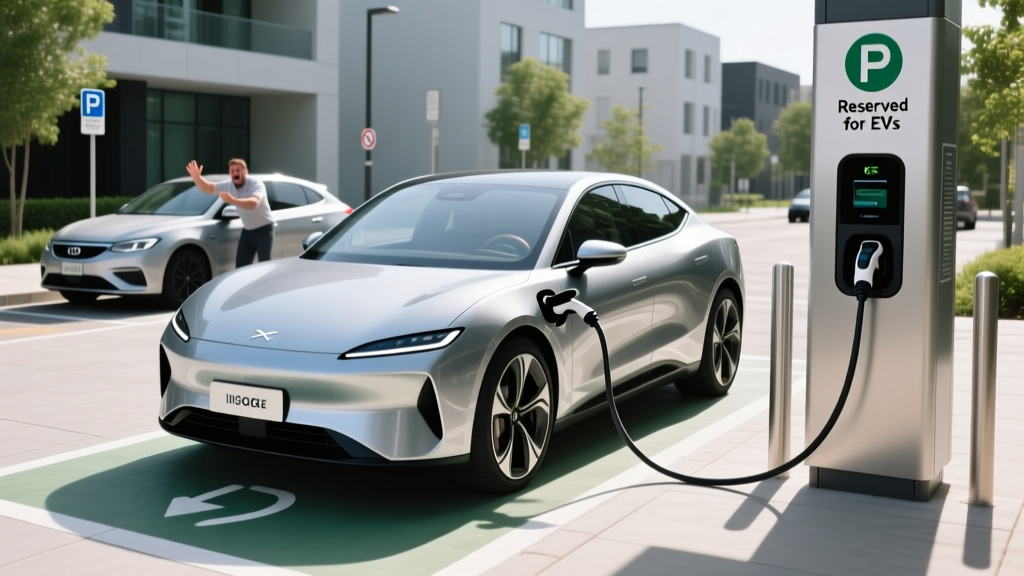
If you've ever pulled up to a public EV charging station only to find a gas-powered car parked squarely in front of the plug, you've experienced what EV owners call being "charger ICEd." The term comes from "ICE" — Internal Combustion Engine — and refers to any non-electric vehicle (or even an EV that isn't plugged in) blocking access to a charging spot.
ICEing is one of the most common frustrations for EV drivers relying on public infrastructure. It wastes your time, drains your battery buffer, and can turn a planned 20-minute DC fast-charge stop into a stressful ordeal. But understanding the broader charging landscape — what speeds to expect, what connectors fit your car, and how to set up reliable home charging — is the best defense against being stranded.
This guide covers everything you need to know: charging levels in exact kilowatt (kW) figures, real installation costs down to the permit, connector compatibility, cost-per-mile math, and what to do when you encounter an ICEd charger in the wild.
Charging Levels Explained: kW Speeds and Miles Per Hour
Before troubleshooting public charging, you need to know the three charging tiers and what each delivers. The critical distinction: kW (kilowatts) measures power — how fast energy flows into your car. kWh (kilowatt-hours) measures energy — how much your battery holds. Think of kW as the flow rate of a hose and kWh as the size of the bucket.
| Level | Voltage | Power (kW) | Miles of Range Added Per Hour | Typical Use Case |
|---|---|---|---|---|
| Level 1 | 120V AC | 1.0–1.4 kW | 3–5 mi/hr | Overnight top-up, PHEVs, emergencies |
| Level 2 | 240V AC | 3.3–19.2 kW | 12–75 mi/hr | Home daily charging, workplaces, malls |
| DC Fast Charge | 400–800V DC | 50–350 kW | 150–1,000+ mi/hr (peak) | Road trips, highway corridors |
Real-world context: A 75 kWh battery (like a Tesla Model Y Long Range) charged from 10–80% on a 50 kW DC fast charger takes roughly 60–70 minutes. On a 150 kW charger, that same 10–80% session drops to approximately 25–30 minutes. On a 350 kW charger with a compatible 800V vehicle (like the Hyundai Ioniq 5 or Kia EV6), 10–80% can happen in as little as 18 minutes. However, peak kW is never sustained — charging speed tapers significantly above 80% State of Charge (SoC) to protect battery health.
Home Charger Installation: Costs, Electrical Requirements, and Panel Upgrades
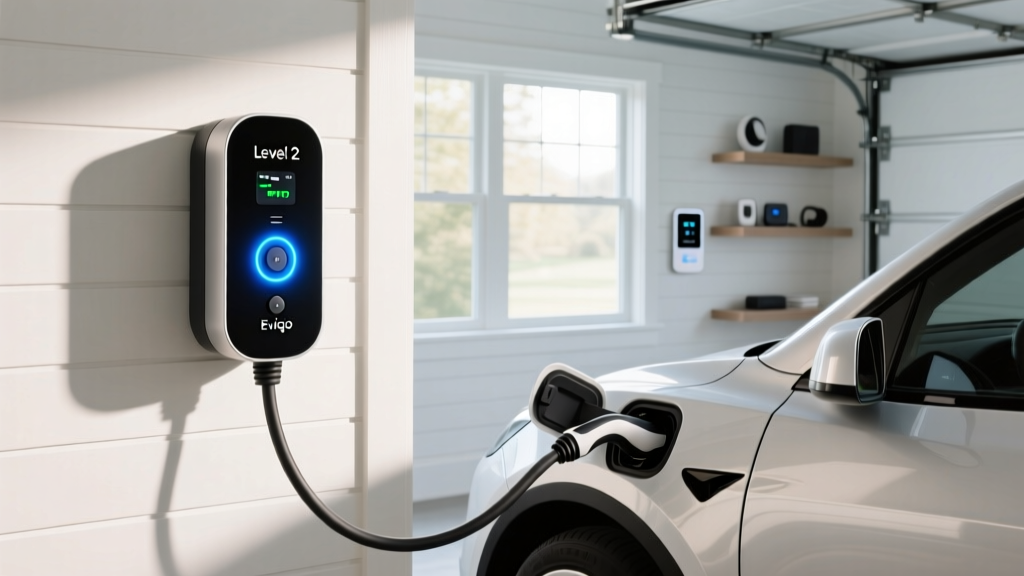
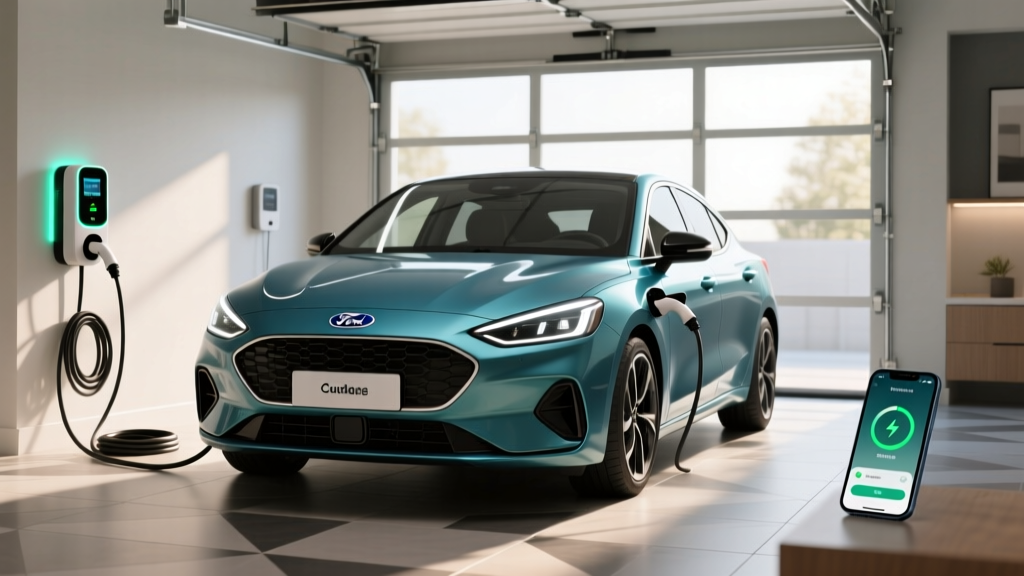
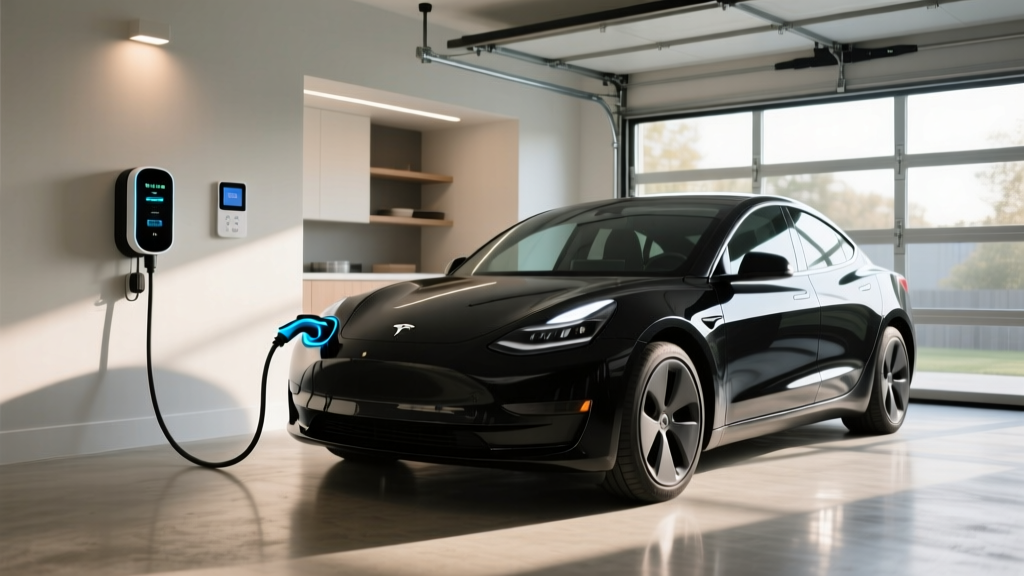
The single best defense against charger ICEing is never needing public chargers for daily driving. A Level 2 home charger lets you wake up to a full battery every morning. But installation costs vary wildly depending on your home's electrical infrastructure.
Electrical Requirements
A typical Level 2 home charger requires a 240V dedicated circuit, similar to what a clothes dryer or electric oven uses. Common configurations:
- 40-amp circuit / 32-amp continuous charge: Delivers ~7.7 kW — sufficient for most EVs overnight. This is the sweet spot for homes with 100-amp or 150-amp panels.
- 48-amp circuit / 40-amp continuous charge: Delivers ~9.6 kW — ideal for larger batteries (100+ kWh trucks like the Ford F-150 Lightning or Rivian R1T).
- 60-amp circuit / 48-amp continuous charge: Delivers ~11.5 kW — requires a robust 200-amp panel with spare capacity.
The National Electrical Code (NEC) requires EV circuits to be rated at 125% of the continuous load. A 32-amp charger needs a 40-amp breaker; a 40-amp charger needs a 50-amp breaker.
Installation Cost Breakdown
| Component | Low End | High End | Notes |
|---|---|---|---|
| Level 2 charger (hardware) | $300 | $700 | Smart Wi-Fi chargers cost more |
| Electrician labor (standard install) | $500 | $1,500 | Depends on run length from panel |
| Permit and inspection | $50 | $300 | Required by most jurisdictions |
| Electrical panel upgrade (if needed) | $1,500 | $4,000+ | 100A → 200A upgrade for older homes |
| Total (no panel upgrade) | $850 | $2,500 | Most homes built after 1990 |
| Total (with panel upgrade) | $2,350 | $6,500+ | Common in pre-1980 homes |
Panel upgrade reality check: Homes built before 1980 often have 60-amp or 100-amp service panels with minimal spare capacity. Adding a 40-amp EV circuit may exceed the panel's capacity, requiring a full upgrade to 200 amps. This is the single biggest cost surprise for new EV owners. Always have a licensed electrician perform a load calculation before committing to a charger install. Some utilities offer rebates that offset panel-upgrade costs — check with your local provider.
Safety and Code Considerations
- Dedicated circuit: Your EV charger must have its own breaker — never share a circuit with other large appliances.
- GFCI protection: NEC 2020 and later require Ground Fault Circuit Interrupter protection for outdoor receptacles. Hardwired chargers often have built-in GFCI; plug-in units via a NEMA 14-50 outlet need a GFCI breaker.
- Outdoor rating: If installing outside, ensure the charger carries a NEMA 4 or NEMA 4X rating for weather resistance.
- Cable management: Longer cables (25 ft) offer flexibility but should be retracted to prevent tripping hazards and UV degradation.
Connector Compatibility: NACS, CCS1, and CHAdeMO
Not every charger plug fits every car. As of 2026, the North American charging landscape has largely standardized around NACS (North American Charging Standard, originally Tesla's proprietary connector), but CCS1 and CHAdeMO vehicles remain on the road.
| Connector | Brands Using It (Native) | Adapter Needed? | DC Fast Charge Availability |
|---|---|---|---|
| NACS (Tesla) | Tesla (all), Ford, GM, Rivian, Volvo, Polestar, Mercedes-Benz, Hyundai/Kia (2025+) | None for Tesla Superchargers; CCS adapter for non-Tesla DC networks | Widest network — 25,000+ Superchargers in North America |
| CCS1 | VW, BMW, older Hyundai/Kia (pre-2025), Stellantis, Honda, Subaru | NACS-to-CCS adapter ($150–$250) for Tesla Superchargers | Electrify America, EVgo, ChargePoint — growing but fragmented |
| CHAdeMO | Nissan Leaf (legacy), Mitsubishi Outlander PHEV (older) | Limited adapter options | Declining — most new DC stations prioritize NACS/CCS |
Adapter reality: If you drive a CCS1-equipped vehicle, purchasing a NACS-to-CCS adapter unlocks access to Tesla's Supercharger network — a significant reliability advantage. Tesla sells an official adapter, and third-party options from brands like Lectron are available. For Level 2 home charging, most chargers ship with a J1772 connector; Tesla provides a J1772-to-NACS adapter in the box with every vehicle.
Cost Per Mile: Charging vs. Gasoline
The economic case for EV charging hinges on where and when you charge. Here's the real math for 2026 electricity and gasoline prices.
| Scenario | Rate | Cost per kWh | Cost per Mile (at 3 mi/kWh) | Annual Cost (12,000 mi) |
|---|---|---|---|---|
| Home (off-peak utility rate) | Time-of-use, overnight | $0.08–$0.14 | $0.03–$0.05 | $360–$600 |
| Home (standard residential rate) | Flat rate | $0.14–$0.20 | $0.05–$0.07 | $600–$840 |
| Public Level 2 (network pricing) | Per kWh or per session | $0.25–$0.49 | $0.08–$0.16 | $960–$1,920 |
| DC Fast Charge (public) | Per kWh | $0.30–$0.56 | $0.10–$0.19 | $1,200–$2,280 |
| Gasoline (25 MPG avg, $3.40/gal) | — | — | $0.14 | $1,680 |
The takeaway: Home charging at off-peak rates saves $1,000–$1,300 annually versus gasoline. Even exclusive DC fast charging is often comparable to or slightly cheaper than gas — but it should supplement, not replace, home charging for both cost and battery longevity reasons. According to fueleconomy.gov, most EVs achieve 3–4 miles per kWh, making the math straightforward.
Recommended Home Level 2 Chargers (2026 Picks)
Not all Level 2 chargers are equal. Here are three proven units with exact specs:
ChargePoint Home Flex
- Power output: Up to 12 kW (50-amp circuit) or configurable down to 16A
- Connector: J1772 (NACS adapter included for newer vehicles)
- Cable length: 23 feet
- Smart features: Wi-Fi, app scheduling, Alexa integration, energy tracking
- Price: ~$549
- Best for: Most homes; adjustable amperage fits any panel
Tesla Wall Connector
- Power output: Up to 11.5 kW (48 amps on a 60-amp circuit)
- Connector: NACS native (J1772 adapter available separately)
- Cable length: 24 feet
- Smart features: Wi-Fi, over-the-air updates, Power Sharing (link two units on one circuit)
- Price: ~$475
- Best for: Tesla and NACS-native vehicle owners
Emporia Vue Smart EV Charger
- Power output: Up to 11.5 kW (48 amps)
- Connector: J1772 (NACS adapter available)
- Cable length: 24 feet
- Smart features: Integrates with Emporia home energy monitor, solar-aware charging, time-of-use optimization
- Price: ~$399
- Best for: Budget-conscious buyers with solar panels or energy monitoring
What to Do When a Charger Is ICEd
Even with reliable home charging, you'll eventually encounter an ICEd public charger on a road trip or at a shopping center. Here's a practical response framework:
- Check the app first. Networks like ChargePoint, EVgo, and Electrify America show real-time charger status. If a stall shows "available" but you arrive to find it ICEd, report it in the app — this data helps other drivers.
- Look for enforcement signage. Many states and municipalities have enacted anti-ICEing laws with fines ranging from $50 to $500. Some lots have tow-away warnings. If signage exists, notify the property manager or security.
- Document and report. PlugShare and A Better Routeplanner (ABRP) allow you to leave status updates warning other EV drivers. Take a photo for the charging network's support channel.
- Have a backup plan. Always identify a second charging location within 5–10 miles using your EV's navigation or PlugShare. This is especially critical when your SoC is below 15%.
- Use it as a home-charging motivator. Every ICEing encounter reinforces why a Level 2 home installation is the single best investment an EV owner can make.
Frequently Asked Questions
How much does it cost to install a home EV charger?
A standard Level 2 home charger installation costs between $850 and $2,500 when your electrical panel has sufficient capacity. This includes the charger hardware ($300–$700), electrician labor ($500–$1,500), and permits ($50–$300). If your home needs a panel upgrade from 100A to 200A service, add $1,500–$4,000+. Always get a load calculation from a licensed electrician before committing.
How fast will each charging level add range?
Level 1 (120V) adds 3–5 miles of range per hour — adequate for plug-in hybrids with small batteries. Level 2 (240V) adds 12–75 miles per hour depending on amperage and your car's onboard charger. DC fast charging adds 150–1,000+ miles per hour at peak rates, but sessions are typically measured in 10–80% times: 18–70 minutes depending on charger power and vehicle architecture.
Which connector and charger is compatible with my EV?
Check your vehicle's charge port. As of 2026, most new EVs from Ford, GM, Rivian, Tesla, Hyundai, Kia, and Volvo use NACS. Vehicles from VW, BMW, and older Hyundai/Kia models use CCS1. The Nissan Leaf uses CHAdeMO. For home Level 2 charging, nearly all non-Tesla chargers use J1772, and adapters are available. For DC fast charging, verify network compatibility before road-tripping.
How much does charging cost per mile vs gas?
Home charging at off-peak rates costs $0.03–$0.05 per mile, compared to $0.14 per mile for a 25 MPG gas car at $3.40/gallon. That's a savings of $1,000+ annually for a driver covering 12,000 miles. Public DC fast charging ($0.10–$0.19/mi) is still comparable to or cheaper than gas but should be used as a supplement, not a primary strategy.
What electrical upgrades might I need for a home charger?
Homes with 200-amp panels built after 1990 usually have enough spare capacity for a 40-amp EV circuit. Older homes with 100-amp service or panels near capacity may require a full panel upgrade ($1,500–$4,000+). Some utilities offer rebates or managed-charging programs that offset costs. A licensed electrician's load calculation is the definitive answer.
Sources: U.S. Department of Energy / fueleconomy.gov, Energy.gov EV Home Charging Guide, manufacturer specifications from Tesla, ChargePoint, and Emporia.