Why Hurricanes Are a Real Threat to Your EV Charger
If you live along the Gulf or Atlantic coast, hurricane season isn't an abstraction—it's an annual infrastructure stress test. For EV owners, the stakes are specific: a flooded Level 2 home charger can short out, a wind-driven debris strike can crack an outdoor unit's enclosure, and a multi-day grid outage can strand you with a depleted battery and no way to recharge. In 2025, Hurricane Milton knocked out power to over 3 million Florida customers, some for more than a week. EV owners without storm-prepared charging setups were disproportionately affected.
This guide covers how to select, install, and protect EV charging equipment in hurricane-prone regions—covering everything from NEMA-rated outdoor enclosures to backup power strategies and the electrical code requirements that keep your installation safe when conditions get extreme.
Understanding EV Charging Levels and Speeds
Before storm-proofing your setup, you need to understand the three charging tiers and what they deliver. The distinction between kW (kilowatts, the rate of power flow) and kWh (kilowatt-hours, the total energy stored in your battery) is critical. Think of kW as how fast water flows through a hose, and kWh as the size of the bucket you're filling.
| Level | Voltage | Power (kW) | Miles of Range Added per Hour | Best For |
|---|---|---|---|---|
| Level 1 | 120V AC | 1.2–1.9 kW | 3–5 miles | Overnight top-ups, PHEVs, emergency backup |
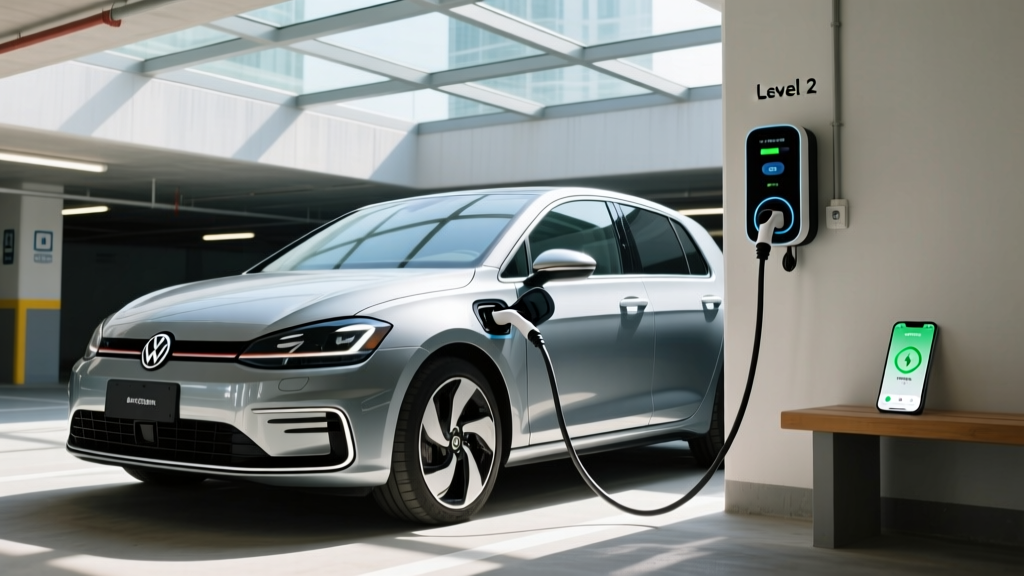
| Level 2 | 240V AC | 7.2–19.2 kW | 20–60 miles | Daily home charging, primary EV ownership |
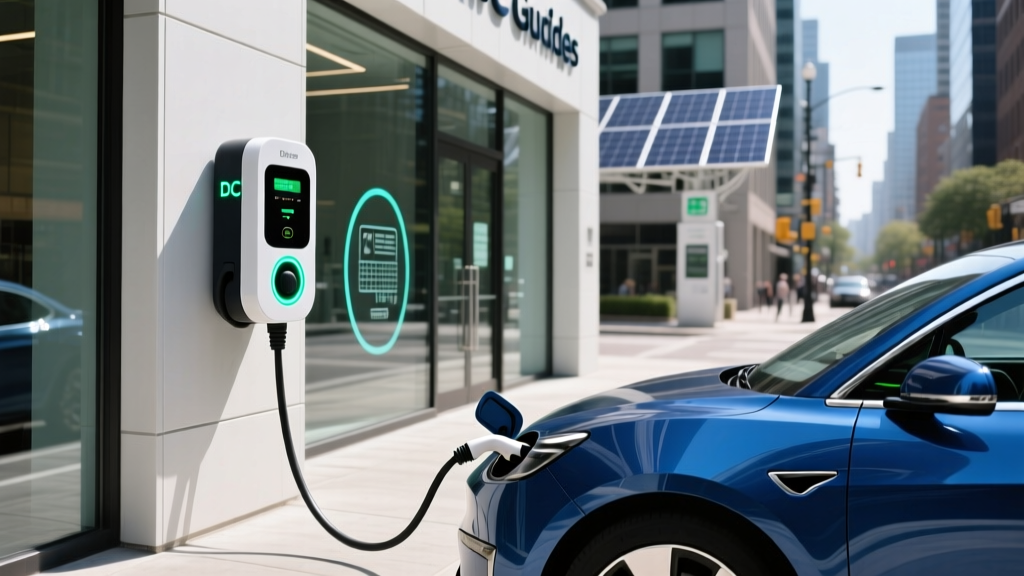
| DC Fast | 400–800V DC | 50–350 kW | 150–1,200+ miles (equivalent) | Road trips, rapid replenishment |
For a typical 75 kWh battery (e.g., Tesla Model Y, Hyundai Ioniq 5), Level 2 at 11.5 kW adds roughly 35–40 miles per hour, taking about 6.5 hours from 10% to 80%. A 350 kW DC fast charger can push a 10–80% charge in 18–25 minutes on vehicles with 800V architecture like the Ioniq 5 or Porsche Taycan, though sustained rates taper significantly above 80% State of Charge.
Storm-Rated Equipment: What Makes a Charger Hurricane-Resistant
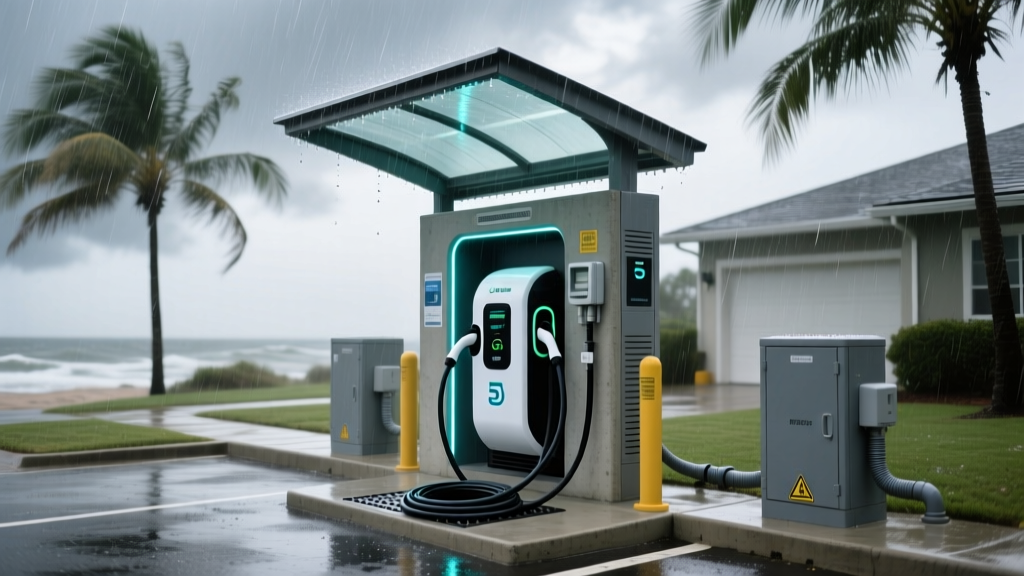
Not all outdoor EV chargers are built to survive Category 3+ conditions. Here's what to look for when selecting equipment for hurricane zones:
NEMA and IP Ratings
The National Electrical Manufacturers Association (NEMA) enclosure rating tells you what environmental conditions a charger can withstand. For hurricane-prone installations:
- NEMA 4: Protects against windblown dust, rain, splashing water, and hose-directed water. Minimum acceptable for coastal outdoor installs.
- NEMA 4X: Adds corrosion resistance—essential for salt-air environments within 5 miles of the coast.
- NEMA 6P: Submersible rating; the unit can survive temporary flooding. Ideal for low-mounted installations in flood-prone zones.
- IP66/IP67: The international equivalent. IP66 handles powerful water jets; IP67 handles temporary immersion.
Impact Resistance and Wind Load
Debris impact is the second-leading cause of charger failure in hurricanes after flooding. Look for enclosures rated to IK10 (the highest impact-protection classification). Some manufacturers offer polycarbonate or cast-aluminum housings tested to withstand 20-joule impacts—equivalent to a 5 kg object dropped from 40 cm, or roughly the force of wind-driven debris at 90+ mph.
Mounting Height and Location
FEMA's post-storm assessments consistently show that chargers mounted below 24 inches from grade suffer disproportionate flood damage. Best practice:
- Mount the charger unit at least 36 inches above finished grade (48 inches if in a FEMA-designated flood zone AE or VE)
- Position on the leeward side of a structure when possible to reduce direct wind exposure
- Avoid mounting under eaves where wind-driven rain channels concentrate
- Use stainless steel or hot-dipped galvanized mounting hardware—zinc-plated bolts corrode within one storm season in salt air
Home Installation: Electrical Requirements and Costs
A hurricane-resilient Level 2 installation starts with the electrical panel and ends with proper permitting. Here's what's involved.
Electrical Requirements
Most Level 2 home chargers require a dedicated 240V circuit. Common configurations:
- 32A circuit (7.7 kW): Requires a 40A breaker (NEC mandates 125% overhead for continuous loads). Suitable for most daily driving needs.
- 48A circuit (11.5 kW): Requires a 60A breaker. Ideal for larger batteries (100+ kWh) or households with two EVs sharing one charger via load management.
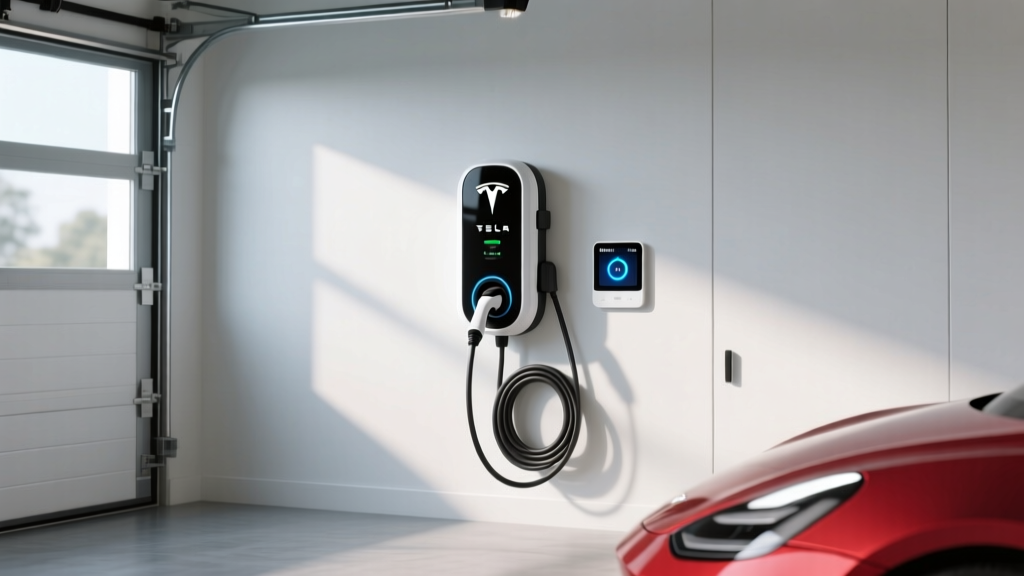
- 80A circuit (19.2 kW): Requires a 100A breaker. Found on premium chargers like the Tesla Wall Connector at max config or the FLO Home X80. Demands substantial panel capacity.
Panel Upgrade Considerations
Older homes—common in coastal communities built before 2000—often have 100A main panels that cannot support an additional 40–60A EV circuit alongside existing loads. A panel upgrade to 200A typically costs $1,500–$3,500. In hurricane zones, consider upgrading to a panel with integrated surge protection (e.g., Eaton's whole-house SPD) to protect against lightning-induced transients common during tropical storms.
| Component | Cost Range | Notes |
|---|---|---|
| Level 2 Charger Unit (NEMA 4X rated) | $400–$800 | Storm-rated models carry a 15–25% premium over standard outdoor units |
| Electrician Labor (standard install) | $500–$1,500 | Depends on run length from panel to mounting location |
| Panel Upgrade (if needed) | $1,500–$3,500 | 100A to 200A upgrade; may include permit fees |
| Permit and Inspection | $100–$400 | Required in most jurisdictions; varies by county |
| Surge Protection Device (SPD) | $150–$400 | Whole-panel or point-of-use; strongly recommended in lightning-prone areas |
| Conduit and Wiring (50 ft run) | $200–$600 | THHN in rigid metal conduit preferred for storm zones |
| Total (no panel upgrade) | $1,350–$3,700 | |
| Total (with panel upgrade) | $2,850–$7,200 |
Always use a licensed electrician familiar with NEC Article 625 (Electric Vehicle Charging System Equipment). Post-Hurricane Ian code updates in Florida now require GFCI protection on all outdoor EV circuits and mandate that receptacles in flood zones be installed above the Base Flood Elevation (BFE).
Connector Compatibility: NACS, CCS, and CHAdeMO
Storm prep includes knowing your connector type—because if you need to evacuate and rely on public DC fast charging, adapter compatibility matters.
| Connector | Brands Using It (2026 Models) | Notes |
|---|---|---|
| NACS (North American Charging Standard) | Tesla (all), Ford, GM, Rivian, Volvo, Polestar, Mercedes-Benz, BMW, Hyundai/Kia (2025+), Toyota, Subaru | Now the dominant standard; access to Tesla Supercharger network natively or via adapter |
| CCS1 (Combined Charging System) | Legacy VW ID.4 (pre-2025), older BMW i4/iX, Stellantis EVs, some Hyundai/Kia pre-2025 | Being phased out; CCS-to-NACS adapters widely available (~$200–$300) |
| CHAdeMO | Nissan Leaf (discontinued 2025), Mitsubishi Outlander PHEV (older models) | Effectively obsolete for new vehicles; limited public charger availability |
If your vehicle uses CCS1 and you live in a hurricane evacuation zone, carry a CCS-to-NACS adapter in your emergency kit. Tesla Supercharger stalls now outnumber all other DC fast networks combined in most Gulf Coast evacuation corridors (I-10, I-75, I-95), and NACS access may be your only fast-charging option during mass evacuations.
Backup Power: Charging When the Grid Goes Down
A hurricane-proof charger is useless without electricity. Here are three strategies ranked by cost and capability:
Option 1: Portable Generator + Level 1 (Budget)
A 3,500W inverter generator (e.g., Honda EU3000iS, ~$2,200) can power a Level 1 charger at 120V/12A (1.4 kW), adding roughly 4 miles of range per hour. That's 96 miles in 24 hours—enough to reach safety if your battery is partially charged. Run time on a gallon of gas: 7–8 hours at this load.
Option 2: Home Battery + Solar (Mid-Range)
A Tesla Powerwall 3 (13.5 kWh usable, ~$9,200 installed) or Enphase IQ 5P paired with a rooftop solar array can sustain Level 2 charging during outages. A single Powerwall 3 can deliver 11.5 kW continuous output—enough for full Level 2 speeds. However, 13.5 kWh of stored energy only adds about 45–50 miles of range to a typical EV before depletion. Solar replenishment depends on conditions; expect 5–8 kWh/day from a 10 kW array during overcast post-storm skies.
Option 3: Vehicle-to-Home (V2H) Bidirectional Charging
The Ford F-150 Lightning (with Ford Charge Station Pro), GM Silverado EV, and Hyundai Ioniq 5 (with V2H-enabled home unit) can power your home's essential circuits during an outage. The F-150 Lightning's 131 kWh battery can sustain an average home for 3+ days. This turns your EV into the backup generator—but you'll need a compatible bidirectional charger ($1,500–$3,000) and a home energy management system with transfer switch.
Charging Cost: Home vs. Public vs. Gas
Understanding your per-mile fuel cost helps you budget for both normal operation and emergency scenarios where you might rely on pricier public DC fast charging.
| Scenario | Rate | Cost per kWh | Cost per Mile (at 3 mi/kWh) |
|---|---|---|---|
| Home Level 2 (off-peak utility rate) | Time-of-use, overnight | $0.08–$0.14 | $0.03–$0.05 |
| Home Level 2 (standard rate) | Flat rate | $0.12–$0.18 | $0.04–$0.06 |
| Public Level 2 (ChargePoint, EVgo) | Per kWh billing | $0.20–$0.35 | $0.07–$0.12 |
| DC Fast (Electrify America, Tesla) | Per kWh billing | $0.30–$0.55 | $0.10–$0.18 |
| Gasoline (30 MPG combined, $3.40/gal) | — | — | $0.11 |
Home charging remains dramatically cheaper than gasoline on a per-mile basis—typically one-third to one-fifth the cost. Even DC fast charging is competitive with gas in most markets. During hurricane evacuations, however, expect peak demand pricing and potential idle fees at public stations along evacuation routes. Plan accordingly.
Recommended Storm-Rated Chargers for 2026
Emporia Vue EV Charger (NEMA 4X)
- Power Output: 48A / 11.5 kW (hardwired) or 40A / 9.6 kW (plug-in NEMA 14-50)
- Connector: J1772 (NACS adapter included in 2026 kit)
- Cable Length: 24 ft
- Smart Features: Wi-Fi scheduling, energy monitoring, solar integration, automatic load management
- Storm Rating: NEMA 4X, IK08 impact rating, UV-stabilized polycarbonate enclosure
- Price: ~$449 (hardwired) / ~$499 (plug-in)
Best for: Budget-conscious coastal homeowners who want solar-aware charging and robust weather sealing without a premium price.
ChargePoint Home Flex (NEMA 4X variant)
- Power Output: Up to 50A / 12 kW (adjustable via DIP switches for panel compatibility)
- Connector: J1772 with integrated NACS adapter option
- Cable Length: 23 ft (standard) or 18 ft
- Smart Features: Alexa/Google Home, scheduled charging, guest access, utility demand-response programs
- Storm Rating: NEMA 4X, tested to 150 mph wind-driven rain, UL listed for outdoor use
- Price: ~$699
Best for: Homeowners wanting networked smart features and utility demand-response participation (which can earn $10–$25/month in some coastal utility programs).
FLO Home X80 (Marine-Grade)
- Power Output: 80A / 19.2 kW (requires 100A breaker)
- Connector: J1772 (NACS via adapter)
- Cable Length: 25 ft
- Smart Features: Load sharing for dual-EV households, RFID access control, FLO network integration
- Storm Rating: NEMA 4X, IK10 impact rating, marine-grade 316 stainless steel mounting plate, salt-spray tested to 1,000 hours
- Price: ~$1,199
Best for: High-demand households (two EVs, large batteries) in severe coastal zones where maximum durability justifies the premium.
Pre-Storm Checklist: Protecting Your Charger Before Landfall
- Charge to 80–90%: Full battery gives maximum evacuation range and powers V2H if equipped. Avoid 100% unless immediate evacuation is likely (prolonged 100% SoC accelerates degradation, especially in NMC batteries).
- Disconnect and store portable units: If using a plug-in charger (NEMA 14-50), unplug it and store indoors. Wind-driven rain can penetrate even weatherproof receptacles.
- De-energize the circuit: Flip the dedicated EV breaker off at the panel. This protects against surge damage from lightning strikes on nearby power lines—a leading cause of charger board failure.
- Document your installation: Photograph the charger, wiring, and panel for insurance claims. Ensure your homeowner's policy covers EV charging equipment (many standard policies exclude "motor vehicle accessories" unless specifically scheduled).
- Check evacuation-route charging: Use apps like PlugShare or A Better Routeplanner to identify DC fast stations along your evacuation route. During Hurricane Milton (2025), Electrify America and Tesla kept 85%+ of Florida corridor stations operational, but wait times exceeded 45 minutes at some locations.
Frequently Asked Questions
How much does it cost to install a hurricane-rated home EV charger?
Expect $1,350–$3,700 for a standard installation without a panel upgrade, or $2,850–$7,200 if your home needs a 200A panel upgrade. Storm-rated (NEMA 4X) charger units add $60–$200 over standard outdoor models. Always budget for a whole-panel surge protection device ($150–$400 installed) in lightning-heavy coastal regions.
How fast will each charging level add range during an emergency?
Level 1 (120V) adds 3–5 miles per hour—adequate for topping off if you have 24+ hours before evacuation. Level 2 (240V) adds 20–60 miles per hour depending on amperage, enough to fully replenish overnight. DC fast charging adds 150+ miles in 20–30 minutes but requires grid power and operational public infrastructure, both of which may be compromised post-landfall.
Which connector/charger is compatible with my EV?
As of 2026, nearly all new EVs sold in North America use the NACS connector natively. If you drive a pre-2025 model with CCS1, purchase a CCS-to-NACS adapter ($200–$300) to access Tesla Superchargers—critical during evacuations when Tesla's network has the highest uptime. CHAdeMO vehicles (older Nissan Leaf) face severely limited public charging options.
How much does charging cost per mile vs gas?
Home Level 2 charging costs $0.03–$0.06 per mile (depending on your utility rate), compared to $0.11/mile for a 30 MPG gas car at $3.40/gallon. Even public DC fast charging at $0.45/kWh costs roughly $0.15/mile—still competitive with gasoline. The savings compound: a driver covering 12,000 miles/year saves $600–$960 annually by charging at home versus fueling with gas.
What electrical upgrades might I need for a storm-safe installation?
Homes built before 2000 often need a panel upgrade from 100A to 200A ($1,500–$3,500). In FEMA flood zones, code may require the receptacle or hardwired junction to be above Base Flood Elevation, potentially adding conduit runs. A whole-house surge protection device is strongly recommended in hurricane zones and costs $150–$400 installed. Some coastal jurisdictions now require GFCI breakers (not just GFCI receptacles) on outdoor EV circuits per post-2023 NEC amendments.
Can I use a portable generator to charge my EV after a hurricane?
Yes, but only at Level 1 speeds. A 3,500W inverter generator delivering clean sine-wave power can sustain a 120V/12A Level 1 charge (1.4 kW), adding roughly 4 miles of range per hour. Ensure the generator is rated for EV charging—some cheaper units produce harmonic distortion that can trigger the vehicle's ground-fault protection and interrupt charging. Honda EU-series and Westinghouse iGen series are commonly recommended by EV owners for this use case.
Does homeowner's insurance cover EV charger damage from hurricanes?
Most standard homeowner's policies cover permanently installed EV chargers under "other structures" or "dwelling" coverage, but portable plug-in units may be classified as personal property with lower limits. Flood damage requires separate flood insurance (NFIP or private). Document your installation with photos and receipts, and confirm with your insurer that the charger is scheduled or explicitly covered before storm season begins.
Sources: NFPA NEC Article 625, EPA Fuel Economy, FEMA Flood Map Service Center