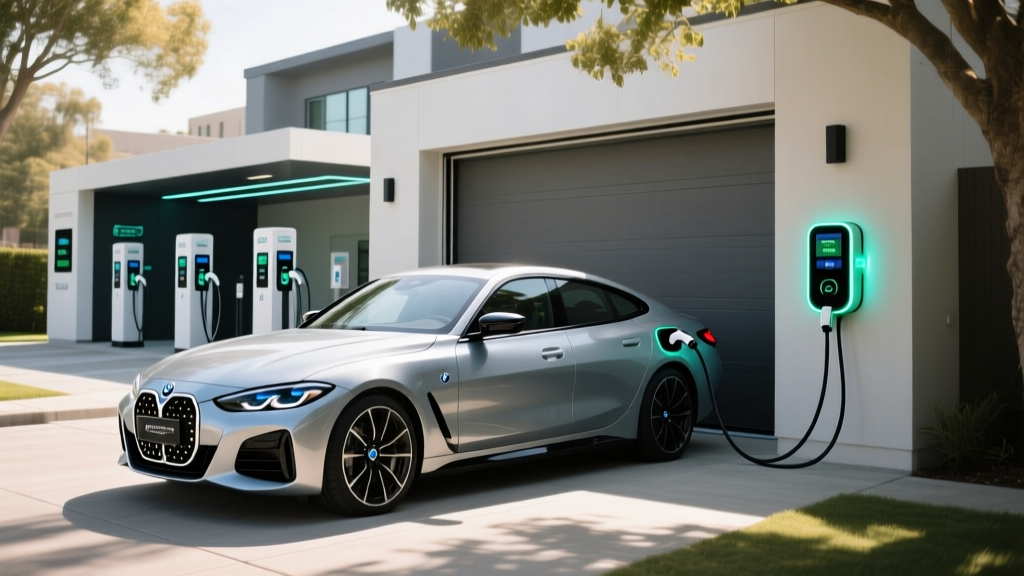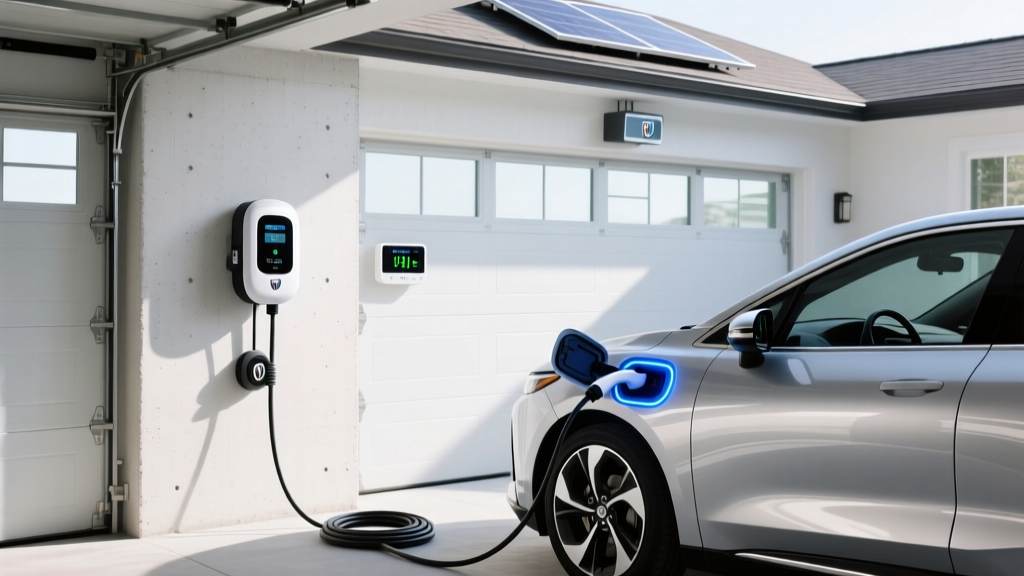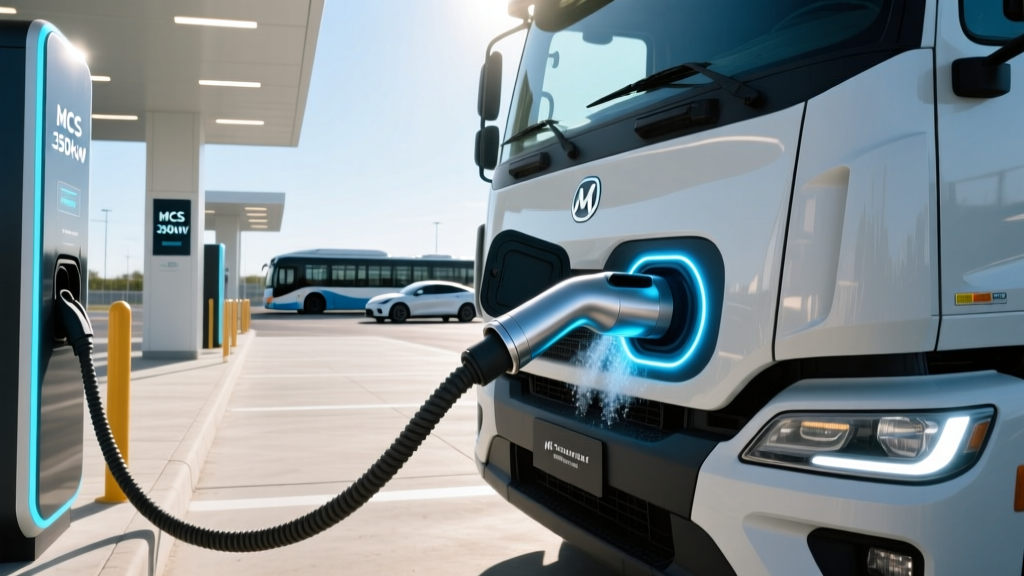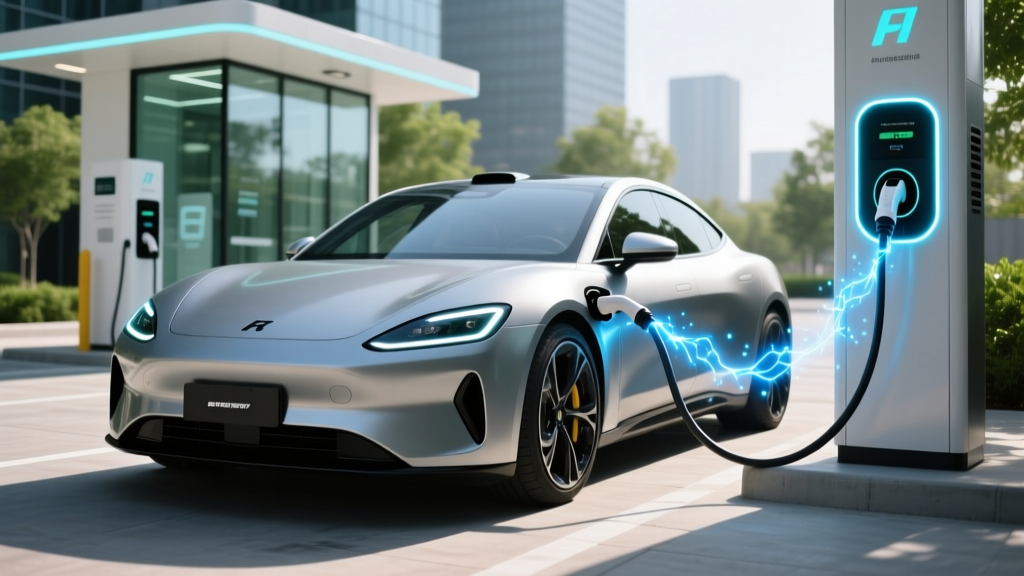
Search for "charger from fast and furious" and you will find memes, movie stills of Dodge Chargers, and the occasional clickbait thumbnail promising instant EV charging. There is no secret Hollywood charger that fills a battery in seconds — but the confusion reveals a real gap in public understanding of how EV charging actually works. This guide cuts through the noise with exact numbers: kilowatt (kW) charge rates, kilowatt-hour (kWh) battery capacities, real-world miles added per hour, and the true cost to install a home Level 2 charger in 2026.
First, a critical distinction that even some automotive journalists get wrong: kW (kilowatts) measures power — the rate at which electricity flows into your car, like water pressure from a hose. kWh (kilowatt-hours) measures energy — the total amount stored in your battery, like gallons in a tank. A charger rated at 11.5 kW delivers energy at that rate; a 75 kWh battery holds that total amount. Confusing the two leads to wildly wrong expectations about charging time.
Charging Levels Explained: Real Speeds in kW and Miles Per Hour
Every EV sold in the US charges at one of three levels. The table below shows what each delivers in practice — not marketing peak numbers, but sustained rates you can expect at a typical state of charge (SoC) between 10% and 80%.
| Level | Voltage | Max Power (kW) | Miles of Range Added Per Hour | Typical Use Case |
|---|---|---|---|---|
| Level 1 | 120V AC | 1.0–1.4 kW | 3–5 mi/hr | Overnight trickle; emergency top-up |
| Level 2 | 240V AC | 7.2–19.2 kW | 20–65 mi/hr | Home daily charging; workplace; retail |
| DC Fast Charge (DCFC) | 400–800V DC | 50–350 kW | 150–800+ mi/hr (peak) | Road trips; highway corridors |
A few real-world anchors: A Tesla Model Y Long Range (75 kWh usable battery, ~310 EPA miles) charging on a 48-amp Level 2 home circuit at 11.5 kW will add roughly 37 miles of range per hour — going from 10% to 80% in about 4.5 hours. That same car on a 250 kW Tesla Supercharger will hit 10–80% in approximately 20–22 minutes, though the charge curve tapers sharply above 80%. No charger — movie prop or otherwise — circumvents the physics of lithium-ion charge acceptance.
How Much Does It Cost to Install a Home EV Charger?
This is the number-one question from new EV buyers, and the honest answer has a wide range: $500 to $4,500+ depending on your electrical panel, the distance from panel to charger location, and local permit fees. Here is the full breakdown.
| Cost Component | Low End | Typical | High End |
|---|---|---|---|
| Level 2 Charger Equipment (hardwired, 48A) | $400 | $550 | $750 |
| Electrician Labor (licensed) | $300 | $800 | $2,000 |
| Electrical Permit | $50 | $125 | $300 |
| Panel Upgrade (100A → 200A, if needed) | $1,500 | $2,500 | $4,000 |
| Conduit/Wiring (long runs 50+ ft) | $200 | $400 | $1,200 |
| Total (no panel upgrade) | $750 | $1,500 | $3,000 |
| Total (with panel upgrade) | $2,250 | $3,800 | $5,500+ |
The panel upgrade gotcha: Most homes built before 2000 have 100-amp or 150-amp electrical panels. A 48-amp Level 2 charger draws 60 amps continuously (NEC code requires circuits rated at 125% of continuous load), which may max out an older panel already serving an electric dryer, range, and HVAC. A licensed electrician will perform a load calculation to determine if an upgrade to 200A is required. Do not skip this step — an overloaded panel is a fire hazard.
The IRS Residential Clean Energy Credit (IRC §25C) covers up to 30% of home EV charger equipment and installation costs, capped at $1,000 per year, for equipment placed in service through 2032. This is separate from the §30D vehicle purchase credit and applies to the charger hardware and electrician labor. Check irs.gov for current eligibility rules, as income limits and sourcing requirements may apply.
Which Connector and Charger Is Compatible with My EV?
The North American charging connector landscape consolidated significantly between 2023 and 2026. The Tesla-designed North American Charging Standard (NACS) is now adopted by Ford, GM, Rivian, Volvo, Polestar, Mercedes-Benz, BMW, Hyundai, Kia, and most other major automakers. CCS1 remains on some legacy models, and CHAdeMO is effectively discontinued on new vehicles (the Nissan Leaf was the last major holdout).
| Connector | Brands Using It (New Vehicles) | Notes |
|---|---|---|
| NACS (J3400) | Tesla, Ford, GM, Rivian, Volvo, Polestar, Hyundai, Kia, BMW, Mercedes, Lucid, Toyota, Subaru | Industry standard; native Tesla Supercharger access |
| CCS1 (Combo) | VW (some 2024 carryover), Stellantis/Jeep (limited), legacy models | Adapters available to NACS; Electrify America supports both |
| CHAdeMO | None (new); Nissan Leaf (used market only) | Networks phasing out; avoid for new purchases |
Adapter reality: If you own a CCS1-equipped EV (e.g., a 2023 Ford Mustang Mach-E or Hyundai Ioniq 5), you can purchase a CCS-to-NACS adapter ($150–$250) to access Tesla Superchargers. Ford and GM provide these adapters to existing owners. Conversely, NACS-equipped vehicles can use NACS-to-CCS adapters at Electrify America and other CCS networks. Always verify adapter compatibility with your specific model year and charging network app before relying on it for a road trip.
Charging Time Examples for Common Battery Sizes
Charge time depends on three variables: battery capacity (kWh), charger power output (kW), and the vehicle's charge curve — the rate at which the battery management system (BMS) allows energy in, which tapers significantly above 80% SoC to protect cell health.
Here are realistic 10–80% charge times for representative 2026 EVs:
- Tesla Model Y Long Range (75 kWh, NMC): ~22 min on 250 kW Supercharger; ~4.5 hr on 11.5 kW Level 2
- Hyundai Ioniq 5 (77.4 kWh, NMC): ~18 min on 350 kW DCFC (800V architecture); ~5.5 hr on 10.9 kW Level 2
- Ford F-150 Lightning Extended Range (131 kWh, NMC): ~41 min on 150 kW DCFC; ~10 hr on 11.5 kW Level 2
- Chevrolet Equinox EV (85 kWh, NMC): ~30 min on 150 kW DCFC; ~6 hr on 11.5 kW Level 2
- Tesla Model 3 RWD (57.5 kWh, LFP): ~25 min on 170 kW Supercharger; ~4 hr on 11.5 kW Level 2 (LFP batteries can charge to 100% regularly without degradation concern)
How Much Does Charging Cost Per Mile vs. Gas?
The economics of EV charging depend entirely on where and when you charge. Here are 2026 cost scenarios compared to a 28 MPG combined gasoline vehicle at $3.40/gallon:
| Charging Scenario | Cost per kWh | Cost per Mile (250 Wh/mi EV) | Annual Cost (12,000 mi) |
|---|---|---|---|
| Home Level 2 — Off-Peak TOU Rate | $0.08–$0.12 | $0.02–$0.03 | $240–$360 |
| Home Level 2 — Standard Rate | $0.13–$0.18 | $0.033–$0.045 | $396–$540 |
| Public Level 2 (ChargePoint, etc.) | $0.20–$0.35 | $0.05–$0.088 | $600–$1,056 |
| DC Fast Charge (Electrify America, EVgo) | $0.35–$0.55 | $0.088–$0.138 | $1,056–$1,656 |
| Gasoline (28 MPG @ $3.40/gal) | — | $0.121 | $1,457 |
The takeaway: Home off-peak charging is 4–6× cheaper per mile than gasoline. Even DC fast charging at premium rates is roughly cost-neutral with gas. The trap is relying exclusively on public DCFC networks — at $0.48/kWh national average, a 75 kWh fill costs $36, comparable to a gas fill-up. Home charging access is the single biggest economic factor in EV ownership.
According to fueleconomy.gov, the average 2026 EV achieves 3.0–3.5 miles per kWh (roughly 100–115 MPGe combined). Use your vehicle's actual Wh/mi consumption — displayed on the instrument cluster — for precise cost calculations rather than the EPA sticker.
Level 2 Home Charger Equipment Recommendations
These are chargers we have evaluated based on sustained power delivery, build quality, smart features, and real-world reliability across multiple EV models:
Tesla Wall Connector (Gen 4)
- Power: Up to 11.5 kW (48A) on 60A circuit
- Connector: NACS native
- Cable: 24 ft
- Smart Features: Wi-Fi, OTA updates, load sharing (pair two units on one circuit), access control
- Price: ~$475
- Best For: Tesla owners and NACS-equipped vehicles; cleanest install
ChargePoint Home Flex
- Power: Up to 12 kW (50A) configurable; NEMA 14-50 or hardwired
- Connector: J1772 (NACS adapter included in 2025+ models)
- Cable: 23 ft
- Smart Features: Wi-Fi, scheduling, energy tracking, Alexa integration, amperage adjustment via app
- Price: ~$550
- Best For: Multi-EV households; renters who may move (plug-in option)
Emporia Vue EV Charger
- Power: Up to 11.5 kW (48A) hardwired
- Connector: J1772 (NACS version available)
- Cable: 24 ft
- Smart Features: Whole-home energy monitoring integration, solar-aware charging, time-of-use scheduling
- Price: ~$400
- Best For: Solar panel owners; budget-conscious buyers
Grizzl-E Smart
- Power: Up to 10 kW (40A) on 50A circuit
- Connector: J1772 (NACS adapter available)
- Cable: 24 ft
- Smart Features: OCPP-compatible, adjustable amperage, outdoor-rated (NEMA 4), extreme cold tested to -40°F
- Price: ~$550
- Best For: Cold-climate outdoor installs; Canadian/northern US garages
Safety, Electrical Code, and Installation Requirements
EV charging is a continuous high-draw electrical load — your charger will run at full amperage for hours at a time, unlike any other household appliance. This demands proper installation per the National Electrical Code (NEC):
- Dedicated circuit: Your Level 2 charger must be on its own dedicated breaker — never shared with other outlets or appliances.
- 125% rule: A 48A continuous load requires a 60A breaker and circuit rated for 60A. A 40A charger requires a 50A circuit. Do not undersize.
- GFCI protection: NEC 2020 and later requires GFCI protection for all EV receptacles. Hardwired chargers with built-in ground-fault protection may not require an external GFCI breaker (confirm with your electrician and local inspector).
- Outdoor rating: If the charger is mounted outside, it must be NEMA 4 (weatherproof) rated. All four chargers above meet this standard.
- Permit required: Virtually all jurisdictions require an electrical permit for a new 240V circuit. The permit ensures inspection — protecting your home insurance coverage in the event of a fault.
- Wire gauge: 6 AWG copper for 50A circuits; 4 AWG copper for 60A circuits over typical residential distances. Longer runs (100+ ft) may require upsizing to prevent voltage drop.
Never use an extension cord with a Level 2 charger. Never plug a portable charger into a standard 15A/120V outlet as a permanent solution — Level 1 charging at 1.2 kW is safe but adds only 3–5 miles per hour, which is inadequate for any EV with more than 200 miles of range and daily driving above 30 miles.
Frequently Asked Questions
Is there a "charger from Fast and Furious" that charges an EV instantly?
No. The "charger from Fast and Furious" is an internet meme, not a real product. The fastest publicly available DC chargers in 2026 peak at 350 kW (Electrify America, IONNA) and can add roughly 200 miles of range in 10 minutes to an 800V-architecture vehicle like the Hyundai Ioniq 5 or Kia EV6. Physics limits how quickly lithium ions can intercalate into the anode without damaging the cell — there is no movie-magic shortcut.
How fast will each charging level add range?
Level 1 (120V): 3–5 miles per hour. Level 2 (240V, 48A): 25–45 miles per hour depending on vehicle efficiency. DC Fast Charging (150–350 kW): 150–800+ miles per hour at peak, though sustained rates drop above 50% SoC. See the charging levels table above for exact figures.
Do I need a panel upgrade for a home EV charger?
Maybe. Homes with 200A panels and gas appliances (furnace, water heater, range) typically have sufficient capacity. Homes with 100A or 150A panels, especially those with electric heat, electric dryer, and electric range, often need an upgrade to 200A. A licensed electrician performs a NEC Article 220 load calculation to determine this. Budget $1,500–$4,000 if an upgrade is needed.
Can I charge a NACS car at a CCS station or vice versa?
Yes, with the correct adapter. CCS-to-NACS adapters ($150–$250) let CCS vehicles use Tesla Superchargers. NACS-to-CCS adapters let NACS vehicles use Electrify America and other CCS networks. Verify adapter compatibility with both your vehicle and the charging network before purchasing.
How much does charging cost per mile compared to gas?
Home off-peak charging: $0.02–$0.03/mile. Home standard rate: $0.03–$0.05/mile. Public DC fast charging: $0.09–$0.14/mile. Gasoline at 28 MPG and $3.40/gallon: $0.12/mile. Home charging delivers 4–6× cost savings; exclusive DCFC use is roughly cost-neutral with gasoline.
What is the best home Level 2 charger to buy in 2026?
For Tesla and NACS vehicles, the Tesla Wall Connector (Gen 4, ~$475) offers the cleanest integration. For multi-brand households, the ChargePoint Home Flex (~$550) provides the broadest compatibility and smart scheduling. For budget and solar integration, the Emporia Vue (~$400) is the value pick. All deliver 11.5 kW on a 60A circuit with 24-foot cables and outdoor-rated enclosures.