Why a Dual-Purpose Charger for Car and Phone Makes Sense in 2026
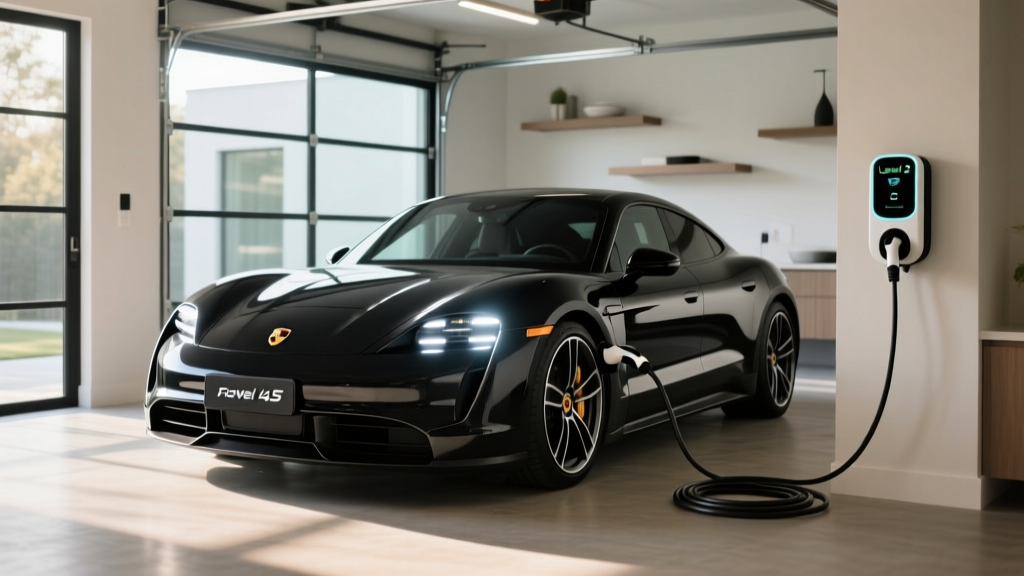
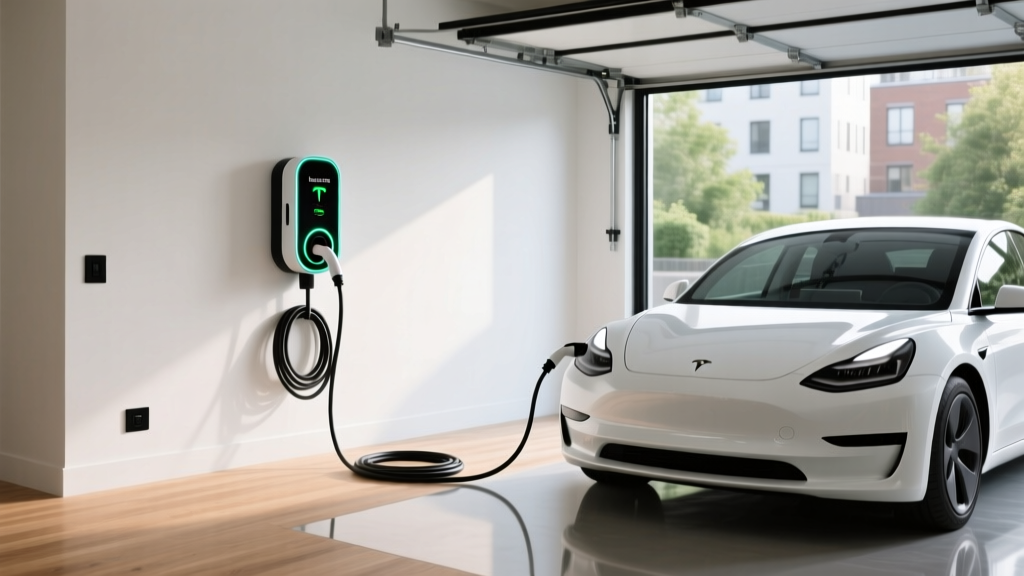
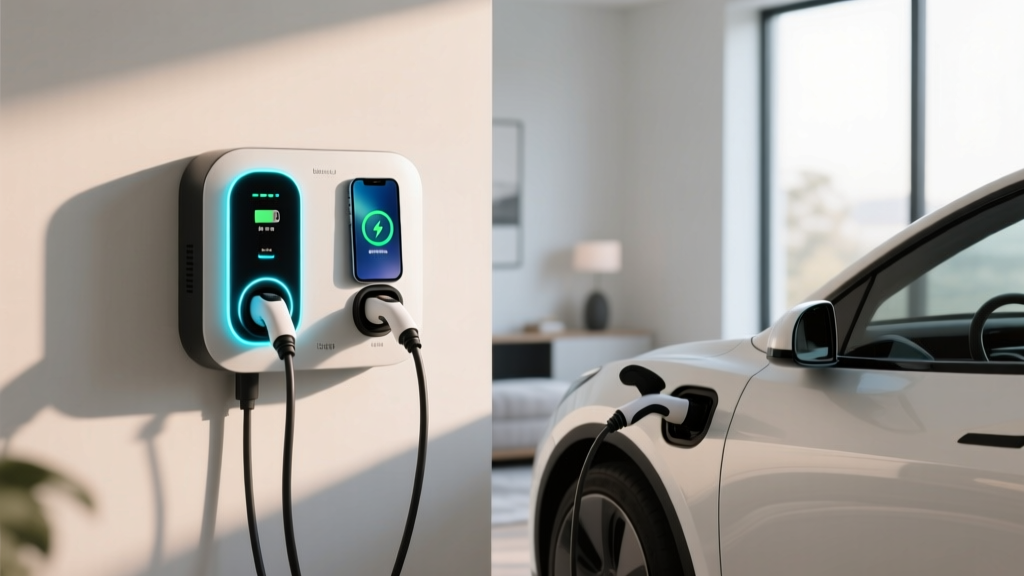
Most EV owners carry two charging cables everywhere they go: a thick 240V cord for the car and a tangle of USB-C wires for phones, tablets, and laptops. A growing category of wall-mounted charger for car and phone stations solves this by combining a hardwired or plug-in Level 2 EV charger with integrated USB-C Power Delivery (PD) ports in a single garage unit. Instead of two separate devices competing for outlet space, you get one clean installation that tops off an EV battery at up to 11.5 kW while fast-charging a phone at 65W or higher on the same wall plate.
This guide covers the electrical requirements, real charging speeds, connector compatibility, and installation costs you need to evaluate before buying a dual-purpose unit. We also break down per-mile charging costs versus gasoline so you can calculate your actual savings.
Charging Levels Explained: kW Speeds and Miles Added Per Hour
Before choosing equipment, understand the three charging tiers available to EV owners. Power is measured in kilowatts (kW) — the rate of energy flow — while battery capacity is measured in kilowatt-hours (kWh), the total energy stored. Confusing these two is the single most common EV mistake.
| Level | Voltage | Max Power (kW) | Miles of Range Per Hour | Typical Use |
|---|---|---|---|---|
| Level 1 | 120V AC | 1.2–1.9 kW | 3–5 mi/hr | Overnight trickle; PHEVs |
| Level 2 | 240V AC | 3.3–19.2 kW | 12–75 mi/hr | Home daily charging |
| DC Fast | 400–900V DC | 50–350 kW | 150–1,200+ mi/hr | Road trips; public stations |
Real-world note: A Level 2 charger rated at 11.5 kW (48A on a 60A circuit) adds roughly 35–42 miles of range per hour to a midsize SUV like the Tesla Model Y or Hyundai Ioniq 5. Cold batteries (<32°F) may accept charge 20–40% slower until preconditioned.
For context, a 75 kWh battery (e.g., Ford Mustang Mach-E Extended Range) charging from 10% to 80% on an 11.5 kW Level 2 unit takes approximately 4.5 hours. That same 10–80% session on a 150 kW DC fast charger takes roughly 25–30 minutes, though charging speed tapers significantly above 80% State of Charge (SoC) to protect battery health.
Home Installation: Electrical Requirements, Panel Upgrades, and Cost
A dual-purpose EV and phone charger typically requires a dedicated 240V circuit, just like a standalone Level 2 EVSE (Electric Vehicle Supply Equipment). The most common residential setup is a 60-amp breaker feeding a 48-amp continuous-load charger — the National Electrical Code (NEC) requires circuits to be rated at 125% of the continuous load, so 48A × 1.25 = 60A breaker.
What Your Electrician Will Evaluate
- Panel capacity: Most modern homes have 200A service. An EV charger adds 48–80A of continuous draw. If your panel is already near capacity (common in homes with electric ranges, dryers, and HVAC), you may need a service upgrade to 300A or 400A, or a smart load-management panel like the Span panel or an Emporia smart breaker.
- Wiring: 6 AWG copper (THHN in conduit) for a 60A circuit; 4 AWG for 80A circuits. Run length affects voltage drop — runs over 100 feet may require thicker wire.
- GFCI protection: NEC 2020 and later require GFCI breakers for EV receptacles (NEMA 14-50). Hardwired EVSEs with built-in ground-fault protection may not need a separate GFCI breaker, which avoids nuisance tripping — a known issue with some GFCI breakers on high-draw EV circuits.
- Permits: Most jurisdictions require an electrical permit ($50–$250) and a final inspection. Skipping the permit risks insurance denial in the event of a fire.
| Component | Low End | High End | Notes |
|---|---|---|---|
| Dual-purpose EVSE unit (11.5 kW w/ USB-C) | $550 | $900 | Hardwired or NEMA 14-50 plug |
| Electrician labor (standard install) | $400 | $1,200 | Depends on run length, wall type |
| Electrical materials (wire, conduit, breaker) | $150 | $500 | 6 AWG copper; longer runs cost more |
| Permit and inspection | $50 | $250 | Varies by municipality |
| Subtotal (standard install) | $1,150 | $2,850 | No panel upgrade needed |
| Panel upgrade (200A → 400A, if needed) | $2,000 | $5,000 | Older homes; includes utility coordination |
The IRS Residential Clean Energy Credit (IRC §25C) covers up to 30% of EV charger equipment and installation costs, capped at $1,000 per year through 2032. This applies to your dual-purpose unit if it qualifies as alternative fuel vehicle refueling property. Always confirm eligibility with a tax professional — rules vary by census tract and income.
Connector Compatibility: NACS, CCS1, CHAdeMO, and Adapter Needs
As of 2026, the North American Charging Standard (NACS), originally developed by Tesla, has become the dominant connector for new EVs sold in the United States. Ford, GM, Rivian, Hyundai, Kia, and most other automakers have transitioned to NACS ports on 2025–2026 model-year vehicles. However, millions of CCS1-equipped EVs from 2020–2024 remain on the road.
| Connector | Brands Using It | Adapter Needed? |
|---|---|---|
| NACS (Tesla standard) | Tesla, Ford (2025+), GM (2025+), Rivian (2025+), Hyundai/Kia (2026+), Volvo/Polestar | None for NACS vehicles; CCS1→NACS adapters available (~$200–$300) |
| CCS1 | VW ID.4 (pre-2026), older BMW iX, Mercedes EQS/EQE, Hyundai Ioniq 5 (pre-2026), Kia EV6 (pre-2026) | NACS→CCS1 adapters for Tesla Supercharger access (~$180–$250) |
| CHAdeMO | Nissan Leaf (discontinued after 2025), Mitsubishi Outlander PHEV (older) | Limited public infrastructure; CHAdeMO→NACS adapters rare and expensive |
For dual-purpose home chargers: Most units ship with a NACS connector by default. If you drive a CCS1 vehicle, look for chargers that offer a CCS1 plug option or purchase a certified adapter. The Lectron V-Box Pro and Emporia J1772/NACS chargers, for example, offer interchangeable connector heads. Always verify the connector matches your vehicle before ordering.
Charging Cost Per Mile: Home Electricity vs. Gasoline
One of the strongest arguments for home Level 2 charging is the cost advantage over gasoline. Here's how real-world numbers break down for a typical midsize EV (3.5 miles per kWh efficiency) compared to a comparable gas vehicle (28 MPG combined).
| Scenario | Rate | Cost Per Mile | Annual Cost (12,000 mi) |
|---|---|---|---|
| Home Level 2 (off-peak utility rate) | $0.09/kWh | $0.026 | $312 |
| Home Level 2 (national avg. residential) | $0.17/kWh | $0.049 | $588 |
| Public Level 2 (ChargePoint, EVgo network) | $0.30/kWh | $0.086 | $1,032 |
| DC Fast Charging (Electrify America, Tesla) | $0.48/kWh | $0.137 | $1,644 |
| Gasoline vehicle (28 MPG, $3.40/gal) | $3.40/gal | $0.121 | $1,452 |
Key takeaway: Home off-peak charging saves roughly $1,100–$1,300 per year versus gasoline for a driver covering 12,000 miles. Even at average residential rates, the annual savings exceed $850. However, exclusive reliance on DC fast charging erases most of the cost advantage — plan your driving and charging around home sessions for maximum savings.
Recommended Dual-Purpose Chargers for Car and Phone (2026 Picks)
The following units combine Level 2 EV charging with integrated USB-C PD ports, eliminating the need for separate phone chargers in the garage. Each recommendation includes exact power output, connector type, cable length, and smart features.
Emporia Vue EV Charger with USB-C Hub
- EV Power Output: 11.5 kW (48A) on a 60A circuit
- USB-C PD Output: 65W (shared across 2 USB-C + 1 USB-A port)
- Connector: NACS (CCS1 adapter available)
- Cable Length: 24 feet
- Smart Features: Wi-Fi scheduling, energy monitoring via Emporia app, solar integration, load management with Emporia Vue panel monitor
- Price: ~$599 (EVSE) + ~$49 (USB-C hub module)
- Best For: Solar-equipped homes wanting whole-home energy visibility
Lectron V-Box Pro Dual
- EV Power Output: 11.5 kW (48A) or 9.6 kW (40A) adjustable
- USB-C PD Output: 100W single port (charges laptops and phones)
- Connector: NACS or J1772 (selectable at purchase)
- Cable Length: 20 feet
- Smart Features: RFID access control, LED status ring, adjustable amperage via DIP switches, outdoor-rated (NEMA 4)
- Price: ~$549
- Best For: Outdoor installations, renters wanting adjustable amperage for different circuits
Wallbox Pulsar Max with PowerBoost + USB Dock
- EV Power Output: 11.5 kW (48A) on 60A circuit; up to 19.2 kW (80A) with 100A circuit
- USB-C PD Output: 45W (2× USB-C ports on optional wall dock)
- Connector: NACS (universal J1772 version also available)
- Cable Length: 25 feet
- Smart Features: Wi-Fi + Bluetooth, myWallbox app scheduling, dynamic load balancing (PowerBoost), Alexa/Google Home voice control
- Price: ~$699 (charger) + ~$79 (USB dock accessory)
- Best For: Tech-forward garages, homes with limited panel capacity needing load balancing
Safety, Code Compliance, and Outdoor Installation
Dual-purpose chargers must meet the same electrical codes as standalone EVSEs, with additional considerations for the low-voltage USB components.
- Dedicated circuit: Never share an EV charger circuit with other appliances. A 60A circuit should serve only the EVSE/USB unit.
- Outdoor rating: If mounted outside or in an open carport, choose a unit rated NEMA 4 (weatherproof). The Lectron V-Box Pro and Wallbox Pulsar Max both carry this rating. Indoor-only units (NEMA 3R) are fine for enclosed garages.
- GFCI protection: Hardwired units with integrated ground-fault detection (most modern EVSEs) do not require a separate GFCI breaker. Plug-in units on NEMA 14-50 receptacles must use a GFCI breaker per NEC 625.54 — but be aware that some GFCI breakers (notably certain Eaton and Siemens models) have nuisance-trip issues with high-draw EV loads. Consult your electrician about breaker compatibility.
- Cable management: A 20–25 foot cable drags on the garage floor and collects dirt. Wall-mounted cable organizers or retractors ($30–$60) keep the cord clean and prevent tripping hazards.
- USB-C safety: Integrated USB ports should be UL-listed and include overcurrent and overvoltage protection. Avoid no-name units that lack certification markings.
Charging Time Examples for Common Battery Sizes
Below are estimated 10–80% charging times for popular 2026 EV models on a typical 11.5 kW home Level 2 charger. These assume a warm battery and no preconditioning delay.
| Vehicle (2026) | Battery (kWh usable) | 10–80% Time | EPA Range |
|---|---|---|---|
| Tesla Model Y Long Range | 75 kWh | ~4 hr 30 min | 330 mi |
| Ford Mustang Mach-E Extended Range | 91 kWh | ~5 hr 30 min | 320 mi |
| Hyundai Ioniq 5 Long Range AWD | 84 kWh | ~5 hr | 290 mi |
| Chevrolet Equinox EV 3RS | 85 kWh | ~5 hr 10 min | 319 mi |
| Toyota bZ4X (2026 refresh) | 71 kWh | ~4 hr 15 min | 275 mi |
Real-world range caveat: EPA range figures assume mixed driving at moderate temperatures. Expect 15–25% range loss in sustained highway driving at 75+ mph and 20–35% loss in sub-freezing winter conditions. Source: fueleconomy.gov.
Frequently Asked Questions
How much does it cost to install a home EV charger?
A standard installation with a 60A dedicated circuit, 20–40 foot wire run, and no panel upgrade costs between $1,150 and $2,850 total (equipment + electrician + materials + permit). If your home needs a panel upgrade from 200A to 400A, add $2,000–$5,000. The federal §25C credit covers 30% of costs up to $1,000.
How fast will each charging level add range?
Level 1 (120V) adds 3–5 miles per hour. Level 2 (240V, 11.5 kW) adds 35–42 miles per hour for a midsize EV. DC fast charging at 150 kW can add 150–250 miles in 20–30 minutes, though the charge curve tapers sharply above 80% SoC.
Which connector/charger is compatible with my EV?
If you own a 2025+ Tesla, Ford, GM, Rivian, Hyundai, Kia, or Volvo, your vehicle likely uses the NACS connector. Older CCS1 vehicles (2020–2024 VW ID.4, pre-2026 Ioniq 5/EV6, BMW iX) require a CCS1 plug or a NACS-to-CCS1 adapter. CHAdeMO vehicles (Nissan Leaf) have limited infrastructure support. Check your owner's manual or the charge port badge for confirmation.
How much does charging cost per mile vs gas?
Home charging at the national average residential rate ($0.17/kWh) costs roughly $0.049 per mile for an EV averaging 3.5 mi/kWh. A comparable gas vehicle at 28 MPG and $3.40/gallon costs $0.121 per mile. That's a 60% savings per mile with home Level 2 charging.
What electrical upgrades might I need?
The most common upgrade is a panel capacity increase from 200A to 300A or 400A, needed in older homes or homes with multiple high-draw electric appliances. A load calculation by a licensed electrician determines whether your existing panel can handle a 60A EV circuit. Smart load-management devices (like the Emporia Power Monitor or Span panel) can avoid a panel upgrade by dynamically reducing EV charge rate when other appliances are running.
Can I use the USB ports while the car is charging?
Yes. Dual-purpose units draw EV power from the 240V circuit and step down to 5–20V DC for USB ports internally. The USB output is independent and does not reduce EV charging speed. A 65W USB-C port draws less than 0.07 kW — negligible compared to the 11.5 kW going to the car.