Why Your EV Lease Changes the Charging Equation
When you lease an electric vehicle — say a 2026 Tesla Model Y, Hyundai IONIQ 5, or Ford Mustang Mach-E — you're committing to roughly 36 months of ownership. That's long enough to make home charging essential but short enough that a $2,000 electrical panel upgrade deserves scrutiny. The keyword question for every new EV lessee: how much should you invest in a home charger when you don't own the car long-term?
The short answer: a quality Level 2 home charger on an existing 240V outlet costs $300–$700 for equipment and minimal installation. A full circuit run from your panel costs $800–$2,500 depending on distance and amperage. A panel upgrade from 100A to 200A service can push costs to $3,000–$5,000+ — a harder pill to swallow on a lease. This guide breaks down every scenario so you can make a data-driven decision before your EV arrives.
Charging Levels Explained: Speeds, Power, and Real-World Range
The single most important distinction in EV charging is between kW (kilowatts) — the rate of power delivery, like water pressure — and kWh (kilowatt-hours) — the total energy stored in your battery, like gallons in a tank. A 48-amp Level 2 charger delivering 11.5 kW can add roughly 11.5 kWh of energy per hour to your battery. Your EV's efficiency (typically 3–4 miles per kWh) determines how far that takes you.
| Level | Voltage | Max Power (kW) | Miles of Range Added/Hour | Best For |
|---|---|---|---|---|
| Level 1 | 120V (standard outlet) | 1.2–1.9 kW | 3–5 miles | Overnight top-ups, PHEVs, low-mileage drivers |
| Level 2 | 240V (dryer-style outlet) | 3.3–19.2 kW | 12–75 miles | Daily home charging, the EV ownership standard |
| DC Fast Charge | 400–800V DC | 50–350 kW | 150–1,000+ miles/hr equivalent | Road trips, quick stops (10–80% in 18–45 min) |
Real-world charging time examples (10% to 80% state of charge):
- 60 kWh battery (e.g., base Nissan LEAF, Chevy Equinox EV): ~8 hours at 7.2 kW Level 2; ~21 minutes at a 150 kW DC fast charger (peak rate)
- 77 kWh battery (e.g., Tesla Model Y, Ford Mach-E Extended Range): ~10 hours at 7.2 kW; ~26 minutes at 250 kW DC fast
- 100+ kWh battery (e.g., GMC Sierra EV, Rivian R1T Max Pack): ~14 hours at 7.2 kW; ~28–35 minutes at 350 kW capable chargers
DC fast charging speeds are peak rates — your EV will charge fastest between 10–50% state of charge, then taper significantly above 80% to protect battery health. This is called the charge curve, and it's why manufacturers quote 10–80% times rather than 0–100%.
Home Charger Installation: Electrical Requirements and True Costs
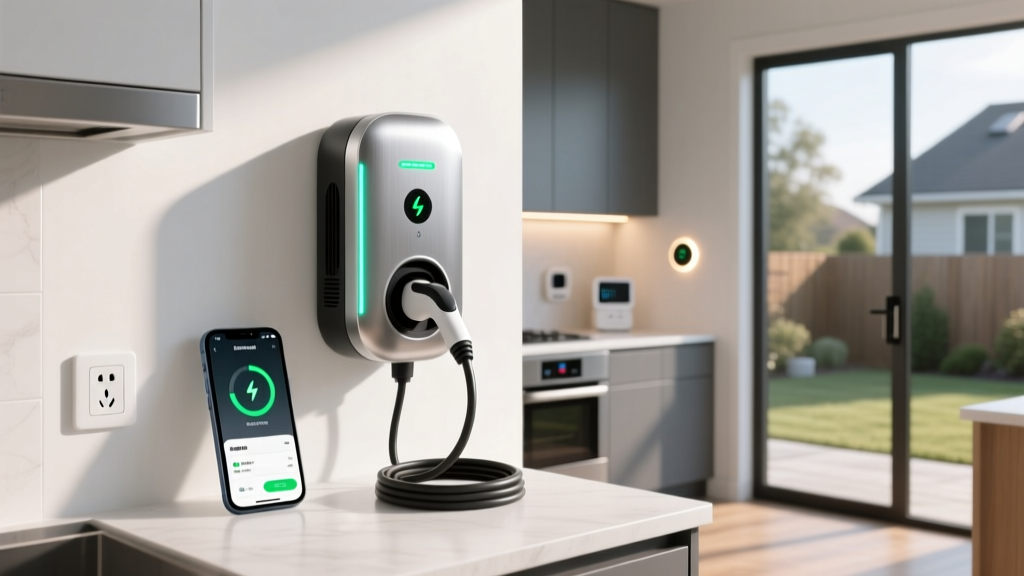
Before you buy a charger, you need to know what your home's electrical system can support. Most Level 2 chargers require a dedicated 240V circuit — the same voltage as an electric dryer or oven. The amperage of that circuit determines your charging speed:
- 20A circuit → 16A continuous draw → 3.8 kW → ~14 miles/hour
- 30A circuit → 24A continuous draw → 5.8 kW → ~21 miles/hour
- 40A circuit → 32A continuous draw → 7.7 kW → ~28 miles/hour
- 50A circuit → 40A continuous draw → 9.6 kW → ~35 miles/hour
- 60A circuit → 48A continuous draw → 11.5 kW → ~42 miles/hour
The National Electrical Code (NEC) requires that continuous loads (anything running 3+ hours, which includes EV charging) use only 80% of a circuit's rated capacity. That's why a 40A circuit delivers 32A to your car.
Installation Cost Breakdown
| Component | Simple Install (Near Panel) | Complex Install (Far from Panel / Upgrade Needed) |
|---|---|---|
| Level 2 Charger Equipment (24–48A) | $300–$700 | $400–$750 |
| Electrician Labor (2–6 hours) | $300–$600 | $600–$1,500 |
| Electrical Materials (wire, conduit, breaker) | $50–$200 | $200–$800 |
| Permit and Inspection | $50–$150 | $100–$300 |
| Panel Upgrade (100A → 200A, if needed) | N/A | $1,500–$4,000 |
| Total Estimated Cost | $700–$1,650 | $2,800–$7,350 |
What Electrical Upgrades Might You Need?
The three most common upgrade scenarios for EV lessees:
- No panel upgrade, short wire run (under 20 feet): Your existing 100A or 200A panel has spare capacity and physical space for a new double-pole breaker. This is the best-case scenario — expect $700–$1,650 all-in.
- No panel upgrade, long wire run (50–100+ feet): Your garage or parking spot is far from the panel. Thicker-gauge copper wire is needed to prevent voltage drop, and conduit must be run along walls or underground. Costs rise to $1,500–$3,000.
- Panel upgrade required: Older homes with 100A service often lack capacity for a 40–60A EV circuit alongside existing loads (HVAC, electric range, dryer). A licensed electrician will perform a load calculation per NEC Article 220. If you're over capacity, a panel upgrade to 200A (or even 400A for larger homes) is mandatory. Budget $1,500–$4,000+ for the upgrade alone, plus the charger install. For a 36-month lease, this is the scenario where you should seriously weigh whether public charging or a lower-amperage circuit (20–30A) makes more financial sense.
Connector Compatibility: NACS, CCS, CHAdeMO, and Your Leased EV
The EV industry has largely standardized around the North American Charging Standard (NACS), originally developed by Tesla. As of 2026, most new EVs from major manufacturers ship with NACS charge ports or include CCS-to-NACS adapters. Here's what you need to know based on your leased vehicle:
| Connector Type | Brands Using It (2026) | Home Charger Availability | Public Network Access |
|---|---|---|---|
| NACS (Tesla standard) | Tesla, Ford, GM, Rivian, Volvo, Polestar, Hyundai, Kia, BMW, Toyota | Widely available (Tesla Wall Connector, ChargePoint, Emporia) | Tesla Supercharger network (17,000+ stalls in North America), plus NACS-equipped public stations |
| CCS1 | Legacy models, some Stellantis vehicles, older inventory | Widely available | Electrify America, EVgo, ChargePoint — adapters available for Supercharger access |
| CHAdeMO | Nissan LEAF (discontinued in US after 2025 MY), Mitsubishi Outlander PHEV | Limited new equipment | Declining network support; adapter options limited |
Adapter considerations: If you lease a CCS-equipped vehicle, a CCS-to-NACS adapter ($150–$250) unlocks Tesla Supercharger access — a significant reliability advantage on road trips. Tesla's official adapter and third-party options from brands like Lectron and A2Z are available. For home charging, most Level 2 chargers now ship with NACS connectors; CCS-terminated units are still available but becoming less common.
Level 2 Home Charger Recommendations for EV Lessees
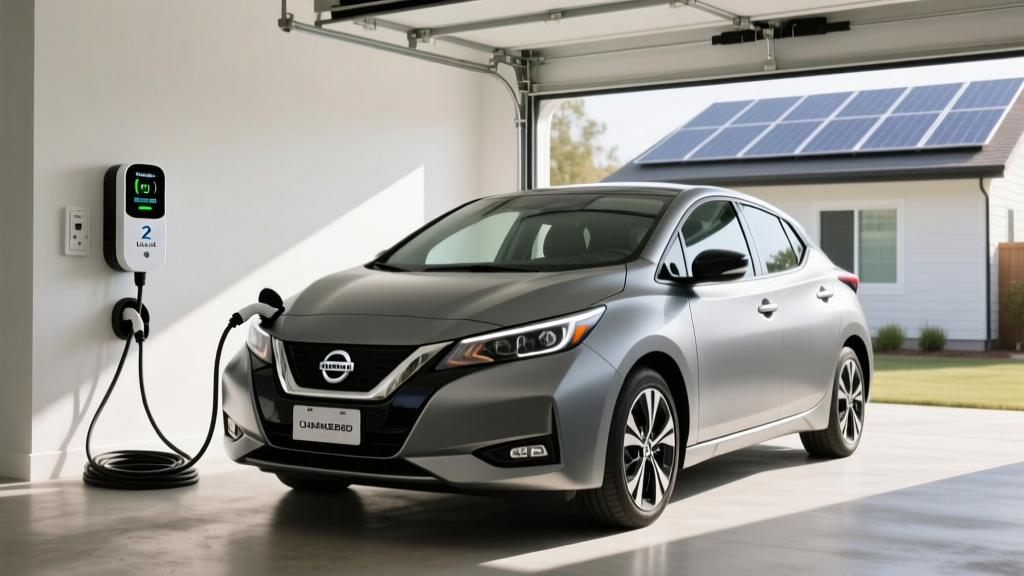
For a lease scenario, portability and value matter — you want a unit you can potentially take with you or that adds value without overspending. Here are three proven options across price tiers:
Budget Pick: Emporia Vue 2 EV Charger
- Power: 48A / 11.5 kW (on a 60A circuit)
- Connector: NACS
- Cable length: 24 ft
- Smart features: Wi-Fi, app scheduling, solar integration, energy monitoring
- Price: ~$399
- Best for: Lessees wanting maximum power at minimum cost
Best Overall: ChargePoint Home Flex
- Power: Configurable 16A–50A (3.8–12 kW, adjustable to your circuit)
- Connector: NACS (CCS adapter available)
- Cable length: 23 ft
- Smart features: Wi-Fi, Alexa, app scheduling, amperage dip-switch configurable
- Price: ~$549–$649
- Best for: Flexibility across different homes/circuits during a lease
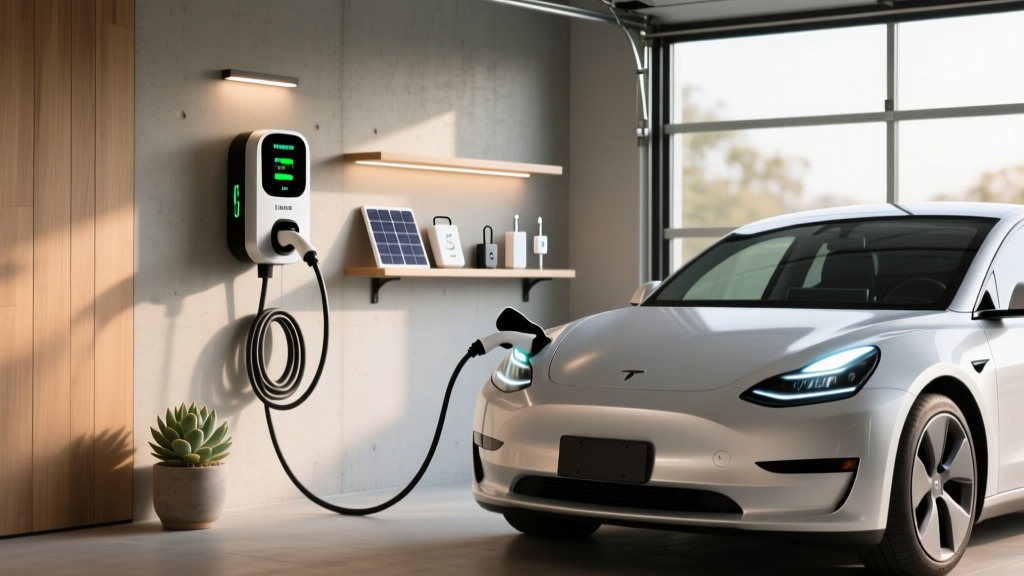
Premium Pick: Tesla Wall Connector
- Power: 48A / 11.5 kW (on a 60A circuit)
- Connector: NACS
- Cable length: 24 ft
- Smart features: Wi-Fi, power sharing (multiple units on one circuit), OTA updates, access control
- Price: ~$450
- Best for: Tesla lessees or anyone with a NACS-equipped EV
Hardwired vs. plug-in: Chargers rated above 40A (9.6 kW) typically require hardwired installation per NEC code. Units at 40A or below can use a NEMA 14-50 plug, which is easier to uninstall and take with you at lease-end. If portability matters for your lease, choose a plug-in unit at 40A or less and have your electrician install a 14-50 receptacle.
Charging Cost Per Mile: Home vs. Public vs. Gas
The economic case for home charging is overwhelming. Here's what you'll actually pay to fuel a typical leased EV with 3.5 miles per kWh efficiency (the approximate average for a 2026 crossover SUV EV):
| Charging Scenario | Cost per kWh | Cost per Mile (at 3.5 mi/kWh) | Monthly Cost (1,200 mi) |
|---|---|---|---|
| Home Level 2 — Off-Peak TOU Rate | $0.08–$0.14 | $0.023–$0.040 | $28–$48 |
| Home Level 2 — Standard Residential Rate | $0.14–$0.20 | $0.040–$0.057 | $48–$68 |
| Public Level 2 (ChargePoint, etc.) | $0.25–$0.49 | $0.071–$0.140 | $85–$168 |
| DC Fast Charging (Electrify America, EVgo) | $0.35–$0.65 | $0.100–$0.186 | $120–$223 |
| Gasoline Vehicle (30 MPG, $3.40/gal) | — | $0.113 | $136 |
The takeaway: home charging at off-peak rates costs roughly one-quarter to one-third what gasoline costs per mile. Even public DC fast charging, the most expensive EV option, often matches or slightly beats gasoline on cost per mile. But if your lease situation forces you to rely exclusively on public DC fast charging (no home or workplace access), your fuel savings over gas shrink significantly — and may not offset the higher monthly lease payment of an EV vs. a comparable gas vehicle.
Time-of-Use (TOU) rates are your best friend as an EV lessee. Most utilities offer TOU plans where electricity drops to $0.06–$0.12/kWh between 10 PM and 6 AM. Setting your charger or vehicle to charge only during these windows maximizes savings. According to the U.S. Department of Energy, EV owners who charge at home save an average of $600–$1,200 annually on fuel compared to a 25 MPG gas vehicle.
Safety, Permits, and Code Requirements
EV charging is a high-draw, continuous electrical load — safety isn't optional. Here's what your installation must include to meet code and protect your home:
- Dedicated circuit: Your Level 2 charger must have its own circuit, not shared with other appliances. A shared circuit risks tripped breakers and overheated wiring.
- GFCI protection: NEC 2023 (Article 625.54) requires GFCI (Ground-Fault Circuit Interrupter) protection for all EV charging outlets rated 150V to ground or less and 60A or less. Hardwired units may have GFCI built into the charger itself. Outdoor outlets always require GFCI.
- Outdoor-rated equipment: If your charger is installed outside or in an unenclosed carport, both the charger and receptacle must carry a NEMA 3R or NEMA 4 weather-resistance rating. All recommended chargers above meet this standard.
- Proper wire gauge: A 60A circuit requires 6 AWG copper wire (or 4 AWG aluminum). A 40A circuit requires 8 AWG copper. Your electrician will size wire based on run length and local code amendments.
- Permit and inspection: Virtually all jurisdictions require an electrical permit for a new 240V circuit. Permit fees typically run $50–$300, and a city/county inspector will verify the work after completion. Do not skip this step — unpermitted work can void homeowner's insurance claims and create liability issues.
Is a Home Charger Worth It on a 36-Month Lease? A Decision Framework
Install a Level 2 Home Charger If:
- Your electrical panel has spare capacity (no upgrade needed) — total cost $700–$1,650 pays for itself in 12–24 months of fuel savings vs. gas
- You drive more than 30 miles per day and need reliable overnight replenishment
- You have access to off-peak utility rates ($0.08–$0.14/kWh)
- You plan to stay at your current residence for the full lease term
- Your lease includes an EV with 250+ miles of EPA range and a large battery (75+ kWh) that would take 24+ hours on Level 1
Consider Alternatives (Level 1, Workplace, or Public Charging) If:
- Your home needs a panel upgrade ($1,500–$4,000+), pushing total install past $4,000 — hard to recoup in 36 months
- You drive under 20 miles/day and your EV's Level 1 cord can replenish overnight (3–5 miles/hour × 10 hours = 30–50 miles)
- Your workplace offers free or subsidized Level 2 charging
- You live in an apartment/condo without dedicated parking or charger installation rights
- You're leasing a PHEV with a small battery (10–20 kWh) that charges fully in 2–4 hours on Level 1
Frequently Asked Questions
How much does it cost to install a home EV charger?
A straightforward Level 2 charger installation on an existing panel with a short wire run costs $700–$1,650 including equipment, electrician labor, materials, and permit. Complex installations with long wire runs cost $1,500–$3,000. If your home requires a panel upgrade (100A to 200A), total costs can reach $4,000–$7,000+. Always get a load calculation from a licensed electrician before committing.
How fast will each charging level add range?
Level 1 (120V) adds 3–5 miles of range per hour. Level 2 (240V) adds 12–75 miles per hour depending on amperage — a 48A/11.5 kW charger adds roughly 40 miles per hour to a typical EV. DC fast charging adds 150–1,000+ miles per hour equivalent, with 10–80% charges taking 18–45 minutes depending on your vehicle's peak charge rate and battery size.
Which connector is compatible with my leased EV?
As of 2026, most new EVs from Tesla, Ford, GM, Hyundai, Kia, Rivian, BMW, Toyota, and Volvo use the NACS connector. Some remaining CCS1-equipped vehicles may need an adapter for Tesla Supercharger access. Check your lease vehicle's spec sheet or owner's manual. The EPA's fueleconomy.gov site lists charge port types for every certified model.
Can I take my home charger with me when my lease ends?
Yes, if it's a plug-in unit (NEMA 14-50 or 6-50 receptacle). Hardwired chargers are more difficult to remove and leave wiring that must be properly capped by an electrician. For lessees who may move, a plug-in Level 2 charger on a 14-50 outlet is the most portable option. You can also have the outlet installed in a location that serves future tenants or homeowners.
Does the federal tax credit apply to home charger installation?
The Alternative Fuel Vehicle Refueling Property Credit (IRC §30C) covers 30% of home charging equipment and installation costs, up to $1,000, but only if you live in a qualifying census tract (generally non-urban or low-income areas). This is separate from the §30D vehicle purchase credit. Check the IRS eligibility tool and consult a tax professional — eligibility depends on your specific address and income. The credit is available for equipment placed in service through 2032.
What if I can't install a charger at home?
Explore these alternatives: workplace charging (many employers offer free or discounted Level 2), public Level 2 networks (ChargePoint, EVgo, Blink — often $0.25–$0.49/kWh), DC fast charging corridors for longer trips, and community charging programs. Some utilities and municipalities offer curbside Level 2 chargers in residential areas. If you're consistently paying $0.40+/kWh for public charging, your cost advantage over gasoline narrows considerably — factor this into your lease decision.