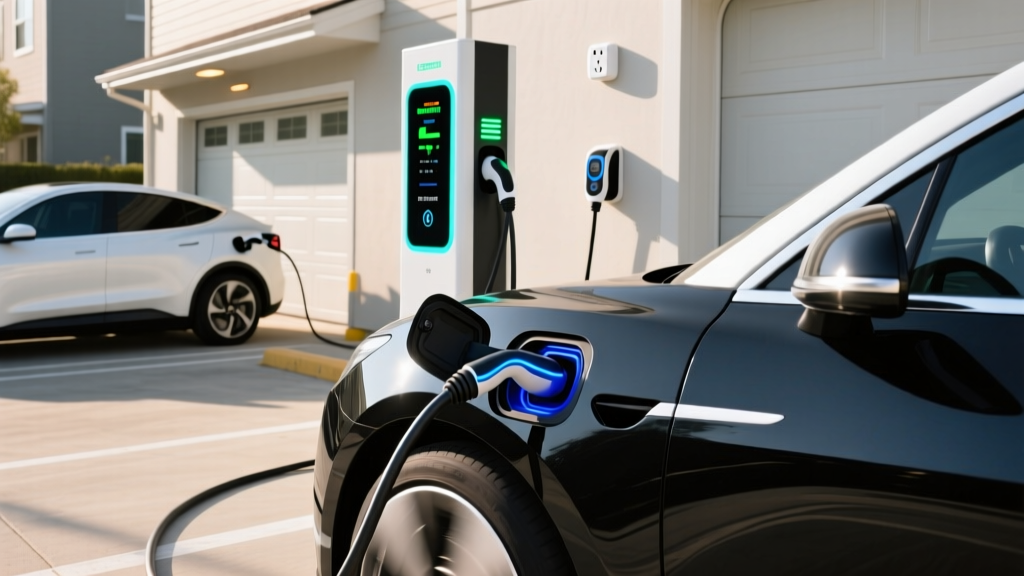
You've spotted an attractive EV lease — maybe a Hyundai Ioniq 5 at $299/month or a Tesla Model Y through a promotional program. Before you sign, the real question isn't just the monthly payment; it's whether you can charge efficiently and affordably where you live. A cheap lease quickly turns expensive if you're relying on $0.48/kWh DC fast chargers every day or facing a $3,500 electrical panel upgrade to install a home charger.
This guide walks through every charging variable that affects your total cost of ownership on a leased EV: home installation requirements, real-world charging speeds, connector compatibility across 2026 models, public charging economics, and the specific Level 2 hardware worth buying. Whether your lease runs 24 or 36 months, these numbers determine whether you save money or bleed it.
Charging Levels Explained: Speed, Power, and What Each Adds Per Hour
The single most important distinction in EV charging is between kW (kilowatts), which measures power flow rate, and kWh (kilowatt-hours), which measures total energy stored in your battery. Think of kW as how fast water flows through a hose and kWh as the total gallons in your bucket. A 77 kWh battery charged at 11.5 kW takes roughly 6.7 hours from empty to full (minus efficiency losses).
| Level | Voltage / Amps | Power (kW) | Miles Added/Hour | Best For |
|---|---|---|---|---|
| Level 1 (120V) | 120V / 12-16A | 1.4–1.9 kW | 3–5 mi/hr | Overnight top-ups, PHEVs, emergency backup |
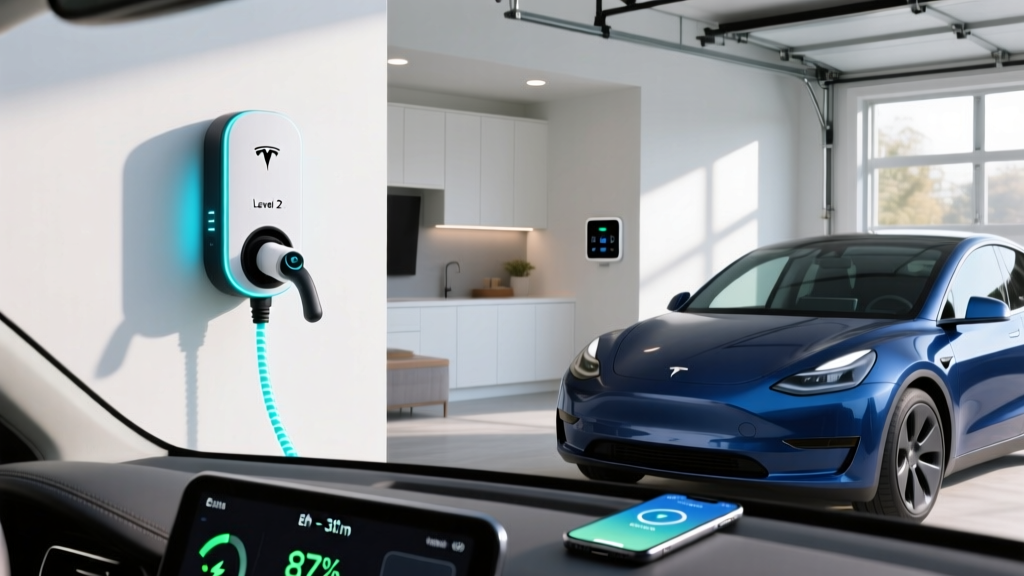
| Level 2 (240V) | 240V / 32–48A | 7.7–11.5 kW | 25–44 mi/hr | Daily home charging, workplace, destination |
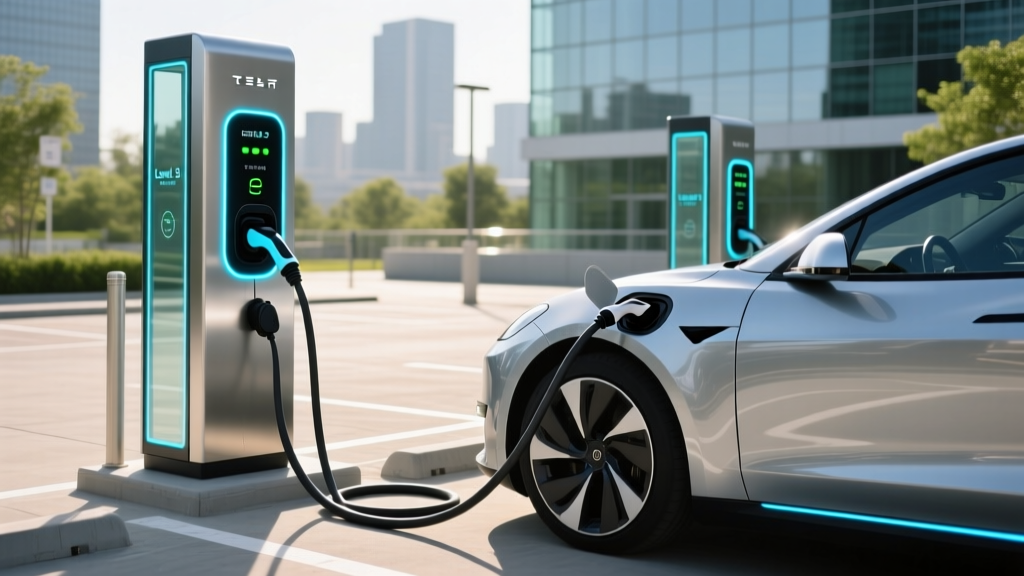
| DC Fast (Level 3) | 400–900V DC | 50–350 kW | 150–1,200 mi/hr (peak) | Road trips, quick top-ups, no-home-charging scenarios |
For a typical 2026 EV lease with a 75–84 kWh battery (Ioniq 5, Model Y, EV6), Level 2 at home is the economic sweet spot. DC fast charging is necessary for road trips but shouldn't be your daily routine — sustained DCFC use accelerates battery degradation and costs 3–5× more per kWh than home electricity.
Home Charger Installation: Electrical Requirements and Real Costs
A Level 2 home charger requires a dedicated 240-volt circuit, similar to what powers an electric dryer or oven. Most modern chargers draw between 32A and 48A, meaning you need a 40A or 60A breaker respectively (electrical code requires breakers rated 125% above continuous load). Here's where costs vary wildly:
| Component | Low End | High End | Notes |
|---|---|---|---|
| Level 2 Charger (hardware) | $350 | $700 | Smart Wi-Fi units with 25' cable |
| Electrician labor (240V outlet or hardwire) | $400 | $1,200 | Depends on run distance from panel |
| Permit & inspection | $50 | $250 | Varies by municipality |
| Electrical panel upgrade (if needed) | $1,500 | $3,500 | Required if panel is 100A or near capacity |
| Total (no panel upgrade) | $800 | $2,150 | Most newer homes with 200A service |
| Total (with panel upgrade) | $2,300 | $5,650 | Older homes, 100A panels, or high-load homes |
The panel-upgrade scenario is the hidden cost that catches lessees off guard. If your home has a 100-amp electrical panel (common in homes built before 1990) and you're already running central A/C, an electric dryer, and an electric range, adding a 48A EV charger may exceed your panel's capacity. A licensed electrician will perform a load calculation per NEC Article 220 to determine this. On a 36-month lease, amortizing a $3,000 panel upgrade adds roughly $83/month to your effective cost — something to factor against that $299 lease payment.
Electrical Upgrades You Might Need
Beyond the panel itself, watch for these requirements:
- Dedicated circuit: Your EV charger cannot share a circuit with other appliances. A 60A breaker with 6 AWG copper wire (for 48A chargers) or 8 AWG (for 40A/32A chargers) is standard.
- GFCI protection: NEC 2020 and later require GFCI protection for 240V outlets in garages. Hardwired chargers may be exempt depending on local code, and hardwiring eliminates the GFCI nuisance-tripping issue some EV owners report with NEMA 14-50 outlets.
- Outdoor rating: If your charger mounts outside, ensure it carries a NEMA 4 (weatherproof) rating. Most major brands now ship outdoor-rated, but verify before purchasing.
- Conduit and wire run: Long runs from your panel to the garage (over 50 feet) increase wire-gauge requirements and labor costs.
Connector Compatibility: NACS, CCS, and CHAdeMO in 2026
The 2026 model year marks the near-complete transition to NACS (North American Charging Standard), the connector Tesla pioneered and that Ford, GM, Hyundai, Kia, Rivian, and most other manufacturers have adopted. Here's where each brand stands:
| Connector | Brands Using It (2026) | Home Charger Availability | Adapter Needed? |
|---|---|---|---|
| NACS (Tesla-style) | Tesla, Ford, GM, Hyundai, Kia, Rivian, Volvo, Polestar, BMW, Mercedes | Widely available (Tesla Wall Connector, ChargePoint, Emporia) | CCS-to-NACS adapters available for older CCS vehicles (~$200) |
| CCS1 | VW ID.4 (2025 and earlier), legacy models, some Stellantis | Available but declining | NACS-to-CCS adapter needed for Tesla Superchargers |
| CHAdeMO | Nissan Leaf (discontinued), Mitsubishi Outlander PHEV | Limited | No practical adapter to NACS/CCS |
If you're leasing a 2026 model-year EV, you'll almost certainly get a NACS port unless you're buying remaining stock of a 2025 CCS-equipped vehicle. This matters for home charger selection: buy a NACS-terminated charger for forward compatibility, even if your current lease vehicle uses CCS (you can use an adapter, and your next EV will almost certainly be NACS).
Charging Cost Per Mile: Home vs. Public vs. Gas
The economic case for an EV lease hinges on fuel savings. Here's how the numbers work across different charging scenarios, using the national average electricity rate of $0.17/kWh (home) and typical public rates as of early 2026, per EIA data:
| Scenario | Rate | Vehicle Efficiency | Cost Per Mile |
|---|---|---|---|
| Home (national avg, off-peak TOU) | $0.12–$0.17/kWh | 3.5 mi/kWh (typical midsize EV) | $0.034–$0.049 |
| Home (time-of-use, overnight valley) | $0.08–$0.11/kWh | 3.5 mi/kWh | $0.023–$0.031 |
| Public Level 2 (ChargePoint, EVgo L2) | $0.25–$0.39/kWh | 3.5 mi/kWh | $0.071–$0.111 |
| DC Fast (Electrify America, EVgo, Tesla) | $0.35–$0.55/kWh | 3.5 mi/kWh | $0.100–$0.157 |
| Gas vehicle (28 MPG combined, $3.40/gal) | $3.40/gallon | 28 MPG | $0.121 |
The takeaway: home charging at off-peak rates delivers fuel costs roughly 75% below a comparable gas vehicle. But if your lease forces you to rely entirely on DC fast charging (apartment living, no garage access), your per-mile cost actually exceeds the gas car in many markets. This is the make-or-break calculation before signing any EV lease.
For a driver covering 12,000 miles annually:
- Home off-peak charging: ~$360–$588/year in electricity
- Exclusive DC fast charging: ~$1,200–$1,884/year
- Gas vehicle at 28 MPG: ~$1,457/year
Charging Times: Real-World 10–80% Expectations
Manufacturer charging claims cite peak kW rates, but real-world DC fast charging follows a tapering curve — the battery accepts maximum power only at low state-of-charge (SoC), then progressively slows to protect cell health. Here are realistic 10–80% times for common 2026 lease vehicles:
- Hyundai Ioniq 5 (84 kWh, 800V architecture): Peaks at ~240 kW, 10–80% in approximately 18 minutes. Sustains above 180 kW up to ~55% SoC before tapering.
- Tesla Model Y Long Range (~75 kWh): Peaks at ~250 kW at V4 Superchargers, 10–80% in approximately 22–25 minutes. Tapers noticeably above 60%.
- Ford Mustang Mach-E Extended Range (~91 kWh usable): Peaks at ~150 kW, 10–80% in approximately 33–36 minutes.
- Chevrolet Equinox EV (~85 kWh): Peaks at ~150 kW, 10–80% in approximately 30–34 minutes.
At home on a 48A Level 2 charger (11.5 kW), any of these batteries will fully replenish overnight in 7–9 hours — more than sufficient for daily driving needs. A 32A charger (7.7 kW) extends that to 10–12 hours, still adequate for most commuters who plug in upon returning home.
Equipment Recommendations: Best Level 2 Chargers for Leased EVs
Since you don't own a leased vehicle long-term, the smart play is buying a high-quality charger you'll keep for your next EV. Here are proven units with exact specifications:
Tesla Wall Connector (Gen 4)
- Power: Up to 11.5 kW (48A) on a 60A circuit
- Connector: NACS native; J1772 adapter included in box
- Cable length: 24 feet
- Smart features: Wi-Fi, OTA updates, power sharing between two units, access control
- Price: ~$475
- Best for: NACS-equipped vehicles, Tesla and non-Tesla alike (2026+ models)
Emporia Vue Level 2 Charger
- Power: Up to 11.5 kW (48A), configurable down to 32A or 16A via app
- Connector: NACS (J1772 version also available)
- Cable length: 24 feet
- Smart features: Wi-Fi, energy monitoring, solar integration, EV utility rate optimization, load management with Emporia panel monitor
- Price: ~$399
- Best for: Solar homes, panel-capacity-limited installations, budget-conscious buyers
ChargePoint Home Flex (2nd Gen)
- Power: Up to 12 kW (50A) on a 60A circuit, adjustable via DIP switches
- Connector: NACS or J1772 (select at purchase)
- Cable length: 23 feet
- Smart features: Wi-Fi, Alexa/Google integration, scheduling, charging history, flexible amperage
- Price: ~$599
- Best for: Smart-home integration, renters who may move (adjustable amperage fits different circuits)
All three units carry NHTSA-listed safety certifications (UL or ETL) and NEMA 4 outdoor ratings. The Emporia stands out for its load-management feature: paired with the Emporia Vue energy monitor on your panel, the charger dynamically adjusts its draw to avoid tripping your main breaker — a genuine solution for homes where a panel upgrade isn't feasible on a lease timeline.
Federal Tax Credit and Incentive Considerations for Leased EVs
A critical nuance for EV lessees: the IRS §30D federal tax credit technically belongs to the vehicle's legal owner — the leasing company (lessor), not you. However, most major lessors (Hyundai Capital, Tesla Leasing, Ford Credit) pass the $7,500 credit through as a capitalized-cost reduction, effectively lowering your monthly payment. This is not guaranteed; verify the lease disclosure explicitly states the credit is applied.
For the charger itself, the Alternative Fuel Vehicle Refueling Property Credit (§30C) covers 30% of home charger hardware and installation costs, up to $1,000, provided you live in an eligible census tract (typically lower-income or non-urban areas). Check the IRS eligibility tool for your address. This credit is available to lessees who pay for their own charger installation.
Making the Lease Math Work: Decision Framework
Sign that EV lease if:
- You have garage or driveway access for a Level 2 charger installation
- Your electrical panel has capacity (200A service with room for a 60A breaker)
- Your utility offers time-of-use rates with overnight valleys below $0.12/kWh
- Your daily commute is under 80 miles round-trip (Level 2 overnight charging covers this easily)
- The lessor confirms the $7,500 credit passes through to your lease terms
Reconsider or negotiate if:
- You live in an apartment with no charging access and no workplace charging
- Your home needs a $3,000+ panel upgrade and you'll only be there 2–3 years
- Your only option is daily DC fast charging at $0.45+/kWh (you'll pay more than gas)
- The lease does not pass through the federal credit, and your state offers no additional incentive
Frequently Asked Questions
How much does it cost to install a home EV charger?
Expect $800–$2,150 for a standard installation (charger + electrician + permit) in a home with a 200A panel and capacity. If your panel needs upgrading from 100A to 200A, add $1,500–$3,500. The charger hardware itself runs $350–$700 for a quality smart unit.
How fast will each charging level add range?
Level 1 (120V) adds 3–5 miles per hour. Level 2 (240V, 48A) adds 35–44 miles per hour. DC fast charging at 150+ kW can add 150–300 miles in 20–30 minutes, but charging speed tapers significantly above 80% state of charge.
Which connector/charger is compatible with my EV?
For 2026 model-year vehicles, NACS is now the dominant standard across Tesla, Ford, GM, Hyundai, Kia, Rivian, and most others. CCS1 remains on some carryover 2025 models. CHAdeMO is effectively discontinued. Buy a NACS charger for forward compatibility.
How much does charging cost per mile vs gas?
Home charging at off-peak rates costs $0.03–$0.05 per mile for a typical EV. Gas at $3.40/gallon in a 28 MPG vehicle costs about $0.12 per mile. However, exclusive DC fast charging at $0.45+/kWh can push EV costs to $0.13–$0.16 per mile — more than gas.
What electrical upgrades might I need?
The most common upgrade is a panel capacity increase (100A to 200A) if your existing panel can't handle an additional 48A continuous load. You'll also need a dedicated 240V circuit with appropriate wire gauge (6 AWG for 48A), a properly rated breaker, and potentially GFCI protection depending on local code and whether you use an outlet or hardwire.
Can I take the charger with me when the lease ends?
Yes. The Level 2 charger you purchase and install is your property, not part of the vehicle lease. When you return the EV, the charger stays with your home (adding resale value) or can be unplugged and moved to your next residence.
Is it worth installing a charger for a 24-month lease?
If your installation cost is under $1,500 and you drive 10,000+ miles annually, the fuel savings versus gas typically recoup the investment within 12–18 months. Factor in the §30C credit (30% up to $1,000) if your census tract qualifies, and the payback period shortens further.