Understanding the Charger Dom: Levels, Speeds, and What They Mean for Your EV
Navigating the charger dom — the ecosystem of home, public, and DC fast charging hardware — starts with one critical distinction: kW (kilowatts) measures power, the rate at which electricity flows into your car. kWh (kilowatt-hours) measures energy, the total capacity stored in your battery. A 60 kWh battery charged at 10 kW takes roughly six hours from empty; the same battery at 150 kW DC fast charging can reach 80% in under 25 minutes. Confusing these two is the single most common EV literacy gap, and it directly affects what hardware you buy and how you plan trips.
| Level | Voltage | Typical Power (kW) | Miles of Range Added per Hour | Best Use Case |
|---|---|---|---|---|
| Level 1 | 120V AC | 1.0–1.4 kW | 3–5 mi/hr | Overnight top-ups, PHEVs, low-mileage drivers |
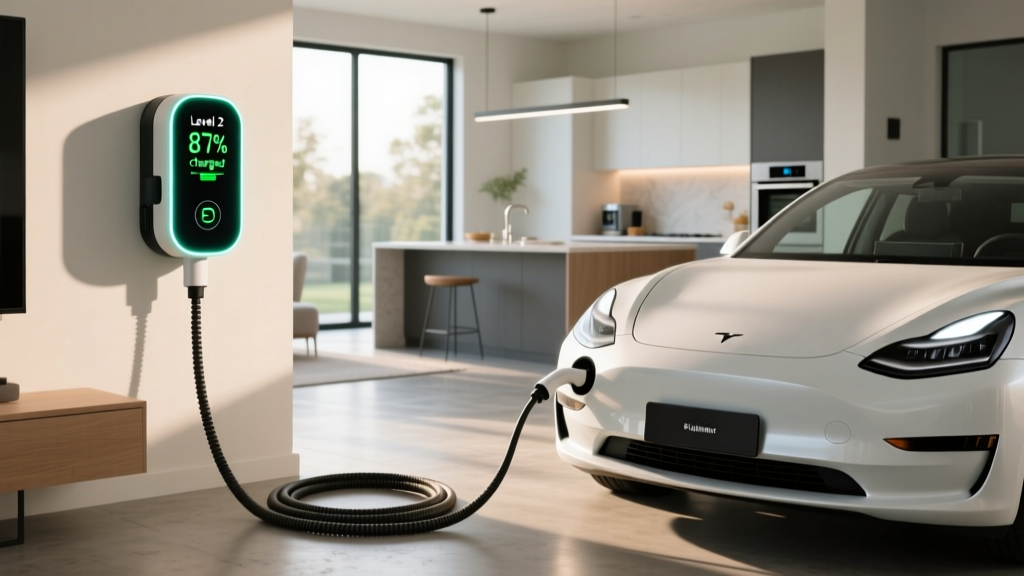
| Level 2 (Home) | 240V AC | 7.2–11.5 kW | 25–44 mi/hr | Daily home charging, full overnight replenishment |
| Level 2 (Public) | 208–240V AC | 6.6–19.2 kW | 22–70 mi/hr | Workplace, retail, destination charging |
| DC Fast (Level 3) | 400–800V DC | 50–350 kW | 150–1,200 mi/hr (peak) | Road trips, rapid top-ups, fleet depots |
Most EV batteries in 2026 range from 50 kWh (compact crossovers) to 100+ kWh (full-size trucks and luxury sedans). A Level 2 home charger at 11.5 kW will replenish a 75 kWh battery (think Tesla Model Y Long Range or Hyundai Ioniq 5) from 10% to full in roughly 6–7 hours. That same battery on a 250 kW DC fast charger hits 10–80% in approximately 18–22 minutes, though the charge curve tapers significantly above 80% — expect the final 20% to take as long as the first 80%.
Home EV Charger Installation: Electrical Requirements and Real Costs
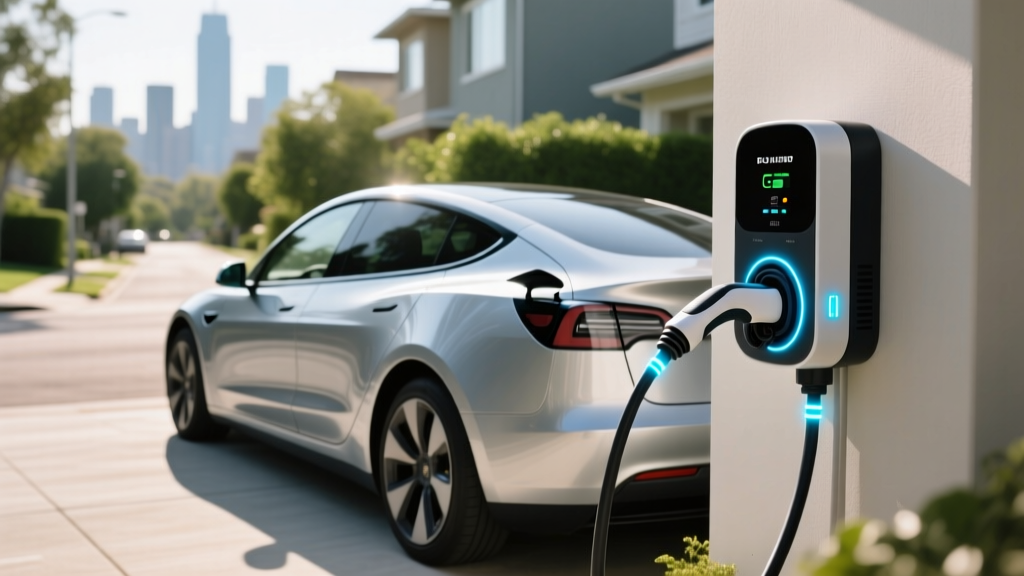
Installing a Level 2 home charger is the single highest-impact upgrade an EV owner can make. It transforms daily ownership from a planning exercise into a plug-in-and-sleep routine. But the cost varies enormously based on your home's electrical infrastructure.
Electrical Requirements
A standard Level 2 home charger requires a 240V dedicated circuit, identical in voltage to an electric dryer or oven. The most common configurations:
- 40-amp circuit (delivers 32A continuous / 7.7 kW) — sufficient for most daily driving under 60 miles
- 50-amp circuit (delivers 40A continuous / 9.6 kW) — the sweet spot for most homes and EVs
- 60-amp circuit (delivers 48A continuous / 11.5 kW) — maximum for vehicles like the Ford F-150 Lightning or Tesla Model S with 11.5 kW onboard chargers
The National Electrical Code (NEC) requires EV circuits to be rated at 125% of the continuous load, which is why a 48A charger needs a 60A breaker. Your charger must also be on a dedicated circuit — it cannot share with other appliances.
Panel Upgrade: The Hidden Cost
Homes built before 2000 often have 100A or 150A main electrical panels. Adding a 50A EV circuit to an already-loaded panel may require a panel upgrade to 200A, which is the most expensive variable in the entire installation. Signs you may need an upgrade:
- Your panel is at or near capacity (electrician will perform a load calculation per NEC Article 220)
- You have a 100A main breaker
- You already run electric heat, an electric oven, an electric dryer, and central AC
- Your panel uses fuses rather than breakers
If a panel upgrade is needed, expect the total project to double or triple in cost. Some homeowners opt for a smart load-management device (like the Emporia Smart Load Center or Span panel integration) that dynamically shares amperage between the EV charger and other circuits, avoiding a panel upgrade entirely. These add $300–$600 to equipment cost but can save $2,000–$4,000 on panel replacement.
| Component | Simple Install (Panel Nearby) | Moderate Install (50+ ft Run) | Complex Install (Panel Upgrade Needed) |
|---|---|---|---|
| Level 2 Charger Equipment | $350–$700 | $350–$700 | $350–$700 |
| Electrician Labor (licensed) | $300–$600 | $600–$1,200 | $800–$1,500 |
| Electrical Materials (wire, conduit, breaker) | $100–$250 | $250–$500 | $200–$400 |
| Permit & Inspection | $50–$150 | $50–$200 | $50–$200 |
| Panel Upgrade (if needed) | — | — | $1,500–$3,500 |
| Total Estimated Cost | $800–$1,700 | $1,250–$2,600 | $2,900–$6,300 |
Always hire a licensed electrician and pull a permit. Unpermitted EV charger installations can void homeowner's insurance claims and create fire hazards. The National Electrical Contractors Association maintains a directory of certified EV charger installers. Additionally, the federal Alternative Fuel Vehicle Refueling Property Credit (§30C) may cover up to 30% of home charging equipment and installation costs (capped at $1,000) for installations in eligible census tracts — check IRS guidelines for current eligibility.
Connector Compatibility: NACS, CCS1, and CHAdeMO in 2026
The connector landscape has consolidated significantly. As of 2026, nearly all new EVs sold in North America use the NACS (North American Charging Standard) connector, originally developed by Tesla and adopted industry-wide starting in 2024–2025. Here's where each standard stands:
| Connector | Brands Using It (2026) | Home Charger Availability | Public DC Network Access |
|---|---|---|---|
| NACS (J3400) | Tesla, Ford, GM, Rivian, Hyundai, Kia, Volvo, Polestar, BMW, Mercedes, Nissan, Toyota, Subaru, Lucid, Fisker | Widely available (Tesla Wall Connector, ChargePoint, Emporia, Grizzl-E) | Tesla Supercharger (open to all NACS), Electrify America (NACS stalls), EVgo, BP Pulse |
| CCS1 | Legacy models (pre-2025 VW ID.4, some Stellantis); most manufacturers have transitioned to NACS | Available but declining | Electrify America, EVgo, ChargePoint — many adding NACS cables |
| CHAdeMO | Nissan Leaf (discontinued), Mitsubishi Outlander PHEV (legacy) | Limited | Declining; most networks prioritize NACS/CCS |
Adapter needs: If you own a CCS1-equipped EV (purchased before the NACS transition), a CCS-to-NACS adapter ($150–$250) unlocks the Tesla Supercharger network. Tesla owners driving non-Tesla vehicles with NACS ports need no adapter. CHAdeMO owners face the most limited public charging options and should prioritize home Level 2 installation.
The Cost to Charge: Home vs. Public vs. Gas Per Mile
Electricity pricing varies dramatically by location, time of day, and charging method. The national residential average in 2026 is approximately $0.17/kWh, but time-of-use (TOU) plans can drop off-peak rates to $0.08–$0.12/kWh. Public DC fast charging typically runs $0.35–$0.55/kWh, with Tesla Superchargers averaging $0.28–$0.36/kWh depending on location and time.
| Scenario | Rate ($/kWh) | Vehicle Efficiency (kWh/100 mi) | Cost Per Mile | Equivalent Gas MPG at $3.40/gal |
|---|---|---|---|---|
| Home Off-Peak (TOU Plan) | $0.10 | 30 kWh/100 mi | $0.030 | 113 MPG |
| Home Standard Rate | $0.17 | 30 kWh/100 mi | $0.051 | 67 MPG |
| Public Level 2 | $0.25 | 30 kWh/100 mi | $0.075 | 45 MPG |
| DC Fast Charging | $0.45 | 30 kWh/100 mi | $0.135 | 25 MPG |
| Gas Vehicle (28 MPG combined) | — | — | $0.121 | 28 MPG |
The math is clear: home charging on a TOU plan delivers fuel costs roughly 75% lower than a comparable gas vehicle. Even public DC fast charging is competitive with gasoline on a per-mile basis. However, if you rely exclusively on public DC fast charging at $0.45+/kWh, your per-mile cost can exceed that of a fuel-efficient hybrid. This is why home Level 2 installation is the single most impactful economic decision in EV ownership.
Charging Time Examples for Common Battery Sizes
Real-world 10–80% charging times depend on battery size, peak charge rate, and the charge curve (most EVs taper significantly above 50–60% SoC to protect battery health):
- 60 kWh battery (Chevrolet Equinox EV): ~22 min at 150 kW peak / ~32 min at 100 kW peak
- 75 kWh battery (Tesla Model Y, Hyundai Ioniq 5): ~18 min at 250 kW peak (Ioniq 5 with 800V architecture) / ~25 min at 170 kW peak
- 100 kWh battery (Ford F-150 Lightning Extended Range): ~35 min at 150 kW peak / ~45 min at 100 kW peak
- 131 kWh battery (GMC Hummer EV): ~55 min at 350 kW peak — the largest consumer EV battery takes the longest regardless of charger speed
Best Home EV Chargers for 2026: Equipment Recommendations
After testing and tracking reliability across dozens of Level 2 home units, here are the standout chargers for different needs. Every recommendation below specifies power output, connector type, cable length, and smart features.
Best Overall: Tesla Wall Connector (Gen 4)
- Power Output: Up to 11.5 kW (48A) on a 60A circuit
- Connector: NACS (native); CCS1 adapter available separately
- Cable Length: 24 ft
- Smart Features: Wi-Fi, OTA updates, power sharing (link up to 6 units on one circuit), load management, Tesla app scheduling
- Price: ~$475
- Why it wins: Highest power-to-price ratio, excellent build quality, power-sharing capability eliminates the need for a panel upgrade in multi-EV households
Best for Non-Tesla NACS Vehicles: ChargePoint Home Flex (2nd Gen)
- Power Output: Up to 12 kW (50A) on a 60A circuit; configurable down to 16A for lower-capacity panels
- Connector: NACS (2026 model); J1772 with NACS adapter also available
- Cable Length: 23 ft
- Smart Features: Wi-Fi, Alexa/Google Home integration, ChargePoint app with scheduling and energy tracking, amperage dial for flexible circuit sizing
- Price: ~$599
- Why it wins: Flexible amperage settings accommodate older panels without upgrade; robust app ecosystem; UL-listed and ENERGY STAR certified
Best Budget / Outdoor-Rated: Grizzl-E Smart
- Power Output: Up to 10 kW (40A) on a 50A circuit
- Connector: NACS (2026 model); J1772 version also available
- Cable Length: 24 ft
- Smart Features: Wi-Fi, OCPP protocol support, adjustable amperage (16A–40A), -40°F to 122°F operating range
- Price: ~$399
- Why it wins: Built in Canada for extreme cold; IP67-rated for outdoor mounting; 3-year warranty; simplest setup for cold-climate and garage-less owners
Best Smart Load Management: Emporia Level 2 EV Charger
- Power Output: Up to 11.5 kW (48A) on a 60A circuit
- Connector: NACS (2026 model); J1772 with adapter
- Cable Length: 24 ft
- Smart Features: Integrates with Emporia Vue energy monitor for whole-home load tracking; automatic load shedding; solar-aware charging; real-time cost tracking
- Price: ~$499 (charger) + ~$150 (Vue monitor recommended)
- Why it wins: Best-in-class energy visibility; can avoid panel upgrades by dynamically limiting charger draw when other loads spike; ideal for solar-equipped homes
Safety, Code, and Installation Best Practices
A home EV charger draws significant continuous current — more than most household appliances. Cutting corners on installation creates fire risk and insurance liability. Here's what the code requires and what smart installers recommend:
- Dedicated circuit: NEC 625.40 requires a dedicated branch circuit for EV charging equipment. It cannot share a breaker with any other outlet or appliance.
- GFCI protection: NEC 2023 and later require GFCI (Ground Fault Circuit Interrupter) protection for all receptacles used for EV charging, including 240V outlets. Hardwired chargers are exempt from GFCI requirements in most jurisdictions, which is why many electricians recommend hardwiring over plug-in installations.
- Outdoor rating: If your charger is mounted outside, it must be rated for outdoor use (NEMA 4 or IP65/IP67 minimum). All recommended chargers above meet this standard.
- Wire gauge: A 50A circuit requires 6 AWG copper wire; a 60A circuit requires 4 AWG copper. Longer wire runs (over 50 ft) may need upsized wire to prevent voltage drop.
- Permit and inspection: Virtually all jurisdictions require an electrical permit for EV charger installation. The inspection verifies wire gauge, breaker sizing, grounding, and GFCI compliance. Skipping this step risks insurance denial in the event of an electrical fire.
- Surge protection: A whole-panel surge protective device (SPD, ~$150–$300 installed) protects your charger and vehicle onboard charger from lightning and grid surges. Highly recommended in storm-prone regions.
Frequently Asked Questions
How much does it cost to install a home EV charger?
A straightforward Level 2 installation with the electrical panel nearby typically costs $800–$1,700 total (equipment + electrician + permit). Longer wire runs (50+ feet) push costs to $1,250–$2,600. If your home needs a 200A panel upgrade, total project cost can reach $2,900–$6,300. The federal §30C tax credit may offset up to $1,000 of these costs if you're in an eligible census tract.
How fast will each charging level add range?
Level 1 (120V) adds roughly 3–5 miles of range per hour — adequate only for PHEVs or drivers covering under 30 miles daily. Level 2 (240V, 40–50A) adds 25–44 miles per hour, fully replenishing most EVs overnight. DC fast charging adds 150–1,200 miles per hour at peak rates, delivering a 10–80% charge in 18–45 minutes depending on battery size and peak kW acceptance.
Which connector/charger is compatible with my EV?
If you purchased a new EV in 2025 or 2026, it almost certainly uses the NACS connector — this includes Tesla, Ford, GM, Hyundai, Kia, Rivian, BMW, Mercedes, Volvo, and most others. Older CCS1 vehicles (pre-2025 models from VW, some Stellantis brands) can use CCS-to-NACS adapters for Supercharger access. CHAdeMO is limited to legacy Nissan Leaf and Mitsubishi models. Buy a home charger with a native NACS plug for future-proofing.
How much does charging cost per mile vs gas?
Home charging on a time-of-use plan costs approximately $0.03 per mile — roughly 75% less than a 28 MPG gas car at $3.40/gallon ($0.12/mi). Standard-rate home charging runs about $0.05/mi. Public DC fast charging at $0.45/kWh costs roughly $0.135/mi — slightly more than gas. The economic case for EVs depends heavily on home charging access.
What electrical upgrades might I need?
The most common upgrade is a panel upgrade from 100A or 150A to 200A, needed when your existing panel lacks capacity for a dedicated 50–60A EV circuit. This costs $1,500–$3,500. Alternatives include smart load-management devices ($300–$600) that dynamically share amperage, or choosing a lower-amperage charger (24A–32A on a 30A–40A circuit) that still delivers 18–25 miles of range per hour — enough for most daily needs.
Should I hardwire or use a plug for my Level 2 charger?
Hardwiring eliminates the need for a 240V receptacle and GFCI breaker (required for receptacles under current NEC), saving $50–$150 on parts. It also provides a more reliable connection and cleaner installation. Plug-in installations offer portability — you can take the charger when you move. Most dedicated EV owners choose hardwire; renters and those who may relocate should opt for a NEMA 14-50 receptacle.