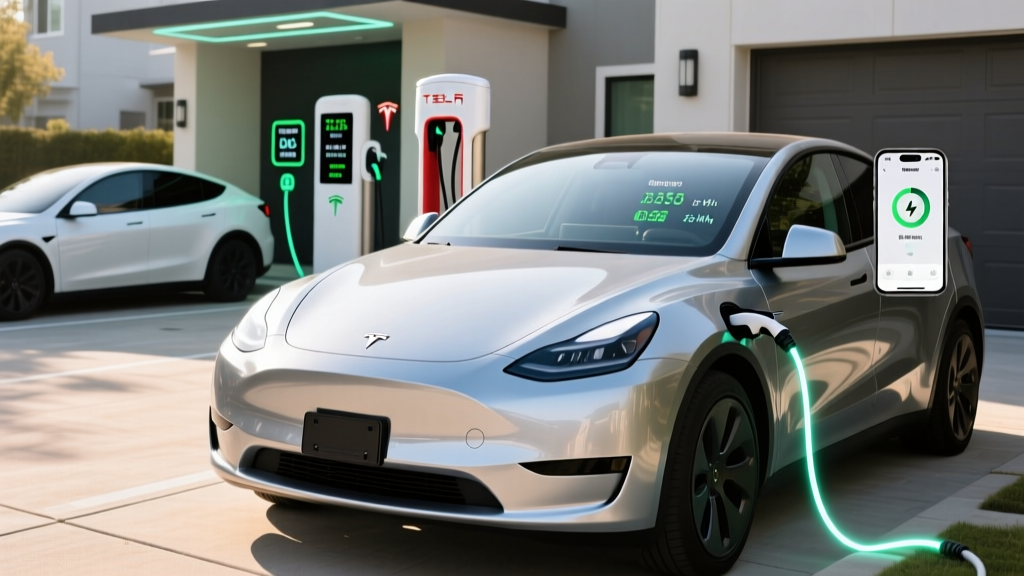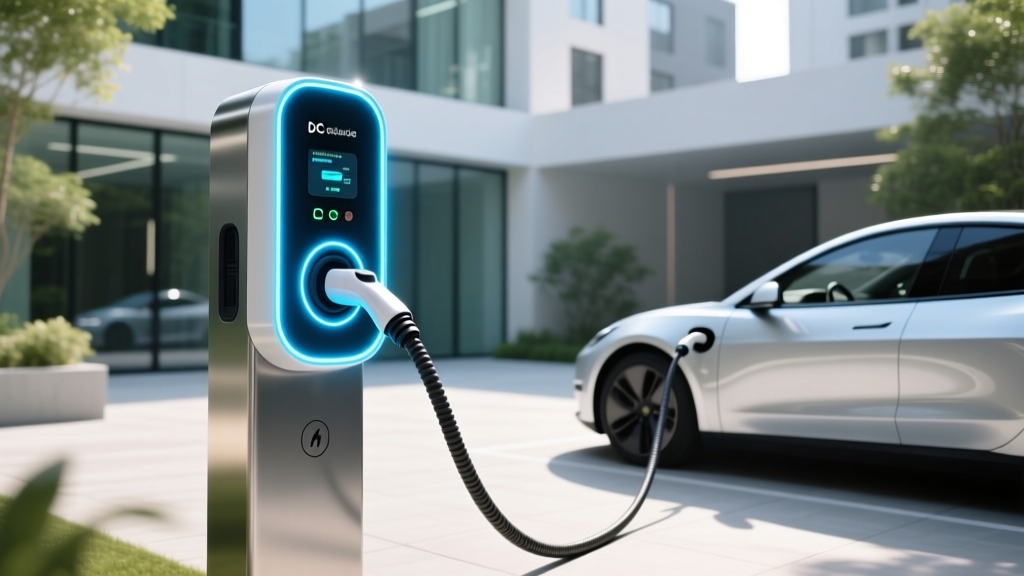
If you've searched for EV charging gear lately, you might have stumbled across the term charger demon horsepower. It sounds like a muscle-car marketing tag, but it actually points to a very real EV concept: the raw power output — measured in kilowatts (kW) — that a charger can push into your battery. Just like a Dodge Demon uses horsepower to shred tires, a high-kW charger uses electrical power to shrink your charging stops. But unlike horsepower, where more is almost always better, EV charging power is only useful if your vehicle can accept it, your wiring can support it, and you understand the difference between power (kW) and energy (kWh).
This guide decodes what charging power really means, walks through every charging level with exact speeds, breaks down real home installation costs (including the panel upgrade nobody warns you about), and shows you what it costs to charge per mile versus filling a gas tank. Let's get specific.
The kW vs kWh Distinction (Don't Skip This)
The single most common EV confusion — and the reason "charger demon horsepower" is misleading — is mixing up kW and kWh.
- kW (kilowatts) = power, or the rate of energy flow. Think of it as the width of a water hose. A 350 kW DC fast charger is a firehose; a 1.4 kW Level 1 outlet is a drinking straw.
- kWh (kilowatt-hours) = energy, or the total amount stored or delivered. Think of it as gallons in a bucket. A Tesla Model Y Long Range has about 75 kWh of usable battery capacity.
When someone talks about a charger's "horsepower," they mean its peak kW rating. But peak kW is rarely sustained. Charging curves taper significantly above 80% State of Charge (SoC), and battery temperature, ambient weather, and the vehicle's onboard charger all throttle real-world speeds. A "250 kW" charger might only deliver 250 kW for the first 5–10 minutes of a session before stepping down.
Charging Levels: Speeds, Power, and Miles Per Hour
Every EV sold in the U.S. charges across one of three defined levels. Here's how they actually perform — not in marketing terms, but in miles of range added per hour of plugged-in time.
| Level | Voltage / Phase | Typical Power (kW) | Miles of Range Added Per Hour | Best Use Case |
|---|---|---|---|---|
| Level 1 | 120V / Single | 1.0 – 1.4 kW | 3 – 5 mi/hr | Overnight top-offs, PHEVs, low-mileage drivers |
| Level 2 | 240V / Single | 3.3 – 19.2 kW | 12 – 75 mi/hr | Home daily charging, workplace, destinations |
| DC Fast (Level 3) | 400V–800V DC | 50 – 350 kW | 150 – 1,200+ mi/hr (peak) | Road trips, quick top-ups, fleet depots |
Real-world context: A 2026 Hyundai Ioniq 5 (84 kWh battery, EPA 305 mi range) charging at a 350 kW DCFC will go from 10% to 80% in about 18 minutes under ideal conditions. That same car on a 48-amp (11.5 kW) Level 2 home charger needs roughly 7 hours for a full 0–100% fill — perfect for overnight. On a 120V Level 1 plug? Expect over 60 hours for a full charge. Level 1 is fine for a PHEV with a 12 kWh battery; it's essentially useless for a 100+ kWh electric truck.
How Much Does It Cost to Install a Home EV Charger?
This is where the "charger demon horsepower" fantasy meets reality. The charger itself is often the cheapest part of the equation. Installation cost depends on three variables: distance from your electrical panel, whether your panel has spare capacity, and local permit requirements.
Typical Electrical Requirements
- Circuit: A 48-amp Level 2 charger requires a dedicated 60-amp breaker (NEC code requires circuits to be rated at 125% of continuous load).
- Voltage: 240V, single-phase, like an electric dryer or oven.
- Wire gauge: Usually 6 AWG copper for runs under 50 feet; 4 AWG for longer runs.
- Panel capacity: Most modern homes have 200-amp service. Older homes may have 100A or even 60A — which almost certainly requires an upgrade.
| Item | Typical Cost Range | Notes |
|---|---|---|
| Level 2 Charger (hardware) | $350 – $750 | 40A–48A smart Wi-Fi-enabled units |
| Electrician labor (standard install) | $500 – $1,500 | Short run, panel has capacity, no trenching |
| Electrician labor (complex install) | $1,500 – $3,500 | Long wire run, attic/crawlspace routing, trenching |
| Electrical permit | $50 – $250 | Varies by municipality; required in most jurisdictions |
| Panel upgrade (100A → 200A) | $1,500 – $3,500 | If your panel is maxed out or outdated |
| Total (no panel upgrade) | $900 – $2,500 | Most homes built after 1990 |
| Total (with panel upgrade) | $2,400 – $6,000+ | Older homes or high-load households |
What Electrical Upgrades Might I Need?
Before calling an electrician, check your panel. If you already have an electric range, electric dryer, central AC, and an electric water heater running on a 100-amp service, adding a 60-amp EV circuit may exceed your panel's capacity. A licensed electrician will perform a load calculation (NEC Article 220) to determine whether you need a service upgrade. Don't skip the permit — unpermitted EV charger installs can void home insurance claims and cause problems at resale.
Federal incentive note: The Alternative Fuel Vehicle Refueling Property Credit (IRS Form 8911) covers up to 30% of home charging equipment and installation costs, capped at $1,000 per year, but it's subject to census-tract eligibility and income requirements. Check IRS.gov guidance before assuming you qualify.
Connector Compatibility: NACS, CCS, and CHAdeMO
As of the 2026 model year, the North American charging landscape has largely consolidated around NACS (Tesla's connector, now SAE J3400). Ford, GM, Rivian, Hyundai, Kia, Volvo, and most other automakers have adopted NACS on new vehicles. CCS1 remains on many 2021–2024 models still on the road, and CHAdeMO is effectively legacy (Nissan Leaf being the main holdover).
| Connector | Vehicles (2025–2026 Models) | DC Fast Network Access | Adapter Needed? |
|---|---|---|---|
| NACS (J3400) | Tesla (all), Ford, GM, Rivian, Hyundai, Kia, Volvo, Polestar | Tesla Supercharger + growing NACS stations on EA, ChargePoint | No (native); CCS→NACS adapter for older CCS cars (~$200–$300) |
| CCS1 | 2021–2024 models (VW ID.4, older Mustang Mach-E, BMW i4, etc.) | Electrify America, EVgo, ChargePoint DCFC | NACS→CCS adapter needed for Tesla Superchargers |
| CHAdeMO | Nissan Leaf (legacy only) | Limited and shrinking network | No adapter widely available; avoid for new purchases |
Level 2 home charging universally uses the J1772 connector for non-Tesla vehicles, and Tesla provides a J1772 adapter in the glovebox of every new vehicle. Most home chargers ship with J1772; if you own a 2025+ NACS-equipped Ford or Hyundai, you'll either use the included adapter or buy a NACS-terminated home charger (increasingly available from ChargePoint, Wallbox, and Tesla).
Charging Cost Per Mile vs. Gasoline
This is where EV ownership economics get compelling — but only if you charge smartly. Public DC fast charging has gotten expensive enough that the "always cheaper than gas" claim no longer holds universally.
| Charging Scenario | Cost per kWh | Cost to Fill 75 kWh Battery | Cost Per Mile (3.5 mi/kWh) | Equivalent Gas Price (at 28 MPG) |
|---|---|---|---|---|
| Home Level 2 (off-peak utility rate) | $0.09 – $0.13 | $6.75 – $9.75 | $0.026 – $0.037 | $0.73 – $1.04/gal |
| Home Level 2 (standard rate) | $0.14 – $0.20 | $10.50 – $15.00 | $0.040 – $0.057 | $1.12 – $1.60/gal |
| Public Level 2 (network pricing) | $0.25 – $0.49 | $18.75 – $36.75 | $0.071 – $0.140 | $1.99 – $3.92/gal |
| DC Fast Charging (EA, EVgo, Tesla) | $0.35 – $0.65 | $26.25 – $48.75 | $0.100 – $0.186 | $2.80 – $5.20/gal |
| Gasoline (2026 U.S. avg) | — | — | $0.11 – $0.14 (at $3.10–$3.90/gal) | $3.10 – $3.90/gal |
The bottom line: Home charging at off-peak rates is 3–4× cheaper per mile than gasoline. But frequent DC fast charging at $0.48–$0.65/kWh can actually exceed the cost of fueling a 30+ MPG hybrid. If you can't charge at home or at work, run the numbers carefully before buying a BEV — a PHEV might be the smarter play.
Charging Time Examples for Common Battery Sizes
Here's what real charging sessions look like for popular 2026 EVs — from 10% to 80% SoC, which is the practical fast-charging window (charging slows dramatically above 80% to protect battery health).
- Tesla Model Y Long Range (75 kWh, NMC): ~15 min at a 250 kW V3 Supercharger; ~28 min at a 150 kW CCS station; ~6.5 hrs on a 48A Level 2 home charger.
- Hyundai Ioniq 5 (84 kWh, NMC, 800V architecture): ~18 min at 350 kW; ~25 min at 150 kW; ~7 hrs on Level 2.
- Ford F-150 Lightning Extended Range (131 kWh, NMC): ~38 min at 150 kW (its max acceptance); ~11 hrs on Level 2. This is a massive battery — don't expect quick fills.
- Chevrolet Equinox EV (85 kWh, NMC): ~20 min at 150+ kW; ~7.5 hrs on Level 2.
- Toyota RAV4 Prime PHEV (18.1 kWh, NMC): ~2.5 hrs on Level 2; ~5.5 hrs on Level 1. No DC fast charging capability.
Remember: these times assume battery preconditioning is active (most EVs automatically precondition when you navigate to a charger), moderate ambient temperatures (60–80°F), and a starting SoC near 10%. Cold weather can add 20–40% to charging times due to reduced lithium-ion mobility at low cell temperatures.
Equipment Recommendations: Home Chargers Worth Buying
Based on sustained real-world performance, build quality, and smart features, here are the Level 2 home chargers we recommend in 2026. All prices are approximate MSRP.
Tesla Wall Connector (Gen 3) — $475
- Power: 11.5 kW (48A) on a 60A circuit
- Connector: NACS native; J1772 adapter included
- Cable length: 24 ft
- Smart features: Wi-Fi, OTA updates, load sharing between multiple units, Tesla app integration
- Best for: Tesla owners, NACS-equipped 2025+ Fords/GMs/Hyundais
ChargePoint Home Flex — $699
- Power: Up to 12 kW (50A) on a 60A circuit; adjustable down to 16A
- Connector: J1772 (NACS adapter available separately)
- Cable length: 23 ft
- Smart features: Wi-Fi, ChargePoint app scheduling, Alexa integration, detailed energy tracking
- Best for: Multi-EV households, CCS/J1772 vehicles, renters who may move
Emporia Vue Level 2 — $399
- Power: 11.5 kW (48A)
- Connector: J1772
- Cable length: 24 ft
- Smart features: Wi-Fi, solar integration (pairs with Emporia home energy monitor), scheduled charging, utility demand-response
- Best for: Budget-conscious buyers, solar-panel homes, energy-tracking enthusiasts
Wallbox Pulsar Plus — $649
- Power: 11.5 kW (48A)
- Connector: J1772 (NACS version shipping 2026)
- Cable length: 25 ft
- Smart features: Wi-Fi + Bluetooth, myWallbox app, Power Sharing, Eco-Smart solar mode
- Best for: Outdoor installs (NEMA 4 rated), tight garages, solar homes
Safety, Code, and Installation Best Practices
EV chargers draw sustained high current for hours — more like a furnace than a phone charger. Treat installation accordingly.
- Dedicated circuit: Your Level 2 charger must be on its own dedicated breaker. Never share a circuit with other appliances.
- GFCI protection: NEC 2020 and later require GFCI protection for all EV charging outlets. Hardwired units (no plug) may be exempt in some jurisdictions — ask your electrician.
- Outdoor rating: If installing outside, ensure the charger is rated NEMA 4 or NEMA 4X (weatherproof). Most quality units are, but the connector holster should also be sheltered.
- Hardwired vs. plug: A NEMA 14-50 outlet gives you portability (take the charger when you move), but hardwired installs avoid GFCI nuisance trips and are often cheaper to permit.
- Cable management: A 24-foot cable is a tripping hazard if left on the ground. Install a cable management hook or retractor.
- Utility notification: Some utilities require you to notify them before installing an EV charger — and they may offer a discounted EV-specific time-of-use rate that can cut your charging cost by 30–50%.
Frequently Asked Questions
How fast will each charging level add range?
Level 1 (120V) adds 3–5 miles per hour. Level 2 (240V, 48A) adds 25–40 miles per hour for most EVs. DC fast charging at 150+ kW can add 100–200 miles in 15–20 minutes under ideal conditions, though speeds taper significantly above 80% SoC.
How much does it cost to install a home EV charger?
Most homes with adequate panel capacity and a short wire run will spend $900–$2,500 total (charger + electrician + permit). Older homes needing a 200A panel upgrade should budget $2,400–$6,000+. Always get a detailed quote that separates equipment, labor, and permit fees.
Which connector/charger is compatible with my EV?
If your EV is a 2025+ model from Tesla, Ford, GM, Rivian, Hyundai, or Kia, it likely has a NACS port. Older EVs (2021–2024 non-Tesla) typically use CCS1. The Nissan Leaf uses CHAdeMO. For home Level 2, all non-Tesla EVs use J1772; Tesla includes a J1772 adapter. Check your vehicle's charge port or owner's manual to confirm.
How much does charging cost per mile vs. gas?
Home off-peak charging costs roughly $0.03–$0.04 per mile — about 70–80% cheaper than gasoline at $3.50/gal. Public DC fast charging at $0.48–$0.65/kWh can cost $0.10–$0.19 per mile, which is comparable to or more expensive than a fuel-efficient hybrid. The savings case for EVs depends heavily on access to affordable home charging.
What electrical upgrades might I need?
If your home has a 200-amp panel with spare capacity, you likely just need a new 60-amp breaker and a wire run. If your panel is 100A, fully loaded, or uses outdated fuse-based breakers, expect a $1,500–$3,500 service upgrade. An electrician's load calculation will determine this definitively — don't guess.
Does the federal tax credit cover home charger installation?
The Alternative Fuel Vehicle Refueling Property Credit (IRS Form 8911) covers 30% of equipment and installation, up to $1,000. However, it's limited to residents in eligible census tracts (generally non-urban or low-income communities) and has income caps. Verify your eligibility at IRS.gov or with a tax professional before counting on it.
Charging an EV isn't mysterious — but it does reward specificity. Know your vehicle's battery capacity in kWh, your charger's power output in kW, your home's panel capacity in amps, and your utility's rate in $/kWh. Get those four numbers right, and the "demon horsepower" of your charger will actually translate into real, usable miles.