Understanding the "Charger Convertible" Concept for EV Owners
When new EV owners search for a charger convertible, they are typically looking for one of two things: a charging setup that can convert from a standard 120V household outlet (Level 1) to a faster 240V circuit (Level 2), or a portable EVSE (Electric Vehicle Supply Equipment) unit that adapts to multiple voltage sources. Both interpretations point to the same practical need — flexibility in how and where you charge your electric vehicle at home.
Most new EVs in 2026 ship with either a dual-voltage portable cord or no home charging equipment at all, pushing buyers toward dedicated wall-mounted Level 2 units. Understanding the difference between kilowatts (kW, the rate of power flow) and kilowatt-hours (kWh, the total energy stored in your battery) is the foundation for making the right choice. A 48-amp Level 2 charger delivers up to 11.5 kW of power; your EV's 75 kWh battery determines how long that power takes to fill it.
Charging Levels Explained: Speed, Power, and Range Added
Every EV owner needs to understand the three charging tiers. The miles-per-hour figures below assume an average efficiency of 3.0 miles per kWh, which is typical for a midsize crossover like the Tesla Model Y or Hyundai Ioniq 5. Larger, less efficient vehicles (e.g., the Rivian R1T or Ford F-150 Lightning) will see fewer miles per hour at the same kW rate.
| Level | Voltage | Max Power (kW) | Miles of Range / Hour | Typical Use Case |
|---|---|---|---|---|
| Level 1 | 120V AC | 1.4 – 1.9 kW | 3 – 5 mi/hr | Overnight trickle, PHEVs, emergency |
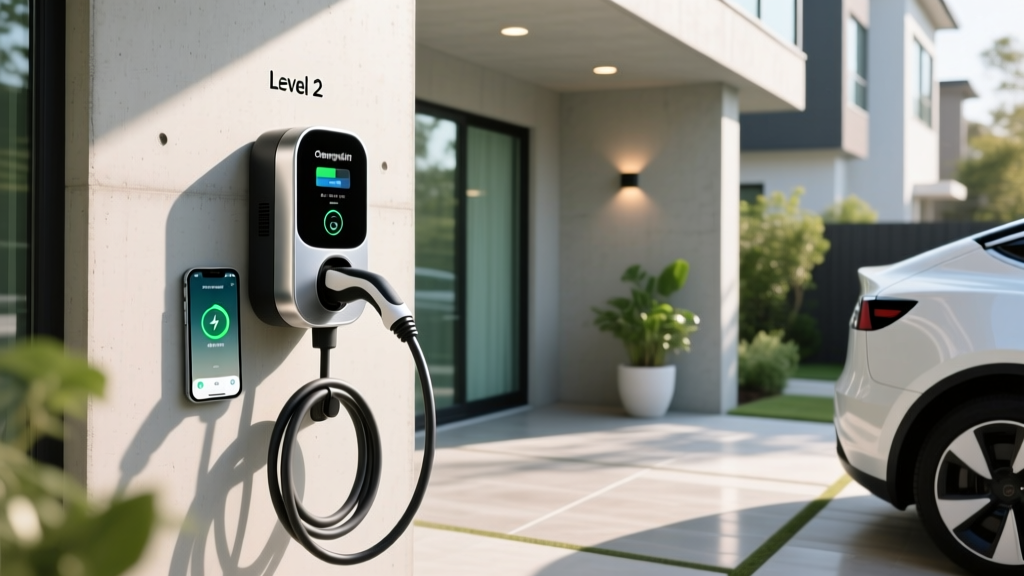
| Level 2 | 240V AC | 3.3 – 19.2 kW | 12 – 60+ mi/hr | Daily home charging, workplace |
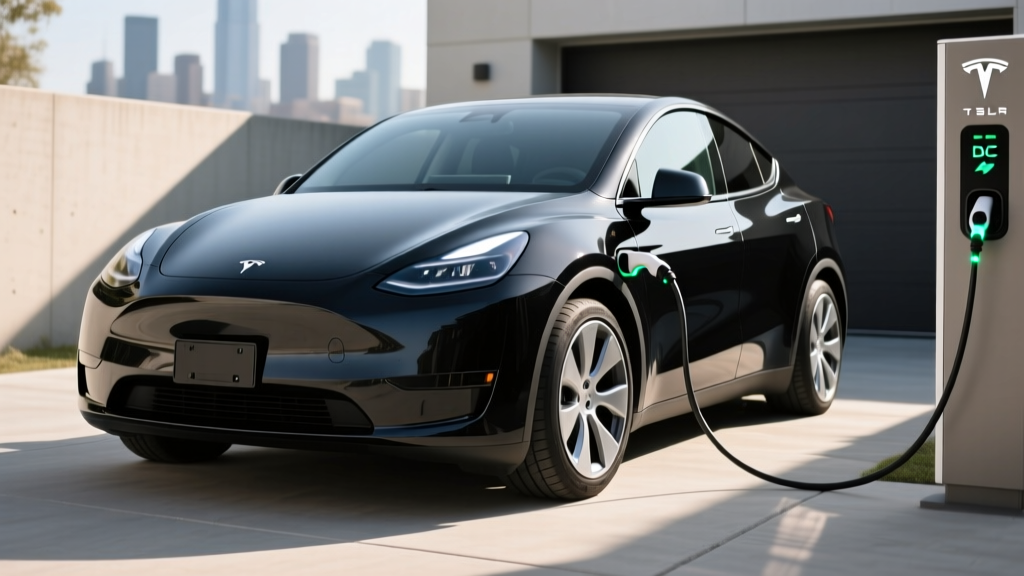
| DC Fast Charge | 400V–800V DC | 50 – 350 kW | 150 – 1,000+ mi/hr | Road trips, highway corridors |
For a 75 kWh battery (common in vehicles like the Tesla Model 3 Long Range), a full Level 1 charge takes roughly 50–55 hours. That same battery on a 48-amp Level 2 circuit (11.5 kW) charges in about 7–8 hours. DC fast charging from 10% to 80% on a 250 kW Supercharger takes approximately 20–25 minutes, though the charge curve tapers significantly above 80% — a critical factor in road-trip planning.
Home EV Charger Installation: Costs, Electrical Requirements, and Panel Upgrades
The most common question we hear: How much does it cost to install a home EV charger? The answer ranges from $500 for a simple outlet install to $4,000+ if your electrical panel needs an upgrade. Here's the full breakdown based on 2026 national averages for licensed electrician rates.
| Component | Typical Cost Range | Notes |
|---|---|---|
| Level 2 EVSE Equipment (hardwired or plug-in) | $300 – $700 | Smart Wi-Fi units cost more; basic units start ~$250 |
| Electrician Labor (240V/50A circuit run) | $400 – $1,500 | Depends on distance from panel to garage; conduit runs add cost |
| Permit & Inspection | $50 – $300 | Required in most jurisdictions; varies by municipality |
| Panel Upgrade (100A → 200A service) | $1,500 – $3,500 | Needed if existing panel lacks capacity for a 40A+ dedicated circuit |
| NEMA 14-50 Outlet (if plug-in unit) | $150 – $400 | Allows charger portability; GFCI breaker required by NEC 2023+ |
What electrical upgrades might I need? Most modern homes with 200-amp service can accommodate a 48-amp Level 2 charger on a dedicated 60-amp breaker without a panel upgrade. Homes with 100-amp service, older wiring, or panels already near capacity (common with electric heating, hot tubs, or solar inverters) may need a service upgrade. A licensed electrician will perform a load calculation per NEC Article 220 to determine this. Never skip the permit — unpermitted electrical work can void homeowner's insurance and create fire risk.
Connector Compatibility: NACS, CCS1, CHAdeMO, and Adapter Needs
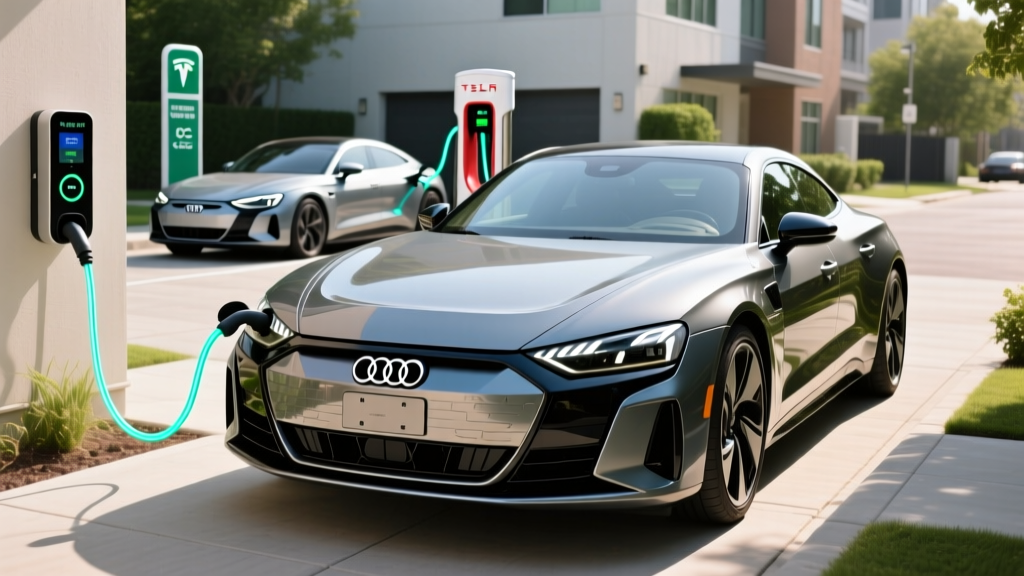
The connector landscape shifted dramatically between 2023 and 2026. The North American Charging Standard (NACS), originally developed by Tesla, is now the dominant connector for new EVs sold in the US. Ford, GM, Rivian, Volvo, Hyundai/Kia, and most other automakers have transitioned to NACS ports starting with 2025–2026 model-year vehicles.
| Connector | Brands Using It (2026) | Adapter Needed? |
|---|---|---|
| NACS (Tesla-style) | Tesla, Ford, GM, Rivian, Volvo, Polestar, Hyundai, Kia, Mercedes-Benz, BMW | CCS→NACS adapter (~$150–$200) for older CCS-equipped chargers |
| CCS1 (Combo) | Legacy 2022–2024 models (VW ID.4, older Bolt, some BMW iX) | NACS→CCS adapter (~$200–$300) to access Superchargers |
| CHAdeMO | Nissan Leaf (discontinued), Mitsubishi Outlander PHEV (legacy) | Limited adapter options; network declining |
Which connector/charger is compatible with my EV? If you're buying a 2026 model-year EV, it almost certainly uses NACS. For home Level 2 charging, nearly all wall units now ship with a NACS connector or include a J1772 adapter (J1772 is the legacy Level 2 standard, now largely superseded by NACS for new installations). When purchasing a charger convertible or portable unit, confirm it includes the connector matching your vehicle's charge port — or budget for the appropriate adapter.
Cost to Charge: Per-Mile Economics vs. Gasoline
How much does charging cost per mile vs gas? This depends entirely on your electricity rate and the vehicle's efficiency. Here are realistic 2026 scenarios for a midsize EV averaging 3.0 mi/kWh (roughly 115 MPGe combined, per fueleconomy.gov data):
| Scenario | Rate ($/kWh) | Cost Per Mile | Equivalent MPG Gas Cost |
|---|---|---|---|
| Home, off-peak utility rate | $0.10 – $0.14 | $0.033 – $0.047 | $0.90 – $1.30/gal |
| Home, standard residential rate | $0.15 – $0.20 | $0.050 – $0.067 | $1.40 – $1.85/gal |
| Public Level 2 (ChargePoint, EVgo) | $0.25 – $0.49 | $0.083 – $0.163 | $2.30 – $4.50/gal |
| DC Fast Charge (Electrify America, Supercharger) | $0.32 – $0.58 | $0.107 – $0.193 | $3.00 – $5.30/gal |
| Gasoline (30 MPG combined, $3.40/gal) | — | $0.113 | $3.40/gal |
The takeaway: home charging on a Level 2 circuit at off-peak rates delivers fuel costs roughly one-third that of gasoline. Public DC fast charging, while convenient for road trips, can equal or exceed the per-mile cost of gas in high-rate markets. This is why a home charger convertible setup — one that lets you maximize cheap overnight Level 2 charging — is the single highest-impact ownership decision you can make.
Equipment Recommendations: Top Level 2 Chargers for 2026
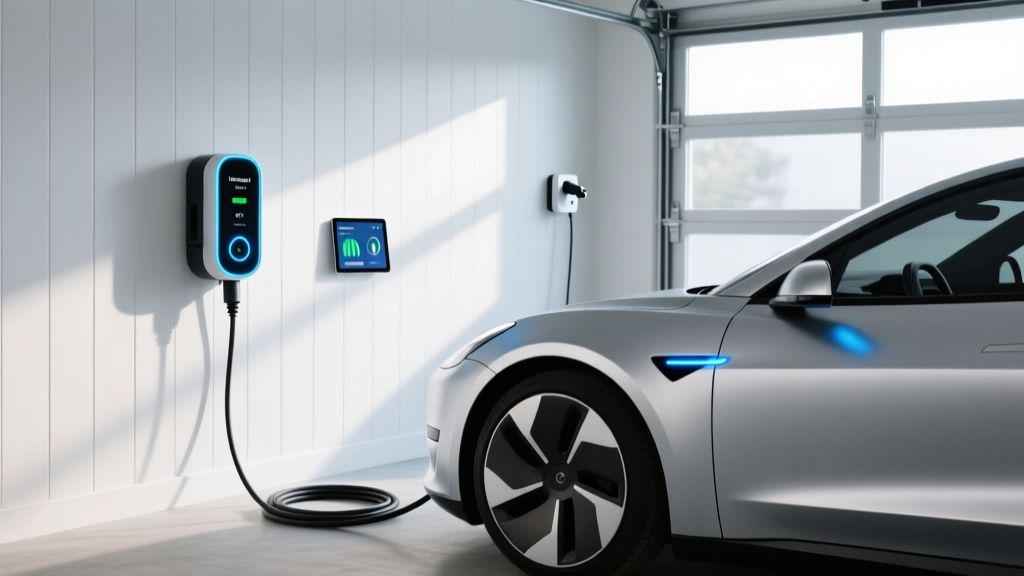
Below are four widely recommended Level 2 home charging units available in 2026, spanning budget to premium. All support NACS or include the appropriate adapter for new EVs. Power output assumes a 240V circuit with adequate amperage.
Emporia Vue Level 2 Smart Charger
Power Output: 48A / 11.5 kW (hardwired) or 40A / 9.6 kW (NEMA 14-50 plug)
Connector: J1772 (NACS adapter included with 2026 models)
Cable Length: 24 ft
Smart Features: Wi-Fi, energy monitoring via Emporia app, solar integration, scheduled charging
Price: ~$350 – $400
Best for: Budget-conscious buyers who want smart features and energy tracking without a premium price.
ChargePoint Home Flex (2nd Gen)
Power Output: Up to 50A / 12.0 kW (adjustable via DIP switches for panel compatibility)
Connector: NACS native (2026 models); J1772 available
Cable Length: 23 ft
Smart Features: Wi-Fi, Alexa/Google integration, ChargePoint app scheduling, Alexa voice control
Price: ~$550 – $650
Best for: Owners who want a proven brand with flexible amperage settings to avoid panel upgrades.
Tesla Wall Connector (Gen 4)
Power Output: 48A / 11.5 kW (hardwired, 60A breaker required)
Connector: NACS native; J1772 adapter available separately
Cable Length: 24 ft
Smart Features: Wi-Fi, over-the-air updates, Tesla app integration, load sharing with multiple units, Powerwall integration
Price: ~$425 – $475
Best for: Tesla owners and NACS-equipped EV drivers who want a clean, integrated ecosystem. Load-sharing capability allows two units on a single 60A circuit.
Grizzl-E Smart (United Chargers)
Power Output: 40A / 9.6 kW (NEMA 14-50) or 48A / 11.5 kW (hardwired)
Connector: J1772 or NACS (configurable at order)
Cable Length: 24 ft
Smart Features: Wi-Fi, OCPP-compatible, adjustable amperage, extreme cold rated (-40°F)
Price: ~$450 – $550
Best for: Cold-climate owners and those wanting an adjustable, rugged, Canadian-built unit. OCPP support allows future utility demand-response programs.
Charging Time Examples: Real-World 10–80% Estimates
How fast will each charging level add range? The table below shows approximate 10% to 80% charging times for common battery sizes on a 48A Level 2 home charger (11.5 kW). Remember that DC fast charging follows a tapered curve — peak kW rates apply only between roughly 10% and 50% SoC, then drop significantly to protect battery health.
| Battery Size (kWh usable) | Example Vehicles | Approx. 10–80% Time |
|---|---|---|
| 60 kWh | Chevrolet Equinox EV, Volvo EX30 | ~3.5 hours |
| 75 kWh | Tesla Model 3 LR, Hyundai Ioniq 6 | ~4.5 hours |
| 85 kWh | Ford Mustang Mach-E ER, BMW i4 | ~5 hours |
| 100 kWh | Tesla Model S, Rivian R1S (Max Pack) | ~6 hours |
| 130 kWh | Ford F-150 Lightning Extended, GMC Sierra EV | ~7.5 hours |
For DC fast charging on the road, a vehicle with an 800V architecture (like the Hyundai Ioniq 5 or Kia EV6) can peak at 240–350 kW and reach 10–80% in approximately 18 minutes on compatible chargers. Vehicles on 400V architectures typically peak at 150–250 kW with 10–80% times of 25–35 minutes. Always check your vehicle's max DC charge rate — it's the bottleneck, not the charger.
Safety, Code Compliance, and Installation Best Practices
Home EV charging involves sustained high-current draw over many hours — far more demanding than typical household appliances. Adhering to electrical code is not optional. Key requirements for a safe, code-compliant 2026 installation include:
- Dedicated circuit: Your Level 2 charger must have its own dedicated breaker — no sharing with other loads. A 48A charger requires a 60A breaker (NEC requires circuits be rated at 125% of continuous load).
- GFCI protection: The NEC 2023 code cycle (adopted by most states by 2026) requires GFCI protection for all EV charging outlets. Hardwired units typically have built-in ground-fault protection and may not require an external GFCI breaker, but check your local AHJ (Authority Having Jurisdiction).
- Outdoor rating: If your charger is mounted outside or in an unenclosed carport, the unit must carry a NEMA 4 (or IP65+) weather rating. All units recommended above meet this standard.
- Wire gauge: A 60A circuit typically requires 6 AWG copper wire (THHN in conduit) or 4 AWG for longer runs to minimize voltage drop. Your electrician will size this based on run distance.
- Permit and inspection: Most jurisdictions require a permit for new 240V circuits. The inspection verifies wire sizing, breaker rating, grounding, and GFCI compliance. Unpermitted work risks insurance claim denial in the event of an electrical fire.
For detailed federal guidance on EV infrastructure safety standards, refer to NHTSA.gov and your local building department.
Federal Tax Credits and Incentives for Home Charger Installation
The IRS §30C Alternative Fuel Vehicle Refueling Property Credit offers a tax credit of up to 30% of the cost of home EV charging equipment and installation, capped at $1,000 per tax year. To qualify in 2026:
- The equipment must be installed at your primary residence in the United States.
- The property must be placed in service during the tax year.
- The credit covers both the charger hardware and installation labor.
- The credit is non-refundable (it reduces your tax liability but won't generate a refund beyond zero).
- Income and geographic restrictions may apply — consult a tax professional for eligibility.
Some utilities also offer rebates of $200–$500 for Level 2 charger purchases or off-peak charging enrollment. Check with your local utility's EV program page.
Frequently Asked Questions
What exactly is a charger convertible?
In EV terminology, "charger convertible" generally refers to a portable or dual-voltage EVSE unit that can operate on either 120V (Level 1) or 240V (Level 2) depending on the outlet available. Some manufacturers, like Tesla with its Mobile Connector, include interchangeable plug adapters that let the same unit charge at 1.4 kW on a standard outlet or up to 7.2 kW on a NEMA 14-50. Dedicated wall units are not "convertible" in this sense but deliver significantly faster, more reliable charging.
Can I install a Level 2 charger myself?
If you're installing a NEMA 14-50 outlet and your panel has capacity, a licensed electrician is strongly recommended and often legally required. Hardwired installations must be performed by a professional. DIY electrical work on 240V/50A+ circuits carries serious shock and fire risk and may void your home insurance.
Will a Level 2 charger degrade my EV battery faster than Level 1?
No. Battery degradation is driven primarily by heat, high state-of-charge storage, and DC fast charging frequency. Level 2 home charging (especially with scheduled charging that holds SoC between 20%–80%) is considered optimal for long-term battery health. Most 2026 EV batteries carry warranties of 8 years/100,000 miles with a 70% capacity retention guarantee.
Do I need a smart charger, or will a basic unit work?
A basic (non-smart) Level 2 charger will charge your EV just as fast. Smart features — Wi-Fi scheduling, energy monitoring, utility demand-response — add convenience and potential cost savings through off-peak optimization, but they don't affect charging speed. If your EV's built-in scheduler handles delayed charging, a basic unit may be sufficient.
How do I know if my electrical panel can handle a Level 2 charger?
A licensed electrician will perform a NEC Article 220 load calculation, summing all existing loads (HVAC, water heater, dryer, etc.) against your panel's rated capacity. If you have a 200A panel and your existing loads total under ~150A, a 48A EV circuit is usually feasible. Older 100A panels often require an upgrade costing $1,500–$3,500.