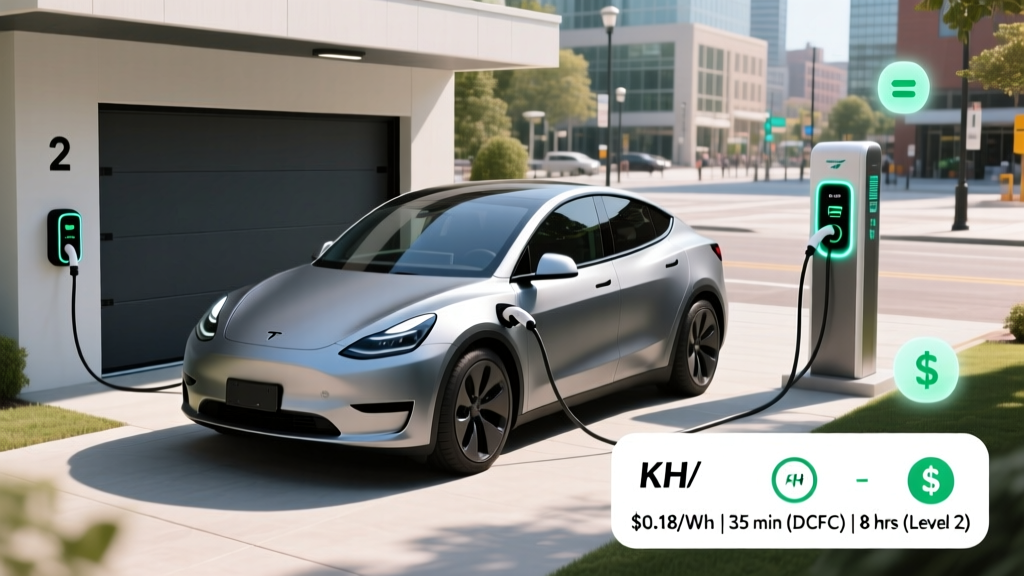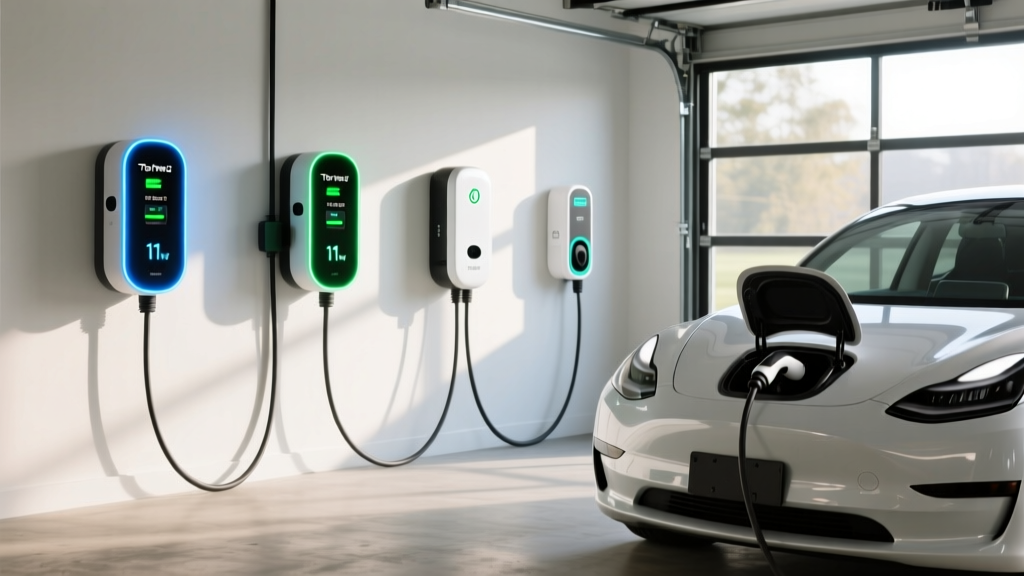
Why We're Running the Charger Challenger Showdown
Buying an EV is only half the equation. The other half — the hardware that actually refuels your car at home — is where most new owners stumble. A Level 2 home charger is the single biggest daily-quality-of-life upgrade an EV owner can make, turning a 50-hour Level 1 trickle into a 6-to-10-hour overnight top-up that greets you with a full battery every morning.
But the market is flooded. Wallboxes, smart chargers, dumb chargers, 32-amp units, 48-amp units, NACS-native plugs, CCS1 with adapters — the choices multiply faster than the spec sheets can keep up. That's why we're running the Charger Challenger: a head-to-head comparison of the most popular Level 2 home EV chargers available in 2026, measured by power output, installation requirements, connector compatibility, real-world charging speed, and total cost of ownership.
Before we pit the units against each other, you need a firm grasp of the charging fundamentals. Let's build that foundation first.
Charging Levels Explained: kW, Miles Per Hour, and Real-World Speeds
The single most important distinction in EV charging is between kW (kilowatts) and kWh (kilowatt-hours). kW measures power — the rate at which electricity flows into your car at any given moment. kWh measures energy — the total capacity of your battery, like gallons in a fuel tank. A 48-amp Level 2 charger operating on a 240V circuit delivers roughly 11.5 kW of power. If you charge for one hour at that rate, you've added 11.5 kWh of energy to your battery.
Here's how each charging level translates into real-world range recovery:
| Level | Voltage | Max Power (kW) | Miles of Range Added Per Hour | Typical Use Case |
|---|---|---|---|---|
| Level 1 | 120V AC | 1.4 kW (12A) | 3–5 mi/hr | Emergency / PHEV overnight |
| Level 2 (32A) | 240V AC | 7.7 kW | 22–28 mi/hr | Basic home install, older panels |
| Level 2 (48A) | 240V AC | 11.5 kW | 33–42 mi/hr | Standard home, most BEVs |
| Level 2 (80A) | 240V AC | 19.2 kW | 50–65 mi/hr | Large-battery trucks (F-150 Lightning, Silverado EV) |
| DC Fast (Level 3) | 400–800V DC | 50–350 kW | 150–1,200+ mi/hr | Road trips, public stations |
A few critical caveats: "miles per hour" varies dramatically by vehicle efficiency. A Tesla Model 3 (roughly 25 kWh/100 mi) gains more miles per kWh than a Ford F-150 Lightning (roughly 48 kWh/100 mi). And DC fast charging speeds follow a charge curve — a vehicle may peak at 250 kW at 10% State of Charge (SoC) but taper to under 50 kW above 80%. That's why we always quote 10–80% charging times rather than peak kW alone.
Home Installation: Electrical Requirements, Panel Upgrades, and Real Costs
This is where the rubber meets the road — and where budget surprises happen. A Level 2 charger needs a dedicated 240V circuit, and the amperage of that circuit dictates which charger you can install.
Electrical Requirements by Charger Amperage
Per the National Electrical Code (NEC), continuous loads like EV charging must not exceed 80% of a circuit's rated capacity. A 48-amp charger requires a 60-amp circuit. A 32-amp charger needs a 40-amp circuit. An 80-amp charger demands a 100-amp circuit — which many older homes simply cannot support without a panel upgrade.
Will You Need a Panel Upgrade?
Homes built before 1990 frequently have 100-amp or 150-amp main service panels. Adding a 60-amp circuit for a 48A charger may consume most of your available headroom, especially if you're already running central A/C, an electric dryer, and an electric range. A licensed electrician will perform a load calculation to determine whether your panel can handle the new circuit. If it can't, a panel upgrade to 200 amps typically runs $1,500–$3,500 before any charger work begins. This is the single biggest variable in home charging cost and the one most online guides gloss over.
Installation Cost Breakdown
| Component | Simple Install (near panel) | Complex Install (long run / panel upgrade) |
|---|---|---|
| Level 2 Charger Unit (48A, hardwired) | $400–$700 | $400–$700 |
| Electrical Permit | $50–$200 | $50–$200 |
| Electrician Labor (2–4 hrs simple / 6–12 hrs complex) | $300–$800 | $900–$2,500 |
| Conduit, Wire (6 AWG copper for 60A), Mounting | $100–$300 | $300–$800 |
| Panel Upgrade (if needed) | $0 | $1,500–$3,500 |
| Total Estimated Cost | $850–$2,000 | $3,150–$7,700 |
Factors that push costs toward the high end: long wire runs from the panel to the garage (over 50 feet), running conduit through finished walls or underground, upgrading from a 100A to 200A main panel, and local jurisdictions with strict inspection requirements. Always get at least two quotes from licensed electricians, and confirm they include permit costs in their estimate.
Safety and Code Considerations
Every Level 2 installation must be on a dedicated circuit — it cannot share a breaker with other appliances. Hardwired installations (no plug) are preferred for 48A+ units and eliminate the failure point of a receptacle. If you use a NEMA 14-50 receptacle for a plug-in charger, the NEC 2023 update (widely adopted by 2026) requires a GFCI breaker for garage receptacles, adding $50–$120 to the breaker cost. For outdoor installations, ensure your charger carries an NEMA 4 or NEMA 4X rating for weather resistance, and use an in-use cover for the receptacle if plug-in.
Connector Compatibility: NACS, CCS1, CHAdeMO, and the Adapter Landscape
The connector on the end of your charger cable must match the inlet on your car. As of 2026, the North American charging landscape has consolidated heavily around NACS (North American Charging Standard), the connector Tesla originated and which most major automakers have adopted for new vehicles starting with 2025–2026 model years.
| Connector | Brands Using It (2026 Models) | Home Charger Availability | Adapter Needed? |
|---|---|---|---|
| NACS (J3400) | Tesla (all), Ford, GM, Rivian, Volvo, Polestar, Hyundai/Kia (2026+), BMW, Mercedes | Tesla Wall Connector, ChargePoint Home Flex (NACS), Emporia J3400 | None for NACS vehicles |
| CCS1 | Remaining 2024–2025 model-year inventory, VW ID.4 (pre-2026), older BMW i4/iX | ChargePoint Home Flex, Emporia Vue, EnelX JuiceBox (CCS1 version) | NACS-to-CCS1 adapter (~$100–$200) for newer NACS chargers |
| CHAdeMO | Legacy Nissan Leaf, Mitsubishi Outlander PHEV (discontinued) | Very limited new production | Not practical — consider CCS-to-CHAdeMO adapter (~$300+) if needed |
If you own a CCS1-equipped vehicle but plan to upgrade to a NACS vehicle in the next few years, buy a charger with a NACS connector and use a CCS1 adapter for your current car. This future-proofs your investment. Tesla's Wall Connector now ships with a NACS plug natively and includes a J1772 adapter for legacy vehicles — making it one of the most versatile options on the market.
The Charger Challenger: 5 Top Home EV Chargers Compared
We selected five of the most widely recommended Level 2 home chargers for 2026 and compared them across the metrics that matter: power output, connector options, cable length, smart features, and price.
Tesla Wall Connector (Gen 4, NACS)
- Power Output: Up to 48A / 11.5 kW (240V, 60A circuit)
- Connector: NACS native; includes J1772 adapter in box
- Cable Length: 24 feet
- Smart Features: Wi-Fi, OTA firmware updates, Power Sharing (link up to 6 units on one circuit), Tesla app integration, load management
- Price: ~$475
- Best For: Tesla owners and NACS-vehicle households wanting the cleanest integration
ChargePoint Home Flex (NACS or J1772)
- Power Output: Adjustable 16A–50A / up to 12 kW (requires 60A+ circuit for 50A)
- Connector: Available in NACS or J1772; plug-in (NEMA 14-50) or hardwired
- Cable Length: 23 feet
- Smart Features: Wi-Fi, ChargePoint app with scheduling, Alexa/Google Home integration, detailed energy reporting, flex amperage lets you match your circuit
- Price: ~$550–$700 (depending on connector and plug type)
- Best For: Multi-EV households wanting adjustable amperage and detailed app data
Emporia Vue J3400 EV Charger
- Power Output: Up to 48A / 11.5 kW (240V, 60A circuit)
- Connector: NACS (J3400)
- Cable Length: 24 feet
- Smart Features: Integrates with Emporia Vue home energy monitor, solar-aware charging, time-of-use scheduling, real-time cost tracking
- Price: ~$400
- Best For: Solar-equipped homes wanting energy-monitoring integration at the lowest price
Grizzl-E Smart (United Chargers)
- Power Output: Up to 40A / 9.6 kW (240V, 50A circuit)
- Connector: J1772 (with NACS adapter available)
- Cable Length: 24 feet
- Smart Features: OCPP-compatible, works with multiple apps (SmartEVSE, evHOME), adjustable amperage via dip switches, extreme cold-rated (-40°F)
- Price: ~$450–$550
- Best For: Cold-climate owners who prioritize rugged build and open-source smart protocols
Enel X JuiceBox 48 (Discontinued — Replaced by Enel X Way)
- Power Output: 48A / 11.5 kW (240V, 60A circuit)
- Connector: J1772 (legacy stock); newer Enel X Way units ship NACS
- Cable Length: 25 feet
- Smart Features: Wi-Fi, JuiceNet app, scheduling, energy tracking
- Price: ~$500–$600 (clearance stock); newer Enel X Way ~$550
- Best For: Budget buyers finding clearance inventory; otherwise superseded by newer options
Charging Time Examples: What 48A Actually Gets You
To make these power outputs tangible, here's how long common EVs take to charge from 10% to 80% on a 48A (11.5 kW) Level 2 home charger:
| Vehicle (2026) | Usable Battery (kWh) | Max AC Charge Acceptance | 10–80% Time at 11.5 kW |
|---|---|---|---|
| Tesla Model 3 Long Range | 75 kWh (NMC) | 11.5 kW | ~5.5 hours |
| Hyundai Ioniq 5 (84 kWh) | 77.4 kWh (NMC) | 10.9 kW | ~5.7 hours |
| Ford F-150 Lightning (Extended) | 131 kWh (NMC) | 19.2 kW | ~9.5 hours (at 11.5 kW) |
| Chevrolet Equinox EV | 85 kWh (NMC) | 11.5 kW | ~6.2 hours |
| Toyota RAV4 PHEV | 14.9 kWh (NMC) | 6.6 kW | ~1.8 hours (at 6.6 kW) |
Notice that the F-150 Lightning can accept up to 19.2 kW on AC — meaning a 48A charger only uses about 60% of its AC charging capability. If you own a large-battery truck and want faster home charging, an 80A charger on a 100A circuit (like the Ford Charge Station Pro) cuts that time to roughly 6 hours. But that 100A circuit is a significant electrical undertaking.
Cost to Charge: Home vs. Public vs. Gas — The Per-Mile Math
The economic case for home charging is overwhelming. Here's what charging actually costs per mile across different scenarios, benchmarked against a comparable gasoline vehicle at 28 MPG combined and $3.40/gallon fuel:
| Charging Scenario | $/kWh | Cost Per Mile (25 kWh/100 mi EV) | Cost Per Mile (48 kWh/100 mi Truck EV) | Gas Equivalent (28 MPG @ $3.40) |
|---|---|---|---|---|
| Home, off-peak (time-of-use rate) | $0.08–$0.12 | $0.020–$0.030 | $0.038–$0.058 | $0.121 |
| Home, standard flat rate | $0.14–$0.18 | $0.035–$0.045 | $0.067–$0.086 | $0.121 |
| Public Level 2 (ChargePoint, EVgo) | $0.25–$0.49 | $0.063–$0.123 | $0.120–$0.235 | $0.121 |
| DC Fast (Electrify America, Tesla Supercharger) | $0.35–$0.55 | $0.088–$0.138 | $0.168–$0.264 | $0.121 |
The takeaway is unambiguous: home charging at off-peak rates costs roughly 75–83% less per mile than gasoline. Even public DC fast charging is roughly comparable to gas on a per-mile basis for efficient sedans, though it exceeds gas cost for less-efficient trucks. The more you charge at home, the more you save. According to fueleconomy.gov, the average EV driver who charges primarily at home saves $600–$1,200 annually compared to a gasoline equivalent.
Federal Incentives for Home Charger Installation
The IRS §30C Alternative Fuel Vehicle Refueling Property Credit offers a tax credit of up to 30% of the cost of home EV charging equipment and installation, capped at $1,000. This applies to both the charger hardware and the electrician labor. However, eligibility is restricted to equipment installed in a census tract that qualifies as a low-income or non-urban area — a rule that excludes many suburban and urban installations. Check the IRS eligibility tool or consult a tax professional before counting on this credit.
Many utilities also offer rebates for Level 2 charger purchases or time-of-use rate enrollment. Check with your local utility before purchasing — rebates of $200–$500 are common and can offset a significant portion of equipment cost.
Decision Framework: Which Charger Should You Buy?
Choose the Tesla Wall Connector if: You own a Tesla or NACS-vehicle, want the most seamless app experience, and value Power Sharing for multi-charger garages. At $475, it's also one of the best-priced 48A units.
Choose the ChargePoint Home Flex if: You need adjustable amperage (your panel can't support a full 60A circuit), want a plug-in NEMA 14-50 option for portability, or prefer detailed energy reporting and smart-home integration.
Choose the Emporia Vue J3400 if: You have solar panels and want charger-to-inverter integration for solar-only charging, or you simply want the lowest-cost 48A NACS charger with smart features.
Choose the Grizzl-E Smart if: You live in an extreme cold climate (Canada, northern US states), want an open-protocol (OCPP) charger that isn't locked to one ecosystem, and value rugged build quality over sleek design.
Frequently Asked Questions
How much does it cost to install a home EV charger?
For a straightforward installation with the electrical panel near the garage, expect $850–$2,000 total (charger + electrician + permit + materials). If you need a long wire run, conduit through finished walls, or a panel upgrade from 100A to 200A, costs can reach $3,150–$7,700. Always get a load calculation from a licensed electrician before committing to a 48A or 80A charger.
How fast will each charging level add range?
Level 1 (120V) adds 3–5 miles per hour — adequate only for PHEVs with small batteries. Level 2 at 32A adds 22–28 mi/hr; at 48A, 33–42 mi/hr. DC fast charging adds 150–1,200+ mi/hr depending on peak kW, but only at public stations. For a 75 kWh battery, a 48A home charger fills 10–80% in roughly 5.5 hours — easily done overnight.
Which connector/charger is compatible with my EV?
Check your vehicle's charge port. If it's a 2025+ model-year Tesla, Ford, GM, Rivian, Hyundai, Kia, or BMW, it likely has a NACS (J3400) inlet. Older or remaining 2024–2025 inventory may still have CCS1. Nissan Leaf uses CHAdeMO. Match your charger's connector to your car's inlet, or use a certified adapter. When in doubt, NACS with a J1772/CCS1 adapter is the most future-proof choice for 2026.
How much does charging cost per mile vs gas?
Home charging at off-peak utility rates ($0.08–$0.12/kWh) costs $0.02–$0.03 per mile for an efficient EV — about 75–83% less than a 28 MPG gas car at $3.40/gallon ($0.12/mi). Even standard-rate home charging ($0.14–$0.18/kWh) saves 60–70%. Public DC fast charging at $0.35–$0.55/kWh is roughly cost-competitive with gas for sedans but more expensive for trucks.
What electrical upgrades might I need?
The most common upgrade is a panel capacity increase. Homes with 100A or 150A main panels often need an upgrade to 200A to safely add a 60A EV circuit alongside existing loads. Other potential upgrades include: replacing a Federal Pacific or Zinsco panel (known fire hazards, required replacement in many jurisdictions), adding a sub-panel in an attached garage if the main panel is far away, or upgrading the utility service drop if your home's total demand exceeds the utility transformer capacity. Budget $1,500–$3,500 for a panel upgrade and get multiple quotes.
Can I use a dryer outlet (NEMA 14-50) for my EV charger?
Yes, but with caveats. A NEMA 14-50 receptacle on a 50A circuit supports up to 40A continuous charging (9.6 kW). The NEC 2023 code cycle, adopted in most jurisdictions by 2026, requires a GFCI breaker for garage receptacles — adding $50–$120. Never share a dryer outlet with your charger using a splitter; the circuit must be dedicated. For 48A charging, you need a 60A circuit and hardwired connection — a 14-50 receptacle is not rated for that load.