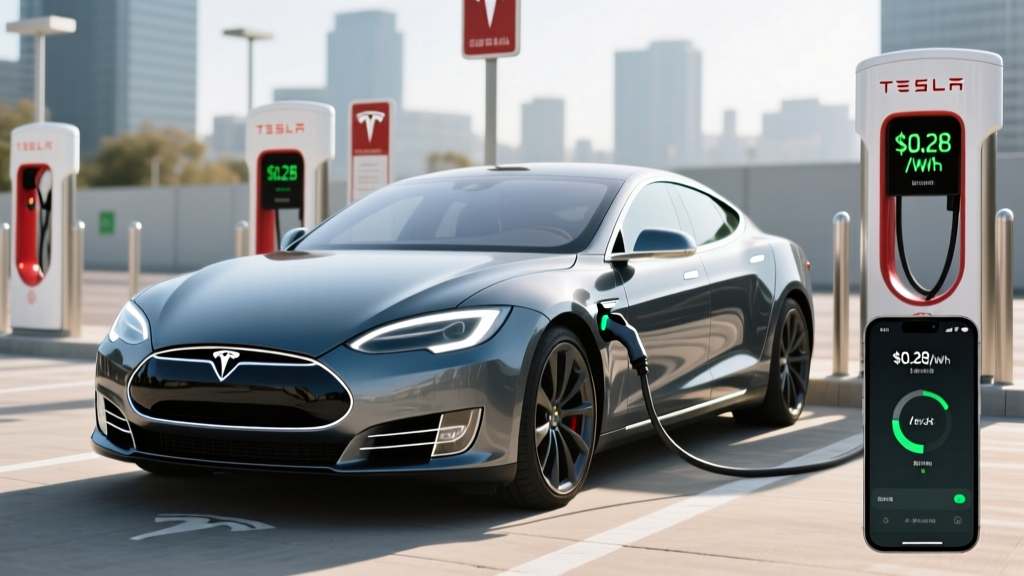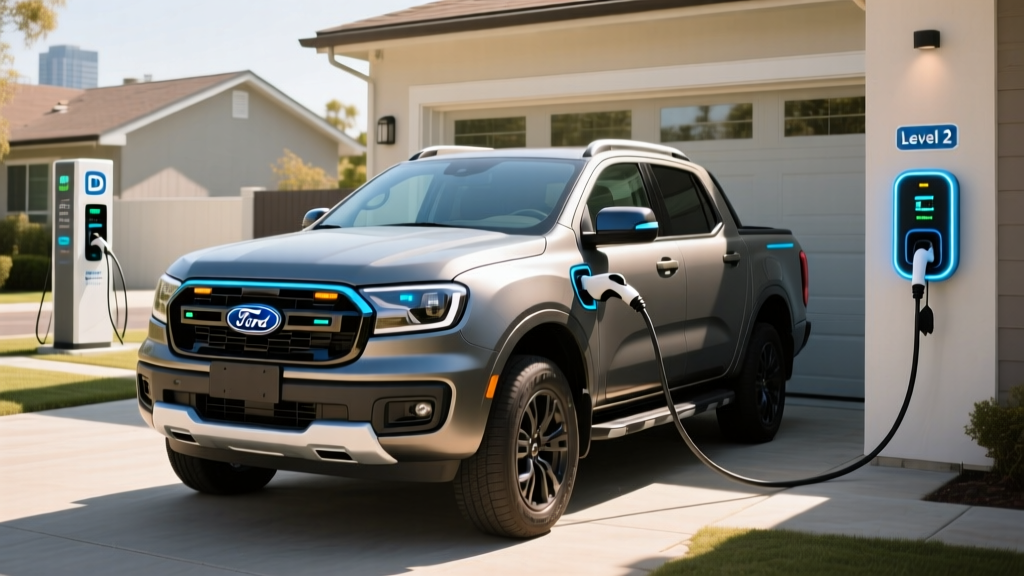
If you're searching for a charger car 2015 solution, you likely own or just bought a used first-generation electric vehicle — a Nissan Leaf, Tesla Model S, BMW i3, Chevrolet Spark EV, or similar. These pioneering EVs are hitting the used market at bargain prices ($5,000–$15,000), but their charging needs differ significantly from today's NACS-equipped, 350-kW-capable models. This guide covers exactly what hardware you need, what your home electrical panel can support, and how much charging will actually cost in 2026.
Why 2015-Era EVs Need Special Charging Attention
Electric vehicles from the 2013–2016 model years share a few traits that shape your charging strategy:
- Smaller batteries: Typically 24–85 kWh, with many in the 24–30 kWh range (the 2015 Leaf has a 24 kWh pack; the i3 has 22 kWh usable).
- Slower onboard chargers: Most accept only 3.3 kW or 6.6 kW on Level 2 AC — meaning even a 48-amp home charger won't push energy into the car any faster than the car's internal hardware allows.
- Legacy connectors: CHAdeMO (Nissan, Mitsubishi), CCS1 (GM, VW, BMW), or Tesla's proprietary connector — none of which are the NACS standard that dominates in 2026.
- Aged battery health: Expect 70–90% State of Health (SoH) depending on climate history and charging habits, which reduces usable range and can affect charge acceptance rates.
The good news: smaller batteries charge faster in absolute time. A 24 kWh pack going from 10% to 80% at 6.6 kW takes roughly 2.5 hours on Level 2 — perfectly practical for overnight charging.
Charging Levels Explained: Speeds in kW and Miles Per Hour
Understanding the difference between kW (kilowatts — the rate of power delivery, like water pressure in a hose) and kWh (kilowatt-hours — the total energy stored, like gallons in a tank) is essential. Your charger's kW rating determines how fast energy flows; your car's battery kWh determines how much it holds.
| Level | Voltage | Max Power (kW) | Miles of Range Added Per Hour | Best Use Case |
|---|---|---|---|---|
| Level 1 (120V) | 120V AC | 1.2–1.4 kW | 3–5 mi/hr | Emergency / trickle top-off |
| Level 2 (240V) | 240V AC | 3.3–6.6 kW (car-limited) | 12–26 mi/hr | Daily home charging |
| DC Fast Charge | 200–500V DC | 20–50 kW (car-limited) | 60–150 mi/hr | Road trips, quick top-ups |
Critical caveat for 2015 EVs: The car's onboard charger (for AC charging) is the bottleneck. A 2015 Nissan Leaf with a 3.3 kW onboard charger will only pull 3.3 kW even if you plug it into a 19.2 kW Level 2 station. Some 2015 models (Leaf SV/SL with the optional 6.6 kW upgrade, Model S with dual chargers) can accept higher AC rates. Check your specific trim.
For DC fast charging, most 2015-era EVs peak between 40–50 kW. The 2015 Leaf with CHAdeMO can accept up to ~50 kW, adding roughly 80 miles in a 30-minute session (10–80%). The Tesla Model S (2015) on Superchargers could peak around 90–120 kW — ahead of its time, but still far below today's 250+ kW peaks.
Home Charger Installation: Electrical Requirements and Real Costs
Most 2015 EV owners will want a Level 2 home charger. Because these cars accept 3.3–6.6 kW, you don't need the most powerful (or expensive) charger on the market — but you do need proper electrical infrastructure.
Electrical Requirements
- Circuit: A dedicated 240V circuit. For a 32-amp charger (delivering 7.7 kW, more than enough for any 2015 EV), you need a 40-amp breaker. For a 40-amp charger, a 50-amp breaker.
- Wire gauge: Typically 8 AWG copper for 40A circuits, 6 AWG for 50A circuits (your electrician will confirm based on run length).
- Panel capacity: Your main panel needs at least 2 unused slots and sufficient amperage headroom. A 200-amp panel can usually support a 40A EV circuit. Older homes with 100-amp panels often require a panel upgrade ($1,500–$3,000) or a smart load-management device like the Emporia Load Center.
- Permit: Most jurisdictions require an electrical permit for a new 240V circuit. Cost ranges from $50–$200 depending on locality.
| Component | Typical Cost Range | Notes |
|---|---|---|
| Level 2 Charger (hardware) | $200–$500 | 32A–40A smart charger; see picks below |
| Electrician labor | $400–$1,200 | Depends on panel-to-outlet distance, wall type |
| Electrical permit | $50–$200 | Varies by municipality |
| Panel upgrade (if needed) | $1,500–$3,000 | Older 100A panels; not always required |
| Load management device (alternative to panel upgrade) | $200–$400 | e.g., Emporia, NeoCharge |
| Total (no panel upgrade) | $650–$1,900 | Most common scenario |
| Total (with panel upgrade) | $2,150–$5,100 | Older homes with 100A service |
According to Energy.gov's home charging guide, most homeowners with a 200-amp panel spend between $800 and $1,500 for a straightforward Level 2 installation. Always hire a licensed electrician — DIY 240V work is dangerous and often violates code.
Safety and Code Considerations
- Dedicated circuit: Your EV charger must be on its own breaker — never shared with a dryer or other high-draw appliance.
- GFCI protection: The 2020 NEC (and 2023/2026 updates) requires GFCI protection for indoor and outdoor EV receptacles in many jurisdictions. Many modern chargers have built-in GFCI.
- Outdoor rating: If installing outside, use a NEMA 4-rated charger or enclosure. Hardwired units avoid the GFCI-breaker requirement in some areas.
- NEMA 14-50 vs. hardwired: A NEMA 14-50 outlet gives you portability (take the charger when you move), but hardwired installations are often cheaper, cleaner, and avoid certain code requirements. Many EV owners choose hardwired for a permanent setup.
Connector Compatibility: Which Plug Does Your 2015 EV Use?
The connector landscape has shifted dramatically since 2015. Here's what you need to know for your specific car:
| Vehicle | AC Connector | DC Fast Connector | 2026 Adapter Needed? |
|---|---|---|---|
| Nissan Leaf | J1772 | CHAdeMO | CHAdeMO-to-CCS adapter (~$150) for non-Tesla DC networks |
| Tesla Model S (2015) | Tesla proprietary | Tesla Supercharger | None for Tesla network; NACS-to-CCS adapter for other DC networks |
| BMW i3 | J1772 | CCS1 | CCS1-to-NACS adapter (~$100) for Tesla Superchargers |
| Chevy Spark EV | J1772 | CCS1 (optional) | CCS1-to-NACS adapter for Tesla Superchargers |
| Fiat 500e | J1772 | None (AC only) | No adapter — Level 2 only |
| Kia Soul EV | J1772 | CHAdeMO | CHAdeMO-to-CCS adapter for non-Tesla DC networks |
| VW e-Golf | J1772 | CCS1 (optional) | CCS1-to-NACS adapter for Tesla Superchargers |
| Mercedes B250e | J1772 | None (AC only) | No adapter — Level 2 only |
The NACS transition: Tesla opened its Supercharger network to non-Tesla EVs starting in 2024 via built-in Magic Dock adapters at select stations or customer-purchased NACS adapters. By 2026, most major automakers have switched to NACS for new vehicles, but your 2015 EV still uses its original connector. Adapters from companies like Lectron, A2Z, and Tesla's own CCS-to-NACS adapter bridge the gap for DC fast charging on road trips.
For Level 2 home and public AC charging, J1772 remains the universal standard for non-Tesla vehicles. If you own a Tesla, any Level 2 charger with a J1772 connector works with Tesla's included J1772 adapter (which ships with every Tesla).
Charging Time Examples for Common 2015 Battery Sizes
Here's how long it takes to charge from 10% to 80% State of Charge (SoC) at different power levels. Note: charging slows significantly above 80% SoC to protect battery health — this is called the charge curve taper and is universal across all lithium-ion EVs.
| Vehicle (Battery kWh) | Level 1 (1.4 kW) | Level 2 at 3.3 kW | Level 2 at 6.6 kW | DC Fast (car's max) |
|---|---|---|---|---|
| Nissan Leaf (24 kWh) | ~12 hrs | ~5 hrs | ~2.5 hrs* | ~30 min (50 kW) |
| BMW i3 (22 kWh) | ~11 hrs | ~4.7 hrs | ~2.3 hrs | ~30 min (50 kW) |
| Tesla Model S 85 (85 kWh) | ~42 hrs | ~18 hrs | ~9 hrs | ~50 min (120 kW) |
| Chevy Spark EV (21 kWh) | ~10.5 hrs | ~4.5 hrs | ~2.2 hrs | ~20 min (50 kW) |
| Kia Soul EV (27 kWh) | ~13.5 hrs | ~5.7 hrs | ~2.8 hrs | ~35 min (50 kW) |
| VW e-Golf (24.2 kWh) | ~12 hrs | ~5.1 hrs | ~2.5 hrs | ~30 min (50 kW) |
*The 2015 Leaf base model has a 3.3 kW onboard charger. The 6.6 kW onboard charger was a $1,300 option on SV and SL trims. Check your build sheet or window sticker.
Cost to Charge: Per-Mile Comparison vs. Gas
One of the strongest arguments for owning a 2015-era EV — even with a degraded battery — is the fuel cost advantage. Here's how charging costs break down across scenarios:
| Scenario | Price per kWh | Cost for 20 kWh | Miles Added (approx.) | Cost per Mile |
|---|---|---|---|---|
| Home (off-peak utility rate) | $0.08–$0.12 | $1.60–$2.40 | 60–80 mi | $0.02–$0.04 |
| Home (standard residential) | $0.14–$0.18 | $2.80–$3.60 | 60–80 mi | $0.04–$0.06 |
| Public Level 2 (ChargePoint, EVgo) | $0.25–$0.45 | $5.00–$9.00 | 60–80 mi | $0.07–$0.15 |
| DC Fast Charge (Electrify America, Tesla Supercharger) | $0.35–$0.55 | $7.00–$11.00 | 60–80 mi | $0.10–$0.18 |
Gas comparison: A comparable gas car getting 30 MPG at $3.50/gallon costs $0.12 per mile. Home-charged 2015 EVs cost $0.02–$0.06 per mile — a 50–80% savings. Even public DC fast charging is often competitive with or cheaper than gas on a per-mile basis.
For a 2015 Leaf owner driving 12,000 miles per year and charging primarily at home on a $0.15/kWh rate, annual fuel cost is approximately $540. The same miles in a 30-MPG gas car cost $1,400. That's $860 in annual savings — enough to recoup the cost of a home charger installation in the first year.
Best Level 2 Chargers for 2015-Era EVs (2026 Picks)
Since most 2015 EVs accept a maximum of 6.6 kW on AC, a 32-amp charger (7.7 kW output) provides more than enough headroom. You don't need a 48-amp or 80-amp unit — save the money. Here are three chargers that match these cars well:
Emporia Level 2 Smart Charger
- Power: 48A max (11.5 kW) — adjustable down to any amperage
- Connector: J1772 (NACS version also available)
- Cable: 24 ft
- Smart features: Wi-Fi, app scheduling, solar integration, load management
- Price: ~$300 (often $250 on sale)
- Best for: Budget-conscious buyers who want smart scheduling and energy monitoring
ChargePoint Home Flex
- Power: Up to 50A (12 kW) — adjustable via DIP switches
- Connector: J1772 (NACS adapter available)
- Cable: 23 ft
- Smart features: Wi-Fi, app control, Alexa integration, detailed energy reports
- Price: ~$550
- Best for: Reliability-focused owners who want a proven brand
Tesla Wall Connector
- Power: Up to 48A (11.5 kW)
- Connector: NACS (native Tesla) — includes J1772 adapter for non-Tesla EVs
- Cable: 24 ft
- Smart features: Wi-Fi updates, power sharing (daisy-chain multiple units)
- Price: ~$420
- Best for: Tesla owners or mixed households with both Tesla and non-Tesla EVs
For 2015-era EVs, I recommend setting any of these chargers to 32 amps (7.7 kW) unless you plan to upgrade to a newer EV within a year or two. A 32A setting requires only a 40-amp breaker and 8 AWG wire — the most common and cost-effective residential installation.
Public Charging Reality for Older EVs in 2026
The public charging network has expanded enormously since 2015, but older EVs face a few practical limitations:
- CHAdeMO stations are declining. As CCS1 and NACS have become the dominant DC standards, many networks (including Electrify America and EVgo) have reduced CHAdeMO stall counts. Nissan Leaf owners may find fewer fast-charging options on road trips. The PlugShare app is essential for route planning.
- CCS1 EVs (BMW i3, VW e-Golf, Spark EV) are better positioned — CCS1 stations remain widespread, and CCS1-to-NACS adapters open up the Tesla Supercharger network.
- AC-only EVs (Fiat 500e, Mercedes B250e) have no DC fast-charging capability. These are strictly local commuters — plan for 2–5 hours at a public Level 2 station if you need a mid-day top-up.
- Preconditioning matters. Some 2015 EVs lack battery preconditioning for fast charging. In cold weather (below 40°F), a cold battery may accept only 20–30 kW instead of its rated 50 kW until it warms up. Plan longer stops in winter.
Frequently Asked Questions
How much does it cost to install a home EV charger for a 2015 EV?
Expect $650–$1,900 for a standard installation (charger + electrician + permit) if your home has a 200-amp electrical panel. If you need a panel upgrade from 100A to 200A, add $1,500–$3,000. Because 2015 EVs accept only 3.3–6.6 kW, you can use a less expensive 32-amp charger (~$250–$350) and a simpler 40-amp circuit, keeping costs on the lower end.
How fast will each charging level add range to my 2015 EV?
Level 1 (120V standard outlet) adds 3–5 miles of range per hour. Level 2 (240V home charger) adds 12–26 miles per hour depending on your car's onboard charger rating (3.3 or 6.6 kW). DC fast charging adds 60–150 miles per hour, but most 2015 EVs peak at 40–50 kW and will complete a 10–80% session in 25–35 minutes.
Which connector and charger is compatible with my 2015 EV?
Check the table above for your specific model. All non-Tesla 2015 EVs use J1772 for AC charging (universal). For DC fast charging, you'll have CHAdeMO (Nissan, Kia, Mitsubishi), CCS1 (BMW, GM, VW), or Tesla's proprietary connector. Adapters are available for cross-network compatibility. For home Level 2 charging, any J1772 charger works with any non-Tesla EV; Tesla owners can use the Tesla Wall Connector or any J1772 charger with Tesla's included adapter.
How much does charging cost per mile vs. gas?
Home charging on a standard residential rate ($0.14–$0.18/kWh) costs $0.04–$0.06 per mile in a 2015-era EV. A comparable 30-MPG gas car at $3.50/gallon costs $0.12 per mile. That's a 50–67% per-mile savings. Annual savings for a 12,000-mile driver: roughly $720–$960.
What electrical upgrades might I need?
If your home has a 200-amp electrical panel with at least 2 unused breaker slots, you likely need nothing beyond the new 240V circuit. Homes with 100-amp panels (common in pre-1980 construction) may need a full panel upgrade ($1,500–$3,000) or a smart load-management device ($200–$400) that throttles the charger when other high-draw appliances are running. Your electrician will assess this during the initial consultation.
Is a used 2015 EV worth buying in 2026?
For a second car, short-commute vehicle, or budget entry into EV ownership — absolutely. A 2015 Leaf with 80% SoH still delivers ~60 miles of real-world range, enough for most daily commutes. With home charging at $0.04/mile and minimal maintenance (no oil changes, fewer brake replacements due to regenerative braking), total operating costs are among the lowest of any vehicle on the road. Just verify the battery's State of Health before buying (a Leaf Spy dongle for Nissan, or a dealer diagnostic for other brands) and budget for eventual battery replacement ($5,000–$8,000) if you plan to keep the car beyond 150,000 miles.