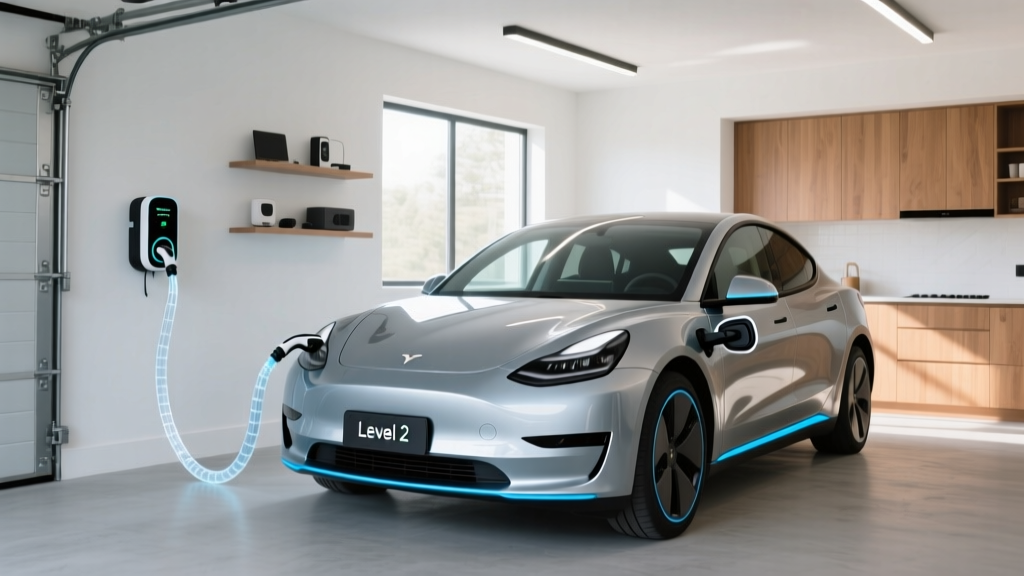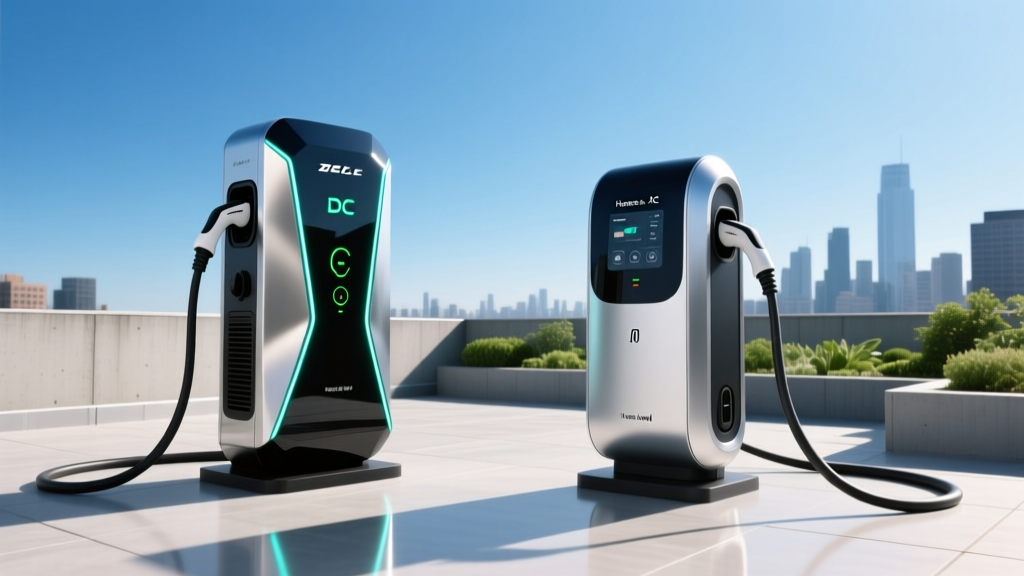
When shopping for an electric vehicle, the charging ecosystem you plug into matters as much as the car itself. In this guide, we put the home charger and its public challenger side by side — comparing Level 2 home setups against DC fast-charging networks on every metric that affects your wallet and your schedule. Whether you're installing a wallbox in your garage or relying on Electrify America and Tesla Superchargers, you'll find exact kW speeds, real installation costs, and per-mile economics below.
Charging Levels Explained: Level 1, Level 2, and DC Fast
Before comparing home and public charging, you need to understand the three tiers. kW (kilowatts) measures power — how fast energy flows into your car. kWh (kilowatt-hours) measures energy — the size of your battery. Confusing the two is the single most common EV mistake. A 10 kW charger delivering power for one hour adds 10 kWh of energy to your battery.
| Level | Voltage | Max Power (kW) | Miles of Range Added per Hour | Best For |
|---|---|---|---|---|
| Level 1 (120V) | 120V AC | 1.2–1.9 kW | 3–5 mi/hr | Overnight top-offs, PHEVs, low-mileage drivers |
| Level 2 (240V) | 240V AC | 3.3–19.2 kW | 12–75 mi/hr | Daily home charging, workplace charging |
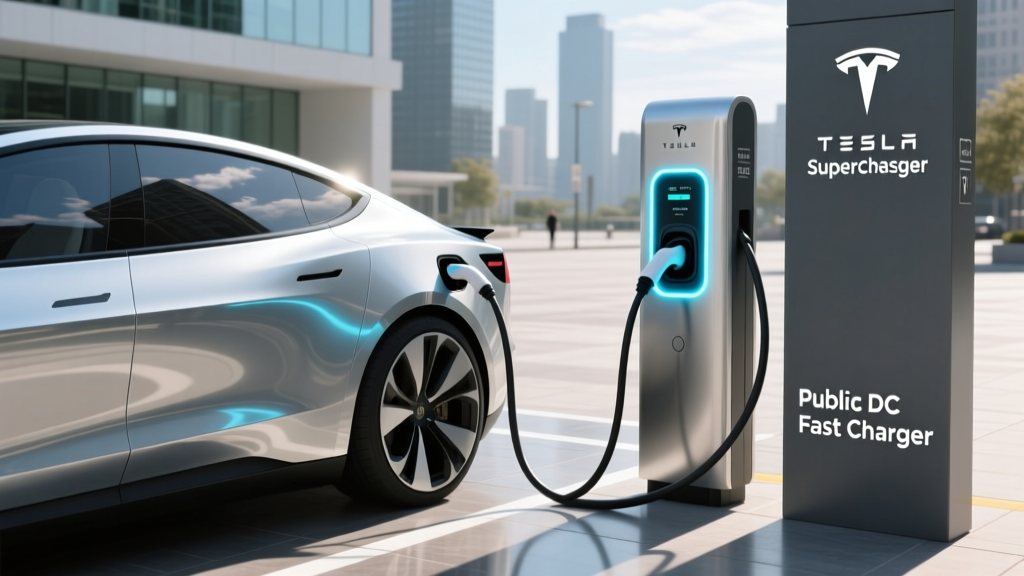
| DC Fast Charge | 200–900V DC | 50–350+ kW | 150–1,200+ mi/hr (peak) | Road trips, rapid top-ups, fleet ops |
A few notes from real-world testing: the "miles per hour" figure assumes a vehicle efficiency of ~3 mi/kWh (typical for a mid-size crossover like the Hyundai Ioniq 5 or Tesla Model Y). Larger, heavier vehicles like the Ford F-150 Lightning or Rivian R1S will see lower miles-per-hour figures at the same kW rate. DC fast-charging speeds also taper significantly above 80% state of charge — a 350 kW peak rarely sustains for the full session. Expect a 10–80% session on a 350 kW-capable vehicle to average closer to 150–200 kW in practice.
Home Level 2 Charger Installation: Requirements and Costs
Installing a Level 2 home charger is the single biggest ownership decision for most EV buyers. Here's what's involved electrically and financially in 2026.
Electrical Requirements
A typical Level 2 home charger runs on a 240V dedicated circuit, similar to an electric dryer or oven. The most common setup is a 40-amp or 48-amp circuit, which supports continuous charging at 32A or 40A respectively (the National Electrical Code requires circuits to be rated 125% above the continuous load). That translates to 7.7 kW or 9.6 kW of charging power — enough to fully recharge most EV batteries overnight.
If your home's electrical panel is already near capacity (common in homes built before 2000 with 100A service), you may need a panel upgrade to 200A. This is the single largest variable in installation cost and can add $1,500–$3,500 to the project. Some utilities and newer energy management systems offer load-management devices that let you add a charger without a panel upgrade by dynamically reducing charger power when other large loads are running.
Installation Cost Breakdown
| Component | Low End | High End | Notes |
|---|---|---|---|
| Charger hardware (Level 2, 32–48A) | $250 | $700 | Smart Wi-Fi models cost more |
| Electrician labor (240V circuit, 20–60 ft run) | $400 | $1,500 | Varies by conduit length, wall type |
| Permit and inspection | $50 | $300 | Required in most jurisdictions |
| Panel upgrade (if needed) | $1,500 | $3,500 | Only if existing panel lacks capacity |
| Total (no panel upgrade) | $700 | $2,500 | Typical for newer homes |
| Total (with panel upgrade) | $2,200 | $6,000 | Older homes with 100A service |
Always hire a licensed electrician familiar with EV charger installations. The work requires a permit and inspection in most US jurisdictions, and skipping this step can void your homeowner's insurance coverage for electrical fires. Per the National Electrical Code (NEC), your charger circuit must be dedicated — no sharing with other outlets or appliances.
Safety and Code Considerations
- Dedicated circuit: Your Level 2 charger must have its own breaker — never share with laundry or kitchen circuits.
- GFCI protection: NEC 2020 and later requires GFCI (ground-fault circuit interrupter) protection for outdoor EV charging outlets. Many hardwired chargers have built-in GFCI, but plug-in NEMA 14-50 outlets require a GFCI breaker.
- Outdoor rating: If mounting outdoors, ensure the charger is NEMA 4 rated (weatherproof). Most major brands are rated for outdoor use, but cables and connectors should be stored off the ground.
- Cable management: Longer cables (25 ft) offer flexibility but add cost and weight. Plan your parking position relative to the charge port location on your specific EV.
Connector Compatibility: NACS, CCS1, and CHAdeMO
The connector landscape has shifted dramatically. As of 2026, the North American Charging Standard (NACS) — originally developed by Tesla — has become the dominant connector for new EVs in North America. Ford, GM, Rivian, Hyundai/Kia, BMW, and most major automakers now ship vehicles with native NACS ports. The CCS1 (Combined Charging System) connector is being phased out on new models, though many 2022–2025 vehicles still use it. CHAdeMO is essentially legacy, found only on older Nissan Leafs and Mitsubishi Outlander PHEVs.
| Connector | Brands Using It (New Vehicles) | Adapter Needed for Legacy Chargers? |
|---|---|---|
| NACS (Tesla-style) | Tesla, Ford, GM, Rivian, Hyundai, Kia, BMW, Volvo, Polestar, Mercedes-Benz, Fisker | CCS1-to-NACS adapter for older Electrify America / EVgo CCS1 stalls |
| CCS1 | Legacy models (2022–2025 VW ID.4, older BMW i4, etc.) | NACS-to-CCS1 adapter to use Tesla Superchargers |
| CHAdeMO | Discontinued on new models (last: Nissan Leaf) | No practical adapter; use CHAdeMO-equipped stations only |
If you own a CCS1-equipped EV from the 2022–2025 era, Tesla and third-party companies sell NACS-to-CCS1 adapters ($150–$250) that enable access to the Supercharger network. Confirm adapter compatibility with your specific model year before purchasing. Per Tesla's adapter support page, not all CCS1 vehicles are approved for Supercharger use even with an adapter — check the in-car navigation or Tesla app for your vehicle's eligibility.
Cost to Charge: Home vs. Public vs. Gas
The economics of EV charging depend heavily on where and when you plug in. Here's a realistic breakdown using 2026 electricity rates and gasoline prices.
| Scenario | Rate ($/kWh) | Vehicle Efficiency (mi/kWh) | Cost per Mile |
|---|---|---|---|
| Home Level 2 (off-peak utility rate) | $0.08–$0.14 | 3.0 | $0.027–$0.047 |
| Home Level 2 (standard residential avg) | $0.16–$0.22 | 3.0 | $0.053–$0.073 |
| Public Level 2 (ChargePoint, workplace) | $0.20–$0.35 | 3.0 | $0.067–$0.117 |
| DC Fast Charge (Electrify America, EVgo) | $0.35–$0.55 | 3.0 | $0.117–$0.183 |
| Tesla Supercharger V4 (avg) | $0.28–$0.40 | 3.0 | $0.093–$0.133 |
| Gasoline vehicle (25 MPG combined, $3.40/gal) | — | — | $0.136 |
Key takeaway: home charging on off-peak rates delivers fuel costs roughly one-quarter to one-third of gasoline. Even DC fast charging is roughly cost-competitive with gas on a per-mile basis — but only if you're using it occasionally for road trips. If you rely exclusively on public DC fast charging, your per-mile cost can exceed gasoline, especially at premium-rate networks in urban centers.
For a driver covering 12,000 miles per year in an EV averaging 3 mi/kWh:
- Home off-peak charging: ~$320–$560/year
- Home standard rate: ~$640–$880/year
- Exclusive DC fast charging: ~$1,400–$2,200/year
- Equivalent gas car (25 MPG, $3.40/gal): ~$1,632/year
Charging Time Examples: What to Expect by Battery Size
Charge times depend on battery size, the vehicle's onboard charger capacity (for AC), and the DC charge curve. Here are real-world benchmarks for common 2026 EVs.
Level 2 Home Charging (0–100%)
- Tesla Model Y Long Range (75 kWh usable, 11.5 kW onboard): ~7 hours from empty on a 48A/11.5 kW circuit.
- Hyundai Ioniq 5 (77.4 kWh usable, 10.9 kW onboard): ~7.5 hours on a 48A circuit.
- Ford F-150 Lightning Extended Range (131 kWh usable, 19.2 kW onboard): ~7 hours on an 80A/19.2 kW circuit; ~14 hours on a standard 48A circuit.
- Chevrolet Equinox EV (85 kWh usable, 11.5 kW onboard): ~7.5 hours on a 48A circuit.
DC Fast Charging (10–80%)
- Hyundai Ioniq 5 / Kia EV6 (800V architecture, 240 kW peak): ~18 minutes on a 350 kW charger. The 800V system sustains high power longer, making these among the fastest-charging mainstream EVs available.
- Tesla Model Y Long Range (250 kW peak): ~22–25 minutes at a V3 Supercharger (250 kW).
- Ford F-150 Lightning (150 kW peak): ~35–40 minutes at a 150+ kW DC charger.
- Chevrolet Silverado EV (350 kW peak): ~20 minutes under ideal conditions on a 350 kW stall.
Remember that charge curves taper above 80%. Charging from 80–100% on DC fast charging can take as long as the 10–80% session. For road trips, plan to charge to 80% and move on — the last 20% is painfully slow and not worth the wait.
Recommended Home Level 2 Chargers (2026)
After testing and tracking reliability data across the market, here are four Level 2 chargers that cover the range of budgets and features most EV owners need.
Emporia Vue Smart Charger (Best Value)
- Power output: 48A / 11.5 kW (hardwired) or 40A / 9.6 kW (NEMA 14-50 plug)
- Connector: J1772 (CCS1-compatible vehicles); NACS version available for newer EVs
- Cable length: 24 ft
- Smart features: Wi-Fi, energy monitoring, solar integration, scheduling via app
- Price: ~$350–$400
- Best for: Budget-conscious buyers who want smart scheduling and energy tracking
ChargePoint Home Flex (Best All-Rounder)
- Power output: Up to 50A / 12 kW (configurable via DIP switch to match circuit)
- Connector: J1772 (CCS1) or NACS (new 2025+ models)
- Cable length: 23 ft
- Smart features: Wi-Fi, Alexa/Google integration, ChargePoint network account, detailed session data
- Price: ~$550–$650
- Best for: Drivers who want a reliable, well-supported charger with strong app ecosystem
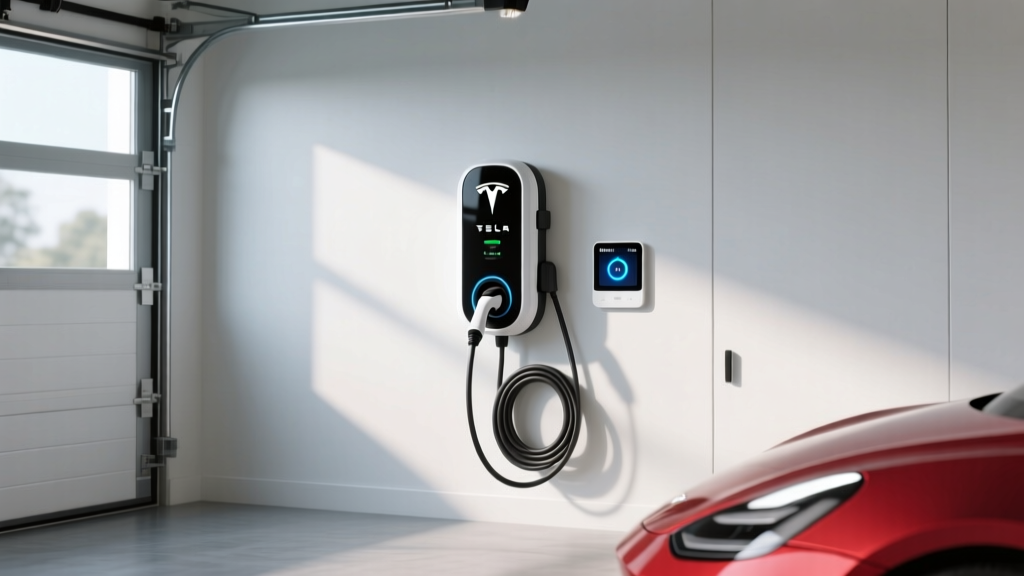
Tesla Wall Connector (Best for NACS Vehicles)
- Power output: Up to 48A / 11.5 kW
- Connector: Native NACS (also includes J1772 adapter in some bundles)
- Cable length: 24 ft
- Smart features: Wi-Fi, power-sharing with multiple Wall Connectors, over-the-air updates
- Price: ~$420–$475
- Best for: Tesla owners and any NACS-equipped EV; cleanest integration for Tesla vehicles
Grizzl-E Smart (Most Durable / Outdoor)
- Power output: 40A / 9.6 kW
- Connector: J1772 or NACS
- Cable length: 24 ft
- Smart features: Wi-Fi, OCPP-compatible (works with utility demand-response programs), NEMA 4 outdoor rating
- Price: ~$450–$550
- Best for: Outdoor installations, extreme climates, and utility-program participants
Public DC Fast Charging Networks: What's Available in 2026
The public charging landscape has consolidated and improved significantly. Here's the current state of major networks:
- Tesla Supercharger: Over 30,000 stalls globally, with V4 cabinets delivering up to 350 kW. Now open to non-Tesla NACS vehicles (Ford, GM, Rivian, and others). Reliability remains the industry benchmark — consistently 97%+ uptime per Tesla's reports.
- Electrify America: ~4,500+ stalls in the US, transitioning many stations to NACS connectors alongside CCS1. Peak speeds up to 350 kW. Reliability has improved but still trails Tesla; expect occasional offline stalls in less-trafficked areas.
- EVgo: ~3,500+ public fast-charging stalls, adding NACS connectors. Offers subscription plans that reduce per-kWh costs for frequent users.
- ChargePoint: Primarily Level 2 destination/workplace charging, with a growing DC fast-charging footprint. Best for opportunistic top-ups while parked.
For road-trip planning, fueleconomy.gov lists EPA range estimates for every EV sold in the US, and apps like A Better Routeplanner (ABRP) or PlugShare can map charger availability along your route. Always check real-time stall status in the network's app before committing to a stop — a station listed on a map may have stalls offline or occupied.
Frequently Asked Questions
How much does it cost to install a home EV charger?
Expect $700–$2,500 for a standard Level 2 installation in a home with adequate electrical panel capacity. This includes the charger hardware ($250–$700), electrician labor ($400–$1,500), and permits ($50–$300). If your home needs a 200A panel upgrade, add $1,500–$3,500, bringing the total to $2,200–$6,000. Get at least two quotes from licensed electricians, and confirm they include permit and inspection in their estimate.
How fast will each charging level add range?
Level 1 (120V) adds 3–5 miles of range per hour — adequate for PHEVs with small batteries or very low daily mileage. Level 2 (240V) adds 12–75 miles per hour depending on the circuit amperage and your vehicle's onboard charger. DC fast charging adds 150–1,200+ miles per hour at peak power, but sessions are typically measured in 10–80% time (18–40 minutes for most 2026 EVs) because the charge rate tapers significantly above 80% state of charge.
Which connector/charger is compatible with my EV?
Check your vehicle's charge port. If your 2025–2026 EV is from Tesla, Ford, GM, Rivian, Hyundai, Kia, BMW, or most other major brands, it almost certainly uses NACS. If you have a 2022–2024 model from VW, older BMW, or some other brands, it may use CCS1. For home Level 2 charging, all EVs can use a J1772 connector (the universal AC standard) or a NACS connector if equipped. Adapters are available for cross-compatibility. CHAdeMO is legacy — no new vehicles use it, and public CHAdeMO stations are declining.
How much does charging cost per mile vs gas?
Home charging on off-peak rates costs roughly $0.03–$0.05 per mile — about one-quarter the cost of gasoline at $3.40/gal and 25 MPG ($0.14/mile). Standard residential rates bring it to $0.05–$0.07/mile. Public DC fast charging at $0.35–$0.55/kWh costs $0.12–$0.18/mile, which is roughly on par with or slightly above gasoline. The economic advantage of EVs is maximized when you charge at home, especially with time-of-use utility plans that offer discounted overnight rates.
What electrical upgrades might I need?
The most common upgrade is a panel capacity increase from 100A to 200A service, required when your existing panel lacks spare breaker slots or amperage headroom for a dedicated 40–60A charger circuit. Homes with 200A panels and available breaker space typically need only a new circuit run from the panel to the charger location. Some homes may benefit from a load-management device (e.g., Emporia's Smart Load Management or Tesla's Wall Connector power-sharing) that dynamically adjusts charger draw to avoid overloading the panel — this can avoid a costly panel upgrade. Always have your electrician perform a load calculation per NEC Article 220 before deciding.
Sources: EPA range and efficiency data via fueleconomy.gov; electrical code requirements per the National Electrical Code (NEC); IRS §30D clean vehicle credit rules (note: the home charger installation credit under §30C expired for most taxpayers after 2023; consult a tax professional for current eligibility).