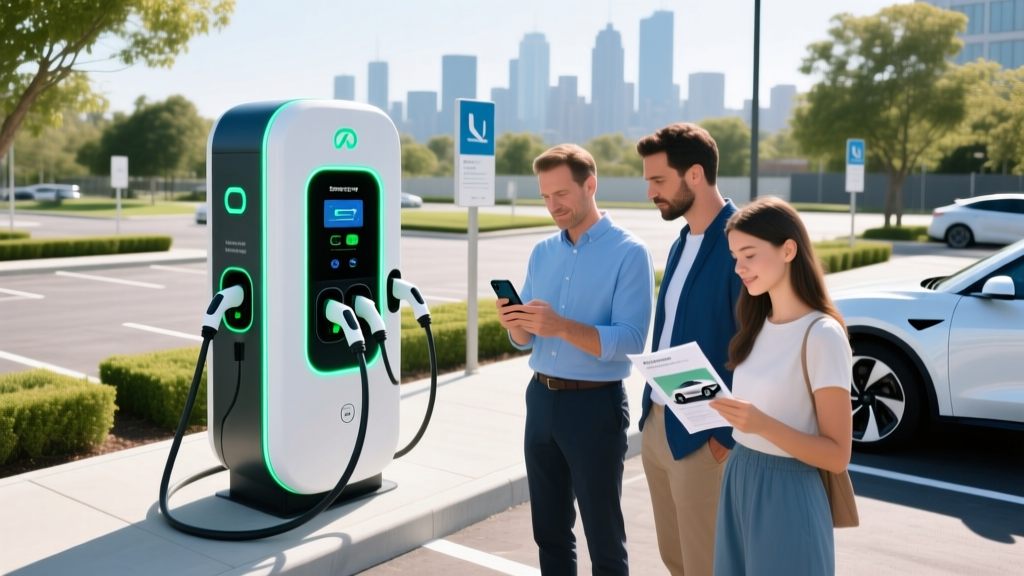
The upcoming electric Chevrolet Camaro has enthusiasts asking a practical question: what charger and Camaro EV setup makes sense at home? Whether you're preparing for Chevy's electrified muscle car or charging a current EV like the Blazer EV or Equinox EV, understanding charging levels, home electrical requirements, and real-world costs is essential before you plug in.
This guide breaks down every charging tier in exact numbers — kilowatts (kW) for charge rate, kilowatt-hours (kWh) for battery capacity — along with installation costs, connector compatibility, and the per-mile economics that decide whether an EV or gas car wins your commute.
Charging Levels Explained: Level 1, Level 2, and DC Fast Charging
EV charging operates across three tiers. The critical distinction: kW (kilowatts) measures the rate of energy flow — like water pressure from a hose. kWh (kilowatt-hours) measures total energy stored in the battery — like the size of the tank. A higher kW charger fills the battery faster, but the battery's kWh capacity determines how far you can drive.
| Level | Voltage | Power (kW) | Miles of Range per Hour | Best Use Case |
|---|---|---|---|---|
| Level 1 | 120V AC | 1.0–1.4 kW | 3–5 mi/hr | Overnight top-up, low-mileage drivers |
| Level 2 | 240V AC | 3.3–19.2 kW | 12–75 mi/hr | Daily home charging, workplace |
| DC Fast | 400–800V DC | 50–350 kW | 150–1,000+ mi/hr (peak) | Road trips, highway corridors |
For a vehicle like the Chevrolet Blazer EV (102 kWh usable battery, EPA 324 miles), Level 1 charging from 10% to full would take roughly 70+ hours — impractical. A 48-amp Level 2 home charger delivering 11.5 kW accomplishes the same in about 9 hours, easily covering an overnight session. DC fast charging at a peak 190 kW can take the Blazer EV from 10–80% in approximately 28 minutes, though the charge curve tapers significantly above 80% to protect battery health.
How Much Does It Cost to Install a Home EV Charger?
Home Level 2 installation costs vary enormously based on your electrical panel's capacity and the distance from panel to charger location. Here's what to budget:
| Component | Low End | High End | Notes |
|---|---|---|---|
| Level 2 Charger (Equipment) | $300 | $750 | 32A–48A smart charger, hardwired or NEMA 14-50 plug |
| Electrician Labor | $400 | $1,500 | Depends on run length, conduit, wall material |
| Electrical Permit | $50 | $250 | Varies by municipality |
| Panel Upgrade (if needed) | $1,500 | $4,000+ | 100A→200A service; common in pre-1990 homes |
| Total (No Panel Upgrade) | $750 | $2,500 | Most homes with 200A service |
| Total (With Panel Upgrade) | $2,250 | $6,500+ | Older homes or high-load households |
Electrical Requirements for Level 2 Charging
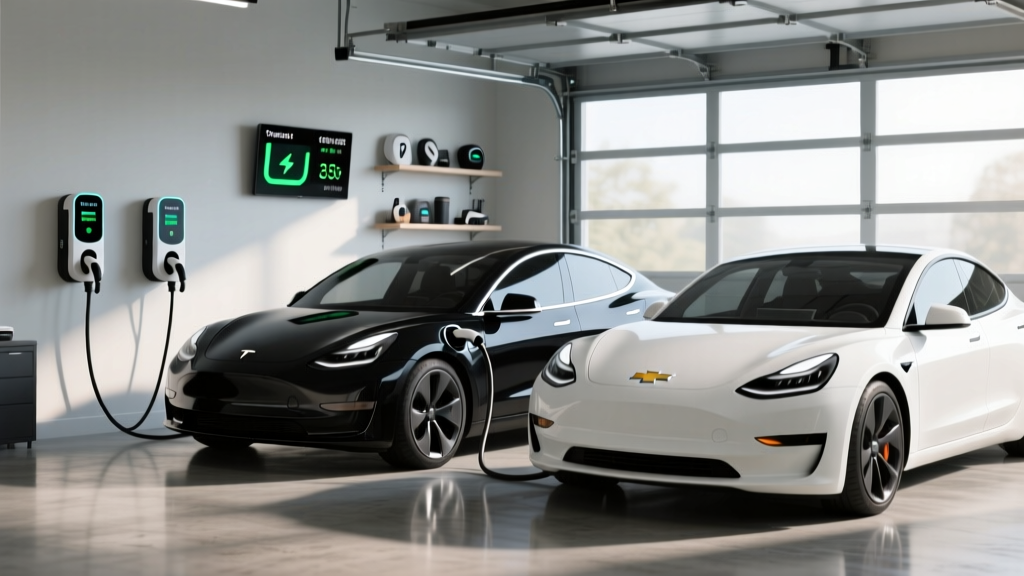
A typical 48-amp Level 2 charger requires a 240V, 60-amp dedicated circuit (NEC code requires circuits rated at 125% of continuous load, so a 48A charger needs a 60A breaker). The most common installation methods:
- Hardwired: Direct connection to a 60A breaker — most reliable, no receptacle wear, required for some jurisdictions above 40A.
- NEMA 14-50 receptacle: 50A breaker, allows charger portability. Common for garage installs but some utilities and inspectors now require GFCI breakers on 14-50 outlets, which can cause nuisance tripping with some EVSE units.
Do You Need a Panel Upgrade?
Your electrical panel has a maximum amperage rating (typically 100A, 150A, or 200A). An electrician will perform a load calculation per NEC Article 220 to determine if adding a 60A circuit exceeds capacity. Homes with electric heat, electric water heaters, and electric dryers on a 100A panel will almost certainly need an upgrade. Homes with gas appliances and 200A service usually have ample headroom.
Some utilities now offer managed charging programs that allow a lower-amperage circuit (e.g., 30A/24A continuous) in exchange for the utility briefly reducing charge rate during peak demand — a viable workaround if panel capacity is tight.
Which Connector Is Compatible With Your EV?
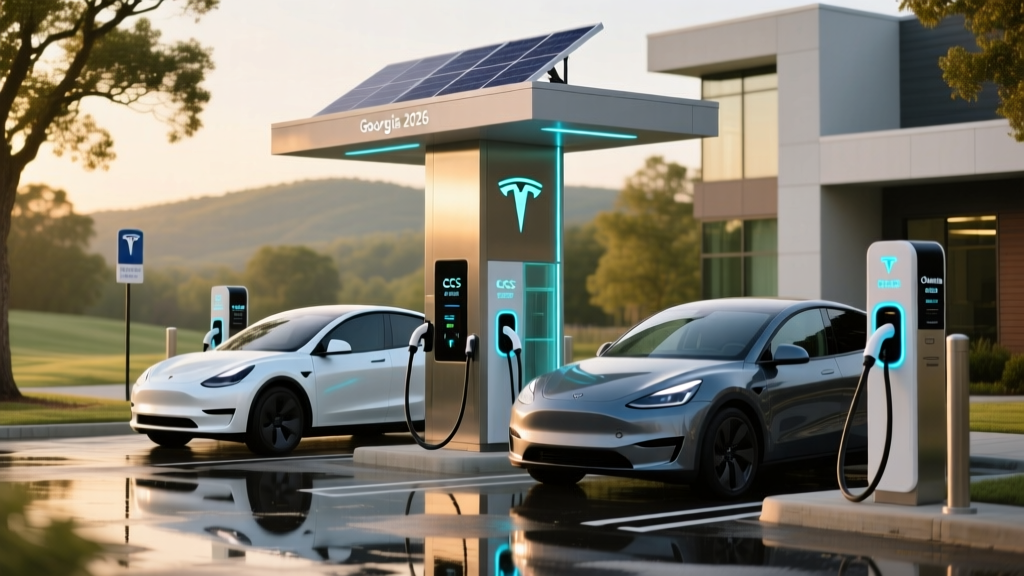
The connector landscape shifted dramatically in 2024–2025 when most major automakers adopted the North American Charging Standard (NACS), originally developed by Tesla. Here's where things stand for 2026 model-year vehicles:
| Connector | Brands Using It (Native) | Adapter Needed For |
|---|---|---|
| NACS (Tesla/SAE J3400) | Tesla, Ford, GM (including Chevrolet), Rivian, Volvo, Polestar, Mercedes-Benz, BMW, Hyundai, Kia | Legacy CCS1 public chargers (adapter included by many OEMs) |
| CCS1 | Legacy models (pre-2025 VW ID.4, some Stellantis) | NACS Tesla Superchargers (requires CCS-to-NACS adapter, ~$200) |
| CHAdeMO | Nissan Leaf (discontinued), Mitsubishi Outlander PHEV | Phasing out; limited DC fast infrastructure |
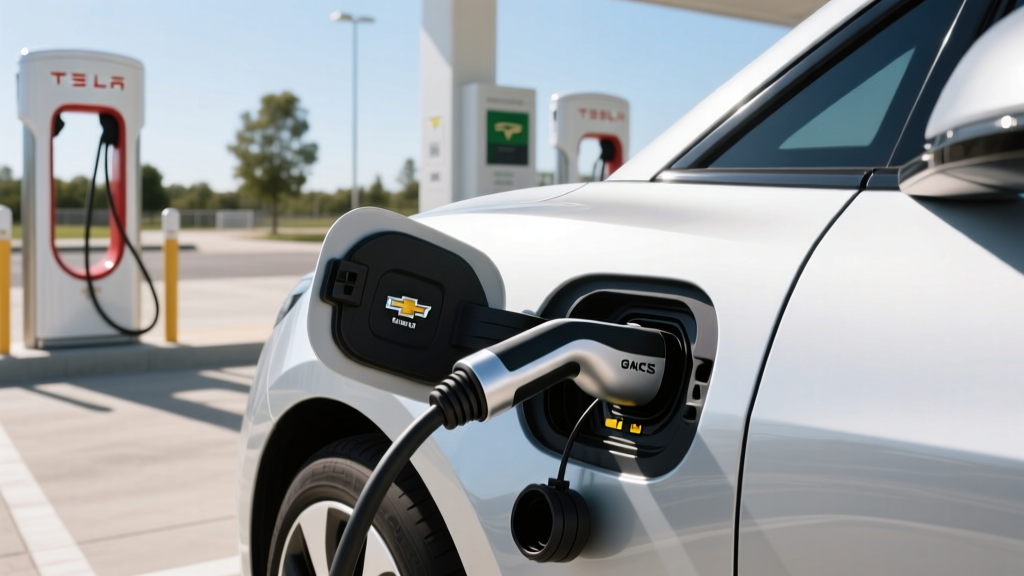
A future electric Camaro, built on GM's Ultium platform, will ship with a native NACS port — the same connector used on the 2026 Chevrolet Blazer EV, Silverado EV, and Equinox EV. This means direct access to Tesla Supercharger stations (over 25,000 stalls in North America) without an adapter, plus all NACS-equipped public networks.
For current CCS1-equipped EVs, GM and Ford provide NACS adapters (often included free with purchase through 2025–2026). Third-party adapters from brands like Lectron and A2Z are available for approximately $150–$250.
Charging Time Examples: What to Expect by Battery Size
Charging time depends on three variables: battery capacity (kWh), charger power output (kW), and the vehicle's onboard charger limit (for AC charging). Here are real-world estimates:
| Battery Size | Example Vehicle | Level 2 (11.5 kW / 48A) | DC Fast 10–80% | DC Fast Peak Rate |
|---|---|---|---|---|
| 65 kWh | Chevrolet Equinox EV | ~6 hours (10–100%) | ~22 min | 150 kW |
| 85 kWh | Ford Mustang Mach-E (Extended) | ~7.5 hours (10–100%) | ~25 min | 150 kW |
| 102 kWh | Chevrolet Blazer EV | ~9 hours (10–100%) | ~28 min | 190 kW |
| 131 kWh | GMC Hummer EV | ~11.5 hours (10–100%) | ~35 min | 350 kW |
DC fast-charge times assume optimal battery temperature (preconditioned) and a charger capable of sustaining the vehicle's peak rate. In practice, expect 10–80% sessions to average 50–70% of the advertised peak rate due to the charge curve taper. Above 80% SoC, charging slows dramatically — from 150+ kW down to 20–40 kW — as the battery management system protects cell longevity. For daily driving, charging to 80% is recommended for NMC chemistry batteries; LFP batteries (used in some standard-range models) tolerate regular 100% charges.
Cost Per Mile: EV Charging vs. Gasoline
The economic case for EV charging hinges on your electricity rate and driving patterns. Here's a breakdown comparing home charging, public Level 2, and DC fast charging against a gasoline baseline:
| Scenario | Rate | Cost per Mile | Assumptions |
|---|---|---|---|
| Home (off-peak utility rate) | $0.09/kWh | $0.027 | 3.3 mi/kWh efficiency (typical midsize EV) |
| Home (national avg. residential) | $0.17/kWh | $0.051 | 3.3 mi/kWh |
| Public Level 2 (network pricing) | $0.35/kWh | $0.106 | 3.3 mi/kWh |
| DC Fast Charging (highway) | $0.48/kWh | $0.145 | 3.3 mi/kWh |
| Gasoline (25 MPG combined) | $3.40/gal | $0.136 | 25 MPG (typical gas midsize sedan) |
| Gasoline (18 MPG, performance car) | $3.40/gal | $0.189 | 18 MPG (typical V8 muscle car) |
At home off-peak rates, EV charging costs roughly one-fifth what gasoline costs per mile. Even at DC fast-charging highway rates, the EV is competitive with or cheaper than a low-MPG performance car. The break-even point shifts depending on your local utility rates — some areas exceed $0.30/kWh residential, narrowing the advantage. Per fueleconomy.gov, the average EV achieves 3–4 miles per kWh, though efficiency drops 15–30% in cold weather due to cabin heating demands and battery thermal management.
Recommended Home Level 2 Chargers for 2026
These chargers are selected for reliability, power output, smart features, and NACS compatibility — important for anyone pairing a charger and Camaro EV or other GM Ultium-based vehicle.
ChargePoint Home Flex
- Power: Up to 12 kW (50A) / configurable 16–50A
- Connector: NACS or J1772 (configurable)
- Cable: 23 ft
- Smart Features: Wi-Fi, app scheduling, Alexa, energy tracking
- Price: ~$550–$650
- Best For: Flexible amperage for panels with limited capacity
WallConnector (Tesla, 3rd Gen)
- Power: Up to 11.5 kW (48A)
- Connector: Native NACS
- Cable: 24 ft
- Smart Features: Wi-Fi, OTA updates, power sharing (multiple units on one circuit)
- Price: ~$475
- Best For: GM/Ford/Rivian owners wanting NACS-native at a competitive price
Emporia Level 2 EV Charger
- Power: Up to 11.5 kW (48A)
- Connector: NACS (2025+ models) or J1772
- Cable: 24 ft
- Smart Features: Wi-Fi, energy monitoring, solar integration, load management
- Price: ~$350–$400
- Best For: Budget-conscious buyers with solar panels or energy monitoring needs
All three chargers support hardwired installation (recommended for 48A+ operation) and NEMA 14-50 plug configurations. For outdoor installations, verify the charger carries a NEMA 4 or IP65 weather-resistance rating — all three above qualify. Per the National Electrical Code (NEC), outdoor receptacles for EV charging must be GFCI-protected, though hardwired installations may be exempt depending on local amendments.
Safety, Permits, and Code Considerations
EV charger installation is electrical work that requires adherence to NEC Article 625 (Electric Vehicle Charging System Equipment). Key requirements:
- Dedicated circuit: Your EV charger must have its own breaker — no sharing with other appliances.
- Permit: Most jurisdictions require an electrical permit for new 240V circuits. Inspections verify wire gauge, breaker sizing, and grounding.
- GFCI protection: Required for outdoor receptacles and increasingly for indoor garage receptacles under NEC 2023+. Hardwired chargers often avoid GFCI requirements, reducing nuisance trips.
- Wire gauge: 6 AWG copper for 60A circuits; 8 AWG for 50A. Aluminum wire requires upsizing.
- Cable management: NEC requires the charging cable not create a trip hazard — wall-mounted hooks or retractors are recommended.
Never use extension cords or outlet adapters not rated for continuous EV charging loads. A 14-50 receptacle that feels warm after a charging session indicates undersized wiring, a loose connection, or a worn receptacle — stop use and call an electrician. Some EV owners report melted 14-50 outlets after months of high-amperage use; hardwired connections eliminate this failure point entirely.
Frequently Asked Questions
How much does it cost to install a home EV charger?
Expect $750–$2,500 for a standard Level 2 installation in a home with adequate 200A electrical service. Homes needing a panel upgrade from 100A to 200A should budget $2,250–$6,500+ total. The charger unit itself runs $300–$750, with electrician labor and permits making up the remainder.
How fast will each charging level add range?
Level 1 (120V) adds 3–5 miles per hour. Level 2 (240V, 48A) adds approximately 30–40 miles per hour for a typical midsize EV. DC fast charging at 150+ kW can add 150–300 miles in a 20–30 minute session, though actual speed depends on battery size, state of charge, and temperature.
Which connector is compatible with my EV?
For 2026 model-year GM vehicles (including the Blazer EV, Silverado EV, Equinox EV, and any future electric Camaro), the native connector is NACS (SAE J3400). This provides direct access to Tesla Superchargers and NACS-equipped public stations. Older CCS1 vehicles can use adapters to access NACS stations.
How much does charging cost per mile vs. gas?
Home charging at the national average residential rate ($0.17/kWh) costs approximately $0.05/mile for a typical EV. Gasoline at $3.40/gallon and 25 MPG costs $0.14/mile. Off-peak home charging can drop to $0.03/mile. DC fast charging at highway rates ($0.48/kWh) runs $0.15/mile — still competitive with a low-MPG performance vehicle.
What electrical upgrades might I need?
If your home has a 100A electrical panel with existing high-draw electric appliances (dryer, oven, heat pump), you'll likely need a panel upgrade to 200A — costing $1,500–$4,000+. Homes with gas appliances and 150A+ service typically have sufficient capacity. An electrician's load calculation per NEC Article 220 will determine this definitively. Some utilities offer managed-charging programs that allow lower-amperage installs as an alternative.
Whether you're preparing your garage for an upcoming electric Camaro or optimizing charging for your current EV, the investment in a proper Level 2 home installation pays for itself within 1–3 years through fuel savings alone — and delivers the convenience of starting every morning with a full battery.