What Does "Charger 0-60 V6" Mean for EV Owners?
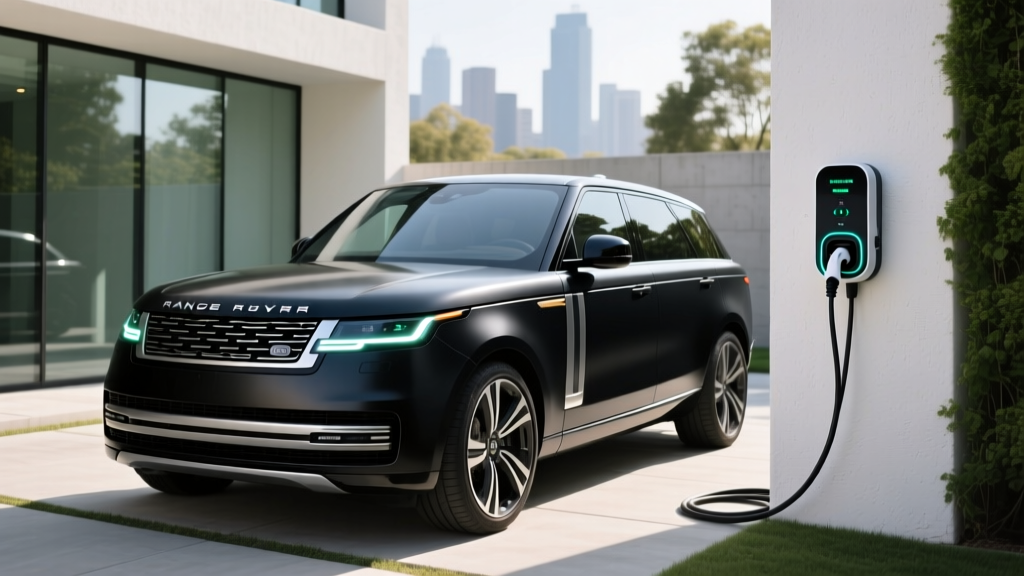
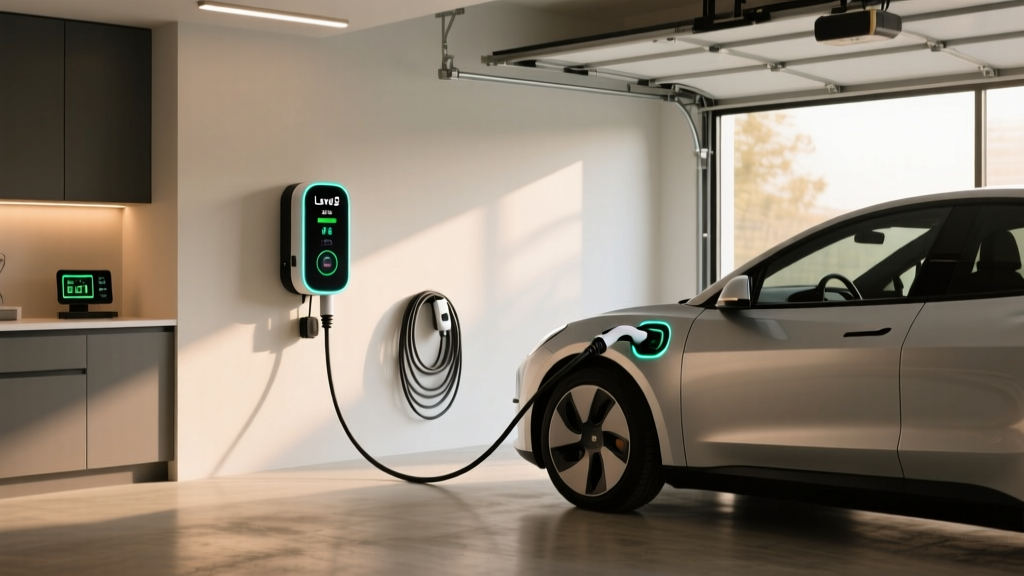
If you've been searching for charger 0-60 V6, you're likely encountering references to the ChargePoint Home Flex (often associated with its V6 hardware revision) or similar high-output Level 2 home charging stations. The "0-60" shorthand in the EV charging world doesn't refer to acceleration — it signals a charger's ability to deliver maximum practical home charging speed, typically up to 48 amps (11.5 kW) on a 240V circuit, which is the functional ceiling for most residential electrical panels without a dedicated 60A+ sub-panel upgrade.
This guide breaks down exactly what you need to install a high-output Level 2 charger at home, what electrical upgrades may be required, how fast each charging level actually adds range, connector compatibility across brands, and the real cost per mile compared to gasoline. We'll also recommend specific equipment and walk through the installation math that most buyers overlook.
Understanding Charging Levels: Speeds in kW and Miles Per Hour
Before choosing equipment, you need clarity on the three charging levels. The single most important distinction in EV literacy: kW (kilowatts) measures power — the rate of energy flow, like water pressure from a hose. kWh (kilowatt-hours) measures energy — the total amount stored in your battery, like gallons in a tank. A 48A charger delivers 11.5 kW of power; your battery might hold 75 kWh of energy. Never confuse the two.
| Level | Voltage / Amperage | Max Power (kW) | Miles of Range Added Per Hour | Typical Use Case |
|---|---|---|---|---|
| Level 1 | 120V / 12A | 1.4 kW | 3–5 miles | Overnight trickle; PHEVs with small batteries |
| Level 2 (Standard) | 240V / 32A | 7.7 kW | 20–28 miles | Most home installs; adequate for daily driving |
| Level 2 (High-Output / "0-60 V6" Class) | 240V / 48A | 11.5 kW | 30–44 miles | Large batteries (100+ kWh); fast overnight recovery |
| DC Fast Charging | 400–800V DC | 50–350 kW | 150–1,200+ miles (equivalent) | Road trips; public stations; 10–80% in 15–35 min |
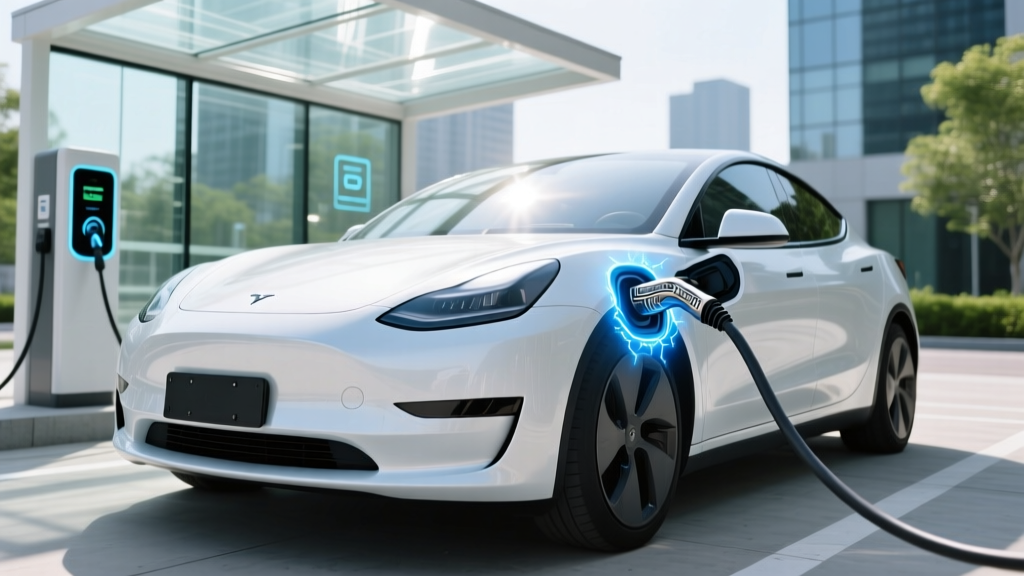
For context, a Tesla Model Y Long Range (75 kWh usable battery, EPA-rated at 310 miles) charging on a 48A Level 2 circuit adds roughly 37 miles of range per hour. A full 10%–80% session takes approximately 5.5 hours — easily accomplished overnight. On a 32A circuit, that same session stretches to about 8 hours.
Home Installation: Electrical Requirements, Costs, and Panel Upgrades
The hardware is only part of the equation. A proper Level 2 installation requires a dedicated 240V circuit, and high-output 48A chargers need a 60-amp breaker (the National Electrical Code requires circuits to be rated at 125% of continuous load, so 48A continuous draw demands a 60A breaker).
Electrical Requirements for a 48A Charger
- Voltage: 240V (split-phase, standard US residential)
- Breaker: 60A double-pole
- Wire gauge: 6 AWG copper (THHN in conduit) or 4 AWG aluminum
- Circuit: Dedicated — no sharing with other appliances
- GFCI protection: Required by NEC 2020+ for EV charging outlets (625.54)
- Outdoor rating: NEMA 4 or NEMA 4X enclosure if installed outside
Installation Cost Breakdown
Costs vary dramatically based on your home's existing electrical infrastructure. Here's what to budget:
| Component | Simple Install (Panel adjacent) |
Moderate Install (50–80 ft run) |
Complex Install (Panel upgrade needed) |
|---|---|---|---|
| Level 2 Charger (48A) | $500–$700 | $500–$700 | $500–$700 |
| Electrician Labor | $300–$600 | $600–$1,500 | $1,500–$3,000 |
| Materials (wire, conduit, breaker) | $50–$150 | $200–$500 | $300–$800 |
| Permit | $50–$150 | $50–$200 | $100–$250 |
| Panel Upgrade (100A → 200A) | — | — | $1,500–$3,500 |
| Total Estimated Cost | $900–$1,600 | $1,350–$2,900 | $3,900–$8,250 |
Permitting and Code Compliance
Most jurisdictions require an electrical permit for EV charger installation. The permit ensures the work meets NEC (National Electrical Code) standards and is typically inspected after completion. Skipping the permit risks insurance claim denials and code violations at resale. Your electrician should pull the permit — if they suggest skipping it, find another electrician.
Connector Compatibility: NACS, CCS1, and CHAdeMO
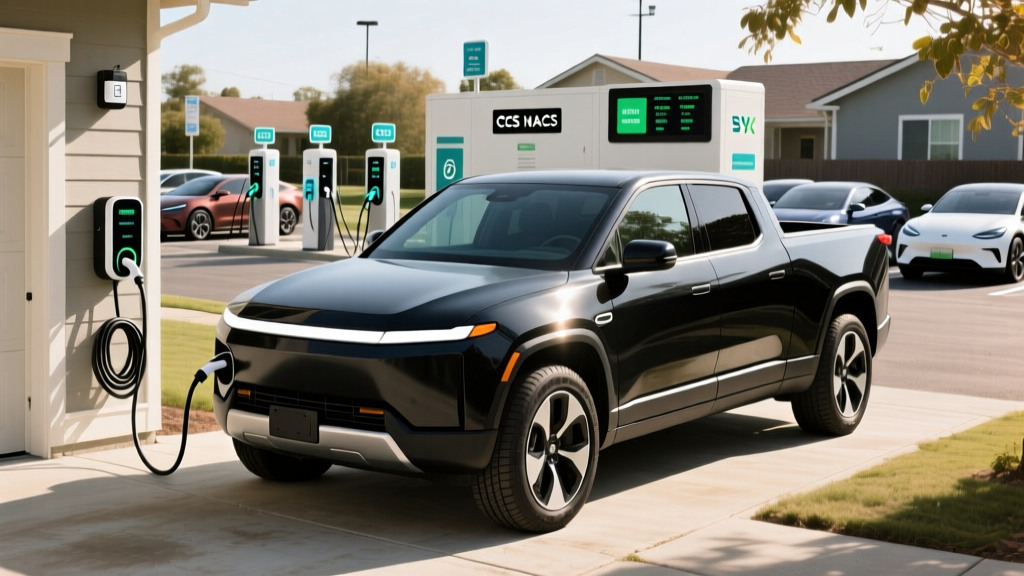
The connector landscape has shifted dramatically. As of 2026, the North American Charging Standard (NACS) — originally Tesla's proprietary connector — has become the dominant standard, with Ford, GM, Rivian, Volvo, Hyundai, and most major manufacturers adopting it. CCS1 remains on many 2023–2025 model-year vehicles, and CHAdeMO is effectively legacy (Nissan Leaf being the primary remaining user).
| Connector | Brands Using It | Adapter Needed? |
|---|---|---|
| NACS (J3400) | Tesla (all), Ford (2025+), GM (2025+), Rivian (2025+), Hyundai/Kia (2026+), Volvo, Polestar, Mercedes, BMW (2026+) | CCS→NACS adapters available (~$200–$300) for older CCS vehicles |
| CCS1 | VW ID.4 (through 2025), some 2023–2025 Hyundai/Kia, older Ford/GM EVs, BMW i4/iX (pre-2026) | NACS→CCS adapter needed at Tesla Superchargers |
| CHAdeMO | Nissan Leaf (all years), Mitsubishi Outlander PHEV (older) | Limited adapter options; CHAdeMO infrastructure declining |
For home Level 2 charging: Most Level 2 chargers sold in 2026 ship with a NACS connector or offer it as the default option. If your vehicle uses CCS1, you can either purchase a CCS-equipped charger or use a NACS-to-CCS adapter (such as the Lectron or A2Z adapter, typically $150–$250). For CHAdeMO vehicles, dedicated CHAdeMO Level 2 chargers remain available but are increasingly niche.
Charging Cost Per Mile: Home vs. Public vs. Gasoline
The economic case for home charging is overwhelming. Here's how the numbers compare across scenarios, using the US average electricity rate of $0.17/kWh and average gas price of $3.40/gallon (early 2026 figures):
| Scenario | Rate | Cost Per Mile (EV at 3.5 mi/kWh) |
Cost Per Mile (Gas at 28 MPG) |
|---|---|---|---|
| Home Off-Peak (TOU rate) | $0.09–$0.12/kWh | $0.026–$0.034 | — |
| Home Standard Rate | $0.17/kWh | $0.049 | — |
| Public Level 2 (ChargePoint, etc.) | $0.25–$0.49/kWh | $0.071–$0.140 | — |
| DC Fast Charging (EA, EVgo) | $0.35–$0.65/kWh | $0.100–$0.186 | — |
| Gasoline (Regular) | $3.40/gallon | — | $0.121 |
At home off-peak rates, an EV costs roughly $0.03 per mile — about one-quarter the cost of gasoline. Even at public DC fast chargers at $0.55/kWh, you're paying roughly $0.16/mile, which is still competitive with a 28 MPG gas car. However, if you rely exclusively on expensive public DC fast charging, the savings erode significantly. This is why home charging access is the single most important factor in EV ownership economics.
For a driver covering 12,000 miles annually, home charging at $0.12/kWh saves approximately $1,050 per year compared to gasoline at $3.40/gallon and 28 MPG. Over five years, that's $5,250 — enough to offset the charger installation cost several times over.
Charging Time Examples: 10%–80% for Common Battery Sizes
DC fast charging times depend on battery size, chemistry, and the vehicle's charge curve. Peak kW rates are not sustained — batteries taper charge speed above ~60% State of Charge (SoC) to protect cell longevity. Here are realistic 10%–80% times:
- Tesla Model Y (75 kWh, NMC): Peak 250 kW on V3 Supercharger, 10–80% in ~22 minutes. Sustains ~170 kW through 50% SoC, then tapers to ~60 kW above 70%.
- Hyundai Ioniq 5 (77.4 kWh, NMC, 800V architecture): Peak 240 kW on 350 kW chargers, 10–80% in ~18 minutes. Superior sustained charge curve thanks to 800V system.
- Ford F-150 Lightning Extended Range (131 kWh, NMC): Peak 150 kW, 10–80% in ~41 minutes. Large battery means longer sessions despite decent peak rate.
- Chevrolet Equinox EV (85 kWh, NMC): Peak 150 kW, 10–80% in ~30 minutes.
- BMW iX xDrive50 (111.5 kWh usable): Peak 200 kW, 10–80% in ~31 minutes.
Equipment Recommendations: Top Level 2 Chargers for 2026
Here are our top picks for high-output Level 2 home chargers, selected for reliability, smart features, and value:
ChargePoint Home Flex (NACS, 48A)
Power Output: Up to 11.5 kW (48A, adjustable down to 16A)
Connector: NACS (J3400) native; CCS adapter available
Cable Length: 23 feet
Smart Features: Wi-Fi, Alexa integration, scheduling, charge history, load sharing
Price: ~$550–$650
Best For: Most EV owners; flexible amperage works with older panels
Tesla Wall Connector (NACS, 48A)
Power Output: Up to 11.5 kW (48A)
Connector: NACS native
Cable Length: 24 feet
Smart Features: Wi-Fi, OTA updates, Power Sharing (link up to 6 units), vehicle authentication
Price: ~$420–$475
Best For: Tesla owners and NACS-adopting brands; best price-to-performance ratio
Emporia Vue Level 2 Charger (48A)
Power Output: Up to 11.5 kW (48A)
Connector: J1772 (CCS-compatible with adapter) or NACS version available
Cable Length: 24 feet
Smart Features: Wi-Fi, solar integration, energy monitoring, time-of-use scheduling, works with Emporia home energy monitor
Price: ~$400–$500
Best For: Solar-equipped homes; energy-conscious owners wanting detailed consumption data
Grizzl-E Smart (40A)
Power Output: Up to 9.6 kW (40A)
Connector: J1772 or NACS
Cable Length: 24 feet
Smart Features: Wi-Fi, OCPP protocol, scheduling, built-in GFCI
Price: ~$450–$550
Best For: Cold-climate durability (rated to -40°F); Canadian-built quality
Safety, Code, and Installation Best Practices
EV charging is a continuous high-draw load — your charger will run at full power for hours. This demands proper installation:
- Dedicated circuit: Never share the EV circuit with other appliances. A 60A breaker serving only the charger is mandatory for 48A operation.
- GFCI protection: NEC 625.54 requires GFCI for all EV receptacles. Hardwired chargers (no plug) are exempt from the GFCI receptacle requirement but still benefit from built-in ground-fault protection in the unit itself.
- Hardwired vs. plug-in: Hardwired installations eliminate the NEMA 14-50 receptacle (a known failure point under continuous load) and are generally preferred for 48A chargers. Plug-in offers portability but requires a quality industrial-grade receptacle (Hubbell or Bryant, not residential-grade).
- Outdoor installations: Use a NEMA 4-rated (weatherproof) charger enclosure. Ensure the conduit and junction boxes are rated for wet locations.
- Load calculation: Your electrician should perform an NEC Article 220 load calculation before installation to confirm your panel can support the additional 48A continuous draw.
- Utility notification: Some utilities require notification or offer incentives for EV charger installations. Check with your provider — you may qualify for a reduced Time-of-Use rate or a $200–$500 installation rebate.
Frequently Asked Questions
How much does it cost to install a home EV charger?
A straightforward Level 2 installation (panel nearby, short wire run) typically costs $900–$1,600 including the charger, electrician labor, materials, and permit. Longer wire runs push costs to $1,350–$2,900. If your home needs a 200A panel upgrade, total costs can reach $3,900–$8,250. Always get three quotes from licensed electricians and verify they pull a permit.
How fast will each charging level add range?
Level 1 (120V) adds 3–5 miles per hour. A standard 32A Level 2 adds 20–28 miles per hour. A high-output 48A Level 2 (the "0-60 V6" class) adds 30–44 miles per hour depending on your vehicle's efficiency. DC fast charging adds 150–300+ miles in 15–30 minutes, depending on peak kW and battery size.
Which connector is compatible with my EV?
For 2026 models, most new EVs from Tesla, Ford, GM, Rivian, Hyundai, Kia, and Volvo use NACS. Volkswagen ID.4 (through 2025) and some earlier models use CCS1. The Nissan Leaf uses CHAdeMO. For home Level 2 charging, a NACS charger covers the broadest range of current and future vehicles. CCS1 owners can use a NACS-to-CCS adapter.
How much does charging cost per mile vs. gas?
At home off-peak rates ($0.10–$0.12/kWh), EV charging costs $0.03–$0.035 per mile — roughly one-quarter the cost of gasoline at $3.40/gallon in a 28 MPG vehicle ($0.12/mile). Even at standard home rates ($0.17/kWh), you're paying about $0.05/mile. Public DC fast charging at $0.50/kWh brings costs to ~$0.14/mile, which is roughly comparable to gas.
What electrical upgrades might I need?
The most common upgrade is a panel capacity increase from 100A to 200A, which costs $1,500–$3,500. Homes with existing 200A panels typically need only a new 60A double-pole breaker and a wire run to the charger location. Older homes with 60A or 100A panels, aluminum wiring, or insufficient breaker spaces will likely need an upgrade. A licensed electrician's load calculation is the definitive answer — this is not a DIY assessment.