EV buyers obsess over 0–60 mph times, but the more consequential performance metric is how quickly a battery goes from 10% to 80% State of Charge (SoC). A car that hits 60 mph in 3.1 seconds still needs a capable charger to keep that performance usable on road trips. This guide reconciles the "0–60" acceleration brag with the real-world charging pipeline, covering Level 1, Level 2, and DC fast charging in kW (power), battery capacity in kWh (energy), and what it actually costs to wire a home for a v6-generation high-power wall unit in 2026.
Charging Levels Explained: kW Speeds and Miles Added Per Hour
The single most common EV confusion is mixing up kW (kilowatts, a rate of power — think "gallons per minute" from a hose) with kWh (kilowatt-hours, a stored amount of energy — think "gallons in the tank"). A 72 kWh battery charged at 11.5 kW takes roughly 6.3 hours from empty; the same battery on a 250 kW DC fast charger refills much faster, but only up to ~80% before the charge curve tapers to protect the cells.
| Level | Voltage / Amps | Power (kW) | Miles of Range Per Hour | Best Use |
|---|---|---|---|---|
| Level 1 | 120V / 12A | ~1.4 kW | 3–5 mi/hr | Overnight top-up, PHEVs, low-mileage drivers |
| Level 2 (basic) | 240V / 32A | 7.7 kW | 22–28 mi/hr | Daily home charging on a 40A circuit |
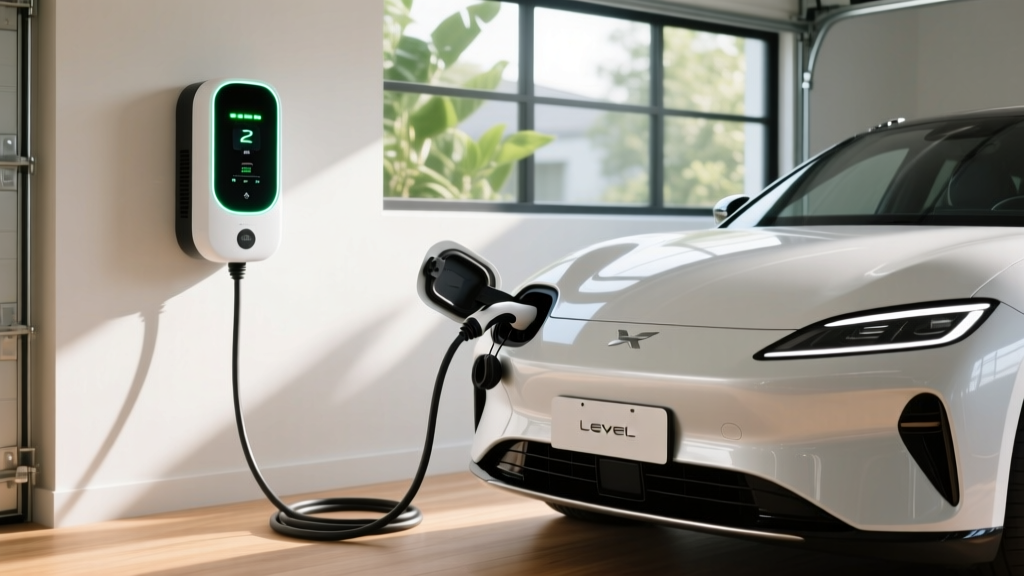
| Level 2 (high-power v6 class) | 240V / 48A | 11.5 kW | 33–42 mi/hr | Larger batteries (80–100 kWh), cold climates |
| Level 2 (max residential) | 240V / 80A | 19.2 kW | 55–70 mi/hr | Requires 100A circuit, rare homes |
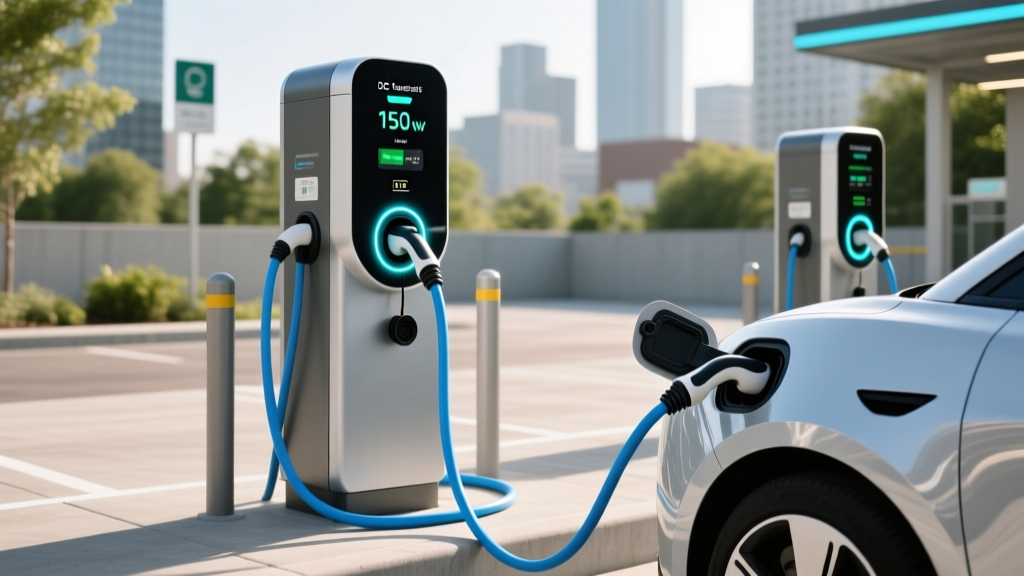
| DC Fast (CCS/NACS) | 400–800V DC | 50–350 kW peak | 150–250 mi in 15–20 min (10–80%) | Road trips, fleet top-ups |
Home Installation: Electrical Requirements, Panel Upgrades, and Cost
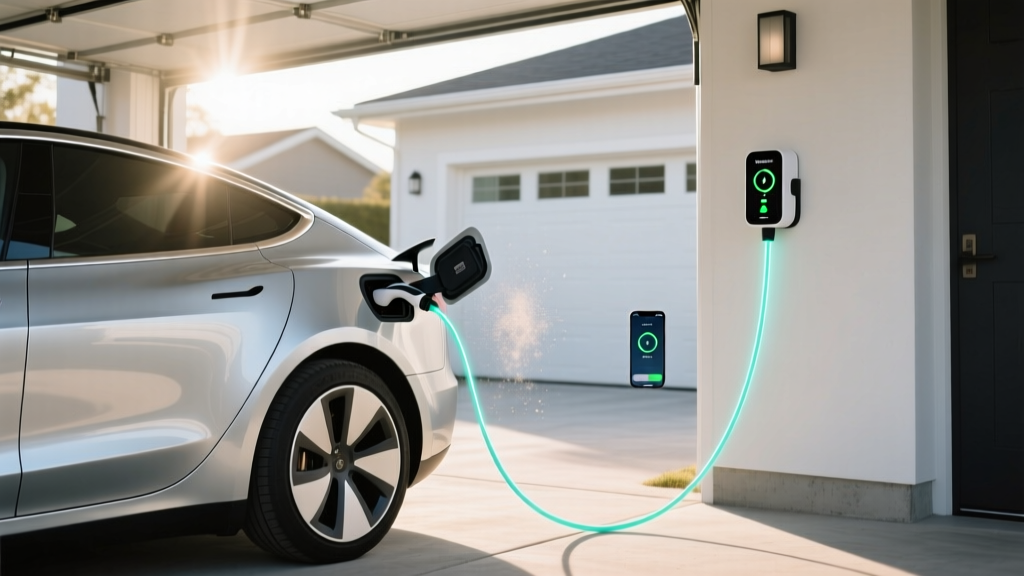
A 48A Level 2 charger — the sweet spot we call the "v6 class" for its six-tens-of-amps lineage — requires a dedicated 60A, 240V circuit per NEC 2023/2026 continuous-load rules (charger amperage cannot exceed 80% of breaker rating). If your main panel is 100A and already near capacity, an electrician may recommend a panel upgrade to 200A or a soft-load-management device like the Emporia Smart SPAN integration that sheds non-essential loads while the EV charges.
| Line Item | Low End | High End | Notes |
|---|---|---|---|
| Level 2 charger hardware (40–48A, NACS/CCS, 24ft cable) | $450 | $750 | Wi-Fi smart units trend higher |
| Electrician labor (run 6 AWG copper, 60A breaker, ~40 ft) | $600 | $1,800 | Conduit length and attic/crawlspace access drive variance |
| Permit + inspection | $75 | $250 | Varies by municipality |
| Panel upgrade (100A → 200A) if needed | $1,800 | $4,500 | Older homes often require this |
| Total (no panel upgrade) | $1,125 | $2,800 | — |
| Total (with panel upgrade) | $2,925 | $7,300 | — |
Before committing, check whether your utility offers a make-ready rebate — programs from PG&E, ConEd, Xcel, and others cover up to $1,000 of the wiring and breaker work. The federal Residential Clean Energy Credit no longer covers EV chargers after 2022 (the old 30C credit expired for most homeowners), though the 30C Alternative Fuel Infrastructure Tax Credit remains available through 2032 only for businesses and certain census-tract-qualified locations — confirm eligibility with a tax professional.
Connector Compatibility: NACS, CCS1, CHAdeMO, and Adapters
The 2026 connector landscape has consolidated heavily around the North American Charging Standard (NACS, J3400), which Ford, GM, Rivian, Volvo, Polestar, BMW, Hyundai/Kia, and most others now ship natively. CCS1 persists on older models and remains supported at Electrify America and many networks via built-in adapters. CHAdeMO is effectively legacy — only the Nissan Leaf and Mitsubishi Outlander PHEV still use it, and new CHAdeMO stalls are rare.
| Brand (2026 MY) | Native Connector | Adapter Needed For |
|---|---|---|
| Tesla (all) | NACS | CCS1 (rare legacy stations) |
| Ford (F-150 Lightning, Mustang Mach-E, Explorer EV) | NACS | None for Superchargers |
| GM (Equinox EV, Blazer EV, Silverado EV, Cadillac Lyriq) | NACS | None for Superchargers |
| Hyundai / Kia / Genesis (Ioniq 5/6/9, EV6/9, GV60/70) | NACS | CCS1 for older Electrify America stalls |
| Rivian R1T / R1S | NACS | None |
| BMW i4/i5/i7/iX, VW ID.4 (2026+) | NACS | None |
| Nissan Leaf (carryover) | CHAdeMO | CHAdeMO→CCS adapters not widely available; plan routes carefully |
For home Level 2, most 2026 wall units ship with NACS connectors; CCS-terminated cords are still available from ChargePoint and Emporia for legacy fleets. If you own a pre-2025 CCS vehicle and buy a NACS home charger, a ~$200 CCS→NACS adapter (e.g., Lectron, A2Z) solves it cleanly.
Cost to Charge Per Mile vs. Gasoline
The economics depend on the price per kWh and the vehicle's efficiency in kWh/100 miles. A 2026 Tesla Model Y Long Range averages ~26 kWh/100 mi (EPA combined); a Hyundai Ioniq 5 is ~30 kWh/100 mi; a Ford F-150 Lightning is ~48 kWh/100 mi. Compare against a 28 MPG gas crossover at $3.40/gal = $0.121/mi.
| Scenario | $/kWh | EV Cost/Mile | Gas Cost/Mile |
|---|---|---|---|
| Home off-peak (utility TOU rate) | $0.11 | $0.033 | $0.121 |
| Home flat rate (national avg) | $0.17 | $0.051 | $0.121 |
| Public Level 2 (ChargePoint, EVgo L2) | $0.32 | $0.096 | $0.121 |
| DC Fast (Electrify America, Tesla Supercharger) | $0.44 | $0.132 | $0.121 |
| DC Fast peak pricing (summer travel corridors) | $0.58 | $0.174 | $0.121 |
Takeaway: home-charged EVs beat gas by 3–4×. Public DC fast charging on peak pricing can exceed gas cost per mile — which is why home Level 2 ownership is the economic backbone of EV life. Data points cross-checked against fueleconomy.gov EPA ratings.
Charging Time Examples: 10–80% for Common Battery Sizes
Peak kW ratings are misleading because the charge curve tapers sharply above 80% SoC to limit lithium plating and heat. Sustained average power matters more than the headline number.
- 60 kWh pack (Chevrolet Equinox EV, base Model 3): 150 kW peak DCFC → 10–80% in ~24 min; 11.5 kW home Level 2 → 10–80% in ~4.2 hrs.
- 84 kWh pack (Ioniq 5 / EV6, 800V architecture): 240 kW peak sustained → 10–80% in ~18 min; 11.5 kW Level 2 → ~5.5 hrs.
- 100 kWh pack (F-150 Lightning Extended, Rivian R1T Max): 200 kW peak → 10–80% in ~34 min; 11.5 kW Level 2 → ~6.8 hrs.
- 115 kWh pack (Silverado EV, Hummer EV): 350 kW peak (800V) → 10–80% in ~28 min; 11.5 kW Level 2 → ~7.8 hrs (consider 19.2 kW unit if panel allows).
Equipment Recommendations: 2026 Level 2 Chargers Worth Buying
ChargePoint Home Flex (NACS or CCS, up to 50A)
- Power output: 12 kW @ 50A / 240V
- Cable: 24 ft, integrated holster
- Smart features: Wi-Fi, app scheduling, utility TOU integration, Alexa
- Price: ~$650 (NACS), ~$600 (CCS)
- Best for: Broad vehicle compatibility, utility demand-response programs
Tesla Wall Connector (Gen 4, NACS)
- Power output: 11.5 kW @ 48A / 240V
- Cable: 24 ft, glass-front design
- Smart features: Wi-Fi, OTA updates, Power-Share load balancing with Powerwall
- Price: ~$475
- Best for: Tesla and NACS-native Ford/GM/Rivian owners; best value
Emporia Vue Level 2 EV Charger (48A)
- Power output: 11.5 kW @ 48A / 240V
- Cable: 24 ft
- Smart features: Deep energy-monitoring integration with Emporia Vue panel, solar-aware charging
- Price: ~$400
- Best for: Solar homes, budget-conscious installers
Grizzl-E Smart (40A, rugged)
- Power output: 9.6 kW @ 40A / 240V
- Cable: 24 ft, -40°F rated, IP67 outdoor
- Smart features: OCPP, optional app
- Price: ~$550
- Best for: Cold-climate outdoor installs (Alaska, Minnesota, Maine)
Safety, Code, and Outdoor Considerations
Every Level 2 install must comply with NEC Article 625. Non-negotiables:
- Dedicated circuit: no shared loads on the EVSE breaker.
- GFCI protection: NEC 2023/2026 requires GFCI on 240V receptacles used for EV charging (hardwired units bypass this requirement, which is why most installers prefer hardwired).
- Outdoor rating: NEMA 4 or IP65 minimum for exterior installs; verify -20°F or lower operating spec in cold regions.
- Cable management: retractors or holsters prevent trip hazards and cord damage.
- Permit + inspection: skipping this voids homeowner's insurance coverage for electrical fires.
FAQ
How much does it cost to install a home EV charger?
Between $1,125 and $2,800 for a typical 48A Level 2 install on an existing 200A panel. Add $1,800–$4,500 if your home needs a panel upgrade from 100A to 200A. Utility make-ready rebates can offset $500–$1,000 of the wiring cost in many states.
How fast will each charging level add range?
Level 1 (120V): 3–5 miles/hour. Level 2 (240V, 48A): 33–42 miles/hour for efficient crossovers, 22–28 for trucks. DC fast (150–350 kW): 150–250 miles in 15–20 minutes from 10–80% SoC, depending on pack size and architecture.
Which connector/charger is compatible with my EV?
If your 2025-or-newer EV is a Tesla, Ford, GM, Rivian, Hyundai/Kia, BMW, or Volvo, it almost certainly uses NACS. Pre-2025 non-Tesla EVs typically use CCS1. Nissan Leaf uses CHAdeMO. Check your charge-port door or the fueleconomy.gov EV listings.
How much does charging cost per mile vs gas?
Home off-peak charging averages $0.03–$0.05 per mile vs. $0.12 for a 28 MPG gas car at $3.40/gal. Public DC fast charging on peak pricing can hit $0.15–$0.17/mi — occasionally more than gas. Home charging is where the savings live.
What electrical upgrades might I need?
Homes with a 100A main panel or those already running electric range, dryer, heat pump, and AC often need a 200A panel upgrade ($1,800–$4,500). Alternatives include a soft-load manager (SPAN panel, Emporia) or a lower-amperage 32A charger on a 40A circuit, which still adds ~22 miles/hour.
Does the 0–60 mph time of my EV affect charging speed?
No. A car's acceleration (0–60) and its charging rate (kW) are independent systems. A 3.1-second Model 3 Performance and a 6.9-second base Model 3 share similar charging hardware. What does affect charge speed: battery chemistry (LFP accepts charge differently than NMC), pack voltage (800V architectures sustain higher kW), thermal preconditioning, and ambient temperature.