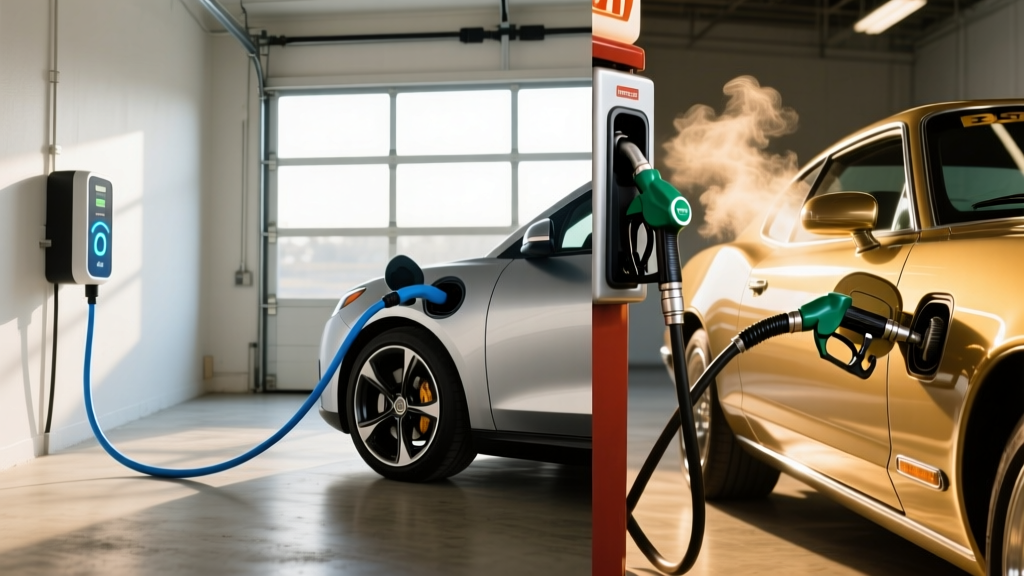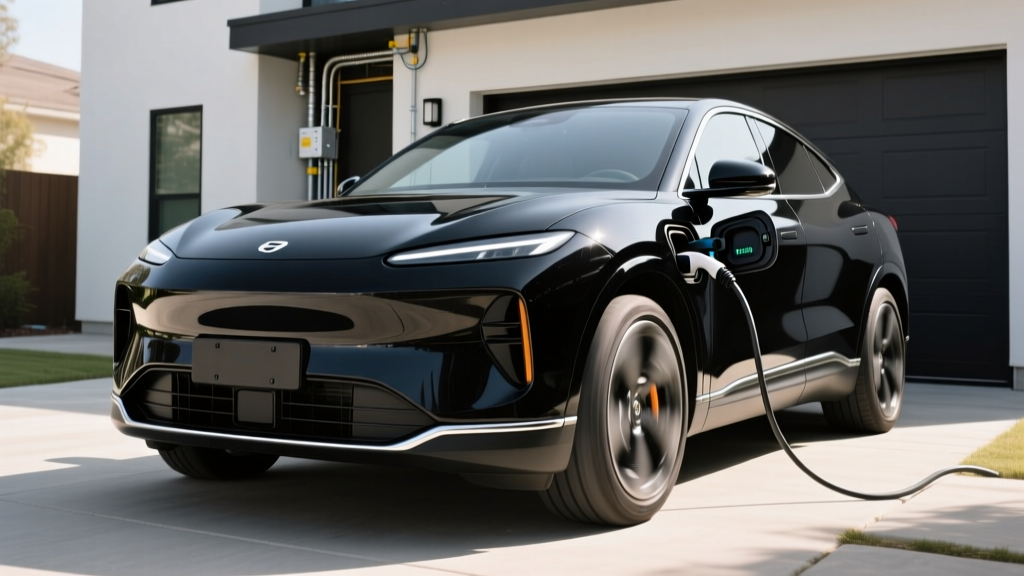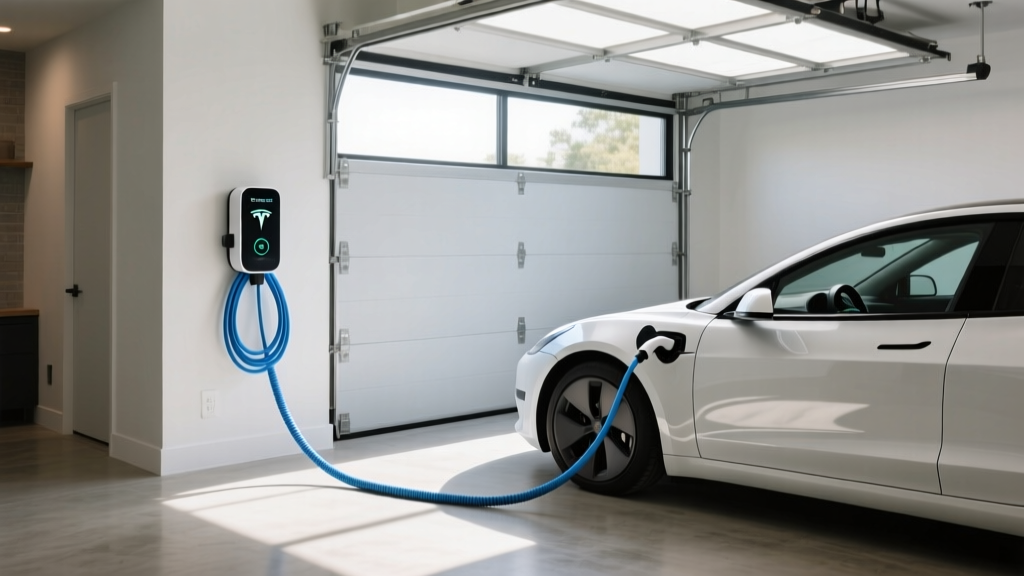
If you're transitioning to an electric vehicle and researching home charging solutions, you've likely encountered the ChargePoint residential charger lineup — specifically the ChargePoint Home Flex, which has become one of the most widely recommended Level 2 home charging stations on the market. But knowing the product name is only the beginning. The real questions are: What will installation actually cost? Will your electrical panel handle it? How fast will it charge your specific EV? And is ChargePoint still the best option compared to competitors in 2026?
This guide breaks down everything a prospective EV owner needs to know about setting up a ChargePoint Home Flex (or comparable Level 2 charger) at home, with exact numbers for costs, speeds, electrical requirements, and long-term ownership economics.
Understanding Charging Levels: What Speed Are We Talking About?
Before evaluating any specific charger, you need to understand the three charging tiers available to EV owners. The distinction between kW (kilowatts — a measure of power, or how fast energy flows) and kWh (kilowatt-hours — a measure of energy capacity, like gallons in a tank) is the single most important concept in EV ownership. Your charger's kW rating determines how quickly it can push energy into your battery's kWh capacity.
| Level | Voltage | Power (kW) | Miles of Range Added Per Hour | Typical Use Case |
|---|---|---|---|---|
| Level 1 | 120V AC | 1.0–1.4 kW | 3–5 miles/hr | Overnight trickle; PHEVs; emergency backup |
| Level 2 | 240V AC | 3.3–19.2 kW | 12–75 miles/hr | Primary home charging; workplace; public destinations |
| DC Fast Charge | 400–800V DC | 50–350 kW | 150–1,000+ miles/hr (peak) | Road trips; highway corridors; 10–80% in 15–30 min |
For daily driving, Level 2 is where the vast majority of EV charging happens. A ChargePoint Home Flex configured for 48 amps delivers up to 11.5 kW on a 240V circuit — enough to add roughly 37–45 miles of range per hour of charging, depending on your vehicle's efficiency. For a typical 75 kWh battery (like the one in a Tesla Model Y or Hyundai Ioniq 5), that means a full charge from 10% to 100% in roughly 7–8 hours, or a 10%–80% session in about 5 hours.
ChargePoint Home Flex: Specs, Features, and 2026 Pricing
The ChargePoint Home Flex (model CPH45) remains ChargePoint's flagship residential unit. It's a flexible amperage charger, meaning you can configure it from 16A up to 50A at installation, matching your available circuit capacity. Here's what you're working with:
- Max power output: 11.5 kW (at 48A / 240V)
- Amperage range: 16A to 50A, configurable via DIP switches at install
- Cable length: 23 feet (standard); sufficient for most garage and driveway setups
- Connector: J1772 (standard for non-Tesla EVs); NACS (Tesla) adapter included in 2025+ units, or available separately for ~$50
- Smart features: Wi-Fi connected, ChargePoint app scheduling, Alexa/Google Home integration, energy usage tracking, utility demand-response compatibility
- Indoor/outdoor rating: NEMA 4 rated — suitable for outdoor installation in rain, snow, and dust
- Warranty: 3 years
- MSRP (2026): Approximately $549–$599 (unit only, before installation)
The Home Flex competes directly with the Tesla Wall Connector ($475, up to 11.5 kW, NACS native), the Emporia Level 2 Smart Charger ($399, up to 48A), and the Enel X JuiceBox (discontinued in the U.S. market as of late 2024). For most buyers, the Home Flex remains a strong choice because of its flexible amperage configuration — you can install it on a 20A circuit today and reconfigure it later if you upgrade your panel.
Home Installation: Electrical Requirements and Real Costs
This is where most EV buyers underestimate complexity. Installing a ChargePoint residential charger isn't just plugging something in — it requires a dedicated 240V circuit run from your electrical panel, and costs vary enormously based on your home's existing infrastructure.
Electrical Requirements
To run the Home Flex at its maximum 48A output, you need a 60-amp dedicated circuit (National Electrical Code requires circuits to be rated at 125% of the continuous load, so 48A continuous draw requires a 60A breaker). If your panel doesn't have capacity for a 60A breaker, you can configure the Home Flex to 32A (requiring a 40A breaker) or even 16A (20A breaker), which still delivers a useful 3.8–7.7 kW.
Key considerations your licensed electrician will evaluate:
- Panel capacity: Most modern homes have 200A service panels. If your panel is already near capacity (common with electric heat, A/C, electric dryer, and electric oven), you may need a panel upgrade to 200A or even 400A — or a smart load-management device like the Span panel or a ChargePoint load-sharing module.
- Wire gauge: 6 AWG copper for 48A/60A circuits; 8 AWG for 32A/40A circuits. Longer wire runs (over 50 feet from panel to charger) increase material cost.
- GFCI protection: NEC 2020 and later require GFCI protection for EV charging outlets. If you're hardwiring the Home Flex (recommended for outdoor installs and for maximizing amperage), the unit has built-in ground fault protection.
- Permit: Most jurisdictions require an electrical permit for a new 240V circuit. Your electrician typically pulls this, and it triggers an inspection after installation.
| Scenario | Equipment | Electrician Labor | Permit | Panel Upgrade | Total Estimated Cost |
|---|---|---|---|---|---|
| Simple install (panel has capacity, charger within 20 ft, hardwired) | $549–$599 | $400–$800 | $50–$150 | None needed | $1,000–$1,550 |
| Moderate install (longer wire run 40–60 ft, conduit needed) | $549–$599 | $800–$1,500 | $50–$200 | None needed | $1,400–$2,300 |
| Complex install (panel at capacity, requires 200A upgrade) | $549–$599 | $1,200–$2,500 | $100–$300 | $1,500–$4,000 | $3,350–$7,400 |
| NEMA 14-50 outlet install (plug-in, 40A circuit max for plug-in) | $549–$599 | $500–$1,200 | $50–$150 | None needed | $1,100–$1,950 |
Connector Compatibility: Will It Work With Your EV?
The EV charging connector landscape has shifted dramatically since 2023, when Ford and GM announced adoption of the NACS (North American Charging Standard) — essentially the Tesla connector. As of 2026, most new EVs sold in North America ship with NACS charge ports, while CCS1 (Combined Charging System) remains on models from Stellantis, VW Group, and Hyundai/Kia (though Hyundai has announced NACS adoption for 2026+ models).
| Connector | Brands Using It | ChargePoint Home Flex Compatibility |
|---|---|---|
| NACS (Tesla standard) | Tesla, Ford, GM, Rivian, Volvo, Polestar, Mercedes-Benz (2025+), Fisker | Native on 2025+ Home Flex units; adapter available for older units |
| J1772 (Level 2 AC) | All non-Tesla EVs for AC Level 2 charging | Native connector on Home Flex — universal for Level 2 |
| CCS1 | Hyundai, Kia, Stellantis, VW, BMW (some models) | J1772 is the AC portion of CCS1 — fully compatible for home charging |
| CHAdeMO | Nissan LEAF (legacy); discontinued on new models post-2025 | Compatible via J1772-to-CHAdeMO adapter (rare; ~$200) |
For home Level 2 charging, the connector situation is simpler than it appears. The J1772 connector on the ChargePoint Home Flex works with every EV sold in North America for AC Level 2 charging — either natively or via the J1772-to-NACS adapter that ships with every Tesla and is available from Ford, GM, and Rivian. The CCS1 and NACS distinction primarily matters for DC fast charging on road trips, not for your home garage.
Cost to Charge: Home Electricity vs. Gas vs. Public Charging
One of the strongest economic arguments for home charging is cost. Let's run the numbers using 2026 average electricity and gasoline prices.
| Scenario | Rate | Vehicle Efficiency | Cost Per Mile | Annual Cost (12,000 mi) |
|---|---|---|---|---|
| Home (national avg. off-peak) | $0.13/kWh | 3.5 mi/kWh (285 Wh/mi) | $0.037 | $444 |
| Home (California TOU off-peak) | $0.18/kWh | 3.5 mi/kWh | $0.051 | $612 |
| Home (utility EV plan, super off-peak) | $0.07/kWh | 3.5 mi/kWh | $0.020 | $240 |
| Public Level 2 (ChargePoint network avg.) | $0.30/kWh | 3.5 mi/kWh | $0.086 | $1,032 |
| DC Fast Charge (Electrify America avg.) | $0.48/kWh | 3.5 mi/kWh | $0.137 | $1,644 |
| Gasoline vehicle (28 MPG combined) | $3.35/gal | 28 mi/gal | $0.120 | $1,440 |
| Gasoline vehicle (22 MPG combined, truck/SUV) | $3.35/gal | 22 mi/gal | $0.152 | $1,824 |
The takeaway is clear: home charging at off-peak rates costs 60–75% less per mile than gasoline, and roughly 55–70% less than public DC fast charging. The economics shift if you rely exclusively on public DC fast chargers — at $0.48/kWh, you're paying slightly more than a 28 MPG gas car. This is why home charging access is the single biggest factor in EV ownership satisfaction and total cost of ownership.
Many utilities now offer dedicated EV time-of-use (TOU) rates. Check fueleconomy.gov for your specific vehicle's kWh/100mi efficiency rating, then cross-reference with your utility's rate schedule to calculate your actual cost.
Equipment Comparison: Home Flex vs. the Competition
The ChargePoint Home Flex isn't the only game in town. Here's how it stacks up against the most common alternatives for a residential Level 2 installation:
ChargePoint Home Flex (CPH45)
- Max output: 11.5 kW (48A)
- Connector: J1772 (NACS adapter available)
- Cable: 23 ft
- Smart features: App scheduling, energy tracking, Alexa, utility DR
- Price: ~$549–$599
- Best for: Buyers wanting flexible amperage and robust app ecosystem
Tesla Wall Connector (Gen 3)
- Max output: 11.5 kW (48A)
- Connector: NACS native (J1772 adapter available)
- Cable: 24 ft
- Smart features: Wi-Fi, OTA updates, power sharing between units, Tesla app
- Price: $475
- Best for: Tesla owners and multi-EV households (power sharing)
Emporia Vue Level 2 Smart Charger
- Max output: 11.5 kW (48A)
- Connector: J1772
- Cable: 24 ft
- Smart features: App, solar integration, energy monitoring, load management
- Price: ~$399
- Best for: Budget-conscious buyers; solar-panel households
Grizzl-E Smart
- Max output: 10 kW (40A)
- Connector: J1772
- Cable: 24 ft
- Smart features: OCPP-compatible, basic app, works with multiple networks
- Price: ~$449
- Best for: Cold-climate durability (rated to -40°F); Canadian-built
For most buyers, the decision comes down to whether you drive a Tesla/NACS vehicle or a J1772/CCS vehicle. Tesla owners get the cleanest experience with the Wall Connector. Everyone else is well-served by the Home Flex or Emporia. The Grizzl-E is the pick for extreme cold climates where cable flexibility and unit durability matter.
Safety, Code Compliance, and Installation Best Practices
EV chargers draw significant continuous current — more than most household appliances. Proper installation isn't optional; it's a fire-safety issue. Here's what the National Electrical Code (NEC) and best-practice standards require:
- Dedicated circuit: Your EV charger must be on its own dedicated breaker — no sharing with other outlets or appliances.
- Hardwired vs. plug-in: Hardwired installations allow higher amperage (up to 48A on a 60A breaker). Plug-in via NEMA 14-50 limits you to 40A continuous (on a 50A breaker) and may require a GFCI breaker, which adds $50–$100 and can cause nuisance tripping with some chargers.
- Outdoor rating: If installing outside, ensure the unit is NEMA 4 rated (the Home Flex is). The electrical junction box and conduit must also be weather-rated.
- Grounding: Proper equipment grounding is mandatory. Your electrician will verify ground impedance.
- Permit and inspection: Required in virtually all U.S. jurisdictions. The inspection ensures wire gauge, breaker size, and grounding meet code. Skipping the permit risks insurance claim denial in the event of an electrical fire.
- Load management: If your panel is near capacity but you want to avoid an expensive upgrade, consider a smart load-management system like the Sense Energy Monitor or Span smart panel, which dynamically reduces charger amperage when other loads are high.
Federal Tax Credit and Utility Rebates for Home Chargers
The federal Alternative Fuel Vehicle Refueling Property Credit (IRS Form 8911) was reinstated under the Inflation Reduction Act and covers up to 30% of home EV charger equipment and installation costs, capped at $1,000. However, eligibility is restricted to residents in census tracts classified as non-urban or low-income communities. Check your eligibility at the IRS credit page before assuming you qualify.
Many utilities and state energy offices offer additional rebates — typically $200–$500 for the charger unit and sometimes covering partial installation costs. California's SGIP program, New York's Charge Ready NY, and Colorado's various utility rebates are among the most generous. Always check your local utility's EV programs page before purchasing.
Frequently Asked Questions
How much does it cost to install a ChargePoint residential charger?
For a straightforward installation where your electrical panel has available capacity and the charger is within 20 feet of the panel, expect to pay $1,000–$1,550 total (including the $549–$599 Home Flex unit, $400–$800 in electrician labor, and $50–$150 for a permit). If your panel needs an upgrade to 200A service, total costs can reach $3,350–$7,400. Always get a load calculation and itemized quote from a licensed electrician before committing.
How fast will the ChargePoint Home Flex charge my EV?
At its maximum 48A / 11.5 kW output, the Home Flex adds roughly 37–45 miles of range per hour, depending on your vehicle's efficiency. A 75 kWh battery (Tesla Model Y, Hyundai Ioniq 5) charges from 10% to 80% in approximately 5 hours. A larger 100 kWh battery (Ford F-150 Lightning extended range, Rivian R1T) takes about 6.5 hours for the same 10%–80% session. Your EV's onboard charger limit may cap the actual speed — if your vehicle accepts only 7.7 kW AC, that's your ceiling regardless of the charger.
Which connector do I need for my EV?
For home Level 2 charging, the J1772 connector on the ChargePoint Home Flex is compatible with every EV sold in North America. Tesla, Ford, GM, and Rivian vehicles with NACS ports use the J1772-to-NACS adapter (included with the vehicle or available for ~$50). For CCS vehicles (Hyundai, Kia, VW, BMW), the J1772 connector plugs directly into the AC portion of the CCS port. CHAdeMO vehicles (older Nissan LEAF) require a specialty adapter.
How much does home charging cost per mile compared to gasoline?
At the U.S. national average residential electricity rate of ~$0.16/kWh and a typical EV efficiency of 3.5 miles per kWh, home charging costs approximately $0.046 per mile. A comparable gasoline vehicle at 28 MPG and $3.35 per gallon costs $0.120 per mile — roughly 2.6× more. If your utility offers an EV-specific off-peak rate of $0.07/kWh, your cost drops to $0.020 per mile, making gasoline about 6× more expensive per mile.
What electrical upgrades might I need for a home EV charger?
The most common upgrade is ensuring your electrical panel has capacity for a new 40A–60A breaker. Homes with 100A or 150A panels that already run electric heat, dryer, and range may need a panel upgrade to 200A ($1,500–$4,000). Older homes may also need aluminum-to-copper wire replacement, a new meter base, or utility service line upgrades. A licensed electrician can perform a load calculation to determine exactly what's needed. If a panel upgrade is cost-prohibitive, you can configure the Home Flex at a lower amperage (16A or 24A) on an existing circuit — it'll charge slower, but still cover most daily driving needs overnight.