Why a ChargePoint Level 2 Home Charger Changes Your Daily EV Routine
If you own an electric vehicle and still rely on the factory-included Level 1 cord plugged into a standard 120V outlet, you're leaving time—and range—on the table. The ChargePoint Level 2 home charger lineup, specifically the ChargePoint Home Flex (2nd Gen), delivers up to 12 kW of power on a 240V circuit, adding roughly 37 miles of range per hour. That transforms overnight charging from a trickle into a full replenishment for nearly every EV on the road.
This guide walks through the exact speeds, electrical requirements, installation costs, and connector compatibility you need to evaluate before buying. We'll also compare real charging costs against gasoline so you can see the true economics of home Level 2 charging.
kW (kilowatts) measures power—how fast energy flows into your battery. kWh (kilowatt-hours) measures energy—the total capacity stored in your battery. A ChargePoint Home Flex delivers up to 12 kW of power. If your EV has a 75 kWh battery, charging at a sustained 12 kW would take roughly 6.25 hours from empty to full. Peak rated power is rarely sustained across the entire session due to charge-curve tapering above ~80% state of charge.
Charging Levels Explained: Speeds in kW and Miles Added Per Hour
Understanding the three charging tiers is essential before evaluating any home equipment. Here's how they break down in real-world terms:
| Level | Voltage | Max Power (kW) | Miles of Range Added Per Hour | Typical Use Case |
|---|---|---|---|---|
| Level 1 | 120V AC | 1.4 kW | 3–5 miles | Emergency / PHEV overnight |
| Level 2 | 240V AC | 7.2–19.2 kW | 20–60+ miles | Home daily charging |
| DC Fast | 400–800V DC | 50–350 kW | 150–1,200+ miles (peak) | Road trips, public stations |
Most EVs accept between 7.2 kW and 11.5 kW on Level 2 AC, limited by the vehicle's onboard charger—not the wall unit. The ChargePoint Home Flex outputs up to 12 kW (50 amps on a 60-amp dedicated circuit), which covers the maximum AC acceptance rate of vehicles like the Tesla Model Y (11.5 kW), Ford F-150 Lightning (up to 19.2 kW with extended-range battery and 80A charger), and Hyundai Ioniq 5 (10.9 kW).
DC fast charging operates on an entirely different architecture, bypassing the onboard charger to deliver direct current to the battery at far higher power levels. Home Level 2 units cannot replicate this, nor should they—DC fast charging is designed for road-trip replenishment, not daily use, and frequent DC sessions can accelerate battery degradation over time.
ChargePoint Home Flex: Power Output, Features, and Price
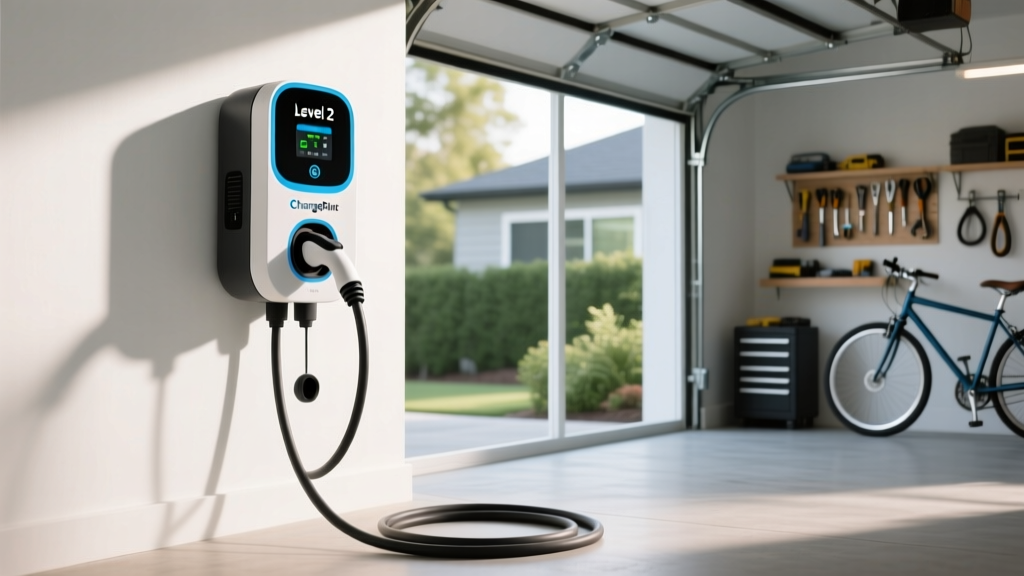
The ChargePoint Home Flex (2nd Generation) is the brand's flagship residential unit, and it remains one of the most versatile Level 2 chargers available. Here's what the hardware delivers:
ChargePoint Home Flex (2nd Gen)
- Max Power Output: 12 kW (50A) on a 60A circuit; configurable down to 16A (3.8 kW) for panel-limited homes
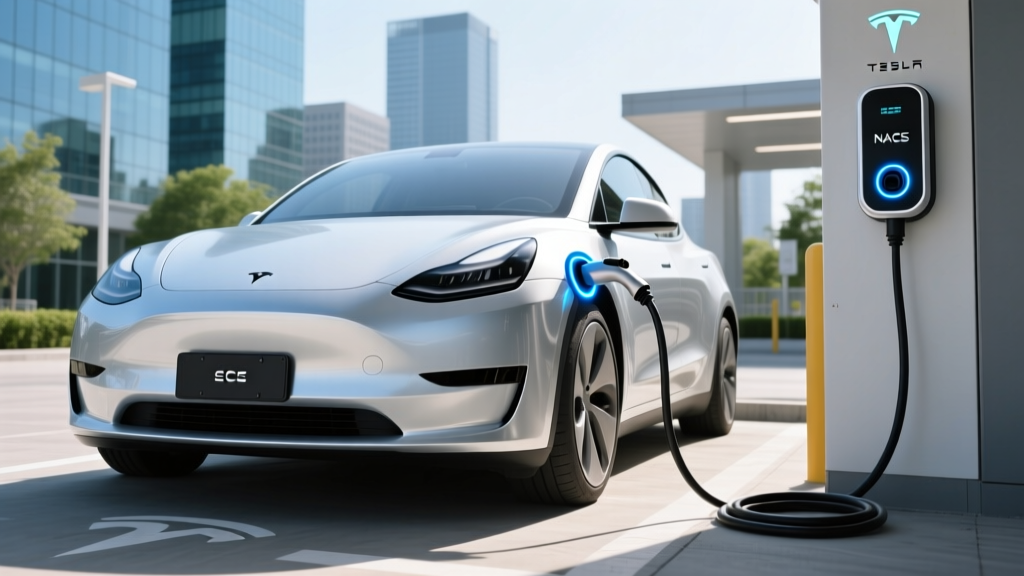
- Connector: J1772 (NACS adapter included for Tesla vehicles as of late 2024+ production)
- Cable Length: 23 feet
- Smart Features: Wi-Fi connected, ChargePoint app scheduling, Alexa integration, energy-use tracking, off-peak rate optimization
- Indoor/Outdoor: NEMA 4 rated (suitable for outdoor installation)
- Hardwired or Plug: Available in NEMA 14-50 plug-in or hardwired configuration
- Price: ~$549–$699 depending on configuration and retailer
- Warranty: 3 years
Alternative: ChargePoint Home Flex with NACS (Native)
- Max Power Output: 12 kW (50A)
- Connector: Native NACS (Tesla connector) — no adapter needed for 2025+ Tesla and NACS-equipped Ford, GM, Rivian, Hyundai, Kia models
- Cable Length: 23 feet
- Smart Features: Identical to J1772 version
- Price: ~$599–$699
- Warranty: 3 years
The amperage configurability is a genuine advantage. If your electrical panel can't support a 60-amp dedicated circuit, an electrician can set the Home Flex to 40A (9.6 kW), 32A (7.7 kW), or even 16A via DIP switches inside the unit—no replacement hardware needed. This flexibility makes it viable for older homes with 100-amp service panels.
Installation Cost: Equipment, Electrician, Permits, and Panel Upgrades
The hardware price is only part of the equation. Professional installation costs vary significantly based on your home's electrical infrastructure, the distance from your panel to the charger location, and local permit fees.
| Component | Cost Range | Notes |
|---|---|---|
| ChargePoint Home Flex (unit) | $549–$699 | J1772 or native NACS configuration |
| Electrician labor (standard install) | $400–$1,200 | Assumes panel within 40 ft of garage; longer runs cost more |
| Permit and inspection | $50–$300 | Varies by municipality; some jurisdictions waive for EV chargers |
| Electrical panel upgrade (if needed) | $1,500–$3,500 | Required if existing panel lacks capacity for a 60A circuit |
| Total (no panel upgrade) | $1,000–$2,200 | Most common scenario for homes with 200A service |
| Total (with panel upgrade) | $2,500–$5,700 | Common in pre-1990 homes with 100A panels |
Panel upgrade reality check: If your home has a 100-amp main panel that's already near capacity (running electric range, dryer, HVAC, and water heater), adding a 60-amp dedicated circuit for the charger may require upgrading to a 200-amp panel. This is the single largest cost variable in EV home-charging installation. An electrician will perform a load calculation per NEC Article 220 to determine whether your panel can handle the additional draw.
The IRS Residential Clean Energy Credit (§25D) covers 30% of home EV charger equipment and installation costs, up to $1,000, for equipment placed in service. This credit applies through 2032. Note that this is separate from the §30D vehicle purchase credit. Consult a tax professional to confirm your eligibility based on your specific tax situation.
Connector Compatibility: Will It Work with Your EV?
The North American charging connector landscape has shifted dramatically since 2024, when Ford, GM, Rivian, and most other automakers adopted Tesla's NACS (North American Charging Standard) connector, phasing out CCS1. Here's where things stand for the current model year:
| Connector Type | Vehicles Using It (Current) | ChargePoint Home Flex Compatibility |
|---|---|---|
| NACS (Tesla connector) | Tesla (all models), Ford (2025+), GM (2025+), Rivian, Hyundai/Kia (2025+), Volvo/Polestar | Native NACS model available; J1772 model works with included adapter |
| J1772 (legacy standard) | Older Nissan Leaf, pre-2025 BMW i4/iX, some PHEVs | Direct plug on J1772 model |
| CCS1 (Combo) | Largely phased out for new vehicles; some 2023–2024 models still in circulation | J1772 portion plugs in directly (CCS adds DC pins not used in Level 2) |
| CHAdeMO | Nissan Leaf (legacy DC only) — not used for Level 2 AC | N/A — Level 2 AC uses J1772 inlet on Leaf |
For the vast majority of buyers purchasing a new EV in 2026, the NACS connector is the standard. ChargePoint now sells the Home Flex with a native NACS cable, eliminating the need for an adapter. If you buy the J1772 version, ChargePoint includes a NACS adapter in the box for Tesla and NACS-equipped vehicles.
Charging Time Examples: How Long Does a Full Session Take?
Real charging times depend on your EV's battery capacity (measured in kWh), its onboard charger acceptance rate, and the circuit amperage your electrician configures. Here are representative examples using the ChargePoint Home Flex at its maximum 12 kW (50A) output:
| Vehicle | Battery Capacity (usable) | Onboard Charger Max | 10–80% Time at 12 kW | Miles Added Per Hour |
|---|---|---|---|---|
| Tesla Model Y Long Range | 75 kWh (NMC) | 11.5 kW | ~4 hours 30 min | ~35 miles |
| Hyundai Ioniq 5 (Long Range) | 77.4 kWh (NMC) | 10.9 kW | ~5 hours | ~34 miles |
| Ford F-150 Lightning (Extended) | 131 kWh (NMC) | 19.2 kW | ~7 hours 45 min | ~33 miles |
| Chevrolet Equinox EV | 85 kWh (NMC) | 11.5 kW | ~5 hours | ~32 miles |
| Toyota RAV4 Prime (PHEV) | 18.1 kWh (NMC) | 6.6 kW | ~1 hour 50 min | ~25 miles (EV range) |
These times assume a sustained peak rate, which holds fairly well on Level 2 AC charging (unlike DC fast charging, where the curve tapers significantly above 80% SoC). AC Level 2 charging maintains a relatively flat power delivery until the battery management system initiates cell balancing near the top of the charge, typically above 90%.
Cost Per Mile: Home Charging vs Gasoline
The economic case for home Level 2 charging is where EV ownership makes the most compelling financial argument. Electricity rates vary by region and time of use, so here are three realistic scenarios:
| Scenario | Rate ($/kWh) | Vehicle Efficiency | Cost Per Mile | Equivalent Gas Price (at 30 MPG) |
|---|---|---|---|---|
| Home off-peak (utility TOU rate) | $0.08–$0.12 | 3.5 mi/kWh (120 MPGe) | $0.023–$0.034 | $0.69–$1.02/gallon |
| Home standard rate (no TOU) | $0.14–$0.18 | 3.5 mi/kWh | $0.040–$0.051 | $1.20–$1.53/gallon |
| Public DC fast (Electrify America, EVgo) | $0.35–$0.55 | 3.0 mi/kWh (highway) | $0.117–$0.183 | $3.51–$5.49/gallon |
| Gasoline (US average, 2026) | — | 30 MPG combined | $0.107–$0.127 | $3.20–$3.80/gallon |
Source: Average efficiency figures from fueleconomy.gov (EPA). Electricity rates based on EIA regional averages and common utility time-of-use plans.
The takeaway: charging at home on an off-peak rate costs roughly one-quarter to one-third what you'd spend on gasoline per mile. Even on a standard residential rate without time-of-use optimization, home charging still undercuts gas by 50–60%. Public DC fast charging, however, can equal or exceed gasoline costs—reinforcing the value of a home Level 2 setup as your primary charging strategy.
Electrical Requirements, Safety, and Code Considerations
A Level 2 home charger is a significant continuous electrical load. The National Electrical Code (NEC) treats EV charging as a continuous load, meaning the circuit must be rated for 125% of the charger's maximum draw. For the ChargePoint Home Flex at 50 amps, that requires a 60-amp dedicated circuit with appropriately sized wire (typically 6 AWG copper for runs under 50 feet, 4 AWG for longer runs).
- Dedicated circuit: The charger must have its own breaker—not shared with any other appliance or outlet.
- GFCI protection: NEC 2020 and later requires GFCI protection for all EV charging outlets. Hardwired installations may have different GFCI requirements depending on jurisdiction. The ChargePoint Home Flex has built-in ground-fault protection (CCID 20) for hardwired installations.
- Outdoor rating: If installing outside or in an unenclosed carport, the unit must carry a NEMA 4 rating (the Home Flex does).
- Permit and inspection: Nearly all jurisdictions require an electrical permit and post-installation inspection. Skipping this can void your homeowner's insurance coverage for electrical fires.
- Load calculation: Your electrician must verify that your panel's total calculated load, including the charger, does not exceed 80% of the panel's main breaker rating (per NEC Article 220).
If your garage outlet is a NEMA 14-50 (commonly installed for electric ranges or RV hookups), you can opt for the plug-in version of the Home Flex. However, many electricians recommend hardwiring for a cleaner installation, eliminating the failure point of a receptacle and reducing the risk of overheating at the plug connection under sustained high-current draw.
Frequently Asked Questions
How much does it cost to install a ChargePoint Level 2 home charger?
Expect $1,000–$2,200 total for a standard installation (unit + electrician + permit) when your electrical panel has sufficient capacity. If your home requires a panel upgrade from 100A to 200A service, the total can reach $2,500–$5,700. The federal §25D Residential Clean Energy Credit covers 30% of equipment and installation, up to $1,000.
How fast will the ChargePoint Home Flex add range?
At its maximum 12 kW output (50A on a 60A circuit), the Home Flex adds approximately 30–37 miles of range per hour depending on your vehicle's efficiency. A Tesla Model Y gains about 35 miles per hour; a less efficient Ford F-150 Lightning gains about 33 miles per hour. Actual speed is capped by your EV's onboard charger acceptance rate.
Which connector do I need — NACS or J1772?
For any new EV purchased in 2025 or later, NACS is almost certainly the correct connector (Tesla, Ford, GM, Hyundai, Kia, Rivian, Volvo, and others have adopted it). If you drive an older EV with a J1772 inlet, the J1772 version of the Home Flex plugs in directly. ChargePoint includes adapters in the box for cross-compatibility.
How much does home charging cost per mile compared to gasoline?
On a typical off-peak residential electricity rate of $0.10/kWh, an EV averaging 3.5 miles per kWh costs roughly $0.029 per mile—equivalent to paying about $0.87 per gallon of gasoline in a 30 MPG vehicle. Even at a standard rate of $0.16/kWh, you're paying the equivalent of ~$1.37/gallon. Gasoline at the 2026 national average of ~$3.40/gallon costs roughly $0.113/mile.
What electrical upgrades might I need for a 60-amp circuit?
The most common upgrade is a panel replacement if your home has a 100-amp main service that's already near capacity. This costs $1,500–$3,500 depending on your region and the complexity of the service entrance. If you have a 200-amp panel with available headroom, no panel upgrade is needed. Your electrician will perform a NEC Article 220 load calculation to determine this before installation.
Can I install the ChargePoint Home Flex outdoors?
Yes. The Home Flex carries a NEMA 4 rating, meaning it's sealed against rain, snow, dust, and splashing water. It's rated for outdoor installation in all US climates. Ensure your electrician uses weatherproof conduit and fittings for the circuit run.
Does the ChargePoint Home Flex work with solar panels?
The Home Flex itself doesn't integrate directly with solar inverters for real-time solar-only charging. However, you can use the ChargePoint app to schedule charging during peak solar production hours (typically 10 AM–3 PM) to maximize the use of your self-generated electricity. Some third-party energy management systems (like Span smart panels) offer more granular solar-aware charging integration.
Editorial note: Installation costs and electrical codes vary by jurisdiction. Always hire a licensed electrician and obtain required permits. Tax credit eligibility depends on individual circumstances—consult a tax professional and review current rules at irs.gov.