If you have narrowed your home charging search to the ChargePoint Home Flex, you are looking at one of the most widely recommended Level 2 wall connectors on the market. But the hardware price tag is only part of the equation. A proper 240V installation, your home's electrical panel capacity, connector compatibility with your specific EV, and local electricity rates all shape the real cost and performance you will experience.
This guide breaks down the ChargePoint Home Flex (and its 2026 lineup siblings) with exact numbers: kilowatt output, miles of range added per hour, installation cost ranges, and the electrical upgrades your home might require. We will also compare it against competing Level 2 chargers so you can decide whether ChargePoint is the right fit for your garage or driveway.
Understanding Charging Levels: How Fast Will Each Add Range?
Before evaluating any home charger, you need to understand the three EV charging tiers and what each delivers in practical terms. Power is measured in kW (kilowatts) — the rate of energy delivery — while your battery stores energy in kWh (kilowatt-hours). Confusing these two is the single most common EV mistake. Think of kW as how fast water flows from a hose, and kWh as how much water fills the bucket.
| Level | Voltage | Power (kW) | Miles of Range per Hour | Typical Use Case |
|---|---|---|---|---|
| Level 1 | 120V AC | 1.2–1.9 kW | 3–5 mi/hr | Overnight trickle; PHEVs or low-mileage commutes |
| Level 2 | 240V AC | 3.3–19.2 kW | 12–75 mi/hr | Home daily charging; workplace; public destinations |
| DC Fast | 400–800V DC | 50–350 kW | 150–1,200+ mi/hr | Road trips; highway corridors; 10–80% in 15–30 min |
For most EV owners, Level 2 is the daily workhorse. A ChargePoint Home Flex configured at 48 amps on a 60-amp dedicated circuit delivers up to 11.5 kW, adding roughly 35–45 miles of range per hour depending on your vehicle's efficiency. That means an 80 kWh battery (like a Tesla Model Y Long Range or Ford Mustang Mach-E Extended Range) can go from 10% to 80% in approximately 5–6 hours — easily covered by an overnight session.
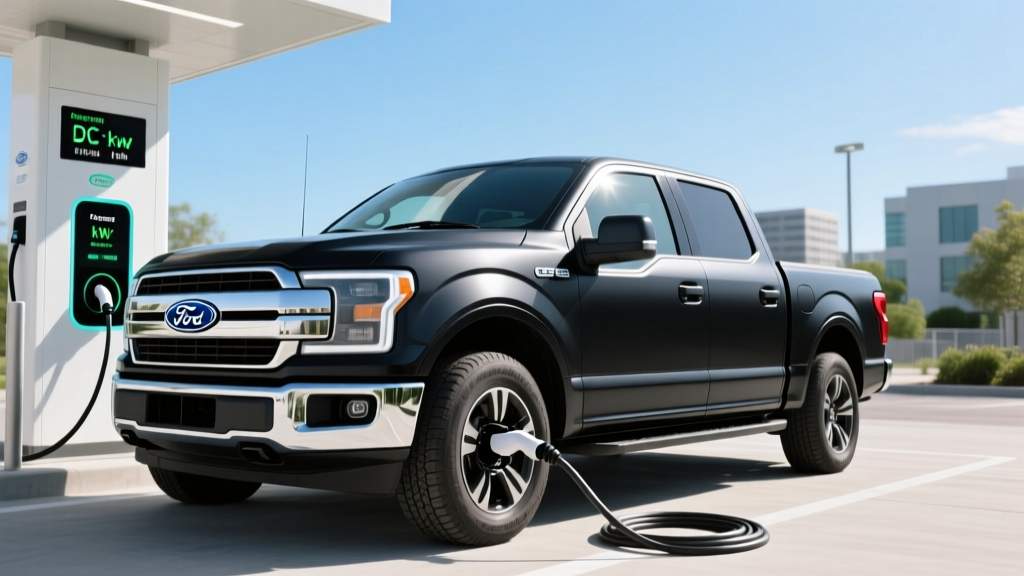
DC fast charging is what you use on road trips. Networks like Tesla Supercharger, Electrify America, and EVgo deliver 150–350 kW, but charging speed tapers significantly above 80% State of Charge (SoC) to protect battery health. A typical DC fast charge session targets 10–80% and takes 18–30 minutes depending on the vehicle's peak charge rate and battery preconditioning.
ChargePoint Home Flex: Specs, Features, and Real-World Performance
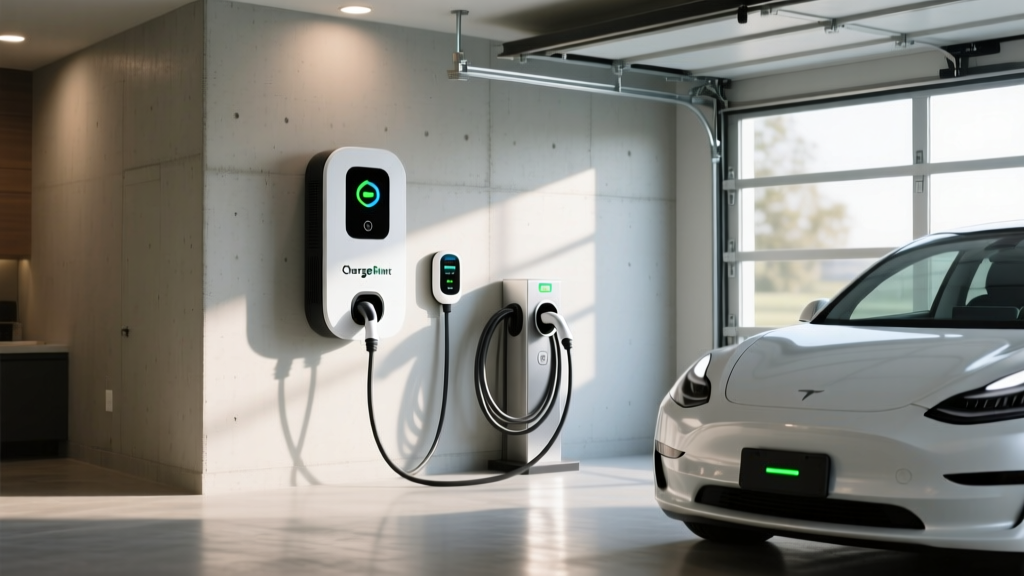
The ChargePoint Home Flex remains the company's flagship residential charger, and it has held its position through several market cycles by offering adjustable amperage and broad vehicle compatibility. Here is the full specification breakdown:
| Specification | Detail |
|---|---|
| Max Power Output | 11.5 kW (48A) on 60A circuit; configurable down to 16A |
| Voltage | 240V AC (NEMA 14-50 plug or hardwired) |
| Connector Options | NACS (Tesla) or J1772 (CCS1 vehicles); CCS1 adapter available |
| Cable Length | 23 feet |
| Wi-Fi / Smart Features | ChargePoint app scheduling, energy tracking, Alexa integration |
| Indoor/Outdoor Rating | NEMA 4 (weatherproof for outdoor installation) |
| Energy Star Certified | Yes |
| Warranty | 3 years |
| Approximate Equipment Price | $549–$699 (varies by connector and retailer) |
Real-world charging performance: On a Tesla Model 3 Long Range (82 kWh usable battery, ~4.0 mi/kWh efficiency), the Home Flex at 11.5 kW adds approximately 46 miles of range per hour. For a Ford F-150 Lightning Extended Range (131 kWh usable, ~2.0 mi/kWh), expect roughly 23 miles per hour. Your actual rate depends on vehicle efficiency, measured in miles per kWh.
The adjustable amperage is the Home Flex's standout feature. If your electrical panel cannot support a 60-amp dedicated circuit, you can configure the unit via DIP switches to draw as little as 16A (3.8 kW) or any increment up to 48A. This flexibility makes it viable for older homes without immediate panel upgrades.
Installation Cost Breakdown: What You Will Actually Pay
The ChargePoint Home Flex unit itself is $549–$699, but total installed cost depends heavily on your home's electrical infrastructure. Here is a realistic breakdown based on typical 2026 electrician rates:
| Component | Cost Range | Notes |
|---|---|---|
| Charger Unit (Home Flex) | $549–$699 | NACS or J1772 version |
| Electrical Permit | $50–$250 | Varies by municipality; some jurisdictions bundle with inspection |
| Electrician Labor (standard install) | $400–$1,200 | New 240V/60A circuit, short conduit run, panel has capacity |
| Electrical Panel Upgrade (if needed) | $1,500–$4,000 | Upgrading from 100A to 200A service; common in pre-1990 homes |
| Conduit/Wiring (long runs) | $200–$800 | If charger is far from panel or requires underground conduit |
| GFCI Breaker (if required by code) | $50–$120 | NEC 2020+ may require for outdoor receptacles |
| Total (standard, no panel upgrade) | $1,050–$2,270 | Most homes with 200A service |
| Total (with panel upgrade) | $2,550–$6,270 | Older homes needing service upgrade |
Panel upgrade reality: Homes built before the 1990s often have 100-amp electrical service. Adding a 60-amp dedicated EV circuit to a 100A panel is frequently impossible — the panel is already near capacity with existing loads. A licensed electrician will perform a load calculation to determine whether your panel can handle the addition. If not, budget $1,500–$4,000 for a 200A service upgrade. This is a significant cost, but it also adds resale value and enables future electrification (heat pumps, induction stoves).
Hardwired vs. NEMA 14-50 plug: The Home Flex supports both. A hardwired installation eliminates the need for a GFCI breaker in many jurisdictions (saving $50–$120) and is generally more reliable. A NEMA 14-50 plug offers portability — you can take the charger if you move — but NEC 2020 and later codes often require a GFCI breaker for outdoor receptacles, which can cause nuisance tripping with some EV chargers. Consult a licensed electrician for your local code requirements.
Connector Compatibility: Will It Fit Your EV?
The North American EV connector landscape has shifted dramatically. Tesla's North American Charging Standard (NACS) has been adopted by nearly every major automaker for 2025 and newer models, while the CCS1 connector still serves many vehicles sold between 2018 and 2024. Here is how to determine what you need:
| Connector | Brands Using It (2026 MY) | Home Flex Compatibility |
|---|---|---|
| NACS (Tesla standard) | Tesla, Ford, GM, Rivian, Volvo, Polestar, Hyundai, Kia (2025+) | Order Home Flex with NACS connector |
| CCS1 (J1772 + DC pins) | VW, BMW, Audi, older Ford/GM/Hyundai/Kia (pre-2025) | Order Home Flex with J1772 connector (Level 2 uses J1772 inlet) |
| CHAdeMO | Nissan Leaf (legacy); discontinued on new models | Home Flex J1772 version for Level 2; CHAdeMO only relevant for DC fast |
Key distinction for Level 2 home charging: All non-Tesla EVs sold in the US through 2024 use the J1772 connector for Level 2 AC charging, even if they use CCS1 for DC fast charging. The DC pins are not involved in home charging. So if you drive a 2023 Hyundai Ioniq 5 or a 2024 VW ID.4, order the ChargePoint Home Flex with the J1772 connector — it will plug directly into your car's AC charging port.
For 2025+ models from Ford, GM, Hyundai, Kia, and others that have switched to the NACS port, order the Home Flex with the native NACS connector. If you own both a Tesla and a CCS1 vehicle, you can use a J1772-to-NACS adapter (available from Tesla and third-party manufacturers for $100–$200) or purchase a second charger.
According to the U.S. Department of Energy, confirming connector type before purchasing any home charger prevents costly returns and ensures you can begin charging immediately after installation.
Cost to Charge: Home vs. Public vs. Gas
One of the strongest financial arguments for home Level 2 charging is the per-mile cost advantage over gasoline and public charging. Here is how the numbers compare using real 2026 electricity and fuel rates:
| Scenario | Rate | Cost per Mile (3.5 mi/kWh EV) | Annual Cost (12,000 mi) |
|---|---|---|---|
| Home off-peak (utility time-of-use) | $0.09/kWh | $0.026 | $309 |
| Home standard rate | $0.16/kWh | $0.046 | $549 |
| Public Level 2 (ChargePoint network) | $0.25–$0.49/kWh | $0.071–$0.140 | $857–$1,680 |
| DC Fast Charging (Electrify America) | $0.35–$0.55/kWh | $0.100–$0.157 | $1,200–$1,886 |
| Gasoline (25 MPG combined, $3.40/gal) | $3.40/gallon | $0.136 | $1,632 |
| Gasoline (25 MPG combined, $4.00/gal) | $4.00/gallon | $0.160 | $1,920 |
The takeaway: Charging at home on an off-peak utility rate costs roughly 80% less per mile than fueling a 25 MPG gasoline car. Even at standard residential rates, home charging saves $1,000–$1,600 annually versus gasoline. Public DC fast charging, while convenient on road trips, approaches or exceeds gasoline cost per mile — which is exactly why a reliable home Level 2 charger like the ChargePoint Home Flex is so important to the ownership economics.
To estimate your personal cost, check your utility's time-of-use (TOU) rate schedule. Many utilities offer off-peak rates between 10 PM and 6 AM that are 40–60% cheaper than daytime rates. The ChargePoint app allows you to schedule charging sessions to start automatically during off-peak windows.
Competing Home Chargers: How Does ChargePoint Compare?
The ChargePoint Home Flex competes in a crowded field. Here is how it stacks up against other top-tier Level 2 home chargers available in 2026:
ChargePoint Home Flex
- Max Power: 11.5 kW (48A)
- Connector: NACS or J1772
- Cable: 23 ft
- Smart Features: App scheduling, energy reports, Alexa
- Price: $549–$699
- Standout: Adjustable amperage (16A–48A)
Tesla Wall Connector
- Max Power: 11.5 kW (48A)
- Connector: NACS native; J1772 adapter included
- Cable: 24 ft
- Smart Features: Wi-Fi updates, Powerwall integration, access control
- Price: $475
- Standout: Best value for Tesla/NACS owners
Emporia Vue EV Charger
- Max Power: 11.5 kW (48A)
- Connector: J1772 (NACS via adapter)
- Cable: 24 ft
- Smart Features: Whole-home energy monitoring, solar integration
- Price: $399–$499
- Standout: Integrated home energy monitoring
Grizzl-E Smart
- Max Power: 10 kW (40A)
- Connector: J1772 or NACS
- Cable: 24 ft
- Smart Features: OCPP-compatible, app control
- Price: $449–$549
- Standout: Extreme cold-weather durability (-40°F rated)
Our assessment: The ChargePoint Home Flex earns its reputation through amperage flexibility and a mature app ecosystem. If your home has a robust 200A panel and you want maximum charging speed, the Tesla Wall Connector at $475 offers slightly better value for NACS-equipped vehicles. If you have solar panels and want whole-home energy visibility, the Emporia Vue is compelling. The Grizzl-E Smart is the top pick for unheated garages in sub-zero climates.
Safety, Electrical Code, and Best Practices
EV chargers draw sustained high current for hours — more like an electric furnace than a typical appliance. Proper installation is non-negotiable for safety and insurance compliance.
- Dedicated circuit: Your Home Flex must be on its own dedicated circuit — never shared with other appliances. A 48A charger requires a 60A breaker per NEC continuous-load rules (circuits must be rated 125% of the sustained load).
- Wire gauge: A 60A circuit typically requires 4 AWG copper wire (or 3 AWG aluminum). Your electrician will size wire based on run length and local code.
- GFCI protection: The 2020 and 2023 National Electrical Code require GFCI protection for outdoor 240V receptacles. Hardwired installations may avoid this requirement, which is worth discussing with your electrician — GFCI breakers can cause nuisance tripping with some EVSE units.
- Outdoor rating: The Home Flex carries a NEMA 4 rating, meaning it can withstand rain, sleet, and hose-directed water. If mounting outdoors, ensure the unit is sheltered from direct afternoon sun where possible to extend cable and enclosure life.
- Permit and inspection: Most jurisdictions require an electrical permit for a new 240V circuit. The inspection ensures code compliance and protects your homeowner's insurance coverage. Skip the permit at your own risk — unpermitted work can void insurance claims related to electrical fires.
The National Fire Protection Association's NEC guidelines govern EV charger installation requirements, and local amendments may add further restrictions. Always hire a licensed electrician familiar with EVSE installations.
Federal Tax Credit and Utility Rebates
The federal Alternative Fuel Vehicle Refueling Property Credit (IRS Form 8911) can offset up to 30% of charger hardware and installation costs, capped at $1,000 for residential installations. However, eligibility depends on whether your census tract qualifies as a non-urban or low-income area. Check the IRS eligibility tool before counting on this credit.
Many utilities also offer direct rebates for Level 2 charger installation — typically $250–$750 — and some provide free or discounted time-of-use rate plans for EV owners. Check with your local utility's EV program page before purchasing.
Frequently Asked Questions
How much does it cost to install a ChargePoint Home Flex?
Total installed cost typically ranges from $1,050 to $2,270 for homes with adequate 200A electrical service. This includes the $549–$699 charger unit, $400–$1,200 in electrician labor, a $50–$250 permit, and wiring. Homes needing a 100A-to-200A panel upgrade should budget $2,550–$6,270 total.
How fast will the ChargePoint Home Flex charge my EV?
At its maximum 11.5 kW output (48A), the Home Flex adds approximately 35–46 miles of range per hour depending on your vehicle's efficiency. A Tesla Model 3 Long Range gains about 46 mi/hr, while an F-150 Lightning Extended Range gains about 23 mi/hr. A full overnight session easily replenishes a day's driving for most commuters.
Do I need a NACS or J1772 connector?
If you drive a Tesla or any 2025+ model from Ford, GM, Hyundai, Kia, Rivian, Volvo, or Polestar, you need the NACS version. If you drive a pre-2025 EV from any non-Tesla brand (VW, BMW, Audi, older Ford/GM/Hyundai/Kia), order the J1772 version. The J1772 connector handles Level 2 AC charging for all CCS1-equipped vehicles.
How much does home charging cost per mile vs. gasoline?
At a typical off-peak residential rate of $0.09/kWh, home charging costs about $0.026 per mile in an average EV — roughly 80% less than gasoline at $3.40/gallon in a 25 MPG vehicle ($0.136/mile). Even at the national average residential rate of $0.16/kWh, home charging costs just $0.046 per mile.
What electrical upgrades might my home need?
The most common upgrade is an electrical panel service increase from 100A to 200A, which costs $1,500–$4,000. Your electrician will perform a load calculation to determine if your existing panel can support a new 60A dedicated circuit. Other potential upgrades include longer conduit runs ($200–$800), GFCI breakers for outdoor outlets ($50–$120), and sub-panel installations for detached garages.
Can I use the ChargePoint Home Flex outdoors?
Yes. The Home Flex carries a NEMA 4 weatherproof rating, suitable for outdoor mounting in rain, snow, and dust. ChargePoint recommends mounting it under an eave or carport where possible to reduce UV exposure on the cable and enclosure over time.