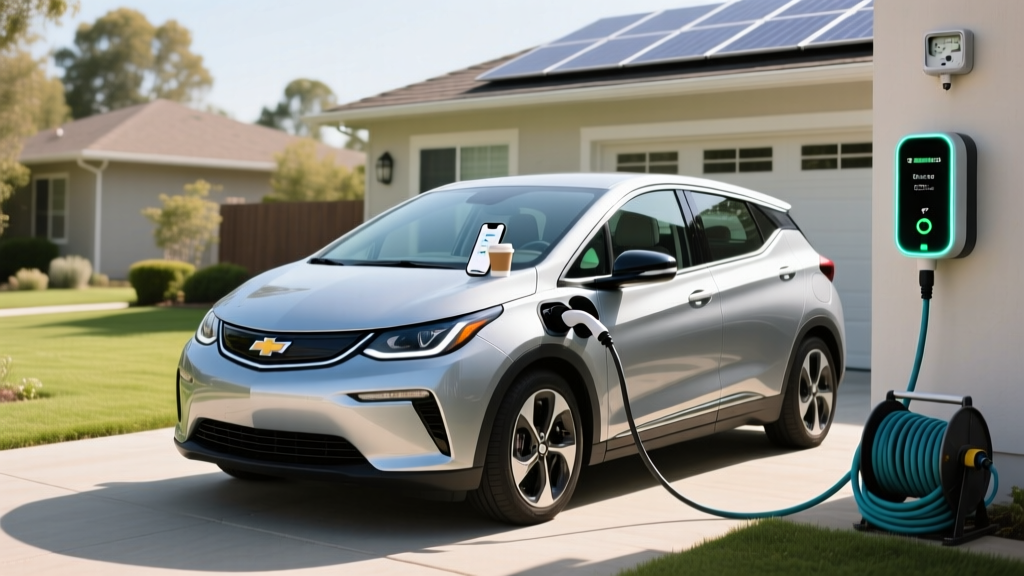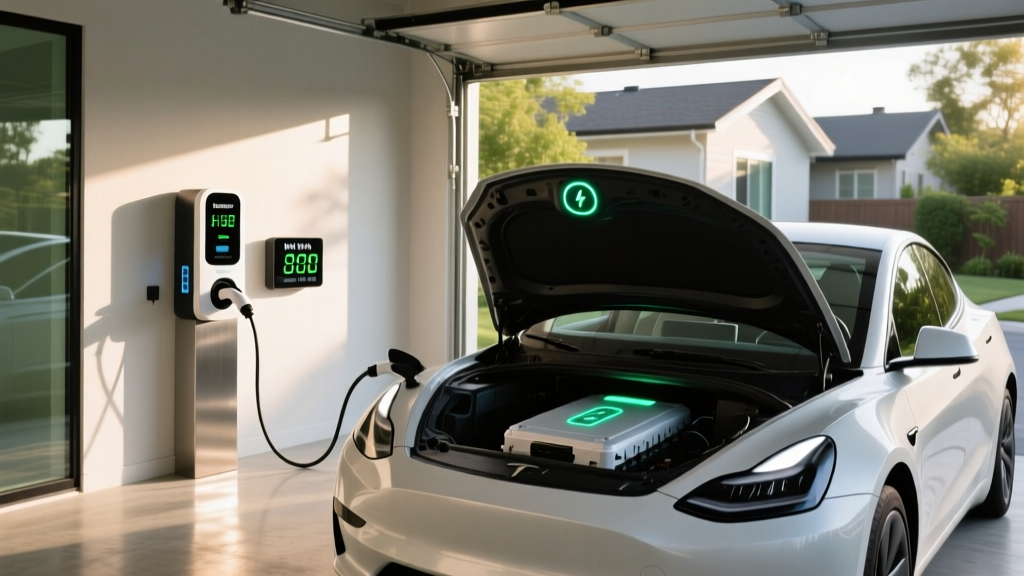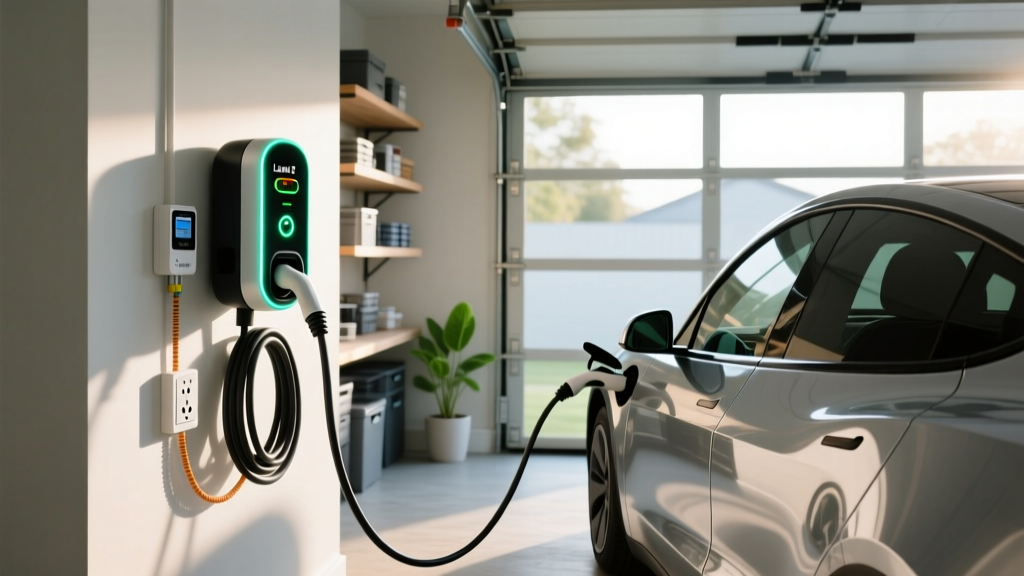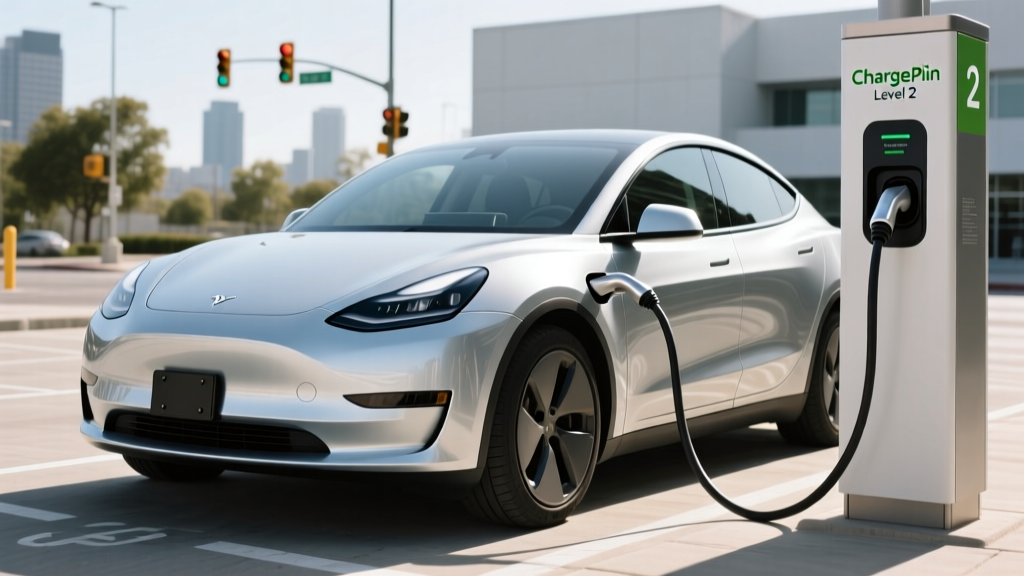
If you have ever plugged into a public ChargePoint station only to watch your state of charge (SoC) crawl upward at single-digit kilowatts, you have experienced what many EV owners call the ChargePoint EV charging bottleneck. The term describes a frustrating but solvable mismatch: your vehicle is capable of accepting far more power than the station — or your home circuit — can deliver. The good news is that understanding the physics behind the bottleneck, paired with the right equipment choices, can cut your charging time by 70% or more.
This guide dissects where charging slowdowns happen, what each charging level actually delivers in real-world miles per hour, how much a proper home Level 2 installation costs in 2026, and which chargers eliminate the bottleneck entirely.
The Three Charging Levels: Speeds, kW, and Real Miles Per Hour
Before diagnosing any bottleneck, you need a clear picture of what each level delivers. The most common EV mistake is confusing kW (kilowatts — the rate of power delivery, like water pressure from a hose) with kWh (kilowatt-hours — the total energy stored in your battery, like the size of the tank). A charger rated at 11.5 kW does not deliver 11.5 kWh per minute; it delivers 11.5 kWh per hour, which translates to roughly 34–40 miles of range in that hour for an efficient sedan.
| Charging Level | Voltage | Max Power (kW) | Miles of Range Added Per Hour | Typical Use Case |
|---|---|---|---|---|
| Level 1 (120V) | 120V AC | 1.2–1.9 kW | 3–5 miles | Overnight trickle, PHEVs, emergencies |
| Level 2 (240V) | 240V AC | 3.3–19.2 kW | 12–70 miles | Home daily charging, workplace, retail |
| DC Fast Charging | 400–800V DC | 50–350 kW | 150–1,200+ miles/hr (peak) | Road trips, rapid top-ups |
The ChargePoint bottleneck most commonly appears in two scenarios: (1) a public ChargePoint Level 2 station delivering only 6.6 kW when your car can accept 11.5 kW or more, and (2) a home setup limited to a 20-amp circuit yielding just 3.8 kW. In both cases, the station or circuit — not your car — is the limiting factor.
Why the ChargePoint Bottleneck Happens (and Where)
ChargePoint operates one of the largest public and commercial charging networks in North America, with tens of thousands of ports. But not all ports are equal. Here is where slowdowns cluster:
- Dual-port Level 2 stations splitting amperage: Many ChargePoint CT4000-series stations share a single 80-amp circuit across two J1772 connectors. When both ports are in use, each vehicle receives roughly 30 amps (7.2 kW) instead of the full 40 amps (9.6 kW). This is the single most common cause of the "ChargePoint bottleneck" complaint.
- Older 6.6 kW-only stations: Some retail and workplace ChargePoint installations were spec'd at 30 amps / 6.6 kW per port — adequate for 2018-era EVs with smaller batteries, but painfully slow for 2026 models carrying 80–100+ kWh packs.
- ChargePoint Home Flex at lower amperage: The ChargePoint Home Flex is a capable unit rated up to 50 amps (12 kW), but many owners install it on a 40-amp breaker (derated to 32 amps / 7.7 kW continuous) to avoid panel upgrades. The hardware is not the bottleneck — the circuit is.
- DC Fast Charging taper: On ChargePoint Express Plus DC stations (up to 400 kW in 2026 configurations), charging speed peaks between 10–40% SoC and tapers significantly above 80%. If you arrive at 60% SoC, your effective charge rate may be well below the station's peak rating.
Real-World Charging Reality: A 2026 Hyundai Ioniq 5 (84 kWh usable battery, NMC chemistry) can accept up to 240 kW on DC fast charge, reaching 10–80% in approximately 18 minutes under ideal conditions. Plug that same car into a 6.6 kW ChargePoint Level 2 port and a 10–80% charge takes roughly 9 hours. The bottleneck is not the car — it is the station.
Home Level 2 Charging: Electrical Requirements, Panel Upgrades, and True Costs
The most effective fix for the ChargePoint bottleneck is a properly sized home Level 2 charger. But "properly sized" means different things depending on your home's electrical infrastructure.
Standard Electrical Requirements
A full-power home Level 2 setup requires a 240-volt dedicated circuit. The most common configurations in 2026:
- 40-amp breaker / 32-amp continuous: Delivers 7.7 kW. Suitable for most daily driving needs (adds ~25 miles/hour). Works with a NEMA 14-50 outlet or hardwired.
- 50-amp breaker / 40-amp continuous: Delivers 9.6 kW. Adds ~32 miles/hour. Requires a NEMA 14-50 or 6-50 outlet, or hardwired connection.
- 60-amp breaker / 48-amp continuous: Delivers 11.5 kW. Adds ~40 miles/hour. Hardwired only — no plug configuration rated for this amperage in residential settings.
Most modern EVs with onboard chargers rated at 11.5 kW (Tesla Model 3/Y, Ford F-150 Lightning, Hyundai Ioniq 5/6, Kia EV6/EV9) can only reach their maximum Level 2 speed on a 60-amp circuit. Anything less creates a bottleneck.
When You Need a Panel Upgrade
If your home has a 100-amp main service panel — common in homes built before 1990 — adding a 50- or 60-amp dedicated EV circuit may exceed your panel's capacity, especially if you already run electric range, dryer, and HVAC. A licensed electrician will perform a load calculation per NEC Article 220 to determine whether your panel can handle the added draw.
If an upgrade is needed, expect a 200-amp panel upgrade to cost between $2,500 and $5,000 depending on your municipality, utility connection fees, and whether new conduit runs from the meter are required. This is the single largest hidden cost in home EV charging and the reason you should get an electrical assessment before purchasing a charger.
| Cost Component | Low-End Estimate | High-End Estimate | Notes |
|---|---|---|---|
| Level 2 Charger (Equipment) | $400 | $750 | ChargePoint Home Flex, Emporia, WallConnector |
| Electrician Labor (240V run, ≤50 ft) | $600 | $1,800 | Varies by region, wall/foundation type |
| NEMA 14-50 Outlet or Hardwire Kit | $50 | $200 | Industrial-grade outlet recommended |
| Permit & Inspection | $50 | $300 | Required in most jurisdictions |
| Panel Upgrade (if needed) | $2,500 | $5,000 | 100A → 200A service upgrade |
| Total (no panel upgrade) | $1,100 | $3,050 | Most common scenario |
| Total (with panel upgrade) | $3,600 | $8,050 | Older homes |
The federal Alternative Fuel Vehicle Refueling Property Credit (IRC §30C) covers 30% of home charger equipment and installation costs, up to $1,000, for chargers placed in service in eligible census tracts. Check irs.gov for current eligibility maps and income requirements.
Connector Compatibility: NACS, CCS, and CHAdeMO in 2026
The connector landscape has shifted dramatically. As of 2026, the North American Charging Standard (NACS), developed by Tesla, is the dominant connector for new EVs. Ford, Rivian, Hyundai, Kia, BMW, and most major automakers now ship vehicles with native NACS ports. CCS1 (Combined Charging System) remains on many 2023–2025 model-year vehicles, and CHAdeMO persists on the Nissan Leaf and a few legacy models.
| Connector Type | Brands Using It (2026 Models) | Public Network Support | Adapter Needed? |
|---|---|---|---|
| NACS (Tesla) | Tesla, Ford, Rivian, Hyundai, Kia, BMW, GM, Volvo, Polestar | Tesla Supercharger, Electrify America (new stations), ChargePoint (new Flex models) | CCS-to-NACS adapter for older CCS stations |
| CCS1 | 2023–2025 VW ID.4, some residual BMW/Mercedes inventory | Electrify America, EVgo, ChargePoint Express | NACS-to-CCS adapter if car has NACS port |
| CHAdeMO | Nissan Leaf (discontinued after 2025 MY) | Limited and declining | No adapter available; native port only |
For home Level 2 charging, the connector is universally J1772 for non-Tesla vehicles, or NACS for Tesla and NACS-equipped vehicles. Most 2026 home chargers ship with a J1772 connector and include (or offer as an accessory) a NACS adapter. If you own a Tesla or a 2025+ NACS-equipped Ford or Hyundai, confirm your charger ships with the correct connector or budget $50–$150 for an adapter.
Charging Cost Per Mile: Home vs. Public vs. Gas
One of the strongest arguments for resolving the home charging bottleneck is cost. Charging at home on a time-of-use (TOU) electricity plan is dramatically cheaper than public DC fast charging — and far cheaper than gasoline on a per-mile basis.
| Scenario | Price per kWh | Cost to Add 200 Miles (3.5 mi/kWh avg efficiency) | Cost Per Mile |
|---|---|---|---|
| Home Level 2 (off-peak TOU rate) | $0.09–$0.13 | $5.14–$7.43 | $0.026–$0.037 |
| Home Level 2 (standard rate, no TOU) | $0.15–$0.20 | $8.57–$11.43 | $0.043–$0.057 |
| ChargePoint Public Level 2 | $0.25–$0.49 | $14.29–$28.00 | $0.071–$0.140 |
| DC Fast Charging (public) | $0.35–$0.65 | $20.00–$37.14 | $0.100–$0.186 |
| Gasoline ($3.50/gal, 28 MPG combined) | N/A | $25.00 | $0.125 |
At off-peak home rates, an EV owner driving 12,000 miles per year spends roughly $310–$440 annually on electricity. The same miles in a 28 MPG gas car at $3.50/gallon cost $1,500. Even frequent public DC fast charging at $0.50/kWh ($0.14/mile) remains competitive with gasoline — but it erases much of the EV cost advantage. This is why a home Level 2 installation pays for itself within 2–4 years for most drivers.
Charging Time Examples: What to Expect With Common Battery Sizes
Charging times depend on three factors: battery size (kWh), the charger's power output (kW), and the vehicle's onboard charger limit. Below are realistic 10–80% charging times for popular 2026 EVs at various power levels. Note that DC fast charging times assume a preconditioned battery and favorable ambient temperatures (60–80°F). Cold batteries charge significantly slower.
| Vehicle (2026 MY) | Battery (kWh usable) | Max Level 2 (kW) | Max DC Fast (kW) | 10–80% at 11.5 kW L2 | 10–80% at DC Fast (peak) |
|---|---|---|---|---|---|
| Tesla Model 3 Long Range | 75 kWh | 11.5 | 250 | ~4 hr 33 min | ~25 min |
| Hyundai Ioniq 5 | 84 kWh | 11.5 | 240 | ~5 hr 6 min | ~18 min |
| Ford F-150 Lightning (Extended) | 131 kWh | 11.5 | 150 | ~7 hr 58 min | ~45 min |
| Chevrolet Equinox EV | 85 kWh | 11.5 | 150 | ~5 hr 10 min | ~32 min |
| BMW iX xDrive50 | 105 kWh | 11.5 | 200 | ~6 hr 23 min | ~34 min |
Notice the pattern: Level 2 charging at 11.5 kW takes 4–8 hours for a 10–80% charge depending on battery size — perfectly suited for overnight charging. Drop to 6.6 kW (the ChargePoint bottleneck scenario) and those times nearly double. A 131 kWh F-150 Lightning on a 6.6 kW port would need over 14 hours for a 10–80% charge, making daily full replenishment impractical.
Equipment Picks: Home Chargers That Eliminate the Bottleneck
Here are four Level 2 home chargers available in 2026 that deliver the power, reliability, and smart features to end charging bottlenecks. All support NACS or J1772 connectors, and all can be hardwired for maximum amperage.
ChargePoint Home Flex
- Power Output: Up to 12 kW (50 amps) on a 60-amp breaker
- Connector: J1772 (NACS adapter available separately)
- Cable Length: 23 feet
- Smart Features: Wi-Fi, app scheduling, Alexa integration, amperage configurable via app (16–50A)
- Price: ~$549
- Best For: ChargePoint ecosystem users who want app control and flexible amperage tuning
Tesla Wall Connector (Gen 4)
- Power Output: Up to 11.5 kW (48 amps) on a 60-amp breaker
- Connector: Native NACS (J1772 adapter included)
- Cable Length: 24 feet
- Smart Features: Wi-Fi, OTA updates, power sharing between multiple units, load management
- Price: ~$475
- Best For: Tesla and NACS-equipped vehicle owners; best value at 11.5 kW
Emporia Vue EV Charger
- Power Output: Up to 11.5 kW (48 amps) on a 60-amp breaker
- Connector: J1772 (NACS adapter available)
- Cable Length: 24 feet
- Smart Features: Wi-Fi, integrates with Emporia energy monitoring, solar-aware scheduling, TOU optimization
- Price: ~$399
- Best For: Solar-equipped homes and energy-monitoring enthusiasts on a budget
EnelX JuiceBox Pro 48
- Power Output: 11.5 kW (48 amps) on a 60-amp breaker
- Connector: J1772 (NACS adapter available)
- Cable Length: 25 feet
- Smart Features: Wi-Fi, app-based scheduling, energy usage tracking, utility demand-response compatible
- Price: ~$599
- Best For: Utility demand-response programs and commercial fleet-adjacent home users
Safety, Electrical Code, and Installation Best Practices
A home EV charger draws sustained current for hours — far longer than most household appliances. This makes proper installation critical for fire safety and code compliance.
- Dedicated circuit required: Your EV charger must be on its own breaker. Sharing a circuit with a dryer, oven, or HVAC system is a code violation and a fire hazard.
- NEC 80% continuous load rule: The National Electrical Code requires that continuous loads (defined as drawing for 3+ hours) be limited to 80% of a breaker's rating. A 50-amp breaker supports 40 amps continuous (9.6 kW). A 60-amp breaker supports 48 amps continuous (11.5 kW).
- GFCI protection: The 2023 NEC (adopted by most states by 2026) requires GFCI protection for all 240V EV charging outlets. Hardwired installations may be exempt in some jurisdictions, which is one reason many electricians recommend hardwiring over plug-in.
- Outdoor-rated equipment: If your charger is installed outdoors or in an unsealed garage, ensure the unit carries a NEMA 4 or NEMA 4X rating for water and dust resistance. All four chargers recommended above meet this standard.
- Permit and inspection: Most municipalities require an electrical permit for a new 240V circuit. The inspection ensures correct wire gauge (typically 6 AWG copper for 50-amp, 4 AWG for 60-amp), proper grounding, and breaker sizing. Skipping the permit can void your homeowner's insurance coverage for electrical fires.
Frequently Asked Questions
How much does it cost to install a home EV charger?
For a standard Level 2 installation on an existing 200-amp panel, expect $1,100 to $3,050 including the charger, electrician labor, outlet or hardwire materials, and permit. If your home requires a 100-to-200-amp panel upgrade, add $2,500–$5,000. The federal §30C tax credit can offset up to $1,000 of equipment and installation costs if you are in an eligible census tract.
How fast will each charging level add range?
Level 1 (120V) adds 3–5 miles per hour. Level 2 (240V) adds 12–70 miles per hour depending on amperage (3.3 kW to 19.2 kW). DC fast charging adds 150–1,200+ miles per hour at peak rates, though speeds taper significantly above 80% SoC. For a typical EV achieving 3.5 miles per kWh, an 11.5 kW Level 2 charger adds roughly 40 miles of range per hour.
Which connector/charger is compatible with my EV?
For 2026 models: Tesla, Ford, Rivian, Hyundai, Kia, GM, and most others now use NACS. Older (2023–2025) VW, BMW, and Mercedes models may still have CCS1. The Nissan Leaf uses CHAdeMO. For home Level 2 charging, non-Tesla vehicles use J1772; NACS vehicles use the Tesla connector. Adapters are available for cross-compatibility in most cases. Check your vehicle's charge port or owner's manual to confirm.
How much does charging cost per mile vs gas?
At home off-peak rates ($0.09–$0.13/kWh), an EV costs $0.026–$0.037 per mile. A gas car averaging 28 MPG at $3.50/gallon costs $0.125 per mile — roughly 3–5× more. Public DC fast charging ($0.35–$0.65/kWh) costs $0.10–$0.19 per mile, which is competitive with gas but erases most of the EV cost advantage. Home charging is where the savings live.
What electrical upgrades might I need?
If your home has a 100-amp main panel, you will likely need a 200-amp upgrade ($2,500–$5,000) to support a 50- or 60-amp dedicated EV circuit alongside existing appliances. Homes with 200-amp panels typically have sufficient headroom. A licensed electrician will perform a NEC Article 220 load calculation to confirm. Some utilities offer rebates for panel upgrades when paired with EV charger installation — check with your local provider.
The ChargePoint EV charging bottleneck is real but entirely addressable. Whether the constraint is a shared-amperage public station, an undersized home circuit, or a connector mismatch, the fix comes down to matching your vehicle's charge acceptance rate with the right infrastructure. A hardwired 60-amp home Level 2 circuit paired with a quality 11.5 kW charger transforms daily charging from a multi-hour ordeal into an overnight non-event — and it costs less per mile than any alternative on the road.