If you've searched for a ChargePoint DC fast charger for home use, you've likely hit a wall of conflicting information. ChargePoint is best known for its Level 2 home units (the ChargePoint Home Flex) and its vast public DC fast-charging network. But the company also manufactures commercial-grade DC fast chargers — and some EV owners with large batteries, high electrical capacity, and a need for rapid turnarounds have explored whether bringing one home is feasible. This guide breaks down exactly what ChargePoint's DC fast chargers deliver, what a home installation actually requires, and how they compare to the Level 2 units most homeowners should consider first.
Understanding Charging Levels: kW, kWh, and What They Mean
Before evaluating any charger, you need to lock in the distinction between kW (kilowatts) and kWh (kilowatt-hours). This is the single most common source of EV confusion:
- kW (power) = the rate at which energy flows into your battery — like water pressure from a hose.
- kWh (energy) = the total amount of energy stored — like the size of the bucket you're filling.
A 62.5 kW DC fast charger delivers energy 62.5 times faster than a 1 kW Level 1 outlet. Your battery's capacity is measured in kWh (e.g., 75 kWh usable). Charge time depends on both the charger's kW output and your vehicle's acceptance rate.
| Level | Voltage | Power (kW) | Miles of Range Per Hour | Typical Use Case |
|---|---|---|---|---|
| Level 1 | 120V AC | 1.0–1.4 kW | 3–5 mi/hr | Overnight top-ups, PHEVs |
| Level 2 | 240V AC | 3.3–19.2 kW | 12–75 mi/hr | Daily home charging |
| DC Fast (Level 3) | 200–920V DC | 50–400 kW | 150–1,200+ mi/hr | Road trips, fleet depots, rapid top-ups |
ChargePoint DC Fast Charger Specs: What's Actually Available
ChargePoint's DC fast-charging lineup is primarily designed for commercial, fleet, and public installations — not residential driveways. Here's what the company currently offers:
| Model | Max Power | Connectors | Primary Market | Approx. Unit Cost |
|---|---|---|---|---|
| Express 250 | 62.5 kW (single CCS) | CCS1, CHAdeMO | Public/commercial | $30,000–$45,000 |
| Express 250 (dual) | 125 kW shared / 62.5 kW per port | CCS1, CHAdeMO | Public/commercial | $50,000–$70,000 |
| Express Plus (modular) | Up to 400 kW | CCS1, NACS | Fleet/highway corridor | $80,000–$150,000+ |
The ChargePoint Express 250 at 62.5 kW is the unit most people encounter when searching for "ChargePoint DC fast charger." It's a robust, networked charger with a touchscreen, RFID payment, and cloud management — but it requires three-phase 480V commercial power, weighs over 500 lbs, and costs as much as a small car.
Home Installation: Electrical Requirements and Costs
Whether you're installing a Level 2 ChargePoint Home Flex or exploring a DC fast charger for a property with commercial-grade power, here's what the electrical work actually involves.
Level 2 Home Charger Installation (ChargePoint Home Flex)
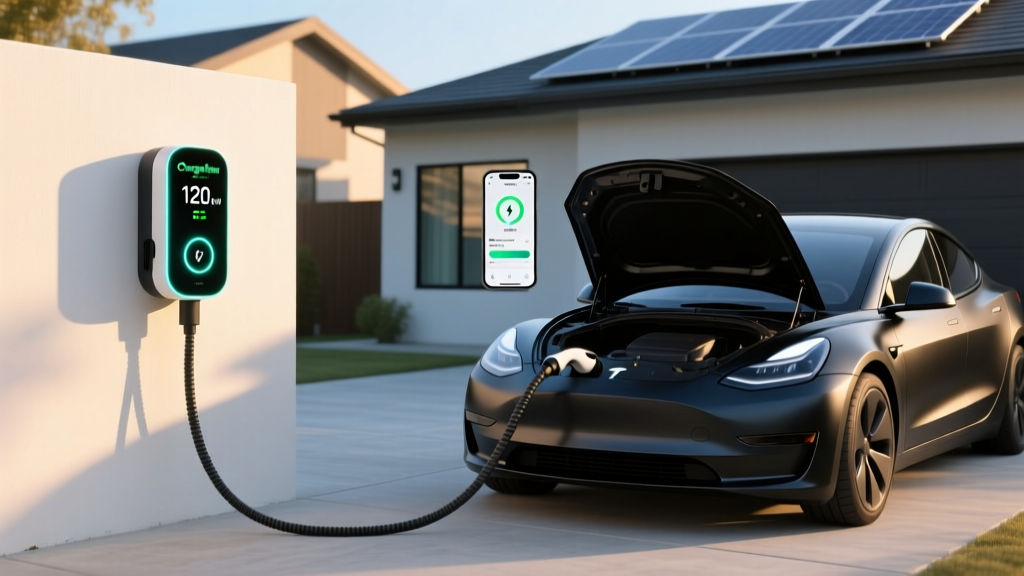
The ChargePoint Home Flex is a 240V Level 2 charger adjustable from 16A to 50A (3.8–12 kW output). Most homeowners install it on a 50A or 60A dedicated circuit.
| Component | Typical Cost Range | Notes |
|---|---|---|
| ChargePoint Home Flex unit | $549–$699 | NACS or J1772/CCS versions available |
| Electrician labor (standard install) | $500–$1,500 | Depends on distance from panel to garage |
| Electrical panel upgrade (if needed) | $1,500–$3,500 | Required if panel is 100A or maxed out |
| Permit and inspection | $50–$300 | Varies by municipality |
| Conduit, wiring, connectors | $100–$500 | Longer runs cost more |
| Total (no panel upgrade) | $1,200–$2,700 | Most common scenario |
| Total (with panel upgrade) | $2,700–$6,000 | Older homes with 100A service |
DC Fast Charger Installation (Commercial/Residential with 480V)
For properties that already have or can obtain 480V three-phase service:
| Component | Typical Cost Range | Notes |
|---|---|---|
| ChargePoint Express 250 (62.5 kW) | $30,000–$45,000 | Single-port unit |
| Utility service upgrade / transformer | $10,000–$50,000 | Major variable; some utilities offer make-ready programs |
| Electrical contractor (commercial) | $8,000–$25,000 | Switchgear, conduit, concrete pad |
| Permits, engineering, inspections | $2,000–$8,000 | Commercial permitting is more involved |
| Network subscription (annual) | $300–$600/yr | ChargePoint cloud management |
| Total installed | $50,000–$130,000+ | Highly site-dependent |
Connector Compatibility: NACS, CCS1, and CHAdeMO
The connector landscape has shifted dramatically. As of 2026, the North American Charging Standard (NACS), developed by Tesla, has been adopted by nearly every major automaker. Here's what you need to know:
| Connector | Brands Using It Natively | Adapter Availability |
|---|---|---|
| NACS (Tesla) | Tesla, Ford, GM, Rivian, Volvo, Polestar, Mercedes, BMW (2025+), Hyundai/Kia (2025+) | CCS-to-NACS adapters widely available ($150–$250) |
| CCS1 | Legacy: VW ID.4 (pre-2025), some Stellantis models, older Hyundai/Kia | NACS-to-CCS adapters from Tesla, Lectron, A2Z |
| CHAdeMO | Nissan Leaf (discontinued), Mitsubishi Outlander PHEV (legacy) | Limited adapter options; network shrinking |
For ChargePoint DC fast chargers: The Express 250 ships with CCS1 and CHAdeMO connectors. If your vehicle uses NACS (which most 2025+ models now do), you'll need a CCS-to-NACS adapter to use these chargers. ChargePoint has begun offering NACS-equipped Express Plus units at newer installations, but the legacy Express 250 fleet remains CCS/CHAdeMO.
For the ChargePoint Home Flex (Level 2): You can order it with either a NACS or J1772 connector. J1772 is the legacy AC standard; all non-Tesla EVs prior to 2025 use it, and NACS vehicles can charge with a simple J1772-to-NACS adapter (often included with the car). If you're buying in 2026, the NACS version is the future-proof choice.
Charging Times: 10–80% for Common Battery Sizes
DC fast charging speed isn't just about peak kW — it's about the charge curve. Batteries accept peak power only between roughly 10–50% SoC, then taper significantly. Here's realistic 10–80% timing for common EV battery sizes on a ChargePoint Express 250 (62.5 kW sustained average ~45 kW accounting for taper):
| Vehicle Example | Battery (kWh usable) | 10–80% Time | Notes |
|---|---|---|---|
| Chevrolet Equinox EV | 85 kWh | ~75–85 min | Accepts up to ~150 kW peak; 62.5 kW is below max |
| Tesla Model Y (NACS adapter) | 75 kWh | ~65–75 min | Vehicle can accept 250 kW; charger is the bottleneck |
| Ford F-150 Lightning (Std Range) | 98 kWh | ~90–100 min | Large battery + charger bottleneck = slower fill |
| Hyundai Ioniq 5 (CCS native) | 77.4 kWh | ~70–80 min | 800V architecture wasted at 62.5 kW |
Level 2 comparison: On a ChargePoint Home Flex at 48A (11.5 kW), that same 85 kWh battery takes roughly 7–8 hours from 10–80%. For overnight charging, this is perfectly adequate — and far cheaper.
Cost to Charge: Home vs. Public DC Fast vs. Gas
The economics of EV charging depend heavily on where and when you charge. Here's a realistic cost breakdown based on 2026 national averages:
| Scenario | Cost per kWh | Efficiency (kWh/mi) | Cost per Mile | Annual Cost (12,000 mi) |
|---|---|---|---|---|
| Home Level 2 (off-peak utility rate) | $0.08–$0.14 | 0.28–0.35 | $0.025–$0.049 | $300–$588 |
| Home Level 2 (standard rate) | $0.14–$0.22 | 0.28–0.35 | $0.039–$0.077 | $468–$924 |
| Public Level 2 (ChargePoint network) | $0.25–$0.49 | 0.28–0.35 | $0.070–$0.172 | $840–$2,064 |
| Public DC Fast (ChargePoint Express) | $0.35–$0.58 | 0.28–0.35 | $0.098–$0.203 | $1,176–$2,436 |
| Gasoline vehicle (28 MPG combined) | $3.20/gal avg | — | $0.114 | $1,368 |
Key takeaway: Home Level 2 charging on off-peak rates delivers the lowest cost per mile — often 70–80% cheaper than gasoline. Public DC fast charging, including ChargePoint Express stations, can approach or exceed the cost of gas per mile. Use DC fast chargers for road trips and convenience, not as your primary charging strategy.
According to fueleconomy.gov, the average EV achieves 3–4 miles per kWh (roughly 100–130 MPGe combined), though larger vehicles like the F-150 Lightning drop to 2.0–2.5 mi/kWh. Your actual efficiency depends on driving style, temperature, and terrain.
Equipment Recommendations: What to Actually Buy
Based on the use case you're solving for, here are specific equipment recommendations with exact specs:
Best for Home Daily Charging: ChargePoint Home Flex
Power Output: Up to 12 kW (50A) on a 60A circuit; adjustable down to 16A
Connector: NACS or J1772 (order the correct version)
Cable Length: 23 feet
Smart Features: Wi-Fi connected, scheduled charging, energy tracking, Alexa/Google Home integration
Price: $549–$699 (unit only)
Eligible for §30D Alternative Fuel Vehicle Refueling Property Credit: Up to 30% of equipment + install cost, max $1,000 for residential (per IRS guidelines; subject to census-tract eligibility)
Best Budget Alternative: Emporia Vue Level 2
Power Output: Up to 11.5 kW (48A)
Connector: J1772 (NACS adapter included)
Cable Length: 24 feet
Smart Features: Wi-Fi, energy monitoring, solar integration
Price: $349–$399
Trade-off: Less robust build quality than ChargePoint; app occasionally laggy
Best for Public/Fleet DC Fast Charging: ChargePoint Express 250
Power Output: 62.5 kW per port (single) or 125 kW shared (dual-port)
Connectors: CCS1 + CHAdeMO (dual-port); single CCS1 option available
Network: ChargePoint cloud management, RFID, contactless payment
Price: $30,000–$70,000 (unit only; installation additional)
Best for: Retail parking, fleet depots, workplace charging, highway corridor stations
Safety, Code, and Permit Considerations
EV charger installation isn't a DIY project. The National Electrical Code (NEC) has specific requirements, and your local jurisdiction will require permits and inspection. Here's what matters:
- Dedicated circuit: Your Level 2 charger must be on its own dedicated breaker — no sharing with other appliances. A 50A charger needs a 60A breaker (NEC requires 125% overhead for continuous loads).
- GFCI protection: NEC 2020 and later require GFCI protection for all EV charging outlets (625.40). Hardwired installations may have different requirements — your electrician will determine this.
- Outdoor rating: If installing outside, the charger must be rated NEMA 3R or NEMA 4 (weather-resistant). The ChargePoint Home Flex is rated NEMA 3R for outdoor use. DC fast chargers like the Express 250 are rated NEMA 4 for full weather exposure.
- Wire gauge: A 60A circuit requires 6 AWG copper wire (THHN in conduit) or 4 AWG aluminum. Longer runs may require upsizing to prevent voltage drop.
- Permit and inspection: Virtually every jurisdiction requires an electrical permit for EV charger installation. The inspector will verify wire sizing, breaker rating, grounding, GFCI, and proper mounting. Expect $50–$300 in permit fees.
Always hire a licensed electrician. Per the National Fire Protection Association, improper EV charger wiring is a documented fire risk — and unpermitted work can void your homeowner's insurance coverage.
Frequently Asked Questions
How much does it cost to install a home EV charger?
A Level 2 ChargePoint Home Flex installation typically costs $1,200–$2,700 total (equipment + electrician + permit) if your electrical panel has capacity. If a panel upgrade from 100A to 200A is needed, add $1,500–$3,500. A DC fast charger installation for commercial or special residential use runs $50,000–$130,000+ due to the equipment cost and 480V three-phase electrical service required.
How fast will each charging level add range?
Level 1 (120V) adds 3–5 miles per hour. Level 2 (240V, 48A) adds 30–40 miles per hour for most EVs. A 62.5 kW DC fast charger like the ChargePoint Express 250 can add 150–200 miles per hour at peak output, though the average over a full session is lower due to charge-curve tapering above 50% SoC.
Which connector or charger is compatible with my EV?
Check your vehicle's charge port. 2025+ models from Tesla, Ford, GM, Rivian, Hyundai, Kia, and most others now use NACS. Older non-Tesla EVs typically use CCS1 or J1772 (for Level 2). Nissan Leaf uses CHAdeMO. Adapters are widely available: CCS-to-NACS ($150–$250), J1772-to-NACS ($100–$180). For home Level 2, order the ChargePoint Home Flex in the connector version that matches your car natively.
How much does charging cost per mile compared to gas?
Home Level 2 charging on off-peak electricity costs roughly $0.03–$0.05 per mile — about 70% cheaper than a 28 MPG gas car at $3.20/gallon ($0.11/mile). Public DC fast charging at $0.35–$0.58/kWh costs $0.10–$0.20 per mile, which can match or exceed gas costs. The economic advantage of EVs is maximized with consistent home charging.
What electrical upgrades might I need?
For a Level 2 charger, the most common upgrade is a panel replacement from 100A to 200A service ($1,500–$3,500) if your existing panel lacks capacity. You may also need a new 240V circuit run from the panel to your garage or driveway, which adds wiring and conduit costs. For a DC fast charger, you'll likely need a utility-installed 480V three-phase transformer and commercial-grade switchgear — a major infrastructure project requiring coordination with your electric utility.