Quick Verdict: What Does a ChargePoint Home Charger Actually Cost?
If you're researching ChargePoint home charging, the headline number is straightforward: a ChargePoint Home Flex Level 2 charger costs roughly $549–$699 for the hardware, but the total charge point charger cost including professional installation typically lands between $1,100 and $2,800 for most homes. Older homes needing a panel upgrade can push that total past $4,500. This guide breaks down every line item — equipment, electrician labor, permits, electrical upgrades — so you can budget accurately and avoid surprises.
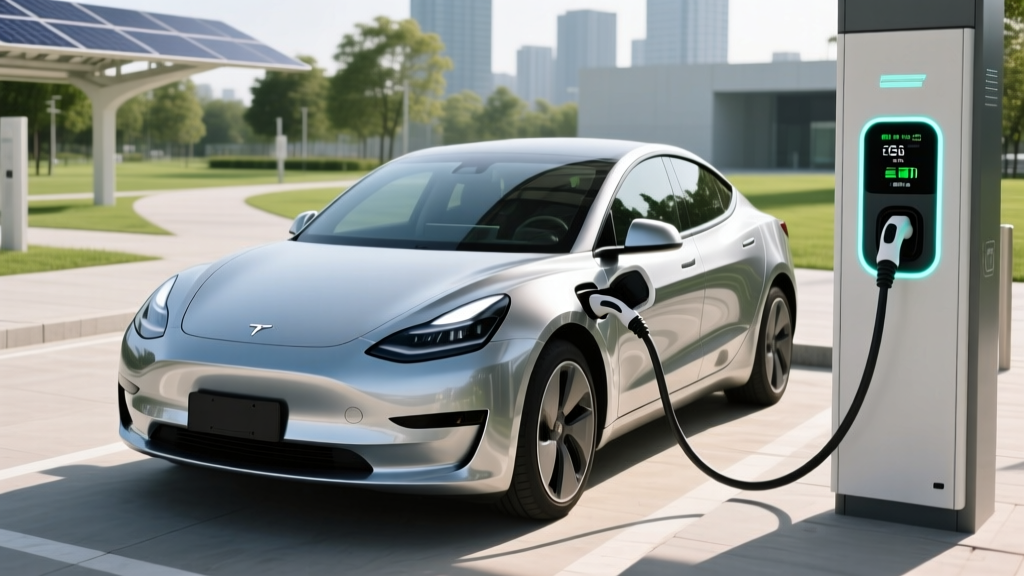
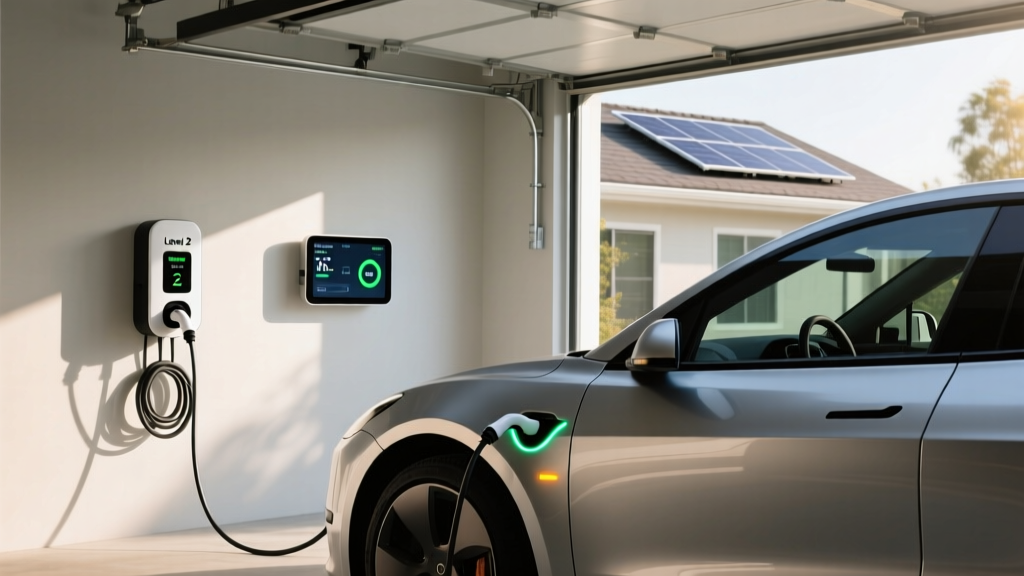
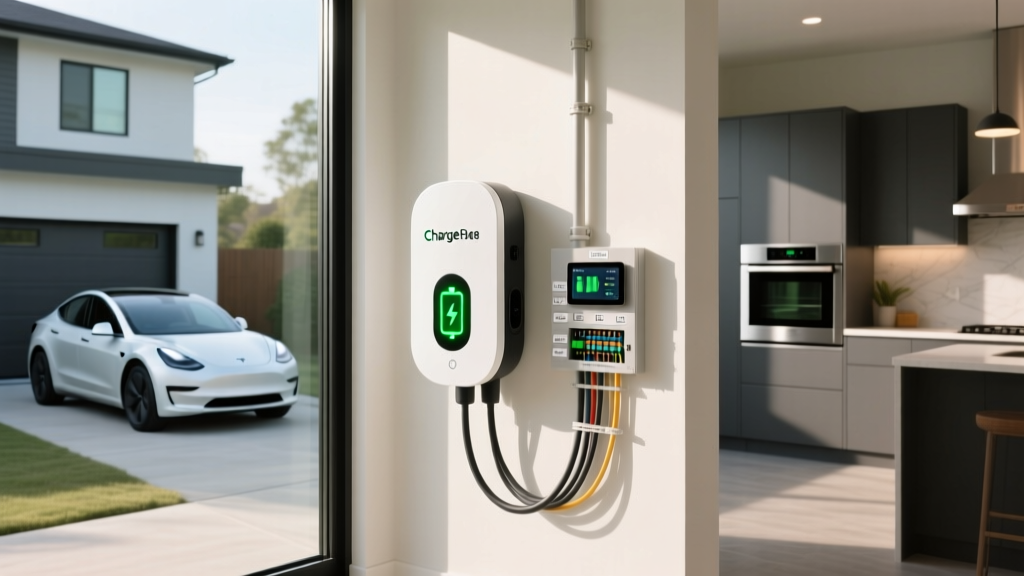
ChargePoint remains one of the most widely deployed home and public charging brands in North America. Their Home Flex line is a smart, Wi-Fi-enabled Level 2 charger that adjusts amperage from 16A to 50A, making it flexible for homes with limited electrical capacity. Let's unpack the real costs, the charging speeds you'll get, and whether a panel upgrade is in your future.
Understanding Charging Levels: Speeds, Power, and Range Added
Before calculating costs, you need to understand the three charging levels and what they deliver. A critical distinction: kW (kilowatts) measures power — how fast energy flows into your battery. kWh (kilowatt-hours) measures energy — the total capacity of your battery. Think of kW as the width of a hose and kWh as the size of the bucket.
| Level | Voltage | Power (kW) | Miles of Range Added/Hour | Typical Use Case |
|---|---|---|---|---|
| Level 1 | 120V AC | 1.0–1.9 kW | 3–5 miles | Overnight trickle; PHEVs or low-mileage drivers |
| Level 2 (Home) | 240V AC | 3.8–11.5 kW | 14–45 miles | Daily home charging; overnight full recharge |
| DC Fast Charging | 400–800V DC | 50–350 kW | 150–1,000+ miles (peak rate) | Road trips; 10–80% in 18–45 min |
For a typical 75 kWh battery (e.g., Tesla Model Y, Hyundai Ioniq 5), a ChargePoint Home Flex running at 48A / 11.5 kW will add roughly 37–42 miles of range per hour and fully recharge from 10% to 80% in about 5–6 hours. At 32A / 7.7 kW, expect about 25–28 miles per hour and a 10–80% recharge in roughly 8 hours — still plenty for overnight charging.
ChargePoint Equipment Options and Pricing
ChargePoint offers two primary home units in 2026, plus an expanding public network. Here's how the hardware breaks down:
ChargePoint Home Flex (NACS or J1772)
- Power Output: Adjustable 16A–50A (3.8–12.0 kW at 240V)
- Connector: Available in NACS (Tesla-native) or J1772 (with CCS1 adapter for non-Tesla EVs)
- Cable Length: 18 ft or 23 ft options
- Smart Features: Wi-Fi, app scheduling, Alexa integration, energy-use tracking, utility TOU optimization
- Price: ~$549 (NACS, 18ft) to $699 (J1772, 23ft)
- Warranty: 3 years
ChargePoint Home Flex Plus (Announced / Early 2026)
- Power Output: Up to 80A (19.2 kW at 240V) — requires 100A dedicated circuit
- Connector: NACS native
- Cable Length: 25 ft
- Smart Features: All Home Flex features + bidirectional V2H readiness (hardware-capable; firmware pending)
- Price: ~$899
- Warranty: 3 years
For most homeowners, the standard Home Flex at 48A is the sweet spot. It covers overnight charging for even large-battery trucks like the Ford F-150 Lightning (98 kWh usable, extended range) without requiring a 100A circuit upgrade. The Flex Plus is aimed at high-mileage drivers or those preparing for vehicle-to-home (V2H) backup power.
Installation Cost Breakdown: Electrician, Permits, and Panel Upgrades
The hardware is only part of the equation. Professional installation by a licensed electrician is non-negotiable for safety, code compliance, and warranty validity. Here's what drives the total charge point charger cost:
| Line Item | Typical Range | Notes |
|---|---|---|
| ChargePoint Home Flex (equipment) | $549–$699 | Varies by connector type and cable length |
| Electrician labor (standard install) | $400–$1,200 | Depends on run length, wall type, conduit needs |
| Electrical permit | $50–$250 | Required in most jurisdictions; varies by municipality |
| Circuit breaker + wiring materials | $50–$200 | 6 AWG copper for 50A; 4 AWG for 60A circuits |
| Panel upgrade (if needed) | $1,500–$4,000 | 100A → 200A service upgrade; common in pre-1990 homes |
| Trenching / conduit (long runs) | $300–$1,500 | Detached garages or chargers far from panel |
| Total (no panel upgrade) | $1,050–$2,850 | Most homes with 200A service |
| Total (with panel upgrade) | $2,550–$5,850 | Older homes needing service upgrade |
When Do You Need a Panel Upgrade?
A Level 2 charger at 48A draws roughly 40A continuous. The National Electrical Code (NEC) requires circuits to be rated at 125% of continuous load, so you need a 50A breaker on a panel with sufficient spare capacity. If your home has a 100A service panel that's already near capacity (common in homes built before 1990 with added HVAC, electric ranges, or dryers), an upgrade to 200A service is likely required. A licensed electrician will perform a load calculation per NEC Article 220 before recommending this.
Some homeowners opt for a lower-amperage install — setting the Home Flex to 32A (requiring only a 40A circuit) — to avoid a panel upgrade. This sacrifices about 30% of charging speed but can save $1,500–$4,000 in electrical work.
Federal Tax Credit for Home Charging Equipment
The IRS §30C Alternative Fuel Vehicle Refueling Property Credit covers 30% of home charging equipment and installation costs, up to $1,000. This is separate from the §30D new-vehicle credit. Key caveats for 2026:
- Your home must be located in a qualifying census tract (low-income or non-urban area as defined by the IRS)
- The credit applies to both the ChargePoint hardware and the electrician's installation labor
- Maximum credit: $1,000 per tax year
- You must file IRS Form 8911 with your tax return
Consult a tax professional to confirm eligibility — census tract qualification varies and is not based on income caps the way §30D vehicle credits are.
Connector Compatibility: NACS, CCS1, and CHAdeMO
The North American charging connector landscape has consolidated significantly. As of 2026, nearly all new EVs sold in the US use either the NACS (North American Charging Standard, originally developed by Tesla) or CCS1 (Combined Charging System). CHAdeMO is effectively legacy — only the Nissan Leaf continues to use it, and Nissan has confirmed future models will adopt NACS.
| Connector | Brands Using It (2026 Models) | ChargePoint Home Flex Available? |
|---|---|---|
| NACS (Tesla plug) | Tesla, Ford, GM, Rivian, Hyundai, Kia, Volvo, Polestar, BMW, Mercedes, Subaru | Yes — native NACS model available |
| CCS1 | Remaining Stellantis models, VW ID.4 (early builds), legacy inventory | Yes — J1772 model + CCS adapter, or native J1772 with vehicle-side CCS inlet |
| CHAdeMO | Nissan Leaf (legacy) | No — requires separate CHAdeMO-specific charger or adapter |
If you drive a non-Tesla EV with a CCS1 inlet, you have two options: buy the ChargePoint Home Flex in J1772 configuration (which charges through the J1772 portion of your CCS inlet) or buy the NACS version and use a NACS-to-J1772 adapter (roughly $100–$150). For most buyers purchasing a 2025+ model year EV, ordering the NACS version is the future-proof choice.
Cost to Charge: Home vs. Public vs. Gas Per Mile
The ongoing cost of fueling an EV is where ownership economics shift decisively. Here's how ChargePoint home charging compares to public networks and gasoline, based on 2026 national averages:
| Scenario | Cost per kWh | Cost for 75 kWh Fill (≈250 mi) | Cost per Mile |
|---|---|---|---|
| Home Level 2 (national avg residential rate) | $0.16/kWh | $12.00 | $0.048 |
| Home Level 2 (off-peak TOU rate) | $0.08–$0.11/kWh | $6.00–$8.25 | $0.024–$0.033 |
| ChargePoint public Level 2 | $0.25–$0.49/kWh | $18.75–$36.75 | $0.075–$0.147 |
| DC Fast Charging (Electrify America / Tesla Supercharger) | $0.32–$0.56/kWh | $24.00–$42.00 | $0.096–$0.168 |
| Gasoline vehicle (28 MPG combined, $3.40/gal) | — | $30.36 (8.9 gal) | $0.121 |
Home charging on an off-peak time-of-use (TOU) plan delivers fuel costs at roughly one-quarter to one-third the per-mile cost of gasoline. Even at full residential rates, EV home charging undercuts gas by 60%. Public DC fast charging, however, can match or exceed gasoline costs — it's designed for road-trip convenience, not daily fueling.
Charging Time Examples: How Long to 80%?
Charge times depend on three factors: your charger's kW output, your EV's battery capacity (kWh), and your vehicle's onboard charger acceptance rate. Here are real-world estimates for common EVs on a ChargePoint Home Flex at 48A (11.5 kW):
- Tesla Model Y (75 kWh usable, 11.5 kW onboard): 10–80% in ~4.5 hours
- Hyundai Ioniq 5 (77.4 kWh, 10.9 kW onboard): 10–80% in ~4.7 hours
- Ford F-150 Lightning Ext. Range (131 kWh, 19.2 kW onboard): 10–80% in ~7.3 hours (charger-limited to 11.5 kW; truck accepts more)
- Chevrolet Equinox EV (85 kWh, 11.5 kW onboard): 10–80% in ~5.1 hours
- Toyota bZ4X (71.4 kWh, 7.4 kW onboard): 10–80% in ~4.1 hours (vehicle-limited; accepts only 7.4 kW AC)
Notice the Toyota bZ4X finishes faster despite a smaller onboard charger — it has a smaller battery. The F-150 Lightning takes longest because its massive battery exceeds what a single Level 2 charger can replenish quickly. For large-battery trucks, the Flex Plus at 19.2 kW (if your panel supports 80A) cuts these times roughly in half.
Safety, Electrical Code, and Installation Requirements
Level 2 charging involves sustained high-current draw over many hours — this is fundamentally different from plugging in a dryer. Proper installation isn't optional; it's a safety and insurance requirement.
Key Electrical Requirements
- Dedicated circuit: Your ChargePoint must be on its own dedicated breaker — no shared circuits with other appliances
- 80% continuous load rule: A 50A breaker supports 40A continuous draw; a 60A breaker supports 48A. Never size a breaker to the exact amperage of the load
- Wire gauge: 6 AWG copper THHN for 50A circuits; 4 AWG for 60A circuits; aluminum requires one gauge larger
- GFCI protection: NEC 2020 and later requires GFCI protection for 240V EV charging outlets in garages. Hardwired installations may have different requirements depending on jurisdiction — your electrician will confirm
- Outdoor rating: If installing outside, the ChargePoint Home Flex carries a NEMA 4 weather resistance rating and is rated for outdoor use. Ensure the electrical junction and conduit are also rated for wet locations
- Hardwired vs. plug: The Home Flex supports both NEMA 14-50 plug (allows portability) and hardwired connection (required for circuits above 50A in most jurisdictions). Hardwired installs avoid the GFCI breaker requirement in some areas and eliminate a potential failure point
Always hire a licensed electrician and pull a permit. Unpermitted work can void your homeowner's insurance coverage in the event of an electrical fire and will create problems during a future home sale inspection. The National Electrical Code (NEC) Article 625 specifically governs EV charging system installation.
Frequently Asked Questions
How much does it cost to install a ChargePoint home charger?
Total installed cost typically ranges from $1,050 to $2,850 for homes with adequate 200A electrical service. This includes the $549–$699 ChargePoint Home Flex unit, $400–$1,200 in electrician labor, $50–$250 for permits, and minor materials. Homes requiring a panel upgrade from 100A to 200A service should budget an additional $1,500–$4,000.
How fast will each charging level add range?
Level 1 (120V) adds 3–5 miles per hour — sufficient only for PHEVs or very low daily mileage. Level 2 at 48A (11.5 kW) adds 37–42 miles per hour, easily replenishing a full day's driving in 1–2 hours. DC fast charging at 150–350 kW can add 200+ miles in 15–20 minutes but is intended for road trips, not daily use, due to higher per-kWh costs and long-term battery wear from frequent high-power sessions.
Which ChargePoint charger is compatible with my EV?
If your EV has a NACS charge port (most 2025+ models from Tesla, Ford, GM, Hyundai, Kia, Rivian, and others), order the ChargePoint Home Flex in NACS configuration. If your EV has a CCS1/J1772 port (older models, some Stellantis vehicles), order the J1772 configuration. The Nissan Leaf uses CHAdeMO and is not directly compatible with ChargePoint home units — you'd need a dedicated CHAdeMO charger or a third-party adapter.
How much does EV charging cost per mile compared to gas?
Home Level 2 charging on an off-peak rate ($0.08–$0.11/kWh) costs $0.024–$0.033 per mile. Gasoline at $3.40/gallon in a 28 MPG vehicle costs $0.121 per mile — roughly 4x more expensive. Even at full residential rates ($0.16/kWh), home EV charging costs about $0.048/mile, still 60% cheaper than gas. Public DC fast charging ($0.32–$0.56/kWh) narrows the gap to near parity with gasoline.
What electrical upgrades might I need for a Level 2 charger?
The most common upgrade is a panel capacity increase from 100A to 200A service, needed in older homes where the existing panel is near its load limit. Other potential upgrades include: adding a sub-panel if your main panel has no available breaker slots, running new conduit for long wire runs to a detached garage, or upgrading service entrance wiring from the utility. Your electrician will perform a NEC Article 220 load calculation to determine if your current panel can handle the additional 40–48A continuous load.
Can I install a ChargePoint charger myself?
Technically, a homeowner can perform electrical work on their own property in many jurisdictions with a homeowner's permit. However, this is strongly discouraged for EV charger installation. Sustained high-amperage circuits require correct wire sizing, torque specifications, GFCI compliance, and thermal management. Mistakes create fire risk, void the ChargePoint warranty, and may invalidate homeowner's insurance. Budget for a licensed electrician — it's a $400–$1,200 investment that protects a $30,000–$70,000 vehicle and your home.
Does the ChargePoint Home Flex work with solar panels?
Yes. The ChargePoint app integrates with solar production data and can be configured to charge only when excess solar generation is available, effectively reducing your marginal charging cost to near zero during peak sun hours. This requires a solar inverter with monitoring API access (SolarEdge, Enphase, and others are supported) and configuration within the ChargePoint app's smart charging settings.