Vehicle-to-Home (V2H) technology is shifting from concept to driveway reality, and the ChargePoint bidirectional charger sits at the center of that transition. Unlike a conventional Level 2 unit that only pushes electricity into your EV, a bidirectional charger can also pull energy out of the battery to power your home during an outage or offset peak-rate grid draw. But the hardware is only half the equation — electrical panel capacity, vehicle compatibility, and installation costs all determine whether this setup makes sense for your household.
This guide breaks down the ChargePoint bidirectional charger's specifications, home-installation requirements, real charging speeds, and how the economics compare to both gas and standard Level 2 charging.
What Is a ChargePoint Bidirectional Charger?
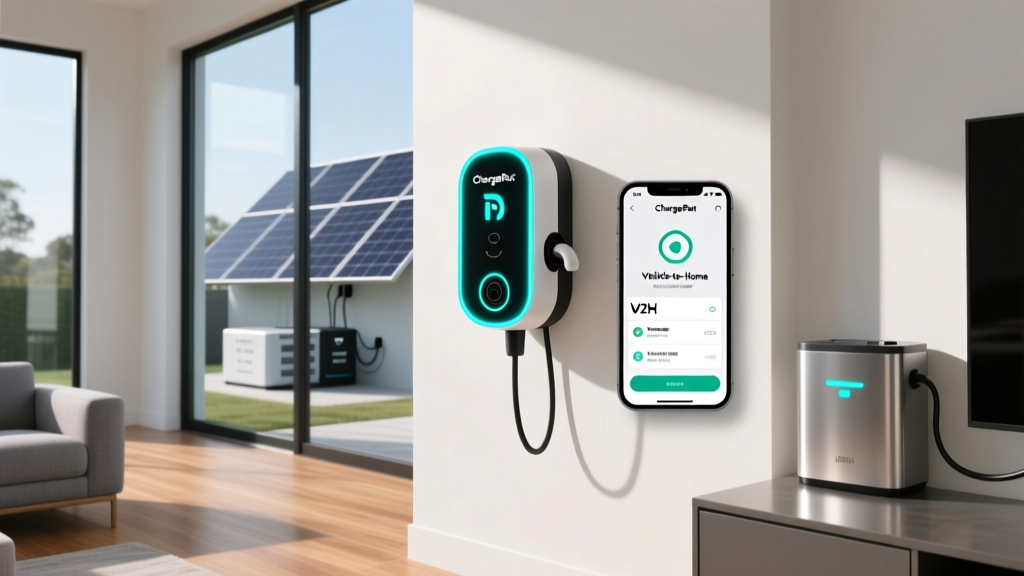
The ChargePoint Home Flex line has been a staple of residential Level 2 charging for several years. The bidirectional extension of ChargePoint's home platform adds V2H (Vehicle-to-Home) capability — meaning the charger, paired with a compatible vehicle and a home energy management system, can discharge the EV battery through your home's electrical panel.
Bidirectional charging is not the same as V2G (Vehicle-to-Grid), which sends power back to the utility grid. V2H keeps the energy local: your EV becomes a backup generator equivalent, typically supplying 3–10 kW of continuous household power depending on the inverter and vehicle.
Charging Levels Explained: Speeds in kW and Miles Per Hour
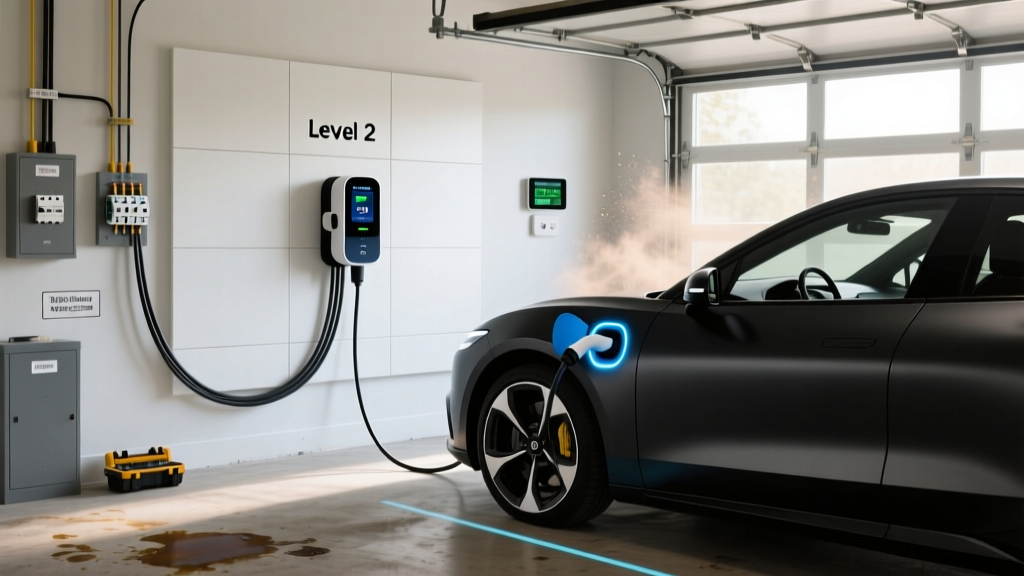
Before evaluating the ChargePoint bidirectional charger, you need the baseline speeds of each charging tier. These figures assume a typical EV efficiency of 3.0–3.5 miles per kWh.
| Level | Voltage / Power (kW) | Miles of Range Per Hour | Typical Use |
|---|---|---|---|
| Level 1 | 120V / 1.4–1.9 kW | 3–5 mi/hr | Overnight top-up, PHEVs, low-mileage drivers |
| Level 2 (Standard) | 240V / 7.7–11.5 kW | 25–40 mi/hr | Daily home charging, most BEVs |
| Level 2 (High-power) | 240V / 19.2 kW | 55–70 mi/hr | Large-battery EVs (F-150 Lightning, Hummer EV) |
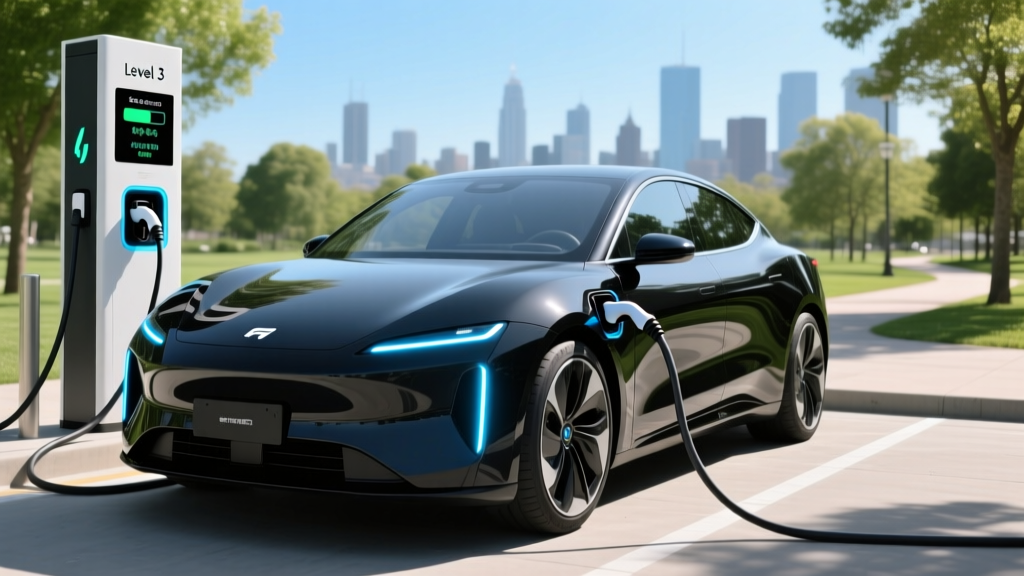
| DC Fast Charging | 50–350 kW | 150–1,000+ mi/hr (peak) | Road trips, rapid top-ups |
The ChargePoint bidirectional home unit operates at Level 2, delivering up to 19.2 kW (80A at 240V) on the charge side. Discharge (V2H) rates typically max out around 9.6 kW, which is sufficient to run essential home circuits — refrigerator, lights, HVAC fan, outlets — for 24–72 hours depending on battery size and household load.
Home Installation: Electrical Requirements, Costs, and Panel Upgrades
Bidirectional chargers demand more from your home's electrical system than a standard Level 2 wallbox. Here is what a licensed electrician will evaluate:
- Circuit requirement: A dedicated 100A circuit breaker (for 19.2 kW / 80A continuous draw) or a 60A breaker (for 11.5 kW / 48A). The bidirectional discharge path adds further requirements.
- Voltage: 240V split-phase, standard in US residential panels.
- Panel capacity: Most bidirectional installs require a 200A main service panel. Homes with 100A panels will almost certainly need an upgrade.
- Energy management system: V2H requires an automatic transfer switch or a smart panel (e.g., SPAN panel or ChargePoint's own energy management controller) to isolate your home from the grid during discharge — a code requirement to prevent backfeeding utility workers.
- Permit: Required in virtually all US jurisdictions for a new dedicated circuit and any panel work.
| Component | Low Estimate | High Estimate | Notes |
|---|---|---|---|
| ChargePoint bidirectional charger unit | $1,200 | $2,000 | Varies by power output and cable length |
| Energy management controller / transfer switch | $500 | $1,500 | Required for V2H isolation |
| Electrician labor (standard install) | $800 | $2,500 | Depends on run length, conduit, wall material |
| Electrical permit | $100 | $400 | Jurisdiction-dependent |
| Panel upgrade (if needed: 100A → 200A) | $2,000 | $5,000 | Major variable for older homes |
| Total (no panel upgrade) | $2,600 | $6,400 | |
| Total (with panel upgrade) | $4,600 | $11,400 | Panel upgrade is the largest cost swing |
The panel upgrade is the cost wildcard. If your home was built before the 1990s, there is a strong chance you have a 100A service. Adding a 80A continuous-load EV circuit to a 100A panel is usually not code-compliant, so budget for the upgrade or explore a smart load-management device that throttles charger draw when other circuits are active.
Connector Compatibility: NACS, CCS1, and Adapter Requirements
The ChargePoint bidirectional charger ships with a J1772/NACS connector configuration. Here is how that maps to the vehicles on the road in 2026:
| Connector | Native Vehicles | Adapter Needed? |
|---|---|---|
| NACS (Tesla plug) | Tesla (all), Ford (2025+), GM (2025+), Rivian (2025+), Volvo, Polestar, Hyundai/Kia (2026+ models) | No — native on new models |
| CCS1 | VW ID.4 (pre-2026), BMW iX, older Ford/GM EVs | Yes — CCS-to-NACS adapter (~$200–$300) |
| CHAdeMO | Nissan Leaf (legacy) | Not compatible with bidirectional home units |
Critical V2H caveat: Bidirectional discharge requires the vehicle itself to support it. As of 2026, confirmed V2H-capable vehicles include the Ford F-150 Lightning, GM Silverado EV, Hyundai Ioniq 5 (select trims with V2L/V2H hardware), and select Tesla models with Powerwall-integration firmware. Always confirm your specific model year and trim supports V2H before purchasing the charger — the charger alone cannot enable bidirectional flow if the vehicle's onboard inverter does not support it.
Charging Time Examples: 10–80% for Common Battery Sizes
Charge times depend on battery capacity (kWh), the charger's output (kW), and the vehicle's onboard charge acceptance rate. The figures below assume the ChargePoint bidirectional unit at its maximum 19.2 kW output and a vehicle that can accept the full rate:
- 60 kWh battery (e.g., Chevrolet Equinox EV): 10–80% (42 kWh needed) in approximately 2 hours 11 minutes.
- 82 kWh battery (e.g., Tesla Model Y Long Range): 10–80% (57 kWh needed) in approximately 2 hours 58 minutes.
- 100 kWh battery (e.g., GMC Sierra EV): 10–80% (70 kWh needed) in approximately 3 hours 39 minutes.
- 131 kWh battery (e.g., Ford F-150 Lightning Extended Range): 10–80% (92 kWh needed) in approximately 4 hours 48 minutes.
These are best-case numbers. Real-world Level 2 sessions lose roughly 5–10% to conversion inefficiency (AC-to-DC in the vehicle's onboard charger), and charge acceptance tapers as State of Charge (SoC) rises above 80%. Always plan around the lower end of these estimates.
Cost to Charge: Home vs. Public vs. Gas Per Mile
The economic case for home charging rests on the gap between residential electricity rates and gasoline prices. Here is a realistic breakdown:
| Scenario | Rate / Price | Cost Per Mile (at 3.2 mi/kWh or 28 MPG) |
|---|---|---|
| Home off-peak (utility time-of-use) | $0.09/kWh | $0.028/mi |
| Home average rate (US residential) | $0.17/kWh | $0.053/mi |
| Public Level 2 (ChargePoint network) | $0.25–$0.39/kWh | $0.078–$0.122/mi |
| DC Fast Charging (Electrify America, Tesla Supercharger) | $0.35–$0.56/kWh | $0.109–$0.175/mi |
| Gasoline (28 MPG combined, $3.40/gal) | $3.40/gal | $0.121/mi |
At home off-peak rates, the EV costs roughly one-quarter what a 28 MPG gas car costs per mile. Even at public DC fast-charging rates, the EV is competitive with or cheaper than gasoline. The V2H feature adds a further economic dimension: if your utility offers time-of-use rates, you can charge at $0.09/kWh overnight and discharge during peak hours when grid electricity costs $0.30+/kWh — effectively arbitraging the rate difference.
For the latest electricity rate data by state, the U.S. Energy Information Administration publishes monthly averages.
Equipment Recommendations: ChargePoint and Comparable Bidirectional Units
The bidirectional home charger market is still narrow in 2026. Here are the primary options with their specifications:
ChargePoint Home Flex (Bidirectional)
- Max output: 19.2 kW (80A) / adjustable down to 16A
- Connector: NACS (J1772 adapter included)
- Cable length: 23 ft
- Smart features: Wi-Fi, ChargePoint app scheduling, Alexa, load sharing
- V2H discharge: Up to 9.6 kW (requires compatible vehicle + transfer switch)
- Price: ~$1,299–$1,699
- Indoor/outdoor: NEMA 4 rated (outdoor-safe)
Ford Charge Station Pro (Bidirectional)
- Max output: 19.2 kW (80A)
- Connector: NACS (native for F-150 Lightning)
- Cable length: 25 ft
- Smart features: FordPass integration, intelligent backup power
- V2H discharge: Up to 9.6 kW with Home Integration System
- Price: ~$1,310 (charger) + ~$3,890 (Home Integration System)
- Indoor/outdoor: NEMA 4
Wallbox Quasar 2 (Bidirectional)
- Max output: 11.5 kW (48A) charge / 11.5 kW discharge
- Connector: NACS
- Cable length: 18 ft
- Smart features: myWallbox app, solar integration, Power Boost load management
- V2H discharge: Up to 11.5 kW
- Price: ~$1,495
- Indoor/outdoor: Indoor-rated (garage install)
For most households, the ChargePoint Home Flex bidirectional unit offers the best balance of price, adjustable amperage (important if your panel cannot support a full 80A circuit), and app ecosystem maturity. The Ford Charge Station Pro is the clear choice for F-150 Lightning owners who want a turnkey V2H system with Ford's Home Integration System.
Safety, Code, and Permitting Considerations
Bidirectional charging introduces complexity beyond a standard Level 2 install. Your electrician must address these code requirements:
- Dedicated circuit: The charger must be on its own breaker — no shared circuits with other appliances.
- GFCI protection: NEC 2023 and later require GFCI protection for all EV receptacles and hardwired units in garages and outdoor locations. The ChargePoint unit includes built-in ground-fault protection.
- Anti-islanding / transfer switch: V2H discharge must be electrically isolated from the grid during outages to protect line workers. This is non-negotiable and requires either an automatic transfer switch or a certified energy management system.
- NEMA rating: Outdoor installations require NEMA 4 (weather-resistant) or higher. All three units above meet this except the Wallbox Quasar 2, which should be garage-mounted.
- Permitting: Your electrician will pull an electrical permit; the inspector will verify wire gauge, breaker sizing, grounding, and the anti-islanding setup before approving. Budget 1–3 weeks for inspection depending on your municipality.
For the full text of NEC Article 625 (Electric Vehicle Charging), consult the National Fire Protection Association or your local building department.
Frequently Asked Questions
How much does it cost to install a ChargePoint bidirectional charger at home?
Expect $2,600–$6,400 for a standard installation (charger unit, transfer switch, electrician labor, and permit) if your home already has a 200A electrical panel. If a panel upgrade from 100A to 200A is needed, total costs rise to $4,600–$11,400. Get at least two quotes from licensed electricians — labor rates and conduit runs vary significantly by region.
How fast will each charging level add range to my EV?
Level 1 (120V) adds 3–5 miles per hour. Level 2 at 9.6 kW adds roughly 30–35 miles per hour. Level 2 at 19.2 kW adds 55–70 miles per hour. DC fast charging at 150 kW can add 300+ miles per hour at peak, though the charge curve tapers significantly above 80% State of Charge. See the charging levels table above for the full breakdown.
Which connector and charger is compatible with my EV?
In 2026, most new EVs sold in the US use the NACS connector natively (Tesla, Ford, GM, Rivian, Hyundai/Kia on newer models). Older CCS1 vehicles require a CCS-to-NACS adapter for Level 2 home charging. CHAdeMO vehicles (Nissan Leaf) are not compatible with bidirectional home units. Always verify that your specific vehicle supports V2H discharge — the charger alone does not enable this feature.
How much does EV charging cost per mile compared to gas?
At the US average residential electricity rate of $0.17/kWh and a typical EV efficiency of 3.2 miles/kWh, home charging costs about $0.053 per mile. A 28 MPG gas car at $3.40/gallon costs $0.121 per mile. Home off-peak rates ($0.09/kWh) drop EV cost to under $0.03/mile. Public DC fast charging at $0.45/kWh costs roughly $0.14/mile — still competitive with gas but far above home charging.
What electrical upgrades might I need for a bidirectional charger?
The most common and expensive upgrade is a main service panel increase from 100A to 200A ($2,000–$5,000). You will also need a dedicated 60A–100A circuit, an automatic transfer switch or smart energy management controller for V2H isolation, and a permit. Homes built after 2000 with 200A panels often need only the dedicated circuit and transfer switch.
Does the federal tax credit cover bidirectional charger installation?
The IRS §30C Alternative Fuel Vehicle Refueling Property Credit covers up to 30% of the cost of home EV charging equipment and installation, capped at $1,000. This applies to the charger hardware and electrician labor. Eligibility depends on your census tract (must be a non-urban or low-income area) and is subject to annual IRS guidance. Consult a tax professional to confirm your eligibility before filing.
The ChargePoint bidirectional charger is a viable home energy resilience tool in 2026 — but only if your vehicle supports V2H, your electrical panel can handle the load, and you are prepared for the installation investment. For F-150 Lightning owners and those with compatible GM or Hyundai platforms, the math works: backup power during outages, potential utility rate arbitrage, and daily Level 2 charging from a single wall-mounted unit. For households with older panels and non-V2H vehicles, a standard ChargePoint Home Flex (non-bidirectional) at $699 remains the more cost-effective path.