When ChargePoint introduces a new compact 600 kW standalone EV charger, it signals a shift in public charging infrastructure — one that finally catches up to the 800-volt battery architectures now common in vehicles like the Hyundai Ioniq 5, Kia EV6, Porsche Taycan, and Lucid Air. But what does a 600 kW (kilowatt) peak power station actually mean for your daily driving, and how does it compare to charging at home? This guide breaks down the new hardware, contextualizes it within the broader charging ecosystem, and gives you the exact numbers you need to plan your charging strategy.
Understanding Charging Levels: Level 1, Level 2, and DC Fast Charging
Before evaluating any new public charger, you need to understand the three tiers of EV charging. The critical distinction: kW (kilowatts) measures power — how fast energy flows into your battery. kWh (kilowatt-hours) measures energy — the total capacity of your battery, like gallons in a fuel tank. A 600 kW charger delivers power at a rate that would fill a 60 kWh battery in roughly six minutes — if your car could accept that rate, which currently none can at full speed.
| Charging Level | Voltage | Power Output (kW) | Miles of Range Added Per Hour | Typical Use Case |
|---|---|---|---|---|
| Level 1 (120V AC) | 120V | 1.2–1.9 kW | 3–5 miles/hr | Overnight trickle; PHEV top-ups |
| Level 2 (240V AC) | 240V | 3.3–19.2 kW | 12–75 miles/hr | Home daily charging; workplace |
| DC Fast Charging | 200–900V DC | 50–600 kW | 150–1,200+ miles/hr (peak) | Road trips; rapid top-ups |
Level 1 is what you get from a standard household outlet — adequate for plug-in hybrids with small batteries (e.g., the Toyota RAV4 Prime's 18.1 kWh pack) but painfully slow for a full BEV. Level 2 at 240V is the backbone of home charging and covers 95% of daily needs. DC fast charging bypasses the vehicle's onboard charger and feeds DC current directly to the battery, which is why it can deliver such extreme power levels.
ChargePoint's 600 kW Standalone Charger: What Changes
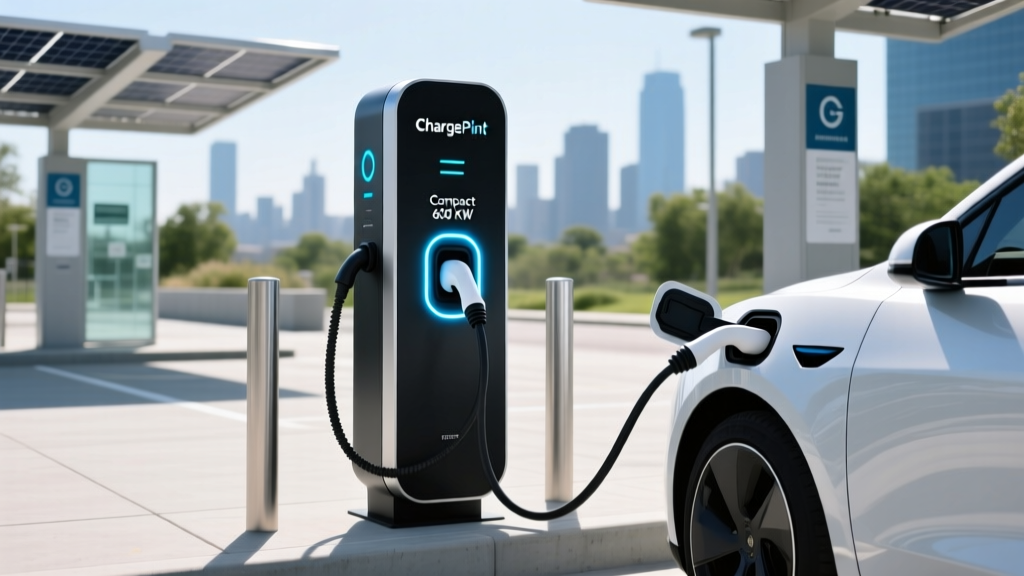
When ChargePoint introduces its new compact 600 kW standalone EV charger, it's targeting a specific gap in the market: ultra-high-power dispensers that don't require massive power cabinets or multi-stall configurations. Previous ChargePoint Express Plus stations topped out at 400 kW per connector and required modular power blocks. The new 600 kW standalone unit consolidates power delivery into a single pedestal, reducing the physical footprint and installation complexity for site hosts.
For drivers, the practical benefit depends entirely on your vehicle's maximum charge acceptance rate. Here's where things stand in 2026:
- 800V architecture vehicles (Hyundai Ioniq 5/6, Kia EV6/EV9, Genesis GV60, Porsche Taycan, Lucid Air): Can accept 250–350 kW peak, with some models approaching 400 kW on compatible chargers. These vehicles will benefit most from the new 600 kW stations, as they can sustain high charge rates longer without the charger being the bottleneck.
- 400V architecture vehicles (Tesla Model 3/Y, Ford Mustang Mach-E, VW ID.4, Chevrolet Equinox EV): Typically peak between 150–250 kW. They won't utilize the full 600 kW but will still charge at their maximum capable rate without the charger limiting throughput.
- Future 800V+ vehicles: As battery chemistries and thermal management improve, vehicles accepting 400–500+ kW are expected within the next few model years. ChargePoint is building infrastructure ahead of that curve.
How Fast Will Each Charging Level Add Range?
The miles-per-hour figures above assume average efficiency. Real-world results vary based on your vehicle's kWh/100mi consumption. A highly efficient vehicle like the Lucid Air (~4.0 miles/kWh) will gain more range per minute of charging than a heavier, less efficient vehicle like the GMC Hummer EV (~1.6 miles/kWh), even at the same charger power output.
Here are approximate 10–80% charging times for common battery sizes at different charging levels:
| Battery Size | Level 2 (11.5 kW / 48A) | DC Fast (150 kW) | DC Fast (350 kW)* | DC Fast (600 kW)** |
|---|---|---|---|---|
| 60 kWh (e.g., base Tesla Model 3) | ~3.5 hours | ~25 min | ~18 min | ~18 min (vehicle-limited) |
| 77 kWh (e.g., Hyundai Ioniq 5) | ~4.5 hours | ~30 min | ~18 min | ~16 min (vehicle-limited) |
| 100 kWh (e.g., Ford F-150 Lightning Ext.) | ~6 hours | ~40 min | ~28 min | ~28 min (vehicle-limited) |
| 118 kWh (e.g., GMC Hummer EV) | ~7 hours | ~50 min | ~35 min | ~35 min (vehicle-limited) |
*350 kW times assume an 800V-architecture vehicle capable of accepting that rate. **600 kW times reflect current vehicle limitations — no production EV in 2026 can sustain 600 kW acceptance.
Home EV Charger Installation: Costs, Electrical Requirements, and Panel Upgrades
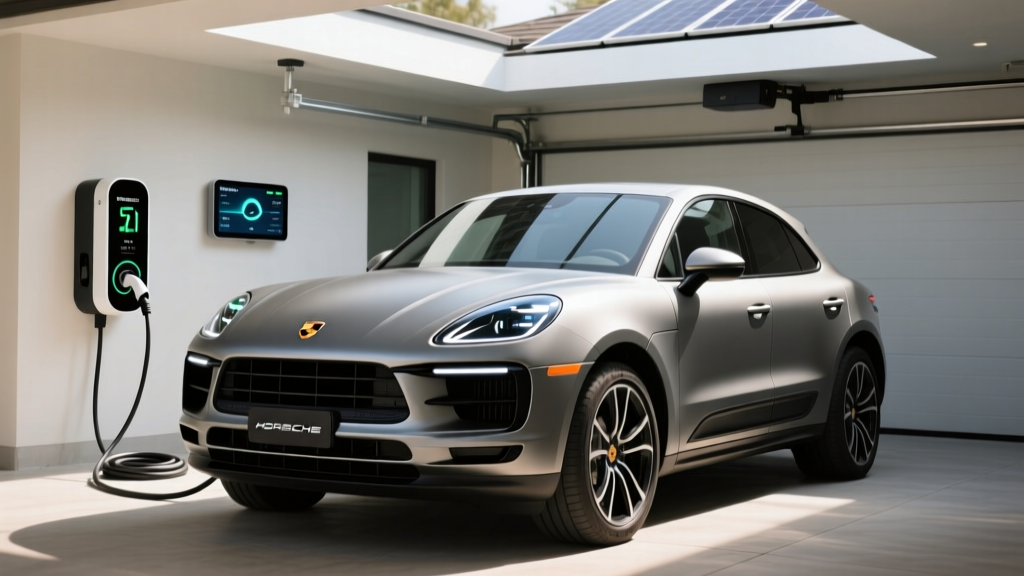
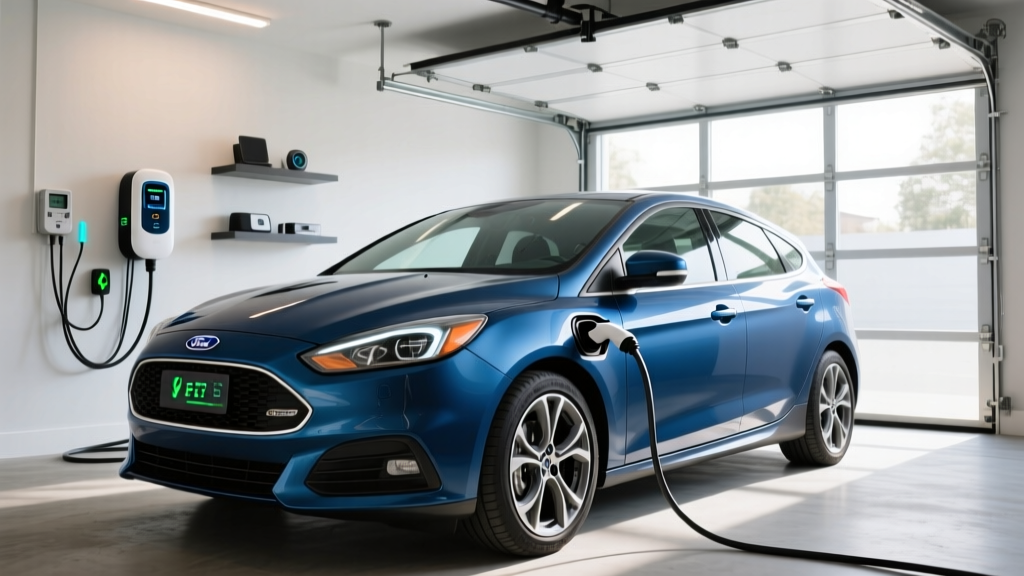
Public charging infrastructure like ChargePoint's new 600 kW stations is essential for road trips, but the vast majority of EV charging — roughly 80–90% for most owners — happens at home. Installing a Level 2 home charger is the single most impactful upgrade you can make for EV ownership convenience.
Electrical Requirements
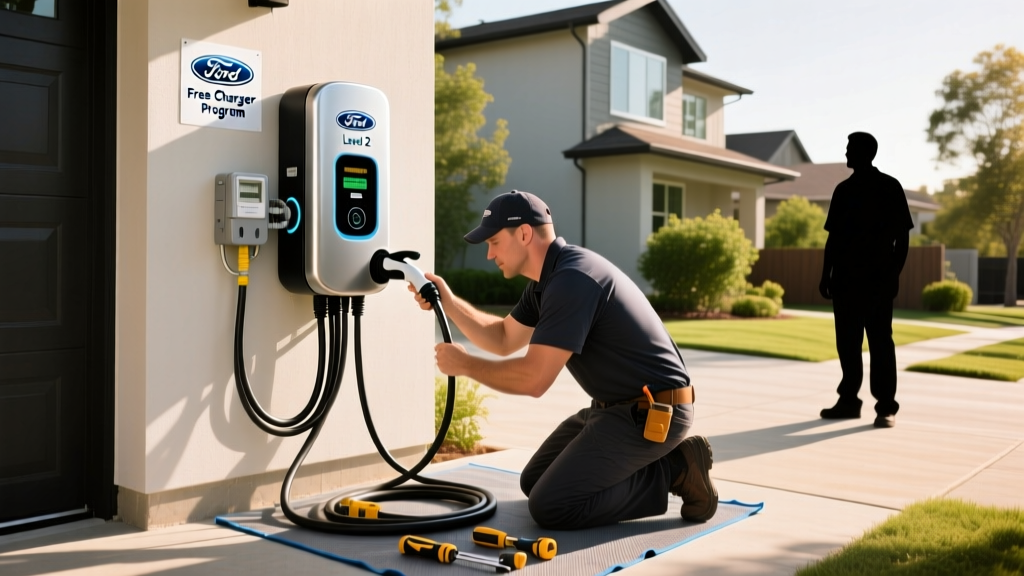
A typical Level 2 home charger requires a 240-volt dedicated circuit, similar to what powers an electric dryer or oven. Common configurations include:
- 40-amp circuit / 32-amp continuous (7.7 kW): Suitable for most daily charging needs; adds ~25–30 miles per hour of charging.
- 50-amp circuit / 40-amp continuous (9.6 kW): Faster charging; adds ~35–40 miles per hour.
- 60-amp circuit / 48-amp continuous (11.5 kW): Ideal for larger-battery vehicles; adds ~40–50 miles per hour.
- 80-amp circuit / 64-amp continuous (15.3–19.2 kW): Requires hardwiring and significant panel capacity; used by the Tesla Wall Connector at max output or the ChargePoint Home Flex configured for high amperage.
Panel Upgrade Considerations
Older homes with 100-amp electrical panels may not have sufficient spare capacity to add a 40–60 amp dedicated EV circuit. A licensed electrician will perform a load calculation to determine whether your panel can handle the additional draw. If an upgrade to a 200-amp panel is required, this is a significant added cost — but it also increases your home's resale value and prepares you for future electrification (heat pumps, solar, etc.).
| Cost Component | Low-End Estimate | High-End Estimate | Notes |
|---|---|---|---|
| Level 2 Charger Equipment | $350 | $750 | Varies by brand, power output, smart features |
| Electrician Labor (standard install) | $400 | $1,200 | Depends on run length from panel to garage/carport |
| Permit Fees | $50 | $250 | Varies by municipality |
| Electrical Panel Upgrade (if needed) | $1,500 | $4,000 | 100A → 200A service upgrade; not always required |
| Total (no panel upgrade) | $800 | $2,200 | Typical scenario for modern homes |
| Total (with panel upgrade) | $2,300 | $6,200 | Older homes needing service upgrade |
The federal Alternative Fuel Vehicle Refueling Property Credit (IRS Form 8911) may cover up to 30% of home charging equipment and installation costs, capped at $1,000, subject to census-tract eligibility. Consult a tax professional to confirm your qualification.
Connector Compatibility: NACS, CCS1, and CHAdeMO in 2026
The connector landscape has consolidated significantly since Ford, GM, and most major automakers adopted the North American Charging Standard (NACS) — originally Tesla's proprietary connector — beginning in 2024–2025. Here's where things stand for the 2026 model year:
| Connector Type | Compatible Brands | Notes |
|---|---|---|
| NACS (J3400) | Tesla, Ford, GM, Rivian, Volvo, Polestar, Mercedes-Benz, Nissan, Honda, Fisker, Lucid, BMW, Hyundai/Kia (select models) | Now the dominant standard in North America; smaller, lighter connector |
| CCS1 (Combined Charging System) | Hyundai/Kia (older models), VW, BMW (older models), Stellantis, legacy EVs | Still widely available at public stations; being phased out by most OEMs |
| CHAdeMO | Nissan Leaf (legacy), Mitsubishi Outlander PHEV | Effectively discontinued for new vehicles; limited new station deployment |
If you own a CCS1-equipped vehicle, NACS-to-CCS1 adapters (such as those offered by Tesla, A2Z, and Lectron) allow you to use Tesla Superchargers and NACS-equipped public stations. These adapters typically cost $150–$250 and are rated for up to 250 kW DC fast charging. Verify your adapter's maximum power rating — using an underspecified adapter at a 600 kW station won't damage your car (the vehicle controls the draw), but you'll be limited to the adapter's rated throughput.
Cost to Charge: Home vs. Public vs. Gas
One of the most common questions from prospective EV buyers is whether charging actually saves money. The answer depends heavily on where and when you charge.
| Charging Scenario | Avg. Cost ($/kWh) | Cost Per Mile* | Equivalent Gas Price** |
|---|---|---|---|
| Home (off-peak utility rate) | $0.08–$0.14 | $0.02–$0.04 | $0.60–$1.20/gallon |
| Home (standard residential rate) | $0.13–$0.20 | $0.04–$0.06 | $1.00–$1.70/gallon |
| Public Level 2 (network pricing) | $0.25–$0.49 | $0.07–$0.14 | $2.00–$4.00/gallon |
| DC Fast Charging ( Electrify America, EVgo, etc.) | $0.35–$0.65 | $0.10–$0.18 | $3.00–$5.50/gallon |
| Tesla Supercharger (varies by location) | $0.25–$0.45 | $0.07–$0.13 | $2.00–$3.75/gallon |
| Gasoline (2026 U.S. avg., 30 MPG vehicle) | — | $0.11–$0.14 | $3.30–$4.20/gallon |
*Cost per mile calculated assuming 3.0 miles/kWh (average EV efficiency, ~333 Wh/mi). **Equivalent gas price = what you'd pay per gallon of gas to travel the same distance at the same per-mile cost, assuming 30 MPG.
The takeaway: home charging during off-peak hours is dramatically cheaper than gasoline — often by a factor of 5–10x on a per-mile basis. Public DC fast charging narrows the gap and can occasionally exceed the cost of gas, especially at premium-priced urban stations. This is why home charging access remains the single biggest predictor of EV ownership satisfaction.
Recommended Home Charging Equipment for 2026
The home charger market has matured significantly. Here are our top picks based on reliability, power output, smart features, and value:
Tesla Wall Connector (Gen 4)
- Power Output: Up to 19.2 kW (80A circuit, 48A continuous) with NACS connector
- Cable Length: 24 feet
- Smart Features: Wi-Fi, OTA updates, load sharing between multiple units, Powerwall integration
- Price: ~$475
- Best For: Tesla owners and NACS-equipped vehicles seeking maximum home charge speed
ChargePoint Home Flex
- Power Output: Configurable up to 12 kW (50A circuit) with included NACS or CCS connector
- Cable Length: 23 feet
- Smart Features: Wi-Fi, app scheduling, Alexa integration, flexible amperage settings to match your circuit
- Price: ~$550–$650
- Best For: Multi-EV households; adjustable amperage avoids panel upgrades
Emporia Vue Level 2 Charger
- Power Output: Up to 11.5 kW (60A circuit, 48A continuous); NACS connector (2026 model)
- Cable Length: 24 feet
- Smart Features: Energy monitoring, solar integration, load management, budget-friendly app
- Price: ~$350–$400
- Best For: Budget-conscious buyers; solar-panel owners wanting integrated energy tracking
Regardless of which unit you choose, ensure it carries UL certification (or equivalent NRTL listing) and is rated for your installation environment (indoor vs. outdoor, NEMA 4 rating for weather exposure).
Safety, Code, and Installation Best Practices
EV charging equipment installation must comply with the National Electrical Code (NEC) Article 625 and any local amendments. Key requirements include:
- Dedicated circuit: Your EV charger must be on its own dedicated breaker — no sharing with other appliances.
- GFCI protection: The 2020 NEC and later require GFCI (Ground Fault Circuit Interrupter) protection for all EV charging outlets. Hardwired units may have GFCI built into the charger itself.
- Continuous load derating: EV charging is classified as a continuous load (3+ hours). NEC requires the circuit to be rated at 125% of the charger's maximum draw — hence a 48A charger requires a 60A breaker.
- Outdoor rating: If your charger is installed outside (carport, driveway pedestal), the enclosure must be rated NEMA 3R or NEMA 4 for weather resistance.
- Permit and inspection: Most jurisdictions require an electrical permit and post-installation inspection. Skipping this can void homeowner's insurance coverage and create liability issues.
Always hire a licensed electrician familiar with EV charger installations. The National Fire Protection Association maintains the NEC and provides resources for both homeowners and electricians on EV charging safety.
Where ChargePoint's 600 kW Charger Fits in Your Strategy
The introduction of ChargePoint's compact 600 kW standalone charger is a milestone for public infrastructure, but it doesn't change the fundamental economics of EV ownership. The optimal charging strategy in 2026 remains:
- Charge at home whenever possible — it's cheaper, more convenient, and gentler on your battery (Level 2 charging generates less heat and stress than repeated DC fast charging).
- Use DC fast charging for road trips — ultra-high-power stations like ChargePoint's new 600 kW unit minimize stop times on long drives, bringing them closer to the 15–20 minute refueling stops of a gas car.
- Precondition your battery before arriving at a DC fast charger. Most EVs do this automatically when you navigate to a charging station, warming the battery to its optimal temperature for maximum charge acceptance. Skipping preconditioning can add 5–10 minutes to your session, especially in cold weather.
- Charge to 80% on DC fast chargers unless you need the full range. The charge curve tapers sharply above 80% SoC, meaning the last 20% can take as long as the first 60%. For road trips, it's faster to charge 10–80% and make more stops than to wait for 100%.
Frequently Asked Questions
How much does it cost to install a home EV charger?
A typical Level 2 home charger installation costs between $800 and $2,200 if your electrical panel has sufficient capacity. If you need a panel upgrade from 100A to 200A service, total costs can range from $2,300 to $6,200. Equipment alone runs $350–$750, with labor and permits making up the rest. The federal Alternative Fuel Vehicle Refueling Property Credit may offset up to $1,000 (30% of costs) depending on your census tract.
How fast will each charging level add range?
Level 1 (120V) adds roughly 3–5 miles of range per hour. Level 2 (240V) adds 12–75 miles per hour depending on amperage (a 48A/11.5 kW circuit adds ~40–50 miles/hr for an average EV). DC fast charging at 150 kW can add 150+ miles in 15 minutes, while 350 kW stations can add 200+ miles in the same timeframe — provided your vehicle can accept that power level.
Which connector is compatible with my EV?
For the 2026 model year, most new EVs sold in North America use the NACS (J3400) connector, including all Tesla models, Ford, GM, Rivian, Volvo, and many others. CCS1 is still found on some Hyundai, Kia, and VW models. CHAdeMO is limited to legacy Nissan Leaf and Mitsubishi vehicles. Check your owner's manual or the EPA's fueleconomy.gov database for your specific model's connector type.
How much does charging cost per mile vs. gas?
Home charging at off-peak rates typically costs $0.02–$0.04 per mile — equivalent to paying $0.60–$1.20 per gallon of gasoline. Standard residential rates bring this to $0.04–$0.06/mile. Public DC fast charging costs $0.10–$0.18 per mile, which can approach or exceed the cost of gasoline depending on local fuel prices and your vehicle's fuel economy. The average gas vehicle at 30 MPG with $3.50/gallon fuel costs about $0.12 per mile.
What electrical upgrades might I need?
If your home has a 200-amp electrical panel with available capacity, you likely need no upgrade — just a dedicated 40–60 amp circuit. Homes with 100-amp panels or those already near capacity (multiple electric appliances, central AC) may require a panel upgrade to 200A service, costing $1,500–$4,000. A licensed electrician will perform a load calculation per NEC Article 220 to determine your panel's spare capacity before recommending a circuit size.