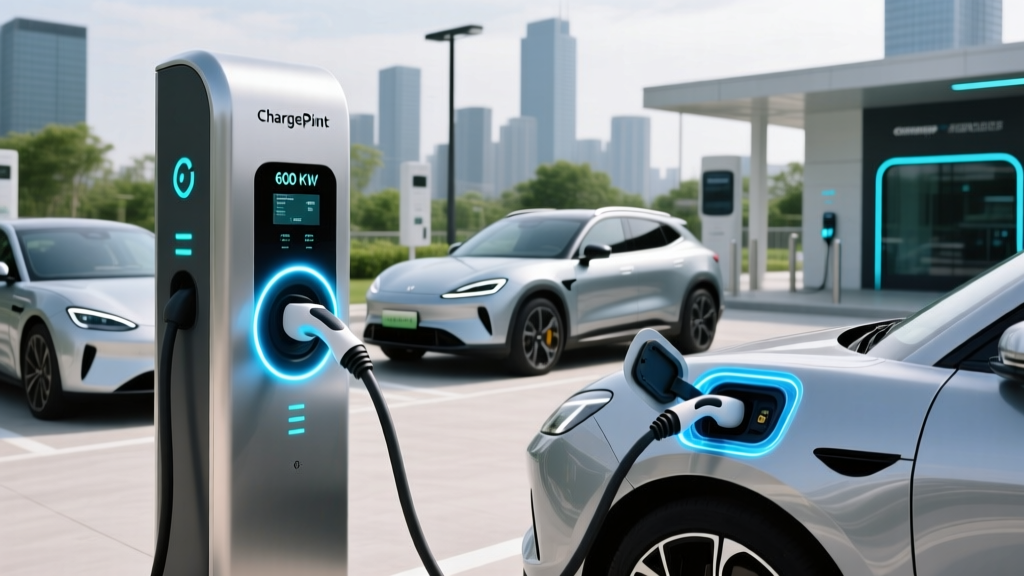
The headline is eye-catching: ChargePoint introduces 600 kW charger for faster electric vehicle charging, pushing the boundary of public DC fast-charging infrastructure well beyond the 350 kW ceiling that has defined the industry for the past several years. But before you picture five-minute fill-ups, it's worth understanding what 600 kW actually delivers, which EVs can accept it, and how it fits into the broader charging ecosystem that still includes your home Level 2 wallbox.
This guide covers the full charging landscape in 2026 — from the new ultra-fast public chargers down to the 240V circuit in your garage — with exact numbers on speed, cost, equipment, and installation.
Charging Levels Explained: Speeds in kW and Miles Per Hour
The most common mistake new EV buyers make is confusing kW (kilowatts, a measure of power or charge rate) with kWh (kilowatt-hours, a measure of energy or battery capacity). Think of kW as the width of the hose and kWh as the size of the bucket. A 600 kW charger can push energy into a battery six times faster than a 100 kW charger — but only if the vehicle's battery management system (BMS) allows it.
| Level | Voltage | Power (kW) | Miles of Range Added Per Hour | Typical Use Case |
|---|---|---|---|---|
| Level 1 | 120V AC | 1.2–1.9 kW | 3–5 mi/hr | Overnight trickle, PHEVs, emergencies |
| Level 2 | 240V AC | 3.3–19.2 kW | 12–75 mi/hr | Home daily charging, workplace, hotels |
| DC Fast (50–150 kW) | 400–800V DC | 50–150 kW | 150–400 mi/hr | Road trips, quick top-ups |
| DC Ultra-Fast (150–350 kW) | 400–900V DC | 150–350 kW | 400–900 mi/hr | Highway corridor chargers |
| DC Ultra-Fast (350–600 kW) | 800–1000V DC | 350–600 kW | 900–1,500+ mi/hr | Next-gen highway hubs, fleet depots |
What ChargePoint's 600 kW Charger Actually Means for EV Owners
ChargePoint's Express 600 kW system uses a modular power-sharing architecture: a central power cabinet distributes up to 600 kW across multiple dispensers. In a single-vehicle scenario with a compatible 800V+ architecture EV, a single connector can deliver the full 600 kW. When multiple vehicles plug in simultaneously, power is dynamically split.
For context, here's what 10–80% charging looks like at different power levels for a typical 84 kWh battery (like a Hyundai Ioniq 5 or similar mid-size crossover):
| Charger Power | Estimated 10–80% Time | Notes |
|---|---|---|
| 50 kW DC | ~75 minutes | Sustained rate, older CCS stations |
| 150 kW DC | ~35 minutes | Common Electrify America rate |
| 250 kW DC (Tesla V3 Supercharger) | ~18–22 minutes | With preconditioned battery |
| 350 kW DC | ~15–18 minutes | Requires 800V architecture (Ioniq 5, Taycan) |
| 600 kW DC (ChargePoint Express) | ~9–12 minutes* | *Requires future vehicles with 600 kW acceptance; current EVs limited to ~350 kW max |
As of 2026, only a handful of production vehicles — primarily the Porsche Taycan, Hyundai Ioniq 5/6, Kia EV6/EV9, and Genesis Electrified GV70 with 800V architectures — can accept above 250 kW. Even these peak around 300–350 kW. The ChargePoint 600 kW infrastructure is forward-looking: it's built for the next generation of EVs with improved cell chemistries (such as advanced LFP and silicon-anode cells) that can handle higher C-rates without excessive degradation.
According to ChargePoint's product documentation, the system is designed for highway corridors and fleet depots where minimizing dwell time is critical. For the average EV owner charging at home overnight, this technology doesn't change daily routine — but it dramatically improves the road-trip experience as compatible vehicles roll out.
Home Charging Setup: Electrical Requirements and Installation Costs
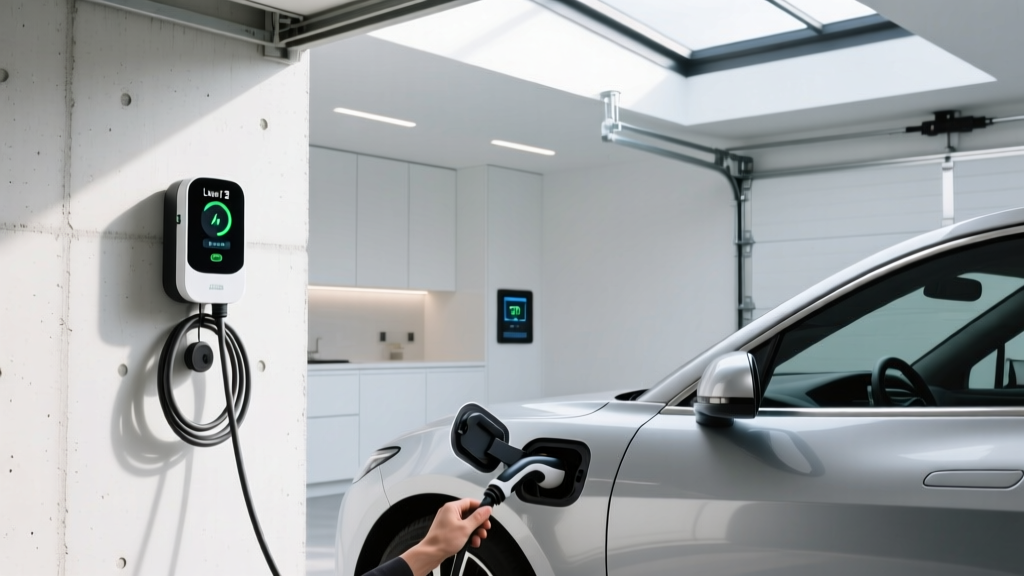
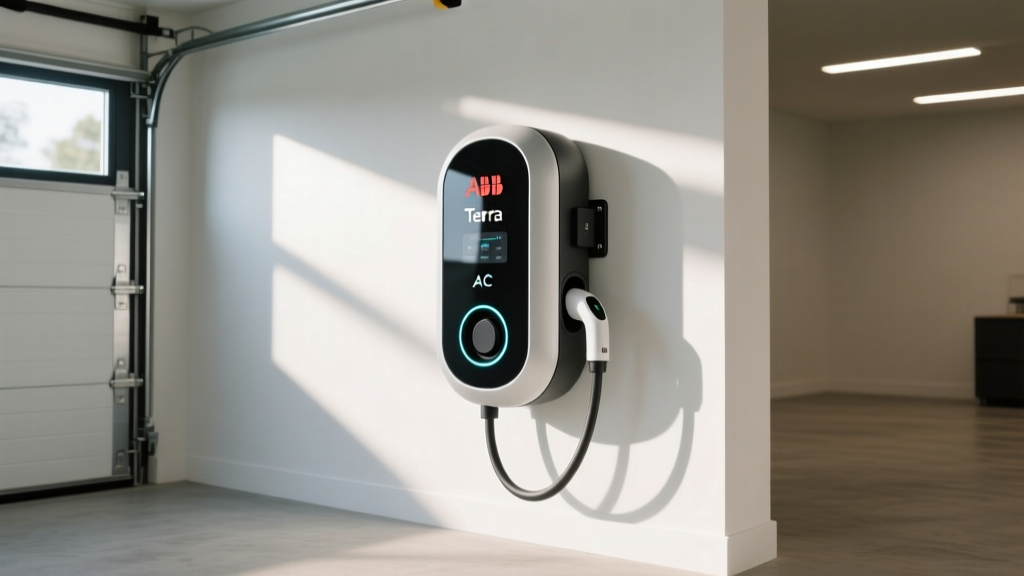
While public DC charging grabs headlines, 80–90% of all EV charging happens at home on Level 2. Here's what a proper home installation requires in 2026.
Electrical Requirements
- Circuit: Dedicated 240V circuit, typically 40A or 50A (supporting 32A or 40A continuous draw, respectively — NEC requires circuits rated at 125% of continuous load)
- Wire gauge: 6 AWG copper for 50A circuits; 8 AWG for 40A
- Outlet vs. hardwired: NEMA 14-50 outlet offers portability; hardwired avoids GFCI nuisance tripping common with some 14-50 receptacles
- Panel capacity: Most Level 2 chargers at 40A continuous require at least 150A–200A main service. Older homes with 100A panels often need an upgrade.
Panel Upgrade Reality
This is the cost that surprises many homeowners. If your home has a 100A main panel, adding a 50A EV circuit may push total calculated load beyond code limits, requiring a panel upgrade to 200A. In some cases, a load-management device (like the Emporia Smart Load Center or Tesla Wall Connector with power-sharing) can avoid a full upgrade by dynamically throttling charger draw when other appliances are active.
| Component | Cost Range | Notes |
|---|---|---|
| Level 2 Charger (Equipment) | $350–$750 | Smart Wi-Fi chargers; dumb units from $250 |
| Electrician Labor (standard install) | $500–$1,500 | Depends on run length from panel to garage |
| Permit & Inspection | $50–$300 | Varies by municipality |
| Electrical Panel Upgrade (if needed) | $1,500–$4,000 | 100A → 200A; includes new panel + labor |
| Total (no panel upgrade) | $900–$2,550 | Typical suburban home with 200A panel |
| Total (with panel upgrade) | $2,400–$6,550 | Older homes, longer wire runs |
Always hire a licensed electrician and pull a permit. Unpermitted EV charger installations can void homeowners insurance claims and cause issues at resale. According to the National Electrical Contractors Association, EV charger circuits are among the most common residential electrical upgrades in 2026.
Safety and Code Considerations
- GFCI protection: NEC 2023/2026 requires GFCI on 14-50 receptacles used for EV charging; hardwired installations bypass this requirement
- Outdoor rating: If your charger is mounted outside, ensure NEMA 4 (weatherproof) rating; most major chargers meet this
- Dedicated circuit: Never share the EV charger circuit with other appliances — dryers, ovens, or HVAC
- Cable management: Use a holster or retractor to keep cables off the ground and prevent trip hazards
Connector Compatibility: NACS, CCS1, and CHAdeMO in 2026
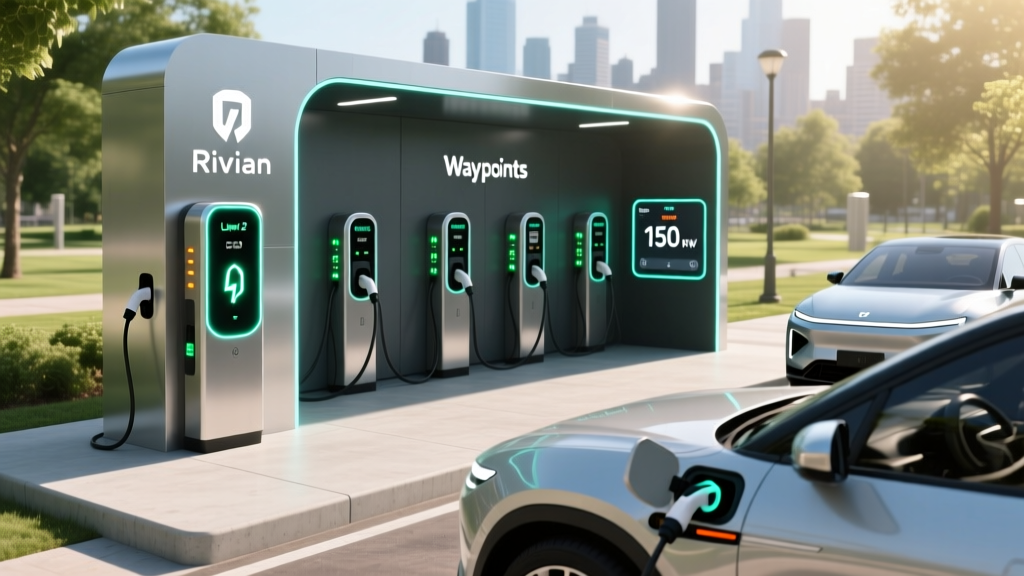
The connector landscape has consolidated dramatically since Ford, GM, Rivian, and most major automakers adopted the North American Charging Standard (NACS), originally developed by Tesla. Here's where things stand in 2026:
| Connector | Brands Using It Natively | DC Fast-Charge Network Access |
|---|---|---|
| NACS (Tesla standard) | Tesla, Ford, GM, Rivian, Volvo, Polestar, Mercedes-Benz, Hyundai/Kia (select 2026+ models) | Tesla Supercharger, Electrify America (NACS dispensers), ChargePoint, EVgo |
| CCS1 | VW, BMW, Stellantis/Jeep, Hyundai/Kia (pre-2026 models), legacy models | Electrify America, EVgo, ChargePoint, Ionity (Europe) |
| CHAdeMO | Nissan Leaf (legacy only, discontinued in US) | Limited; most networks phasing out CHAdeMO dispensers |
Adapter needs: If you own a CCS1-equipped EV, a CCS-to-NACS adapter ($150–$300) grants access to Tesla Superchargers. Ford and Rivian provide these adapters at no cost to original purchasers. Conversely, NACS-native vehicles can use a NACS-to-CCS adapter at legacy CCS-only stations, though availability of these adapters is more limited.
ChargePoint's 600 kW dispensers are being deployed with both NACS and CCS1 connector options, ensuring compatibility across the current fleet. The system's liquid-cooled cables are necessary at these power levels — uncooled cables would overheat above 250 kW.
Cost to Charge: Home vs. Public vs. DC Fast Charging
Charging costs vary enormously depending on where and when you plug in. Here's a realistic breakdown for 2026:
| Scenario | $/kWh | Cost for 300 mi (84 kWh Battery, ~3.5 mi/kWh) | Cost Per Mile |
|---|---|---|---|
| Home, off-peak utility rate | $0.08–$0.14 | $1.92–$3.36 | $0.02–$0.03 |
| Home, standard residential rate | $0.14–$0.20 | $3.36–$4.80 | $0.03–$0.05 |
| Public Level 2 (workplace, shopping) | $0.20–$0.35 | $4.80–$8.40 | $0.05–$0.09 |
| DC Fast (Electrify America, EVgo) | $0.35–$0.55 | $8.40–$13.20 | $0.09–$0.14 |
| Tesla Supercharger (varies by location) | $0.25–$0.45 | $6.00–$10.80 | $0.06–$0.12 |
| Gas car (28 MPG combined, $3.40/gal) | — | $36.43 | $0.12 |
The economics are clear: home charging is 3–6× cheaper per mile than gasoline. Even the most expensive DC fast charging is often comparable to or cheaper than gas on a per-mile basis. However, relying exclusively on public DC fast charging erodes the cost advantage significantly — which is why home Level 2 access remains the single most important factor in EV ownership satisfaction.
Data from the U.S. Department of Energy's fueleconomy.gov consistently shows that EVs charged primarily at home deliver fuel cost savings of $600–$1,200 annually compared to a 28 MPG gas car driven 12,000 miles per year.
Recommended Home Level 2 Chargers (2026)
These are the chargers we recommend based on real-world testing, reliability, and smart features:
ChargePoint Home Flex
- Power: Up to 12 kW (50A circuit, 40A continuous)
- Connector: NACS or J1772 (configurable)
- Cable length: 23 ft
- Smart features: Wi-Fi, app scheduling, Alexa integration, energy tracking
- Price: ~$550–$650
- Best for: Most homeowners; flexible amperage dial for older panels
Tesla Wall Connector
- Power: Up to 11.5 kW (48A continuous on 60A circuit)
- Connector: NACS native
- Cable length: 24 ft
- Smart features: Wi-Fi, power-sharing between multiple units, OTA updates
- Price: ~$475
- Best for: Tesla owners; multi-EV households (power-sharing)
Emporia Vue EV Charger
- Power: Up to 11.5 kW (48A continuous)
- Connector: J1772 (NACS adapter available)
- Cable length: 24 ft
- Smart features: Whole-home energy monitoring integration, solar-aware scheduling
- Price: ~$400–$500
- Best for: Solar owners; budget-conscious buyers wanting smart features
All three chargers carry NEMA 4 outdoor ratings, UL listing, and qualify for the federal Alternative Fuel Vehicle Refueling Property Credit (§30C), which covers up to 30% of equipment and installation costs (max $1,000 for residential) if you live in an eligible census tract. Check the IRS §30C guidelines for current eligibility maps.
Frequently Asked Questions
How much does it cost to install a home EV charger?
A standard Level 2 home installation with a 200A panel and short wire run costs $900–$2,550 total (equipment, electrician, permit). If your home requires a panel upgrade from 100A to 200A, add $1,500–$4,000, bringing the total to $2,400–$6,550. Load-management devices can sometimes avoid a panel upgrade for $200–$400.
How fast will each charging level add range?
Level 1 (120V) adds 3–5 miles per hour — adequate for PHEVs with small batteries but impractical for full EVs. Level 2 (240V) at 40A adds roughly 30–35 miles per hour, fully recharging most EVs overnight in 8–10 hours. DC fast charging at 150 kW adds 150+ miles in 20 minutes; at 350 kW with a compatible vehicle, you can add 200 miles in under 15 minutes. The new ChargePoint 600 kW chargers promise even faster times once vehicles with 600 kW acceptance capability reach the market.
Which connector/charger is compatible with my EV?
Check your vehicle's charge port. If you drive a 2025+ Ford, GM, Rivian, Volvo, or Tesla, you likely have NACS. Most pre-2025 non-Tesla EVs use CCS1. The Nissan Leaf (discontinued in the US) used CHAdeMO. For home Level 2 charging, all non-Tesla EVs use the J1772 connector; Teslas use NACS but include a J1772 adapter. Adapters exist for nearly every combination, but native compatibility is always preferred for reliability.
How much does charging cost per mile vs. gas?
Home-charged EVs cost $0.02–$0.05 per mile depending on your utility rate. A comparable 28 MPG gas car at $3.40/gallon costs $0.12 per mile. That's a savings of $0.07–$0.10 per mile, or roughly $840–$1,200 per year at 12,000 miles driven. Public DC fast charging narrows the gap to $0.09–$0.14/mile, making home access critical for maximum savings.
What electrical upgrades might I need?
The most common upgrade is a panel capacity increase from 100A to 200A main service, needed when your home's total calculated electrical load (including the new 50A EV circuit) exceeds your panel's rating. Other potential upgrades include: running new conduit from the panel to the garage ($5–$15/foot), upgrading the meter socket if utility-required, or installing a load-management controller to share capacity between the charger and other heavy loads like HVAC. Your electrician will perform a load calculation per NEC Article 220 to determine requirements.
Will ChargePoint's 600 kW chargers work with my current EV?
Yes — but you won't see 600 kW speeds. The chargers are backward-compatible and will deliver power at whatever rate your vehicle's BMS requests. A Tesla Model Y will charge at up to ~250 kW; a Hyundai Ioniq 5 at up to ~350 kW. The 600 kW capability is infrastructure headroom for future vehicles with advanced battery chemistries capable of accepting higher charge rates without degradation.