Can You Charge a Non-Tesla at a Supercharger?
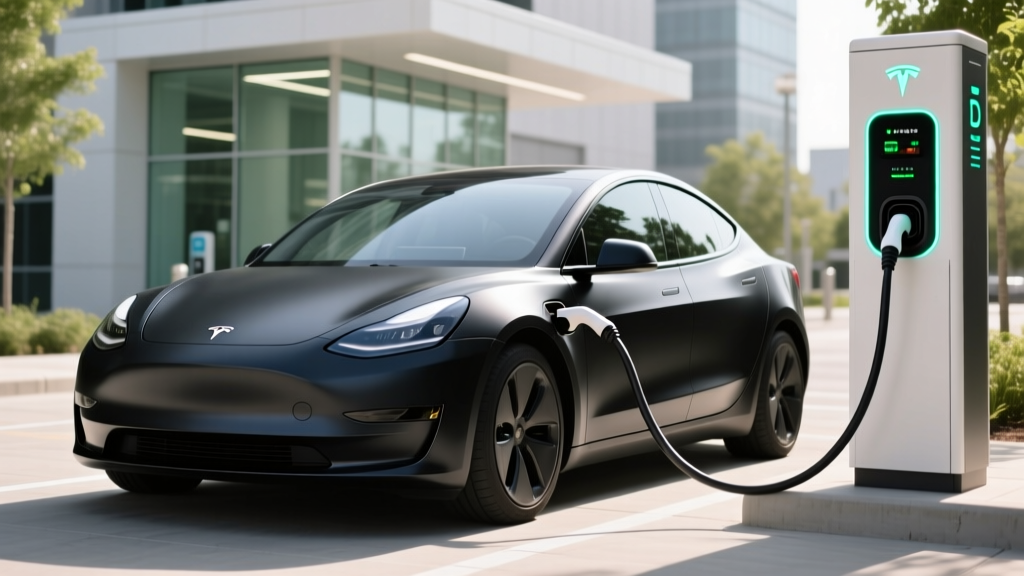
Yes — but how depends entirely on your vehicle's charge port and which Supercharger station you visit. Tesla has opened portions of its Supercharger network to non-Tesla EVs through two distinct pathways: built-in Magic Dock connectors at select stations, and the broader adoption of the NACS (North American Charging Standard) connector by nearly every major automaker starting in 2025. Understanding which applies to your EV is the difference between a seamless 250 kW top-up and being stranded with an incompatible plug.
Two Ways to Charge a Non-Tesla at a Supercharger
1. Tesla Magic Dock (Built-in CCS Adapter)
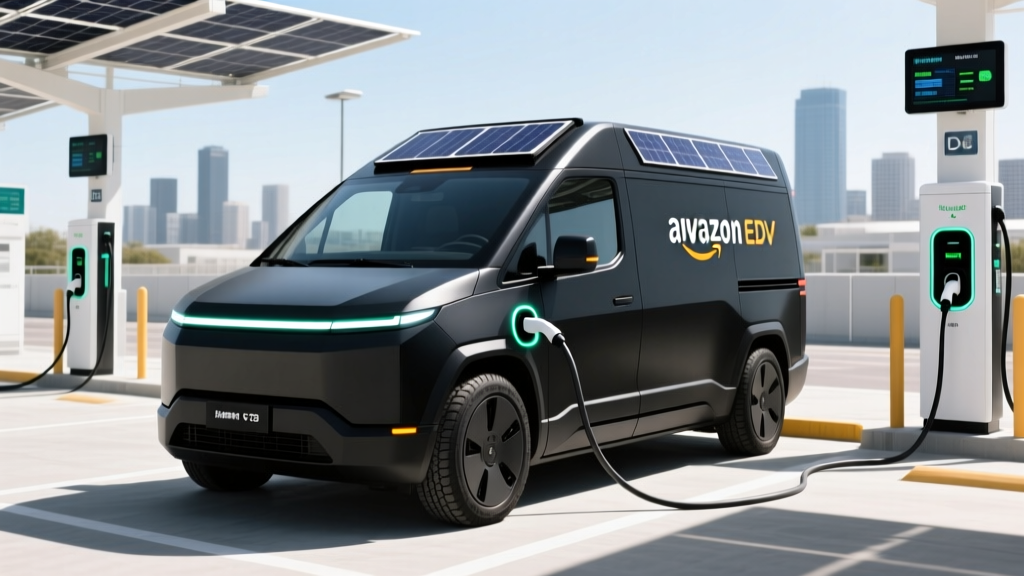
At select Supercharger stations, Tesla has installed a device called the Magic Dock — a built-in CCS1 adapter integrated into the Supercharger cable. When you unlock it through the Tesla app, the Tesla proprietary connector converts to a CCS1 plug that fits Ford, Hyundai, Kia, BMW, Rivian, and other CCS-equipped EVs. No separate adapter purchase is required; you simply initiate the session in the Tesla app, dock the CCS connector into your vehicle, and charge at up to 250 kW (depending on your vehicle's peak acceptance rate).
Limitations: Magic Dock stations are geographically sparse — concentrated in parts of California, New York, Texas, and a handful of other metro areas. You must check the Tesla app for "Charge Your Non-Tesla" to find participating locations. Not every Supercharger stall at a given site may have Magic Dock; often only 2–4 stalls per station are equipped.
2. Native NACS Port (2025+ Vehicles)
Starting with 2025 model-year vehicles, Ford, Rivian, General Motors, Volvo, Polestar, Mercedes-Benz, Nissan, BMW, Hyundai, Kia, and others have adopted Tesla's NACS connector as their native charge port. If your EV has a factory NACS port, you can plug directly into any V3 or V4 Supercharger stall — no adapter needed. This is the cleanest experience and the direction the entire industry is moving.
3. NACS Adapter for Older CCS Vehicles
If you own a pre-2025 EV with a CCS1 port (e.g., a 2023 Hyundai Ioniq 5, 2024 Ford Mustang Mach-E, or 2022 Volkswagen ID.4), several manufacturers now sell or include a NACS-to-CCS adapter. Ford provides one free to Mach-E and F-150 Lightning owners; GM offers one for Bolt and Blazer EV owners. Third-party adapters from brands like A2Z EV and Lectron are also available for $150–$300. With the adapter, you can use any Supercharger stall, though charge speeds are limited by your vehicle's onboard charging hardware, not the adapter.
| Vehicle Charge Port | Supercharger Access Method | Adapter Required? | Max Speed at Supercharger |
|---|---|---|---|
| NACS (native, 2025+ models) | Plug directly into any V3/V4 stall | No | Up to 250 kW (vehicle-limited) |
| CCS1 (with OEM NACS adapter) | NACS-to-CCS adapter + any V3/V4 stall | Yes (OEM or aftermarket) | Up to 250 kW (vehicle-limited) |
| CCS1 (no adapter) | Magic Dock stations only | No (built-in at station) | Up to 250 kW (station-limited) |
| CHAdeMO (Nissan Leaf, etc.) | Magic Dock with CHAdeMO adapter (rare) | Yes (third-party, limited) | Typically ≤50 kW |
Charging Levels Explained: Speeds and Range Added
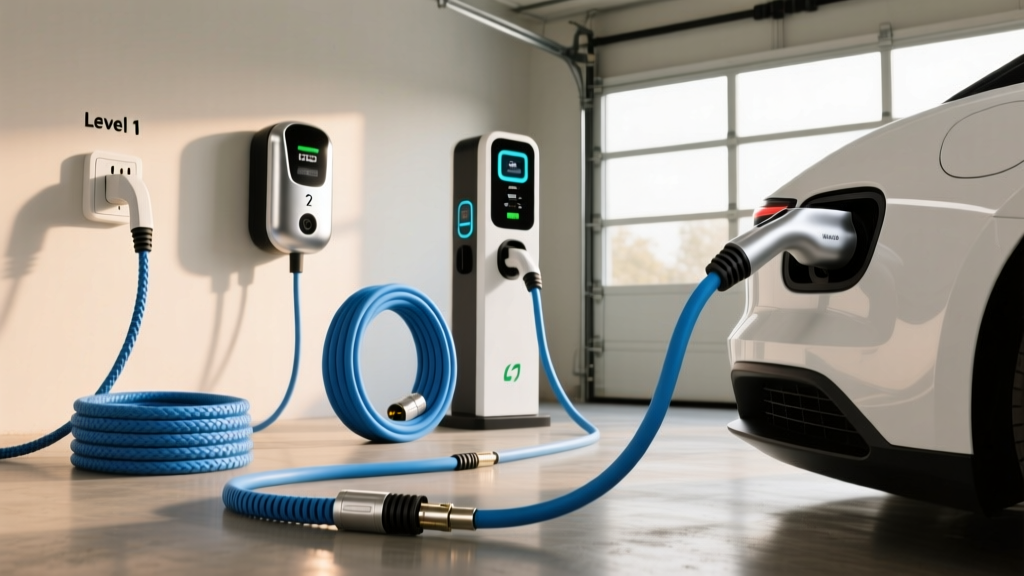
Whether you're at a Supercharger, a public Electrify America station, or charging at home, all EV charging falls into three levels. Here's what each delivers:
| Level | Voltage / Current | Power (kW) | Miles of Range Added per Hour | Typical Use Case |
|---|---|---|---|---|
| Level 1 | 120V / 12–16A | 1.4–1.9 kW | 3–5 mi/hr | Overnight trickle, PHEVs, emergencies |
| Level 2 | 240V / 16–80A | 3.8–19.2 kW | 14–75 mi/hr | Home daily charging, workplace, hotels |
| DC Fast Charge | 200–900V DC | 50–350 kW | 150–1,000+ mi/hr (peak) | Road trips, highway corridors, Superchargers |
A Tesla V3 Supercharger delivers up to 250 kW of DC fast-charging power. A V4 Supercharger cabinet supports up to 350 kW, though most current vehicles cannot yet accept that full rate. At 250 kW, a vehicle like the Ford Mustang Mach-E (extended-range, 91 kWh usable battery) can add roughly 150 miles of range in 15 minutes under ideal conditions — though real-world charging curves taper significantly above 80% State of Charge (SoC).
Charging Time Examples: 10–80% at a Supercharger
DC fast charging is not linear. Your EV charges fastest between roughly 10% and 50% SoC, then progressively slows to protect battery health. The "10–80%" metric is the industry standard because charging above 80% at DC speeds is painfully slow and generates excess heat.
| Vehicle (2026 MY) | Battery (kWh usable) | Peak Charge Rate (kW) | 10–80% Time | Chemistry |
|---|---|---|---|---|
| Ford Mustang Mach-E ER | 91 kWh | ~150 kW | ~38 min | NMC |
| Hyundai Ioniq 5 (Long Range) | 77.4 kWh | ~240 kW | ~18 min | NMC |
| Rivian R1S (Dual Motor, Max) | 149 kWh | ~220 kW | ~48 min | NMC |
| Cadillac Optiq | 102 kWh | ~190 kW | ~35 min | NMC |
| Tesla Model Y Long Range | 78.1 kWh | ~250 kW | ~25 min | NMC |
Real-world caveat: These times assume preconditioned batteries (the vehicle has warmed or cooled the pack to optimal temperature before arrival) and an uncrowded station. Cold-weather charging can add 30–50% to these times if the battery is cold-soaked. The Hyundai Ioniq 5's 800V architecture gives it a genuine advantage here, sustaining higher power deeper into the charge curve than 400V competitors.
How Much Does Supercharger Charging Cost?
Tesla prices Supercharger sessions for non-Tesla vehicles differently than for Tesla owners. Expect to pay between $0.35 and $0.55 per kWh depending on location, time of day, and whether you're a Tesla member. Non-Tesla drivers typically pay a small premium (roughly $0.05–$0.10/kWh more) at Magic Dock stations unless they subscribe to the Tesla charging membership ($12.99/month), which brings rates in line with Tesla-vehicle pricing.
| Charging / Fueling Method | Rate | Cost per Mile (250 Wh/mi EV) | Cost per Mile (30 MPG Gas Car) |
|---|---|---|---|
| Home Level 2 (national avg electricity) | $0.16/kWh | $0.040/mi | — |
| Home Level 2 (off-peak TOU rate) | $0.08/kWh | $0.020/mi | — |
| Tesla Supercharger (non-Tesla, no membership) | $0.48/kWh | $0.120/mi | — |
| Tesla Supercharger (with membership) | $0.38/kWh | $0.095/mi | — |
| Gasoline (national avg $3.40/gal) | $3.40/gal | — | $0.113/mi |
| Gasoline (California avg $4.60/gal) | $4.60/gal | — | $0.153/mi |
Even at full non-Tesla Supercharger rates, you're paying roughly the same per mile as a 30 MPG gas car at national-average fuel prices. The real savings come from home charging, where off-peak rates make EV fueling 5–6× cheaper per mile than gasoline.
Setting Up Home Charging: The Foundation of EV Ownership
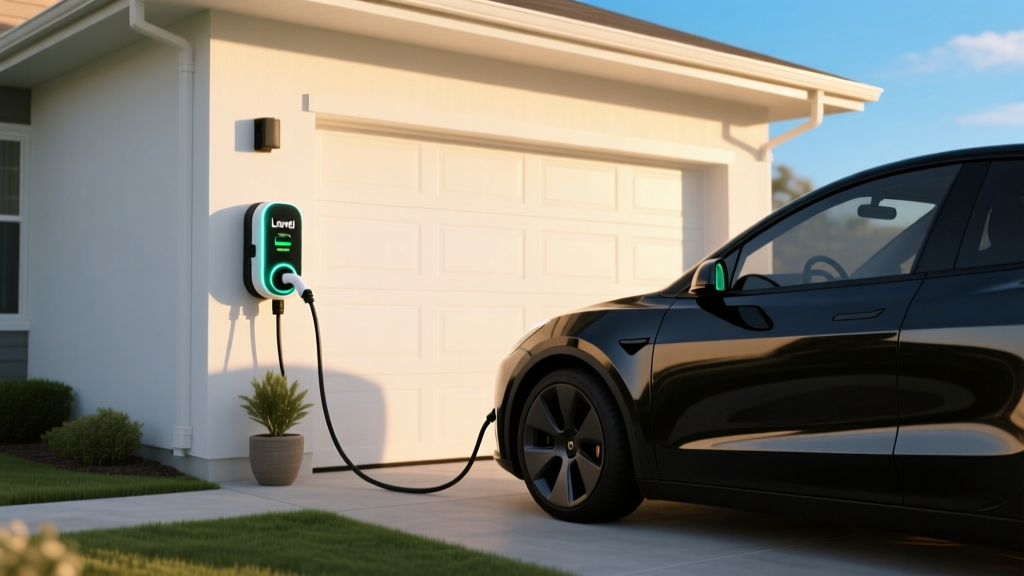
Public Superchargers are essential for road trips, but 80–90% of EV charging happens at home. A Level 2 home charger on a 240V circuit is the single most impactful upgrade for daily EV ownership. Here's what installation actually involves.
Electrical Requirements
A typical Level 2 home charger requires a dedicated 240V circuit at 40A to 60A. The most common setup is a NEMA 14-50 outlet (50A circuit, 40A continuous draw) or a hardwired connection at 48A–80A. Your home's electrical panel must have sufficient capacity — most modern 200A panels can accommodate an EV circuit, but older 100A panels often require an upgrade.
Panel Upgrade Reality
If your home has a 100A main panel and you're already running central AC, an electric dryer, and an electric range, adding a 50A EV circuit may exceed your panel's capacity. A panel upgrade to 200A typically costs $1,500–$3,500 depending on your utility, local code, and whether a new meter base or service drop is needed. Some homeowners opt for a smart panel or load-management device (like the Emporia VUE or Span smart panel) to avoid a full upgrade by dynamically sharing capacity between the EV charger and other loads.
| Component | Low End | High End | Notes |
|---|---|---|---|
| Level 2 EVSE equipment | $350 | $750 | Smart Wi-Fi chargers; basic units from $200 |
| Electrician labor (standard install) | $400 | $1,200 | Short run from panel to garage; longer runs cost more |
| Permit and inspection | $50 | $250 | Required in most jurisdictions; varies by municipality |
| Electrical panel upgrade (if needed) | $1,500 | $3,500 | 100A → 200A; not always required |
| Conduit and wiring materials | $100 | $400 | Depends on run length and whether conduit is exposed |
| Total (no panel upgrade) | $900 | $2,600 | Most homes with 200A panel fall in this range |
| Total (with panel upgrade) | $2,400 | $6,100 | Older homes with 100A service |
Federal incentive: The Residential Clean Energy Credit (IRS §25D) does not cover EV chargers. However, the §30C Alternative Fuel Vehicle Refueling Property Credit covers 30% of home EV charger equipment and installation costs, up to $1,000, for equipment placed in service in eligible census tracts. Check IRS guidelines and consult a tax professional — eligibility depends on your address and income.
Recommended Home EV Chargers for Non-Tesla Vehicles
If you drive a non-Tesla EV with either a CCS or NACS port, here are proven Level 2 chargers that pair well with Supercharger-compatible vehicles:
Emporia Vue Smart Charger
- Power output: 48A (11.5 kW on 240V/60A circuit)
- Connector: NACS or J1772 (configurable)
- Cable length: 24 ft
- Smart features: Wi-Fi, solar integration, energy monitoring, scheduled charging
- Price: ~$399
- Best for: Solar-owning households wanting granular energy tracking
ChargePoint Home Flex
- Power output: Up to 50A (12 kW) — configurable via dip switch
- Connector: NACS or J1772
- Cable length: 23 ft
- Smart features: Wi-Fi, app scheduling, Alexa integration, flexible amperage
- Price: ~$599
- Best for: Versatile install on 40A or 60A circuits; wide amperage range
Wallbox Pulsar Plus
- Power output: 40A (9.6 kW on 240V/50A circuit)
- Connector: NACS or J1772
- Cable length: 25 ft
- Smart features: Wi-Fi + Bluetooth, Power Sharing (two chargers on one circuit), compact design
- Price: ~$449
- Best for: Tight garage spaces and dual-EV households
Tesla Wall Connector
- Power output: 48A (11.5 kW on 240V/60A circuit)
- Connector: NACS (native) — J1772 adapter included for older EVs
- Cable length: 24 ft
- Smart features: Wi-Fi, OTA updates, power sharing, load management
- Price: ~$475
- Best for: NACS-equipped non-Tesla owners who want one charger for home and Supercharger familiarity
Safety, Code, and Installation Best Practices
EV charging draws sustained high current for hours — unlike a dryer or oven that cycles on and off. This makes proper installation critical:
- Dedicated circuit: Your EV charger must be on its own dedicated breaker — never shared with other outlets or appliances.
- GFCI protection: The 2023 NEC (National Electrical Code) requires GFCI protection for all EVSE installations. Most modern smart chargers have built-in GFCI; hardwired installations may need a GFCI breaker.
- Outdoor rating: If your charger is mounted outside or in an uncovered carport, ensure the EVSE is rated NEMA 4 (weatherproof). All recommended chargers above carry this rating.
- Wire gauge: A 60A circuit requires 6 AWG copper wire for runs up to ~50 feet; longer runs may need 4 AWG to prevent voltage drop. Your electrician will size this correctly.
- Permit and inspection: Nearly all jurisdictions require a permit for new 240V circuits. Skipping inspection risks insurance denial in the event of an electrical fire. Budget $50–$250 and 1–3 weeks for inspection turnaround.
FAQ: Charging a Non-Tesla at a Supercharger
Do I need the Tesla app to charge my non-Tesla at a Supercharger?
Yes. At Magic Dock stations, you must download the Tesla app, create an account, and use the "Charge Your Non-Tesla" feature to activate the stall and unlock the built-in CCS adapter. At standard Supercharger stalls (for NACS-equipped vehicles or those using an adapter), you also initiate payment through the Tesla app — there is no credit card reader on the stall itself.
Will charging at a Supercharger damage my non-Tesla's battery?
No. DC fast charging at 250 kW is within the design envelope of all modern EV battery management systems. Your vehicle controls how much power it accepts — even if the Supercharger can deliver 250 kW, a Ford Mach-E limited to ~150 kW will only draw 150 kW. Frequent DC fast charging does accelerate long-term degradation slightly compared to Level 2 charging, but the effect is modest for NMC batteries (typically 2–5% additional capacity loss over 100,000 miles). LFP batteries (found in some Tesla and BYD models) tolerate frequent DC fast charging with minimal additional degradation.
How do I find Supercharger stations that accept non-Tesla vehicles?
Open the Tesla app and tap "Charge Your Non-Tesla." The app displays a map of participating stations with Magic Dock availability. For NACS-equipped vehicles, all Supercharger locations are accessible — use your vehicle's native navigation or the Tesla app to find stalls. Third-party apps like PlugShare and A Better Routeplanner also tag Supercharger stations by Magic Dock availability and NACS compatibility.
How much does it cost to install a home EV charger?
For a home with an existing 200A electrical panel and a short wiring run, expect $900–$2,600 total (equipment + electrician + permit). If your home requires a panel upgrade from 100A to 200A, the total ranges from $2,400–$6,100. Always get 2–3 quotes from licensed electricians and confirm the quote includes permit and inspection fees.
Which connector is compatible with my EV?
Model-year 2025+ vehicles from Ford, GM, Rivian, Volvo, Polestar, Hyundai, Kia, BMW, Mercedes-Benz, and Nissan use the NACS connector natively and plug directly into any Supercharger. Pre-2025 vehicles with CCS1 ports require either a Magic Dock station or an NACS-to-CCS adapter. Older CHAdeMO vehicles (Nissan Leaf, Mitsubishi Outlander PHEV) have very limited Supercharger compatibility and are better served by Electrify America or EVgo networks with native CHAdeMO connectors.
How much does charging cost per mile compared to gas?
At home on off-peak electricity ($0.08/kWh), an EV averaging 250 Wh/mile costs about $0.02/mile — roughly one-fifth the cost of a 30 MPG gas car at $3.40/gallon ($0.113/mile). Even at Supercharger rates ($0.38–$0.48/kWh), per-mile cost is comparable to or slightly below gasoline. The savings case for EVs is strongest with consistent home charging access.
What electrical upgrades might I need for home charging?
The most common upgrade is a new 240V/50A or 60A dedicated circuit from your existing panel. If your panel is at capacity (common in older homes with 100A service), you may need a panel upgrade to 200A, which adds $1,500–$3,500. Alternatives include smart load-management devices that share amperage between the EV charger and other heavy loads, potentially avoiding a full panel replacement. A licensed electrician can perform a load calculation to determine your specific needs.