Hyundai's Ioniq 5 has been one of the best-selling electric crossovers since its launch, praised for its 800-volt architecture and rapid DC fast-charging capability. But with Hyundai transitioning to the North American Charging Standard (NACS) for its 2025+ models and Tesla opening its Supercharger network to non-Tesla EVs, owners and shoppers face a common question: how to charge Ioniq 5 at Tesla Supercharger stations without complications.
This guide covers the adapter requirements, real-world charging speeds you can expect, and the full home charging setup — from Level 1 trickle charging to a dedicated 240V Level 2 installation — so Ioniq 5 owners can maximize range recovery whether at home or on the road.
Can You Charge an Ioniq 5 at a Tesla Supercharger?
Yes — but the method depends on your Ioniq 5's model year and which Supercharger you visit.
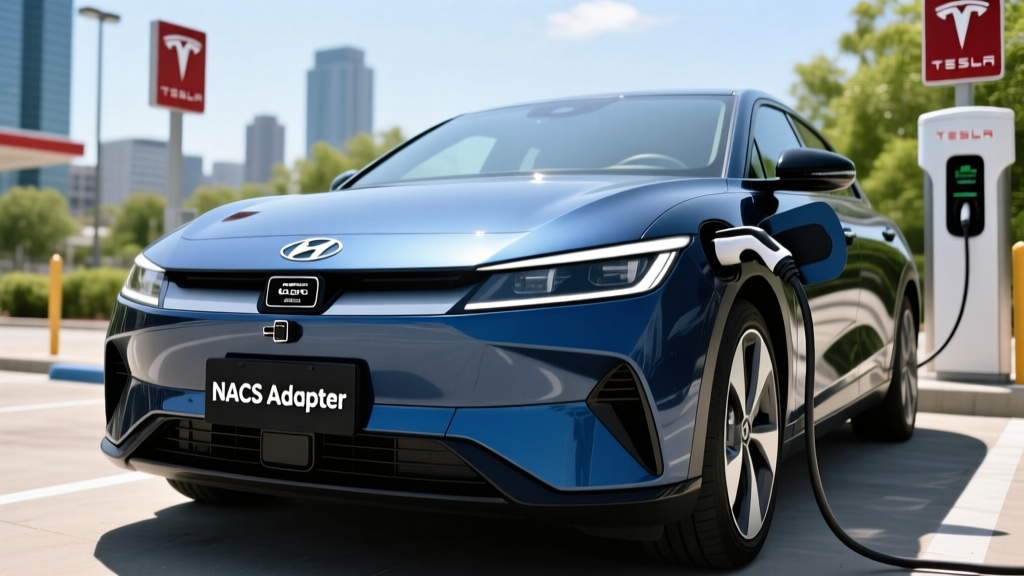
2025–2026 Hyundai Ioniq 5 (NACS port): Hyundai began equipping the Ioniq 5 with a native NACS charge port starting with the 2025 model year. These vehicles can plug directly into Tesla Superchargers that have been opened to non-Tesla EVs through Tesla's "Open Supercharger" program, as well as any NACS-equipped destination charger. No adapter is needed.
2022–2024 Hyundai Ioniq 5 (CCS1 port): Earlier models use the CCS1 connector. To access Tesla Superchargers, you need a CCS-to-NACS adapter. Hyundai has offered an official NACS adapter to qualifying Ioniq 5 owners (check with your dealer for current availability and pricing, typically $0–$200 depending on promotional programs). Third-party adapters from brands like Lectron and A2Z are also available, though Hyundai recommends the OEM unit for warranty and safety assurance.
Important limitation: Not every Tesla Supercharger stall is open to non-Tesla vehicles. Tesla designates specific stalls at participating stations. Use the Tesla app or your Hyundai Bluelink app to confirm station compatibility before routing there. According to Tesla's non-Tesla Supercharging page, the network continues expanding access through 2026.
| Model Year | Native Port | Tesla Supercharger (NACS) | CCS Stations (EA, EVgo) | Adapter Needed for Tesla? |
|---|---|---|---|---|
| 2025–2026 | NACS | Direct plug-in (open stalls) | Requires NACS-to-CCS adapter | No |
| 2022–2024 | CCS1 | Via CCS-to-NACS adapter | Direct plug-in | Yes (CCS-to-NACS) |
Charging Speeds at Tesla Superchargers: What to Expect
The Ioniq 5's 800-volt E-GMP platform supports peak DC fast-charging rates up to 240 kW on capable chargers. However, most Tesla Supercharger stalls open to non-Tesla vehicles are V3 units rated at 250 kW maximum — and sustained speeds depend on battery state of charge, temperature, and the station's power-sharing configuration.
Here's what real-world Ioniq 5 DC fast-charging looks like:
- 10–80% at a 250 kW V3 Supercharger: approximately 18–22 minutes (with battery preconditioned)
- 10–80% at a 150 kW V2 Supercharger: approximately 28–35 minutes
- Peak sustained rate: ~235 kW between 10–40% SoC, tapering to ~100 kW above 60%, and ~50 kW above 80%
The charge curve taper above 80% is a battery-protection feature common to all lithium-ion packs. If you're road-tripping, plan to charge to 80% and move on rather than waiting for a full top-off — the last 20% can take as long as the first 70%.
Battery preconditioning tip: When you set a Supercharger (or compatible DC fast charger) as your navigation destination in the Ioniq 5, the thermal management system warms the battery to optimal temperature. In cold weather (below 40°F), preconditioning can shave 5–10 minutes off your 10–80% charge time and reduce the risk of speed throttling.
Understanding EV Charging Levels: Speeds and Range Added
Before diving into home equipment, it's essential to understand the three charging levels and the difference between kW (kilowatts), which measures power or charge rate, and kWh (kilowatt-hours), which measures energy capacity. Think of kW as the speed of water flowing through a hose, and kWh as the size of the bucket you're filling. The Ioniq 5's usable battery capacity is 77.4 kWh (Long Range) or 58 kWh (Standard Range).
| Level | Voltage / Amperage | Power Output | Miles of Range Added per Hour | Best Use Case |
|---|---|---|---|---|
| Level 1 (120V) | 120V / 12A | ~1.4 kW | ~4–5 miles/hr | Overnight trickle, emergencies |
| Level 2 (240V) | 240V / 32–48A | 7.7–11.5 kW | ~25–40 miles/hr | Daily home charging |
| DC Fast Charge | 400–800V DC | 50–250 kW | ~200–700+ miles/hr equivalent | Road trips, rapid top-ups |
The Ioniq 5 Long Range has an EPA-estimated range of 303 miles (per fueleconomy.gov), though real-world highway driving at 70+ mph in moderate temperatures typically yields 250–275 miles. In cold weather (below 30°F), expect a 15–25% reduction, bringing effective range to roughly 225–260 miles.
Home Level 2 Charger Installation: Costs, Requirements, and Gotchas
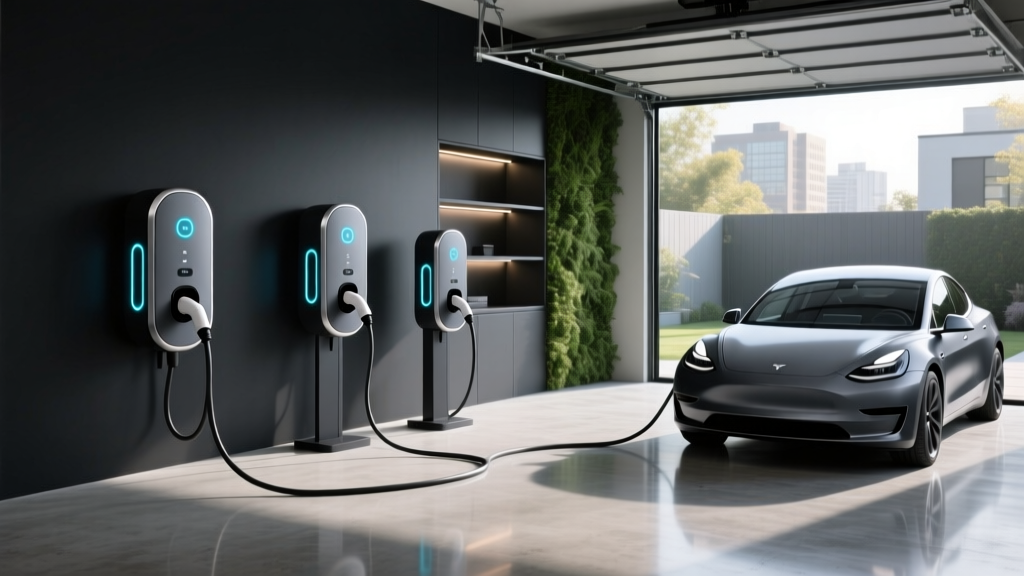
A dedicated Level 2 home charger is the single most impactful upgrade for daily EV ownership. Here's what's required for an Ioniq 5 installation.
Electrical Requirements
The Ioniq 5's onboard charger accepts up to 10.9 kW on Level 2 (240V, ~45A). To maximize this, you'll need a 240V / 50A dedicated circuit with a NEMA 14-50 outlet or a hardwired connection. A 40A circuit with a NEMA 14-50 outlet is the most common residential setup and delivers up to 9.6 kW — sufficient for overnight charging from 20% to full in roughly 7–8 hours.
Panel Upgrade Considerations
Homes with a 100A main electrical panel may not have sufficient capacity for a 50A EV circuit, especially if you already run electric heating, a dryer, and an electric oven simultaneously. Upgrading to a 200A panel typically costs $1,500–$3,000 and may be required by your local electrical code. Homes with existing 200A service usually have enough headroom.
Pro tip: Before hiring an electrician, check your panel's amperage rating (printed on the main breaker) and tally your existing large-load circuits. If you're near capacity, a load-management device or smart charger with dynamic load balancing can avoid a full panel upgrade.
Permits and Code Requirements
Most municipalities require an electrical permit for EV charger installation ($50–$200 depending on jurisdiction). The National Electrical Code (NEC) requires a GFCI breaker for outdoor receptacles and recommends a dedicated circuit. Outdoor installations should use a charger rated NEMA 4 (weather-resistant).
| Item | Low Estimate | High Estimate | Notes |
|---|---|---|---|
| Level 2 charger (equipment) | $350 | $700 | 32A–48A smart charger |
| Electrician labor | $400 | $1,500 | Depends on run length from panel |
| Electrical permit | $50 | $200 | Varies by municipality |
| Panel upgrade (if needed) | $1,500 | $3,000 | 100A → 200A service upgrade |
| Total (no panel upgrade) | $800 | $2,400 | Most common scenario |
| Total (with panel upgrade) | $2,300 | $5,400 | Older homes with 100A service |
Always hire a licensed electrician for the final installation. DIY electrical work on 240V circuits poses serious fire and shock risks, and most jurisdictions require licensed work to pass inspection.
Recommended Home Chargers for the Ioniq 5
Since 2025+ Ioniq 5 models use a NACS port, your home charger choice depends on your model year. For CCS1-port models (2022–2024), use a J1772/CCS-compatible charger. For NACS models, choose a NACS-equipped unit or use an adapter.
ChargePoint Home Flex (NACS or J1772)
- Power output: Up to 12 kW (50A) on 240V
- Connector options: NACS or J1772 (select at purchase)
- Cable length: 23 feet
- Smart features: Wi-Fi, app scheduling, Alexa integration, energy tracking
- Price: ~$550–$650
- Best for: Ioniq 5 owners wanting max Level 2 speed with smart scheduling
Wallbox Pulsar Plus (J1772 with NACS adapter option)
- Power output: Up to 11.5 kW (48A)
- Connector: J1772 native; NACS adapter available
- Cable length: 25 feet
- Smart features: Wi-Fi/Bluetooth, Power Sharing for dual installations, app control
- Price: ~$500–$600
- Best for: Compact form factor, two-EV households with Power Sharing
Emporia Level 2 EV Charger
- Power output: Up to 11.5 kW (48A)
- Connector: J1772 (use adapter for NACS-port Ioniq 5)
- Cable length: 24 feet
- Smart features: Wi-Fi, real-time energy monitoring, solar integration via Emporia Vue
- Price: ~$350–$400
- Best for: Budget-conscious buyers who want energy monitoring
Charging Cost Breakdown: Home vs. Public vs. Gas
One of the strongest arguments for EV ownership is lower fueling costs — but the savings depend heavily on where you charge. Here's a realistic cost comparison for the Ioniq 5 Long Range (77.4 kWh battery, ~3.6 mi/kWh efficiency).
| Scenario | Rate | Cost to Add 200 Miles | Cost Per Mile |
|---|---|---|---|
| Home charging (off-peak utility rate) | $0.10/kWh | $5.53 | $0.028 |
| Home charging (average US rate) | $0.17/kWh | $9.40 | $0.047 |
| Public Level 2 (ChargePoint, etc.) | $0.25/kWh | $13.82 | $0.069 |
| DC fast charge (Electrify America) | $0.48/kWh | $26.54 | $0.133 |
| Tesla Supercharger (non-Tesla rate) | $0.35–$0.50/kWh | $19.35–$27.65 | $0.097–$0.138 |
| Gas vehicle (25 MPG, $3.40/gal) | $3.40/gal | $27.20 | $0.136 |
The takeaway: home charging at off-peak rates saves roughly 75–80% compared to gas. Even DC fast charging on the road is cost-competitive with gasoline. But if you rely exclusively on public DC fast charging at peak rates, your fuel costs can approach or slightly exceed those of an efficient gas car.
Tesla's non-Tesla Supercharger pricing varies by station and time of day. In most markets, rates for non-Tesla vehicles range from $0.35 to $0.50/kWh, with some stations offering lower "member" pricing through the Tesla app subscription ($12.99/month). For frequent Supercharger users, the membership typically pays for itself within 3–4 sessions.
Safety, Code, and Best Practices for Ioniq 5 Charging
Whether you're plugging in at home or at a Supercharger, follow these safety and longevity guidelines:
- Dedicated circuit: Your Level 2 charger must be on its own dedicated breaker — never share a circuit with other high-draw appliances.
- GFCI protection: Required by NEC for outdoor outlets. Most modern EV chargers include built-in ground-fault protection, but the breaker should also be GFCI-rated for outdoor installs.
- Outdoor rating: If your charger is mounted outside, ensure it carries a NEMA 4 (or IP65+) rating for rain and dust resistance.
- Cable management: Avoid running charging cables across driveways or walkways. Use a wall-mounted holster or retractable cable reel.
- State of Charge management: For daily driving, Hyundai recommends charging to 80% to preserve long-term battery health. Use the Ioniq 5's built-in charge-limit setting or your smart charger's scheduling feature. Reserve 100% charges for road trips.
- Cold-weather charging: Plug in when you arrive home while the battery is still warm. This avoids the slow charge speeds that result from a cold-soaked battery.
Frequently Asked Questions
How much does it cost to install a home EV charger for the Ioniq 5?
A typical Level 2 home charger installation costs $800–$2,400 including equipment, electrician labor, and permits — assuming your electrical panel has sufficient capacity. If a panel upgrade from 100A to 200A is needed, add $1,500–$3,000. Always get a quote from a licensed electrician who will assess your panel, circuit run distance, and local code requirements.
How fast will each charging level add range to my Ioniq 5?
Level 1 (120V) adds roughly 4–5 miles of range per hour. Level 2 (240V, 40–50A) adds 25–40 miles per hour, enough to fully recharge overnight. DC fast charging at a 250 kW station can add up to 200+ miles in approximately 18–22 minutes (10–80% SoC), though speeds taper significantly above 80%.
Which connector and charger is compatible with my Ioniq 5?
The 2025–2026 Ioniq 5 uses a native NACS port, making it directly compatible with Tesla Superchargers (open stalls) and NACS destination chargers. The 2022–2024 models use CCS1, requiring a CCS-to-NACS adapter for Tesla Supercharger access. For home Level 2 charging, choose a charger matching your vehicle's port or use the appropriate adapter.
How much does charging the Ioniq 5 cost per mile vs. a gas car?
At the US average residential electricity rate of ~$0.17/kWh, the Ioniq 5 costs approximately $0.047 per mile to charge at home — roughly 65% less than a 25 MPG gas car at $3.40/gallon ($0.136/mile). Public DC fast charging narrows the gap to $0.10–$0.14 per mile depending on the network and station pricing.
What electrical upgrades might I need for a home charger?
If your home has a 100A main electrical panel, you may need a panel upgrade to 200A ($1,500–$3,000) to safely support a 40–50A EV circuit alongside existing loads. Homes with 200A service typically have sufficient headroom. A licensed electrician can perform a load calculation to determine if an upgrade is necessary. Some utilities offer rebates that offset panel-upgrade costs.
Do I need the Tesla app to charge at a Supercharger with my Ioniq 5?
Yes. To initiate and pay for a charging session at a Tesla Supercharger with a non-Tesla vehicle, download the Tesla app, create an account, and add a payment method. Some stations also support Plug & Charge if your vehicle and the station are compatible, but app-based activation is the most reliable method as of 2026.
Whether you're charging at home overnight or pulling into a Supercharger on a cross-country trip, the Ioniq 5's flexible charging ecosystem — now bridging CCS and NACS — makes it one of the most versatile EVs on the market. Invest in a quality Level 2 home charger, keep an adapter in your frunk if you drive a 2022–2024 model, and plan your road-trip stops using both the Tesla and Hyundai apps for the smoothest experience.