Why 300-Mile EVs Need a Charging Strategy, Not Just a Bigger Battery
Electric vehicles with 300 mile range — like the 2026 Tesla Model 3 Long Range (EPA 363 mi), Hyundai Ioniq 6 SE Long Range (EPA 361 mi), and Chevrolet Equinox EV 3RS (EPA 319 mi) — have effectively eliminated range anxiety for daily driving. But a large battery (typically 75–100 kWh usable) introduces a different challenge: replenishing that energy efficiently. Plugging into a standard 120V wall outlet adds roughly 3–5 miles per hour. Fully recharging an 82 kWh battery that way takes 20+ hours.
The right charging setup turns a 300-mile EV into a practical daily driver that rarely visits a public station. This guide covers exactly what hardware, electrical work, and ongoing costs are involved — with real numbers, not marketing estimates.
Charging Levels Explained: Speeds, Power, and Practical Use
EV charging is measured in kilowatts (kW), which is the rate of energy flow. The battery itself stores energy in kilowatt-hours (kWh). Think of kW as the width of a hose and kWh as the size of the bucket. Here's how each level performs with a typical 80 kWh battery:
| Level | Voltage | Power (kW) | Miles Added/Hour | 10–80% Time (80 kWh) | Best For |
|---|---|---|---|---|---|
| Level 1 | 120V AC | 1.0–1.4 kW | 3–5 mi/hr | ~48+ hours | Overnight trickle, PHEVs |
| Level 2 | 240V AC | 7.2–19.2 kW | 25–65 mi/hr | 4–8 hours | Daily home charging |
| DC Fast | 400–800V DC | 50–350 kW | 150–1,000+ mi/hr | 15–35 min | Road trips, rapid top-ups |
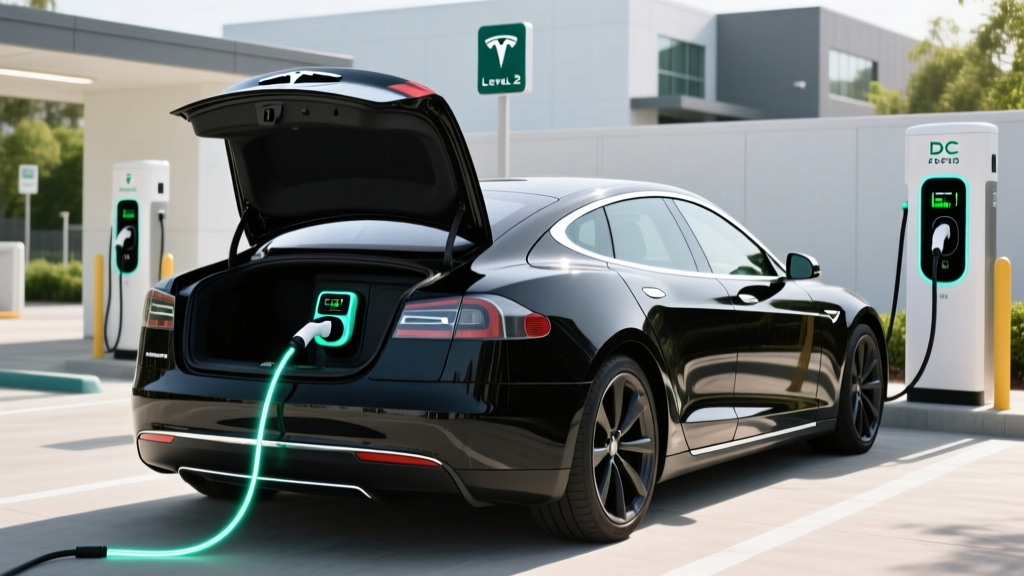
Critical nuance on DC fast charging: The peak kW rating (e.g., 250 kW) is not sustained across the entire session. Charging follows a curve — power peaks between roughly 10–50% State of Charge (SoC), then tapers significantly above 80% to protect battery chemistry. A vehicle rated at 250 kW peak may average only 120–150 kW over a full 10–80% session. This is why 10–80% time is a more honest metric than peak kW.
Home Level 2 Installation: Electrical Requirements and True Costs
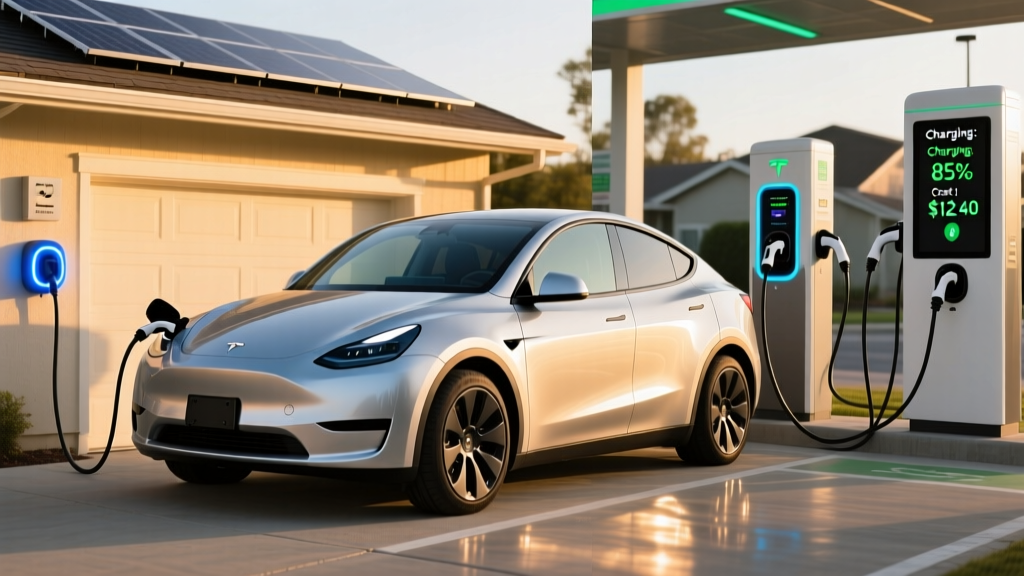
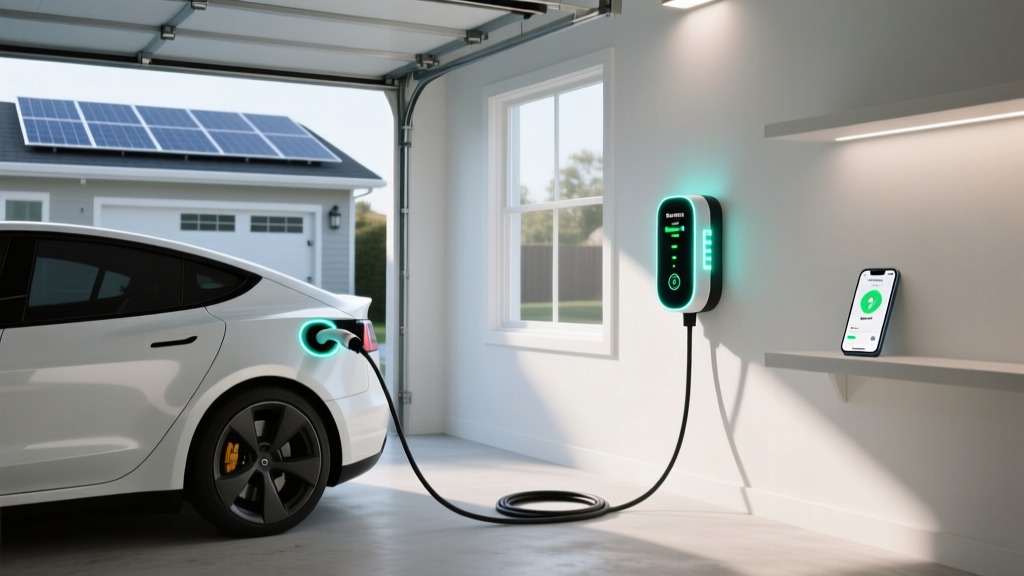
Level 2 home charging is the backbone of practical EV ownership. Most 300-mile EV owners install a 240V, 40-amp or 48-amp circuit, delivering 9.6–11.5 kW — enough to fully recharge overnight.
Electrical Requirements
- Circuit: Dedicated 240V circuit, typically 40A or 50A breaker (EVSE draws 80% of breaker rating continuously — a 50A breaker supports 40A continuous draw)
- Wire: 6 AWG copper for 50A circuits; 8 AWG for 40A (varies by run length and local code)
- Panel capacity: Your main panel must have sufficient amperage headroom. A 200A panel is standard; adding a 50A EV circuit may require a load calculation to confirm capacity
- GFCI protection: 2026 NEC requires GFCI protection for outdoor EV receptacles; many jurisdictions now require it indoors as well
- Permit: Nearly all jurisdictions require an electrical permit and inspection for new 240V circuits
Panel Upgrade Reality
Homes with 100A or 150A service panels — common in pre-1990 construction — often cannot accommodate a 40–50A EV circuit without a panel upgrade to 200A. This is the single biggest cost variable and the one most online guides understate.
| Item | Simple Install (200A panel, short run) | Complex Install (panel upgrade, long run) |
|---|---|---|
| Level 2 EVSE hardware | $350–$700 | $350–$700 |
| Electrician labor (240V circuit) | $500–$1,200 | $800–$2,000 |
| Panel upgrade (100A → 200A) | N/A | $1,500–$3,500 |
| Permit and inspection | $100–$300 | $150–$400 |
| Conduit, wire, misc materials | $100–$300 | $200–$600 |
| Total estimated cost | $1,050–$2,500 | $3,000–$7,200 |
Get a licensed electrician's quote before purchasing hardware. Many EVSE manufacturers and utility companies offer installation bundles or rebates that offset costs. The IRS §30C credit covers up to 30% of home charging equipment and installation costs (max $1,000), subject to income and census-tract eligibility — consult a tax professional.
Connector Compatibility: NACS, CCS1, CHAdeMO, and Adapters
As of 2026, the North American EV connector landscape has consolidated significantly around NACS (the Tesla-designed standard now formally SAE J3400), but CCS1 and CHAdeMO vehicles remain on the road. Here's what fits what:
| Connector | Brands Using It (2026 Models) | Home Charging | DC Fast Network Access |
|---|---|---|---|
| NACS (J3400) | Tesla, Ford, GM, Rivian, Volvo, Polestar, Hyundai/Kia (2025+), Honda, BMW, Lucid | NACS wall connector or J1772 w/ adapter | Tesla Supercharger network natively; others via NACS DC stations expanding |
| CCS1 | VW ID.4 (remaining stock), older Hyundai/Kia, BMW i4/iX (pre-2025) | J1772 standard for L2; CCS for DC | Electrify America, EVgo, ChargePoint — broadest non-Tesla network |
| CHAdeMO | Nissan Leaf (legacy only) | J1772 for L2 | Limited and declining — plan around CCS/NACS stations |
Adapter note: If you own a CCS1-equipped EV, a CCS-to-NACS adapter (~$150–$200) unlocks access to Tesla Supercharger stations. Ford and GM began shipping these with new vehicles in 2024–2025. For Level 2 home charging, a J1772-to-NACS adapter (~$100) lets NACS-vehicles use standard J1772 wall chargers, or vice versa.
Charging Cost Per Mile: Home Electricity vs. Public DC vs. Gasoline
The economic case for a 300-mile EV hinges on fuel savings. Here's a realistic cost comparison using a 320-mile EPA-range EV averaging 3.5 miles per kWh (a typical efficiency figure for a midsize sedan like the Ioniq 6 or Model 3):
| Charging Scenario | Rate | Cost per Full Charge (80 kWh) | Cost per Mile |
|---|---|---|---|
| Home (off-peak utility rate) | $0.12/kWh | $9.60 | $0.030 |
| Home (average US residential) | $0.17/kWh | $13.60 | $0.043 |
| Public Level 2 (network pricing) | $0.25–$0.35/kWh | $20–$28 | $0.063–$0.088 |
| DC Fast Charging (350 kW station) | $0.35–$0.55/kWh | $28–$44 | $0.088–$0.138 |
| Gasoline equivalent (30 MPG @ $3.40/gal) | $3.40/gallon | $36.27 | $0.113 |
The takeaway: Home off-peak charging at $0.03/mile is roughly 73% cheaper than gasoline at $0.113/mile. Even public DC fast charging at $0.45/kWh ($0.138/mile) is comparable to or slightly above gas. The savings compound dramatically with home charging: a driver covering 12,000 miles/year saves approximately $996 annually vs. gas at home rates, or $540/year at average residential rates. Road-trip-heavy drivers who rely on DC fast charging will see narrower savings.
Charging Time Examples for Popular 300-Mile EVs
Charge times depend on battery size, onboard charger capacity (for Level 2), and peak DC charge rate. Here are realistic 10–80% times for popular 2026 models with 300+ mile range:
| Vehicle | Battery (kWh usable) | Peak DC Rate | 10–80% DC Fast | L2 Home (11.5 kW) 0–100% |
|---|---|---|---|---|
| Tesla Model 3 Long Range | 79 kWh (NMC) | 250 kW | ~27 min | ~7.5 hr |
| Hyundai Ioniq 6 SE LR | 77.4 kWh (NMC) | 240 kW (800V) | ~18 min | ~7.2 hr |
| Chevy Equinox EV 3RS | 85 kWh (NMC) | 150 kW | ~35 min | ~8 hr |
| Ford Mustang Mach-E ER | 91 kWh (NMC) | 150 kW | ~38 min | ~8.5 hr |
| Kia EV6 Long Range | 77.4 kWh (NMC) | 240 kW (800V) | ~18 min | ~7.2 hr |
Vehicles built on 800V architectures (Hyundai Ioniq 6, Kia EV6, Porsche Taycan) sustain higher charge rates longer, resulting in noticeably faster 10–80% times than 400V platforms at similar peak ratings. This matters on road trips where every stop counts.
Recommended Level 2 Home Chargers for 300-Mile EVs
Best Overall: ChargePoint Home Flex (NACS)
- Power: Up to 12 kW (50A circuit) — configurable via DIP switches to match your circuit
- Connector: NACS native (J1772 version also available)
- Cable length: 23 ft
- Smart features: Wi-Fi, app scheduling, utility integration, Alexa
- Price: ~$549
- Why: Adjustable amperage means one unit fits any circuit from 24A to 50A. UL-listed, NEMA 4 rated for outdoor use.
Best Value: Emporia Level 2 EV Charger
- Power: Up to 11.5 kW (48A on 60A circuit)
- Connector: J1772 (NACS adapter included in 2026 kit)
- Cable length: 24 ft
- Smart features: Wi-Fi, app control, solar integration, energy monitoring
- Price: ~$399
- Why: Lowest-cost smart charger with robust energy monitoring. Pairs well with home solar systems for optimized charging.
Best for Tesla Owners: Tesla Wall Connector (Gen 3)
- Power: Up to 11.5 kW (48A on 60A circuit)
- Connector: NACS native
- Cable length: 24 ft
- Smart features: Wi-Fi, OTA updates, power sharing between two units, Tesla app integration
- Price: ~$475
- Why: Seamless integration with Tesla vehicles, clean design, power-sharing feature lets two chargers share one circuit.
Best for High-Power: Grizzl-E Smart (40A/48A)
- Power: Up to 11.5 kW (48A) or 9.6 kW (40A)
- Connector: J1772 (NACS adapter available)
- Cable length: 24 ft
- Smart features: OCPP-compatible, app control, adjustable amperage
- Price: ~$499–$599
- Why: Built in Canada for extreme cold (-40°F rated), heavy-duty aluminum case, 3-year warranty. Ideal for unheated garages and outdoor installs.
Safety, Electrical Code, and Installation Best Practices
EV charging draws sustained high current for hours — more like an electric furnace than a typical appliance. Proper installation is non-negotiable for fire safety and insurance compliance.
- Dedicated circuit: Your EVSE must be on its own dedicated breaker — never shared with other loads. The National Electrical Code (NEC) Article 625 governs EV charging installations.
- Continuous load derating: EVSE is classified as a continuous load, meaning the circuit must be rated at 125% of the charger's max draw. A 40A charger requires a 50A breaker.
- GFCI protection: Required for outdoor receptacles and increasingly required indoors per 2023/2026 NEC updates. Hardwired EVSE units avoid nuisance GFCI trips that plague plug-in (NEMA 14-50) setups.
- Hardwired vs. plug-in: Hardwired installations (directly connected, no receptacle) are generally more reliable, allow higher amperage (48A+), and avoid the overheating risk associated with 240V receptacles under sustained load. Plug-in (NEMA 14-50) offers portability but caps at 40A and requires a high-quality receptacle (Hubbell or Bryant industrial grade — avoid $10 big-box store outlets).
- Outdoor rating: If installed outside, the EVSE must be NEMA 4 or NEMA 4X rated for weather resistance. Verify the unit's operating temperature range for your climate.
- Permit and inspection: Skipping permits risks insurance denial in the event of a fire. Most permits cost $100–$300 and the inspection typically takes 15 minutes.
Frequently Asked Questions
How much does it cost to install a home EV charger?
A straightforward Level 2 installation in a home with an existing 200A panel and short wire run costs $1,050–$2,500 including equipment, electrician labor, materials, and permit. Homes needing a panel upgrade (100A to 200A) or long conduit runs face $3,000–$7,200. Always get an electrician's load calculation and quote before buying hardware.
How fast will each charging level add range?
Level 1 (120V) adds 3–5 miles per hour — adequate for PHEVs but impractical for large-battery EVs. Level 2 (240V, 40–48A) adds 25–45 miles per hour, fully recharging a 300-mile EV overnight in 7–9 hours. DC fast charging at 150–250 kW adds 150–500+ miles per hour at peak, with 10–80% sessions taking 18–38 minutes depending on the vehicle's architecture and battery size.
Which connector and charger is compatible with my EV?
Check your vehicle's charge port. Most 2025–2026 EVs from Tesla, Ford, GM, Rivian, Hyundai, Kia, and Volvo use NACS. Older or remaining-stock models from VW, BMW, and some Hyundai/Kia use CCS1. For home Level 2 charging, J1772 is the legacy standard, but NACS wall connectors are now widely available, and adapters bridge both directions. For DC fast charging, NACS vehicles access Tesla Superchargers natively; CCS1 vehicles use Electrify America, EVgo, and ChargePoint networks.
How much does charging cost per mile compared to gas?
Home charging at the US average residential rate ($0.17/kWh) costs approximately $0.043/mile for a 320-mile EV averaging 3.5 mi/kWh. Gasoline at $3.40/gallon in a 30 MPG vehicle costs $0.113/mile. That's a 62% per-mile savings with home charging. Even public DC fast charging at $0.45/kWh ($0.138/mile) is only marginally more expensive than gas — and most charging happens at home.
What electrical upgrades might I need for a home charger?
The most common upgrade is a panel service increase from 100A or 150A to 200A, costing $1,500–$3,500. Other potential needs include: replacing a worn or undersized main breaker, adding a sub-panel closer to the garage, upgrading service entrance wiring, or installing a utility-approved meter socket for a separate EV rate plan. A licensed electrician's load calculation (per NEC Article 220) will determine exactly what's required.
Does frequent DC fast charging degrade the battery?
Moderate DC fast charging (1–2 sessions per week) causes minimal additional degradation in modern EVs with active thermal management. Data from fueleconomy.gov and long-term fleet studies show that batteries charged primarily on Level 2 with occasional DC fast charging retain 90–95% capacity after 100,000 miles. Daily DC fast charging in extreme heat without preconditioning can accelerate degradation. Most manufacturers warranty the battery for 8 years/100,000 miles with a 70% capacity retention threshold.
Should I charge to 100% every night?
For NMC batteries (used in most 300-mile EVs), daily charging to 80% maximizes longevity. Reserve 100% charges for road trips. LFP batteries (found in some Tesla Model 3 Standard Range and entry-level models) tolerate and actually benefit from regular 100% charges. Check your vehicle's battery chemistry — the owner's manual or manufacturer app will specify the recommended daily charge limit.