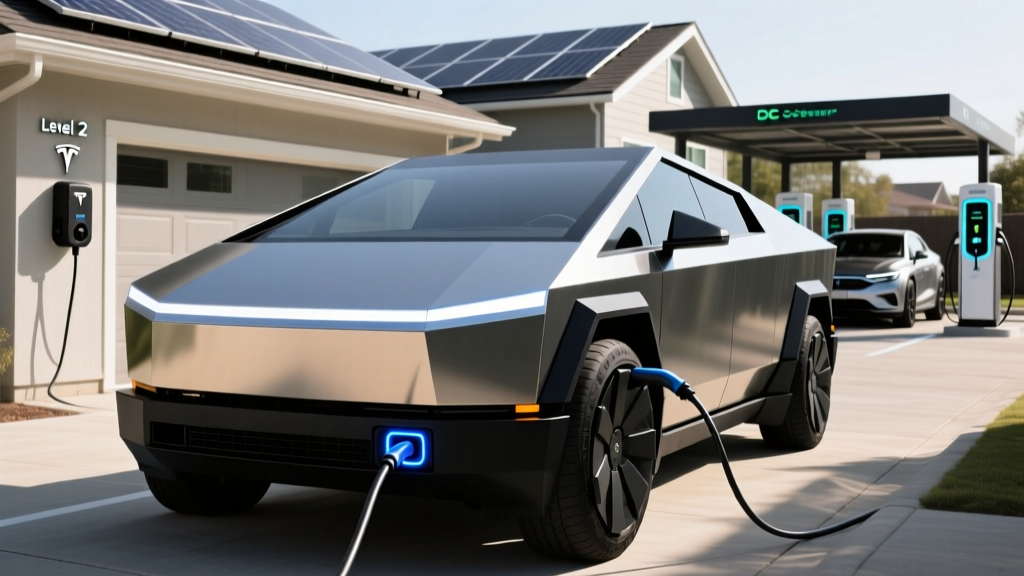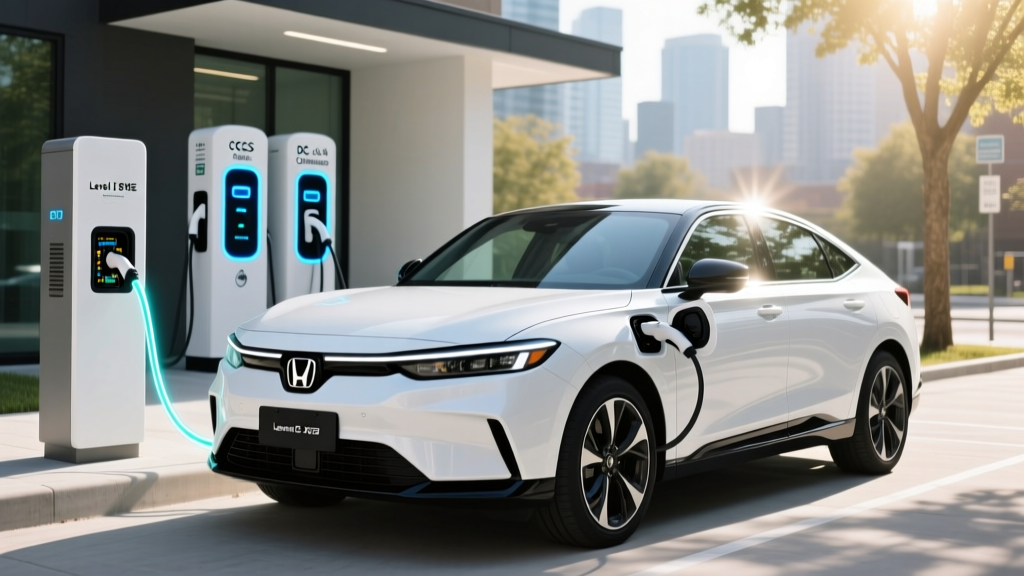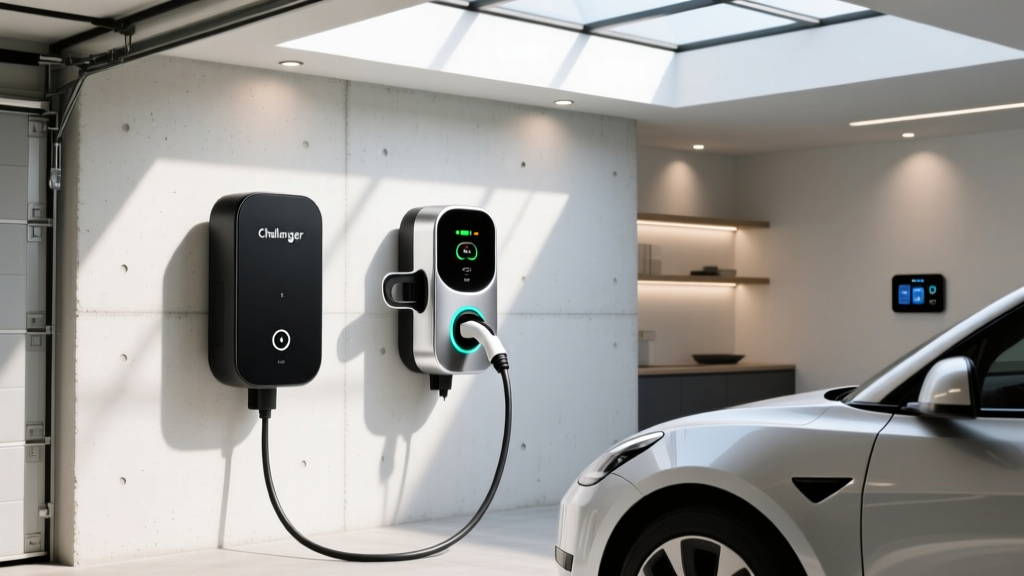
When homeowners search for "challenger chargers" in the context of electric vehicles, they're often encountering a tangle of brand names, electrical specs, and connector types that can stall a purchase decision. The reality is that the EV home-charging market in 2026 is dominated by purpose-built Level 2 wall connectors from companies like ChargePoint, Emporia, and Wallbox — while the Challenger name is historically associated with industrial electrical components, panel boards, and circuit breakers (now largely under the Eaton/Cutler-Hammer umbrella), not dedicated EV supply equipment (EVSE). This guide cuts through the confusion, explains exactly what you need to charge an EV at home, and compares the best real-world Level 2 chargers available today.
Understanding EV Charging Levels: Speeds in kW and Miles Per Hour
Before evaluating any charger brand, you need to understand the three charging tiers. Power is measured in kilowatts (kW) — the rate at which energy flows. Energy is measured in kilowatt-hours (kWh) — the total amount stored in your battery. Confusing these two is the most common mistake new EV buyers make.
| Level | Voltage | Power (kW) | Miles of Range Per Hour | Best Use Case |
|---|---|---|---|---|
| Level 1 | 120V AC | 1.2–1.9 kW | 3–5 mi/hr | Overnight top-ups, PHEVs, low-mileage drivers |
| Level 2 | 240V AC | 3.3–19.2 kW | 12–75 mi/hr | Daily home charging (primary method for most owners) |
| DC Fast Charge | 400–900V DC | 50–350+ kW | 150–1,000+ mi/hr | Road trips, public stations, quick top-ups |
For context, a typical 75 kWh battery (like the one in a Tesla Model Y Long Range) charged on a 48-amp Level 2 station at 11.5 kW will go from 10% to 80% in roughly 5.5 hours. That same session on a 350 kW DC fast charger takes about 22 minutes (10–80%), though the charge curve tapers significantly above 80% to protect battery health.
How Much Does It Cost to Install a Home EV Charger?
This is where the Challenger name sometimes surfaces — homeowners with older Challenger-branded electrical panels (common in homes built in the 1970s–1990s) may need panel work before adding a 240V circuit. Here's a realistic cost breakdown for a Level 2 home installation in 2026:
| Component | Typical Cost Range | Notes |
|---|---|---|
| Level 2 EVSE hardware (smart charger) | $350–$700 | 40A–48A Wi-Fi-enabled units |
| Electrician labor (240V/50A circuit run) | $500–$2,000 | Depends on distance from panel to garage |
| Electrical permit | $50–$200 | Required in most jurisdictions |
| Panel upgrade (if needed) | $1,500–$4,000 | 100A → 200A service; common in older homes |
| GFCI breaker (code-required) | $50–$120 | NEC 2020+ requires GFCI for 240V EV circuits |
| Total (no panel upgrade) | $900–$2,900 | Most homes with 200A service |
| Total (with panel upgrade) | $2,400–$6,900 | Older homes with 100A or Challenger panels |
If your home has an original Challenger electrical panel, consult a licensed electrician about its condition. Many Challenger panels from the 1980s–90s have known issues with bus bar corrosion and breaker compatibility. Eaton (which acquired the Challenger line) recommends inspection, and some insurance companies require replacement. Budget an additional $1,500–$3,500 for a panel swap if your electrician flags it.
Which Connector Is Compatible With My EV?
The connector landscape shifted dramatically in 2024–2025 when nearly every major automaker adopted the North American Charging Standard (NACS), originally developed by Tesla. By 2026, NACS is the dominant connector for new EVs, while CCS1 remains on older models and CHAdeMO is effectively legacy (Nissan Leaf being the primary holdout).
| Connector | Brands Using It (2026 Models) | Adapter Needed? |
|---|---|---|
| NACS (J3400) | Tesla, Ford, GM, Rivian, Hyundai/Kia, Volvo, Polestar, BMW, Mercedes, Nissan (new Ariya), Subaru, Lucid | No — native on new vehicles |
| CCS1 | Older VW ID.4 (pre-2025), older BMW i4/iX, some Stellantis models | CCS-to-NACS adapter (~$200) if using Superchargers |
| CHAdeMO | Nissan Leaf (legacy), Mitsubishi Outlander PHEV (older) | Limited public availability; no adapter to NACS for DC |
For home Level 2 charging, the physical plug is a NACS connector on most 2026 EVs. If you own a CCS1-equipped vehicle, you can still use a NACS wall connector with a CCS-to-NACS adapter, or simply buy a CCS1-terminated EVSE. Most smart chargers now ship with NACS by default, with CCS1 available as an option or via adapter.
Top Level 2 Home Chargers: Equipment Comparison
These are the purpose-built EVSE units that dominate the residential market in 2026. None of these are "Challenger chargers" in the industrial-panel sense — they're dedicated EV charging stations from companies that specialize in electric vehicle infrastructure.
ChargePoint Home Flex (Gen 2)
- Power: Up to 11.5 kW (48A) on 240V/60A circuit
- Connector: NACS (J3400) native; CCS1 available
- Cable length: 23 feet
- Smart features: Wi-Fi, Alexa/Google Home, scheduled charging, energy dashboard, load sharing between two units
- Price: ~$599
- Best for: Most EV owners wanting reliable smart charging with robust app
Emporia Vue EV Charger
- Power: Up to 11.5 kW (48A) on 240V/60A circuit
- Connector: NACS (J3400)
- Cable length: 24 feet
- Smart features: Wi-Fi, integrates with Emporia Vue energy monitor, solar-aware charging, time-of-use scheduling
- Price: ~$399
- Best for: Budget-conscious buyers and solar-panel homes
Wallbox Pulsar Plus
- Power: Up to 11.5 kW (48A) on 240V/60A circuit
- Connector: NACS (J3400) native
- Cable length: 25 feet
- Smart features: Wi-Fi + Bluetooth, Power Sharing (daisy-chain two units on one circuit), Eco-Smart solar integration
- Price: ~$549
- Best for: Two-EV households sharing a single circuit
Tesla Wall Connector
- Power: Up to 11.5 kW (48A) on 240V/60A circuit
- Connector: NACS native; J1772 adapter included
- Cable length: 24 feet
- Smart features: Wi-Fi, OTA updates, Power Sharing, integrates with Tesla app
- Price: ~$475
- Best for: Tesla owners and multi-EV Tesla households
All four units above require a dedicated 240V circuit (typically 60A breaker for 48A continuous charging, per NEC 80% rule). They are all NEMA 4-rated for outdoor installation and carry UL or ETL certification.
How Much Does Charging Cost Per Mile vs Gas?
The economic case for home charging is strong, but it depends heavily on your local electricity rate and whether you can charge during off-peak hours.
| Scenario | Rate | Cost for 75 kWh Battery (0–100%) | Cost Per Mile (270 mi range) |
|---|---|---|---|
| Home off-peak (national avg) | $0.12/kWh | $9.00 | $0.033/mi |
| Home peak rate | $0.22/kWh | $16.50 | $0.061/mi |
| Public Level 2 (ChargePoint/EVgo) | $0.30–$0.45/kWh | $22.50–$33.75 | $0.083–$0.125/mi |
| DC Fast Charge (Electrify America, Tesla Supercharger) | $0.35–$0.55/kWh | $26.25–$41.25 | $0.097–$0.153/mi |
| Gasoline vehicle (25 MPG avg, $3.40/gal) | $3.40/gal | $36.72 equivalent | $0.136/mi |
At off-peak home rates, an EV costs roughly one-quarter what a 25 MPG gas car costs per mile. Even at peak DC fast-charging rates, EVs are competitive with or cheaper than gasoline on a per-mile basis. According to fueleconomy.gov, the average 2026 EV achieves 100–130 MPGe combined, translating to 25–33 kWh per 100 miles of driving.
Real-World Charging Time Examples by Battery Size
Charging times depend on three variables: battery capacity (kWh), the charger's power output (kW), and the vehicle's onboard charger limit. Here are practical 10–80% times for common 2026 EVs on a 48A (11.5 kW) Level 2 home charger:
| Vehicle | Battery (kWh) | Onboard Charger Limit | 10–80% Time (11.5 kW L2) | 10–80% DC Fast |
|---|---|---|---|---|
| Tesla Model Y LR | 75 kWh (usable) | 11.5 kW | ~4.5 hours | ~22 min (250 kW peak) |
| Hyundai Ioniq 5 | 77.4 kWh | 10.9 kW | ~5.0 hours | ~18 min (350 kW peak) |
| Ford F-150 Lightning Ext | 131 kWh | 19.2 kW | ~8.0 hours | ~41 min (150 kW peak) |
| Chevrolet Equinox EV | 85 kWh | 11.5 kW | ~5.2 hours | ~30 min (150 kW peak) |
| BMW i4 eDrive40 | 81.5 kWh | 11 kW | ~5.1 hours | ~31 min (200 kW peak) |
Important caveat: DC fast-charging times assume optimal battery preconditioning (warming the pack to ~95°F before arrival). Without preconditioning — or in cold weather below 40°F — expect 10–80% times to increase 30–50%. Also, the charge curve tapers sharply above 80% SoC, which is why we measure 10–80% rather than 0–100%.
Safety, Electrical Code, and Installation Requirements
Every Level 2 home charger installation must comply with the National Electrical Code (NEC) and local amendments. Here are the non-negotiable requirements:
- Dedicated circuit: Your EV charger must be on its own dedicated 240V circuit — it cannot share a circuit with a dryer, oven, or other appliance.
- Breaker sizing (NEC 80% rule): A 48A continuous-load charger requires a 60A breaker. A 40A charger requires a 50A breaker. Never undersize the breaker.
- GFCI protection: NEC 2020 and later requires ground-fault circuit interrupter (GFCI) protection on all 240V EV charging circuits. This typically means a GFCI breaker in the panel (~$50–$120).
- Wire gauge: 60A circuits require 6 AWG copper wire (or 4 AWG aluminum). Longer runs may need upsizing to prevent voltage drop.
- Outdoor rating: If the charger is installed outside (carport, driveway), it must carry a NEMA 4 or NEMA 4X rating for weather resistance. All four chargers recommended above meet this standard.
- Permit and inspection: Most municipalities require an electrical permit ($50–$200) and a post-installation inspection. Do not skip this — unpermitted work can void homeowner's insurance and cause issues at sale time.
If you have an older home with a Challenger-branded electrical panel, your electrician should inspect the bus bars, breaker seats, and overall amperage capacity before adding a 60A EV circuit. Many 100A panels simply don't have the spare capacity for a large EV charger alongside existing loads (HVAC, electric range, dryer). A load calculation per NEC Article 220 will determine whether a panel upgrade is required. The National Fire Protection Association (NFPA) publishes the NEC code reference.
Tax Credits and Rebates for Home Charging
The federal Alternative Fuel Vehicle Refueling Property Credit (§30C) was extended through 2032 and covers up to 30% of home EV charger hardware and installation costs, capped at $1,000 per year. Eligibility depends on the installation being in a qualifying census tract (typically rural or low-income areas). Check the IRS §30C page for current tract-eligibility maps.
Additionally, many utilities offer rebates of $250–$500 for installing a smart Level 2 charger, especially if you enroll in a time-of-use (TOU) rate plan. Contact your local utility before purchasing equipment — some require pre-approval or specific charger models to qualify.
Frequently Asked Questions
Are "Challenger chargers" a real EV charging brand?
Not in the consumer EV market. The Challenger name is associated with legacy electrical panels and circuit breakers (now under Eaton). If you're seeing "Challenger" in the context of your home's electrical system, it likely refers to your breaker panel — not an EV charger. You'll need a purpose-built EVSE from a company like ChargePoint, Emporia, Wallbox, or Tesla.
Can I install a Level 2 charger on a 100-amp electrical panel?
Possibly, but it depends on your existing loads. A 40A EV charger (9.6 kW) draws a significant continuous load. Your electrician will perform a NEC Article 220 load calculation. If your panel is near capacity, you'll either need a panel upgrade (to 200A, costing $1,500–$4,000) or a smart load-management device like the Emporia Vue with automatic load shedding, which throttles the charger when other appliances are running.
How fast does Level 1 (120V) charging really add range?
Level 1 charging at 120V/12A delivers about 1.4 kW, adding roughly 3–5 miles of range per hour depending on vehicle efficiency. For a daily commute of 30 miles round-trip, Level 1 can work if you plug in for 10+ hours overnight. For anything more, Level 2 is strongly recommended.
Do I need a smart charger, or is a dumb (non-connected) unit fine?
A non-connected charger will charge your car perfectly well. However, smart chargers offer scheduled charging (to exploit off-peak electricity rates), energy monitoring, remote start/stop, and utility-rebate eligibility. The $50–$100 premium for smart features typically pays for itself within the first year through TOU savings.
What happens if my EV's onboard charger is limited to 7.7 kW?
Some EVs (notably certain PHEVs and older models) have onboard chargers limited to 7.7 kW (32A) or even 3.3 kW (16A). Even if you install a 48A (11.5 kW) wall connector, your vehicle will only draw what its onboard charger allows. A 7.7 kW-limited vehicle with a 16 kWh battery will charge from 10–80% in about 1.5 hours — fast enough for daily PHEV use.
Is it safe to charge an EV in the rain or snow with an outdoor charger?
Yes. NEMA 4-rated chargers are designed for full weather exposure. The NACS and CCS connectors are engineered with sealed contacts and drainage channels. You can safely plug and unplug in rain, snow, and sleet. Just avoid submerging the connector or charging through standing floodwater.
Bottom Line: What to Buy and Budget
If you're outfitting a home for EV charging in 2026, plan for a 48A smart Level 2 charger with a NACS connector, a dedicated 60A/240V circuit, and a total budget of $900–$2,900 (assuming no panel upgrade). If your home has an aging Challenger electrical panel, add $1,500–$3,500 to that range for a panel replacement — and consider it a worthwhile safety investment independent of EV charging. The ChargePoint Home Flex and Emporia Vue EV Charger offer the best value-to-feature ratios, while the Tesla Wall Connector is the natural choice for Tesla households. Whichever unit you choose, pull a permit, use a licensed electrician, and enroll in your utility's time-of-use plan to maximize savings.