If you drive a Nissan Leaf, Mitsubishi Outlander PHEV, or any EV with a CHAdeMO port and want access to Tesla's Supercharger network, you've likely searched for a "CHAdeMO to Tesla" solution. The reality is more nuanced than a single adapter purchase — the EV charging landscape in 2026 has shifted dramatically toward NACS (the Tesla connector standard), leaving CHAdeMO owners navigating a shrinking but still functional network. This guide breaks down exactly how connector compatibility works, what home charging setup you need, and what you'll actually pay to keep your EV fueled.
The CHAdeMO to Tesla Question: What Actually Works in 2026?
Here's the hard truth: there is no commercially available, safe CHAdeMO-to-NACS (Tesla) adapter that lets a CHAdeMO-equipped vehicle charge at a Tesla Supercharger. The reasons are both electrical and protocol-level:
- Protocol mismatch: CHAdeMO uses CAN-bus communication while NACS/CCS uses Power Line Communication (PLC). The vehicle and charger must "handshake" before energy flows, and these protocols cannot translate through a passive adapter.
- Physical pin differences: CHAdeMO uses a large, round multi-pin connector with separate DC pins. NACS uses a compact linear pin layout. The geometries are fundamentally incompatible.
- Voltage architecture: Most CHAdeMO vehicles (like the Nissan Leaf) operate on 400V architectures, while Superchargers are optimized for a range of voltages but expect CCS/NACS protocol negotiation.
Charging Levels Explained: Speed, Power, and Real-World Range Added
Understanding EV charging requires keeping kW (kilowatts — the rate of power delivery) and kWh (kilowatt-hours — the total energy stored in your battery) strictly separate. Think of kW as the width of a pipe and kWh as the size of the tank you're filling.
| Level | Voltage / Amperage | Max Power (kW) | Miles of Range Added Per Hour | Typical Use Case |
|---|---|---|---|---|
| Level 1 (120V) | 120V / 12A | 1.4 kW | 3–5 miles | Overnight trickle; emergency top-up |
| Level 2 (240V) | 240V / 32–48A | 7.7–11.5 kW | 20–44 miles | Home daily charging; workplace |
| DC Fast Charge | 400–800V DC | 50–350 kW | 150–1,200+ miles (equivalent) | Road trips; rapid top-ups |
Real-world charging time examples (10–80% State of Charge):
- Nissan Leaf (40 kWh battery, CHAdeMO): ~40 minutes on a 50 kW CHAdeMO charger; ~8 hours on Level 2 (6.6 kW onboard charger limit)
- Nissan Ariya (91 kWh battery, CCS1): ~35 minutes on a 130 kW CCS charger; ~10 hours on Level 2
- Tesla Model Y (75 kWh battery, NACS): ~18 minutes on a 250 kW Supercharger; ~8 hours on Level 2 (11.5 kW)
A critical detail: DC fast charging is not linear. A charger rated for 50 kW may deliver that rate from 10–50% SoC, then taper significantly. CHAdeMO chargers in particular are known for aggressive taper curves — a 50 kW CHAdeMO station might average only 30–35 kW across a full 10–80% session. Always plan road-trip stops around the sustained average, not the peak number.
Connector Compatibility: Which Plug Does Your EV Use?
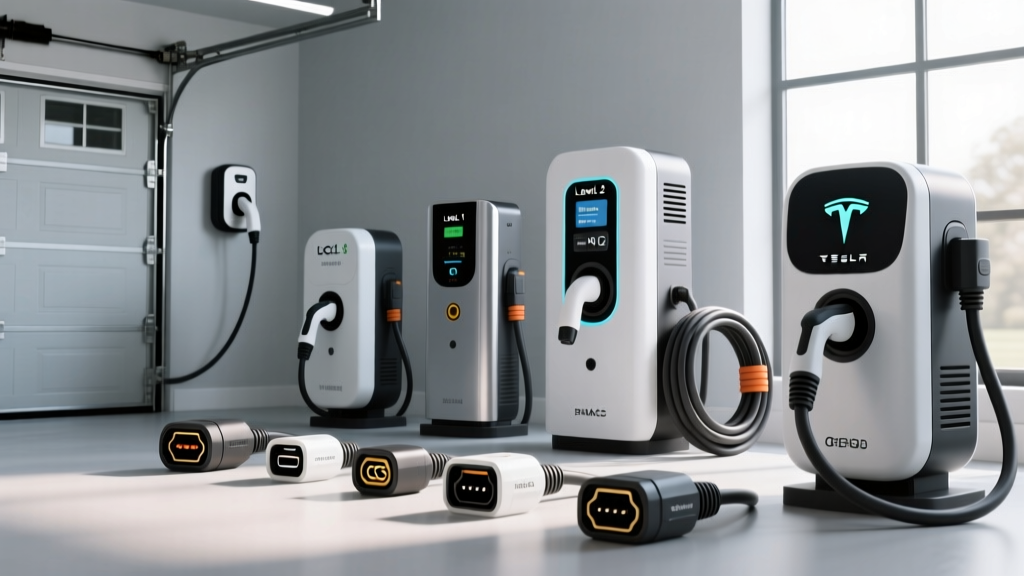
The North American EV market in 2026 has consolidated heavily around NACS, but legacy connectors persist. Here's what fits what:
| Connector | Type | Vehicles Using It (2026) | Adapter Available? |
|---|---|---|---|
| NACS (Tesla) | AC + DC combined | Tesla Model 3/Y/S/X, Ford F-150 Lightning, GM EVs (2025+), Rivian, Hyundai/Kia (2025+) | CCS1-to-NACS adapters available from Ford, GM, Rivian |
| CCS1 | AC + DC combined | VW ID.4, BMW i4/iX, older Hyundai Ioniq 5, Chevy Bolt (discontinued) | NACS-to-CCS1 adapters available (e.g., Lectron, A2Z) |
| CHAdeMO | DC only | Nissan Leaf, Mitsubishi Outlander PHEV (legacy) | No adapter to NACS or CCS1 exists |
| J1772 | AC only (Level 1/2) | All non-Tesla EVs (for AC charging) | J1772-to-Tesla adapter widely available (~$30–$50) |
For CHAdeMO vehicle owners specifically: Your vehicle has two charge ports — a CHAdeMO port for DC fast charging and a J1772 port for Level 1 and Level 2 AC charging. At home, you'll use the J1772 port with any standard Level 2 charger. On the road, you need stations with CHAdeMO connectors, which are still found at Electrify America, EVgo, and some ChargePoint locations, though the number is declining as networks prioritize NACS.
Home EV Charger Installation: Requirements, Costs, and Upgrades
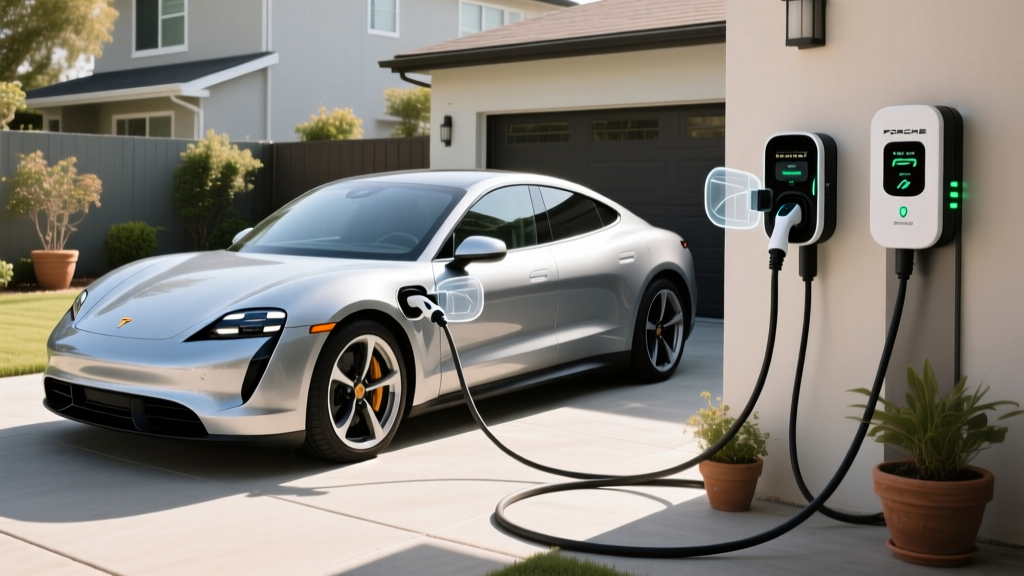
Home Level 2 charging is where 80–90% of EV charging happens for most owners. Here's what's required and what it costs.
Electrical Requirements
A typical Level 2 home charger requires:
- Voltage: 240V (same as a clothes dryer or electric oven)
- Amperage: 32A to 48A circuit (dedicated — cannot share with other appliances)
- Circuit breaker: Rated 25% above continuous load — a 40A charger needs a 50A breaker; a 48A charger needs a 60A breaker
- Wire gauge: 6 AWG copper for 48A circuits; 8 AWG for 32A circuits
Panel Upgrade: The Hidden Cost
Most modern homes with 200-amp electrical service can accommodate a Level 2 charger without a panel upgrade. However, if your home has a 100-amp panel (common in homes built before the 1990s), you may need:
- Panel upgrade to 200A: $1,500–$3,500 depending on your utility and local code
- Load management device: An alternative to a panel upgrade — devices like the Emporia Smart Load Management or Tesla Wall Connector with load-sharing can dynamically reduce charger amperage when other circuits draw heavy power. Cost: $200–$400 plus installation.
| Component | Simple Install (near panel) | Complex Install (long run, conduit) |
|---|---|---|
| Level 2 Charger (hardware) | $350–$600 | $350–$600 |
| Electrician labor | $300–$600 | $800–$2,000 |
| Permit | $50–$150 | $50–$150 |
| Conduit/wire (50+ ft run) | $0–$100 | $200–$600 |
| Panel upgrade (if needed) | $0 | $1,500–$3,500 |
| Total | $700–$1,450 | $2,900–$6,850 |
Safety and Code Considerations
- Dedicated circuit: NEC Article 625 requires EV chargers to be on a dedicated branch circuit — no sharing with outlets or appliances.
- GFCI protection: NEC 2020 and later requires GFCI (Ground Fault Circuit Interrupter) protection for all EV charging outlets. Many hardwired chargers have built-in GFCI, but receptacle-based installs need a GFCI breaker.
- Outdoor rating: If your charger is installed outside (garage exterior, driveway), ensure it carries a NEMA 4 or NEMA 4X rating for weather resistance.
- Hardwired vs. plug-in (NEMA 14-50): Hardwired installations are safer and allow higher amperage (48A+). NEMA 14-50 receptacles are limited to 40A continuous draw per NEC derating rules and offer portability if you move.
Level 2 Charger Equipment Picks for 2026
These chargers work with all EVs via the J1772 connector (including CHAdeMO vehicles for AC charging). Tesla owners can use them with a J1772-to-NACS adapter.
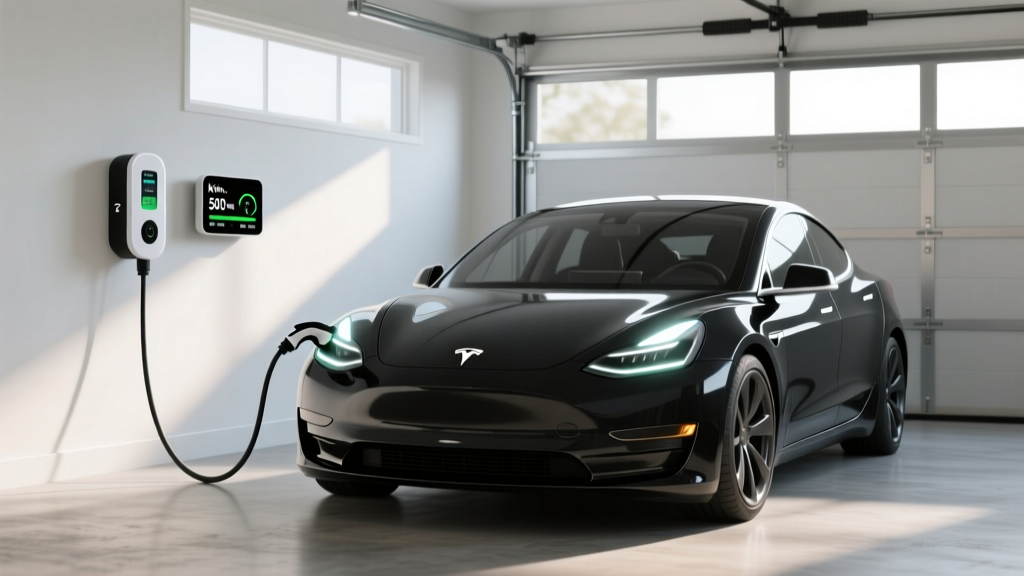
Tesla Wall Connector (Gen 4)
- Power output: 11.5 kW (48A) on 60A circuit
- Connector: NACS (native); J1772 adapter included
- Cable length: 24 ft
- Smart features: Wi-Fi, OTA updates, load sharing between units, access control
- Price: ~$450
- Best for: Tesla owners; mixed-fleet garages with adapter
ChargePoint Home Flex
- Power output: Up to 12 kW (50A) on 60A circuit; configurable down to 16A
- Connector: J1772 (works with all non-Tesla EVs natively)
- Cable length: 23 ft
- Smart features: Wi-Fi, Alexa integration, scheduling, energy tracking via app
- Price: ~$550–$650
- Best for: CHAdeMO/CCS1 owners wanting native J1772 without adapters
Emporia Level 2 EV Charger
- Power output: Up to 11.5 kW (48A) on 60A circuit
- Connector: J1772
- Cable length: 24 ft
- Smart features: Integrates with Emporia Vue energy monitor, solar-aware charging, load management
- Price: ~$400
- Best for: Budget-conscious installs; homes with solar panels
Charging Cost Per Mile: EV vs. Gas in 2026
One of the strongest arguments for EV ownership is the fuel cost advantage — but it varies dramatically depending on where and when you charge.
| Scenario | Rate ($/kWh) | Cost Per Mile* |
|---|---|---|
| Home off-peak (utility time-of-use) | $0.08–$0.12 | $0.024–$0.036 |
| Home standard rate | $0.14–$0.18 | $0.042–$0.054 |
| Public Level 2 (ChargePoint, etc.) | $0.20–$0.35 | $0.060–$0.105 |
| DC Fast Charge (Electrify America, EVgo) | $0.35–$0.55 | $0.105–$0.165 |
| Gas car (28 MPG combined, $3.40/gal) | — | $0.121 |
*Based on an EV averaging 3.5 miles per kWh (typical for a mid-size crossover like the Nissan Ariya or Tesla Model Y). Actual efficiency varies by vehicle, speed, and temperature.
Key takeaway: Home off-peak charging costs roughly 70–80% less per mile than gasoline. But if you rely exclusively on DC fast charging at public rates, your per-mile cost can exceed that of a fuel-efficient gas car. The economics of EV ownership depend heavily on having reliable home or workplace charging access.
The CHAdeMO Network Reality: What's Available and What's Shrinking
CHAdeMO was the dominant DC fast-charging standard in North America from roughly 2011 to 2018, championed by Nissan and Mitsubishi. As of 2026, the picture has changed:
- Electrify America: Still maintains CHAdeMO connectors at most existing stations, but new builds (2024 onward) increasingly feature only NACS and CCS1 cables. Check the EA app for specific station connector availability.
- EVgo: Continues CHAdeMO support at legacy stations. Some newer "EVgo eXtend" locations have dropped CHAdeMO.
- ChargePoint: Many ChargePoint Express stations include CHAdeMO, but availability varies by site host.
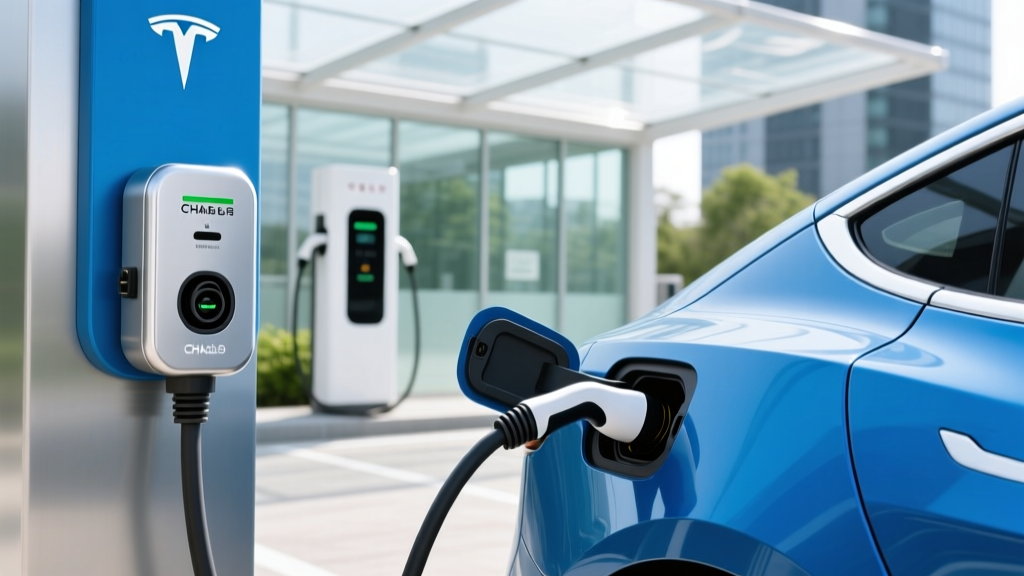
- Tesla Superchargers: NACS only. No CHAdeMO access — and no adapter path exists.
If you're buying a used Nissan Leaf in 2026, understand that your DC fast-charging options are narrowing. For daily driving with home Level 2 charging, this may not matter. For road trips, plan carefully and build in backup charging stops.
Frequently Asked Questions
How much does it cost to install a home EV charger?
A straightforward Level 2 home charger installation (charger near the electrical panel, 200A service already in place) typically costs $700–$1,450 including the charger hardware ($350–$600), electrician labor ($300–$600), and permit ($50–$150). Complex installations with long wire runs, conduit, or a required panel upgrade can push the total to $2,900–$6,850. Always get at least two quotes from licensed electricians and confirm the quote includes permit costs.
How fast will each charging level add range?
Level 1 (120V) adds approximately 3–5 miles of range per hour — useful for overnight top-ups on plug-in hybrids with small batteries but impractical for full BEVs. Level 2 (240V) adds 20–44 miles per hour depending on amperage and your vehicle's onboard charger capacity. DC fast charging can add 100–250+ miles in 20–30 minutes, but actual speed depends on the charger's kW output, your vehicle's maximum acceptance rate, battery temperature, and the charging curve taper above 80% SoC.
Which connector/charger is compatible with my EV?
Check your vehicle's charge port: if it's a large round port with multiple pins, that's CHAdeMO (Nissan Leaf, Mitsubishi). If it's a compact oval with a CCS combo section below, that's CCS1 (VW, BMW, older Hyundai/Kia). If it's a slim, compact port, that's NACS (Tesla and 2025+ Ford, GM, Rivian, Hyundai/Kia). For AC Level 2 home charging, all non-Tesla EVs use J1772, and Tesla uses NACS — adapters are inexpensive and widely available for AC charging across all connector types.
How much does charging cost per mile vs gas?
At home on off-peak electricity rates ($0.08–$0.12/kWh), an EV averaging 3.5 miles per kWh costs $0.024–$0.036 per mile — roughly 70–80% less than a 28 MPG gas car at $3.40/gallon ($0.121/mile). Public DC fast charging at $0.35–$0.55/kWh costs $0.105–$0.165 per mile, which can equal or exceed gas costs. The financial case for EVs is strongest when you charge at home.
What electrical upgrades might I need?
If your home has a 100-amp electrical panel (common in pre-1990s construction), you'll likely need either a panel upgrade to 200 amps ($1,500–$3,500) or a smart load management device ($200–$400 installed) that dynamically limits charger draw when other circuits are active. A licensed electrician can perform a load calculation per NEC Article 220 to determine if your existing panel has sufficient headroom. Some utilities offer rebates for panel upgrades when paired with EV charger installation — check with your local provider.
Can I use a CHAdeMO-to-Tesla adapter to charge at Superchargers?
No. As of 2026, no safe, commercially certified CHAdeMO-to-NACS adapter exists. The CHAdeMO and NACS protocols use fundamentally different communication methods (CAN-bus vs. Power Line Communication), and the physical connector geometries are incompatible. CHAdeMO vehicle owners should rely on Electrify America, EVgo, and ChargePoint stations that maintain CHAdeMO connectors for DC fast charging, and use the J1772 AC port (with a J1772-to-NACS adapter if needed) for Tesla Destination Chargers and other Level 2 locations.
Sources: Alternative Fuels Data Center — Charging Infrastructure, EPA Fuel Economy, NFPA National Electrical Code (NEC Article 625).