Why CHAdeMO vs Tesla Matters in 2026
If you own a Nissan Leaf, Mitsubishi Outlander PHEV, or an older Kia Soul EV, you've likely stared at a charging station with a thick, round CHAdeMO plug and wondered how it compares to the sleek Tesla Supercharger network. The "chademo tesla" question comes up constantly because these two connector ecosystems evolved in parallel — and only recently began converging around the North American Charging Standard (NACS).
CHAdeMO (Charge de Move) was developed by Japanese automakers and TEPCO in the early 2010s. Tesla built its proprietary connector and Supercharger network independently. In 2022, Tesla opened its connector design as NACS, and by 2025, nearly every major automaker had committed to adopting it. As of 2026, CHAdeMO remains a legacy standard — still functional, still supported at many stations, but no longer expanding.
This guide breaks down exactly how these connector systems compare, what adapters exist (and which don't), how fast each charges, and what you'll spend per mile.
Charging Levels Explained: kW, Miles Per Hour, and Real Times
Before comparing connectors, you need to understand the three charging levels. The critical distinction: kW (kilowatts) measures power — how fast energy flows into your battery. kWh (kilowatt-hours) measures energy — the total capacity of your battery. Think of kW as the width of a hose and kWh as the size of the bucket.
| Level | Voltage | Max Power (kW) | Miles of Range Added/Hour | Best Use Case |
|---|---|---|---|---|
| Level 1 | 120V AC | 1.4–1.9 kW | 3–5 miles | Overnight top-ups, PHEVs |
| Level 2 | 240V AC | 7.2–19.2 kW | 20–60 miles | Daily home charging |
| DC Fast Charging | 400–800V DC | 50–350 kW | 150–1,000+ miles (equivalent) | Road trips, rapid top-ups |
For context, a 75 kWh battery charged on Level 1 (1.4 kW) takes roughly 54 hours from empty to full. That same battery on a 50 kW CHAdeMO charger reaches 80% in about 60–75 minutes. On a 250 kW Tesla V3 Supercharger, a compatible vehicle can go from 10% to 80% in roughly 18–25 minutes depending on battery chemistry and thermal management.
Real-world charging times depend on the charge curve. DC fast chargers don't deliver peak kW the entire session. A CHAdeMO station rated at 50 kW may deliver close to that rate up to ~60% State of Charge (SoC), then taper significantly. Tesla V3 Superchargers peak at 250 kW but taper above 50–60% SoC. This is why manufacturers quote 10–80% times rather than 0–100%.
CHAdeMO vs Tesla NACS: Connector Compatibility Chart
Here's how the major connector types map to vehicles available in the US market:
| Connector | Native Vehicles | DC Fast Charge Max (Typical) | Network Availability |
|---|---|---|---|
| CHAdeMO | Nissan Leaf, Mitsubishi Outlander PHEV (older Kia Soul EV) | 50–100 kW | Electrify America (limited), EVgo, independent stations |
| NACS (Tesla) | All Tesla models; Ford, GM, Rivian, Hyundai, Kia, BMW, Mercedes, Volvo (2025+) | 150–350 kW | Tesla Supercharger network (20,000+ stalls in North America) |
| CCS1 | VW ID.4, older Ford Mustang Mach-E, Hyundai Ioniq 5 (pre-2025), BMW iX (pre-2025) | 150–350 kW | Electrify America, EVgo, ChargePoint |
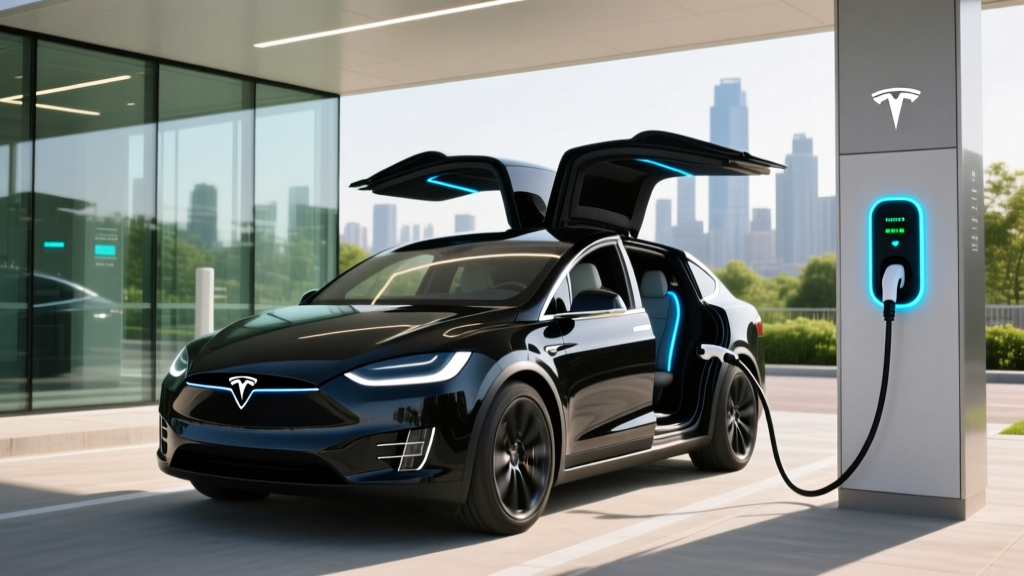
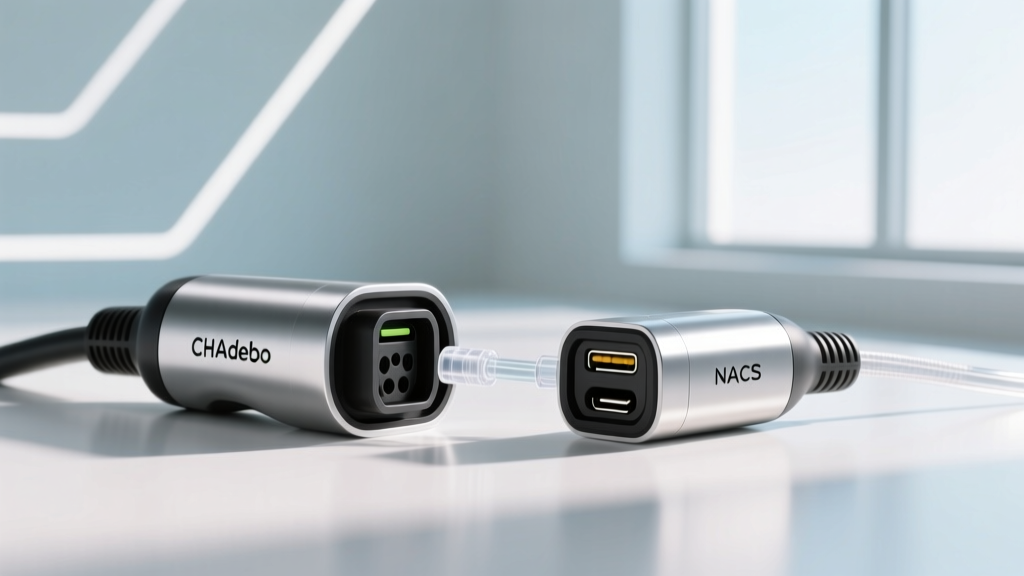
The most common question: Can a CHAdeMO vehicle charge at a Tesla Supercharger? As of 2026, the answer is no — not directly, and not with any commercially available adapter. Tesla has opened its Supercharger network to non-Tesla vehicles via the Magic Dock (a built-in CCS1 adapter at select stalls), but this supports CCS1, not CHAdeMO. No CHAdeMO-to-NACS adapter exists on the consumer market because the communication protocols and pin configurations are fundamentally incompatible.
If you drive a CHAdeMO-equipped Nissan Leaf, your DC fast charging options are limited to stations with CHAdeMO connectors — primarily EVgo and a shrinking number of Electrify America locations. CHAdeMO infrastructure is not being expanded, and some operators have retired CHAdeMO stalls in favor of CCS1 and NACS.
Home Charger Installation: Requirements, Costs, and Panel Upgrades
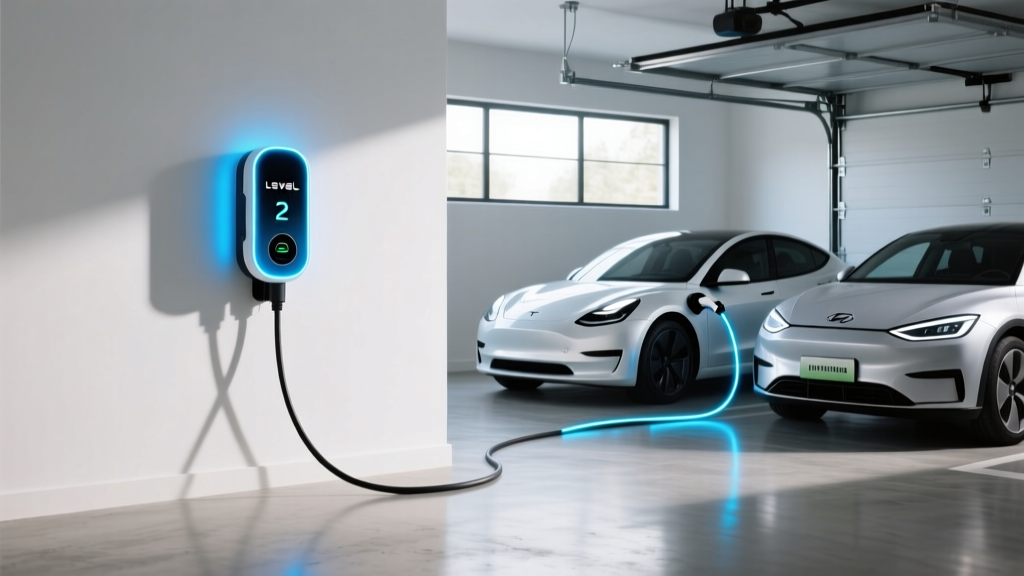
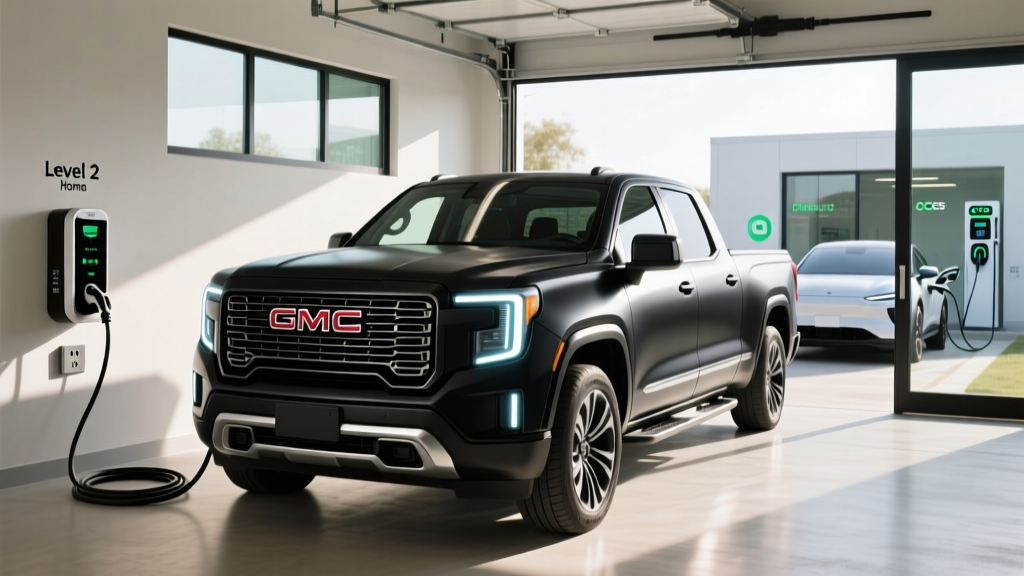
Most EV charging happens at home, and a Level 2 home charger is the single biggest quality-of-life upgrade for any EV owner. Here's what's involved electrically and financially.
Electrical Requirements
A Level 2 charger requires a dedicated 240V circuit — the same voltage as an electric dryer or oven. Common configurations:
- 40A circuit / 32A continuous (9.6 kW output) — sufficient for most EVs, charges a 75 kWh battery overnight
- 50A circuit / 40A continuous (11.5 kW output) — faster charging, good for larger batteries like the F-150 Lightning (131 kWh)
- 60A circuit / 48A continuous (11.5–14.4 kW output) — maximum common residential; requires robust panel capacity
The National Electrical Code (NEC) requires that continuous loads (like EV charging, which runs for 3+ hours) not exceed 80% of the circuit breaker rating. A 40A breaker therefore supports 32A continuous draw.
Panel Upgrade Considerations
Many homes built before 2000 have 100A or 150A electrical panels. Adding a 40–60A dedicated EV circuit may push total load close to or beyond panel capacity. Signs you may need a panel upgrade:
- Your panel is 100A and already supports electric heat, an electric oven, a dryer, and central AC
- Your panel has no available breaker slots
- Your electrician's load calculation shows you'd exceed 80% of panel capacity with the EV circuit added
A panel upgrade from 100A to 200A typically costs $1,500–$3,000 depending on your region and the complexity of the service entrance. In some cases, a smart panel or load-management device (like the Span smart panel or a charger with built-in load sharing) can avoid a full upgrade by dynamically reducing EV charge rate when other high-draw appliances are running.
| Cost Component | Low End | High End | Notes |
|---|---|---|---|
| Level 2 Charger (Equipment) | $300 | $700 | 32A–48A smart chargers |
| Electrician Labor | $400 | $1,500 | Depends on run length, conduit, wall type |
| Permit & Inspection | $50 | $300 | Varies by municipality |
| Panel Upgrade (if needed) | $1,500 | $3,000 | 100A → 200A service upgrade |
| Total (no panel upgrade) | $750 | $2,500 | Most installations fall in $1,000–$1,800 |
| Total (with panel upgrade) | $2,250 | $5,500 | Older homes with 100A service |
Always hire a licensed electrician and pull a permit. Unpermitted EV charger installations can void homeowner's insurance and create fire risk. The charger must be on a dedicated circuit with proper GFCI protection (required by NEC 2020 and later for outdoor receptacles). If installing outdoors, ensure the charger and outlet carry a NEMA 4 or NEMA 4X weather-resistance rating.
Cost to Charge: Per-Mile Economics vs Gasoline
Charging cost depends entirely on where and when you plug in. Here's a realistic comparison for a mid-size EV averaging 3.5 miles per kWh (roughly 28.5 kWh/100mi, similar to a Tesla Model Y or Hyundai Ioniq 5).
| Charging Scenario | Typical $/kWh | Cost per Mile (at 3.5 mi/kWh) | Full 75 kWh Battery Cost |
|---|---|---|---|
| Home (off-peak utility rate) | $0.08–$0.14 | $0.023–$0.040 | $6.00–$10.50 |
| Home (standard residential rate) | $0.14–$0.20 | $0.040–$0.057 | $10.50–$15.00 |
| Public Level 2 (ChargePoint, etc.) | $0.25–$0.49 | $0.071–$0.140 | $18.75–$36.75 |
| DC Fast Charging (EA, EVgo) | $0.35–$0.60 | $0.100–$0.171 | $26.25–$45.00 |
| Tesla Supercharger (member rates) | $0.25–$0.40 | $0.071–$0.114 | $18.75–$30.00 |
| Gasoline (28 MPG at $3.40/gal) | — | $0.121 | $34.00 (equivalent energy) |
At home on off-peak rates, an EV costs roughly $0.03 per mile — about one-quarter the cost of gasoline. Even at public DC fast charging rates of $0.48/kWh, you're paying roughly $0.14/mile, which is comparable to a gas car getting 28 MPG. The savings are most dramatic for home chargers with time-of-use (TOU) utility plans that offer rates below $0.10/kWh overnight.
According to the EPA's fueleconomy.gov, the average US electricity rate for EV charging translates to roughly $0.04–$0.06 per mile for most efficient models — significantly below the gasoline equivalent.
Recommended Home Level 2 Chargers for Every Connector
Below are specific charger recommendations based on real-world use, reliability, and smart features. All prices are approximate as of 2026.
Tesla Wall Connector (NACS)
- Power Output: Up to 11.5 kW (48A)
- Connector: NACS (native Tesla)
- Cable Length: 24 ft
- Smart Features: Wi-Fi, OTA updates, power sharing between multiple units
- Price: ~$425
- Best For: Tesla owners who want the simplest, fastest home setup
ChargePoint Home Flex (NACS or J1772)
- Power Output: Up to 12 kW (50A) — configurable via DIP switches
- Connector: Available in NACS or J1772 (CCS1 adapter included with some trims)
- Cable Length: 23 ft
- Smart Features: Wi-Fi, app scheduling, Alexa integration, energy tracking
- Price: ~$550–$650
- Best For: Non-Tesla EVs; flexible amperage for older panels
Emporia Vue Level 2 Charger
- Power Output: Up to 11.5 kW (48A)
- Connector: J1772 (NACS adapter available separately)
- Cable Length: 24 ft
- Smart Features: Wi-Fi, app control, solar integration, load management with Emporia panel monitor
- Price: ~$400
- Best For: Budget-conscious buyers; homes with solar panels
For CHAdeMO vehicle owners: none of these home chargers have a CHAdeMO connector. That's because CHAdeMO is exclusively a DC fast-charging standard. At home, CHAdeMO-equipped vehicles like the Nissan Leaf use a J1772 connector for Level 1 and Level 2 AC charging — the same standard used by all non-Tesla EVs in North America. So a ChargePoint Home Flex with J1772 or an Emporia Vue will charge your Leaf at home just fine. The CHAdeMO port on your Leaf is only used at public DC fast charging stations.
DC Fast Charging Times: CHAdeMO vs NACS vs CCS1
Here's how typical charging sessions compare across connector types for common battery sizes. All times assume 10–80% SoC and optimal battery temperature (preconditioned).
| Vehicle (Battery Size) | Connector | Peak DC Rate | 10–80% Time | Notes |
|---|---|---|---|---|
| Nissan Leaf SV Plus (62 kWh, LMO/NMC) | CHAdeMO | 100 kW | ~45 min | Passive air cooling limits sustained rate; CHAdeMO 2.0 |
| Nissan Leaf S (40 kWh) | CHAdeMO | 50 kW | ~60 min | Older CHAdeMO 1.0; rapidgate in warm weather |
| Tesla Model Y Long Range (75 kWh, NMC) | NACS | 250 kW | ~22 min | V3 Supercharger; excellent thermal management |
| Hyundai Ioniq 5 (77.4 kWh, NMC) | NACS (2025+) or CCS1 | 350 kW (800V) | ~18 min | 800V architecture sustains high rate longer |
| Ford F-150 Lightning Extended (131 kWh, NMC) | NACS (2025+) or CCS1 | 150 kW | ~41 min | Large battery means longer absolute time |
CHAdeMO's primary limitation is its maximum power ceiling. CHAdeMO 2.0 supports up to 400 kW in theory, but in practice, no CHAdeMO vehicle sold in the US charges above 100 kW, and most are limited to 50 kW. The Nissan Leaf's air-cooled battery also suffers from "rapidgate" — thermal throttling that further reduces charge speed during repeated fast-charge sessions or hot weather. This is a physics limitation, not a connector limitation, but it compounds the CHAdeMO experience.
NACS vehicles benefit from both higher power availability (250–350 kW at modern Supercharger stalls) and superior battery thermal management systems that sustain peak rates longer before tapering. The Hyundai Ioniq 5's 800V architecture, for instance, can sustain over 200 kW from 10% to roughly 55% SoC before tapering, which is why its 10–80% time is among the fastest in production.
Safety, Code, and Installation Best Practices
Whether you're installing a NACS Wall Connector or a J1772 unit for your CHAdeMO-equipped Leaf, these safety and code requirements are non-negotiable:
- Dedicated circuit: Your Level 2 charger must be on its own breaker — not shared with other outlets or appliances.
- GFCI protection: NEC 2020+ requires ground-fault circuit interrupter protection for outdoor EV charging receptacles (NEC Article 625). Many hardwired chargers have built-in GFCI; for plug-in units using a NEMA 14-50 outlet, a GFCI breaker is required.
- Outdoor rating: Outdoor installations require NEMA 4 or 4X rated enclosures for both the charger and any receptacle. Indoor garage installations have no special weatherproofing requirement.
- Wire gauge: A 40A circuit requires at minimum 8 AWG copper wire; a 60A circuit requires 6 AWG. Your electrician will size wire based on run length and local code.
- Permit and inspection: Nearly all jurisdictions require an electrical permit for a new 240V circuit. The inspection ensures correct wire sizing, breaker rating, grounding, and GFCI compliance. Skipping this step risks insurance denial in the event of an electrical fire.
For homes with limited panel capacity, consider a smart charger with dynamic load management. Devices like the Emporia Vue charger paired with an Emporia panel monitor can automatically reduce charge current when total household load approaches panel capacity — avoiding a costly panel upgrade while still providing overnight charging.
Frequently Asked Questions
Can I charge my CHAdeMO Nissan Leaf at a Tesla Supercharger?
No. There is no commercially available adapter that converts a Tesla NACS Supercharger connector to CHAdeMO. The communication protocols and physical pin layouts are fundamentally different. Tesla's Magic Dock adapter at select Supercharger stations supports CCS1 only, not CHAdeMO. CHAdeMO vehicle owners must use stations with native CHAdeMO connectors — primarily EVgo and some remaining Electrify America locations.
Is CHAdeMO being phased out?
Effectively, yes. No new vehicles sold in the US use CHAdeMO as their primary DC fast-charging connector. The Nissan Ariana uses CCS1/NACS, and the next-generation Nissan Leaf is expected to adopt NACS. Existing CHAdeMO stations continue to operate, but new infrastructure investment is going to NACS and CCS1. CHAdeMO vehicle owners should plan for a gradually shrinking DC fast-charging footprint.
How much does it cost to install a home EV charger?
A typical Level 2 home charger installation costs $1,000–$1,800 including equipment ($300–$700), electrician labor ($400–$1,500), and permit fees ($50–$300). If your home needs an electrical panel upgrade from 100A to 200A service, add $1,500–$3,000, bringing the total to $2,500–$5,000. Always get a load calculation from a licensed electrician before committing.
How fast will each charging level add range?
Level 1 (120V) adds roughly 3–5 miles of range per hour. Level 2 (240V, 32–48A) adds 20–45 miles per hour depending on your vehicle's onboard charger capacity. DC fast charging adds 150–300+ miles in a 20–30 minute session, depending on peak kW rate and battery size. Exact rates depend on the vehicle's acceptance rate — a Nissan Leaf on a 50 kW CHAdeMO charger adds about 100 miles in 30 minutes, while a Tesla Model Y on a 250 kW V3 Supercharger adds about 200 miles in 15 minutes.
How much does charging cost per mile vs gas?
Home charging on off-peak utility rates costs approximately $0.03–$0.04 per mile for an efficient EV. Public DC fast charging costs $0.10–$0.17 per mile. A comparable gasoline car getting 28 MPG at $3.40/gallon costs about $0.12 per mile. Home charging is roughly one-quarter to one-third the per-mile cost of gasoline, according to fueleconomy.gov data.
What electrical upgrades might I need for a home charger?
You may need a panel upgrade (100A to 200A) if your existing electrical service is near capacity. Other potential upgrades include: adding a new breaker slot, running new conduit from the panel to the garage or exterior wall, upgrading wire gauge, or installing a GFCI breaker. Homes with 200A panels and available breaker slots typically need no upgrades beyond the dedicated circuit itself.
Can I use a J1772 home charger with my CHAdeMO vehicle?
Yes. CHAdeMO is only a DC fast-charging connector. For Level 1 and Level 2 AC home charging, all CHAdeMO-equipped vehicles (Nissan Leaf, Mitsubishi Outlander PHEV) use the standard J1772 connector — the same one used by every non-Tesla EV in North America. Any J1772 Level 2 home charger will work with your vehicle.