If you drive a Nissan LEAF, Mitsubishi Outlander PHEV, or any vehicle equipped with a CHAdeMO DC fast-charging port, you've probably noticed a frustrating trend: public charging networks are rapidly consolidating around CCS1 and the Tesla NACS standard. CHAdeMO stalls are shrinking. For 2026, the practical solution is a CHAdeMO adapter — a hardware bridge that lets your car plug into the dominant fast-charging networks without trading it in.
This guide covers exactly what adapters exist, what they cost, how they affect charging speed, and how to pair them with a solid home Level 2 setup so you're never stranded hunting for a dying CHAdeMO stall.
Why CHAdeMO EV Owners Need an Adapter in 2026
CHAdeMO was the original DC fast-charging standard, deployed widely in the early 2010s by Nissan, Mitsubishi, and Kia. But the industry has moved on. Electrify America, EVgo, and most new networks deploy CCS1 or NACS connectors. Tesla opened its Supercharger network to non-Tesla vehicles via NACS, but only for cars with a native NACS port or a CCS-to-NACS adapter — CHAdeMO cars are left out without a two-step solution.
As of 2026, only a handful of new vehicles still ship with CHAdeMO (mainly the Mitsubishi Outlander PHEV for DC fast charging). Every other major automaker has adopted either CCS1 or NACS. According to the U.S. Department of Energy's AFDC, CHAdeMO connectors now represent under 15% of new DC fast-charger deployments in the U.S.
A CHAdeMO adapter solves this by converting a CCS1 or NACS plug on the station side to the CHAdeMO inlet on your car. It's not cheap — expect $300 to $500 for a quality unit — but it dramatically expands your charging map.
Charging Levels Explained: kW, kWh, and Miles Per Hour
Before discussing adapters, let's nail down the three charging levels and the critical distinction between kW (kilowatts, a measure of power — how fast energy flows) and kWh (kilowatt-hours, a measure of energy — how much the battery holds). Confusing these is the single most common EV mistake.
| Level | Voltage | Max Power (kW) | Miles of Range Added Per Hour | Typical Use |
|---|---|---|---|---|
| Level 1 | 120V AC | 1.2–1.9 kW | 3–5 mi/hr | Overnight trickle; emergency top-up |
| Level 2 | 240V AC | 7.2–19.2 kW | 20–60 mi/hr | Home daily charging; workplace; shopping centers |
| DC Fast (Level 3) | 200–900V DC | 50–350 kW | 150–1,200+ mi/hr (peak) | Road trips; rapid top-ups |
For a Nissan LEAF with a 60 kWh battery and an EPA range of ~212 miles (2025 SV Plus), a Level 2 charger at 7.2 kW adds roughly 25 miles of range per hour — enough to fully recharge overnight in about 8–9 hours. A 50 kW CHAdeMO DC fast charge takes that same battery from 10% to 80% in approximately 45–55 minutes. A 100 kW CCS station with an adapter could cut that to roughly 30–35 minutes, depending on the car's onboard charge acceptance curve.
CHAdeMO Adapter Compatibility: What Plugs Into What
Not all adapters work with all stations. Here's the connector landscape and which adapters bridge which gaps:
| Your Car's Inlet | Station Connector | Adapter Needed? | Availability (2026) |
|---|---|---|---|
| CHAdeMO | CHAdeMO | None — native | Declining; ~15% of new DCFC |
| CHAdeMO | CCS1 | CHAdeMO-to-CCS1 adapter | Limited; ~$400–$500 from specialty makers |
| CHAdeMO | NACS (Tesla Supercharger) | CHAdeMO-to-CCS1 adapter + CCS-to-NACS adapter (daisy-chain not recommended) | Not officially supported; unreliable |
| CCS1 | NACS (Tesla Supercharger) | CCS-to-NACS adapter (Tesla Magic Dock or third-party) | Widely available; ~$200–$250 |
| NACS | CCS1 | NACS-to-CCS1 adapter | Available from Tesla and third parties |
The critical reality: A true CHAdeMO-to-CCS1 adapter is a complex, active device — it must translate DC communication protocols between the car and the station. This makes it significantly more expensive than a simple NACS-to-CCS passive adapter. As of early 2026, companies like Lectron and Setec offer CHAdeMO-to-CCS adapters in the $400–$500 range, with max throughput around 50–60 kW due to protocol translation overhead. You will not get the full 150+ kW that a CCS-native car might pull.
Daisy-chaining adapters (CHAdeMO → CCS → NACS) to reach a Tesla Supercharger is strongly discouraged. Each adapter adds resistance, communication latency, and a potential failure point. Most Supercharger stations with the Magic Dock have a built-in CCS adapter, but they will not recognize a CHAdeMO vehicle even with two adapters stacked. If Supercharger access is essential, the more reliable path is to trade into a NACS-native vehicle.
Home Level 2 Charging: Installation Costs and Electrical Requirements
Regardless of which adapter you buy for road trips, your daily charging should happen at home on a Level 2 charger. Here's what's involved and what it costs.
Electrical Requirements
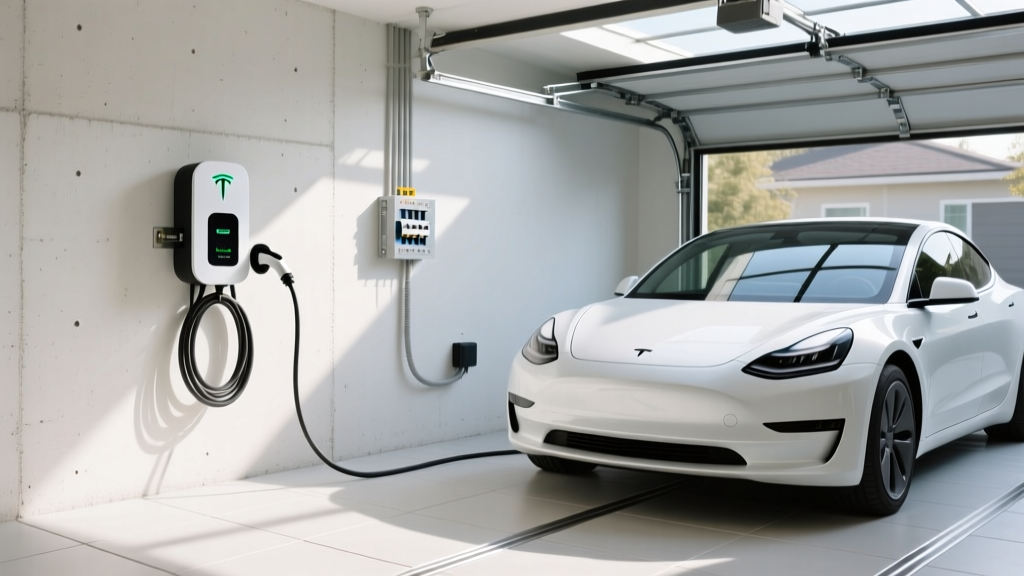
A typical Level 2 home charger runs on a 240V circuit at 40 amps (for a 32-amp continuous charger — the National Electrical Code requires circuits be rated 125% of continuous load). This delivers approximately 7.7 kW of power. Higher-output chargers may require a 50-amp or 60-amp circuit.
Your home's electrical panel must have enough spare capacity to support the new circuit. A licensed electrician will perform a load calculation to verify. Homes with a 200-amp panel and gas appliances usually have sufficient headroom. Older homes with 100-amp panels, or homes that have already added high-draw circuits (hot tubs, workshops), may need a panel upgrade to 200 amps — which adds $1,500–$3,000 to the project.
Installation Cost Breakdown
| Component | Simple Install (panel nearby) | Complex Install (long run / panel upgrade) |
|---|---|---|
| Level 2 Charger (hardware) | $350–$700 | $350–$700 |
| Electrician labor | $300–$600 | $800–$2,500 |
| Electrical permit | $50–$150 | $50–$200 |
| Panel upgrade (if needed) | $0 | $1,500–$3,000 |
| Conduit, wiring, misc. | $50–$150 | $200–$500 |
| Total | $750–$1,600 | $2,900–$6,900 |
The wide range reflects real-world variability. A garage with the panel on the adjacent wall might cost $800 total. A detached garage needing a 60-foot underground conduit run and a panel upgrade can push past $5,000. Always get at least two quotes from licensed electricians, and confirm they pull a permit — it's required by code and protects your home insurance.
How Much Does Charging Cost? Home vs. Public vs. Gas
The economics of EV charging depend entirely on where and when you plug in. Here's a realistic comparison using the 2025 Nissan LEAF SV Plus (60 kWh battery, 212 mi EPA, ~3.5 mi/kWh efficiency) as our baseline:
| Charging Scenario | Rate ($/kWh) | Cost to Add 100 Miles | Cost Per Mile |
|---|---|---|---|
| Home — off-peak utility rate | $0.08–$0.12 | $2.30–$3.40 | $0.023–$0.034 |
| Home — standard residential rate | $0.14–$0.18 | $4.00–$5.15 | $0.040–$0.051 |
| Public Level 2 (ChargePoint, etc.) | $0.25–$0.40 | $7.15–$11.40 | $0.071–$0.114 |
| DC Fast Charging (EA, EVgo) | $0.35–$0.55 | $10.00–$15.70 | $0.100–$0.157 |
| Gasoline vehicle (30 MPG, $3.40/gal) | — | $11.33 | $0.113 |
Home off-peak charging is the clear economic winner — roughly one-third the cost of gasoline per mile. But frequent DC fast charging can actually exceed the cost of gas, especially at stations charging $0.48+/kWh. This is why a home Level 2 installation pays for itself within 1–3 years for most drivers.
For the LEAF SV Plus, a full 10–80% charge (42 kWh) at home off-peak costs about $3.35–$5.00. The same fill at a $0.48/kWh DC fast station costs $20.15. The math overwhelmingly favors home charging.
Recommended Home Chargers for CHAdeMO EVs
Your car's CHAdeMO inlet is only for DC fast charging. At home, you'll use the car's J1772 Level 2 port (standard on all U.S. EVs). Here are proven Level 2 chargers that pair well with LEAF, Outlander PHEV, and other CHAdeMO-equipped vehicles:
Emporia Level 2 Smart Charger
Power: 48A (11.5 kW on 60A circuit)
Connector: J1772
Cable: 24 ft
Smart features: Wi-Fi, app scheduling, energy monitoring, solar integration
Price: ~$400
Best for: Budget-conscious buyers wanting smart features and solar pairing
ChargePoint Home Flex
Power: Up to 50A (12 kW on 60A circuit); adjustable via dip switch
Connector: J1772
Cable: 23 ft
Smart features: Wi-Fi, app scheduling, Alexa, flexible amperage settings
Price: ~$550–$650
Best for: Homes with varying circuit capacities; the adjustable amperage avoids a panel upgrade
Grizzl-E Smart
Power: 40A (9.6 kW on 50A circuit)
Connector: J1772
Cable: 24 ft
Smart features: OCPP-compatible, app control, over-the-air updates
Price: ~$500
Best for: Extreme cold climates; rated to -40°F, rugged aluminum case
Important note for LEAF owners: The LEAF's onboard charger maxes out at 6.6 kW (27.5A), so even a 48A charger will only deliver 6.6 kW to the car. A 40A circuit is sufficient. Don't overspend on a 60A circuit upgrade for a car that can't use it — but consider future-proofing if you plan to buy a higher-power EV later.
Real-World Charging Times: 10% to 80% by Method
Charging speed is not linear. Lithium-ion batteries accept peak power only at low states of charge. As the battery fills, the rate tapers significantly — this is called the charge curve. Manufacturers quote peak kW, but the sustained rate matters more for your actual wait time.
| Charging Method | Peak Power | 10–80% Time | Notes |
|---|---|---|---|
| 120V Level 1 (wall outlet) | 1.4 kW | ~28–30 hours | Emergency only; not viable for daily use |
| 240V Level 2 (home, 6.6 kW) | 6.6 kW | ~7–8 hours | Ideal overnight charge |
| 50 kW CHAdeMO (native) | 50 kW | ~45–55 min | LEAF charge curve tapers heavily above 80% |
| 100 kW CCS via adapter | ~55–60 kW (adapter-limited) | ~35–45 min | Adapter protocol overhead caps throughput |
| 150 kW CHAdeMO (rare, Japan) | 150 kW | ~30 min | Only LEAF e+ supports; almost no U.S. stations |
The LEAF's lack of liquid battery thermal management means repeated DC fast charges in hot weather will trigger the car's "Rapidgate" protection — the onboard system throttles charging speed to prevent battery overheating. If you're planning a road trip with multiple DC fast stops in summer, expect progressively slower charges after the first stop. This is an inherent LEAF limitation, not an adapter issue.
Tax Credits and Incentives for Home Charger Installation
The federal Residential Clean Energy Credit (IRS §25C) covers 30% of the cost of home EV charging equipment and installation, up to $1,000 per year. This applies to the charger hardware and electrician labor, but not a panel upgrade.
Many states and utilities offer additional rebates. For example, some utility companies provide $250–$500 rebates for installing a smart Level 2 charger, and a few states (California, Colorado, Massachusetts) offer $500–$1,500 in additional incentives. Check the AFDC state incentive database for current programs in your area. Eligibility varies by jurisdiction, income level, and utility — always confirm with official sources and a tax professional before claiming.
Frequently Asked Questions
How much does a CHAdeMO adapter cost?
A CHAdeMO-to-CCS1 adapter typically costs $400–$500 as of 2026. These are active protocol-converting devices, which is why they cost significantly more than passive NACS-to-CCS adapters ($200–$250). The investment is worth it if you regularly travel through areas where CHAdeMO stations are scarce but CCS chargers are plentiful.
Can I use a CHAdeMO adapter at a Tesla Supercharger?
Not reliably. Tesla Superchargers with the Magic Dock provide a built-in CCS adapter, but the handshake protocol expects a CCS-native or NACS-native vehicle. Stacking a CHAdeMO-to-CCS adapter on top of the Magic Dock's CCS connector creates a multi-adapter chain that most stations will not recognize. If Supercharger access is critical to your driving patterns, the practical answer is a NACS-equipped vehicle.
Will an adapter reduce my charging speed?
Yes, modestly. Current CHAdeMO-to-CCS adapters are limited to roughly 50–60 kW of throughput due to the protocol translation hardware. If you're plugging into a 350 kW CCS station, you'll still only see 50–60 kW. For a LEAF that peaks around 50 kW anyway, this isn't a meaningful loss. For a vehicle capable of faster CHAdeMO charging (like the older Kia Soul EV at 50+ kW), the adapter may cap you slightly below native speed.
Do I need an adapter for home charging?
No. Your CHAdeMO vehicle has a separate J1772 inlet for Level 1 and Level 2 AC charging. Every home Level 2 charger comes with a J1772 connector, which plugs directly into your car. The CHAdeMO adapter is only needed for DC fast charging on the road when a CHAdeMO stall isn't available.
What electrical upgrades might I need for a home charger?
At minimum, you need a dedicated 240V circuit (40A or 50A) with space in your existing panel. If your panel is full or undersized (100A service), an upgrade to 200A costs $1,500–$3,000. Older wiring (knob-and-tube, aluminum branch circuits) may need replacement in the run to the charger. A licensed electrician's load calculation will determine exactly what's needed — never skip this step.
How fast will each charging level add range?
Level 1 (120V): 3–5 miles per hour. Level 2 (240V, 7.7 kW): ~25 miles per hour for a LEAF-class EV. DC fast charging (50 kW): ~150 miles per hour at peak, tapering as the battery fills. These figures scale with battery efficiency — a more efficient vehicle like the Tesla Model 3 adds more miles per kWh than a heavier SUV.
Is it worth buying a CHAdeMO adapter or should I just trade in my EV?
If your LEAF or Outlander PHEV is paid off and in good shape, a $400–$500 adapter extends its useful life for road trips at a fraction of a new car payment. If you're regularly driving 200+ mile routes in hot weather and frustrated by the LEAF's Rapidgate throttling and ~175-mile real-world highway range, the adapter won't fix those underlying limitations. In that case, trading into a NACS- or CCS-native vehicle with liquid-cooled battery management and 300+ mile range is the stronger long-term move.