If you drive a non-Tesla electric vehicle with a CCS1 charge port, the rapid expansion of Tesla's Supercharger network is one of the most compelling reasons to consider an adapter. As of 2026, Tesla has opened thousands of Supercharger stalls to non-Tesla EVs through its "Open Supercharger" initiative, and nearly every major automaker has adopted the North American Charging Standard (NACS) connector — the same physical plug Tesla has used since 2012. But if your current EV still has a CCS1 port (the combo connector standard on most non-Tesla EVs sold between 2015 and 2024), a CCS1 to Tesla adapter is your bridge to the largest fast-charging network in North America.
This guide breaks down exactly what these adapters do, which ones to buy, how fast you'll actually charge, what it costs compared to gas, and how home and public charging fit into the bigger picture.
Why CCS1 to Tesla Adapters Matter in 2026
The EV charging landscape has shifted dramatically. Ford, GM, Rivian, Hyundai, Kia, BMW, Volvo, Polestar, and others have committed to NACS as their standard connector, with most 2025-and-newer models shipping with native NACS ports. But millions of CCS1-equipped EVs remain on the road — vehicles like the Hyundai Ioniq 5 (pre-2025), Volkswagen ID.4, Ford Mustang Mach-E (pre-2025), BMW i4, and Kia EV6. For these owners, a CCS1 to Tesla adapter (more accurately called a CCS1-to-NACS adapter) is the key to accessing over 25,000 Tesla Supercharger stalls across the U.S. and Canada.
Tesla's network consistently ranks highest in reliability among DC fast-charging providers. According to J.D. Power's EV Experience Index, Tesla Superchargers outperform Electrify America, EVgo, and ChargePoint in uptime and ease-of-use scores. For CCS1 owners, that reliability gap is the primary driver of adapter demand.
Before going further, let's lock in the most important EV terminology distinction. kW (kilowatts) measures power — the rate at which energy flows into your battery, like water pressure from a hose. kWh (kilowatt-hours) measures energy — the total capacity of your battery, like the size of a water tank. A 150 kW charger delivers energy faster than a 50 kW charger. A 77 kWh battery holds more energy than a 58 kWh battery. We'll use both precisely throughout this guide.
Charging Levels Explained: Speeds in kW and Miles per Hour
Whether you're plugging in at home or using a CCS1 to Tesla adapter at a Supercharger, charging falls into three levels. Here's what each delivers in practical terms:
| Level | Voltage / Power | Miles of Range per Hour | Best For |
|---|---|---|---|
| Level 1 | 120V / 1.4–1.9 kW | 3–5 mi/hr | Overnight top-offs, PHEVs, emergencies |
| Level 2 | 240V / 7.2–19.2 kW | 20–60 mi/hr | Daily home charging, workplace, hotels |
| DC Fast Charging | 400–900V / 50–350 kW | 150–1,000+ mi/hr (peak) | Road trips, rapid top-ups (10–80% in 18–40 min) |
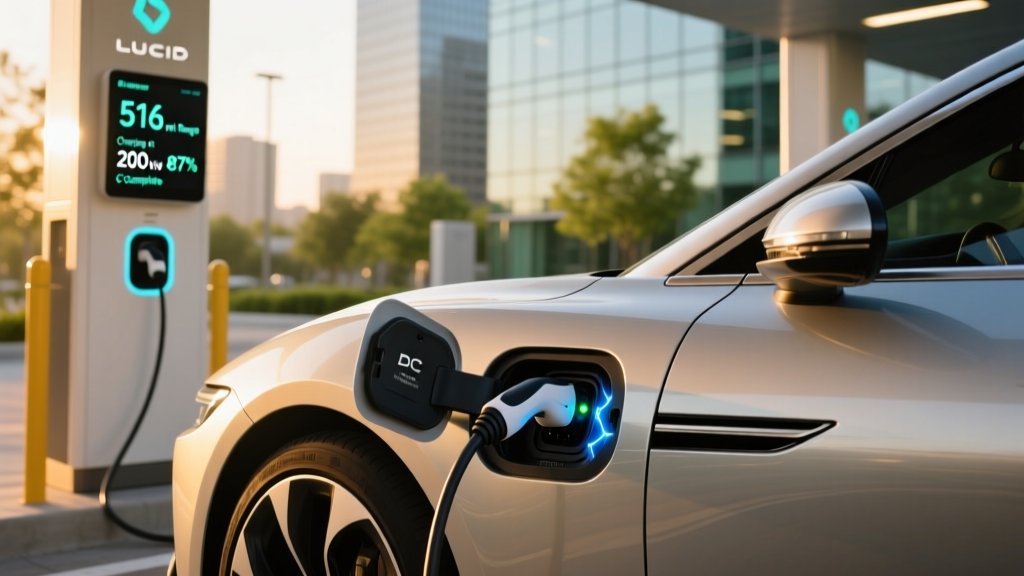
A few real-world nuances: DC fast-charging speeds peak at low states of charge (typically 10–30% SoC) and taper significantly above 80% to protect the battery. That's why we quote 10–80% charge times rather than 0–100%. On a Tesla V3 Supercharger (250 kW peak), a Hyundai Ioniq 5 with its 77.4 kWh battery and 800V architecture can accept up to ~235 kW, reaching 10–80% in roughly 18 minutes. A Volkswagen ID.4 with its 82 kWh battery and 400V architecture peaks around 135 kW, taking about 28–30 minutes for the same 10–80% window.
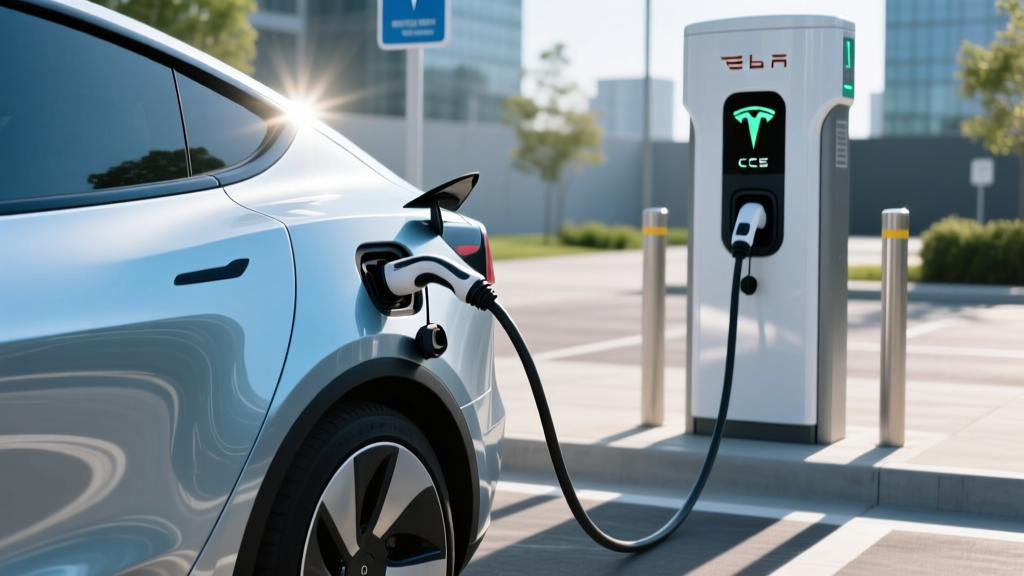
When using a CCS1 to Tesla adapter at a V3 Supercharger stall, your charge speed is limited by whichever is lower: the stall's maximum output or your vehicle's maximum charge acceptance rate. The adapter itself does not restrict power — quality adapters are rated for up to 250 kW / 500A.
Connector Compatibility: CCS1, NACS (Tesla), and CHAdeMO
North America has three active DC fast-charging connector standards. Here's which vehicles use each and what adapters you need:
| Connector | Vehicles (Examples) | Access to Tesla Superchargers? | Adapter Needed |
|---|---|---|---|
| NACS (Tesla) | All Tesla models; 2025+ Ford F-150 Lightning, GM Ultium vehicles, Rivian, new Hyundai/Kia models | Native — no adapter | None (need CCS adapter for non-Tesla DCFC stations) |
| CCS1 | Hyundai Ioniq 5 (pre-2025), Kia EV6 (pre-2025), VW ID.4, Ford Mach-E (pre-2025), BMW i4/iX, Chevy Bolt EUV | Yes — with CCS1-to-NACS adapter | CCS1-to-NACS adapter ($150–$250) |
| CHAdeMO | Nissan Leaf, Mitsubishi Outlander PHEV (older) | No — no reliable adapter exists | None commercially available (use EA, EVgo CHAdeMO stalls) |
Which CCS1 to Tesla Adapters Are Worth Buying?
Not all adapters are created equal. The critical specs to check are maximum power rating (kW), maximum current (amps), safety certifications (UL or equivalent), and weather sealing. Here are the top options available as of 2026:
Tesla Official CCS1-to-NACS Adapter
- Price: ~$195 (sold via Tesla shop)
- Max Power: 250 kW
- Max Current: 500A
- Certification: UL-listed
- Notes: Works at all Open Supercharger stalls. Firmware integration ensures seamless handshake. Best option if available for your vehicle.
Lectron CCS1-to-NACS Adapter (400A)
- Price: ~$150–$180
- Max Power: 200 kW (400A limit)
- Max Current: 400A
- Certification: TÜV certified
- Notes: Solid third-party option. The 400A cap means slightly slower peak speeds on 250 kW stalls — expect ~15–20 seconds longer 10–80% times. IP55 rated for rain.
A2Z Typhoon CCS1-to-NACS
- Price: ~$170–$200
- Max Power: 250 kW
- Max Current: 500A
- Certification: UL-listed (select models)
- Notes: Full 500A throughput. Compact form factor. Verify UL listing on the specific SKU — some variants are pending certification.
Regardless of brand, always verify that the adapter is rated for at least 250 kW DC fast charging and carries a recognized safety certification. Avoid unbranded adapters from marketplace sellers — a poor connection at 500A can cause dangerous overheating.
How Much Does Charging Cost? Home vs. Public vs. Gas
Charging costs vary enormously depending on where and when you plug in. Here's a realistic breakdown using national averages as of 2026:
| Scenario | Rate ($/kWh) | Cost per Mile* | Annual Cost (12,000 mi) |
|---|---|---|---|
| Home (off-peak utility rate) | $0.08–$0.14 | $0.024–$0.042 | $288–$504 |
| Home (standard rate, no TOU) | $0.15–$0.20 | $0.045–$0.060 | $540–$720 |
| Tesla Supercharger (Open network) | $0.28–$0.42 | $0.084–$0.126 | $1,008–$1,512 |
| Electrify America / EVgo DCFC | $0.35–$0.55 | $0.105–$0.165 | $1,260–$1,980 |
| Gas car (28 MPG avg, $3.40/gal) | — | $0.121 | $1,452 |
*Based on an EV efficiency of 3.3 miles/kWh (roughly 100 MPGe combined), which is typical for a midsize crossover like the Hyundai Ioniq 5 or Ford Mach-E. Source: fueleconomy.gov.
The takeaway: home charging on an off-peak rate is 3–5x cheaper per mile than gasoline. Even exclusive DC fast charging at Supercharger prices is competitive with gas, and public DCFC on Electrify America can approach or exceed gas costs. This is why home Level 2 installation is the single highest-ROI investment an EV owner can make.
Home Level 2 Charger Installation: Requirements, Costs, and Equipment
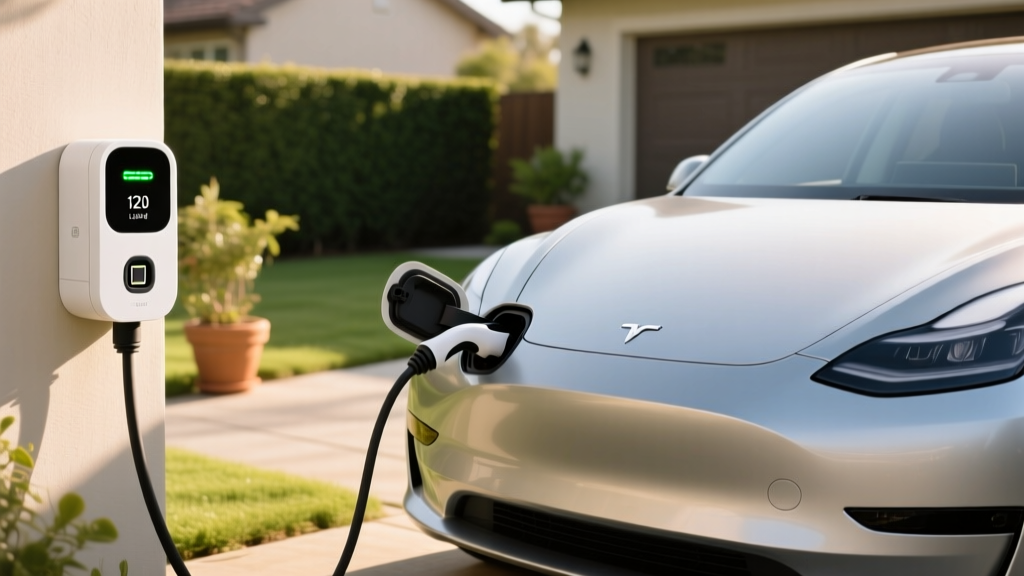
If you own a CCS1 EV and are considering a CCS1 to Tesla adapter for road trips, your daily charging should still happen at home on a Level 2 charger. Here's what that installation actually involves.
Electrical Requirements
A Level 2 home charger requires a dedicated 240V circuit — the same voltage as your electric dryer or oven. The most common configurations:
- NEMA 14-50 outlet (50A circuit): Supports chargers up to 40A continuous (48A breaker), delivering up to 9.6 kW. This is the most popular and versatile setup.
- Hardwired 60A circuit: Supports chargers up to 48A continuous, delivering up to 11.5 kW. Required for some higher-power chargers. No outlet — the charger is wired directly to the panel.
- NEMA 6-20 outlet (20A circuit): A budget option delivering 3.8 kW (16A continuous). Adds roughly 12–15 miles per hour — adequate for PHEVs or low-mileage BEV drivers.
Panel capacity matters. Most homes have a 100A or 200A main electrical panel. A 50A EV circuit consumes a significant portion of that capacity. If your panel is already near its load limit (common in older homes with electric heat, water heaters, and dryers), you may need a panel upgrade to 200A or even 400A, or an automated load-management device like the Emporia Smart Load Center.
Installation Cost Breakdown
| Item | Simple Install | Complex Install |
|---|---|---|
| Level 2 charger (equipment) | $350–$550 | $500–$750 |
| Electrician labor (2–4 hrs simple; 6–12 hrs complex) | $300–$600 | $800–$2,000 |
| Permit and inspection | $50–$150 | $100–$300 |
| Conduit, wiring, outlet (materials) | $50–$150 | $200–$600 |
| Panel upgrade (if needed) | $0 (not needed) | $1,500–$4,000 |
| TOTAL | $750–$1,450 | $3,100–$7,650 |
A "simple install" assumes your electrical panel has spare capacity, the charger location is within 10–20 feet of the panel, and conduit runs are straightforward (e.g., through an attached garage wall). A "complex install" involves long conduit runs, trenching to a detached garage, panel upgrades, or working in finished walls. Always get 2–3 quotes from licensed electricians — pricing varies widely by region.
Homes built before 1990 often have 100A panels. Adding a 50A EV circuit may exceed the panel's rated capacity, triggering a mandatory upgrade under NEC Article 220 load-calculation requirements. Budget $1,500–$4,000 for this if your electrician flags it. Some utilities offer rebates of $200–$500 for panel upgrades tied to EV adoption — check with your local provider.
Recommended Level 2 Home Chargers (CCS1/NACS Compatible)
ChargePoint Home Flex
- Power: Up to 12 kW (50A) — configurable from 16A to 50A
- Connector: J1772 (CCS1 compatible for AC); NACS version available
- Cable Length: 23 feet
- Smart Features: Wi-Fi, app scheduling, Alexa, energy tracking
- Price: ~$550
- UL Listed: Yes
Emporia Vue Level 2 Charger
- Power: Up to 11.5 kW (48A hardwired) or 9.6 kW (40A plug-in)
- Connector: J1772 (NACS version shipping 2025+)
- Cable Length: 24 feet
- Smart Features: Integrates with Emporia Vue energy monitor, solar-aware charging, TOU scheduling
- Price: ~$400
- UL Listed: Yes
Tesla Wall Connector
- Power: Up to 11.5 kW (48A hardwired)
- Connector: NACS native (CCS1 vehicles need a NACS-to-J1772 adapter for home AC charging)
- Cable Length: 24 feet
- Smart Features: Wi-Fi updates, power sharing between multiple units, load management
- Price: ~$475
- UL Listed: Yes
If you primarily drive a CCS1 vehicle, the ChargePoint Home Flex or Emporia charger with a native J1772 connector is the most convenient choice — no adapter needed at home. Save the CCS1 to Tesla adapter for DC fast charging on the road.
Safety, Code, and Best Practices for Adapter Use
Using a CCS1 to Tesla adapter at a Supercharger is straightforward, but a few safety and operational points deserve attention:
- Inspect the adapter before each use. Check pins for discoloration, debris, or bent contacts. A compromised connection at high amperage can generate dangerous heat.
- Use the Tesla app or in-car Tesla infotainment (if supported). Most Open Supercharger stalls require you to initiate and pay for the session through the Tesla app. Download it, create an account, and add a payment method before your first visit.
- Precondition your battery. If your EV supports route-based battery preconditioning (Hyundai, Kia, Ford, BMW all offer this on recent models), set the Supercharger as your navigation destination. Preconditioning warms the battery to optimal temperature, enabling faster charge acceptance — especially critical in cold weather, where charge speeds can drop 30–50% without it.
- Don't idle at the stall after reaching your target SoC. Tesla enforces idle fees (up to $1.00/minute) at busy stations. Most CCS1 EVs will notify you via their app when charging is complete.
- Store the adapter properly. Keep it in a padded case in your frunk or cargo area. Avoid tossing it loose where pins can get scratched or contaminated.
- Verify stall compatibility. Not every Supercharger stall is open to non-Tesla vehicles. Use the Tesla app's map to confirm a station supports non-Tesla charging before driving there. As of 2026, roughly 70% of U.S. Supercharger locations have at least some Open stalls.
Cold-Weather Charging Reality Check
A CCS1 EV that charges from 10–80% in 18 minutes at 70°F may take 30–40 minutes at 20°F without preconditioning. Battery chemistry (whether NMC or LFP) affects this — LFP batteries are more sensitive to cold-weather charge-speed reduction. Always budget extra time for winter road trips and prioritize preconditioning.
Frequently Asked Questions
How much does it cost to install a home EV charger?
A straightforward Level 2 home charger installation (existing panel capacity, short conduit run) typically costs $750–$1,450 all-in, including the charger, electrician labor, permit, and materials. Complex installations requiring panel upgrades, long conduit runs, or trenching can reach $3,100–$7,650. Always get multiple quotes from licensed electricians.
How fast will each charging level add range?
Level 1 (120V) adds roughly 3–5 miles of range per hour. Level 2 (240V, 40A) adds approximately 25–35 miles per hour depending on vehicle efficiency. DC fast charging at a 150 kW stall can add 150–250 miles in 20–30 minutes, though speeds taper above 80% SoC. Your vehicle's maximum charge acceptance rate is the limiting factor.
Which connector or charger is compatible with my EV?
Check your vehicle's charge port. If it's CCS1 (two large DC pins below the J1772 AC pins), you can use any CCS1 DC fast charger natively and access Tesla Superchargers via a CCS1-to-NACS adapter. If your EV has a native NACS port (most 2025+ models from Ford, GM, Rivian, Tesla), you can use Superchargers directly but may need a NACS-to-CCS adapter for Electrify America or other CCS networks. CHAdeMO vehicles (Nissan Leaf) have no Supercharger adapter option.
How much does charging cost per mile vs. gas?
Home charging on a standard rate ($0.15/kWh) costs roughly $0.045/mile for an efficient EV — about one-third the cost of gas at $3.40/gallon and 28 MPG ($0.121/mile). Public DC fast charging at $0.35–$0.48/kWh costs $0.105–$0.144/mile, roughly on par with gasoline. The savings advantage is largest when you charge at home, especially on time-of-use off-peak rates.
What electrical upgrades might I need for a home charger?
The most common upgrade is a panel capacity increase from 100A to 200A, which costs $1,500–$4,000 and is often required in older homes. You may also need a new dedicated 240V circuit with appropriate breaker, conduit runs from the panel to the charger location, and a NEMA 14-50 receptacle or hardwired connection. A licensed electrician will perform an NEC Article 220 load calculation to determine if your existing panel can handle the additional draw. Permits and inspections are required in most jurisdictions.
Will using a CCS1 to Tesla adapter void my vehicle's warranty?
No. Under the Magnuson-Moss Warranty Act, using a third-party adapter cannot void your vehicle's battery or powertrain warranty unless the manufacturer can prove the adapter directly caused damage. That said, buy only UL-listed or TÜV-certified adapters from reputable brands to minimize risk of electrical faults.
Can I use a CCS1 to Tesla adapter for Level 2 AC charging at home?
These adapters are designed specifically for DC fast charging. For Level 2 AC home charging, use a standard J1772 connector (native on CCS1 vehicles) or a NACS-to-J1772 adapter if your home charger has a NACS cable. Don't use a DC-rated CCS1-to-NACS adapter for AC charging — it's unnecessary and not designed for that purpose.
Sources: fueleconomy.gov (EPA efficiency data), Tesla Supercharger network info, NFPA 70 National Electrical Code. Tax credit and incentive rules referenced from IRS §30D guidance. Installation costs based on 2026 electrician market averages; actual quotes vary by region. Always consult a licensed electrician for your specific installation.