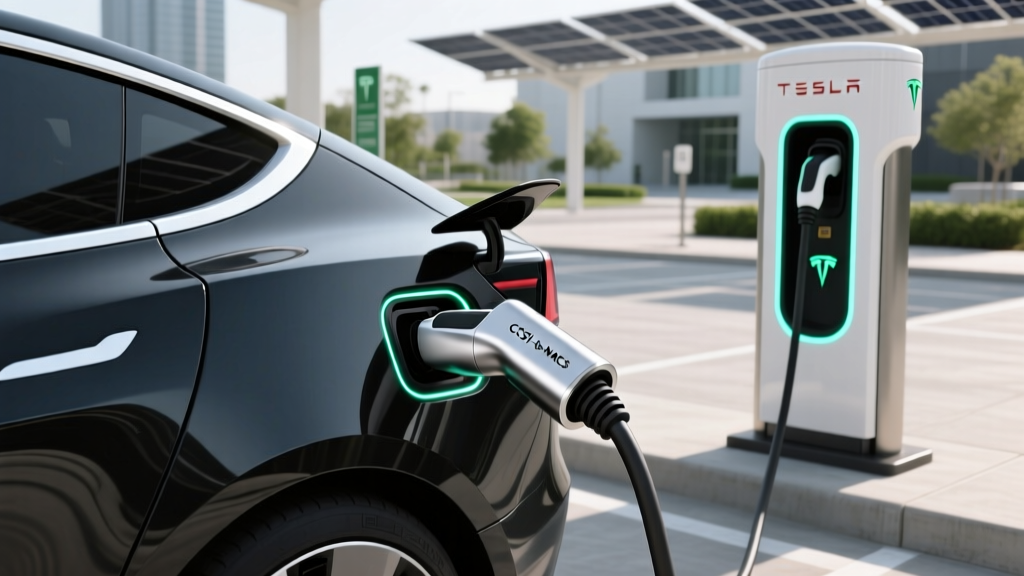
By mid-2026, the North American Charging Standard (NACS) has effectively won the connector war. Nearly every major automaker — Ford, GM, Rivian, Hyundai, Kia, BMW, and more — has transitioned to the NACS charge port on new vehicles. But millions of CCS1-equipped EVs are still on the road, from the Hyundai Ioniq 5 to the Ford Mustang Mach-E (pre-2025) to the Volkswagen ID.4. If you own one of these vehicles, a CCS1 to NACS adapter is your bridge to the largest and most reliable DC fast-charging network in North America: Tesla's Supercharger network, now open to non-Tesla vehicles.
This guide covers which adapters work, what charging speeds to expect, how to pair an adapter with a home charging setup, and what you'll actually spend per mile. We'll be precise about numbers — because the difference between kW (power, or how fast energy flows) and kWh (energy, or how much your battery stores) is the single most important distinction in EV ownership.
Why the CCS1 to NACS Adapter Matters in 2026
As of 2026, Tesla's Supercharger network exceeds 6,500 stations and 65,000+ stalls across North America, according to Tesla's public charging data. With the network now accessible to non-Tesla EVs via the NACS standard, CCS1-vehicle owners who skip the adapter are effectively cutting themselves off from the most reliable DC fast-charging infrastructure available.
Meanwhile, legacy CCS1 networks — Electrify America, EVgo, and ChargePoint — continue to operate, but station uptime and connector availability remain inconsistent in many regions. The adapter isn't just a convenience; it's a redundancy strategy that dramatically expands your charging options on road trips and in areas where CCS1-only stations are sparse.
- NACS (North American Charging Standard): The smaller, lighter connector pioneered by Tesla, now adopted industry-wide for both AC Level 2 and DC fast charging.
- CCS1 (Combined Charging System Combo 1): The larger connector used by most non-Tesla EVs built before 2025, combining a J1772 AC plug with two DC pins below.
- CHAdeMO: An older DC fast-charge connector used primarily by the Nissan LEAF. Not compatible with NACS adapters.
Charging Levels Explained: Speeds, Power, and Range Added
Before choosing an adapter or home charger, you need to understand the three charging levels and how they translate to real-world range recovery. Power is measured in kilowatts (kW); energy stored in your battery is measured in kilowatt-hours (kWh). A 75 kWh battery charged at 11.5 kW (Level 2) takes roughly 6.5 hours from empty to full, minus losses.
| Level | Voltage | Power (kW) | Miles of Range Per Hour | Typical Use Case |
|---|---|---|---|---|
| Level 1 | 120V AC | 1.0–1.4 kW | 3–5 mi/hr | Overnight trickle; emergency top-up |
| Level 2 | 240V AC | 3.3–19.2 kW | 12–75 mi/hr | Home daily charging; workplace; public AC |
| DC Fast Charge | 200–900V DC | 50–350 kW | 150–1,200+ mi/hr | Road trips; rapid top-ups |
Real-world charging time examples (10–80% SoC):
- Hyundai Ioniq 5 (77.4 kWh battery, 800V architecture): Peaks at ~240 kW on a 350 kW CCS1 charger, achieving 10–80% in approximately 18 minutes. Through a CCS1 to NACS adapter on a V4 Supercharger (currently limited to ~250 kW for non-Tesla vehicles), expect 10–80% in roughly 20–22 minutes.
- Ford Mustang Mach-E Extended Range (91 kWh usable, 400V): Peaks at ~150 kW on CCS1, 10–80% in ~35 minutes. Via NACS adapter on a 250 kW Supercharger, expect similar times since the vehicle's charge rate is the bottleneck, not the station.
- Volkswagen ID.4 (82 kWh usable, 400V): Peaks at ~135 kW, 10–80% in ~34 minutes on CCS1. Adapter use adds negligible overhead.
Charge curve reality check: Peak kW is not sustained kW. Most EVs charge rapidly from 10–50% SoC, then taper significantly. A vehicle rated at 240 kW peak may average only 120–140 kW across the full 10–80% session. This is why 10–80% time is a more useful metric than peak power.
Which Connector Does Your EV Use? Compatibility Guide
Before buying a CCS1 to NACS adapter, confirm your vehicle's charge port. Here's the landscape as of the 2026 model year:
| Connector | Vehicle Examples | Adapter Needed for Superchargers? |
|---|---|---|
| NACS (native) | Tesla Model 3/Y/S/X, 2025+ Ford F-150 Lightning, 2025+ Rivian R1T/R1S, 2026+ Hyundai Ioniq 5 (refresh), 2025+ Cadillac Lyriq | No — plug directly into Supercharger |
| CCS1 | 2022–2024 Hyundai Ioniq 5, 2021–2024 Ford Mach-E, VW ID.4, BMW i4/iX, Kia EV6, Chevy Bolt EUV | Yes — CCS1 to NACS adapter required |
| CHAdeMO | Nissan LEAF (all years), Mitsubishi Outlander PHEV (DC port) | No adapter available — CHAdeMO to NACS does not exist for DC charging |
Top CCS1 to NACS Adapters: Specs and Pricing
The adapter market has matured significantly since Tesla first opened its network. Here are the leading options available in 2026, based on independent testing and owner reports:
Lectron CCS1 to NACS Adapter
- Max DC Power: 250 kW
- Max AC Power: 48A / 11.5 kW
- Max Voltage: 1,000V DC
- Weight: ~2.1 lbs
- IP Rating: IP55 (weather-resistant)
- Price: ~$160–$190
- Notes: Most widely available third-party option. UL-listed. Works with all CCS1 vehicles tested. Some users report a snug fit on the CCS1 side — push firmly until the latch clicks.
Tesla Official CCS1 to NACS Adapter
- Max DC Power: 250 kW
- Max AC Power: 48A / 11.5 kW
- Max Voltage: 1,000V DC
- Weight: ~1.8 lbs
- IP Rating: IP55
- Price: ~$200–$250
- Notes: Sold through Tesla's shop. Guaranteed Supercharger network compatibility. Initially limited availability; now broadly stocked. The OEM choice for peace of mind.
A2Z CCS1 to NACS Adapter (FLECTRON)
- Max DC Power: 250 kW
- Max AC Power: 48A / 11.5 kW
- Max Voltage: 1,000V DC
- Weight: ~2.3 lbs
- IP Rating: IP55
- Price: ~$140–$170
- Notes: Budget-friendly option with solid owner reviews. Ensure you purchase from the official A2Z EV store to avoid counterfeits.
Emporia / EVSE Adapters CCS1 to NACS
- Max DC Power: 200 kW
- Max AC Power: 48A / 11.5 kW
- Max Voltage: 1,000V DC
- Weight: ~2.0 lbs
- IP Rating: IP54
- Price: ~$130–$160
- Notes: Lower DC power cap (200 kW vs. 250 kW) is negligible for most CCS1 vehicles, which peak below 200 kW anyway. Good value pick.
What to look for: UL listing (or equivalent safety certification), IP55+ weather resistance, a minimum 250 kW DC rating, and a warranty of at least 1 year. Avoid unbranded adapters from marketplace sellers — improper pin alignment or inadequate thermal management can damage your vehicle's charge port.
Home Charging Setup: Installation, Electrical Requirements, and Cost
A CCS1 to NACS adapter is only half the equation. Most EV charging — roughly 80% of all charging sessions for EV owners with home access — happens at home on Level 2. Here's what you need to know about setting up a dedicated home charger.
Electrical Requirements
A Level 2 home charger requires a 240V dedicated circuit, similar to what an electric dryer or oven uses. The most common and practical setup is:
- Circuit: 50A breaker, which supports a charger rated at 40A continuous (the National Electrical Code requires continuous loads to be derated to 80% of breaker capacity)
- Charger output: 9.6 kW (40A × 240V) — adds roughly 30–40 miles of range per hour for most EVs
- Wire gauge: 6 AWG copper (for runs up to ~50 feet); 4 AWG for longer runs
- Connector at the wall: NEMA 14-50 outlet (for plug-in chargers) or direct hardwire (preferred for 48A+ chargers)
Panel Upgrade Reality
If your home has a 100A electrical panel — common in homes built before 1990 — adding a 50A EV circuit may exceed your panel's capacity. A licensed electrician will perform a load calculation (NEC Article 220) to determine if your panel can handle the additional draw. If not, a panel upgrade to 200A typically costs $1,500–$3,000 before the charger circuit is even installed.
Alternative for limited panels: A 24A charger on a 30A breaker draws only 5.76 kW and is often sufficient for overnight charging if you drive less than 60 miles per day. This may avoid a panel upgrade entirely.
Installation Cost Breakdown
| Component | Low End | High End | Notes |
|---|---|---|---|
| Level 2 Charger (hardware) | $300 | $700 | 32A–48A Wi-Fi-enabled units |
| Electrician labor | $400 | $1,500 | Depends on run length, wall material, conduit needs |
| Electrical permit | $50 | $250 | Varies by municipality; required in most jurisdictions |
| Panel upgrade (if needed) | $1,500 | $3,000 | 100A to 200A service upgrade |
| NEMA 14-50 outlet install | $100 | $400 | If not hardwiring |
| Total (no panel upgrade) | $750 | $2,450 | Most homes with 200A service |
| Total (with panel upgrade) | $2,250 | $5,450 | Older homes with 100A panels |
Some utilities offer rebates of $250–$500 for Level 2 charger installation, and the federal Residential Clean Energy Credit (IRS Form 5695) covers 30% of charger hardware and installation costs up to $1,000 through 2032, subject to eligibility. Check your local utility and irs.gov for current rules.
Level 2 Home Charger Recommendations for 2026
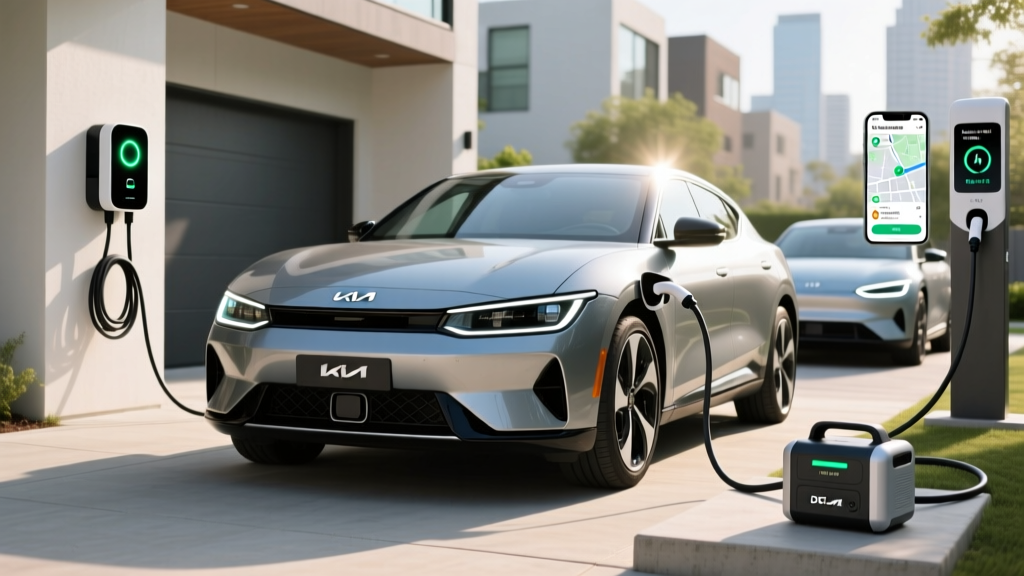
These chargers pair well with both CCS1 and NACS vehicles (use your CCS1 to NACS adapter if your car has a CCS1 port and the charger has a NACS plug, or buy a charger with a CCS1/J1772 connector and use the adapter in reverse for Supercharger access on the road).
ChargePoint Home Flex (NACS or J1772)
- Power Output: Up to 11.5 kW (48A) on a 60A circuit; adjustable down to 16A
- Cable Length: 23 feet
- Smart Features: Wi-Fi, app-based scheduling, energy tracking, Alexa integration
- Connector: Available in NACS or J1772
- Price: ~$550–$650
- Best For: Flexibility — adjustable amperage lets you match your panel's capacity
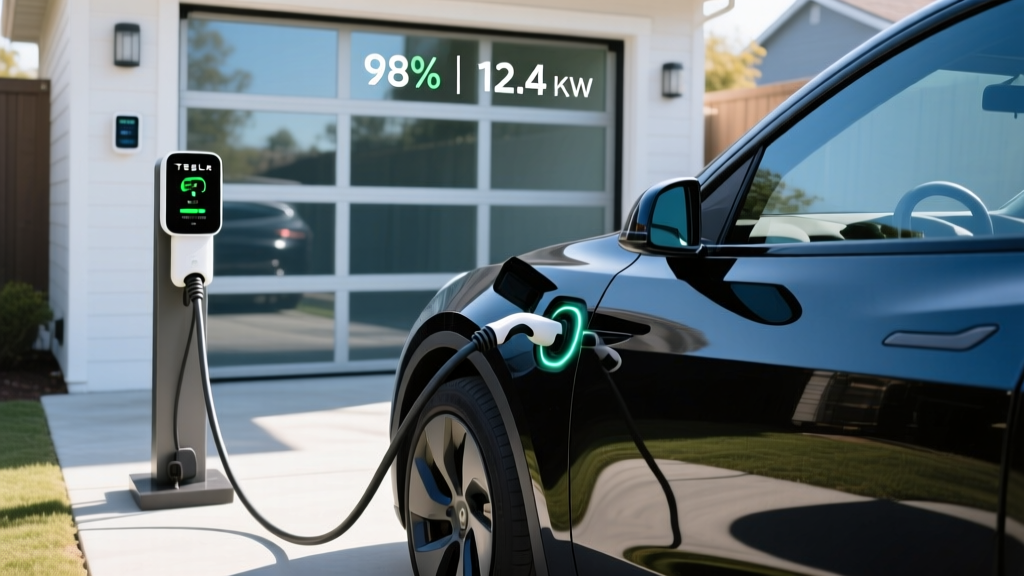
Tesla Wall Connector (NACS)
- Power Output: Up to 11.5 kW (48A) on a 60A circuit
- Cable Length: 24 feet
- Smart Features: Wi-Fi, over-the-air updates, power sharing between two units, access control
- Connector: NACS (CCS1 vehicles need an adapter)
- Price: ~$425–$475
- Best For: Value and reliability. Excellent build quality. If you have a CCS1 vehicle, pair with your CCS1 to NACS adapter.
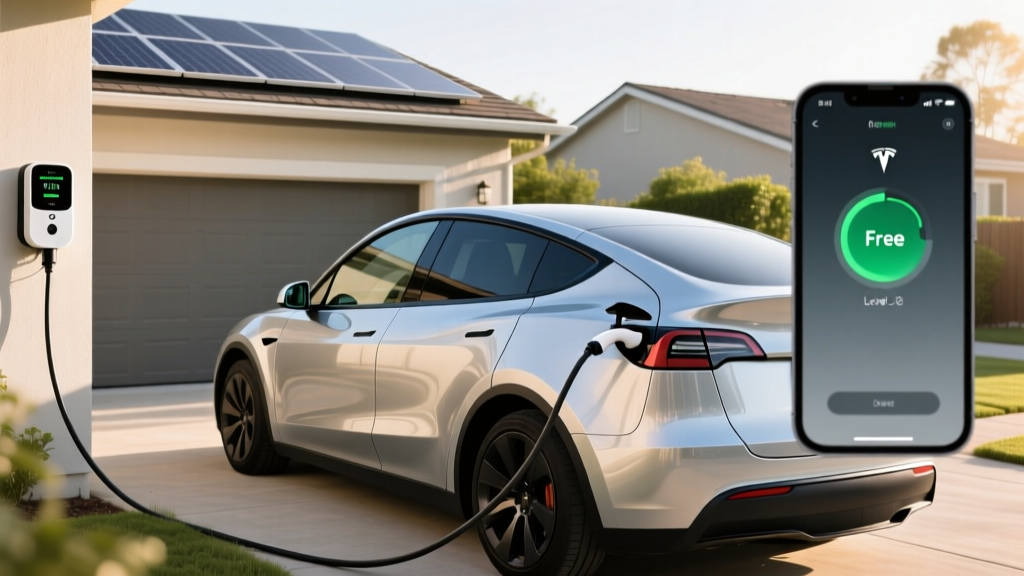
Emporia Vue Smart Home EV Charger
- Power Output: Up to 11.5 kW (48A) on a 60A circuit
- Cable Length: 24 feet
- Smart Features: Wi-Fi, detailed energy monitoring via Emporia Vue panel integration, solar-aware scheduling
- Connector: J1772 (NACS version available)
- Price: ~$400–$500
- Best For: Homes with solar panels or Emporia energy monitoring — best-in-class energy tracking
Grizzl-E Smart (J1772 or NACS)
- Power Output: Up to 9.6 kW (40A) on a 50A circuit
- Cable Length: 24 feet
- Smart Features: Wi-Fi, OCPP protocol support, adjustable output
- Connector: J1772 or NACS
- Price: ~$400–$450
- Best For: Cold climates — rated to -40°F, ruggedized aluminum case, built in Canada
Cost to Charge: Home vs. Public DC vs. Gas
The economics of EV charging depend heavily on where and when you charge. Here's a realistic comparison using 2026 national averages:
| Scenario | Rate | Cost per kWh | Cost per Mile (at 3.5 mi/kWh) |
|---|---|---|---|
| Home Level 2 (national avg. residential) | Off-peak / time-of-use | $0.10–$0.14 | $0.03–$0.04 |
| Home Level 2 (national avg. residential) | Standard rate | $0.16 | $0.046 |
| Public Level 2 (ChargePoint, etc.) | Per kWh | $0.20–$0.35 | $0.057–$0.10 |
| DC Fast Charge (Electrify America) | Per kWh | $0.38–$0.56 | $0.11–$0.16 |
| Tesla Supercharger (non-Tesla rate) | Per kWh | $0.30–$0.48 | $0.086–$0.14 |
| Gasoline (25 MPG combined, $3.40/gal) | Per gallon | — | $0.136 |
| Gasoline (30 MPG combined, $3.40/gal) | Per gallon | — | $0.113 |
The takeaway: Home charging at off-peak rates is 3–4× cheaper per mile than gasoline. Even public DC fast charging is roughly cost-competitive with a 25 MPG gas car. The savings compound: a driver covering 12,000 miles/year saves $800–$1,200 annually by charging at home vs. fueling a 28 MPG gas vehicle.
Efficiency matters here. The Hyundai Ioniq 5 achieves roughly 3.3–3.5 miles per kWh (119 MPGe combined per fueleconomy.gov), while a heavier vehicle like the Ford F-150 Lightning delivers roughly 2.0–2.3 mi/kWh. Your cost per mile scales directly with vehicle efficiency.
Safety, Electrical Code, and Installation Best Practices
EV charging draws sustained high current for hours — this is not the same as plugging in a phone. Proper installation protects your home and your vehicle:
- Dedicated circuit: Your Level 2 charger must be on its own dedicated breaker — never shared with other appliances. A shared circuit risks tripping the breaker mid-charge.
- GFCI protection: NEC 2020 and later requires GFCI (Ground Fault Circuit Interrupter) protection for EV charging outlets in garages. Many modern chargers have built-in GFCI, but your electrician should verify compliance with local code.
- Outdoor rating: If installing outdoors, use a charger rated IP55 or higher, and ensure the outlet (if plug-in) is in a weatherproof enclosure with an in-use cover.
- Cable management: A 24-foot cable draped across a driveway is a trip hazard and a code violation in some jurisdictions. Wall-mount a cable organizer or choose a charger with a retractable cord system.
- Permit and inspection: Most municipalities require an electrical permit for EV charger installation. Skipping the permit can void your homeowner's insurance in the event of an electrical fire. Budget $50–$250 for the permit and a follow-up inspection.
- Use a licensed electrician: This is not a DIY project unless you have electrical training. Improper wiring, undersized conductors, or missing bonding can create fire and shock hazards.
Frequently Asked Questions
Will a CCS1 to NACS adapter reduce my charging speed?
Minimally. The adapter itself introduces negligible electrical resistance. However, Tesla Supercharger V3 stalls are capped at 250 kW, and some non-Tesla CCS1 vehicles (like the VW ID.4 at ~135 kW peak) can't approach that limit regardless. The vehicle's onboard charge acceptance rate is almost always the bottleneck, not the adapter. Expect the same 10–80% times you'd see on a comparable CCS1 DC fast charger.
Can I use the CCS1 to NACS adapter for Level 2 AC charging too?
Yes. The adapter handles both DC fast charging and AC Level 2 charging. If you arrive at a Tesla Destination Charger (Level 2, NACS plug) at a hotel or restaurant, you can use your adapter to charge your CCS1 vehicle at up to 11.5 kW AC.
Is it safe to leave the adapter plugged into my car?
Most owners leave the adapter attached to the CCS1 cable at home and store it in the frunk or trunk for road trips. The adapter adds about 2 lbs and roughly 6 inches of length. There's no electrical risk in leaving it connected when the vehicle is off — the charge port remains sealed.
Do I need a NACS or CCS1 home charger if I have the adapter?
Either works. If you buy a NACS home charger (like the Tesla Wall Connector), you'll use your CCS1 to NACS adapter every time you charge at home — which is fine, but adds a step. If you buy a J1772/CCS1 home charger, you plug directly into your car at home and only use the adapter at Superchargers. Most CCS1 owners choose a J1772 home charger for convenience and reserve the adapter for road trips.
How do I pay at Tesla Superchargers with a non-Tesla vehicle?
Download the Tesla app, create an account, and add a payment method. When you arrive at a Supercharger stall, the app identifies your location and initiates the session. No RFID card or additional hardware is needed. Some Supercharger stalls with the "Magic Dock" built-in CCS1 adapter allow direct plug-in without your own adapter, but availability is limited to select stations.
What about the §30D federal tax credit and home charger costs?
The home charger itself is not covered under the §30D vehicle purchase credit. Instead, the Alternative Fuel Vehicle Refueling Property Credit (IRS §30C) covers 30% of home EV charger hardware and installation costs, up to $1,000, through 2032. Eligibility depends on your census tract meeting certain criteria. Consult a tax professional and review current rules at irs.gov.