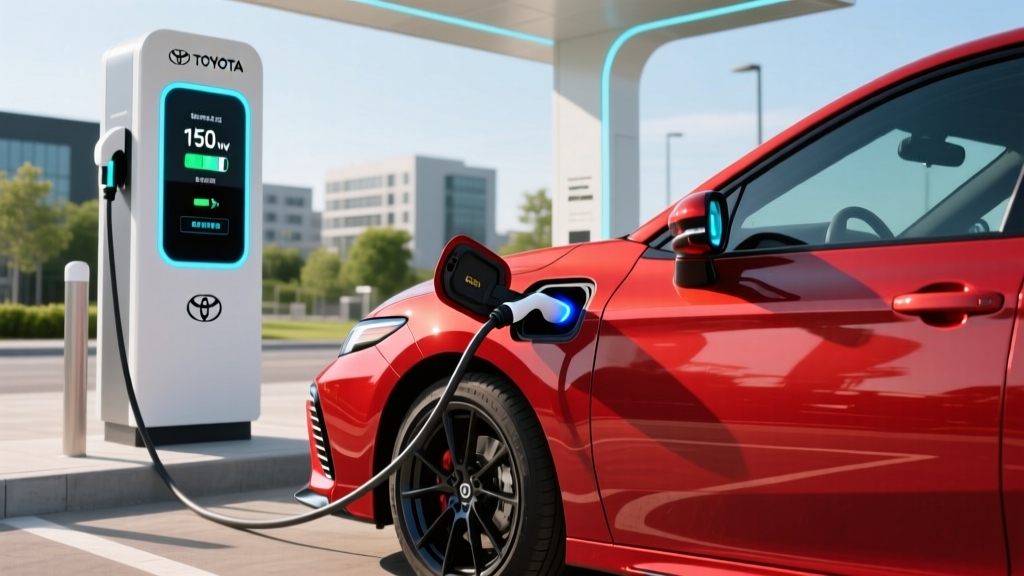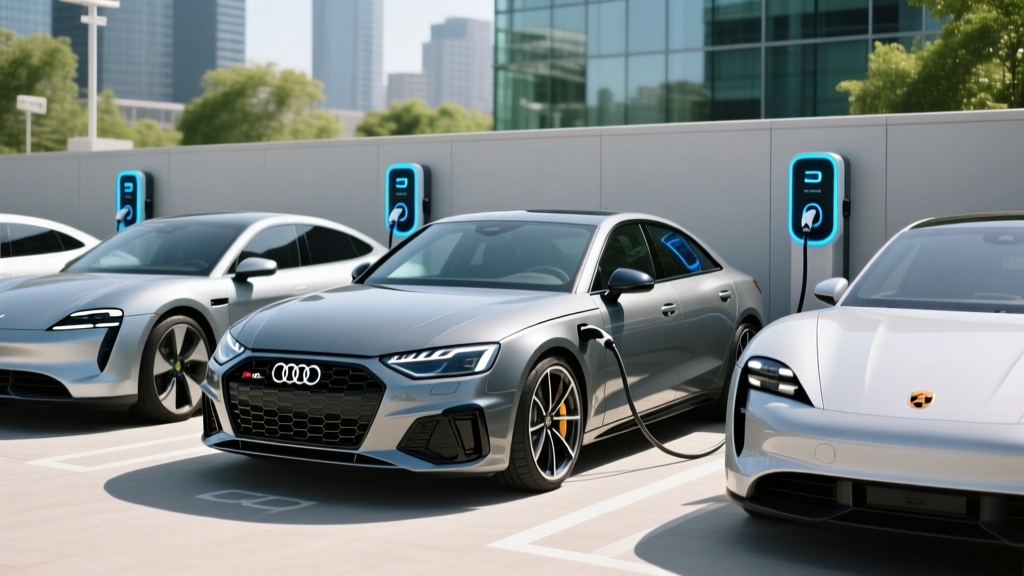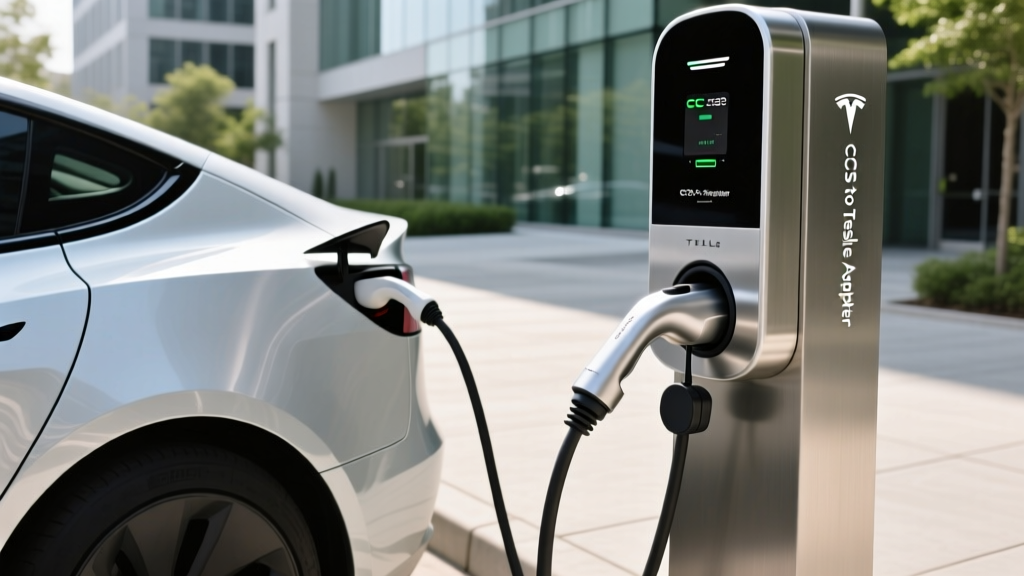
The North American Charging Standard (NACS) has won the connector war. As of 2026, virtually every major automaker — Ford, GM, Rivian, Hyundai, Kia, BMW, and others — ships new EVs with the Tesla-style NACS port. But millions of EVs built between 2019 and 2025 still carry the CCS1 (Combined Charging System) connector. If you own one of these vehicles, a CCS to Tesla adapter is your bridge to the largest, most reliable fast-charging network in North America: Tesla's Supercharger network, now rebranded for broader access in many regions.
This guide covers exactly how CCS to Tesla adapters work, which ones to buy, what speeds to expect, how to set up home charging, and the real cost-per-mile math versus gas.
Why the CCS to Tesla Adapter Matters in 2026
Before 2024, Tesla Superchargers were exclusive to Tesla vehicles. The opening of the network — driven by the federal EV infrastructure incentives and Tesla's own strategic pivot — means CCS-equipped EVs can now access over 25,000 Supercharger stalls across the U.S. and Canada. The catch? You need a CCS to NACS (Tesla-style) adapter.
Without one, your Ioniq 5, Mustang Mach-E, or ID.4 is locked out of the most expansive DC fast-charging network on the continent. With one, you unlock route planning through the Tesla app or built-in vehicle integration (on supported models), reliable uptime, and generally faster real-world charging than most Electrify America or EVgo stations.
Charging Levels Explained: kW, kWh, and Miles Per Hour
The most common mistake new EV owners make is confusing kW (kilowatts) — a measure of power, or how fast energy flows — with kWh (kilowatt-hours) — a measure of energy, or how much the battery holds. Think of kW as the width of a hose and kWh as the size of the bucket. A wider hose (higher kW) fills the bucket (kWh) faster.
| Level | Voltage | Power (kW) | Miles of Range Added Per Hour | Typical Use Case |
|---|---|---|---|---|
| Level 1 | 120V AC | 1.0–1.4 kW | 3–5 mi/hr | Overnight trickle; emergency top-ups |
| Level 2 | 240V AC | 3.3–19.2 kW | 12–75 mi/hr | Home daily charging; workplace; public AC |
| DC Fast Charging | 400–800V DC | 50–350 kW | 150–1,000+ mi/hr (peak) | Road trips; rapid top-ups |
For context: a typical EV with a 75 kWh battery and 300 miles of EPA range needs roughly 25 kWh per 100 miles. At a 150 kW DC fast charger, you can theoretically add 150 miles in about 20 minutes — but real-world charge curves taper above 80% state of charge (SoC), so your actual 10–80% time is the more useful metric.
Connector Compatibility: NACS, CCS1, and CHAdeMO
North America has three main DC fast-charging connector standards. Here's what fits what:
| Connector | Also Known As | Vehicles That Use It | Network Access |
|---|---|---|---|
| NACS | Tesla connector, J3400 | All Tesla models; 2025+ Ford, GM, Rivian, Hyundai, Kia, BMW, Mercedes, and others | Tesla Superchargers (native); growing CCS networks via adapter |
| CCS1 | Combined Charging System | 2019–2024 Hyundai, Kia, VW, BMW, Ford, GM, and most legacy EVs | Electrify America, EVgo, ChargePoint, Ionity; Superchargers via adapter |
| CHAdeMO | — | Nissan Leaf (2011–2025); Mitsubishi Outlander PHEV (older) | Limited and shrinking; some EA and EVgo stations |
If you own a CCS1-equipped EV: You need a CCS to NACS adapter to use Tesla Superchargers. Several manufacturers and third parties now sell these. Ford and GM began shipping adapters to existing owners in 2024–2025; check your brand's owner portal. The official Lectron Vortex and A2Z Typhoon adapters are widely available and rated for up to 250 kW DC.
For Level 2 (AC) charging: Most public Level 2 stations use the J1772 connector. Tesla provides a J1772-to-NACS adapter with every vehicle. If you have a CCS1 car, your vehicle already accepts J1772 natively — no adapter needed for Level 2.
How Fast Does a CCS to Tesla Adapter Actually Charge?
The adapter itself doesn't limit speed — it's a passive passthrough. Your actual charge rate depends on three factors:
- The Supercharger stall's max output — V3 stalls peak at 250 kW; V4 stalls can deliver up to 350 kW (though most non-Tesla EVs can't accept that rate).
- Your vehicle's max DC charge rate — A Hyundai Ioniq 5 can accept up to 240 kW (thanks to its 800V architecture); a Ford Mustang Mach-E peaks around 150 kW.
- The charge curve — No EV sustains peak kW for the entire session. Charging slows significantly above 80% SoC to protect battery health.
Here are real-world 10–80% charging times for popular CCS vehicles at a 250 kW Supercharger (via adapter):
| Vehicle | Battery (kWh usable) | Peak Charge Rate (kW) | 10–80% Time (min) |
|---|---|---|---|
| 2024 Hyundai Ioniq 5 | 72.6 (NMC) | 240 | ~18 |
| 2024 Kia EV6 | 72.6 (NMC) | 240 | ~18 |
| 2024 Ford Mustang Mach-E | 70.0 (NMC) | 150 | ~33 |
| 2024 VW ID.4 | 77.0 (NMC) | 135 | ~30 |
| 2023 BMW iX xDrive50 | 105.2 (NMC) | 200 | ~31 |
Real-world caveat: Cold weather (below 40°F) can add 5–10 minutes to these times unless your vehicle preconditions the battery. Always enable preconditioning in your EV's navigation or app before arriving at the charger.
Home Charging Setup: What You Need and What It Costs
Most EV charging — roughly 80% of all miles charged — happens at home on Level 2. Here's what a proper installation requires.
Electrical Requirements
A Level 2 home charger runs on a 240V dedicated circuit, the same voltage as an electric dryer or oven. Common configurations:
- 40-amp circuit / 32-amp continuous output (7.7 kW): The most common residential setup. Adds ~25–30 miles of range per hour. Sufficient for most daily driving.
- 48-amp circuit / 40-amp continuous (9.6 kW): Faster charging; requires thicker wire (6 AWG copper) and a 60A breaker.
- 60-amp circuit / 48-amp continuous (11.5 kW): Maximum common residential rate. Useful for large-battery vehicles (100+ kWh) or households with two EVs sharing a charger.
Your charger should be hardwired (not plugged into a NEMA 14-50 outlet) for installations above 40 amps, per NEC code. Hardwired connections eliminate the GFCI breaker nuisance-tripping issues common with high-amperage receptacles.
Installation Cost Breakdown
| Item | Cost Range | Notes |
|---|---|---|
| Level 2 Charger Equipment | $350–$700 | Varies by brand, power output, smart features |
| Electrician Labor | $500–$2,000 | Depends on run length, wall type, conduit needs |
| Electrical Permit | $50–$250 | Required in most jurisdictions; varies by city/county |
| Panel Upgrade (if needed) | $1,500–$4,000 | Required if your panel lacks capacity for a new 240V circuit; common in homes with 100A service |
| Total (no panel upgrade) | $900–$2,950 | Most installations fall in the $1,200–$2,000 range |
| Total (with panel upgrade) | $2,400–$6,950 | Older homes (pre-2000) most likely to need this |
Panel upgrade reality check: If your home has a 100-amp electrical panel that's already near capacity (common with electric HVAC, water heaters, and dryers), you may need to upgrade to 200A service. This is the single biggest variable in home charging cost. Have a licensed electrician perform a load calculation before committing to equipment.
The federal Residential Clean Energy Credit (IRC §25D) covers 30% of home charger equipment and installation costs, up to $1,000, through 2032. Check eligibility with a tax professional.
Equipment Recommendations: Top Home Chargers for CCS and NACS Vehicles
Whether your EV has a CCS1 or NACS port, these Level 2 chargers deliver reliable daily charging. CCS vehicles plug in directly; NACS vehicles use one of these with a NACS connector or an adapter.
ChargePoint Home Flex (NACS or J1772)
- Power Output: Up to 12 kW (50A circuit) — adjustable via dip switches
- Cable Length: 23 feet
- Smart Features: Wi-Fi, app scheduling, Alexa integration, energy tracking
- Connector: Available in NACS or J1772 (CCS vehicles use J1772 natively)
- Price: ~$549 (J1772) / ~$599 (NACS)
- Best For: Flexibility; adjustable amperage fits older panels
Wallbox Pulsar Plus (J1772)
- Power Output: Up to 11.5 kW (48A)
- Cable Length: 25 feet
- Smart Features: Wi-Fi + Bluetooth, Power Sharing for dual installations, app control
- Connector: J1772 (compatible with all CCS vehicles; Tesla vehicles via adapter)
- Price: ~$449
- Best For: Compact size, two-EV households (Power Sharing splits one circuit)
Tesla Wall Connector (NACS)
- Power Output: Up to 11.5 kW (48A)
- Cable Length: 24 feet
- Smart Features: Wi-Fi, OTA updates, load sharing, Power Connector for non-Tesla vehicles
- Connector: NACS (native for Tesla and 2025+ NACS vehicles; CCS vehicles need NACS-to-CCS adapter for home use)
- Price: ~$475
- Best For: Tesla owners or households with mixed fleets (NACS + CCS via adapter)
Emporia Vue Level 2 Charger (J1772)
- Power Output: Up to 11.5 kW (48A)
- Cable Length: 24 feet
- Smart Features: Full energy monitoring via Emporia Vue panel integration, solar-aware scheduling
- Connector: J1772
- Price: ~$399
- Best For: Solar owners; budget-conscious buyers wanting energy tracking
Cost to Charge: Home vs. Public vs. Gas
Electricity pricing varies dramatically by location, time of day, and whether you're charging at home or on the road. Here's how the math breaks down for a typical EV averaging 3.0 miles per kWh (roughly 112 MPGe — representative of vehicles like the Tesla Model Y, Ioniq 5, and EV6).
| Scenario | Cost per kWh | Cost per Mile (at 3 mi/kWh) | Equivalent MPG at $3.50/gal Gas |
|---|---|---|---|
| Home (off-peak utility rate) | $0.08–$0.12 | $0.027–$0.04 | 88–130 MPGe |
| Home (national avg. $0.17/kWh) | $0.17 | $0.057 | 61 MPGe |
| Public Level 2 (ChargePoint, etc.) | $0.20–$0.35 | $0.067–$0.117 | 30–52 MPGe |
| DC Fast — Supercharger (avg. $0.30/kWh) | $0.25–$0.40 | $0.083–$0.133 | 26–42 MPGe |
| DC Fast — Electrify America (avg. $0.48/kWh) | $0.35–$0.55 | $0.117–$0.183 | 19–30 MPGe |
| Gas car (28 MPG combined, $3.50/gal) | — | $0.125 | 28 MPG |
The takeaway: Home charging is nearly always cheaper than gas — often 3–4x cheaper per mile. Public DC fast charging can approach or exceed gas costs, especially at premium networks. The economic case for EVs is strongest when you can charge at home overnight on off-peak rates. According to fueleconomy.gov, the average EV owner who charges primarily at home saves $800–$1,200 annually versus a comparable gas vehicle.
Safety, Electrical Code, and Installation Best Practices
A Level 2 charger installation is serious electrical work. Key safety and code requirements include:
- Dedicated circuit: Your EV charger must have its own breaker — not shared with other appliances. NEC Article 625 governs EV charging equipment.
- GFCI protection: Outdoor installations and NEMA receptacle installations require GFCI breakers. However, hardwired chargers often do not require a separate GFCI breaker (the charger has internal ground-fault protection). Consult your local AHJ (Authority Having Jurisdiction).
- Outdoor rating: If your charger is mounted outside or in an unconditioned garage, ensure it carries a NEMA 4 or IP65 rating for weather resistance.
- Wire gauge: 40A circuits need 8 AWG copper; 48A circuits need 6 AWG; 60A circuits need 4 AWG. Aluminum wire requires upsizing.
- Permit and inspection: Most municipalities require a permit for new 240V circuits. Skipping this can void homeowner's insurance in the event of a fire.
- Load calculation: A licensed electrician must verify your panel has sufficient spare capacity. NEC 220 load calculations determine this — don't guess.
Frequently Asked Questions
How much does it cost to install a home EV charger?
Expect $900–$2,950 for a standard installation (equipment + electrician + permit) if your electrical panel has sufficient capacity. If a panel upgrade from 100A to 200A is needed, add $1,500–$4,000, bringing the total to $2,400–$6,950. The federal §25D credit covers 30% of costs up to $1,000.
How fast will each charging level add range?
Level 1 (120V) adds 3–5 miles per hour. Level 2 (240V, 7.7–11.5 kW) adds 25–45 miles per hour — enough to fully recharge overnight. DC fast charging (50–350 kW) adds 150–1,000+ miles per hour at peak, with a typical 10–80% session taking 18–35 minutes depending on the vehicle.
Which connector and charger is compatible with my EV?
If your EV is a 2025+ model from Ford, GM, Rivian, Hyundai, Kia, or BMW, it likely has the NACS connector natively. If it's a 2019–2024 EV from these brands (or VW, Volvo, etc.), it has CCS1 and needs a CCS to NACS adapter for Tesla Superchargers. For home Level 2, any J1772 charger works with CCS vehicles natively. All Tesla vehicles and new NACS vehicles use the Tesla Wall Connector natively.
How much does charging cost per mile vs gas?
Home charging on off-peak rates costs roughly $0.03–$0.04 per mile — about 3–4x cheaper than gas at $3.50/gallon and 28 MPG. Public DC fast charging ranges from $0.08–$0.18 per mile, which can match or exceed gas costs. The savings case is strongest with home charging.
What electrical upgrades might I need?
The most common upgrade is a panel capacity increase from 100A to 200A service ($1,500–$4,000). You may also need: a new 240V circuit with appropriate breaker and wire gauge, conduit runs if the charger is far from the panel, and potentially a smart panel or load-management device (like the Emporia Vue or Span panel) if your utility requires it for time-of-use programs.
Do CCS to Tesla adapters work at all Superchargers?
Most V3 (250 kW) and V4 Supercharger stalls now support non-Tesla vehicles via the Tesla app or in-car integration (for supported brands). However, some older V2 (150 kW) stalls remain Tesla-only. Use the Tesla app or your vehicle's built-in navigation to confirm compatibility before routing to a station.
Can I use a CCS to Tesla adapter for Level 2 charging?
No — and you don't need to. CCS vehicles accept J1772 (the standard Level 2 connector) natively. The CCS to NACS adapter is only needed for DC fast charging at NACS-equipped stations like Superchargers. For home Level 2, simply use a J1772 charger.
Whether you're retrofitting a CCS-equipped EV for Supercharger access or planning a home installation from scratch, the adapter ecosystem in 2026 makes cross-network charging more practical than ever. The key is matching the right adapter, charger hardware, and electrical infrastructure to your specific vehicle and driving patterns.