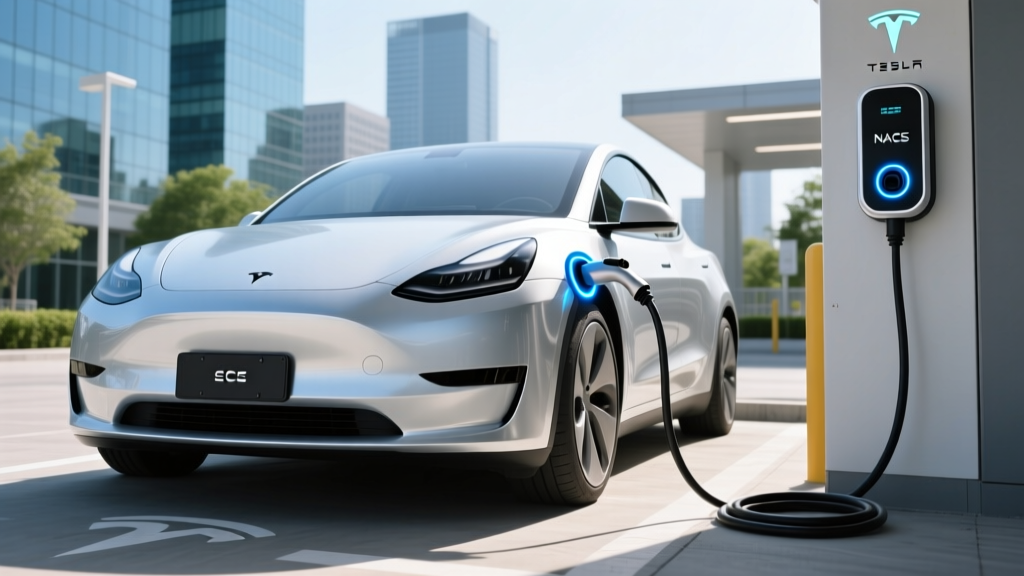
The North American Charging Standard (NACS) has won the connector war. With Ford, Rivian, Hyundai, GM, and nearly every major automaker adopting Tesla's plug for 2025 and 2026 models, the legacy CCS1 connector is being phased out on new vehicles. But if you own a CCS-equipped EV — which includes virtually every non-Tesla built before 2025 — accessing the largest fast-charging network in North America requires a CCS to NACS adapter.
This guide covers which adapters work, how fast you can actually charge through one, what home charging looks like across all three levels, and how to calculate your real cost per mile versus gas. We'll also walk through the electrical realities of a Level 2 home install, including the panel upgrades that catch many buyers off guard.
The Connector Landscape in 2026: NACS, CCS1, and CHAdeMO
Before choosing an adapter, you need to know which connector your EV uses and which networks you're trying to access. Here's the current state of play:
| Connector | Used By | DC Fast Networks | Adapter Needed for Tesla Superchargers? |
|---|---|---|---|
| NACS (Tesla) | Tesla (all years), Ford F-150 Lightning/2025+ Mustang Mach-E, Rivian (2025+), GM Ultium (2025+), Hyundai Ioniq (2026+) | Tesla Supercharger, Electrify America (expanding), EVgo, ChargePoint | No — native plug |
| CCS1 | Hyundai/Kia (pre-2026), VW ID.4, BMW iX, Mercedes EQ, most non-Tesla EVs 2018–2024 | Electrify America, EVgo, ChargePoint, Tesla Supercharger (with adapter) | Yes — CCS to NACS adapter required |
| CHAdeMO | Nissan LEAF (2011–2025), Mitsubishi Outlander PHEV (older) | Electrify America (limited), EVgo (declining) | Not available — CHAdeMO to NACS adapters do not exist for DC fast charging |
The critical takeaway: a CCS to NACS adapter unlocks Tesla Supercharger stalls for CCS1-equipped vehicles. Tesla opened its Supercharger network to non-Tesla EVs via the "Magic Dock" built-in adapter at select stalls, but carrying your own adapter gives you access to far more locations — over 25,000 Supercharger stalls across North America as of early 2026.
Top CCS to NACS Adapters: Speed, Compatibility, and Pricing
Not all adapters are created equal. The key specifications are maximum DC fast-charge power (in kW), maximum Level 2 AC power, weight, and which adapter the manufacturer officially approves. Here are the leading options available in 2026:
Lectron Vortex CCS to NACS Adapter
- Max DC Fast Charge: 150 kW (rated), real-world sustained ~130 kW
- Max AC Level 2: 48A / 11.5 kW
- Weight: 2.4 lbs
- Price: ~$180
- Notes: Compatible with most CCS1 vehicles. IP55 weather rating. Lectron is widely used and tested by the EV community.
A2Z Typhoon CCS1 to NACS Adapter
- Max DC Fast Charge: 150 kW rated
- Max AC Level 2: 48A / 11.5 kW
- Weight: 2.1 lbs
- Price: ~$170
- Notes: Compact design, IP55 rated. Works with Tesla destination chargers and Superchargers. Check compatibility with your specific vehicle model year.
Tesla-Approved OEM Adapters (Ford, Rivian, GM)
- Max DC Fast Charge: 150 kW (Ford/Rivian supplied adapters)
- Max AC Level 2: 48A / 11.5 kW
- Price: Often included free with vehicle purchase or ~$200–$250 separately
- Notes: If your automaker provides a CCS to NACS adapter, use it. OEM adapters are tested against the vehicle's specific charging handshake protocol, reducing the risk of communication errors at the stall.
Charging speed reality check: Most CCS to NACS adapters are rated for 150 kW peak, but your actual sustained speed depends on your vehicle's onboard charge curve. A Hyundai Ioniq 5 (peak 240 kW native CCS) will be bottlenecked to ~150 kW through an adapter. A VW ID.4 (peak 135 kW) won't notice the difference. Expect 10–80% charging in roughly 25–35 minutes depending on your vehicle's battery size and thermal management.
Charging Levels Explained: Speeds, Times, and Range Added
Understanding the three charging levels — and the difference between kW (power, or how fast energy flows) and kWh (energy, or how much your battery holds) — is essential. Think of kW as the width of a hose and kWh as the size of the bucket.
| Level | Voltage | Power (kW) | Miles of Range per Hour | Best For |
|---|---|---|---|---|
| Level 1 | 120V AC | 1.0–1.4 kW | 3–5 miles/hr | Overnight top-ups, PHEVs, emergencies |
| Level 2 | 240V AC | 3.3–19.2 kW | 12–75 miles/hr | Daily home charging, workplace, destinations |
| DC Fast Charge | 400–800V DC | 50–350 kW | 150–1,000+ miles/hr (peak) | Road trips, rapid top-ups away from home |
Real-World Charging Time Examples (10–80% SoC)
Charging slows significantly above 80% State of Charge (SoC) to protect battery health — this is called charge curve taper. Here's what 10–80% looks like for common battery sizes:
| Battery Size | Example Vehicle | Level 2 (11.5 kW) | DC Fast (150 kW peak) | DC Fast via CCS-to-NACS Adapter (~130 kW sustained) |
|---|---|---|---|---|
| 62 kWh | Chevy Equinox EV | ~4.5 hours | ~28 minutes | ~32 minutes |
| 77 kWh | VW ID.4 | ~5.5 hours | ~33 minutes | ~38 minutes |
| 84 kWh | Hyundai Ioniq 5 (Long Range) | ~6 hours | ~22 minutes (native 240 kW) | ~38 minutes (adapter-limited) |
| 131 kWh | Ford F-150 Lightning (Extended) | ~9.5 hours | ~45 minutes | ~52 minutes |
Cold-weather caveat: In temperatures below 32°F, expect DC fast charging to take 20–40% longer unless your vehicle has active battery preconditioning. The Ioniq 5 and Tesla models precondition automatically when a charger is set in the navigation; many older CCS vehicles do not.
Home Level 2 Charger Installation: Costs, Electrical Requirements, and Gotchas
Level 2 home charging is the backbone of practical EV ownership. Here's exactly what's involved.
Electrical Requirements
A typical Level 2 home charger requires a 240V dedicated circuit — the same voltage as your electric dryer or oven. The most common setup is a 40-amp or 50-amp circuit, which delivers 9.6 kW or 11.5 kW respectively (EV chargers are limited to 80% of the circuit's rated amperage per National Electrical Code, so a 50A circuit provides 40A continuous / 9.6 kW to the vehicle, while a 60A circuit provides 48A / 11.5 kW).
Panel upgrade reality: Most homes built after 1990 have a 200-amp electrical panel, which can usually accommodate a 50A EV circuit. Homes with 100-amp panels — common in houses built before 1980 — will almost certainly need a panel upgrade to 200A, adding $1,500–$3,500 to your installation cost. Always have a licensed electrician perform a load calculation before committing to a charger.
| Component | Typical Cost Range | Notes |
|---|---|---|
| Level 2 Charger (hardware) | $300–$700 | Smart WiFi chargers cost more; dumb chargers are cheaper |
| Electrician labor (standard install) | $500–$1,500 | Depends on run length from panel to garage; longer runs cost more |
| Electrical permit | $50–$200 | Required in most jurisdictions; varies by municipality |
| Panel upgrade (if needed) | $1,500–$3,500 | 100A to 200A upgrade; not needed in most modern homes |
| Total (no panel upgrade) | $850–$2,400 | Average: ~$1,200–$1,600 |
| Total (with panel upgrade) | $2,350–$5,900 | Significant but adds home value |
Safety and Code Considerations
- Dedicated circuit: Your EV charger must have its own breaker — never share a circuit with other large appliances.
- GFCI protection: NEC 2020 and later require GFCI (Ground Fault Circuit Interrupter) protection for EV charging outlets. Many modern hardwired chargers have this built in.
- Outdoor rating: If your charger is mounted outside or in an open carport, ensure it carries at least an IP55 or NEMA 4 rating for weather resistance.
- NEMA 14-50 vs. hardwired: A NEMA 14-50 outlet gives you portability (take the charger when you move), but hardwired installations are often cheaper, more reliable, and avoid the GFCI breaker nuisance-trip issue that plagues some 14-50 setups.
- Permit and inspection: Skipping the permit risks insurance claim denial if an electrical fire occurs. Always get the permit and final inspection.
Recommended Level 2 Home Chargers (2026)
ChargePoint Home Flex
- Power Output: Up to 12 kW (50A) on a 60A circuit; configurable down to 16A
- Connector: J1772 (NACS adapter available separately for Tesla destination charging)
- Cable Length: 23 feet
- Smart Features: WiFi, app scheduling, Alexa integration, energy tracking
- Price: ~$550
Emporia Level 2 EV Charger
- Power Output: Up to 11.5 kW (48A)
- Connector: J1772
- Cable Length: 24 feet
- Smart Features: WiFi, app control, solar integration with Emporia Vue energy monitor, load management
- Price: ~$400
Tesla Wall Connector (Universal)
- Power Output: Up to 11.5 kW (48A)
- Connector: NACS with integrated J1772 adapter (Magic Dock style)
- Cable Length: 24 feet
- Smart Features: WiFi, power sharing between multiple units, automatic software updates
- Price: ~$600
If you drive a CCS vehicle and install a Tesla Universal Wall Connector, the built-in J1772 adapter means you can charge at home without needing your CCS to NACS adapter — that adapter is only necessary for DC fast charging on the road.
Cost to Charge: Home vs. Public vs. Gas
The economics of EV charging depend heavily on where you charge. Here's a realistic breakdown using a national average electricity rate and common public charging prices as of 2026.
| Scenario | Cost per kWh | Cost to Add 200 Miles* | Cost per Mile |
|---|---|---|---|
| Home (national avg. residential) | $0.16/kWh | $10.24 | $0.051 |
| Home (off-peak utility rate) | $0.09/kWh | $5.76 | $0.029 |
| Public Level 2 (ChargePoint, etc.) | $0.25–$0.40/kWh | $16–$25.60 | $0.08–$0.128 |
| DC Fast Charge (Electrify America) | $0.35–$0.55/kWh | $22.40–$35.20 | $0.112–$0.176 |
| Tesla Supercharger (non-Tesla, via adapter) | $0.30–$0.48/kWh | $19.20–$30.72 | $0.096–$0.154 |
| Gasoline ($3.40/gal, 28 MPG combined) | — | $24.29 | $0.121 |
*Based on a vehicle consuming 32 kWh per 100 miles (~3.1 mi/kWh), typical of a mid-size crossover EV like the Ioniq 5 or ID.4. Source: fueleconomy.gov
The bottom line: Home charging — especially on an off-peak rate plan — delivers fuel costs at roughly one-quarter to one-half the cost of gasoline. Public DC fast charging, however, often matches or exceeds gas costs per mile. The financial case for an EV depends on reliable home charging access.
If you use a CCS to NACS adapter at Tesla Superchargers, you'll typically pay between $0.30 and $0.48 per kWh depending on location and time of day. Tesla's pricing for non-Tesla vehicles is sometimes slightly higher than for Tesla owners, though the gap has narrowed since 2024.
Using a CCS to NACS Adapter at Tesla Superchargers: What to Expect
Once you have your adapter, the process is straightforward but has a few nuances:
- Download the Tesla app and create an account. You'll initiate and pay for charging sessions through the app — the Supercharger stall won't communicate with your CCS vehicle's infotainment screen.
- Locate compatible stalls. Not every Supercharger stall supports non-Tesla vehicles. In the Tesla app, look for stations labeled "Open to Non-Tesla EVs." As of 2026, roughly 70% of U.S. Supercharger locations are open to CCS vehicles.
- Attach the adapter to the NACS cable before plugging into your vehicle's CCS port. The adapter handles the communication handshake between Tesla's protocol and your car's CCS controller.
- Expect slightly slower peak speeds. Most adapters cap at ~150 kW. If your vehicle normally charges at 200+ kW on a CCS-native station (like the Ioniq 5 on a 350 kW Electrify America stall), you'll see slower speeds through the adapter. Plan for 30–40 minute stops instead of 18–22.
- Check cable reach. Tesla Supercharger cables are relatively short (~6 feet). If your vehicle's charge port is on the opposite side from where you park, you may need to back in or choose a different stall orientation.
⚠️ Important limitations of CCS to NACS adapters:
- Adapters do NOT work with CHAdeMO vehicles (Nissan LEAF, older Mitsubishi).
- Maximum speed is adapter-limited (~150 kW), not vehicle-limited. High-speed CCS vehicles will not reach their native peak.
- Some early third-party adapters have experienced firmware handshake failures at certain Supercharger firmware versions. Buy from established brands (Lectron, A2Z, or your vehicle OEM) and check for firmware updates.
- Adapters are for DC fast charging only on the road. For Level 2 home charging, use a J1772 connector or a Universal Wall Connector.
Frequently Asked Questions
How much does it cost to install a home EV charger?
A standard Level 2 home charger installation costs between $850 and $2,400 when no panel upgrade is needed. This includes the charger hardware ($300–$700), electrician labor ($500–$1,500), and the permit ($50–$200). If your home has a 100-amp electrical panel, expect an additional $1,500–$3,500 for a panel upgrade to 200 amps. Always get a licensed electrician to perform a load calculation first.
How fast will each charging level add range?
Level 1 (120V) adds 3–5 miles of range per hour — fine for plug-in hybrids with small batteries but impractical for full EVs. Level 2 (240V) adds 12–75 miles per hour depending on amperage, covering daily driving needs overnight. DC fast charging adds 150–1,000+ miles per hour at peak rates, though charging slows significantly above 80% SoC. A typical 10–80% DC fast charge takes 20–45 minutes depending on battery size and peak kW.
Which connector and charger is compatible with my EV?
If your EV was built before 2025 and is not a Tesla, it almost certainly has a CCS1 port (or CHAdeMO if it's a Nissan LEAF). For home Level 2 charging, you need a J1772 connector — every non-Tesla EV accepts this. For DC fast charging at Tesla Superchargers, you need a CCS to NACS adapter. For 2025+ vehicles from Ford, Rivian, GM, and others, NACS is the native port and no adapter is needed. Check your owner's manual or look at your vehicle's charge port shape to confirm.
How much does charging cost per mile vs. gas?
Home charging on a national average rate ($0.16/kWh) costs about $0.05 per mile for a typical EV — roughly 40% the cost of gasoline at $3.40/gallon and 28 MPG. Off-peak home rates can drop this to under $0.03/mile. However, public DC fast charging at $0.35–$0.55/kWh costs $0.11–$0.18 per mile, which can exceed gasoline. The cost advantage of EV ownership depends heavily on access to affordable home charging.
What electrical upgrades might I need?
The most common upgrade is a panel increase from 100A to 200A, needed in older homes that lack capacity for a dedicated 50A EV circuit alongside existing loads. You may also need a new conduit run if your panel is far from the garage (adds $200–$800 depending on distance). Some utilities offer rebates of $200–$500 for smart charger installations — check with your local provider. The IRS §30C credit may cover up to $1,000 of home charging equipment and installation costs if you live in an eligible census tract.
Can I use a CCS to NACS adapter for Level 2 home charging?
Technically yes, but it's unnecessary and impractical. For home Level 2 charging, a standard J1772 charger plugs directly into your CCS vehicle's port (the upper portion of the CCS port is the J1772 connector). Save your adapter for DC fast charging on road trips. If you install a Tesla Universal Wall Connector with its built-in J1772 adapter, you can charge both NACS and CCS vehicles at home without any separate adapter.
Will using an adapter void my vehicle's battery warranty?
No. Using a properly certified CCS to NACS adapter does not void your battery or powertrain warranty. Federal law (the Magnuson-Moss Warranty Act) prevents manufacturers from voiding warranties for using third-party accessories unless they can prove the accessory caused the damage. That said, always keep receipts and use adapters from reputable manufacturers to avoid any disputes.
For the latest on federal charging equipment tax credits, consult the IRS §30C guidelines. For vehicle-specific range and efficiency data, the EPA's fueleconomy.gov remains the authoritative source for comparing real-world MPGe and kWh/100mi figures across all EV models.