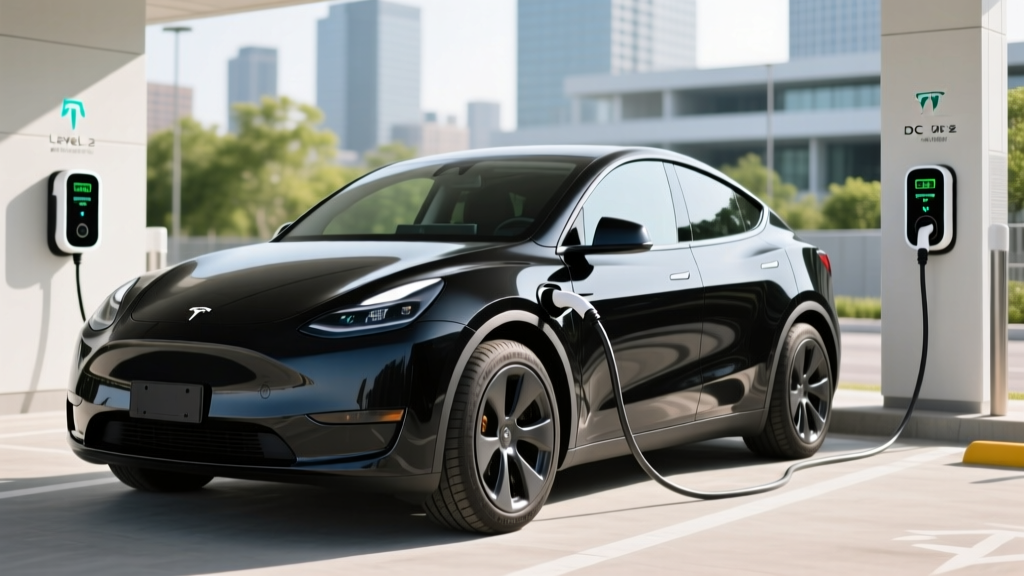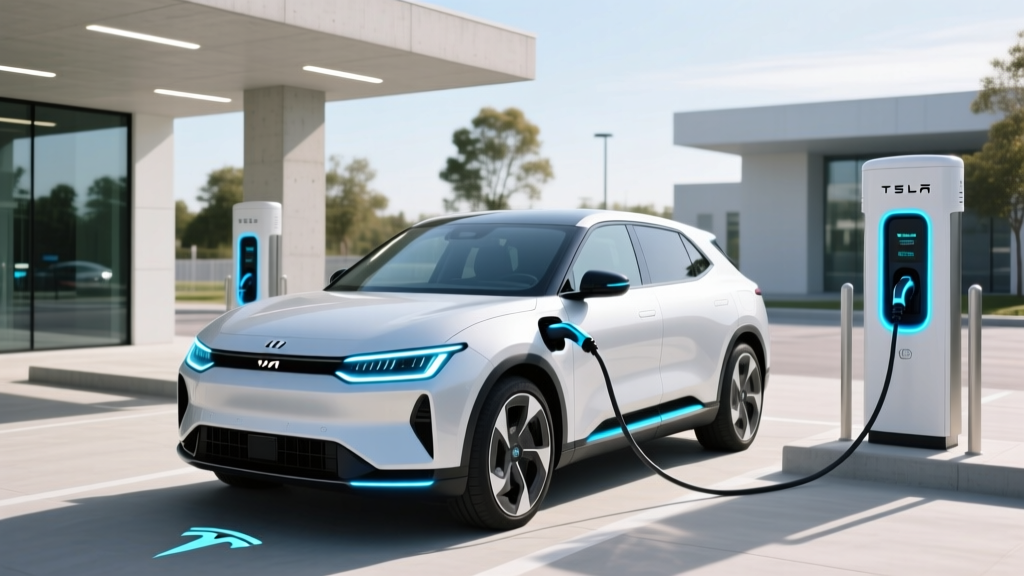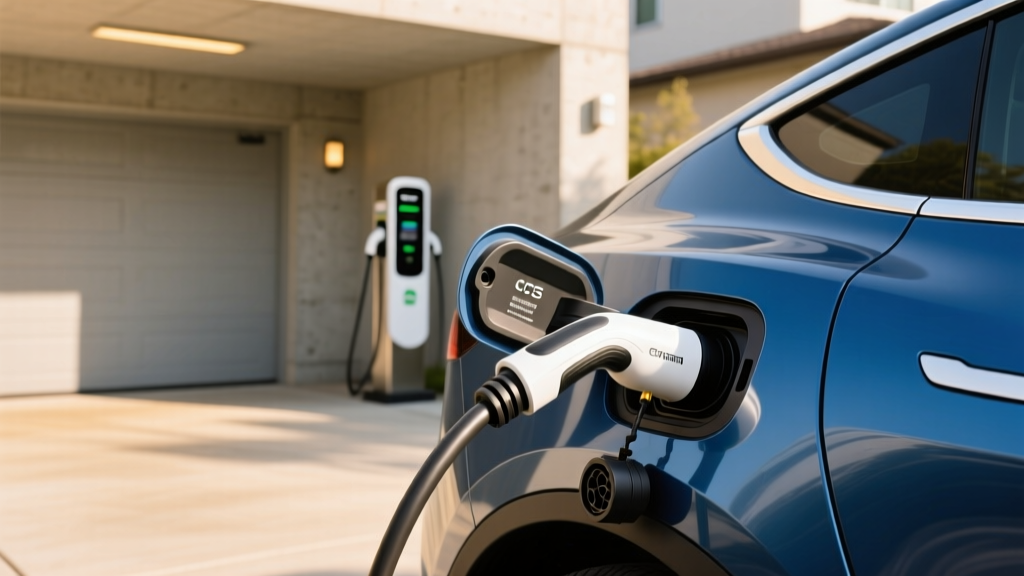
If you've recently purchased an electric vehicle or are shopping for one, you've likely encountered a confusing alphabet soup of charging connectors: J1772, CCS1, NACS, CHAdeMO. A common question that surfaces in EV forums and buyer groups is whether you need a CCS to J1772 adapter to charge at home or in public. The short answer: for Level 2 AC charging, every non-Tesla EV in the U.S. already uses the J1772 connector natively — so a "CCS to J1772" adapter is usually a misunderstanding of how these connectors relate. But the full picture involves understanding which connector your car has, what's available at public stations, and how the industry's shift toward NACS (the Tesla-style plug) is reshaping adapter needs through 2026 and beyond.
This guide breaks down every charging connector, when you actually need an adapter, home installation costs, real-world charging speeds, and the per-mile economics of charging versus fueling a gas car.
Understanding EV Charging Connectors: J1772, CCS1, NACS, and CHAdeMO
Before addressing adapters, it's essential to understand what each connector does — because the terms "CCS" and "J1772" are not competing standards; they're related parts of the same system.
- J1772 (Type 1): The standard AC charging connector for all non-Tesla EVs in North America. Used for Level 1 (120V) and Level 2 (240V) charging. Five-pin round connector.
- CCS1 (Combined Charging System): Adds two large DC fast-charging pins below the J1772 connector, creating a single combo plug. Your car's CCS port accepts both J1772 (for AC) and CCS1 (for DC fast charging). It's not a separate port — it's a superset.
- NACS (North American Charging Standard): Tesla's proprietary connector, now adopted by Ford, GM, Rivian, Hyundai, Kia, and most major automakers for 2025+ models. Smaller, lighter, and used for both AC and DC charging. By 2026, most new EVs ship with NACS ports.
- CHAdeMO: A legacy DC fast-charging standard used by the Nissan Leaf and Mitsubishi Outlander PHEV. Being phased out in North America as CCS and NACS dominate.
Connector Compatibility: Which Adapter Do You Actually Need?
The adapter you need depends entirely on your vehicle's model year and the charging infrastructure you'll encounter. Here's how compatibility breaks down across the current EV landscape:
| Vehicle / Port Type | AC Level 2 (J1772 Stations) | DC Fast (CCS1 Stations) | DC Fast (NACS / Tesla Supercharger) | Adapter Needed? |
|---|---|---|---|---|
| CCS1 port (2020–2024 most non-Tesla EVs) | Direct plug ✓ | Direct plug ✓ | NACS-to-CCS adapter required | Tesla NACS adapter (~$200–$250) for Supercharger access |
| NACS port (2025+ Ford, GM, Rivian, Hyundai, Kia) | NACS-to-J1772 adapter required | NACS-to-CCS adapter (limited availability) | Direct plug ✓ | J1772-to-NACS adapter (~$150–$250) for non-Tesla Level 2 stations |
| Tesla (Model 3/Y/S/X, all years) | Tesla J1772 adapter (included) | Tesla CCS adapter (~$250) for non-Tesla DCFC | Direct plug ✓ | J1772 adapter ships with car; CCS adapter optional |
| CHAdeMO (Nissan Leaf, Mitsubishi) | J1772 port (separate inlet) ✓ | Direct plug (CHAdeMO stations, declining) | Not compatible | No reliable CHAdeMO-to-NACS/CCS adapter exists |
The real-world takeaway for 2026: the adapter confusion most new EV buyers face isn't CCS-to-J1772 — it's navigating the transition between CCS1 infrastructure (which is still the majority of public DC fast chargers) and NACS (which is rapidly expanding via Tesla Superchargers opening to non-Tesla vehicles and new NACS-equipped models).
Charging Levels Explained: Speeds, kW, and Miles Per Hour
Before choosing equipment or adapters, you need to understand the three charging levels and what they deliver in practical terms. Note: kW (kilowatts) measures power — the rate of energy delivery. kWh (kilowatt-hours) measures energy — the total capacity of your battery. These are not interchangeable.
| Level | Voltage | Power (kW) | Miles of Range Added Per Hour | 10–80% Charge Time (75 kWh Battery) | Best For |
|---|---|---|---|---|---|
| Level 1 | 120V AC | 1.0–1.4 kW | 3–5 mi/hr | ~40–50 hours | Overnight top-up, PHEVs, low daily mileage |
| Level 2 | 240V AC | 3.3–19.2 kW | 12–75 mi/hr | ~4–8 hours (varies by kW) | Home daily charging, workplace, destination |
| DC Fast Charging | 400–800V DC | 50–350 kW | 150–1,000+ mi/hr (peak) | ~18–45 minutes | Road trips, highway travel, rapid top-ups |
Home Level 2 Charger Installation: Electrical Requirements and Costs
Installing a Level 2 home charger is the single highest-impact upgrade for EV ownership. Here's what's involved electrically and financially.
Electrical Requirements
A Level 2 charger requires a dedicated 240V circuit, similar to what powers an electric dryer or oven. The most common configurations:
- 40-amp circuit → delivers up to 32A continuous (9.6 kW) — the NEC requires circuits rated at 125% of continuous load, so a 40A breaker supports 32A charging
- 50-amp circuit → delivers up to 40A continuous (11.5 kW) — suitable for most EVs with 11.5 kW onboard chargers
- 60-amp circuit → delivers up to 48A continuous (11.5 kW) — required for chargers like the Tesla Wall Connector at full output
For NEMA 14-50 outlet installations (a popular plug-in option), you need a 50A breaker with 6-gauge copper wire (or 4-gauge aluminum). For hardwired installations above 40A, 6-gauge or 4-gauge wire is standard depending on the amperage.
Panel Upgrade Considerations
Older homes with 100A electrical panels may not have sufficient capacity for a dedicated 40–60A EV circuit, especially if you already run electric heating, a dryer, and an oven. A panel upgrade to 200A typically costs $1,500–$3,500 depending on your region and utility requirements. Some homeowners can avoid this by installing a lower-amperage circuit (e.g., 20A/240V delivering 3.8 kW) or using a smart load-management device like the Emporia Vue with automatic charger throttling.
Installation Cost Breakdown
| Item | Budget Install (Short Run, Plug-In) | Standard Install (Hardwired, Moderate Run) | Complex Install (Long Run + Panel Upgrade) |
|---|---|---|---|
| Level 2 Charger Equipment | $300–$500 | $400–$700 | $400–$700 |
| Electrician Labor | $300–$600 | $600–$1,500 | $1,500–$3,000 |
| Permit & Inspection | $50–$150 | $100–$300 | $150–$400 |
| Panel Upgrade (if needed) | $0 | $0 | $1,500–$3,500 |
| Conduit, Wire, Misc. Materials | $50–$150 | $150–$400 | $400–$800 |
| TOTAL RANGE | $700–$1,400 | $1,250–$2,900 | $3,950–$8,400 |
Always hire a licensed electrician and pull a permit. Unpermitted EV charger installations can void homeowner's insurance and create fire hazards. The NEC (National Electrical Code) requires GFCI protection for outdoor receptacles and specific wire-gauge sizing for continuous loads.
Recommended Level 2 Home Chargers for 2026
Here are proven Level 2 chargers with the specs that matter — power output, connector type, cable length, and smart features:
Tesla Wall Connector (Gen 4)
- Power: Up to 11.5 kW (48A)
- Connector: NACS (native); J1772 adapter version available
- Cable: 24 ft
- Smart features: Wi-Fi, OTA updates, power sharing between two units, load management
- Price: ~$475
- Best for: Tesla owners, NACS-equipped 2025+ EVs, multi-EV households
ChargePoint Home Flex
- Power: Up to 12 kW (50A) — configurable from 16A to 50A
- Connector: J1772 (works with all CCS-port EVs directly)
- Cable: 23 ft
- Smart features: Wi-Fi, Alexa, scheduling, energy tracking, flexible amperage
- Price: ~$550–$650
- Best for: CCS-port EVs (pre-2025), homes with variable panel capacity
Emporia Level 2 EV Charger
- Power: Up to 11.5 kW (48A)
- Connector: J1772
- Cable: 24 ft
- Smart features: Integration with Emporia Vue energy monitor, solar-aware charging, scheduling
- Price: ~$400
- Best for: Solar-panel owners, budget-conscious buyers wanting smart features
Grizzl-E Smart
- Power: Up to 10 kW (40A)
- Connector: J1772
- Cable: 24 ft
- Smart features: Wi-Fi, OCPP support, adjustable amperage, extreme cold rating (-40°F)
- Price: ~$450
- Best for: Cold-climate owners, outdoor installations, Canadian-built durability
Cost to Charge: Per-Mile Economics vs. Gasoline
One of the most compelling reasons to go electric is the per-mile fuel cost. But the savings vary dramatically depending on where and when you charge.
| Scenario | Rate ($/kWh) | Cost Per Mile (at 3.5 mi/kWh) | Annual Cost (12,000 mi) |
|---|---|---|---|
| Home, off-peak (utility time-of-use) | $0.08–$0.12 | $0.023–$0.034 | $275–$410 |
| Home, standard residential rate | $0.13–$0.18 | $0.037–$0.051 | $445–$620 |
| Public Level 2 (ChargePoint, EVgo L2) | $0.20–$0.35 | $0.057–$0.10 | $685–$1,200 |
| DC Fast Charging (Electrify America, EVgo) | $0.35–$0.55 | $0.10–$0.16 | $1,200–$1,885 |
| Gas car (28 MPG avg, $3.40/gal) | — | $0.121 | $1,455 |
Home off-peak charging delivers the lowest cost per mile — typically 3 to 5 cents, compared to 12+ cents for a gas car averaging 28 MPG. However, if you rely exclusively on DC fast charging at public stations, your per-mile cost can approach or even exceed gasoline. The economic case for EVs is strongest when you can charge at home.
For the latest electricity rates and efficiency data by vehicle model, fueleconomy.gov provides EPA-rated kWh/100mi figures that let you calculate exact costs for your local utility rate.
Safety, Electrical Code, and Permit Requirements
EV charging involves sustained high-current draw for hours — this is fundamentally different from plugging in a dryer for 45 minutes. Safety and code compliance matter.
- Dedicated circuit: Your EV charger must be on its own dedicated breaker — not shared with other outlets or appliances. This prevents overloading and tripped breakers during long charging sessions.
- GFCI protection: The 2020 NEC and later require GFCI (Ground Fault Circuit Interrupter) protection for all outdoor receptacles, including NEMA 14-50 outlets used for EV charging. Hardwired chargers may have built-in ground-fault protection, but check local code.
- Outdoor rating: If your charger is installed outdoors (garage exterior, driveway, carport), ensure it carries a NEMA 4 or IP65 weather rating. All recommended chargers above meet this standard.
- Permit and inspection: Most jurisdictions require an electrical permit for a new 240V circuit. The inspection verifies wire gauge, breaker sizing, grounding, and GFCI compliance. Skipping this step risks insurance claim denial in the event of an electrical fire.
- Wire gauge: Undersized wire is a fire hazard. For a 50A circuit with a NEMA 14-50 outlet, use 6 AWG copper (or 4 AWG aluminum). For 60A hardwired, 4 AWG copper is standard. Your electrician will calculate exact requirements based on run length and local code.
Frequently Asked Questions
Do I need a CCS to J1772 adapter to charge my CCS-equipped EV at home?
No. The CCS1 port on your vehicle includes a J1772 inlet in its upper section. Any J1772 Level 2 charger (which is nearly every home and public Level 2 station in the U.S.) plugs directly into the top portion of your CCS port. No adapter is required for AC Level 2 charging.
How much does it cost to install a home EV charger?
A typical Level 2 home charger installation costs $1,250–$2,900 for a standard hardwired setup with moderate wire run. Budget installations with a short wire run and plug-in NEMA 14-50 outlet can cost $700–$1,400. If your home needs a 200A panel upgrade, expect the total to reach $3,950–$8,400. Always get 2–3 quotes from licensed electricians.
Which adapter do I need for my 2025+ NACS-equipped EV at older J1772 stations?
If your 2025+ EV (Ford F-150 Lightning, GM Ultium vehicles, new Hyundai/Kia models) has a NACS port, you'll need a NACS-to-J1772 adapter to use older public Level 2 stations. These adapters cost $150–$250 from manufacturers like Lectron, A2Z, or your vehicle's OEM. Many automakers include one with the vehicle.
How fast will a Level 2 home charger add range?
A 48A (11.5 kW) Level 2 charger adds approximately 35–45 miles of range per hour for a typical EV consuming 3–3.5 miles per kWh. For a 75 kWh battery (like the Hyundai Ioniq 5 or Tesla Model Y), a full 10–80% charge takes approximately 5–6 hours on an 11.5 kW home charger. Overnight charging easily covers daily driving needs.
What electrical upgrades might I need for a home charger?
The most common upgrades are: (1) adding a new 240V circuit with appropriate breaker and wire gauge, (2) upgrading from a 100A to a 200A electrical panel if your existing panel lacks capacity, and (3) installing a NEMA 14-50 outlet or hardwiring a junction box. Homes built after 2000 with 200A panels usually need only the new circuit. Older homes with 100A service and electric heating may require a panel upgrade.
Is DC fast charging bad for my battery?
Occasional DC fast charging is fine, but daily use can accelerate battery degradation compared to Level 2 charging. Most manufacturers recommend keeping DCFC to road trips and using Level 2 for daily charging. Modern battery thermal management systems (like the Ioniq 5's heat pump and active cooling) mitigate much of the heat stress, but sustained high-rate charging still produces more wear than gentle Level 2 sessions. Battery warranties (typically 8 years/100,000 miles with 70% capacity retention guarantee) still cover DCFC-heavy usage patterns.
Can I use a Tesla Supercharger with my non-Tesla EV?
Yes — as of 2026, Tesla has opened a significant portion of its Supercharger network to non-Tesla EVs equipped with CCS1 ports via Tesla's Magic Dock adapter built into select stations. Additionally, Ford, Rivian, GM, and other NACS-equipped vehicles can use Tesla Superchargers directly. For CCS-port vehicles without a Magic Dock station nearby, a Tesla NACS adapter (available from Tesla for ~$200–$250) enables Supercharger access at compatible stations. Check the Tesla app for station compatibility before relying on this for a road trip.