If you own or are considering a used Nissan LEAF, you've likely noticed the charging landscape shifting away from its CHAdeMO connector toward the CCS1 and NACS standards dominating North America. The question many LEAF owners ask in 2026: is there a CCS to CHAdeMO adapter for Nissan LEAF that lets you access the growing Electrify America, EVgo, and Tesla Supercharger networks?
The short answer is complicated — and understanding why requires a clear look at connector standards, adapter engineering realities, and the practical charging options still available to LEAF drivers. This guide covers everything from adapter availability to home charging setup, public network access, and cost-per-mile calculations so you can keep your LEAF charged and road-ready.
The Connector Problem: CHAdeMO vs CCS1 vs NACS
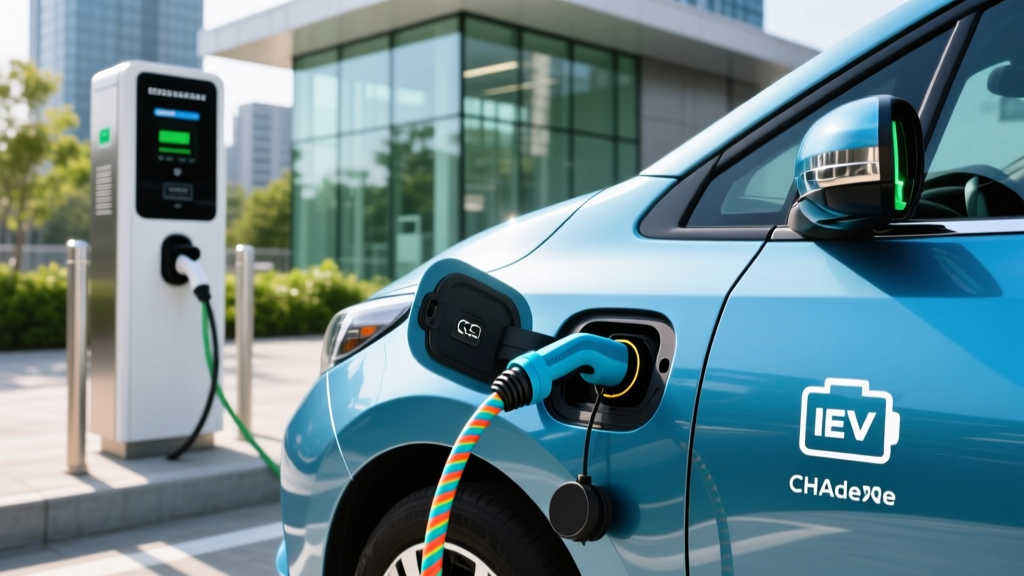
The Nissan LEAF has used the CHAdeMO DC fast-charging connector since its 2011 debut. For years, CHAdeMO was the only DC fast-charging standard available, and networks like early Nissan dealer chargers supported it exclusively. But the industry has moved decisively:
- CCS1 (Combined Charging System) became the standard for virtually all non-Tesla EVs sold in North America from 2015 onward — Chevrolet Bolt, Hyundai Ioniq 5, Ford Mustang Mach-E, VW ID.4, and dozens more.
- NACS (North American Charging Standard), originally Tesla's proprietary connector, was adopted by Ford, GM, Rivian, Volvo, and most major automakers starting in 2024–2025. By 2026, NACS is the dominant new-vehicle connector.
- CHAdeMO is effectively legacy. No new mass-market EV sold in North America in 2026 uses CHAdeMO except the Nissan LEAF (and the LEAF itself is expected to transition to NACS with its next-generation model).
| Connector | Brands Using It | DC Fast-Charge Network Access |
|---|---|---|
| CHAdeMO | Nissan LEAF (all years), Mitsubishi Outlander PHEV (older) | Declining — limited Electrify America, some EVgo stations |
| CCS1 | VW, Hyundai, Kia, BMW, Ford (pre-2025), GM (pre-2025), Rivian (pre-2025) | Electrify America, EVgo, ChargePoint, Ionity (EU) |
| NACS | Tesla, Ford (2025+), GM (2025+), Rivian (2025+), Volvo, Polestar, Nissan (next-gen LEAF) | Tesla Supercharger network (17,000+ stalls), growing EA/EVgo NACS stalls |
Does a CCS to CHAdeMO Adapter Exist for the Nissan LEAF?
This is the core question, and the answer requires understanding two different adapter directions:
CHAdeMO-to-CCS Adapters (Use CCS Stations with a CHAdeMO Car)
Yes, CHAdeMO-to-CCS adapters do exist, but with significant caveats. A handful of products — notably from companies like Setec and a few Chinese-market manufacturers — have offered CHAdeMO-to-CCS1 adapters that theoretically allow a CHAdeMO-equipped vehicle to plug into a CCS1 DC fast charger. However:
- Availability is limited and inconsistent. As of 2026, these adapters are primarily sold through specialty EV forums, AliExpress, or direct-from-manufacturer channels — not through mainstream retailers like Amazon or auto parts stores.
- Pricing is steep. Expect to pay $400–$800+ for a functional CHAdeMO-to-CCS DC fast-charge adapter. Compare this to the $200–$250 Tesla NACS-to-CCS adapters that are widely available.
- Protocol translation is the real challenge. CHAdeMO and CCS use different communication protocols between the car and the charger (CAN bus signaling vs. PLC/Power Line Communication). An adapter must actively translate these protocols, not just reroute pins. This makes the adapter an active electronic device, not a passive dongle — which drives up cost, complexity, and potential failure points.
- Reliability is mixed. User reports on forums like SpeakEV, My Nissan Leaf, and Reddit's r/leaf indicate that some adapters work reliably at certain charger brands (Electrify America's newer CCS stalls, for example) but fail to initiate sessions at others. Firmware mismatches between the adapter, the car's BMS, and the charger's software are common culprits.
- Warranty and safety are concerns. These adapters are not certified by UL or ETL in most cases, and using one could theoretically affect your LEAF's electrical system warranty. Nissan does not endorse third-party protocol adapters.
CCS-to-CHAdeMO Adapters (Use CHAdeMO Stations with a CCS Car)
These are more common but serve the opposite use case — letting a CCS-equipped car use the few remaining CHAdeMO-only stations. This doesn't help LEAF owners.
NACS-to-CHAdeMO Adapters
As Tesla's Supercharger network has opened to non-Tesla vehicles (via the "Magic Dock" built-in adapter at select stalls and NACS adoption by other brands), LEAF owners have hoped for a NACS-to-CHAdeMO adapter. As of 2026, no commercially available, reliable NACS-to-CHAdeMO DC fast-charge adapter exists for the LEAF. The same protocol-translation challenges apply, compounded by Tesla's proprietary communication layer on older Supercharger stalls.
Charging Levels Explained: What the LEAF Actually Supports
Before investing in adapters, it's worth understanding the three charging levels and what they mean for your LEAF in practical terms. Remember: kW (kilowatts) measures power — how fast energy flows — while kWh (kilowatt-hours) measures energy — the total capacity of your battery. Think of kW as the width of a hose and kWh as the size of the bucket.
| Level | Voltage / Amperage | Power (kW) | Miles of Range per Hour | Best For |
|---|---|---|---|---|
| Level 1 (120V household) | 120V / 12A | ~1.4 kW | ~4–5 mi/hr | Overnight trickle, PHEVs, emergencies |
| Level 2 (240V home/public) | 240V / 16–48A | 3.3–11.5 kW | ~14–40 mi/hr | Daily home charging, workplace, destination |
| DC Fast Charging | 200–500V DC | 24–100+ kW (LEAF: up to 100 kW peak on 62 kWh) | ~80–200+ mi in 30 min | Road trips, quick top-ups |
Nissan LEAF Charging Specs by Battery Size
The LEAF comes in two battery configurations that affect charging times significantly:
- LEAF S (40 kWh battery): EPA range ~149 miles. Level 2 charging at 6.6 kW (the LEAF's onboard charger max) takes roughly 7 hours for a full charge. DC fast charging peaks around 50 kW, reaching 10–80% in approximately 40–50 minutes.
- LEAF SV Plus / SL Plus (62 kWh battery): EPA range ~212–226 miles depending on trim and model year. Level 2 at 6.6 kW takes about 11 hours for a full charge. DC fast charging peaks around 100 kW (on newer model years), reaching 10–80% in approximately 45–60 minutes. Note that the LEAF lacks active battery thermal management (liquid cooling), which means sustained charge rates taper significantly in hot weather or on repeated fast-charge sessions — a phenomenon known as "Rapidgate" in the LEAF community.
Source: fueleconomy.gov — Nissan LEAF
Public CHAdeMO Charging Network Status in 2026
The reality for LEAF owners is that the CHAdeMO public charging network is shrinking, not growing. Here's where you can still find CHAdeMO connectors:
- Electrify America: Many EA stations installed CHAdeMO connectors alongside CCS1 on their early-generation chargers (2018–2021). However, EA's newer Gen 3.5 and Gen 4 stalls increasingly omit CHAdeMO, focusing on CCS1 and NACS. Check the EA app before planning a trip — station-level connector details are listed.
- EVgo: EVgo maintains one of the larger remaining CHAdeMO footprints, particularly at older metro-area stations. Their newer "EVgo eXtend" stations prioritize CCS1 and NACS.
- ChargePoint: ChargePoint's network is highly fragmented since individual site hosts choose their equipment. Some locations still have CHAdeMO; many have been upgraded to CCS-only.
- Nissan dealerships: Many Nissan dealers installed CHAdeMO DC fast chargers as part of the "No Charge to Charge" program. Availability varies wildly, and chargers are often 50 kW or older units.
- PlugShare and A Better Routeplanner: Use these apps to filter specifically for CHAdeMO connectors. The number of available CHAdeMO stalls in most metro areas has dropped 30–50% since 2023.
Bottom line: CHAdeMO infrastructure is not being built out. Existing stations may lose CHAdeMO connectors during upgrades. For LEAF owners who rely on public DC fast charging, this is a real and growing constraint.
Home Charging Setup for the Nissan LEAF
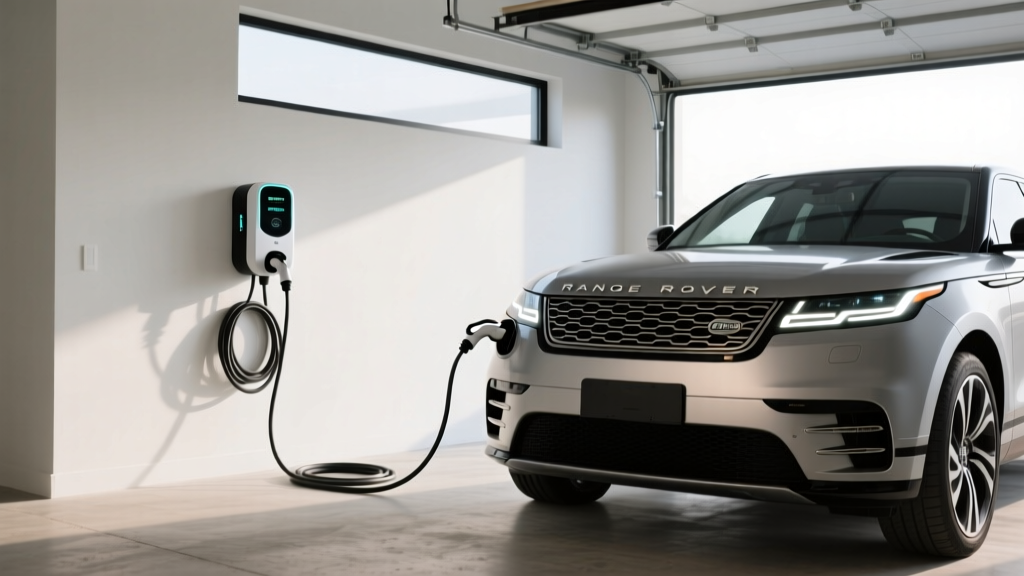
For most LEAF owners, home Level 2 charging is the practical backbone of daily ownership. The LEAF's 6.6 kW onboard charger means you don't need an ultra-high-power home unit — a 32A (7.7 kW) Level 2 charger will fully utilize the car's acceptance rate. Here's what a proper home installation looks like:
Electrical Requirements
- Circuit: 240V, 40-amp dedicated breaker (for a 32A continuous-draw charger — NEC requires circuits rated at 125% of continuous load)
- Wire: 6 AWG copper (THHN in conduit or NMC-B Romex)
- Outlet: NEMA 14-50 (if using a plug-in charger) or hardwired connection (required for some higher-power units and often preferred for outdoor installs)
- GFCI protection: Required by NEC 2020 and later for EV charging outlets in garages. Many modern chargers have built-in GFCI, which can avoid nuisance tripping with breaker-panel GFCIs — consult your electrician.
Panel Upgrade Considerations
Many older homes (pre-2000 construction) have 100-amp or 150-amp main service panels. Adding a 40A EV circuit may push your panel past its safe capacity, especially if you also run electric HVAC, an electric dryer, and an electric range simultaneously. A licensed electrician will perform a load calculation (per NEC Article 220) to determine if your panel can handle the additional draw.
If a panel upgrade is needed — typically from 100A to 200A — expect costs of $1,500–$3,500 depending on your utility's requirements, whether a new meter base is needed, and local labor rates. In rare cases with very old service entrances, costs can reach $5,000+.
| Component | Cost Range | Notes |
|---|---|---|
| Level 2 Charger (Equipment) | $300–$700 | 32A–40A smart charger, NEMA 14-50 or hardwired |
| Electrician Labor | $400–$1,500 | Depends on run length from panel to garage/carport |
| Electrical Materials (wire, conduit, breaker) | $100–$400 | Longer runs = more wire and conduit cost |
| Permit & Inspection | $50–$250 | Varies by municipality; some jurisdictions waive EV permits |
| Panel Upgrade (if needed) | $1,500–$3,500 | 100A → 200A service upgrade |
| Total (no panel upgrade) | $850–$2,850 | Most homes with 200A panels fall in this range |
| Total (with panel upgrade) | $2,350–$6,350 | Older homes with 100A service |
Recommended Level 2 Chargers for the Nissan LEAF
Since the LEAF's onboard charger caps at 6.6 kW, you don't need a 48A charger. A 32A unit (7.7 kW output) provides headroom and future-proofing. Here are proven options:
ChargePoint Home Flex
- Power: Up to 12 kW (50A), configurable down to 16A–50A
- Connector: J1772 (standard for LEAF Level 2)
- Cable length: 23 feet
- Smart features: Wi-Fi, scheduling, energy tracking, Alexa integration
- Price: ~$550–$650
- Why for LEAF: Adjustable amperage lets you match your circuit exactly; excellent app
Emporia Level 2 EV Charger
- Power: Up to 11.5 kW (48A)
- Connector: J1772
- Cable length: 24 feet
- Smart features: Wi-Fi, energy monitoring via Emporia Vue panel integration, scheduling
- Price: ~$350–$400
- Why for LEAF: Best budget smart charger; pairs with whole-home energy monitoring
Grizzl-E Smart
- Power: Up to 10 kW (40A)
- Connector: J1772
- Cable length: 24 feet
- Smart features: Wi-Fi, OCPP support, adjustable amperage
- Price: ~$450–$550
- Why for LEAF: Built in Canada, rugged outdoor rating (NEMA 4), -40°F tested — ideal for cold-climate LEAF owners
Important connector note: All Level 2 chargers in North America use the J1772 connector, which is compatible with every Nissan LEAF ever sold. The connector compatibility issue is only relevant for DC fast charging, where the LEAF uses CHAdeMO and most other EVs use CCS1 or NACS.
Cost to Charge: Home vs. Public vs. Gas
One of the LEAF's strongest ownership arguments is low fueling cost, especially when charging at home. Here's how the numbers break down:
| Scenario | Cost per kWh | Cost to Charge 62 kWh (Full) | Cost per Mile (226-mi range) |
|---|---|---|---|
| Home (off-peak utility rate) | $0.08–$0.14 | $4.96–$8.68 | $0.022–$0.038 |
| Home (average US rate) | $0.16 | $9.92 | $0.044 |
| Public Level 2 (ChargePoint, EVgo) | $0.20–$0.35 | $12.40–$21.70 | $0.055–$0.096 |
| DC Fast Charging (Electrify America, EVgo) | $0.35–$0.55 | $21.70–$34.10 | $0.096–$0.151 |
| Gas vehicle (28 MPG, $3.40/gal) | — | — | $0.121 |
Key takeaways:
- Home charging on off-peak rates is dramatically cheaper than gas — roughly $0.03/mile vs. $0.12/mile, a 75% savings.
- DC fast charging at public rates can actually exceed the cost of gasoline per mile. This is why home charging access is so critical for EV ownership economics.
- The LEAF's relatively small battery (40 or 62 kWh) means even at higher public rates, a full charge still costs less than $35 — but frequent DC fast charging erodes the financial advantage.
- Many utilities offer time-of-use (TOU) plans with EV-specific rates. Check with your utility for overnight rates as low as $0.05–$0.08/kWh.
Safety, Code, and Installation Best Practices
EV charging involves sustained high-current draw — far more demanding than any other household appliance. Proper installation is non-negotiable:
- Dedicated circuit: Your Level 2 charger must be on its own dedicated breaker — never shared with other outlets or appliances.
- Permit and inspection: Most jurisdictions require an electrical permit for EV charger installation. The inspection ensures proper wire gauge, breaker sizing, grounding, and GFCI compliance. Skipping the permit risks insurance claim denial in the event of an electrical fire.
- Outdoor rating: If your charger is installed outside (carport, driveway), it must be rated NEMA 4 or NEMA 4X for weather resistance. The ChargePoint Home Flex and Grizzl-E both meet this standard.
- NEMA 14-50 vs. hardwired: Plug-in installations using a NEMA 14-50 outlet offer flexibility (you can take the charger when you move), but NEC 2020+ requires GFCI breakers for receptacles in garages, which can cause nuisance tripping with some chargers. Hardwired installations avoid this issue and are often preferred by electricians.
- Never use extension cords or adapter plugs (e.g., NEMA 14-50 to 14-30) to connect your charger. These create fire hazards at sustained EV charging currents.
Practical Strategies for LEAF Owners in a Post-CHAdeMO World
Given the declining CHAdeMO infrastructure, here are practical approaches LEAF owners are using in 2026:
- Maximize home charging. A properly installed Level 2 home charger eliminates daily dependence on public DC fast charging. For the 62 kWh LEAF with ~212 miles of range, overnight home charging covers the vast majority of daily driving needs.
- Map your CHAdeMO corridor. Before road trips, use PlugShare and A Better Routeplanner to identify confirmed CHAdeMO stations along your route. Call ahead if a station shows as "check status" — many CHAdeMO connectors have been decommissioned without being removed from apps.
- Consider the adapter gamble. If you find a reputable CHAdeMO-to-CCS adapter (Setec is the most-cited brand in owner communities), understand that you're paying $400–$800 for a device with no UL certification, mixed compatibility, and no manufacturer warranty support. For some owners on road trips through CHAdeMO deserts, the adapter is worth the risk. For others, it's not.
- Evaluate the upgrade path. If your LEAF is a 2018–2022 model with significant battery degradation (check your battery health bars — 12 bars is full capacity, 8 bars or fewer means >25% degradation), the economics of investing in adapters and charging accessories may not justify keeping the vehicle. The next-generation Nissan LEAF (expected for the 2027–2028 model year) is anticipated to adopt NACS and offer 300+ miles of range, which would be a substantial upgrade.
- Join the LEAF community. Forums like MyNissanLeaf.com and the r/leaf subreddit are the best sources for real-time adapter compatibility reports, CHAdeMO station status updates, and workarounds that other owners have validated.
Frequently Asked Questions
Can I charge my Nissan LEAF at a Tesla Supercharger?
Not directly, and likely not with a simple adapter. Tesla Superchargers use the NACS connector, and while Tesla has opened some Supercharger stalls to non-Tesla EVs via the built-in "Magic Dock" CCS adapter, this only works for CCS-equipped vehicles. There is no reliable NACS-to-CHAdeMO adapter available in 2026. The LEAF's CHAdeMO connector is incompatible with the Supercharger network both physically and at the protocol level.
How much does a CHAdeMO-to-CCS adapter cost?
The few available CHAdeMO-to-CCS adapters (such as those from Setec) typically cost $400–$800. Availability is limited, and these adapters are not UL-certified. Compare this to widely available NACS-to-CCS adapters at $200–$250 — the CHAdeMO adapter market is far smaller and less mature due to the declining number of CHAdeMO vehicles.
Will the next Nissan LEAF use a different connector?
Nissan has committed to adopting NACS for its future EVs in North America. The next-generation LEAF (announced concept, expected production around 2027–2028) is anticipated to use the NACS connector, which would give it access to Tesla's Supercharger network and the growing NACS public charging infrastructure.
How fast can the Nissan LEAF charge at home?
The LEAF's onboard charger accepts up to 6.6 kW on Level 2 (240V). With the 62 kWh battery, a full charge from empty takes approximately 11 hours. With the 40 kWh battery, a full charge takes about 7 hours. In practice, most owners charge from 20–80% overnight, which takes 4–7 hours depending on battery size.
Is CHAdeMO being completely phased out?
"Phased out" is accurate in terms of new infrastructure investment. No major charging network is building new CHAdeMO stalls in 2026. Existing CHAdeMO connectors at Electrify America and EVgo stations are being replaced with CCS1 and NACS during station upgrades. However, some legacy CHAdeMO stations will remain operational for years, particularly at Nissan dealerships and older installations.
Does the Nissan LEAF qualify for any federal tax credits in 2026?
The new Nissan LEAF's eligibility for the federal §30D clean vehicle credit depends on current-year battery sourcing, critical mineral requirements, MSRP caps (must be under $55,000 for cars), and buyer income limits. The LEAF's MSRP typically falls within the cap, but battery-sourcing compliance has varied by model year. Check the IRS qualified vehicle list and consult a tax professional to confirm your eligibility. A point-of-sale transfer option is available if you qualify.
The Nissan LEAF remains a capable, affordable electric vehicle — but its CHAdeMO connector is increasingly a liability in a charging ecosystem that has standardized on CCS1 and NACS. While CCS-to-CHAdeMO adapters exist in limited form, they're expensive, uncertified, and unreliable. The most practical path for LEAF owners in 2026 is to invest in a quality home Level 2 charging setup, plan road trips carefully around remaining CHAdeMO infrastructure, and consider the next-generation LEAF or a different EV when it's time to upgrade.