The Connector Divide: Why a CCS to CHAdeMO Adapter Matters
If you drive a Nissan LEAF, Mitsubishi Outlander PHEV, or another CHAdeMO-equipped electric vehicle, you've likely noticed something frustrating at public DC fast-charging stations: most new chargers are being installed with CCS1 connectors, and increasingly, NACS (Tesla's North American Charging Standard). CHAdeMO ports are becoming the minority on new public infrastructure.
This has driven growing interest in a CCS to CHAdeMO adapter — a device that would let CHAdeMO-equipped vehicles plug into the far more common CCS1 chargers. But does such an adapter exist for consumers, does it work reliably, and what are the practical alternatives? This guide breaks down the technical realities, connector compatibility landscape, and what CHAdeMO owners should actually do in 2026.
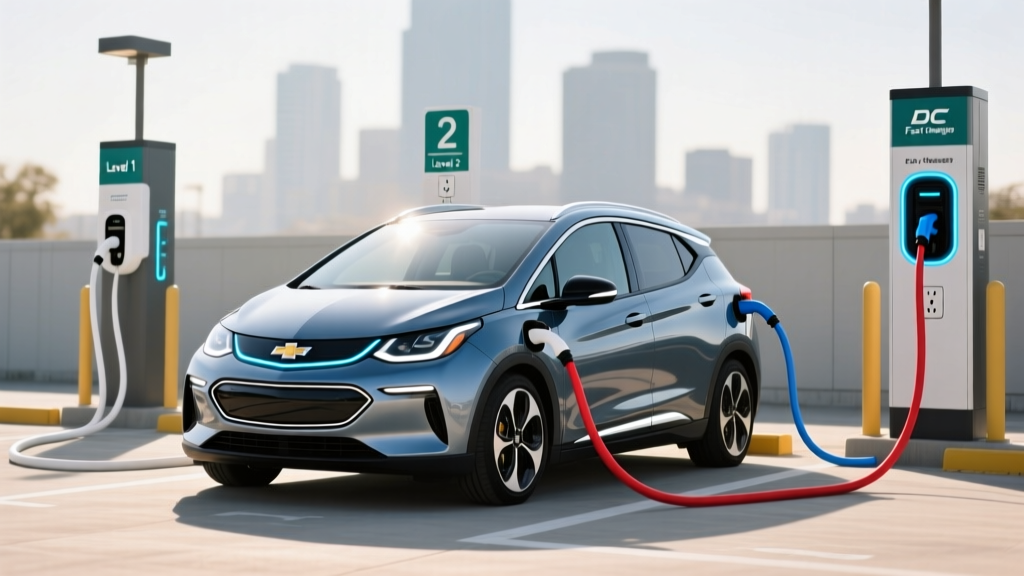
Understanding DC Fast Charging Connectors in 2026
Before evaluating adapters, it's essential to understand the three DC fast-charging connector standards currently deployed across North America, and how power (measured in kW, kilowatts — the rate of energy delivery) differs from energy (measured in kWh, kilowatt-hours — the total capacity stored in your battery).
| Connector | Peak Power | Vehicles Using It | Network Availability |
|---|---|---|---|
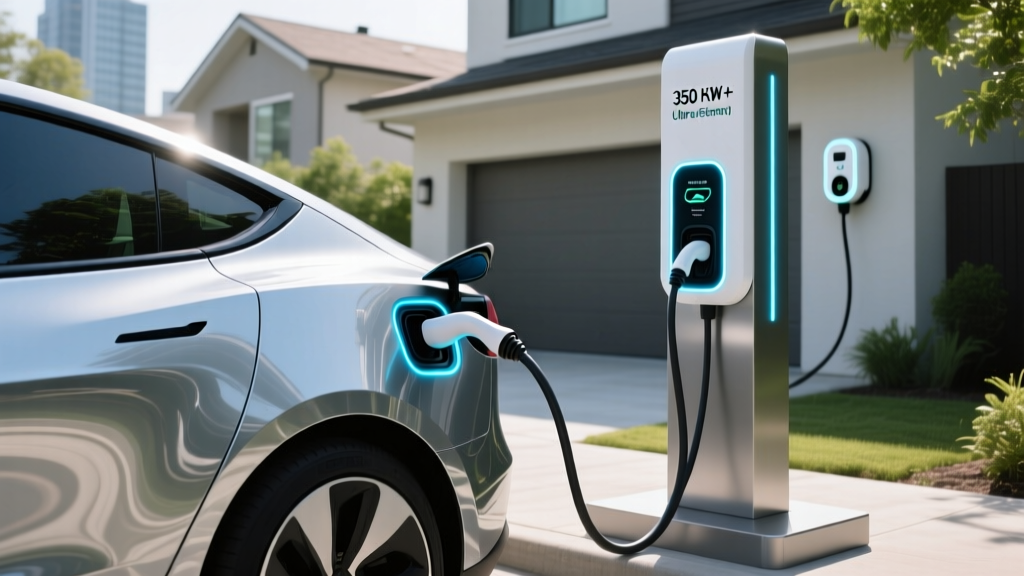
| CCS1 (Combined Charging System) | Up to 350 kW | Hyundai Ioniq 5/6, Kia EV6/EV9, Ford Mustang Mach-E, VW ID.4, BMW iX, GM Ultium vehicles, Rivian, most European/US brands | Dominant — Electrify America, EVgo, ChargePoint, most new deployments |
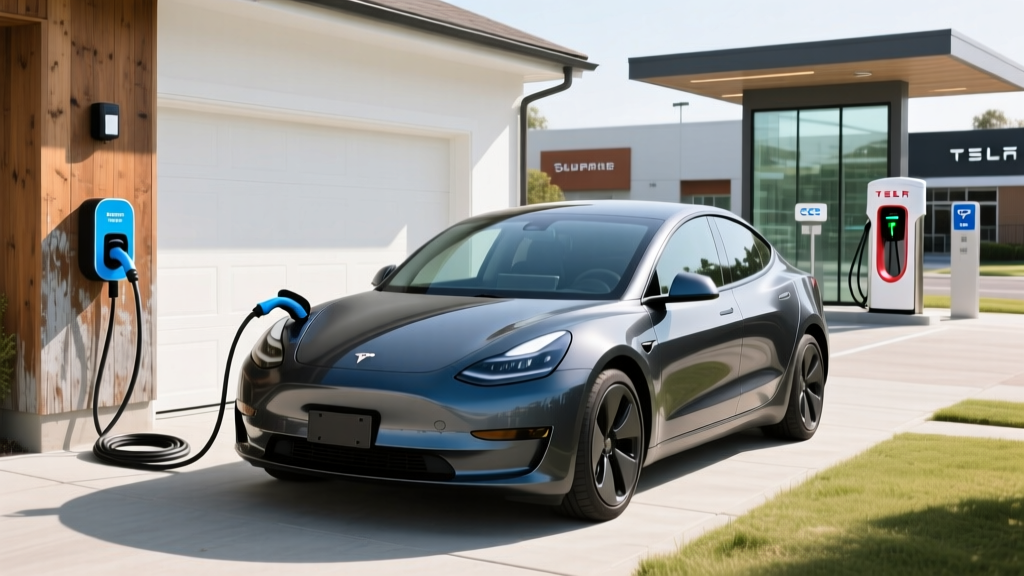
| NACS (North American Charging Standard / Tesla) | Up to 250 kW (V4 Supercharger) | All Tesla vehicles; Ford, GM, Rivian, Hyundai, Kia, and others adopting NACS port starting 2025-2026 model years | Tesla Supercharger network (20,000+ stalls); expanding to non-Tesla via adapters |
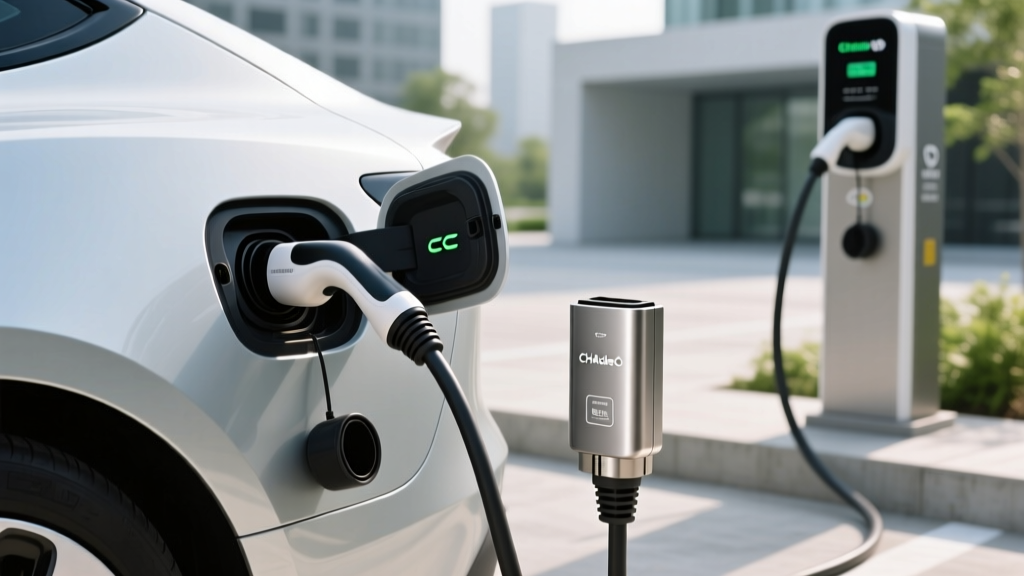
| CHAdeMO | Up to 62.5 kW (most US deployments); 400 kW in Japan | Nissan LEAF (all years), Mitsubishi Outlander PHEV, older Kia Soul EV, Peugeot/Citroën (non-US) | Declining — available at ~40% of Electrify America stations, some EVgo; rarely added to new installs |
The writing is on the wall: CCS1 dominated through 2024, and NACS is rapidly gaining ground as major automakers adopt Tesla's connector. CHAdeMO, while still functional, is no longer being prioritized for new infrastructure investment in North America.
The Technical Reality: Why a CCS to CHAdeMO Adapter Is So Difficult
A CCS to CHAdeMO adapter isn't a simple plug reshaper like a NACS-to-CCS adapter. The two standards differ in fundamental ways:
- Communication protocols: CCS uses Power Line Communication (PLC) over the DC lines to negotiate charging parameters between vehicle and charger. CHAdeMO uses Controller Area Network (CAN bus) communication via dedicated signal pins. An adapter must translate between these two entirely different "languages" in real time.
- Pin configurations: CCS1 uses a 7-pin design (2 DC power + 2 signal + 1 ground + 2 AC pins for Level 2). CHAdeMO uses a 10-pin circular connector with different power and signal routing.
- Voltage and current negotiation: CCS chargers can deliver up to 1,000V and 500A. CHAdeMO vehicles typically accept up to 400-500V and 125A. The adapter would need to safely limit and negotiate power delivery within the vehicle's acceptance range.
- Safety certification: Any DC fast-charging adapter handling 50+ kW must meet UL 2251 or equivalent safety standards. As of 2026, no consumer CCS-to-CHAdeMO adapter has achieved this certification.
What Does Exist Today
There are CHAdeMO-to-CCS adapters used by charging station operators (not consumers) — these are built into some dual-standard charger cabinets. For consumers, the adapter landscape in 2026 looks like this:
- NACS-to-CCS1 adapters: Widely available ($200-$300) from Lectron, A2Z EV, and Tesla — let CCS1 vehicles use Tesla Superchargers.
- CCS1-to-NACS adapters: Available from Ford, Tesla, and third parties — let NACS vehicles use CCS chargers.
- CHAdeMO-to-CCS1 adapters: Not commercially available for consumer purchase as of early 2026. Some fleet/industrial solutions exist in Japan and Europe at prices exceeding $2,000, but these are not UL-listed for North American consumer use.
Charging Speeds by Level: What CHAdeMO Owners Can Expect
Whether you're charging at home or on the road, understanding how each charging level delivers power helps set realistic expectations. Here's the breakdown:
| Level | Power (kW) | Voltage / Amperage | Miles of Range Added per Hour | Typical Use Case |
|---|---|---|---|---|
| Level 1 | 1.0 - 1.4 kW | 120V / 12A | 3-5 miles/hr | Overnight trickle; emergency top-up |
| Level 2 | 3.3 - 19.2 kW | 240V / 16A-80A | 12-75 miles/hr | Home daily charging; workplace; public Level 2 |
| DC Fast (CHAdeMO) | 50 - 62.5 kW | 200-500V DC / up to 125A | ~120-180 miles/hr (at peak) | Road trips; rapid public charging |
| DC Fast (CCS1) | 50 - 350 kW | 200-1000V DC / up to 500A | 150-1,200+ miles/hr (at peak) | Road trips; ultra-fast public charging |
Charging Time Examples: 10-80% State of Charge
DC fast charging slows significantly above 80% to protect battery health — this is the "charge curve taper." Here's what 10-80% charging looks like for common CHAdeMO vehicles:
- Nissan LEAF SV Plus (62 kWh battery): ~45 minutes on a 50 kW CHAdeMO charger; ~60+ minutes on older 25 kW CHAdeMO stations.
- Nissan LEAF S (40 kWh battery): ~35-40 minutes on a 50 kW CHAdeMO charger.
- Mitsubishi Outlander PHEV (20 kWh battery): ~25 minutes on a 50 kW CHAdeMO charger (charges to ~80% of 20 kWh usable).
For comparison, a Hyundai Ioniq 5 on a 350 kW CCS1 charger achieves 10-80% in approximately 18 minutes. This speed gap is a key reason CHAdeMO owners feel the infrastructure squeeze.
Home Charging Setup: Installation Costs and Electrical Requirements
Regardless of which DC connector your EV uses, home Level 2 charging is connector-agnostic — all EVs sold in North America use the J1772 connector for Level 1 and Level 2 AC charging. CHAdeMO and CCS1/NACS only apply to DC fast charging. So your home charger will work perfectly with any EV.
Electrical Requirements for Level 2 Home Charging
A typical Level 2 home charger installation requires:
- Circuit: Dedicated 240V circuit, typically 40A or 50A (breaker rated 125% above continuous load — so a 32A charger needs a 40A breaker; a 40A charger needs a 50A breaker)
- Wiring: 6 AWG copper (for 50A circuits) or 8 AWG (for 40A circuits), run through conduit if exposed
- Outlet or hardwire: NEMA 14-50 outlet (for plug-in chargers) or direct hardwire connection (required for chargers above 40A continuous)
- GFCI protection: NEC 2020/2023 requires GFCI protection for EV receptacles in garages — many modern EVSE units have built-in GFCI, but the breaker may also need to be GFCI-type depending on local code
- Outdoor rating: If installing outdoors, the EVSE must carry a NEMA 4 or NEMA 4X weatherproof rating
Panel Upgrade Considerations
This is where costs can escalate significantly. If your home has a 100A electrical panel (common in homes built before 1990), adding a 40A or 50A EV circuit may exceed your panel's capacity. An electrician will perform a load calculation per NEC Article 220 to determine if your panel can support the additional draw.
If a panel upgrade is needed — typically from 100A to 200A — expect to add $1,500 to $3,500 to your total installation cost. This is a non-negotiable safety requirement and one of the most common surprises for new EV owners in older homes.
| Component | Low Estimate | High Estimate | Notes |
|---|---|---|---|
| Level 2 EVSE (charger unit) | $300 | $700 | 32A-48A smart chargers; see recommendations below |
| Electrician labor | $400 | $1,500 | Depends on run length, conduit, wall type |
| Electrical materials (wire, conduit, breaker) | $100 | $400 | 6 AWG copper, NEMA 14-50 or hardwire |
| Permit and inspection | $50 | $250 | Required by most jurisdictions; varies by municipality |
| Subtotal (no panel upgrade) | $850 | $2,850 | Typical install for homes with 200A panels |
| Panel upgrade (100A → 200A) if needed | $1,500 | $3,500 | Older homes only; includes new panel + labor |
| Total (with panel upgrade) | $2,350 | $6,350 | Worst-case scenario for older homes |
Note: Always hire a licensed electrician for EV charger installation. Final specifications depend on your home's specific electrical configuration. Some utilities offer rebates of $250-$500 for Level 2 charger installation — check with your local provider.
Equipment Recommendations: Best Level 2 Chargers for 2026
Since Level 2 home charging uses the universal J1772 connector (compatible with all EVs including CHAdeMO vehicles), here are the top-performing home chargers for 2026:
Emporia Level 2 Smart Charger
- Power output: 48A continuous (11.5 kW at 240V)
- Connector: J1772 (universal)
- Cable length: 24 feet
- Smart features: Wi-Fi, app scheduling, energy monitoring, solar integration
- Price: ~$400
- Best for: Budget-conscious buyers wanting full smart features
ChargePoint Home Flex
- Power output: Up to 50A continuous (12 kW at 240V) — adjustable via dip switch
- Connector: J1772 (universal)
- Cable length: 23 feet
- Smart features: Wi-Fi, Alexa integration, scheduling, charge history
- Price: ~$550
- Best for: Adjustable amperage to match your circuit capacity
Tesla Wall Connector (Universal)
- Power output: 48A continuous (11.5 kW at 240V)
- Connector: J1772 with integrated NACS adapter
- Cable length: 24 feet
- Smart features: Wi-Fi, power sharing (up to 6 units on one circuit), OTA updates
- Price: ~$600
- Best for: Multi-EV households or future-proofing for NACS vehicles
Cost to Charge: EV Electricity vs. Gasoline per Mile
One of the strongest arguments for EV ownership — regardless of connector type — is lower fueling cost. Here's a real comparison using 2026 average electricity and gasoline prices:
| Scenario | Rate | Cost per kWh | Cost per Mile* |
|---|---|---|---|
| Home Level 2 (off-peak TOU rate) | $0.08-$0.14/kWh | $0.11 avg | $0.033 |
| Home Level 2 (standard rate) | $0.14-$0.22/kWh | $0.18 avg | $0.054 |
| Public Level 2 (ChargePoint, etc.) | $0.20-$0.35/kWh | $0.28 avg | $0.084 |
| DC Fast Charging (Electrify America, EVgo) | $0.35-$0.55/kWh | $0.45 avg | $0.135 |
| Gasoline vehicle (28 MPG combined, $3.40/gal) | — | — | $0.121 |
*Based on a Nissan LEAF SV Plus consuming ~0.30 kWh/mile (3.33 miles/kWh), per fueleconomy.gov efficiency data. Actual costs vary by vehicle efficiency, local electricity rates, and driving conditions.
Even at public DC fast-charging rates, the LEAF costs roughly the same per mile as a 28 MPG gas car. At home off-peak rates, the EV is roughly 73% cheaper per mile. This math holds regardless of whether your car uses CHAdeMO, CCS1, or NACS — the connector doesn't affect electricity cost.
Practical Strategies for CHAdeMO Owners in 2026
If you own a CHAdeMO vehicle and are concerned about shrinking DC fast-charging access, here are the most practical approaches:
1. Maximize Home Level 2 Charging
With a 48A Level 2 charger at home, a Nissan LEAF SV Plus (62 kWh battery) charges from 0-100% in approximately 5.5 hours. For most daily driving (30-50 miles), overnight Level 2 charging fully replenishes the battery. DC fast charging is only essential for road trips exceeding your vehicle's range.
2. Map CHAdeMO-Compatible Public Chargers
Use PlugShare or the Electrify America app to filter specifically for CHAdeMO availability. Electrify America still maintains CHAdeMO connectors on a significant portion of its stations — approximately 40% of its ~1,000 US locations as of early 2026, per Electrify America's station locator. EVgo also operates CHAdeMO-equipped stations in select markets.
3. Plan Road Trips Around CHAdeMO Infrastructure
For routes through rural areas or the Mountain West, CHAdeMO coverage can be sparse. Pre-plan using PlugShare's route planner and identify backup Level 2 stops (hotels, restaurants) where you can add range overnight if DC fast chargers are unavailable.
4. Consider Your Next Vehicle's Connector
If you're approaching a vehicle upgrade, the connector landscape strongly favors CCS1 (for maximum public charger compatibility today) or NACS (for Tesla Supercharger access, which is the largest and most reliable network). Vehicles like the Hyundai Ioniq 5 (CCS1) or the 2025+ Ford Mustang Mach-E (NACS) will have substantially broader fast-charging access than any CHAdeMO vehicle.
Looking Ahead: Is CHAdeMO Being Phased Out?
CHAdeMO isn't being actively decommissioned, but new investment has shifted decisively to CCS1 and NACS. Key indicators:
- The CHAdeMO Association (the standards body) has reduced its North American advocacy presence since 2022.
- Nissan — CHAdeMO's primary champion — confirmed that future EVs for the North American market will use NACS connectors, starting with upcoming model-year vehicles.
- New federal NEVI (National Electric Vehicle Infrastructure) funding requires CCS1 connectors on all federally funded charging stations, with no CHAdeMO requirement.
- No major new EV model launched in North America since 2023 has included a CHAdeMO port.
This doesn't mean existing CHAdeMO chargers will disappear overnight — most are under long-term operating agreements. But the network will not grow, and stations may gradually lose CHAdeMO capability as equipment reaches end-of-life and is replaced with CCS1/NACS-only units.
Frequently Asked Questions
Does a CCS to CHAdeMO adapter exist that I can buy?
As of early 2026, no UL-listed, consumer-available CCS1-to-CHAdeMO adapter exists on the North American market. The technical complexity of translating between CCS's PLC communication protocol and CHAdeMO's CAN bus protocol, combined with the high-voltage safety certification requirements, has prevented a viable consumer product from reaching market. Some fleet-grade solutions exist in Japan at prices exceeding $2,000, but these are not certified for North American consumer use.
Can I use a Tesla Supercharger with my CHAdeMO vehicle?
No. Tesla Superchargers use the NACS connector and Tesla's proprietary authentication protocol. Even with a physical NACS-to-CHAdeMO adapter (which does not exist as a consumer product), the Tesla network requires vehicle-level software authentication that CHAdeMO vehicles cannot provide. CHAdeMO owners cannot access the Supercharger network.
How much does it cost to install a home EV charger?
A typical Level 2 home charger installation costs between $850 and $2,850 for homes with adequate panel capacity (200A service). This includes the charger unit ($300-$700), electrician labor ($400-$1,500), materials ($100-$400), and permit fees ($50-$250). If your home has a 100A panel that needs upgrading to 200A, add $1,500-$3,500 for a total of $2,350-$6,350. Always get a load calculation from a licensed electrician before proceeding.
How fast will each charging level add range to my Nissan LEAF?
A Nissan LEAF SV Plus (62 kWh, ~3.3 miles/kWh efficiency) gains approximately: Level 1 (1.4 kW) = 3-5 miles per hour; Level 2 (7.7 kW / 32A) = ~25 miles per hour; Level 2 (11.5 kW / 48A) = ~38 miles per hour; DC Fast CHAdeMO (50 kW) = ~150 miles per hour at peak, though charging slows above 80% state of charge. For context, a full Level 2 overnight charge (8 hours at 7.7 kW) adds roughly 200 miles — more than enough for most daily driving.
Which connector and charger is compatible with my EV?
For home Level 2 charging, all EVs use the J1772 connector — any Level 2 home charger will work with any EV, including CHAdeMO, CCS1, and NACS vehicles. For DC fast charging, your vehicle's port determines compatibility: CHAdeMO vehicles can only use CHAdeMO chargers; CCS1 vehicles can only use CCS1 chargers; NACS vehicles can use NACS chargers (and CCS1 with an adapter). Check your vehicle's specifications or look at the physical port to confirm your DC connector type.
How much does charging cost per mile compared to gas?
At home off-peak rates (~$0.11/kWh), a Nissan LEAF costs approximately $0.033 per mile to charge — roughly 73% less than a 28 MPG gas car at $3.40/gallon ($0.121/mile). Even at public DC fast-charging rates (~$0.45/kWh), the LEAF costs about $0.135/mile, comparable to gasoline. The savings are maximized when you charge at home, which is where 80-90% of EV charging occurs for most owners.
What electrical upgrades might I need for a home charger?
The most common upgrade is a panel capacity increase from 100A to 200A, needed in older homes where the existing panel can't support an additional 40-50A continuous load. Your electrician will perform a NEC Article 220 load calculation to determine if this is necessary. Other potential upgrades include: adding a sub-panel closer to the garage (if the main panel is far away), upgrading service entrance wiring, or replacing an outdated fuse box with a modern breaker panel. These upgrades add $1,500-$3,500 but increase your home's overall electrical capacity for future needs.
Sources: U.S. Department of Energy / fueleconomy.gov — EV efficiency and charging data; Electrify America — public charging network connector availability; Alternative Fuels Data Center (AFDC) — charging infrastructure statistics and standards documentation.