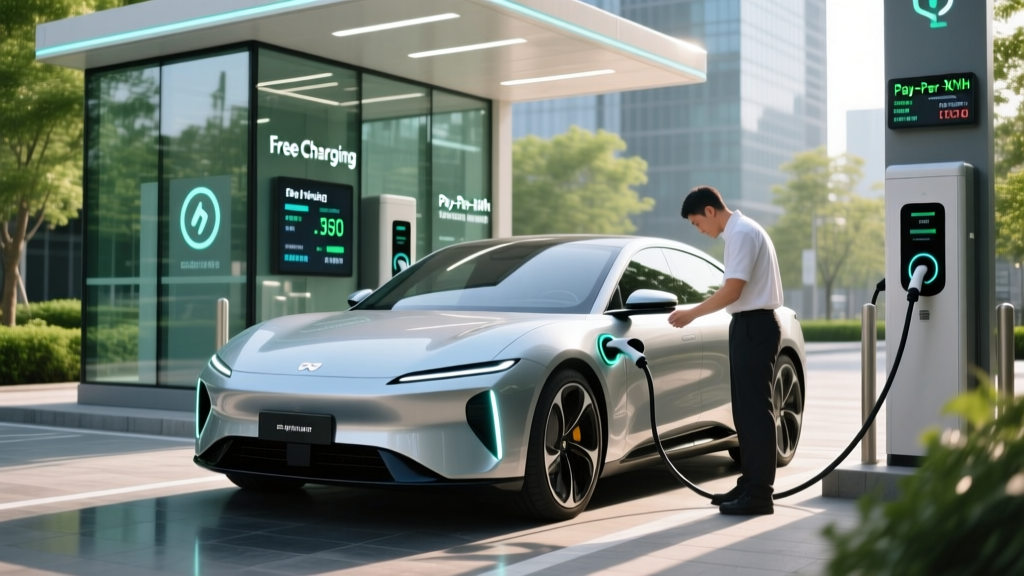
If you own a Tesla Model 3, Model Y, Model S, or Model X built before late 2022, your car shipped with a proprietary Tesla charge port — no CCS1 connector in sight. That meant DC fast charging was limited to the Tesla Supercharger network. Today, with the North American Charging Standard (NACS) opening up and third-party networks adding Tesla access, many owners are exploring a CCS retrofit for Tesla vehicles to unlock Electrify America, EVgo, and other public DC fast chargers.
This guide covers exactly what a CCS retrofit entails, which adapters and hardware upgrades work, what home Level 2 installation costs in 2026, and how to choose the right charging equipment for your setup. We'll keep the numbers precise — kW for charge rate, kWh for battery capacity — because confusing the two is the most common mistake new EV owners make.
Understanding Charging Levels: What Each Adds Per Hour
Before choosing hardware, you need to know what each charging tier delivers. Power is measured in kilowatts (kW) — the rate of energy flow — while your battery stores energy in kilowatt-hours (kWh). A 75 kWh battery charged at 7.5 kW takes roughly 10 hours from empty; at 150 kW DC fast charging, that same battery reaches 80% in about 25 minutes (with taper above 80% slowing the final stretch).
| Level | Voltage | Max Power (kW) | Miles of Range Added Per Hour | Typical Use Case |
|---|---|---|---|---|
| Level 1 | 120V AC | 1.4–1.9 kW | 3–5 mi/hr | Overnight trickle, PHEVs, emergency |
| Level 2 | 240V AC | 7.2–19.2 kW | 20–60 mi/hr | Home daily charging, workplace |
| DC Fast (Level 3) | 400–800V DC | 50–350 kW | 150–1,000+ mi/hr (peak) | Road trips, highway corridors |
For a Tesla Model Y Long Range (75 kWh usable battery, ~310 miles EPA), a Level 2 charger at 11.5 kW adds roughly 44 miles of range per hour. That means a 20–80% session (about 45 kWh) takes around 4 hours — perfectly suited to overnight charging on a time-of-use electricity plan.
CCS Retrofit for Tesla: What's Actually Involved
A CCS retrofit lets a Tesla with the legacy proprietary port accept CCS1 connectors — the standard used by Electrify America, EVgo, and most non-Tesla DC fast chargers. There are two paths:
Path 1: CCS Adapter (No Vehicle Modification)
Several third-party manufacturers sell CCS1-to-Tesla adapters that plug into your Tesla's charge port on one end and accept a CCS1 connector on the other. Key products include:
- Tesla CCS Combo 1 Adapter (official, ~$250): Works with Tesla vehicles that have the ECU firmware update (most 2021+ vehicles, some earlier with retrofit ECU). Supports up to 250 kW DC fast charging.
- Setec CCS Adapter (~$150–$200): A popular aftermarket option that works with a broader range of model years. Rated for up to 250 kW, though sustained speeds depend on your vehicle's onboard charge controller.
- A2Z Typhoon / Lectron adapters (~$130–$180): Budget options; verify firmware compatibility before purchasing.
Critical caveat: the adapter alone isn't always enough. Tesla vehicles built before approximately mid-2020 may require an ECU (Electronic Control Unit) firmware update or hardware retrofit to communicate with CCS chargers. Tesla Service centers can perform this update on eligible vehicles — typically free if your car qualifies, but availability varies by VIN. Check with your local Service Center before buying an adapter.
Path 2: NACS-to-CCS Adapter (Reverse Direction)
If you drive a newer Tesla with the native NACS port (2025+ models), you won't need a CCS retrofit — NACS is now the standard adopted by Ford, GM, Rivian, Hyundai, and most major automakers. Instead, you may need a NACS-to-CCS adapter to use legacy CCS1 chargers that haven't yet added NACS cables. Ford and GM provide these adapters to early buyers; aftermarket options from Lectron and A2Z are available for $100–$180.
| Connector | Vehicles Using It | Networks Available | Adapter Needed for Tesla? |
|---|---|---|---|
| Tesla Proprietary (pre-2023) | Model S/3/X/Y (pre-NACS) | Tesla Supercharger only | N/A — native port |
| NACS (Tesla standard) | 2025+ Teslas, Ford, GM, Rivian, Hyundai, others | Tesla Supercharger, Electrify America (select), EVgo, others | CCS1 adapter for legacy CCS stations |
| CCS1 | Most non-Tesla BEVs (2024 and earlier) | Electrify America, EVgo, ChargePoint, Ionity (EU) | CCS1-to-Tesla adapter required |
| CHAdeMO | Nissan Leaf, Mitsubishi (legacy) | Limited; being phased out in US | Not compatible with Tesla |
Home Level 2 Installation: Electrical Requirements and Costs
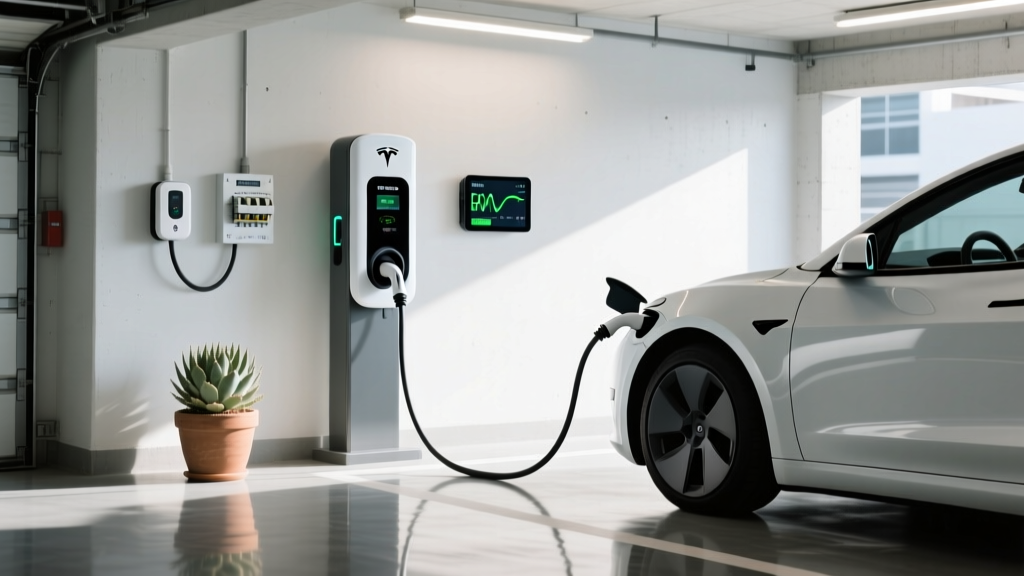
Most Tesla owners charge at home using a Level 2 wall connector on a 240V circuit. Here's what a proper installation requires and what it costs in 2026.
Electrical Specifications
- Circuit: Dedicated 60A breaker (for 48A continuous charging) or 50A breaker (for 40A continuous). National Electrical Code (NEC) requires circuits rated at 125% of continuous load.
- Wire: 6 AWG copper (THHN in conduit) for 60A; 8 AWG for 50A runs under 50 feet. Longer runs may require 4 AWG to minimize voltage drop.
- Outlet vs. hardwired: The Tesla Wall Connector is hardwired (no plug). If you want portability, install a NEMA 14-50 outlet (50A) to use the Tesla Mobile Connector or a plug-in unit like the ChargePoint Home Flex.
- GFCI protection: NEC 2020+ requires GFCI breakers for outlets in garages. Hardwired units are exempt in most jurisdictions.
- Outdoor rating: If mounting outside, ensure the unit carries a NEMA 4 (weatherproof) rating. The Tesla Wall Connector and ChargePoint Home Flex are both rated for outdoor use.
Panel Upgrade Considerations
This is where costs can spike. If your home has a 100A main service panel (common in pre-1990 construction), adding a 60A EV circuit may exceed your panel's capacity. An electrician will perform a load calculation — summing your existing circuits against panel capacity. If you're over 80% utilization, you'll need either:
- A panel upgrade to 200A service ($1,500–$3,500 depending on utility requirements and local labor rates)
- A smart load management device like the Emporia Smart Load Center or Tesla's built-in load-sharing, which throttles EV charging when other appliances draw heavily ($200–$500 for hardware)
| Component | Cost Range | Notes |
|---|---|---|
| Level 2 Charger (equipment) | $250–$700 | Tesla Wall Connector ~$420; ChargePoint Flex ~$650 |
| Electrician labor (standard install) | $500–$1,500 | Depends on run length, conduit, drywall work |
| Permit & inspection | $50–$250 | Required in most jurisdictions; varies by city |
| Panel upgrade (if needed) | $1,500–$3,500 | 100A → 200A service; may require utility coordination |
| Total (no panel upgrade) | $800–$2,450 | Typical for homes with 200A service |
| Total (with panel upgrade) | $2,300–$5,950 | Older homes with 100A service |
Always hire a licensed electrician and pull a permit. Unpermitted EV charger installations can void homeowner's insurance claims and create fire risk — especially on 60A circuits that run continuously for hours.
Charging Cost Per Mile: EV vs. Gas in 2026
One of the strongest ownership arguments for electrification is fuel cost. Here's how home and public EV charging stacks up against gasoline on a per-mile basis.
| Scenario | Rate | Cost for 40 kWh (≈120 mi in Model Y) | Cost Per Mile |
|---|---|---|---|
| Home (off-peak utility rate) | $0.09/kWh | $3.60 | $0.03/mi |
| Home (average US rate) | $0.17/kWh | $6.80 | $0.057/mi |
| Public Level 2 (ChargePoint, etc.) | $0.25–$0.40/kWh | $10–$16 | $0.08–$0.13/mi |
| DC Fast (Electrify America, EVgo) | $0.35–$0.55/kWh | $14–$22 | $0.12–$0.18/mi |
| Tesla Supercharger (avg 2026) | $0.28–$0.38/kWh | $11.20–$15.20 | $0.09–$0.13/mi |
| Gas car (28 MPG avg, $3.40/gal) | — | $14.57 (for 120 mi) | $0.12/mi |
At home off-peak rates, a Tesla Model Y charges at roughly $0.03 per mile — about 75% cheaper than a 28 MPG gas car. Even at public DC fast charging rates, the per-mile cost is competitive with gasoline. The key to maximizing savings is home charging on a time-of-use plan that offers sub-$0.10/kWh overnight rates. According to the U.S. Energy Information Administration, the national average residential rate sits around $0.17/kWh, but utility-specific EV plans from PG&E, SCE, ConEd, and others can cut that substantially during off-peak windows.
Equipment Recommendations: Level 2 Chargers for Tesla Owners
Here are the top Level 2 chargers we recommend for Tesla owners in 2026, whether you're running the legacy port or NACS.
Tesla Wall Connector (Gen 4)
- Power output: Up to 11.5 kW (48A on 60A circuit)
- Connector: NACS (native Tesla)
- Cable length: 18 ft or 24 ft options
- Smart features: Wi-Fi, OTA updates, Power Sharing (load-balance two units on one circuit), integrated Tesla app control
- Price: ~$420
- Best for: Tesla-only households wanting the simplest, cleanest integration
ChargePoint Home Flex
- Power output: Up to 12 kW (50A configurable, NEMA 14-50 or hardwired)
- Connector: J1772 (use Tesla's J1772 adapter, included with most Teslas) or NACS version available
- Cable length: 23 ft
- Smart features: Wi-Fi, Alexa integration, scheduling, detailed energy tracking via app, works with any EV
- Price: ~$650
- Best for: Multi-EV households (Tesla + non-Tesla) or renters who want a plug-in unit they can take when moving
Emporia Vue Level 2 Charger
- Power output: Up to 11.5 kW (48A)
- Connector: J1772 or NACS (configurable at purchase)
- Cable length: 24 ft
- Smart features: Integration with Emporia Vue energy monitor for whole-home load tracking, solar-aware charging, EVAutomation for utility demand response programs
- Price: ~$400
- Best for: Homes with solar panels or Emporia energy monitoring; budget-conscious buyers wanting smart features
Grizzl-E Smart
- Power output: Up to 10 kW (40A on 50A circuit)
- Connector: J1772 (use Tesla adapter)
- Cable length: 24 ft
- Smart features: OCPP-compatible, adjustable amperage (16A–40A via DIP switches), extreme cold rating (-40°F), rugged aluminum case
- Price: ~$450
- Best for: Cold-climate garages, outdoor installs, owners who value durability over app features
DC Fast Charging Times: What to Expect With CCS Retrofit
When using a CCS adapter on a Tesla at a public DC fast charger, your actual charging speed depends on three factors: the station's maximum output, your vehicle's charge acceptance rate, and the battery's state of charge (SoC). Tesla's battery management system aggressively tapers charge rate above 80% SoC to protect long-term battery health.
| Vehicle | Battery (kWh usable) | Peak DC Charge Rate | 10–80% Time (est.) | Notes |
|---|---|---|---|---|
| Model 3 Long Range (2024) | 75 kWh (NMC) | 250 kW | ~25–28 min | Peak sustained ~170 kW average |
| Model Y Long Range (2025) | 75 kWh (NMC) | 250 kW | ~27–30 min | Slightly heavier, similar pack |
| Model S Plaid (2025) | 95 kWh (NMC) | 250 kW | ~35–38 min | Larger pack extends session |
| Model X (2025) | 95 kWh (NMC) | 250 kW | ~36–40 min | Heavier vehicle, higher consumption |
The "peak 250 kW" figure is misleading if taken at face value. In real-world testing, a Model 3 Long Range at a V3 Supercharger or comparable CCS station sustains roughly 170–200 kW between 10–50% SoC, then tapers to 100 kW by 65%, and drops below 50 kW above 80%. This charge curve taper is why manufacturers quote 10–80% times rather than 0–100% — the final 20% can take as long as the first 70%.
When using a CCS retrofit adapter at an Electrify America 350 kW station, don't expect faster charging than at a Tesla V3 Supercharger (250 kW). Your Tesla's onboard charge controller caps acceptance at 250 kW regardless of the station's capability. The adapter passes through whatever the car can accept.
Safety, Code Compliance, and Best Practices
EV charging involves sustained high-current draw — often 40–48 amps for 4–8 hours straight. This is fundamentally different from intermittent appliance use and demands proper installation.
- Dedicated circuit: Your EV charger must have its own breaker — never share a circuit with other loads. A shared 50A circuit with a dryer or oven creates overheating risk.
- Conductor sizing: Undersized wire on a long run causes voltage drop and heat buildup. For runs over 50 feet from panel to charger, your electrician should upsize to 4 AWG copper.
- Thermal monitoring: The Tesla Wall Connector and ChargePoint Home Flex both include internal temperature sensors that throttle charging if the unit or plug overheats. This is a critical safety feature — avoid chargers without it.
- Outdoor installation: Use NEMA 4-rated units and ensure the connector holster protects the plug from rain and debris. Drip loops on the cable prevent water ingress at the connection point.
- Permit and inspection: Most municipalities require an electrical permit for EV charger installation. The inspection verifies wire gauge, breaker sizing, grounding, and GFCI compliance. Skipping this step risks insurance denial in the event of an electrical fire.
For the latest NEC requirements and local amendments, consult your city's building department or a licensed electrician familiar with EV infrastructure. The National Fire Protection Association publishes the NEC code cycle updates that govern these installations.
Frequently Asked Questions
How much does it cost to install a home EV charger?
A standard Level 2 home installation (60A circuit, hardwired Tesla Wall Connector, 30-foot wire run) costs $800–$2,450 including equipment, electrician labor, and permit. If your home needs a panel upgrade from 100A to 200A service, add $1,500–$3,500. Homes with existing 200A panels and short wire runs land at the low end; older homes with long conduit runs or panel upgrades land at the high end.
How fast will each charging level add range?
Level 1 (120V) adds 3–5 miles per hour — adequate for PHEVs with small batteries but impractical for a full-size BEV. Level 2 (240V at 48A) adds roughly 44 miles per hour in a Model Y, fully replenishing a 20–80% session overnight. DC fast charging at 150–250 kW adds 150–300+ miles in a 20–30 minute session, though the charge curve tapers significantly above 80% SoC.
Which connector and charger is compatible with my Tesla?
Teslas built before late 2022 use the proprietary Tesla connector and need a CCS1-to-Tesla adapter (official or aftermarket, $130–$250) to use non-Tesla DC fast chargers. Teslas built from 2025 forward use the NACS connector natively and can access most networks directly; a NACS-to-CCS adapter ($100–$180) handles legacy CCS1 stations. For home Level 2, the Tesla Wall Connector (NACS) or ChargePoint Home Flex (J1772 with adapter) are the top choices.
How much does charging cost per mile compared to gas?
Home charging at the US average rate ($0.17/kWh) costs about $0.057 per mile in a Model Y — roughly half the $0.12/mile cost of a 28 MPG gas car at $3.40/gallon. Off-peak home rates ($0.09/kWh) drop this to $0.03/mile. Public DC fast charging ($0.35–$0.55/kWh) costs $0.12–$0.18/mile, roughly matching gasoline. The savings case for EVs is strongest when you can charge at home on a time-of-use plan.
What electrical upgrades might I need for a home charger?
The most common upgrade is a panel capacity increase from 100A to 200A if your existing panel can't support a new 60A circuit alongside current loads. Other potential needs include: upgrading the main service drop from the utility (if the utility wire is undersized), adding a sub-panel if your main panel has no available breaker slots, or installing a smart load management device to avoid the panel upgrade entirely. A licensed electrician's load calculation will determine which applies to your home. The IRS §30D tax credit does not cover home charging equipment directly, but the separate §25C energy credit and various utility rebates can offset 30–50% of installation costs — check with your utility and a tax professional for current eligibility.