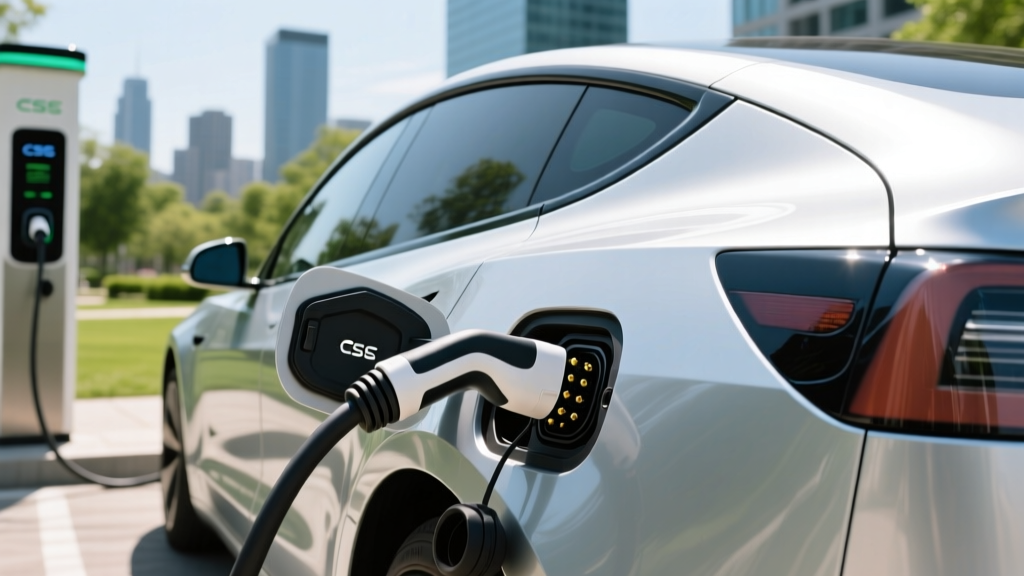
If you've pulled into a public charging station and seen a bulky plug with five pins, you were looking at the Combined Charging System — CCS1 in North America. For years, the CCS fast charge standard has been the default DC fast-charging connector for nearly every non-Tesla electric vehicle sold in the United States, from the Chevrolet Bolt to the Hyundai Ioniq 5 to the Ford F-150 Lightning. But with Tesla's North American Charging Standard (NACS) now being adopted by most major automakers starting in 2025–2026, CCS owners need a clear picture of what their connector can do today, where it's headed, and how to maximize charging speed and value.
This guide covers CCS fast charging in depth: the power levels you'll actually see at public stations, real-world 10–80% charge times for popular EVs, connector compatibility across brands, and what you need to know about charging at home versus on the road. We'll also break down installation costs, electrical requirements, and per-mile charging costs so you can budget accurately.
Understanding Charging Levels: Level 1, Level 2, and DC Fast Charging
Before focusing on CCS specifically, it's essential to understand the three tiers of EV charging. The critical distinction: kW (kilowatts) measures power — how fast energy flows into your battery. kWh (kilowatt-hours) measures energy — the total capacity of your battery, like gallons in a fuel tank. A 75 kWh battery charged at 7 kW takes roughly 10+ hours; charged at 150 kW via CCS fast charge, it can reach 80% in under 30 minutes.
| Level | Voltage | Max Power (kW) | Miles of Range Added per Hour | Typical Use Case |
|---|---|---|---|---|
| Level 1 | 120V AC | 1.4–1.9 kW | 3–5 mi/hr | Overnight trickle; emergency top-ups |
| Level 2 | 240V AC | 7.2–19.2 kW | 20–60 mi/hr | Home daily charging; workplace; destinations |
| DC Fast Charge (CCS/NACS) | 400–800V DC | 50–350 kW | 150–1,200+ mi/hr (peak) | Road trips; rapid public top-ups |
CCS fast charging operates at Level 3 — DC (direct current) is delivered straight to the battery, bypassing the vehicle's onboard charger. This is why DC fast charging is dramatically faster than Level 2. The CCS1 connector combines the J1772 AC charging pins on top with two large DC pins on the bottom, enabling a single port to handle both AC and DC charging.
How Fast Does a CCS Fast Charge Actually Deliver?
Station signage advertises peak power — 150 kW, 250 kW, even 350 kW — but your EV will rarely sustain that peak for the entire session. The charging curve is the real story. Most EVs ramp up to peak power between 10–30% state of charge (SoC), hold near-peak through roughly 50–60%, then taper significantly to protect the battery. Above 80% SoC, charging slows dramatically — often to Level 2 speeds.
This is why manufacturers and testers quote 10–80% charge times rather than 0–100%. Here's what that looks like for popular CCS-equipped EVs at a sufficiently powerful station:
| Vehicle (2025–2026) | Battery (kWh usable) | Peak DC Rate (kW) | 10–80% Time (min) | Station Required |
|---|---|---|---|---|
| Hyundai Ioniq 5 (RWD Long Range) | 77.4 kWh (NMC) | 240 kW | ~18 min | 350 kW station (800V architecture) |
| Kia EV6 (GT-Line AWD) | 77.4 kWh (NMC) | 240 kW | ~18 min | 350 kW station |
| Ford F-150 Lightning (Extended Range) | 131 kWh (NMC) | 150 kW | ~41 min | 150+ kW station |
| Volkswagen ID.4 (Pro S AWD) | 82 kWh (NMC) | 175 kW | ~28 min | 175+ kW station |
| Chevrolet Equinox EV (3RS) | 85 kWh (NMC) | 150 kW | ~30 min | 150+ kW station |
| BMW iX xDrive50 | 105.2 kWh (NMC) | 200 kW | ~31 min | 200+ kW station |
The Hyundai/Kia 800V architecture stands out here: because it can accept higher voltage directly, it sustains peak power longer on 350 kW chargers, which is why a 77 kWh battery charges in roughly the same time as smaller batteries on 400V systems limited to 150 kW.
CCS1 vs. NACS vs. CHAdeMO: Connector Compatibility Guide
North America currently has three DC fast-charging connector standards in active use, though the landscape is consolidating rapidly. Here's which vehicles use which connector as of the 2026 model year:
| Connector | Brands Using It (2026 Models) | Adapter Available? |
|---|---|---|
| NACS (Tesla) | Tesla (all), Ford (2025+), GM (2025+), Rivian (2025+), Volvo, Polestar, Mercedes-Benz (2026+), Honda (2026+) | Tesla provides CCS-to-NACS adapter for Supercharger access on non-Tesla CCS vehicles; aftermarket adapters available |
| CCS1 | Hyundai, Kia, Volkswagen, BMW, Stellantis/Jeep, Subaru, legacy Ford/GM (pre-2025) | NACS-to-CCS adapters available for newer NACS vehicles to use CCS stations |
| CHAdeMO | Nissan Leaf (legacy only — no new CHAdeMO vehicles since ~2024) | Limited adapter options; network support declining |
If you own a 2024 or earlier model with a native CCS1 port — say, a VW ID.4 or Hyundai Ioniq 5 — you can access Tesla Superchargers using a Tesla NACS DC adapter (~$200–250), which Tesla has made available to non-Tesla EVs at participating Supercharger locations. Conversely, if you buy a 2025+ Ford or GM that ships with NACS, you'll need an NACS-to-CCS adapter to use Electrify America, EVgo, and other CCS networks.
CHAdeMO is effectively a legacy standard in the US. New installations overwhelmingly deploy CCS1 or NACS connectors, and the Nissan Ariya switched to CCS1, signaling the end of CHAdeMO for new vehicles.
How Much Does It Cost to Install a Home EV Charger?
While CCS fast charging handles road trips, 80–90% of EV charging happens at home on Level 2. Installing a 240V home charger is the single highest-impact upgrade for EV ownership. Costs vary enormously based on your electrical panel's capacity and the distance from panel to charger location.
| Component | Simple Install (Panel Near Garage) | Complex Install (Long Run or Panel Upgrade) |
|---|---|---|
| Level 2 Charger Equipment | $350–$700 | $350–$700 |
| Electrician Labor (240V/40–50A circuit) | $500–$1,200 | $1,500–$3,000 |
| Electrical Permit | $50–$200 | $50–$200 |
| Panel Upgrade (100A → 200A, if needed) | N/A | $1,500–$3,500 |
| Conduit/Wiring Materials | $100–$300 | $300–$800 |
| Total Estimated Cost | $1,000–$2,400 | $3,700–$8,200 |
The single biggest cost variable is whether your existing electrical panel has capacity. A 40-amp Level 2 charger requires a dedicated 50-amp breaker (NEC code requires circuits to be rated at 125% of continuous load). If your panel is already near capacity — common in older homes with 100-amp service — you'll need a panel upgrade to 200 amps, which adds $1,500–$3,500.
A newer solution: smart circuit-sharing devices like the NeoCharge Smart Splitter or Span Drive can share an existing 240V circuit (e.g., a dryer outlet) with your EV charger, avoiding a panel upgrade entirely. These work well if you don't charge during dryer cycles, but a dedicated circuit remains the gold standard for reliability and code compliance.
The federal §30C Alternative Fuel Vehicle Refueling Property Credit covers 30% of home charging equipment and installation costs, up to $1,000, though eligibility depends on census-tract income and location requirements. Check IRS guidelines for current-year qualification.
What Electrical Upgrades Might You Need for Home Charging?
Before hiring an electrician, assess these factors:
- Panel amperage: Check your main breaker — 200A service handles a 40–48A EV circuit easily alongside normal household loads. A 100A panel may require an upgrade.
- Available breaker slots: You need two adjacent slots for a 240V double-pole breaker. Full panels may need a sub-panel addition.
- Wire gauge and run distance: A 40A circuit typically requires 8 AWG copper wire; a 48A circuit needs 6 AWG. Longer runs (100+ feet) may require thicker wire to prevent voltage drop, adding cost.
- Outlet vs. hardwired: A NEMA 14-50 outlet offers portability (take your charger when you move) but requires a GFCI breaker under current NEC code, adding $80–$150. Hardwired installations skip the outlet and GFCI requirement, often costing less and supporting higher amperage (48A+).
- Outdoor rating: If your charger mounts outside, ensure it carries a NEMA 4 or IP65 weather-resistance rating. Most quality Level 2 chargers (ChargePoint, Wallbox, Emporia) are rated for outdoor use.
A licensed electrician should perform a load calculation per NEC Article 220 before any installation. Don't rely on guesswork — an overloaded panel is a fire hazard.
How Much Does Charging Cost per Mile vs. Gas?
One of the strongest arguments for EV ownership is lower per-mile fuel cost, but the savings depend heavily on where and when you charge. Here's a realistic comparison using national averages:
| Charging Scenario | Avg Cost ($/kWh) | Cost per Mile (at 3.5 mi/kWh)* | Annual Fuel Cost (12,000 mi) |
|---|---|---|---|
| Home, off-peak utility rate | $0.08–$0.14 | $0.023–$0.040 | $275–$480 |
| Home, standard residential rate | $0.14–$0.20 | $0.040–$0.057 | $480–$685 |
| Public Level 2 (ChargePoint, etc.) | $0.20–$0.35 | $0.057–$0.100 | $685–$1,200 |
| DC Fast Charge (Electrify America, EVgo) | $0.35–$0.55 | $0.100–$0.157 | $1,200–$1,885 |
| Gas Vehicle (28 MPG, $3.40/gal) | — | $0.121 | $1,457 |
*3.5 miles per kWh is a typical efficiency for a mid-size crossover EV like the Ioniq 5 or Model Y. Larger vehicles like the F-150 Lightning average closer to 2.2–2.5 mi/kWh.
The takeaway: home charging is dramatically cheaper than gas, saving $800–$1,100+ annually for an average driver. But exclusive reliance on DC fast charging at public stations can actually exceed gas costs. The economics strongly favor installing a Level 2 home charger and using DC fast charging only for road trips.
Many utilities offer time-of-use (TOU) plans that drop rates to $0.06–$0.10/kWh during overnight off-peak hours (typically 11 PM–6 AM). Scheduling your EV to charge during these windows maximizes savings. Check with your local utility about EV-specific rate plans.
Recommended Level 2 Home Chargers for CCS-Equipped EVs
If your EV has a CCS1 port, you'll want a Level 2 home charger with a J1772 connector (the AC portion of the CCS standard — all CCS vehicles charge on Level 2 via J1772). Here are proven picks for 2025–2026:
Emporia Vue Level 2 Smart Charger
- Power: 48A / 11.5 kW (hardwired) or 40A / 9.6 kW (NEMA 14-50)
- Connector: J1772 (CCS-compatible AC charging)
- Cable Length: 24 ft
- Smart Features: Wi-Fi, energy monitoring via Emporia Vue panel integration, scheduled charging, solar-aware charging
- Price: ~$399 (hardwired) / ~$449 (plug-in)
- Best For: Budget-conscious buyers who want detailed energy tracking
ChargePoint Home Flex
- Power: Up to 50A / 12 kW (adjustable via DIP switch: 16A–50A)
- Connector: J1772
- Cable Length: 23 ft
- Smart Features: Wi-Fi, ChargePoint app scheduling, Alexa integration, amperage flexibility for panel-limited homes
- Price: ~$649
- Best For: Flexibility — can dial down amperage to match a smaller electrical panel without buying a new charger
Wallbox Pulsar Plus
- Power: 40A / 9.6 kW (NEMA 14-50) or 48A / 11.5 kW (hardwired)
- Connector: J1772
- Cable Length: 25 ft
- Smart Features: Wi-Fi + Bluetooth, compact form factor, Power Sharing for two chargers on one circuit
- Price: ~$549–$599
- Best For: Tight garage spaces — one of the smallest wall-mounted units available
Tesla Wall Connector (with J1772 adapter)
- Power: 48A / 11.5 kW (hardwired, 60A circuit)
- Connector: NACS native; J1772 adapter included for CCS vehicles
- Cable Length: 24 ft
- Smart Features: Wi-Fi, firmware updates, power sharing, Tesla app integration
- Price: ~$450 + J1772 adapter
- Best For: Households with both Tesla and CCS vehicles — one charger serves both
For any of these chargers, hardwired installation supports maximum amperage and avoids the GFCI breaker requirement. If you opt for a NEMA 14-50 plug, ensure your electrician installs a GFCI-protected breaker per NEC 2023/2026 code.
Safety and Code Considerations for Home EV Charging
EV charging places a sustained high-amperage load on your electrical system — unlike a dryer or oven that cycles on and off, an EV charger may draw maximum current continuously for 6–10 hours. This makes proper installation critical:
- Dedicated circuit: Your Level 2 charger must have its own dedicated double-pole breaker — never share a circuit with other appliances.
- NEC 125% rule: Because EV charging is a "continuous load" (3+ hours), the circuit must be rated at 125% of the charger's max draw. A 40A charger requires a 50A breaker and wire rated for 50A.
- GFCI protection: Required for plug-in (NEMA 14-50) installations under NEC 2023 and later. Hardwired installations are exempt from the GFCI requirement, which avoids nuisance tripping issues reported with some GFCI breakers at high amperage.
- Outdoor installations: Use a charger rated NEMA 4 (weatherproof) or IP65. Ensure the connector holster protects the plug from rain and debris. Some jurisdictions require a disconnect switch within sight of outdoor chargers.
- Permit and inspection: Most municipalities require an electrical permit for a new 240V circuit. The inspection ensures code compliance and protects your home insurance coverage. Skipping the permit risks denied claims in the event of an electrical fire.
Frequently Asked Questions About CCS Fast Charging
Will CCS fast charging damage my EV battery?
Occasional DC fast charging does not meaningfully accelerate battery degradation. Modern battery management systems (BMS) actively limit charge rates when the battery is too cold, too hot, or near full. The primary degradation factors are sustained high state of charge (sitting at 100% for days), extreme heat exposure, and total cycle count. For daily driving, charge to 80% and use DC fast charging for road trips without concern. Most manufacturers warranty the battery for 8 years / 100,000 miles with a 70% capacity retention threshold.
Can I use a CCS fast charger on a Tesla?
Tesla vehicles use the NACS connector natively and charge primarily on the Supercharger network. However, Tesla provides a CCS1 adapter (sold separately, ~$175–$250) that allows Teslas to charge at CCS stations — useful when Superchargers are unavailable. Non-Tesla EVs with CCS ports can access participating Superchargers using Tesla's NACS DC adapter.
Why does my CCS fast charge slow down above 80%?
This is the charging curve taper, and it's intentional. Above 80% SoC, the battery management system reduces current to prevent lithium plating and excess heat — both of which degrade the battery. On a 250 kW session, you might see the rate drop from 200+ kW at 50% SoC to under 50 kW above 85%. This is why road-trip strategy favors charging to 80% and driving on, rather than waiting for 100%.
Are public CCS chargers reliable?
Reliability has improved but remains inconsistent. According to J.D. Power's EV Experience Index, CCS networks like Electrify America and EVgo score lower in satisfaction than Tesla Superchargers, primarily due to payment-system glitches, broken cables, and stalls delivering less than advertised power. The NEVI (National Electric Vehicle Infrastructure) program is pushing networks toward 97% uptime requirements for federally funded stations. Before a road trip, check station status on PlugShare or A Better Routeplanner and always have a backup station identified.
Is CCS going away now that NACS is the new standard?
Not immediately. While most automakers are transitioning to NACS ports starting in 2025–2026, millions of CCS-equipped EVs are already on the road, and charging networks are maintaining CCS connectors alongside new NACS installations. Electrify America has committed to offering both CCS1 and NACS at new stations. CCS infrastructure will remain viable for at least a decade, though NACS will become the dominant standard for new vehicles. If you buy a CCS vehicle today, you won't be stranded — but an adapter for NACS/Supercharger access is a smart $200 investment.